Over the past few years I have been grappling with a new craft. Even though we have run a business making pottery for about a decade, Michaela was the potter really whilst just worked around the edges, helping out with some of the donkey work. My areas of creativity were outside the use of actual clay. Then it all changed.
First, I began working with a different clay body- with much more ‘grog’ mixed in (ground down fired clay.) This was much more forgiving than the white stoneware clay that Michaela loves so much, more plastic and willing to hold shape – or at least I think so. Michaela might protest. These qualities of the grogged clay mean that building bigger vessels is that bit easier, but also this kind of clay also has the capacity to cope with so much more thermal shock, meaning that alternative firing methods are possible… so I started making big old pots and trying to fire them in pits dug in the garden, with mixed success!
Then I discovered raku.
Time for a short introduction to clay firing.
Most pottery is fired in kilns, either electic, gas or more rarely, wood fired. All three methods introduce variations to the process and to how the glazes in particular react, due to the conditions created, for example the degree of oxygen present during the firing.
Using a purpose build kilns allows careful control of the temperature, which in the case of our electric kiln will step up around 100 degrees per hour, then cool down over a long period of time. This means that failures in the form of cracking (or even exploding) pots are minimised and colours from glazes are reliable and predictable.
There are other methods however, most of which require specialist clays. These include pit firing/barrel firing, saggar firing and most drramatic of all, raku firing.
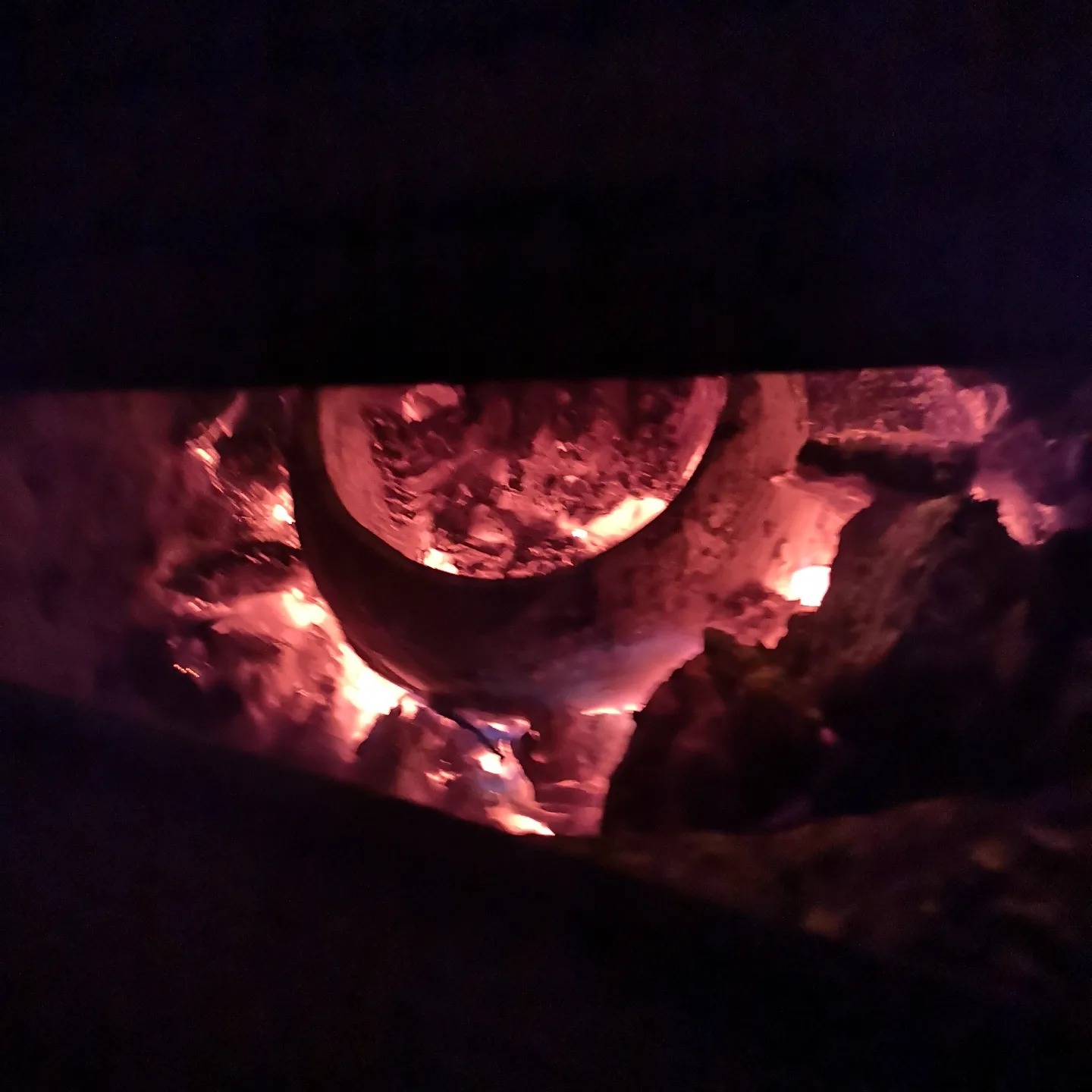
Raku, meaning ‘easy” in Japanese, involves heating up a previously fired pot to 1000 degrees in an insulated container- typically a barrel or a dustbin – using a gas burner. The pot is then removed and placed in a sealed contained along with combustable materials. The oxides and glazes applied to the pot will then react in the oxygen depleted conditions to form bright colours, crackles and textures.
The thing is about this kind of pottery, it is always shifting, changing – it never quite arrives at a destination. It is art by experiementation and evolution. Perhaps all art is like this, but let me explain what I mean.
Functional pottery might be understood as the means to perfect a process in order to create a usable shape. As such, potters are developing their shapes and glazes to make their versions of archetypal forms. There is art and beauty in this that is beyond my skills. I look in wonder at many of the things that people are able to make. I hold their mugs in my hands as if they were grails. This is not what I am trying to do.
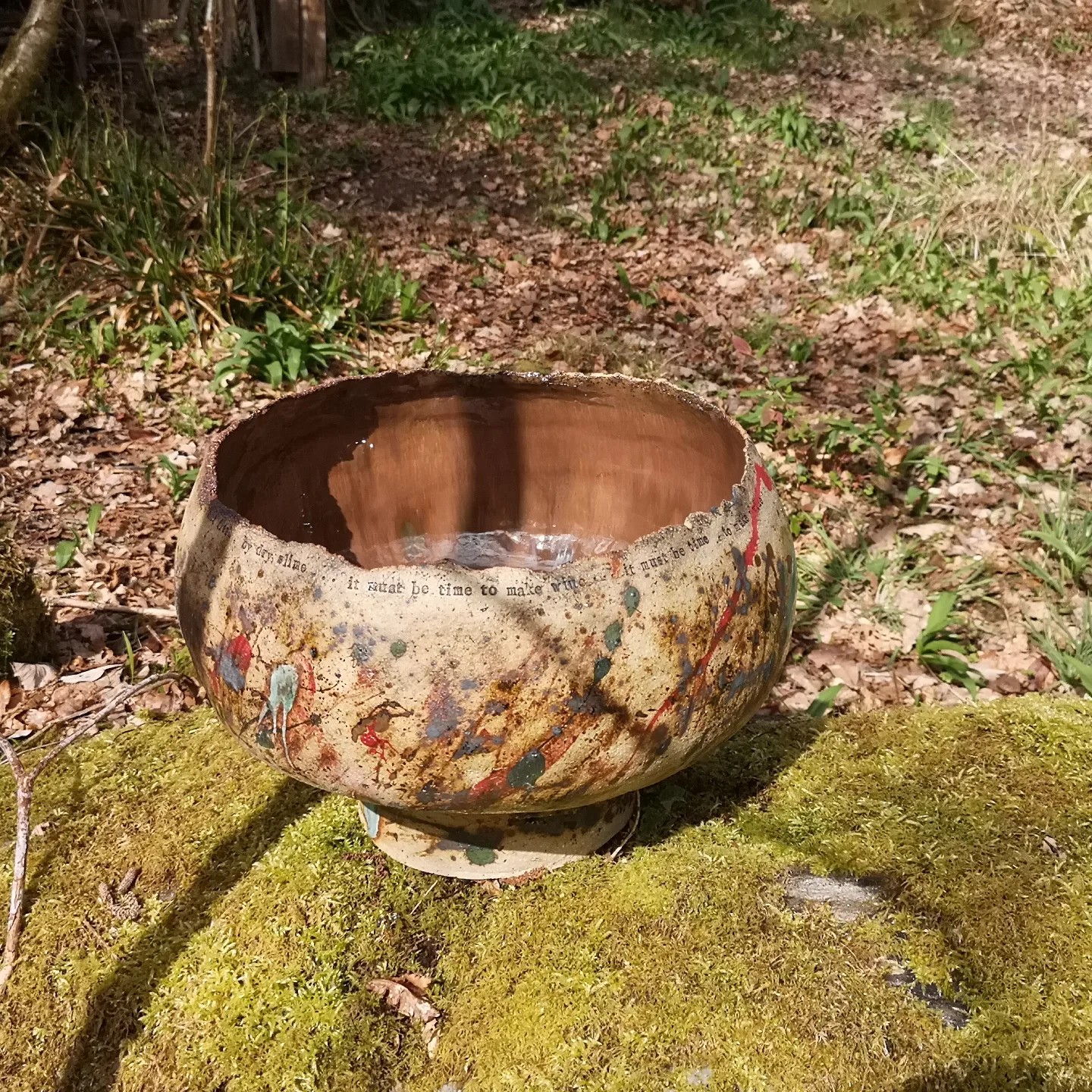
The pottery I am making is not really in puruit of shape or colour (even though both are essential elements) rather they are chasing after meaning. So when I make a pot, I am not asking if it is a ‘good’ pot, I am asking if it carrys any meaning for me. Has it told a story? Has it opened up a space or framed something that asks questions that I find important?
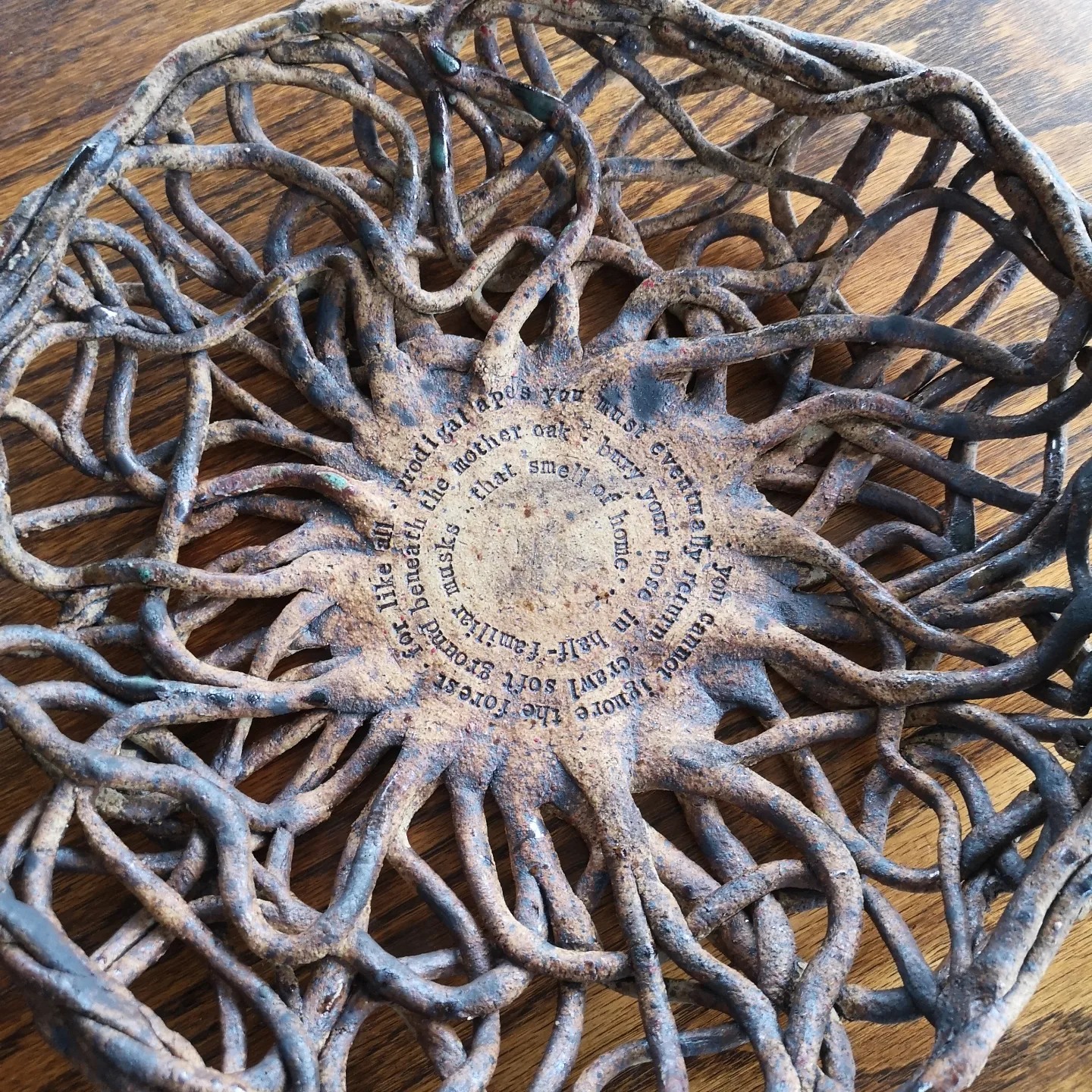
Let me tell you, this kind of art can drive you mad.
It is rarely sarisfied and never completed. There are no real reference points for comparison, other than whether someone is prepared to pay money for it.
The evolution thing I mentioned before suggests an ascendancy, in which we get ‘better’ and certainly I have learned through lots of mistakes and failures, so that I at least make different mistakes now rather than the same ones. I am also slightly more able to steer the chaos, but as I look back on some of the things I made previously, I wonder if I have gone in the wrong direction since. Perhaps I should have made more of the same?
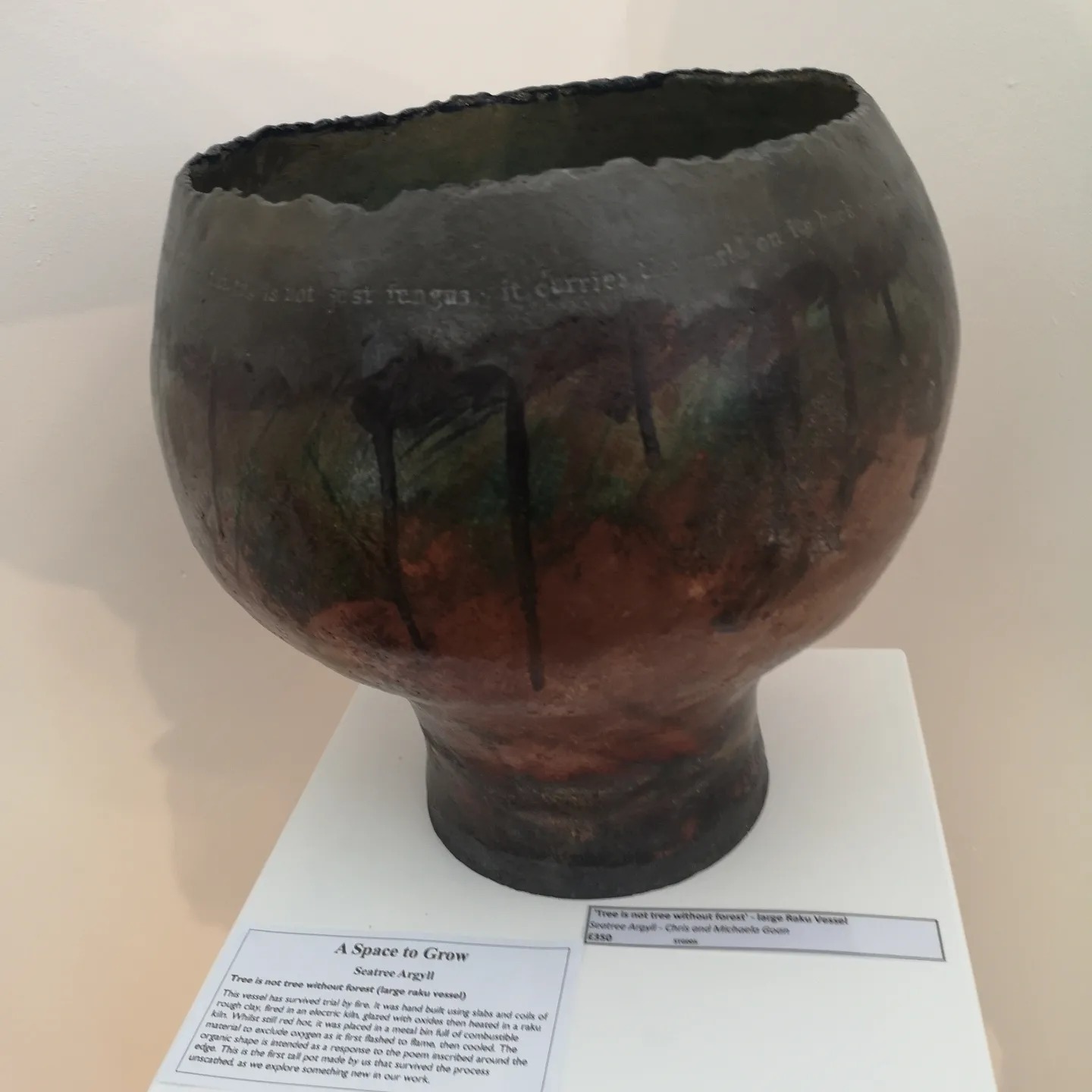
But who am I kidding… this is not an option. The quest I am on is always after meaning, and so I have to search for these in new shapes, new ideas.
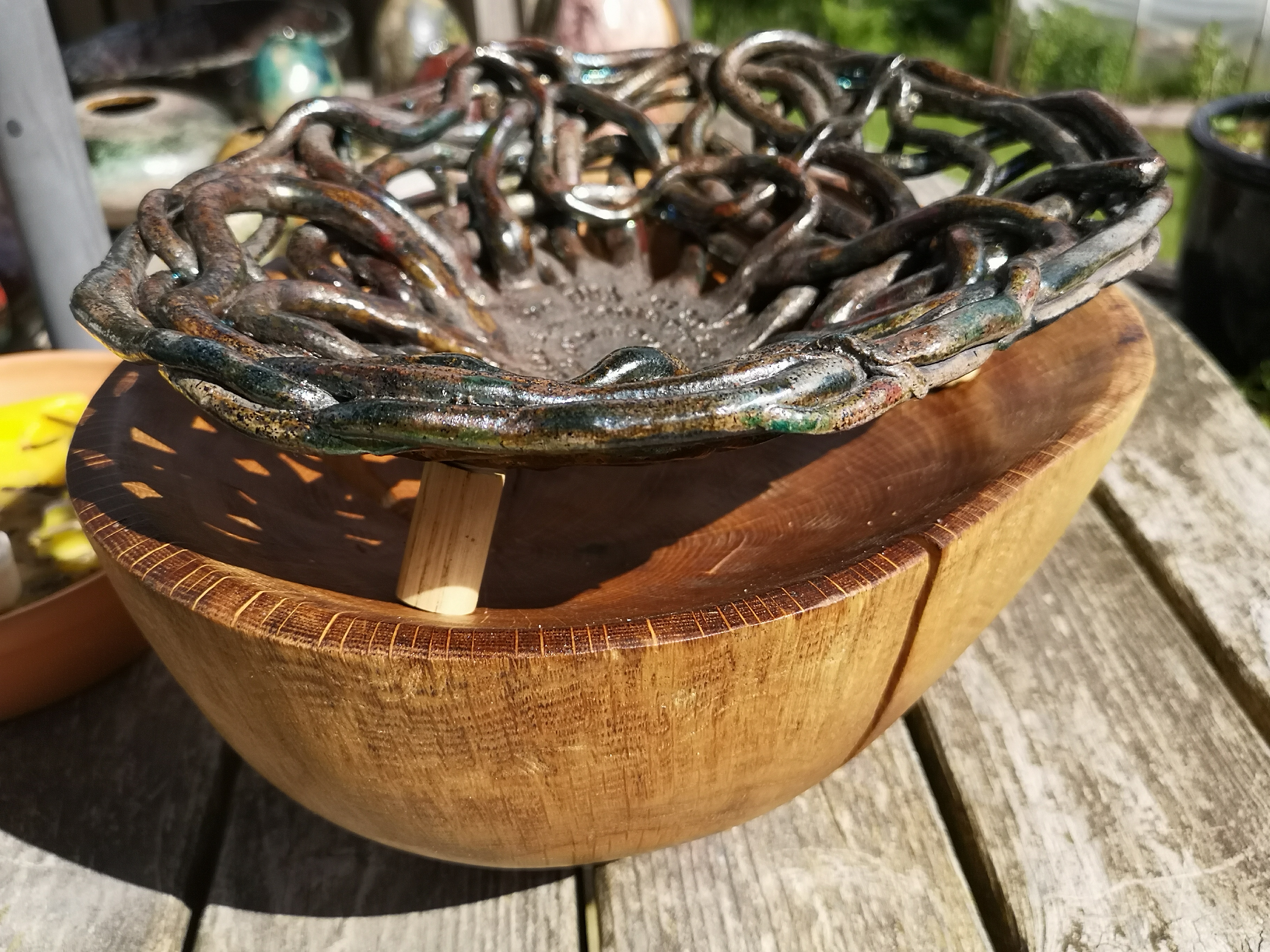
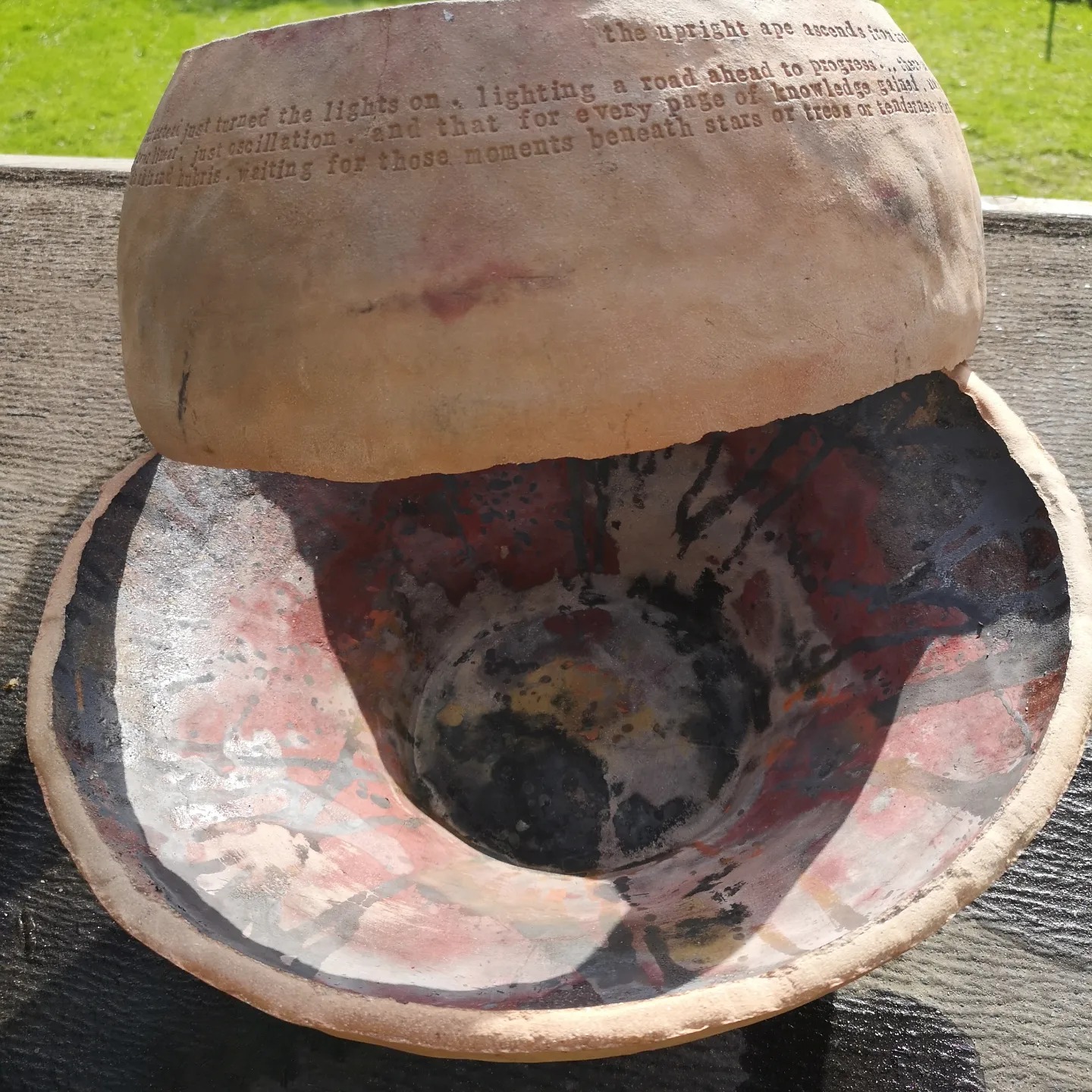
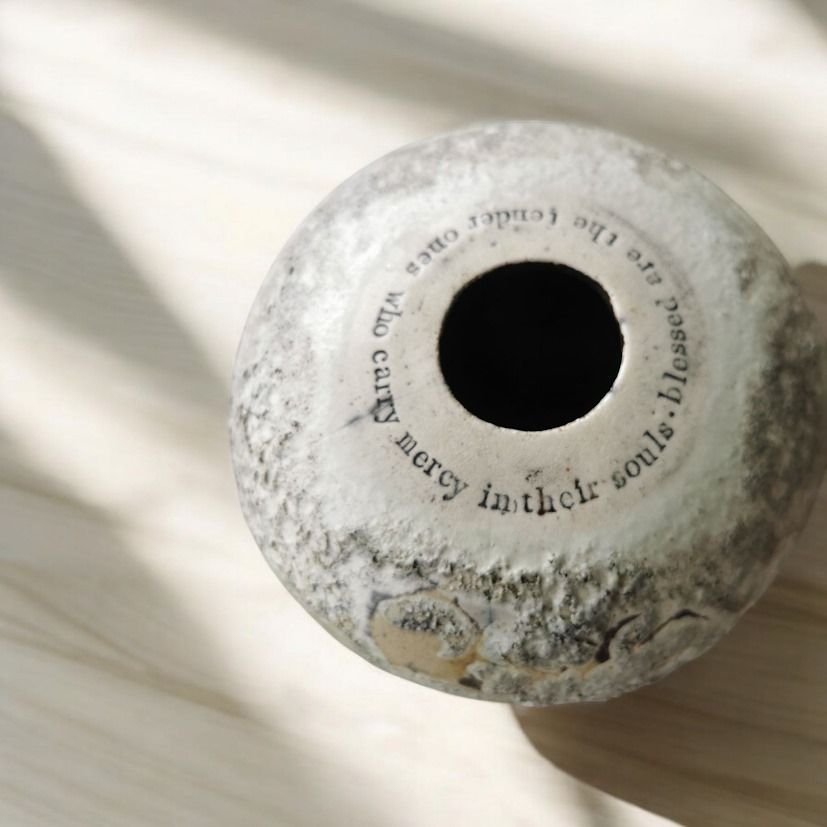
I have a secret weapon however, in that our pots use poetry. This alows me to set up an interplay between words, form and colour in such a way as to gather meaning more directly. In other words, I can cheat.
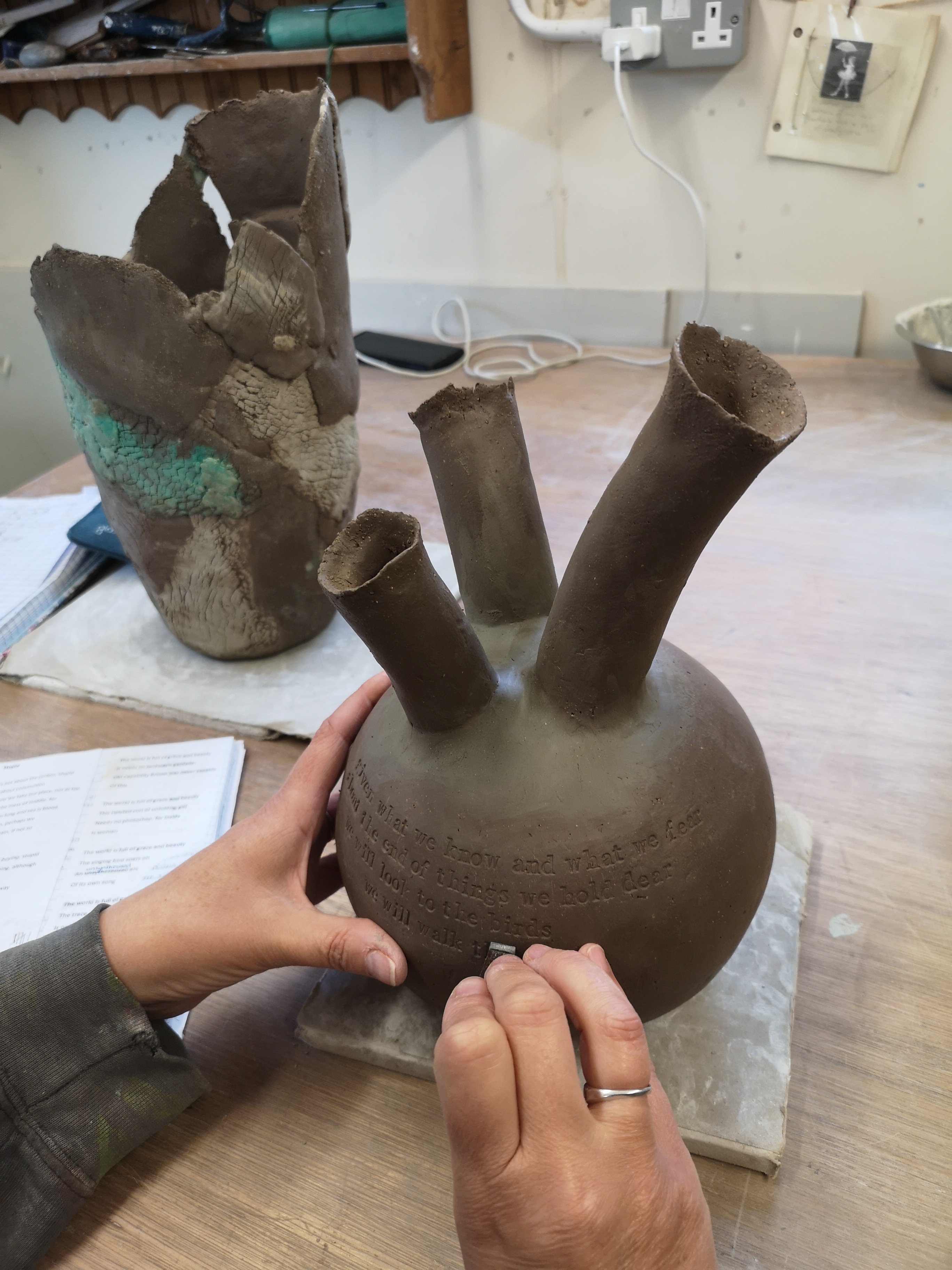
One last thing about this evolutionary quest- it is entirely addictive.
There may come a time when I am done with it – music was like this for me once – but for now, if a couple of days goes by without me spending significant amounts of time in pursuit of my clay meanings, I am anxious for a fix.
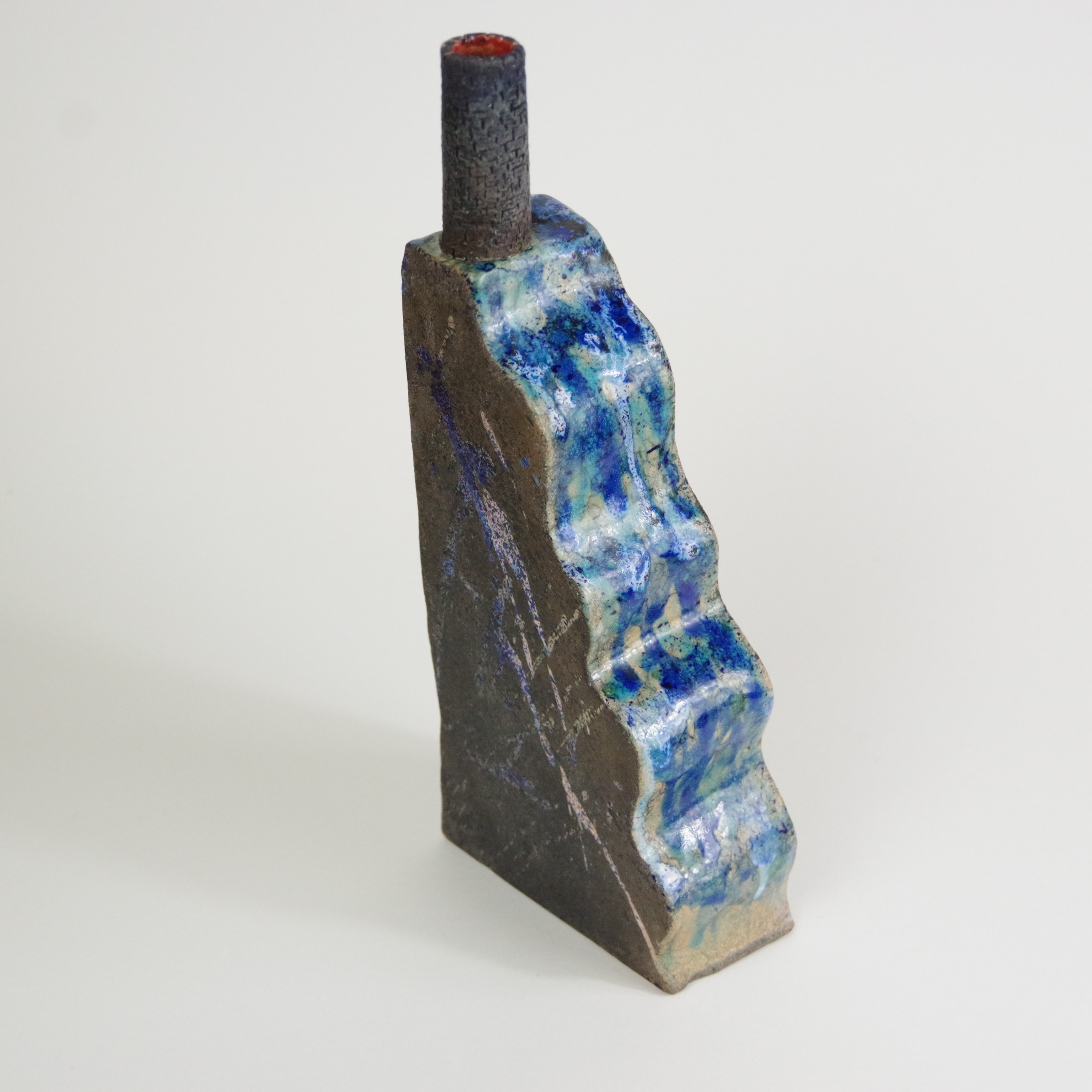
In the spirit of charity, it is possible you may be interested in helping out this addict in his continuing quest.
Some of our work is available in the website shop, here.
Much of our larger work is simply too big for us to make available through an on-line shop – It is not really ‘postable’ after all – these are more likely to be things we take to ceramics shows or place in galleries (and we work with some fantastic galleries!)
Perhaps the best way though might be to come and visit us. Drop us a line first and see what we have in our storage shed. There may well be a bargain or two to be had!




 this fragile tent