
Not sure why you would want to- but you can now subscribe to this blog- which means you will get e-mail updates on posts.
Just click on the relevant bit to the right…

Not sure why you would want to- but you can now subscribe to this blog- which means you will get e-mail updates on posts.
Just click on the relevant bit to the right…
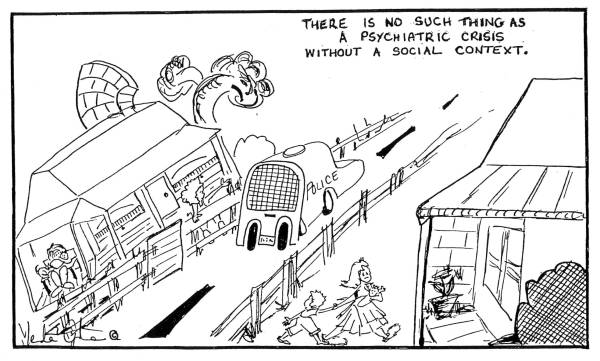
I had a good chat with our friend Kathryn tonight about spirituality and mental health problems.
Kathryn has been studying with ICC in Glasgow and has a passion for working with people who have problems with mental illness. To this end, with her husband Bobby she has been running a furniture recycling/reallocating project- in her spare time that is, as well as her day job!
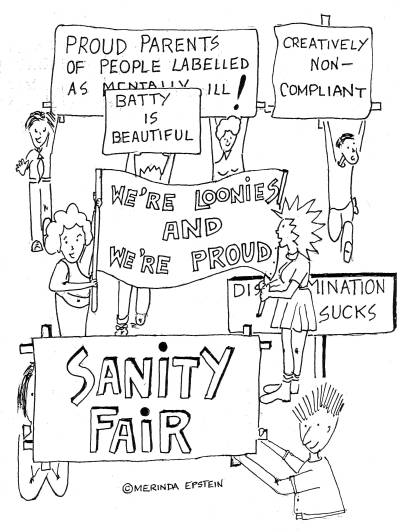
She also has this idea for a kind of friendship group where people who have mental health problems (and lets face it, this is many of us at some point in our lives.) This has formed part of her studies, and tonight was a chance for us to talk through some of this stuff- which was great, not just because it was good to see Kathryn again, but also because this subject kind of beats in my heart.
The bias that I feel Jesus had towards the poor and broken, and the hope that we feel for a new way of being- categorised by grace, and radical inclusion, according to the rules of the New Kingdom- these things are all in there for me.
As part of her project, Kathryn asked me to consider some questions- which I found surprisingly hard to answer given that this is an area of constant reflection. In particular she was interested in how church might provide help and assistance to people experiencing mental ill health.
Here are some of the things that I was chewing on-
I want to suggest that all of us are potential sufferers of mental ill health- including many people within church. We too easily start with an ‘I’m OK, you are not OK’ way of thinking- which leads us to believe that we have the answers to other people’s problems. Perhaps in part, we might actually be part of the cause!
We often fail to acknowledge MH difficulties amongst people within church- the stigma is as strong, if not stronger, against mental ill health within church as without- because we add assumptions about spiritual weakness to all the other negative assessments.
Another assumption we tend to make is that our job as Christians is primarily to bring people inside the club by making them realise that they are outside. Our job then easily becomes to invite people into our buildings, and hope they will then become like us. The support available within church for people who have MH problems has often been far from perfect, and very poorly integrated with other community resources.
Christian groups/churches seeking to support and provide care for people experiencing mental ill health easily fall into lots of traps. I would include some of these-The evangelical trap- Our real (covert) motivation is to convert. Most folk see this coming and run a mile. Some may indeed convert- repeatedly. The difficulty is that conversion does not make the illness go away, and we may find ourselves being dishonest and conditional in the way we offer love and support.The therapy trap- Christians tend to do bad therapy. Bad therapy often does more damage. It is easy to inadvertently be the ‘expert’ and then let people down when we fail to deliver.The dependency trap- Sustaining relationships with people who have experienced real damage can be extremely hard. If people find something that is helpful and supportive, it can easily become a full stop. The dependency that begins can be an impossible burden for those running groups also, leading to broken promises and further alienation and rejection.
My strong feeling is that Christians ought to be attracted to failure, rather than being seduced by success. I also believe that Jesus calls us to the poor in spirit.
But I am not sure that he calls us to ‘rescue’ people- rather that he asks us to practice a form of radical inclusion.
I think too that all streams of ‘therapy’ have a thing at the heart of them- for CBT it is about therapeutic allegiance, for person centred counselling it is ‘unconditional positive regard’ and for psychoanalysis it is ‘transferance’. All these seem to me to carry something of Jesus about then- they are related to LOVE. They are in some senses a Christian heresy.
I wonder whether we might yet work out how better to understand the relationship between Spirituality and mental health problems? Is this something that Emerging Church might yet do better?
To accept that our fallability is not a sign of individual weakness, or spiritual corruption, or demonisation. It is just part of who we are.
Part of what it is to be human. Even extra-human.
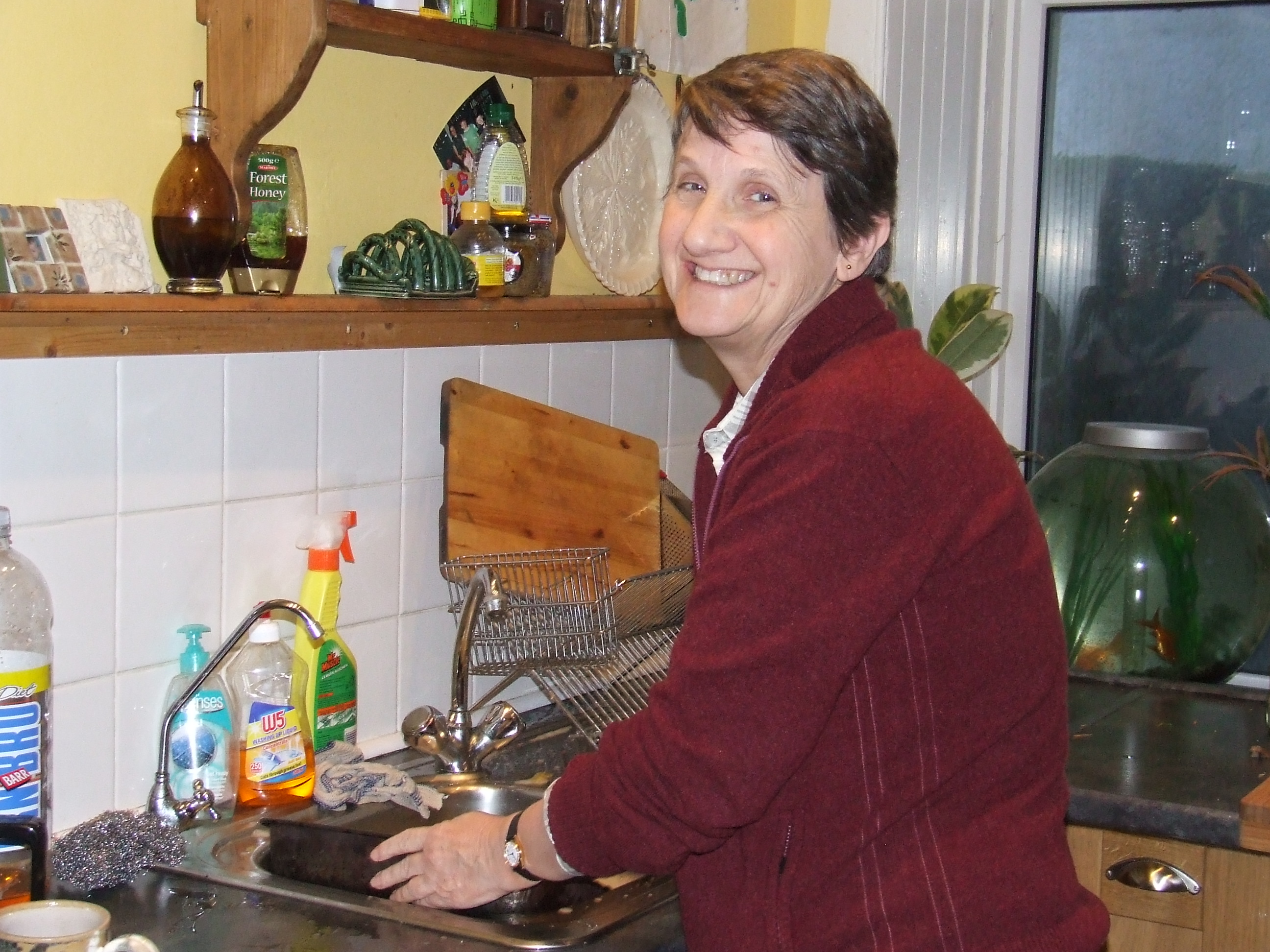 We just had a lovely weekend catching up with our friend Maggy Cooper.
Maggy is originally from Australia, coming over to the UK to become a Nun, before moving into secular work with adults with learning disabilities. She currently works as a community leader of a L’Arche community.
Although she remains Catholic, Maggy began to attend the church we attended in England, Calvary Christian Fellowship in order to learn and share with others from a different Christian tradition. She has been a bridge into a new world for many of us over the last 10 years or so…
So through Maggy I heard about people like Jean Vanier and Henri Nouwen. And she opened up for me a whole new stream of contemplative understanding of the life of faith. Maggy has years of experience as a prayer guide, and in leading retreats- now most commonly at St Beuno’s in North Wales.
Talking to Maggy is always a blessing.
But perhaps the common language that she and I have most in common is that found in and around the ’emerging church conversation’. She reads more books than I do on the subject (some of my friends will find this difficult to beleive!) and the excitment offered for the future by the ideas and thoughts coming out of the EC debate seems to fit naturally with her Catholic faith.
Indeed, it has been very noticable how much of the ’emerging’ movement has embraced older contemplative practices- in many ways this could be describing a healing of rifts formed by the Reformation- a bringing together of different Christian traditions.
Which kind of makes me ask again- where are all the other Emerging Catholics? I have met a few. Some of them are returnees to the church that they had previously rejected- like Vince down in Ayr. For him, the EC has made it possible to speak about things that previously had no words, or at very least were unmentionable.
This is particularly important here in Scotland, where sectarian division runs deep and toxic.
In this pluralistic world, movements still require leadership– and given the rather conservative stance the Pope takes on most matters Spiritual perhaps this is difficult thing to do within the Catholic Church.
One voice that will be increasingly familiar will be that of Fransiscan Preist Richard Rohr, and his Center for Action and Contemplation in New Mexico USA. He even gets a mention in ChristianityToday.
Here are a couple of clips of him speaking…
I am not interested in seeing us all the converge on a common form of faith. How boring and lifeless that would be! I am fascinated to see these common streams emerging in the different traditions however.
And at the heart of this has to be a kind of generosity to one another’s view points.
I would love to hear about Catholic movements that I have missed…


We have a new driveway!
For those who have tried to drive up the hill to our house, you will remember the white knuckle ride it was- complete with spinning wheels and the smell of burning clutch plate. Well all is transformed!
It was an expensive task, which we have been worrying about for a while, but in the end we found a local builder (Euan Oxland- highly recommended if you need someone locally!) who came, did a good job, and cleared up before he left.
Friends of ours who struggle with health can now get right to the front door…

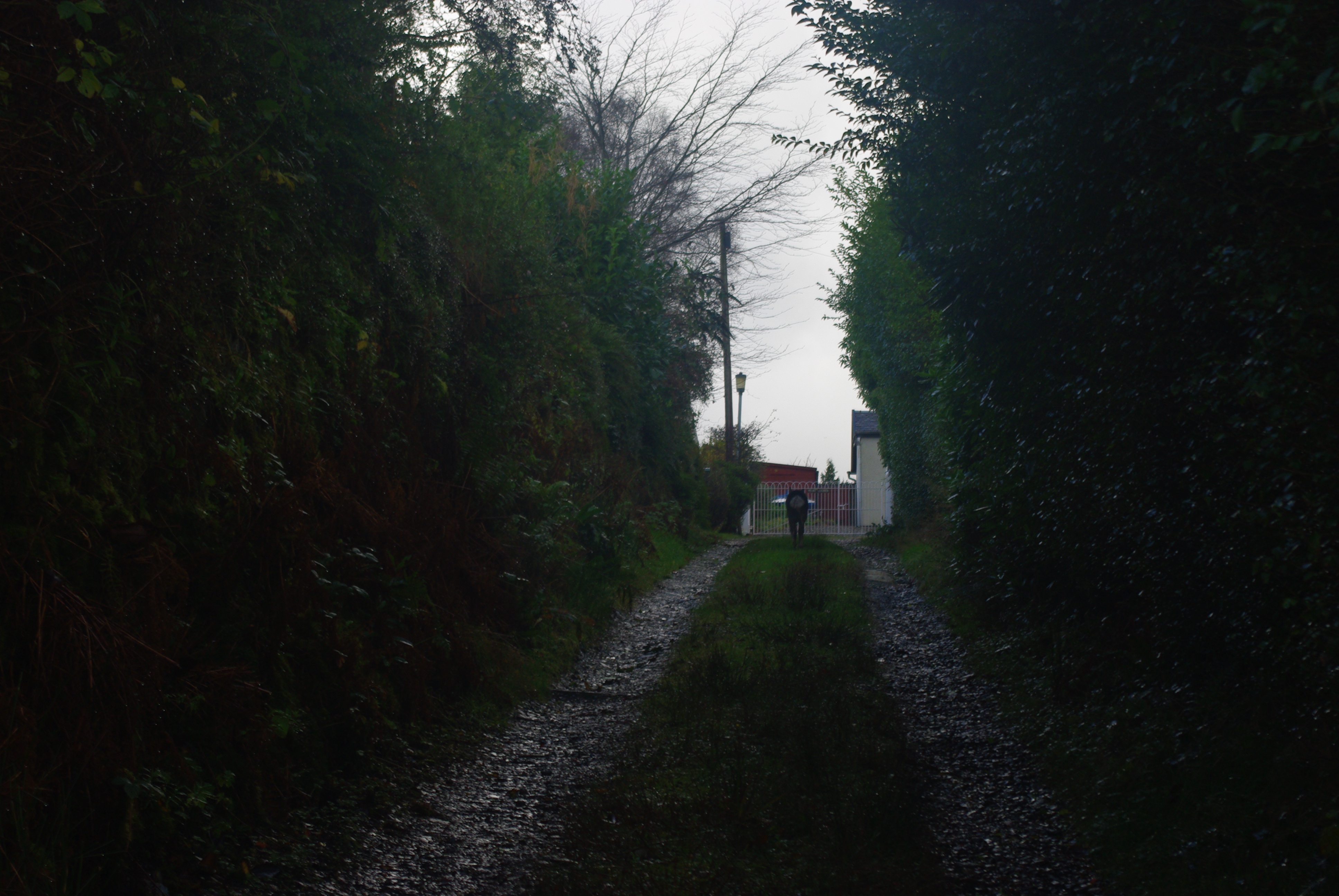
Yes- that is a deer. On our lower driveway, quite at home, in no hurry.
Friend of all small boys who hate to eat anything green- because they get there first.
I really must get round to putting up the gates…
Following on from previous discussions about the relationship between politics and religion in the worlds only superpower, here is a clip I saw on Brian McLaren’s blog-
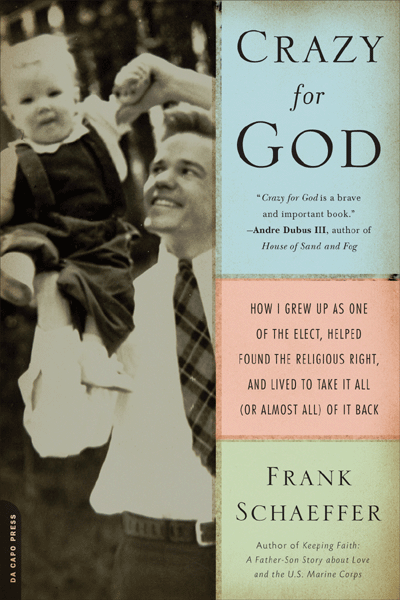
Frank Schaeffer is an interesting man. I managed to hear him speak at Greenbelt Festival recently. Son of Francis Schaeffer, hero of the Evangelical right wing, he has written a this book about his experiences of growing up into his particular context, which I think I am going to read…

Long term TFTD contributor Rabbi Lionel Blue
Each weekday millions of people in Britain reach for their radio and tune to BBC radio 4’s Today programme. It has been my primary window on world news and events for 40 years. In a world of sound bites and looped infotainment it’s continued popularity is remarkable. Thoughtful extended reflections on real issues? Serious journalistic inquiry that makes politicians tremble in their Gucci’s? It will never catch on surely?
Today programme listeners tend to be very protective of their habitual morning listening. We do not like things to change. We do not like things to be trivialised or tarted up. John Humphrey’s can often irritate and annoy with his savant-pedanticism- but he does this as one of ours. Like an older brother at Christmas.
At 7.45 each morning, we are offered a Spiritual slot, called Thought for the Day. A selected bunch of folk from different faith backgrounds are given 120 seconds to reflect on a current issue. It is often bland and esoteric. Sometimes it is beautiful and moving. It is one of those rare ‘pause, breathe in and think’ moments. Or at very least a moment to switch the kettle on.
Step forward the Militant Atheists. They object strongly to their morning listening being corrupted by religion. Particularly when Atheists and humanists are not invited to speak. This from the National Secular Society–
“Every edition of Thought for the Day is a rebuke to those many people in our society who do not have religious beliefs…This is so blatant an abuse of religious privilege that we cannot simply let it pass. Our evidence shows that five out of six of the public are heavily on our side. We will be looking at other ways of challenging this unjustifiable slot.”
And so complaints were sent (7 in total) and much huffing and puffing was made in many quarters. The BBC trust sat in leather chairs for quite some time- then rejected the complaint.
The ghost of Lord Reith, Presbytarian forefather of the BBC- rested again in peace…
Of course, we may yet Atheist voices Thought for the day. But I find myself in agreement with The Guardian’s John Plunket who said this-
Introducing secular voices to Thought for the Day wouldn’t just have changed the slot, it would have killed it. As one of its former editors John Newbury said, there is no need for a non-theological Thought-style reflection at 7.50am – there is plenty of that elsewhere on Today and across the Radio 4 schedule.
Evangelical muscular atheism seems to me as anachronistic in these pluralistic times as the street corner preacher in his sandwich board proclaiming the nigh-ness of the end.
And whilst I have no desire to get into pointless arguments with people who have claim to know what can never be known (who remembers last year’s bus campaign?) I must confess to a feeling of more than a little smug satisfaction at the rejection of their complaint…

Had a nice night out with some friends last night eating curry and drinking beer. Mmmmm.
There were six of there, all men- David for the first time- and as well as the usual man-talk subjects (mostly involving some kind of bodily function) we talked about our local community.
We are all ‘incomers’ to our town- one from England, one from Ireland, and the rest from other parts of Scotland. And like most incomers, our relationship to place requires a degree of negotiation- and it also inevitably means asking lots of questions about the nature and characteristics of the community we are part of.
It is a regular pre-occupation of mine, as regular readers of this blog will know well. The quality of our lives depends so much on the depth and degree of our relationships with others. This seems a lesson that we desperately need to re-learn.
Modernity taught us individualism- Post modernity hit us with its fluidity and disconnection. The internet added distance and diversity, and we were left with… what?
Empty village halls, clubs and churches that no-one belongs to any more. Family units who pass each other in the school yard.
Of course, I exaggerate. There are many thriving clubs and churches- including in our lovely little town. But the direction of travel towards social disconnectedness is well documented- as is the potential cost.
We Christians were shown a different way to live by Jesus. A way of life lived for the other. Forming Ecclesia’s who practice a form of radical community and out of this gathering seek to be a blessing to the towns they are part of.

I was half remembering a little bit of philosophy today as I drove around Argyll. It was that old rogue Jean Jacques Rousseau, and his own struggle to distinguish between the individual self, and the collective self.
Rousseau believed us all driven by two opposites- the Moi (me, or I) and the Moi Commun (the communal I.)
The first of these- the Moi fits well with modern enlightenment thinking- this from here.
The utopia of the independant, fulfilled moi is Rousseau’s most popular message to the modern world. It’s existence is so pervasive an assumption in western society that any educator who challenged it as an ideal would be forwith banished.
The Roussean ‘I’ is alive in the present day rhetoric of the search for identity, in a whole series of theses about self actuation from Marx through Maslow.
But Rousseau’s thinking did not end there- he remained convinced that our ideal as humans was discovered in collective with other humans- the collective I, or Moi Commun.
This collective experience is so much more than the subjugation of the individual will to the numerical superiority of the collective. It is the place where the Moi finds absolute fulfillment and identity.
These ideas became the seeds for ideological and actual revolution- as many ideas do.
Perhaps they are appealing because they are familiar ideas, to followers of Jesus at least.
Another one of what CS Lewis called ‘Christian heresies’ perhaps…
The curry was nice by the way- and indeed led to it’s own internal revolution.
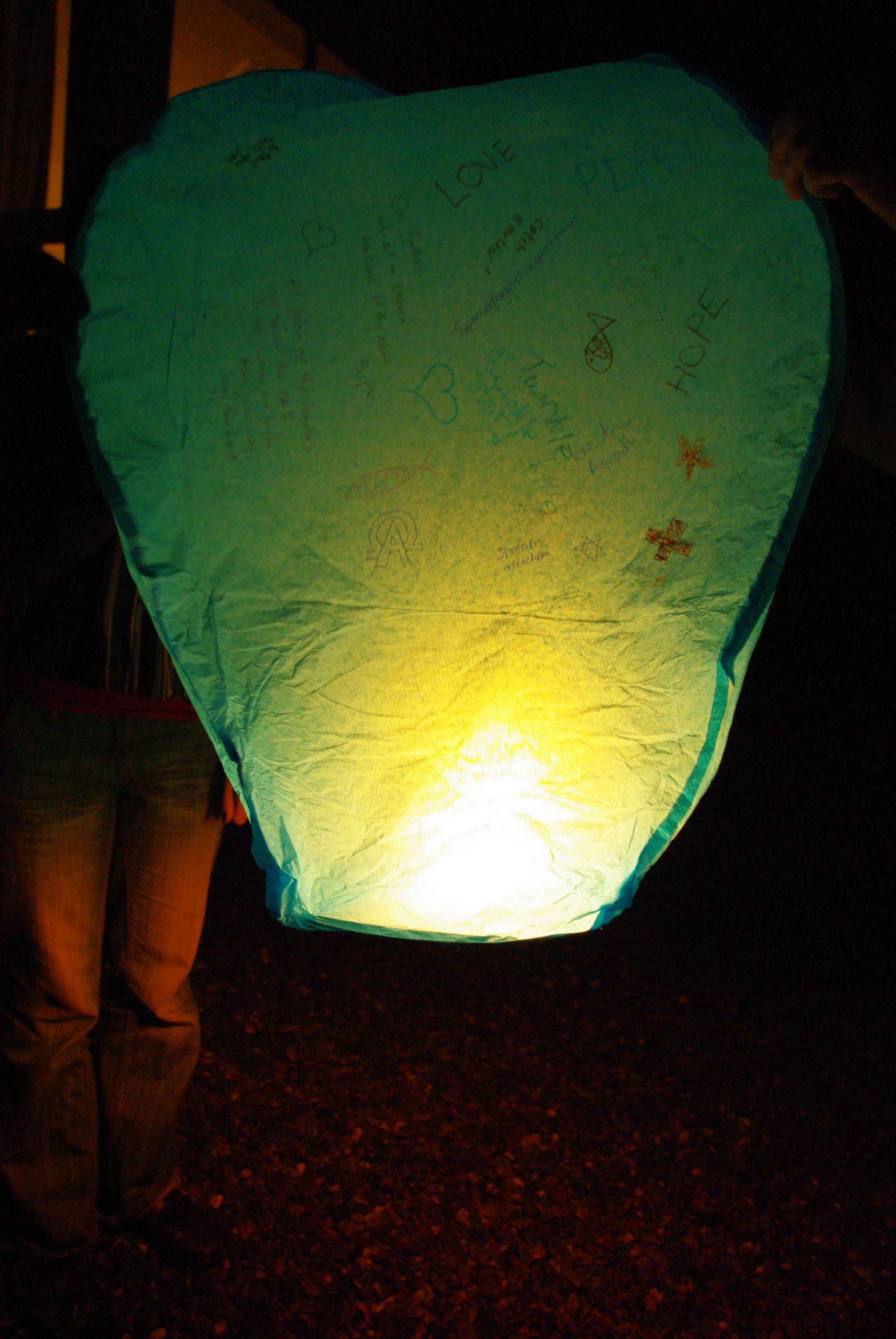
We are planning (and I use the word loosely) a thing. An Aoradh thing. Around an Advent theme. We will be supporting Simon and CLAN as they sell some Christmas trees and raise some money for the play park.
It will be based on the West Bay in Dunoon, on the 12th/13th December. We will have a big tent, mulled wine, thinking stations, and… (we hope) be getting people to decorate sky lanterns for a mass launch.
Assuming we get permission.
And assuming it is not very wet.
Or windy.
So come along- let hope rise to faith.
We tried out one of the lanterns this evening in house group- so for those of you out looking for meteor showers, what you saw was not one of them. Nor was it an alien space ship.
It floated into a tree, then rose high in the direction of Helensburgh, where it was no doubt shot out of the sky over Faslane naval base.
We wrote prayers on it- and watching the thing rise gracefully into the sky then disappear into the clouds was wonderful.

Following on from this post, here is another video relating to an attempt to put together a universal Charter for Compassion.
It attempts to comb together some of the common themes of compassion present in the major religions.
I can hear the cries of horror from certain Christian circles… the fear will be that such a thing might lead somehow to impurity, dilution or syncretism. But I think we have nothing to fear, and so much to gain, through meeting and sharing with people from other faiths.
Particularly in these times…
 this fragile tent