Church- moving forward to the 1930’s?

1930s

Just read this really interesting post by TSK.

The comparisons of the economic circumstances of the ‘naughties’ with the great depression of the 1930’s are not new, but the implications for church in this context offered by TSK certainly are (to me at least!)

Partly this is because the erosion of funding experienced by faith based organisations has passed me by- the church things I am involved in require no external funding- and the ‘missions’ that we have been involved in have all been done on a shoestring. I suppose that as long as members of my group have had collective personal resources that we can use together, we are pretty recession proof.

And this is what TSK seems to be saying. He makes the following predictions/comments about the likely moves in church over the next ten years-

The church in the West will use up much of this coming decade to rebound from the financial recession and to restructure in a more sustainable way, much like the church did in the 1930’s after the Great Recession which started about 1929.


In a concerted effort to get church ministry on a solid financial footing, or to start new ministries with a diminished budget, many traditional churches will offer their buildings mid-week as micro-business enterprise labs and will become micro-credit unions for their local communities. The word “fellowship” will regain its meaning of sharing and risk-taking. Emerging church energies will be re-directed from creative worship arts to creative social enterprises which will enable long term sustainability. In both realms, women will come to the front as some of the most successful missional entrepreneurs.

This seems very important. The activities of many of the small ‘alternative worship/missional/emerging groups that I am aware of have tended towards re imagining worship- in terms of what is meaningful and authentic, but perhaps has also have had more than a whiff of exclusivity. We are starting to build community, but my conviction is that the strength and vitality of our enterprise has to be found in deeper and more loving community- and there is nothing like adversity to forge us together! I have noticed that in the middle of most of these groups is a person gifted with the spiritual gift of hospitality. they are the glue, and the oil, and the heart of the thing. Many of these people are women. In this new context- this feels like the most appropriate way to ‘lead’.

Creative social enterprises may well be the way to go- But I work for the public sector here in the UK, so I am not best placed to comment.

1930′ s writings from theologians Barth and Bonhoeffer will continue in their popularity (no-brainer) but we will also revisit Dorothy Day (USA) and Dorothy Sayers (UK).

Barth and Bonhoeffer I know, but Day and Sayers- must do some reading…

Having already “re-traditioned” and “re-sourced” our theological and missiological base for church and mission, we will feel more confident to launch out further into the world with transformational models that will change the world without draining the next generation’s resources. The next decade will be a time of sustainable outreach, measurable by a far more holistic criteria of success.

So this sounds like the possibility of church offering models of intervention- in the same way that social change happened in the 1930’s through small scale social projects and missions. Big, corporate level stuff is no longer viable, or no longer trusted. The alternatives are local, community generated and sustainable within local resources.

I hope TSK is right in this. It remains to be seen whether church can really make an impact for good in these rather troubled and vacuous times.

It is my impression that the 1930’s also saw a dominance of a form of Christianity that could be seen as ‘liberal’, left wing, socially motivated and engaged. This seems another echo with today.

Hmmmm…
TransFORM- missional community formation…

Look past the impossibly hip language, and plethora of piercings friends, as this stuff could spell the future of church- particularly this side of the Atlantic.

Check out what is all about here.

Vodpod videos no longer available.

more about “TransFORM- missional community format…“, posted with vodpod


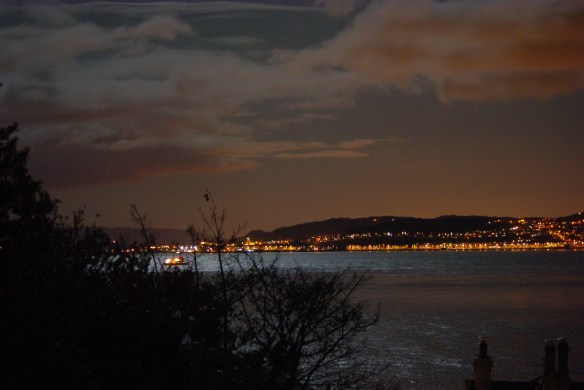
Night comes soon…

The dark nights are always a surprise when the clocks change from BST to GMT- it was already dark when I was home from work at 5.15.

Winter feels that step closer.

Darkness is rising.

So on this All Saints Day- may some fractals of light make their home in your soul.

For the winter is long

But also

Beautiful.

the clyde, november, nightime, western ferries, dunoon

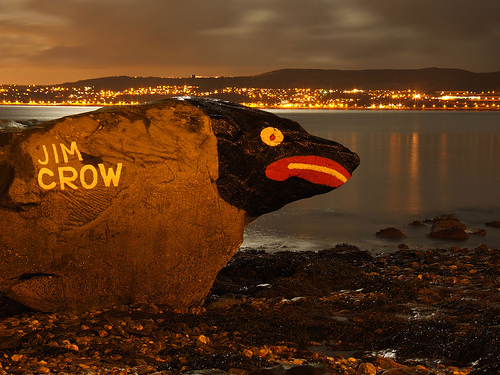
Jim Crow laws, and a painted rock…

jim crow rock- from flickr

Photo by Scott Adams- http://www.flickr.com/photos/10021898@N02/797575782/in/photostream

On the shore a few hundred yards from where I live, is this rock.

It has probably been there since the last ice age, but at some point in the last 150 years someone thought that the point on one side looked like a beak so painted it black and began to call it ‘Jim Crow’. Quite who this was, and what the thinking behind the name was all about is unknown.

In June of this year there was much local controversy as someone painted over the decorations in the rock, restoring it to a natural stone colour. As far as we could tell, this seemed to be a protest against the symbolic meaning of a rock called ‘Jim Crow’. Here is the Dunoon Observers (somewhat partisan) take on the story at the time.

There was much debate as to what should be done about the rock- should it be repainted, or would it be better used as a different kind of community installation- perhaps decorated by different schools once a year…

However before this could be taken any further, someone had repainted the rock in its original colours.

So what is all the fuss about?

Well, the origins of the words ‘Jim Crow’ are pretty dreadful to most post modern sensibilities.

As far back as the middle of the 19th Century, ‘Jim Crow’ was a pejorative negative stereotype of people of Africanjim crow origin. ‘Jump Jim Crow‘ was a popular song and dance routine performed by white men with black faces in 1828 in the USA. The minstrel shows that began in this time became popular all over the world- and would certainly have spread to the music halls catering for day trippers ‘doon the watter’ towards the end of the Victorian era.

The words ‘Jim Crow’ were used as a description of black people at this time- in the same way that others would use ‘Nigger’ or ‘Sambo’.

But the infamy attached to the words was just beginning.

Following the widescale freeing of slaves following the American Civil war, the politics of the Southern states gradually returned to the Conservative whites, and from the 1870’s, a whole series of ‘segregation’ laws were enacted. These were known collectively simply as ‘the Jim Crow Laws’.

The effect of these laws on black Americans in the first half of the 20th Century has been well documented. It took the great struggles for freedom of the 60’s and 70’s to break their power.

There is a sample of the scope and extent of the laws here.

People fought and died over these issues, and for many the struggle against prejudice and narrow judgementalism continues.

JimCrow56

jim crow 2

So, back to our little rock in Dunoon.

I have heard it said that the name of the rock comes from the fact that there used to be a local joiners yard owned by Jim Crow opposite the rock. I doubt this myself, but in any case, the words ‘Jim Crow’ had too much resonance in the past to ever have been  neutral or value free, and the decoration on the rock is just too black-and-white-minstrel.

As you can see from here , there are strong opinions locally. One argument goes something like this;

Jim Crow is a local landmark- which has been there for over 100 years, and has nothing to do with racism.

The only people who have a problem with it are ‘incomers’ who have no connection to Dunoon.

For many years we had an American Navy base here, with lots of black sailors. No one ever protested about the rock.

It is a harmless much loved piece of local tradition, and should be left just as it is.

a_Jim_Crow_1905

Jim Crow on a photo dated 1905

But the sight of the rock, golliwogged up in garish new paint has always troubled me. I believe that where tradition and culture are in league with prejudice, then it is time to take a closer look at what we actually want to base our local tradition upon.

It’s symbolism may be obscure, but it is no less potent when set alongside recent American history.

I hear that the matter has been discussed in Scottish parliament, and there may yet be further scrutiny of the matter.

Get rid I say.

Persian poetry 3- Rumi…

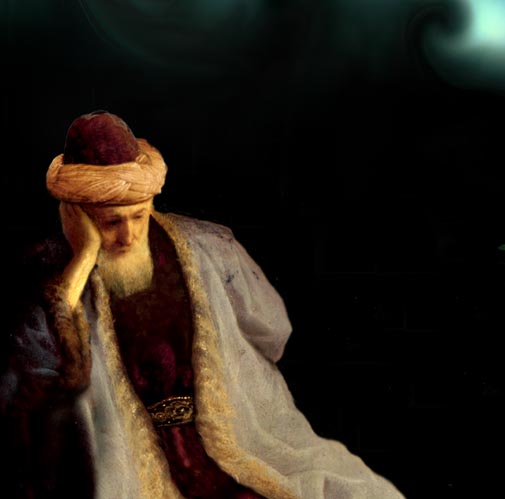
rumi-meditating

So, we come to Rumi.

He was the only poet I had sort of heard of when I began reading this wonderful old poetry. I knew of him as an almost alien mystic, but once again, the beauty of his words seem to reach over the centuries, and become a bridge over the religious/cultural divides that we still build up high. There is such depth of humanity in this poetry that it deserves to be so much better known in the West.

So who was this man Rumi?

His full name was Jalāl ad-Dīn Muḥammad Balkhi and it seems we know a lot about his life, despite the 800 year odd years that have passed since he was born. Many of his letters have survived (as many as 147 personal letters) and he was revered in his own lifetime, and so people recorded his words and wisdom.

We know that he had a famous father, who was a poet and learned man in his own right. We also know he was born around 1207 during turbulent times, as the Mongol hordes where slashing and burning their way across the known world, and pushing back the edges of what had been the great Seljuq empire which split into small Emerates.

Rumi was thought to have been born in Balkh, an ancient city in what is now Afghanistan- previously a melting pot of religious ideas- first a centre for Zoroastrian thought, later Buddhism but by the time of Rumi, Islam was in the ascendant.

Rumi’s family fled the advancing Mongols in the nick of time, traveling west, first performing the Hajj and eventually settling in the Anatolian city Konya (capital of the Seljuk Sultanate of Rum, now located in Turkey.

The story of his life goes something like this-

Rumi follows in his fathers footsteps- becoming a scholar at the University in Konya, and eventually his fame as a poet and learned man spread.

At the height of his success, he encountered a Sufi called Shams-e-Tabrīzī. This meeting changed his life. Everything that he counted as worthwhile- success, wealth, position- all this was suddenly called into question by what he saw in the poverty and simplicity of the life of the wandering Sufi.

He started neglecting his public duties and following after his new friend. The association brought him ridicule and so he was forced to resign his job, and then began a 4 year friendship with Shams.

Then one day, as suddenly as he came into Rumi’s life, his friend disappeared. Some say he was murdered by one of Rumi’s sons, perhaps embarrassed and resentful of the hold this raggedy man had over his father. Others said that he traveled East for new adventures. Rumi spent years looking for him.

Rumi’s life from this time was dedicated to a deep spirituality. For him, the human condition was empty, like a reed plucked from the bank of a river, and cut to form a flute. Life might make holes in the flute through to its hollow centre, but unless the reed was filled with the breath of the Beloved, then it would be for ever empty. So the purpose of life was to journey back to union with Beloved, from whom we have been cut off.

A craftsman pulled a reed from the reedbed
cut holes in it, and called it a human being.

Since then it has been wailing a tender agony
of parting, never mentioning the skill
that gave it life as a flute.

Although a devout Muslim, the journey of the Sufi according to Rumi, was to be encountered in personal experience- not in abstract doctrine and creed. Some of his ideas would seem to sit well within universalist ideas of faith. For example-

I searched for God among the Christians and on the Cross and therein I found Him not.
I went into the ancient temples of idolatry; no trace of Him was there.
I entered the mountain cave of Hira and then went as far as Qandhar but God I found not.
With set purpose I fared to the summit of Mount Caucasus and found there only ‘anqa’s habitation.
Then I directed my search to the Kaaba, the resort of old and young; God was not there even.
Turning to philosophy I inquired about him from ibn Sina but found Him not within his range.
I fared then to the scene of the Prophet’s experience of a great divine manifestation only a “two bow-lengths’ distance from him” but God was not there even in that exalted court.
Finally, I looked into my own heart and there I saw Him; He was nowhere else.

Rumi believed that we could encounter the Beloved through dance, music, art and of course- poetry. After his death others formed an order of Sufi’s that came to be known as the Whirling Dervishes, because of their wild ecstatic dancing, and regarded him as their spiritual father.

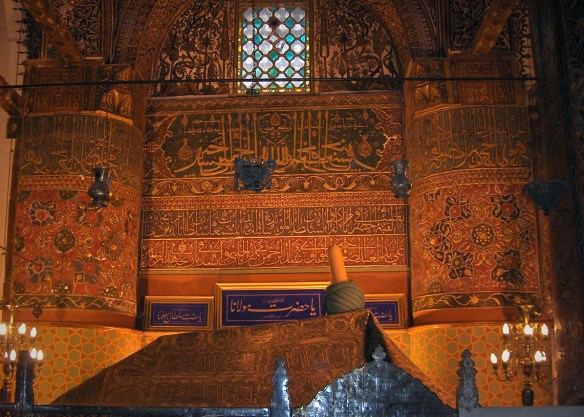
He died in 1273 and a shrine still stands over his grave in Konya-

Rumi's tomb, Konya

Time for some more poetry-

The first one is thought to relate to friendship. It makes me think of campfire on dark nights on island trips with friends-

We point to the new moon

This time when you and I sit here, two figures
with one soul. we’re a garden,
with plants and birdsong moving through us
Like rain

The stars come out. We’re out
of ourselves, but collected. We point
to the new moon, its discipline and slender joy.

We don’t listen to stories
full of frustrated anger. We feed
On laughter and tenderness
we hear around us
when we are together.

And even more incredible, sitting here in Konya
we’re this moment in Khorasan and Iraq.

We have these forms in time
and another in the elsewhere
that’s made of this closeness

Say who I am

I am dust particles in sunlight
I am the round sun.

To the bits of dust I say, stay.
To the sun, keep moving.

I am morning mist,
And the breathing of evening.

I amwind in the top of a grove
and surf on the cliff.

Mast, rudder, helmsman and keel.
I am also the coral reef they founder on.

I am a tree with a trained parot in its branches.
Silence, thought and voice.

The musical air coming through a flute
A spark off a stone, a flickering
in metal. Both candle
and the moth crazy around it.

Rose and the nightingale
lost in the fragrance.

I am all orders of being, the circling galaxy,
the evolutionary intelligence, the lift
and the falling away. What is
and what isn’t.

Argyll Rhapsody…

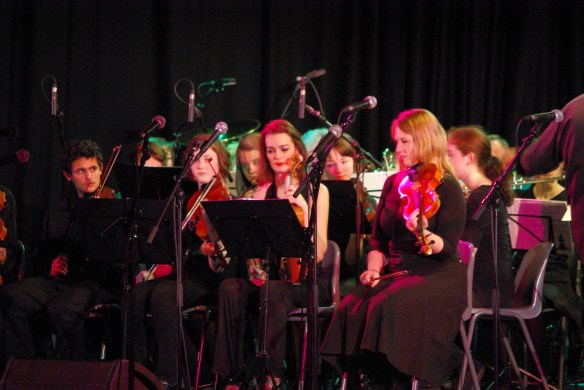
IMGP6653

We are just back from a schools music/fashion/photography event called Argyll Rhapsody. This is an event organised by CAST (Creative arts in schools team), and was led/inspired by a fantastic musician called Donald Shaw, one of the directors of Celtic Connections, and a founding member of the band Capercaillie. The concept is that some talent is gathered from schools across Argyll, and spend three days preparing and producing something wonderful.

Here is ForArgyll’s take on the thing.

Emily was one of 15 fiddle players picked to join in with an orchestra of traditional instruments, playing along with some professional musicians first in Oban, then tonight in Helensburgh. You can just about see her in the photo below in the second row…

IMGP6643

To be honest, I do not usually look forward to these events- apart from my own daughters involvement of course! However, this one simply blew me away. The music was great- powerful, emotive and well produced.

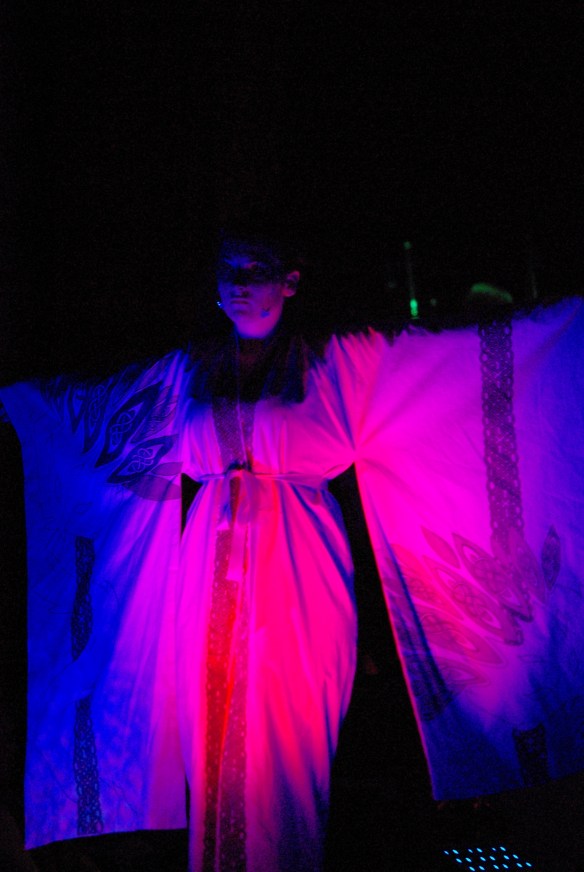
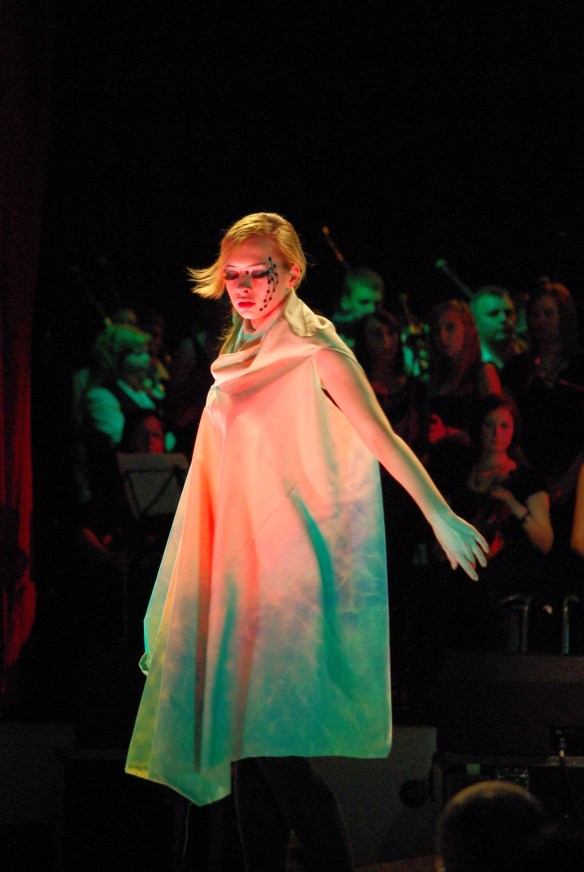
The second half of the event involved a fashion show, with clothes designed and made by pupils.

I was so proud of my girl…

Here is some of the fashion stuff-

IMGP6710

IMGP6761

Conservapedia and the Religious Right…

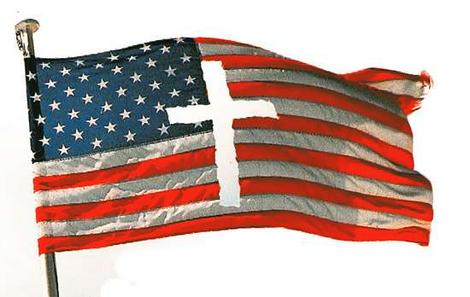
american religion

Now I do not want to be offensive to Americans, but for most Christians this side of the Atlantic, the whole mixture of politics and religion over there has long been baffling.

We do not understand how for huge parts of middle America, faith,culture, patriotism and culture have become so inseparable. This is so far removed from the role played by faith in the UK that we might be describing a different planet.

What we do hear about over here are the extremes- and they are usually right wing extremes. Televangelists, and those who use a Bible to beat down anything Black/homosexual/feminist/communist/Arab and perhaps above all, this word Liberal.

For us, you see, the word Liberal is mostly a good word- meaning generous, open and forgiving. If applied to politics, it means a rather irrelevant middle-of-the-road political party that is neither one thing nor the other.

There was an interesting article in the Guardian the other day suggesting that the Christian left wing is on the rise in America. Power to them I say, but it remains to be seen whether the left wingers will produce anything as gloriously mad as their Christian brethren on the right.

I spent some time a few years ago amongst some really lovely folk in Maryland who were Southern Baptists. I had been invited over to lead some worship and do some workshops and went in some trepidation, fearing that we had little in common. However I was made ludicrously welcome, and came to have a lot of respect for Conservative Christianity, despite my totally different perspective and convictions.

What I was most shocked by was how things that I thought of as universally bad and against the Kingdom of God- for example rampant free market economics- could be viewed seen as right and proper, and the only option for a Christian democracy.

I came across Conservapedia today- which aims to be a Conservative religious alternative to Wikipedia. It is well worth checking out for those of us who live this side of the Atlantic and find it difficult to understand the political dimension of American religion, and its influence on the world view of half of the most powerful nation in the world.

Despite the fact that ‘The Free World’ has a black Liberal President, I think we need to be aware of this engine for thought in the US- not necessarily to challenge it and attack, but certainly to understand it better.

For example, I notice that they are touting something called the Conservative Bible Poject which is an attempt to produce a translation of the Bible that avoids ‘liberal bias’ (presumably by ensuring Conservative bias.) They have 10 rule that they are applying to the task-

  1. Framework against Liberal Bias: providing a strong framework that enables a thought-for-thought translation without corruption by liberal bias
  2. Not Emasculated: avoiding unisex, “gender inclusive” language, and other feminist distortions; preserve many references to the unborn child (the NIV deletes these)
  3. Not Dumbed Down: not dumbing down the reading level, or diluting the intellectual force and logic of Christianity; the NIV is written at only the 7th grade level[3]
  4. Utilize Powerful Conservative Terms: using powerful new conservative terms to capture better the original intent;[4] Defective translations use the word “comrade” three times as often as “volunteer”; similarly, updating words that have a change in meaning, such as “word”, “peace”, and “miracle”.
  5. Combat Harmful Addiction: combating addiction[5] by using modern terms for it, such as “gamble” rather than “cast lots”;[6] using modern political terms, such as “register” rather than “enroll” for the census
  6. Accept the Logic of Hell: applying logic with its full force and effect, as in not denying or downplaying the very real existence of Hell or the Devil.
  7. Express Free Market Parables; explaining the numerous economic parables with their full free-market meaning
  8. Exclude Later-Inserted Inauthentic Passages: excluding the interpolated passages that liberals commonly put their own spin on, such as the adulteress story
  9. Credit Open-Mindedness of Disciples: crediting open-mindedness, often found in youngsters like the eyewitnesses Mark and John, the authors of two of the Gospels
  10. Prefer Conciseness over Liberal Wordiness: preferring conciseness to the liberal style of high word-to-substance ratio; avoid compound negatives and unnecessary ambiguities; prefer concise, consistent use of the word “Lord” rather than “Jehovah” or “Yahweh” or “Lord God.”
Check it out- it’s an education…

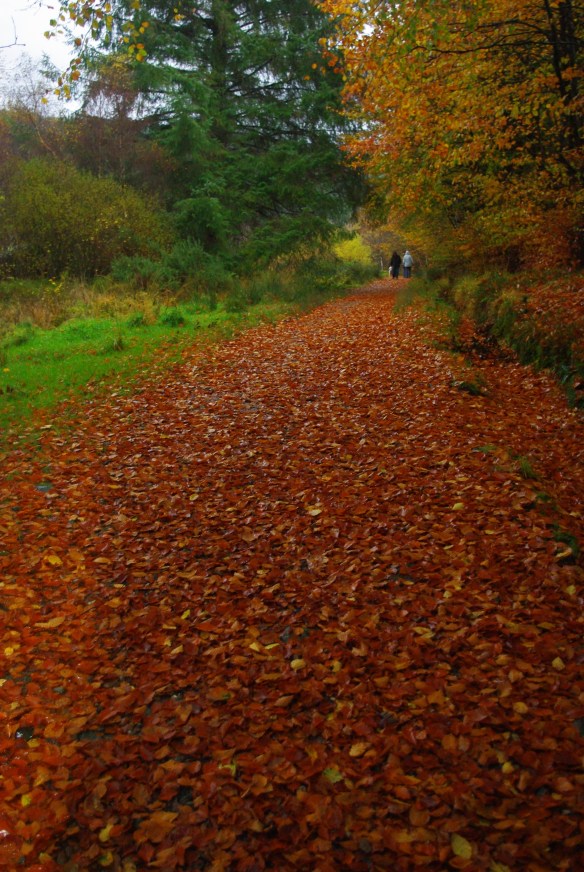
A few more pictures of autumn…

We had a lovely day today- I took a day off work and Michaela and I went a walk in the sunshine around Benmore Gardens before meeting Simon and Helen for lunch in the coffee shop.

Autumn was kind today- we did not even need coats- which is something of a contrast with the stormy weekend just past.

So, a few pics then…

kicking leaves