
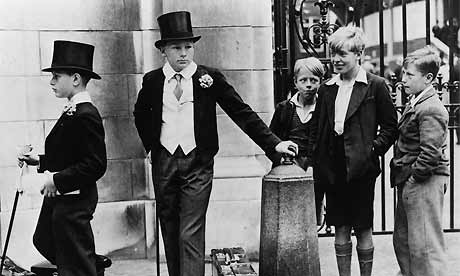
I have been thinking about social class. This was triggered in part because of listening to Polly Toynbee’s programme on Radio 4, ‘The Class Ceiling’ This was in two parts, and examining some of the myths and enduring realities of social class, and social mobility, and asking what social class means now.
It was an old issue for me, as a former student of social policy. For 40 years since the second world war, social class was the central concept of British social policies. After the war, even the Conservative party had to grapple with the fact that the working classes were no longer prepared to be passive fodder for the industrial machines that produced wealth for a ruling elite. There was the shadow of communist revolution hanging over us all of course, which always tends to focus the altruism of the rich, but it was also a time of idealism when we really believed that we could make things better.
The end result was a kind of political and economic hegemony- accreted through a combination of Keynesian economic stimulus, more or less progressive taxation structures, health care free at the point of delivery and education systems that sought to operate as a kind of social engineering- measuring success by the degree to which working class kids were able to attain similar educational success as those whose families came from well off backgrounds.
Whether any of this worked is a real debate- was the real hope for a more just and egalitarian society ever really realised?
Education is a case in point- we started out with the tripartite system- Grammar, Secondary Modern and Technical schools. The idea was that children could be tested aged 11, and them streamed into the kind of education that would get the best out of them. Except, kids from disadvantaged backgrounds continued to do really badly.
So we tried Comprehensive schools- educating all kids together, regardless of ability. That did little for disadvantaged kids too.
Finally we tried a few experiments with ‘Community Schools’ (one of which was my own) where we tried to engage the whole of the community in the education of our schools. They did not deliver different results either.
Education cannot compensate for society. The deep seated political, social, psychological and economic forces that tended to perpetuate the class system proved remarkably difficult to shift. And being ‘poor’ in a rich western society means that your disadvantages are stark when compared with the averages.
However, in many ways, I am one of the beneficiaries of this countries attempts towards social justice. I grew up the child of a single mother, living off state benefits. But I did well enough at school to be offered a place at University, and the state funded my place there, and paid me a grant to allow me to live whilst studying. I then became a middle class professional social worker.
It all began to break apart in the 1980’s. Thatcher shattered the bipartite cross party attempts to support social justice. Greed was good. Let the wealthy chase money, because this will benefit the whole of society in the form of ‘trickle down’. Return to ‘traditional values’ (whatever they are) flog the delinquents and smash the unions of the great unwashed. Sell off the council housing stock, as the Englishman’s (and Scottishman’s) home is his castle and we are all middle class now.
What is interesting, and perhaps worrying, is that according to the programme mentioned above, since these times (and despite 14 years of a so called Labour government) the gap between the poorest and richest people in our society is about the same as was the case in Victorian Britain.
You are less likely to attend university if your parents did not than 30 years ago.
You are less likely to own your own home if your parents did than 30 years ago.
We are far less likely to see Cabinet Ministers who came from council estates (or whatever has replaced these) than 10 years ago.
If your parent are not ‘in the know’- steering you towards the right experience, via contacts and internships- then you are far less likely to succeed.
Does any of this matter? Well I think that aspiring towards social justice- to a society where people’s measure of success is not determined by their parents social standing- is a good thing. It was one of the things that led me into social work- the thought that it was possible to make a difference. Social work without ideology is- administration.
The fact that at present our society is becoming more unequal- the rich are richer than ever, and those without are increasingly shut out of the opportunities that are available to those who already hold all the cards- has to be of concern to us all.
However, as I look at this now, my feelings are mixed. Despite all our efforts, we did not achieve an egalitarian society. Perhaps there has never been one. For everyone who moves up, someone else moves down.
And how are we measuring this success? We use the currency of our cultural addictions- houses, shiny cars, lifestyle choices, disposable income, consumer power. All those things that got us into this mess in the first place, and we hold onto like a drunkard to a gin bottle. We know this thing is not sustainable, nor is it making us healthy or happy or fulfilled- but it is so hard to shake ourselves loose…
Jesus knew this- I think this was the point of this ‘Camels through the eyes of needles’ point.
So, do I want to see a more equal society? Yes, absolutely. I think it should shame us to think that we live alongside an underclass of people whose offspring are condemned to some kind of broken ground hog day. And when we have riots, to talk of people as ‘ferral’, less than human. We should set ourselves to challenging this and seeking to bring grace- wherever we can.
Because the most beautiful expression of the Christian faith is still to be found in the gutter, not in any Cathedral. Redemption is not just an abstract thing to be encountered when we die- it is also an everyday miracle to be loved into being.
But perhaps this is not the whole story of what we aspire to- to live as counter-cultural critical participants in our lovely but broken world?
Perhaps it might mean seeking to apply a different kind of measure to our worth. Not an economic one, but one based on simpler and older classifications- shared lives, including the outsider, belonging to one another, generosity to the stranger and good husbandry of the earth we are wedded to.
In this we are not seeking to be social climbers but rather to be becoming the beloved of God.


 this fragile tent