Events and stuff up and coming at Sgath an Tighe…

Forgive the commercial, but I thought it might be worth mentioning some of the things that we have been developing around our lovely old house…

Sgath an Tighe is a lovely Victorian house with stunning views out over the Clyde estuary. It is used as a base for a number of different activities, including a working pottery, a place of spiritual retreat (including wilderness retreats) and craft workshops. We can also arrange guided mountain bike tours, individually led outdoor activities and life-coaching (via our friend Nick,) or maybe you would just like to rest and enjoy the tranquillity of the house, and this beautiful area.

There are shops and restaurants locally, and the town of Dunoon is within easy reach. Take a steamer cruise and explore the unspoilt hills and lochs of the Cowal Peninsula. Outdoor activities are on offer in the area with sailing, kayaking, sea fishing, quad bikes, clay shooting and more. Located at the edge of Loch Lomond National Park, the area is ideal for walkers and cyclists and boasts magnificent scenery.

Attached to the house is a delightful cottage. On the ground floor it has a living room, kitchen and a bathroom with shower. Upstairs there are two bedrooms: one light and spacious double, and one twin room with sea views. There is an open fire in the living room, (initial fuel included, further logs available), gas central heating (£25pw Oct-Apr), electricity and bed linen included, freeview TV, DVD player, CD player, and the kitchen is equipped with a cooker, microwave, washing machine and freezer. Wi-fi The cottage leads onto a shared, enclosed lawned garden with a sitting-out area and furniture, vegetable gardens and free-range chickens. Parking is available, and a cycle store. Guests are greeted with a welcome tray. No smoking.

Prices range from £263 to £558.

Website: www.sgathantighe.co.uk

Email: michaela.goan@fsmail.net

There it is!

Over the next few months, the plan is also to develop part of the house for bed and breakfast, which will then allow us to have more space available for planned retreats, which is what we are both passionate about.

So if you are looking for a holiday up amongst the mountains and lochs, then get in touch!


Pawned in the USA- Springsteen gets angry…

Bruce Springsteen’s new album Wrecking Ball is out soon, and it looks set to do some damage. In a good way. Too late for my birthday, but

I am not a die hard Springsteen fan- his music always seems a bit too industrial for my taste, although I love one of his old albums- Nebraska. However, industrial is what this new album needed to be, as Springsteen seems to have given voice to the disenfranchised working American man.

What he seems to have produced is a protest album- with the finger pointed at the very heart of the Capitalist machine, which Springsteen calls with such irony, unamerican.

This from a Guardian article;

“A big promise has been broken. You can’t have a United States if you are telling some folks that they can’t get on the train. There is a cracking point where a society collapses. You can’t have a civilisation where something is factionalised like this.”

“Previous to Occupy Wall Street, there was no push back at all saying this was outrageous – a basic theft that struck at the heart of what America was about, a complete disregard for the American sense of history and community … In Easy Money the guy is going out to kill and rob, just like the robbery spree that has occurred at the top of the pyramid – he’s imitating the guys on Wall Street. An enormous fault line cracked the American system right open whose repercussion we are only starting to be feel.

“Nobody had talked about income inequality in America for decades – apart from John Edwards – but no one was listening. But now you have Newt Gingrich talking about ‘vulture capitalism’ – Newt Gingrich! – that would not have happened without Occupy Wall Street.”

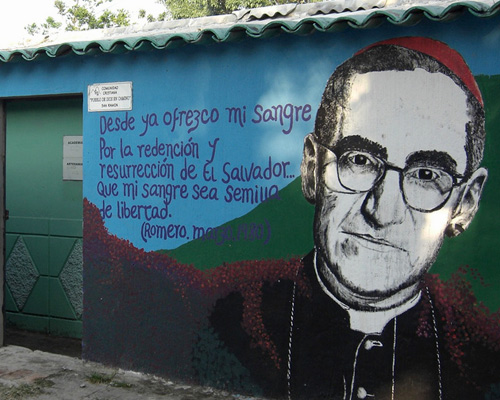
Oscar Romero on the Kingdom…

Via the Emergent Village daily ‘minimergent’

A future not our own

A prayer / poem by Archbishop Oscar Romero
(murdered, 24 March 1980)  


It helps, now and then, to step back

and take the long view.
The kingdom is not only beyond our efforts,
it is beyond our vision.

We accomplish in our lifetime only a tiny fraction of
the magnificent enterprise that is God’s work.
Nothing we do is complete,
which is another way of saying
that the kingdom always lies beyond us.

No statement says all that could be said.
No prayer fully expresses our faith.
No confession brings perfection.
No pastoral visit brings wholeness.
No programme accomplishes the church’s mission.
No set of goals and objectives includes everything.

This is what we are about:
We plant seeds that one day will grow.
We water seeds already planted, knowing that they hold future promise.
We lay foundations that will need further development.
We provide yeast that produces effects beyond our capabilities.

We cannot do everything
and there is a sense of liberation in realizing that.
This enables us to do something,
and to do it very well.
It may be incomplete, but it is a beginning, a step along the way,
an opportunity for God’s grace to enter and do the rest.

We may never see the end results,
but that is the difference between the master builder and the worker.
We are workers, not master builders,
ministers, not messiahs.
We are prophets of a future not our own.

Start it all over again…

It is my birthday today! Thank you dear friends for your cards, messages and presents.

Not so long ago around this time I was in hospital recovering from nearly drowning. So each new year is one of added blessing.

Today though my mind is on my lovely daughter, in the middle of preliminary exams for her highers. It is a rollercoaster of fear, hope, defeat, optimism, confidence, hopelessness. Today she was given a bad result, and also struggled through a maths exam.

So today I offer her the words of a song from a Heidi Talbot album that Michaela gave me-

I’m the sea that surrounds you
the garden that grounds you
the sun and the wind and the rain
I am every season
you’re every reason
to start it all over again

Soon you’ll sail a wild river
we’ll set sail together
and oceans will call out your name
and by stars you will follow
your hopes for tomorrow
and start it all over again

And if you stagger or stumble
if dreams start to crumble
I’ll pick up the pieces of pain
I will cradle you cry with you
pray that you’ll try to just
start it all over again

Who has eyes that can see
all the things you could be?
who has ears for the sweetest refrain?
may your heart sing forever
where the sea meets the river
and start it all over again

Karine Polwart

Worship music remix 4- culture…

Worship music is the cultural carrier of faith.

Or perhaps worship music is the carrier of culture into faith.

If either of these statements are true then what we sing together in churches is formational, fundamental. Our songs shape our belief, our worldview and our action in subtle and profound ways. Perhaps it is another one of those times when the medium might become the message.

What comes first, the culture or the song? Instinctively we would have to say the culture, but the idea of culture is one that demands a little more examination. I am using the term not to describe the shared tenants/creeds of the Christian faith but rather to describe something of the shared context, deep assumptions and instinctive reactions that people tend to converge upon in our collectives.

Culture is so powerful a force on how we live and think about ourselves that it can come to be indistinguishable from creed. I think I need to demonstrate this with a couple of examples.


I have spent some time in America, doing some worship music with a Southern Baptist Convention. There was, shall we say, a degree of cultural friction, but it was on the whole a fantastic experience. What was obvious to me as an outsider to this culture was the degree to which expressions of faith became interwoven with a whole set of wider assumptions- political, economic, commercial. These assumptions became totally self perpetuating, as many people seemed to have virtually no contact with people outside this culture. They shopped at ‘Christian’ shops, employed ‘Christian’ tradesman, listened only to ‘Christian’ voices (and only ones from a particular part of the spectrum) and voted always for ‘Christian’ politicians. God, community and country were indistinguishable.

I particularly remember a store with a whole isle selling nothing but Aslans, in all sorts of shapes and sizes. Next to another selling Bible cases decorated with the American flag.

Those who did not conform to a particular way of being were gently corrected, or would find themselves ‘outside’.

The best way of describing this culture I have heard is this one- Moralistic Therapeutic Deism. God exists as a kind of divine therapist, mediating the psychological and financial rewards of society upon those who can conform to a certain moral code. God is a personal saviour, who will guarantee self esteem and success. Those who lack these things need to repent, and get more God so that they get some kind of a chance in the next life if not in this one.

All this has real strengths but it is hard to fully reconcile it all with the story of Jesus. Jesus called us to go, not stay. He seemed intent on overturning tables erected by the religious folk. He gravitated towards the outsiders, the poor, the broken. He started no political parties, nor would be joined to any. And he certainly gave no guarantees for health and wealth.

If I sound critical of the American church, then this is only because these issues were so much more obvious to me as an outsider. We can make equally critical comments about our own religious institutions. Think back towards the days of Empire and the complicity of our own churches even with genocide.

But how is this perspective reflected in our songs of worship?

When you stand back and look at the canon of songs that we have inherited over the last thirty years written both sides of the Atlantic they have some common characteristics;

  • They focus primarily on individual encounters with a personal God. Often it is as if worship is the means by which God ministers to us in some kind of Holy Spirit therapy.
  • They assume that repentance is required to allow us to be acceptable to God, and therefore to receive his blessing. However, repentance is primarily concerned with individual morality- particularly sexuality or dishonesty. We hear next to nothing about injustice, consumerism, over consumption or the workings of international capitalism.
  • There is little call to collective action, apart from parallel individual actions in line with the point above. There is little idea that repentance can be collective, or that change requires sacrifice and joint action.
  • Then there is the theological assumptions of the unassailable centrality of penal substitutionary atonement. The only way to save the world is one soul at a time- and our interest is really only in saving them from hell in the next life.

Does this sound familiar? I am of course not saying that the views above are necessarily wrong, rather that they arise from culture. They are then reinforced and communicated within our songs.  Where then are the songs of protest, of prophetic vision, of renewed or alternative perspectives? The songs of the marginalised now welcomed home, the songs that disturb and challenge? The songs that confront power in the name of the weak? Where are the songs that remember the God who liberates captives not just in the abstract, who breaks actual chains? Where are the songs for the wayside pilgrim campfire, not those that require a graphic equaliser and power amplifier?

As ever, Brian McLaren has some interesting things to say on this issue. If not songs about personal relationships with Jesus, then what? He suggested some of the following in this article which is well worth reading in full;

  1. Biblical vision of God’s future which is pulling us toward itself
  2. Not just evangelism, but mission – participating in the mission of God, the kingdom of God, which is so much bigger and grander than our little schemes of organizational self-aggrandizement) is the key element needed as we move into the postmodern world.
  3.  Re-discover historic Christian spirituality and express it in our lyrics.
  4. Songs that are simply about God … songs giving God the spotlight, so to speak, for God as God, God’s character, God’s glory, God’s beauty, God’s wonder and mystery, not just for the great job God is doing at making me feel good.
  5. Songs of lament. The Bible is full of songs that wail, the blues but even bluer, songs that feel the agonizing distance between what we hope for and what we have, what we could be and what we are, what we believe and what we see and feel. The honesty is disturbing, and the songs of lament don’t always end with a happy Hallmark-Card-Precious-Moments cliché to try to fix the pain. ( Amen Brian!)

By way of another example;

Who remembers the song ‘Heart of Worship’? I’m coming back to the heart of worship, and it’s all about you. If I remember rightly, this came about as a result of a song writer/worship leader coming to the realisation that the music had taken over, so they stopped singing for a while to reflect and rebalance.

Then wrote a song about it.

It is not just the irony of this that should raise an eyebrow, it is the fact that the only cultural response to such a challenge to worship culture is to do the same thing again with a bit more passion.

Perhaps it might be time to do something totally different.

One of the things about the most recent renewal movement to sweep through the church, which I will describe using the words ’emerging/missional consciousness’ has been the LACK of songs, and the lack of singing.

I think this is partly reaction formation against the things mentioned above, but also because other forms of worship have been in the ascendancy. I have taken a similar journey with my own community, Aoradh. We became much more interested in ‘Alternative worship’, borrowing more from the art gallery than the auditorium. Worship became more about encounter within a shared space, with the emphasis being about openness and creativity.

All movement however need a corrective because the pendulum will swing too far and will overbalance the clock.

And all movements also need to communicate their hopes, dreams, ideas and worship. Within the emerging church this has tended to happen over the internet- blogs, podcasts, you tube clips, twitter feeds, even the old archaic websites.

But we still need to sing. We are not just individuals with access to chatrooms, we are also flesh and vocal chord.

Sing me a song of freedom and a song of hope, and I will sing it with you.

Glasgow food project needs your help…

If you are in central Scotland, then a project being run by St Rollox Community Outreach needs your help.

“Destitute Food and Hygiene Parcels Project”.  They now have 13 people registered as well as occasional users and, at present, are at full stretch and will have to turn away anyone else seeking to register.   There are distribution points stocked by other projects across Glasgow but destitution is on the increase amongst asylum seekers and likely to increase further if plans to give the housing contract to a security firm go ahead.

Donations of the following items are required to assist destitute refused asylum seekers who cannot return to their own countries at the present time:

Cooking oil

Dried skimmed milk

Tinned fish

Lentils

Tinned tomatoes

Tomato puree

Sugar

Pasta

Rice

Tea

Tinned fruit

Tinned beans

Shampoo

Soap

Feminine hygiene items

Collection of donations can be arranged.

For further information, please contact Emma Wilson paulandemmawilson@yahoo.co.uk

Quote from a regular recipient of a food pack “I cannot find the words to thank you for what you are doing here for us so I simply open my heart to God in prayer because He sees how grateful I am.” (a lady in her 60s from Zimbabwe).  

Songs for the downshifter…

My tongue is slightly in my cheek with the title above, but a song has been rattling round my brain today.

Do you have that thing when you are walking sometimes, where you find yourself pacing along to a soundtrack, John Travolta style? No one else can hear it, but it is in your head like a bumble bee in a bottle…

So I walked home from work on a lovely almost-spring day, with the sun on still water. I have a few days off, and all feels open and possible.

I see my light come shining

From the west down to the east

Any day now, any day now

I shall be released


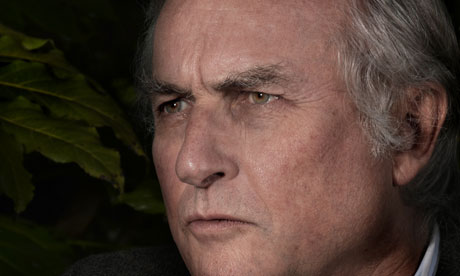
Dawkins and Fraser go at it on the wireless…

Great little exchange on Radio 4 this morning between Richard Dawkins, Athiest missionary, and Giles Fraser. I may be slightly biased but if we were to use a tiddlywinks analogy, Fraser’s winks were more numerous in the pot.

I tried to rise above it all but that line from Fraser where he asks Dawkins to name the full title of ‘The Origin of Species’ (which he couldn’t) made me laugh out loud.

Consider this post a slightly guilty admission that if I turn the other cheek, it is whilst smirking.

You can listen again here.

Valentine…

I am not much into Valentine’s day. It always seemed too plastic. But I am into love…

What more can be said of love?

~

What more can be said of love

That has not been said before?

You and I find each other

Quietly

We curved a few moments about us

Like a blanket

Knowing that all of this would pass

This house, this car, this bank balance

These objects shaped from memories

~

But love is not mixed from dust

It makes a spark that leaps between here

And there

And the dark matter moves

To make room

For you

In me

Is it time to change our whole approach towards mental distress?

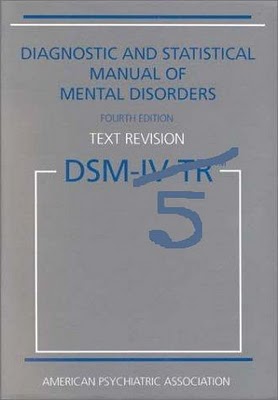
In May, the American Psychiatric Association will publish the fifth edition of the Dignostic and Statistical Manual of Psychiatric Disorders, otherwise known as DSM 5. Although originating in the USA, this publication is immensely influential, and is likely to form the basis for Psychiatric diagnosis the world over, as with the out going DSM 4.

Does it matter?

Well, the answer to this is YES. It matters on an individual level because all of us will be affected by mental disorder. One in four of us will be diagnosed according to one of the classifications above, so even if this is not you it will be someone you love or someone you work with. Lots of us feel a strange relief when distress is given a name – it suggests understanding, companionship, a removal of uncertainty and the possibility of treatment. However, for many these can easily become self perpetuating and destructive as they may have the effect removing responsibility, ownership and even hope, which some never find again.

It matters too on a sociological level. Our societies are increasingly regulated by psychiatry. We medicalise, medicate and plan ‘evidence based interventions’ into all sorts of human variation. This may simply amount to the application of science and knowledge to the alleviation of mental illness, but the question is whether this is ‘healthy’? Are we seeking to make a world in which the mess and gristle of life is edited out, tidied away, chemically suppressed? And is it working?

Psychiatric classification almost always demands treatment, so step forward the drug companies, with another product to push by fair means or foul. All those countless drug rep funded lunches, gadgets, even holidays, in the name of publicity for the next wonder drug. Even if the drugs do half of what they promise there is no doubt that our population is increasingly medicated. This from here;

Prescription Pricing Authority data shows that more than 30 million prescriptions for SSRIs (selective serotonin reuptake inhibitors) such as Prozac and Seroxat, are now issued per year, twice as many as the early 1990s. Researchers at the University of Southampton found 90 per cent of people diagnosed with depression are now taking SSRIs either continuously or as repeated courses over several years.

Professor Kendrick adds: “Our previous research found that although these drugs are said not to be addictive, many patients found it difficult to come off them, due to withdrawal symptoms including anxiety. Many wanted more help from their GP to come off the drugs. We don’t know how many really need them and whether long-term use is harmful. This has similarities to the situation with Valium in the past.”

Unsurprisingly, there is evidence that the current economic recession is also having an effect. This from the Telegraph;

The number of prescriptions for drugs such as Prozac has risen from 16 million to 23 million since 2006 with many GPs saying patients are increasingly expressing concern about the recession.

Figures obtained by the BBC under the Freedom of Information Act found the number of prescriptions for the most common group of antidepressants rose by 43 per cent during the period covering the banking crisis and housing crash.

If we can agree that in terms of practice, prescription and intervention psychiatry is increasingly involved in our lives, then the emergence of a new set of diagnostic criteria must be a considerable significance to all of us. We should also know then that this classification process, already controversial, is in the middle of a storm of criticism following the release of advance details of the new DSM 5.

Firstly, what could be regarded as the ‘tabloid headlines’. This from here;

Bereavement, which has always been excluded from the mood disorders, will become a mental disorder. Mild forgetfulness will become a mental disorder (“mild neurocognitive disorder”). Your child’s temper tantrums will become a mental disorder (“disruptive mood dysregulation disorder”). Even preferring one of your parents to the other will become a mental disorder! (Yes, really: “parental alienation disorder”).

You will need to display fewer and fewer symptoms to get labeled with certain disorders, for exampleAttention Deficit Disorder and Generalized Anxiety Disorder. Children will have more and more mental disorder labels available to pin on them.  These are clearly boons to the mental health industry but are they legitimate additions to the manual that mental health professionals use to diagnose their clients?

You can listen to a short Radio 4 Today Programme debate on some of these issues between David Kupfer who chairs the DSM 5 committee for the American Psychiatric Association, and Peter Kinderman, professor and honorary Consultant Clinical Psychologist with Mersey Care NHS Trust about this between on this link.

Then there is the murky world of classification of ‘personality disorders’. Many people regard these as the ultimate examples of how abstract description of patterns of behaviour can become viewed as some kind of unassailable concrete ‘illness’, which then take on a reality in the same way as we might understand influenza or cancer.

DSM 5 complicates this further by adding more categories, for example “Apathy Syndrome,” “Internet Addiction Disorder,” and “Parental Alienation Syndrome”. This has raised so much concern that the American Psychological Association has begun an on line petition to allow people to express their concerns. This from here;

It is particularly concerning that a member of the Personality Disorders Workgroup has publicly described the proposals as “a disappointing and confusing mixture of innovation and preservation of the status quo that is inconsistent, lacks coherence, is impractical, and, in places, is incompatible with empirical facts” (Livesley, 2010), and that, similarly, Chair of DSM-III Task Force Robert Spitzer has stated that, of all of the problematic proposals, “Probably the most problematic is the revision of personality disorders, where they’ve made major changes; and the changes are not all supported by any empirical basis.”

How about this side of the Atlantic? This from the British Psychological Society (not renowned as a radical organisation) response to the consultation;

The Society is concerned that clients and the general public are negatively affected by the continued and continuous medicalisation of their natural and normal responses to their experiences; responses which undoubtedly have distressing consequences which demand helping responses, but which do not reflect illnesses so much as normal individual variation. (p.1)

We believe that classifying these problems as ‘illnesses’ misses the relational context of problems and the undeniable social causation of many such problems. For psychologists, our well-being and mental health stem from our frameworks of understanding of the world, frameworks which are themselves the product of the experiences and learning through our lives. (p.4)

These comments go to the very heart of how we approach mental distress.

The Hearing Voices Network have been making a case for change for many years. Psychiatrist Marius Romme for example claimed that many people who hallucinate “are like homosexuals in the 1950s — in need of liberation, not cure.”

There is a change underway, akin to that of other great liberation movements and I believe that when we see chains on people it should be the intention and hope of the followers of Jesus to seek to break them. What is unfortunate is that the classification found in DSM5 do little to break chains. If anything DSM5 might yet forge new ones and as such, we should resist…

How might they be broken then? Here is my reading of (and my hope for) some of the changes;

Away from ‘illness’ towards ‘distress’

Away from ‘symptoms’ towards understanding that we develop different  means of coping with this distress.

Away from restrictive labels towards listening to individual experience.

Away from medicalised interventions, towards encouragement and support of individual recovery.

Away from simplistic distinctions between ‘psychosis’ and ‘neurosis’ towards a greater interest and understanding of the effect of trauma.

Away from segregation and ‘otherness’ towards seeing mental distress as an essential part of the human experience and as such, part of all of our experiences.

Away from ‘maintenance’ towards, hope.