Politics does not matter- or does it?

Michaela and I were sitting looking miserably into our tea cups today and talking about the vote in parliament to cut welfare payments.

All this depressing divisive and stigmatizing talk of ‘strivers and skyvers’. Tax cuts to the rich to encourage them all to generate ‘growth’ in the economy (best measured it seems by how much the rich get even richer.) As if the poor are somehow culpable- a useless drain on society that we are better without. As if they were the cause of all this economic turmoil rather than its primary victims.

Writing in the Guardian, Aditya Chakrabortty pronounced this vote as the final nail in the coffin of the welfare state. Some may regard this as overdue- as we lurch to the right, and find our political language dominated by America. But we are not America. We have our own proud history- not the Kings-and-Queens stuff, but the history of the rise of a kind of shared decency that characterises these islands. The history of the small people in fields and factories. Here is Chakrobortty;

 the golden period of Welfare really came in the 60s and 70s as, thanks to the work of Barbara Castle, Jeff Rooker, Audrey Wise and others, pensions and allowances were made more generous and tied to typical earnings.

“If you were poor, you were far less behind than at any other time in contemporary British history,” according to Richard Exell, a senior policy officer at the TUC and a campaigner on welfare issues for more than 30 years. “It produced a Britain that was one of the most equal societies in western Europe.”

Just before Margaret Thatcher came to power, a single person out of work would get unemployment benefit worth almost 21% of average earnings; last year, jobseeker’s allowance was nearly half that, amounting to just over 11%.

Welfare’s big decline came in the 1980s, as the Conservatives moved more benefits from available to all to on offer only to the poor. This was justified as making public spending more efficient.

But, according to a famous and much quoted study by Walter Korpi and Joakim Palme, such means-testing is far less effective and more expensive than universal benefits. In a study of 18 rich countries, the academics found that targetting benefits at the poorest usually generated resentment among those just above – and led to smaller entitlements.

This “paradox of redistribution” was certainly observable in Britain, where Welfare retained its status as one of the 20th century’s most exalted creations, even while those claiming benefits were treated with ever greater contempt.

“If you look at unemployment and sickness benefit as a proportion of average earnings, then Britain has one of the meanest welfare systems in Europe,” says Palme. “Worse than Greece, Bulgaria or Romania.”

Some of that same meanness can be seen in the way Welfare was discussed as it moved into its sixth and seventh decades. It was no longer about social security but benefits. Those who received them were no longer unfortunate but “slackers“, as Iain Duncan Smith referred to them. A recent study by Declan Gaffney, Ben Baumberg and Kate Bell of 6,600 national newspaper articles on Welfare published between 1995 and 2011 found 29% referred to benefit fraud. The government’s own estimate of fraud is that it is less than 1% across all benefit cases.

Is this what we come to- this great nation of ours? Mean and whinging and judgmental?  Are we not better than this? Which brings me back to politics. Michaela remembered reading something recently about one of the finest politic speeches of the last 50 years in the UK- Neil Kinnock, speaking in 1985, at a time when we were young and fired up by ideas and hope that things could be better;

If Margaret Thatcher is re-elected as prime minister on Thursday, I warn you.

I warn you that you will have pain–when healing and relief depend upon payment.

I warn you that you will have ignorance–when talents are untended and wits are wasted, when learning is a privilege and not a right.

I warn you that you will have poverty–when pensions slip and benefits are whittled away by a government that won’t pay in an economy that can’t pay.

I warn you that you will be cold–when fuel charges are used as a tax system that the rich don’t notice and the poor can’t afford.

I warn you that you must not expect work–when many cannot spend, more will not be able to earn. When they don’t earn, they don’t spend. When they don’t spend, work dies.

I warn you not to go into the streets alone after dark or into the streets in large crowds of protest in the light.

I warn you that you will be quiet–when the curfew of fear and the gibbet of unemployment make you obedient.

I warn you that you will have defence of a sort–with a risk and at a price that passes all understanding.

I warn you that you will be home-bound–when fares and transport bills kill leisure and lock you up.

I warn you that you will borrow less–when credit, loans, mortgages and easy payments are refused to people on your melting income.

If Margaret Thatcher wins on Thursday–

– I warn you not to be ordinary

– I warn you not to be young

– I warn you not to fall ill

– I warn you not to get old.

Neil Kinnock

For the record, Thatcher won the election and we live in her rain shadow still. Cameron and his whipping boy Clegg have now gone further than even Thatcher would ever have dared go however.

Politics matters. We need some more Kinnocks- for all their faults…

Our B and B is now open for bookings!

IMGP3339

It feels like a big step forward!

Over the past few months I have been working hard on getting the house ready to serve as place of hospitality- a guest house, retreat centre, pottery, etc. Thanks to my mate Andy Prosser’s work on our website, we can now take on line bookings for our B and B rooms! Or you can just contact us direct.

We have two main rooms- a double room and a family room (2 plus 2.) Both are en suite, and costs are as follows;

Double room £70 a night for double occupancy, £45 for single Occupancy.

Family room £70 for double, £45 for single. Kids under 12 free, over 12 add £10 per child per night.

We also have an adjoining single bedroom that is available as an add on booking only as the occupant will share the en suite shower facilities in one of the other rooms. This might be suitable for older kids or for friends travelling together. This costs £25 per night.

If you are thinking of making time for yourself- to be quiet, to be creative or to be closer to the wild country- then please come and see us!

Here are some photos of the new Family Room;

Family room window

IMGP3733

Calling all crafters and potters…

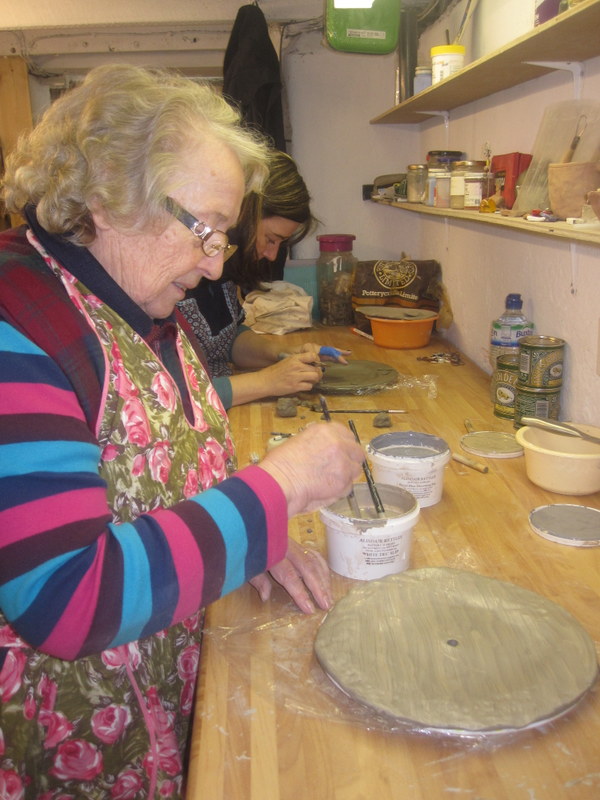
netta potting

Michaela and Pauline have set the dates for their craft and pottery workshops in the coming year! If you are interested to see what they are up to, or fancy joining in the fun- see here.

I am very proud of what they have done with these workshops- they have a way of creating a safe space for people to be creative. Art and design can be so stuffy and exclusive- making us feel that we “can not”- they have a way of encouraging people to believe that they CAN.

This year they have extended the pottery options too here is what is planned;

Pottery for beginners course– £80: 4 weeks to learn basics of handbuilding, throwing a pot on the wheel, then firing and glazing your own work.
SPRING- March 6, 13, 20, 27
AUTUMN- September 4, 11, 18, 25.

Taster sessions– £20: One evening to get the flavour of working with clay;
April 17, 24
July 10, 17
August 21, 28

Go-to-pot Wednesdays– £160: 8 weeks to learn more about pottery and try out your own projects. Great for those who have already undertaken one of our other courses and want to go further.
SUMMER- May 1, 8, 15, 22, 28. June 5, 12, 19.
AUTUMN- October 2, 9, 16, 23, 30. November 6, 13, 20.

If you are on holiday at Sgath an Tighe (or in the vicinity) , it is usually possible to arrange sessions in the pottery with tuition. It makes for a lovely relaxed creative break…

Being ‘spiritual’: it is bad for you?

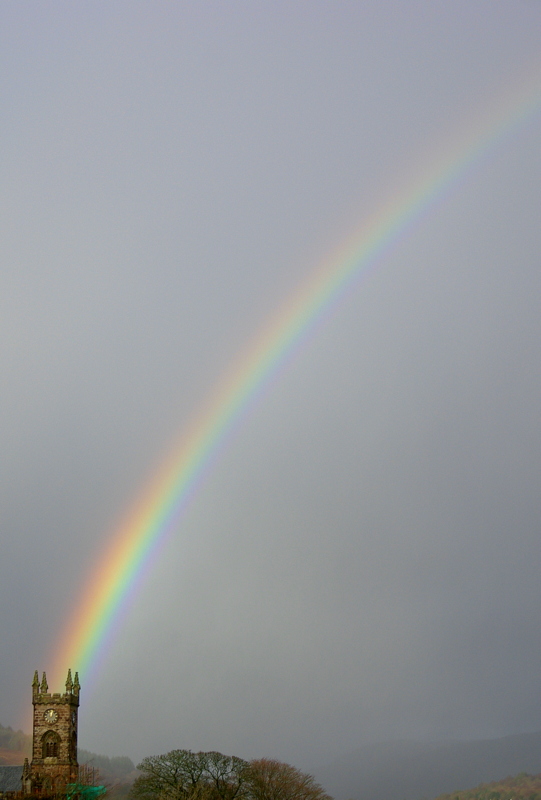
sundial and one of the three Lichfield spires

“I am not religious, but I am spiritual.” How many times have you heard someone say this? I suppose, given the devaluation of the word ‘Christian’ with western culture, and the post-modern slide into an elastic pluralistic individualism it is one of those sentences that increasing numbers of us would use to describe themselves (as can be seen from the recent Census data.)

Despite my continued attempts to hold to the ways of Jesus, the idea of a religion-less spirituality appeals to me too; leaving behind all the baggage and rigidities of proscribed doctrine and setting off on my own spiritual adventure…

However, Sam Dawlatly kindly  sent me a link to a story in the Telegraph. Here are a couple of quotes;

People who said said they had spiritual beliefs but did not adhere to a particular religion were 77 per cent more likely than the others to be dependent on drugs, 72 per cent more likely to suffer from a phobia, and 50 per cent more likely to have a generalised anxiety disorder.

They are more likely to suffer from a range of mental health problems than either the conventionally religious or those who are agnostic or atheists, found researchers at University College London.

They are more disposed towards anxiety disorders, phobias and neuroses, have eating disorders and drug problems.

In addition, they are more likely than others to be taking medication for mental health problems.

Professor Michael King, from University College London, and his fellow researchers wrote in the British Journal of Psychiatry: “Our main finding is that people who had a spiritual understanding of life had worse mental health than those with an understanding that was neither religious nor spiritual.”

…The researchers concluded: “We conclude that there is increasing evidence that people who profess spiritual beliefs in the absence of a religious framework are more vulnerable to mental disorder.

“The nature of this association needs greater examination in qualitative and in prospective quantitative research.”

What is going on here then?

Firstly, we must look at the numbers a bit more closely- the study is not huge even though statistically significant;

The study was based on a survey of 7,403 randomly selected men and women in England who were questioned about their spiritual and religious beliefs, and mental state.

Of the participants, 35 per cent described themselves as “religious”, meaning they attended a church, mosque, synagogue or temple. Five in six of this group were Christian.

Almost half (46 per cent) described themselves as neither religious nor spiritual, while the 19 per cent remainder said they had spiritual beliefs but did not adhere to a particular religion.

Members of this final group were 77 per cent more likely than the others to be dependent on drugs, 72 per cent more likely to suffer from a phobia, and 50 per cent more likely to have a generalised anxiety disorder.

They were also 40 per cent more likely to be receiving treatment with psychotropic drugs, and at a 37 per cent higher risk of neurotic disorder.

The interesting thing is that this study is in contrast with a lot of previous research about the impact of religious belief on measures of psychological and sociological health- which sees faith has having clear benefits, even if more recent research has suggested that some of the self esteem benefits depend on the wider societal norms towards religiosity.

Accepting that this research may simply be a rogue study, there seem to me to be a few possible reasons why those who consider themselves Spiritual (but nor Religious) (SBNR) might appear to be vulnerable as a wider group.

Self selection

The link may well not be causal, but correlational. Perhaps those of us who are spiritually seeking outside the edges of organised religion are doing so because life has driven us there. Perhaps even our negative experiences of church has driven us there. It is hardly surprising that we might be seen to be stressed, troubled and even unwell. These things are not necessarily measures of the futility of the journey, but more part of any real human experience- part of the process of changing, becoming, learning to inhabit our own skin. We learn far more about ourselves in crisis than we ever do in prosperity.

The question might remain as to why this is NOT also the case for the religious? Are they not also  being challenged, shaped and changed by their contact with scripture/teaching/existential challenge? All I can say is that in my experience in Churches, this is rather rare. The pews offer comfort more than adventure.

In this sense, the idea of spiritual travellers on the road, nursing wounds on the way seems not necessarily a negative- rather it offers hope for our humanity. Despite it all, we still strive for connection with the divine.

Belonging

A lot of the presumed benefit of religion at  both a sociological and psychological level seems to be the given sense of belonging, of inclusion and connection to a wider family. Even accepting that in-groups can have all sorts of other problems, this benefit appears to be rather universal. It should not be surprising then that those who are attempting spirituality without community do not experience this benefit.

I have written elsewhere about my conviction that we experience the divine through scripture, through revelation, but perhaps most through community. We humans were made to love- and this is not an abstract proposition divorced from the mess of human contact. Nothing strips us bare, opens us up, sustains us, breaks us down, wounds us, heals us, like community. I also beleive that our approach to theology should also be one of ‘small theologies’ (HT Karen Ward) worked out in community- in respect of ‘big theologies’, but not enslaved to them.

Having said that, it seems that there are surface benefits too in just demonstrating some kind of collective respectability- even if this depends on a wider societal respect for the religious badge that we wear. I confess to less concern about this kind of religiosity. It sounds too much like the stuff that Jesus had no time for.

The lesson here then might be to encourage our spiritual seekers to connect with one another. In these times of total (but fleshless) communication, the deeper community connection described above is a rare commodity, and where it happens it is a precious flame that we should nurture.

Believing

Finally, I have been thinking about the nature of faith itself. We have many models- faith as journey, as destination, as therapy, as national identity, as absolute truth, as means of rescue from hell. From the outside all of these organised expressions of faith appear rigidly codified, doctrinal, dogmatic. They seem to demand blind observance of rules and regulations often policed by male power. Small wonder that we would be suspicious about joining such an organisation. Small wonder that pilgrims remain outside the sites of pilgrimage.

However, I am reminded of this;

Spirituality requires context. Always. Boundaries, borders, limits. ‘The Word became flesh and dwelt among us.’ No one becomes exalted by ascending in a gloriously colored hot-air balloon. Mature spirituality requires askesis, a training program custom-designed for each individual-in-community, and then continuously monitored and adapted as development takes place and conditions vary. It can never be mechanically imposed from without; it must be organically grown in locale. Askesis must be context sensitive.

Eugene Peterson

Under the Unpredictable Plant

Perhaps like others who are more comfortable with being SBNR I prefer to regard faith as a journey of engagement with the God-in-all-things. To look for the marks left by Jesus on the whole of creation. But in doing this, It has become clear to me that in order to journey we need a means to travel. We need a road, and shoes to walk it with.

Like it or not, this means of travel is religion.

It is the corrective to the self centred me-first spirituality that can often characterise SBNR journeying. You know what I mean- a pick and mix spirituality tailor made to make me feel better about the choices I have made, and the lifestyle I want to live. A situation where morality and love of strangers are elasticated around our own comfort zone. (Not that these characteristics are not to be equally found in churches of course!)

It challenges us towards connection to others who have journeyed first.

To all of those SBNRs out there- I think you are the hope and the conscience of our generation. The depth and meaning you find in the mess of western civilisation will be recorded in art, law, history and handed on to the generations to come- so may you journey well…

journey's end

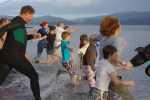
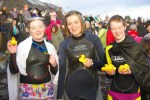
Things to do on NYD…

You could take a wee swim in aid of charity? We did;

Happy New Year!

All saints eve sky lantern


Another year.

May 2013 bring to you many good things.

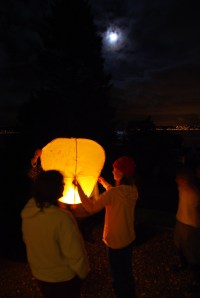
It is nearly 2AM and we are enjoying some peace after a lovely evening with friends old and new. We let off a couple of sky lanterns, one to remember the year gone and one to express hope for the year to come. We also used this simple ritual;

1.

We stand on the threshold of another year

The old one is gone and the new one is still mystery

And we offer you our prayers

We watch them rise to you

2.

Last year was full of good things;

Friendship, laughter, music, art

New experiences,

New achievements

For these things we offer you our praises

We watch them rise to you

3.

For some of us the year gone by has had times of great difficulty

The loss of a people who are dear to us

Life has darkness as well as light

So we give to you all those memories-

All those times when doubt, fear and pain were close at hand

We watch them rise to you

4.

The future belongs to you Lord

Each breath, each heartbeat

So we give you our hopes

We offer you our projects

We offer you our dreams

We watch them rise to you