
Sometimes it is best to flee from light…
Image
Reply

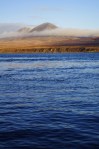
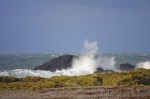
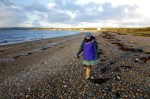
Michaela and I have just spent a night on Islay- I had to do some work there on Friday, so she tagged along too. It is a hard life.
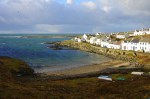
Islay is a beautiful island, full of rolling farmland, beaches and a dozen or so distilleries that make the finest whisky. The beaches are stunning and the air full of birds.
On Islay, everyone waves at other drivers as they pass by. It is an instinctive thing- everyone gets a wave. It costs nothing, this kind of distanced friendliness. It is possible to maintain the illusion of conviviality despite all sorts of shared history that divides as much as it unites.
Today Michaela and I explored some lovely beaches and walked around the edge of the weather as it waved to us from dramatic skies. What a beautiful world we live in…








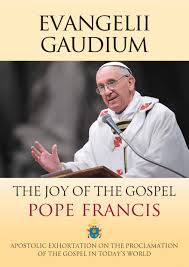
We got a present in the post today from our friend Maggy. The note with it said something like ‘I am not given to reading Papal documents as a matter of course, but this one is different’. So different that she sent a copy to us!
This one is the first such document to be written by Pope Francis, and could be seen as his personal agenda, his manifesto, for his papacy. He has called it Evangelii Gaudium, or The Joy of the Gospel. You can read it on-line here, which I had tried to do, but given up. It is much easier to read in paper form so thanks Maggy!
The ‘Gospel’ that Francis talks about ‘Evangelising’ is a very different Gospel that the Evangelicals that I grew up with would recognise. For them the Gospel was simply this- repent, because unless you say the sinners prayer you are going to hell. Francis’ Gospel is about the truth of Christ growing within us, so that as we experience his profound liberation we become ever more sensitive to the needs of others.
Francis is also concerned that the church may be a poor church, for the poor. Here are a couple of quotes which immediately light me up;
“Just as the commandment ‘Thou shalt not kill’ sets a clear limit in order to safeguard the value of human life, today we also have to say ‘thou shalt not’ to an economy of exclusion and inequality. Such an economy kills. How can it be that it is not a news item when an elderly homeless person dies of exposure, but it is news when the stock market loses two points? This is a case of exclusion. Can we continue to stand by when food is thrown away while people are starving? This is a case of inequality. Today everything comes under the laws of competition and the survival of the fittest, where the powerful feed upon the powerless. As a consequence, masses of people find themselves excluded and marginalised: without work, without possibilities, without any means of escape.
“Human beings are themselves considered consumer goods to be used and then discarded. We have created a ‘disposable’ culture which is now spreading. It is no longer simply about exploitation and oppression, but something new. Exclusion ultimately has to do with what it means to be a part of the society in which we live; those excluded are no longer society’s underside or its fringes or its disenfranchised – they are no longer even a part of it. The excluded are not the ‘exploited’ but the outcast, the ‘leftovers’.”
I look forward to reading more of the story that Francis would encourage us to see ourselves part of- the good news Gospel story that our world desperately needs to hear anew.
And I will contrast it with the other stories, like this one.
I will read other stories through the shape given by the Gospel.

There are parts of the UK that operate like some kind of holding tank for radioactive waste. Except that the waste is made up of people.
Some would call these people skyvers, wasters, people who live on the edge of criminality and addiction. They are the bastards of the welfare state; half lives created out of the fissive heat of market led capitalism. They are gathered together where the housing is cheapest, closest together. Even when new, it is housing no one wants to live in.
And because it is irradiated, those who live in these places become defined by it, cursed by it, captured within it.
What to do?
This has been the subject of study in sociology for decades- ever since the slums were replaced by high rise flats, which in turn were torn down and replaced by housing association faux-villages with their ragged green bits and broken picket fences.
The problem is not welfare even though there are problems with welfare.
The problem is not worklessness even though work is next to impossible to find if you are irradiated.
The problem is lack of hope.
The problem is caused by abandonment, by casting outside, by removing worth, by categorising as ‘other’, ‘less than’. By the death of dreams.
Today the Chancellor announced cuts of £25 Billion to welfare budgets and I want to scream out loud with anger at it all.
But who knows what to do with the radioactive waste? It is too expensive to clean.
I turn to writing as this is the only way I know how to scream. Here is another one of the poems that I am calling ‘protest poems’.

Cowboys and Indians
The wagons circled in that wild place
Under the kitchen table
Brambled by spiders’ webs
Stalked by wrinkled peas
He always wanted to be a pioneer
To ride the range, and
Eat beans beneath the wandering star
But no-one ever leaves this place
His cowboy became Red Indian
His range a reservation
In the streets below roam no buffalo
The distant drums
Lie silent
PJ harvey guest edited Radio 4’s Today programme the other day, asking some searching questions about (among other things) Britain’s on going role in selling arms to the worlds more despotic regimes.
This led me to listening to some of her music. Previously I had found it a difficult listen- too much keening wierd singing, too much crashing and bleeping. I had not heard of her last album, entitled Let England Shake. It is full of references to a broken lovely England and our legacy of war making. Songs like this one;
or this one;

I have been a vegetarian for about 26 years. I would like to pretend that this is for the highest moral purposes, fueled by compassion for the suffering of creation, but this would not be truthful. The fact is, when I was a student, desperate to find some kind of place of belonging in a world in which I was a rather dysfunctional outsider, I found myself surrounded by people who did not eat meat. Most of them were more confident, better looking and certainly more socially gifted than I was. One of them subsequently became my wife- and she was a passionate anti-vivisectionist who regarded eating animals as a kind of murder. Given that she still loves me after all these years might suggest that I made the right choice- one that we have both continued with even though this is more through developed habit than passion.
Our vegetarianism is not really about health benefits- despite all the concerns about red meat and larded-clogged arteries. After all, chips, chocolate, crusty bread and butter with deep red cheese and sugar loaded pickle are still every bit as challenging to my waistline.
If asked about the reason for my choice to eschew the burger and the lamb chop I could not have honestly claimed to be angered by the death of little furry creatures for our glutinous pleasure. As we look out there, we see a vast ecosystem of flesh clawing at flesh. Killing to eat is not something that I can find any real philosophical, theological or moral objection to- even though I have never killed anything on purpose then eaten it.
This is part of the problem- I became increasingly convinced that if I could not see the chain of meat production managed in a caring, responsible way, including the killing and the butchering, then how could I take my responsibility as a steward of the earth seriously?
Since then there have been many reasons to be concerned about the weird world of meat production. Foot and Mouth disease, horse meat in beef burgers, the use of rotten ‘reconstituted’ chicken in hospital food, etc etc. All these scandals seem to be what happens when the messy business of killing is conveniently out of sight and enslaved to profit margins and the demands of the big supermarkets.
However, back in my student days, with pomposity and self righteousness that I blush about now, I would also mention another fact that influenced my lentil-love. I would point to the fact that land usage in some of the poorest parts of the world was being dominated by pastureland to produce beef for our burgers. In fact, rain forest was being cleared at alarming rates just for this purpose too. In those days I could probably even quote you numbers- read in the magazine New Internationalist. At the time McDonalds were forced to announce a change to their meat sourcing, insisting that beef came from local sources.
My musical hero also encouraged this view- remember the song ‘If a tree falls’ from Bruce Cockburn?
Cut and move on
Cut and move on
Take out trees
Take out wildlife at a rate of species every single day
Take out people who’ve lived with this for 100,000 years
Inject a billion burgers worth of beef
Grain eaters, methane dispensers.Through thinning ozone,
Waves fall on wrinkled earth
Gravity, light, ancient refuse of stars,
Speak of a drowning
But this, this is something other.
Busy monster eats dark holes in the spirit world
Where wild things have to go
To disappear
Forever
The argument then was that our meat machine was wasteful, took productive land out of crop production, depended on stupidly high energy use and it was all for markets thousands of miles away from where the animals were raised. The alternative was to encourage local sustainable food production, local markets producing what local populations needed. Damn it, we might even be able to do this in the UK if we really wanted to- let alone in South America.
This all came back to me again when reading an article in The Guardian by Ian Jack.
An academic paper in the new issue of Nature magazine’s Climate Change journal warns of the consequences of eating red meat, not in terms of cholesterol levels and heart attacks but for its contribution to greenhouse gas emissions. Domesticated ruminants are the largest source of anthropogenic methane and account for 11.6% of greenhouse gases that can be attributed to human activity. In 2011, they numbered approximately 1.4bn cattle, 1.1bn sheep. 0.9bn goats and 0.2bn buffalo, an animal population that was growing at the rate of roughly 2m a month. Their grazing and feeding takes up a greater area than any other land use: 26% of the world’s land surface is devoted to grazing, while feed crops command a third of the total arable land – land that might more usefully grow cereals, pulses and vegetables for human consumption or biomass for energy production.
The paper’s authors argue that, with more than 800m people chronically hungry: “The use of highly productive croplands to produce animal feed is questionable on moral grounds because this contributes to exhausting the world’s food supply.” Other well-known consequences include tropical deforestation and the erosion of biodiversity, but unless governments intervene (the paper calls for “increased awareness among public and policy makers”) it seems unlikely that the demand for animal flesh can be curbed. But which popularly elected government will ration meat or deliberately price it as a luxury? More and more people, especially among the newly prosperous in India and China, have the taste for it. Animal meat production stood at a global figure of 229m tonnes in 2000 and at present rates of increase will have more than doubled to 465m tonnes by 2050.
The Japanese appetite for whale meat has disgusting results, as does the Chinese fascination for ivory trinkets; but elephant and whale slaughter is surely no more than a peccadillo in the context of the great, ever-expanding, overheating slaughterhouse that the world feeds from. Animals with single stomachs such as pigs and chickens produce negligible amounts of methane; perhaps – setting aside the cruelty question – we should rear and eat more of those.
The arguments are stacking up. If you want to save the planet, start by changing your own patterns of consumption. A vegetarian diet is no panacea, but it starts to make a lot of sense when you take a long look at it.
Others are starting to reduce their meat consumption, or pay-more-buy-local- finding out where the meat comes from, how it was looked after etc. Some are even doing that admirable thing- producing their own. We have chickens and a veg patch, but some of my friends keep pigs and sheep too.
People often ask me if I miss meat. I can honestly say that I do not. The smell of bacon in the morning is still a pleasant smell however, even though I doubt I could actually eat it. Burgers always look disgusting these days, cooked or uncooked. I have never enjoyed fish even before becoming vegetarian, although Michaela sometimes eats it. There are of course as many problems with over fishing and farming as with land meat production.
Pass me a carot will you?


I am not into making new year’s resolutions- I tend not to keep them. However this time of year is the time to take stock, to dream of what might be ahead.
As well as the personal stuff it is a great time to wave some spiritual litmus paper in the stew of culture that we swirl around in. What is there that we can celebrate? What should we protest? How does the life of Jesus within us open us up to new ways of living in this new year?
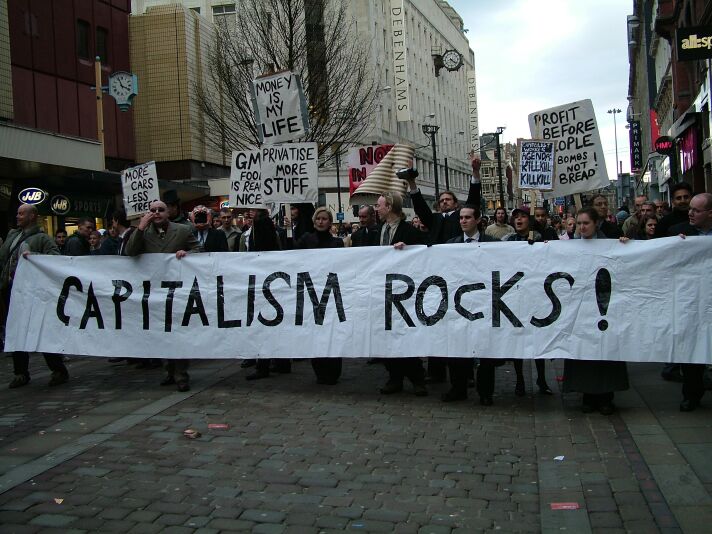
A year or so ago, I wrote a post reflecting on the relationship between Capitalism and Christianity. This seems even more relevant now as austerity measures hit the poorest and weakest in our economy. Something is wrong– not just at an economic level, but rather in our very ways of being.
There are some encouraging signs that the Church is starting to realise this however- and that we need to be the voice of instability, not conformity. Sometimes it seems that our religion is like smoke blown into a hive while the honey is stolen. The Pope appears to understand this, as does Archbishop Welby.
The problem, it seems to me, is that church often claims to be separate from society (the old sacred/secular duality) at the same time as being indistinguishable from it perhaps in the following ways (as listed in my earlier post but with a few refinements and additions.)
I am not happy to leave this list just as a set of negatives, so here are my hopes/prayers for the Church in 2014;
Let this be the year of a different kind of revolution…

A few shots from a lovely walk up through the woods to the ‘Chinese ponds’ round past Toward.
We took a picnic.
The trees always still you. They have this way of telling you that life is not for the burning, but rather is what happens as we pass by. Each bare branch wears its lichen colonies well, as birds flit through on some afternoon mission or other, unnoticed.
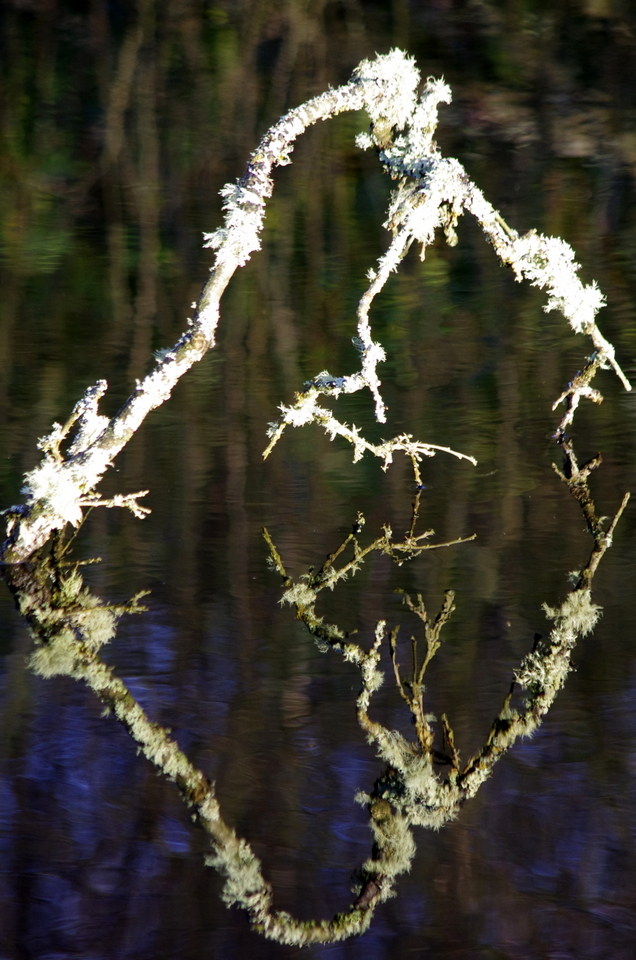
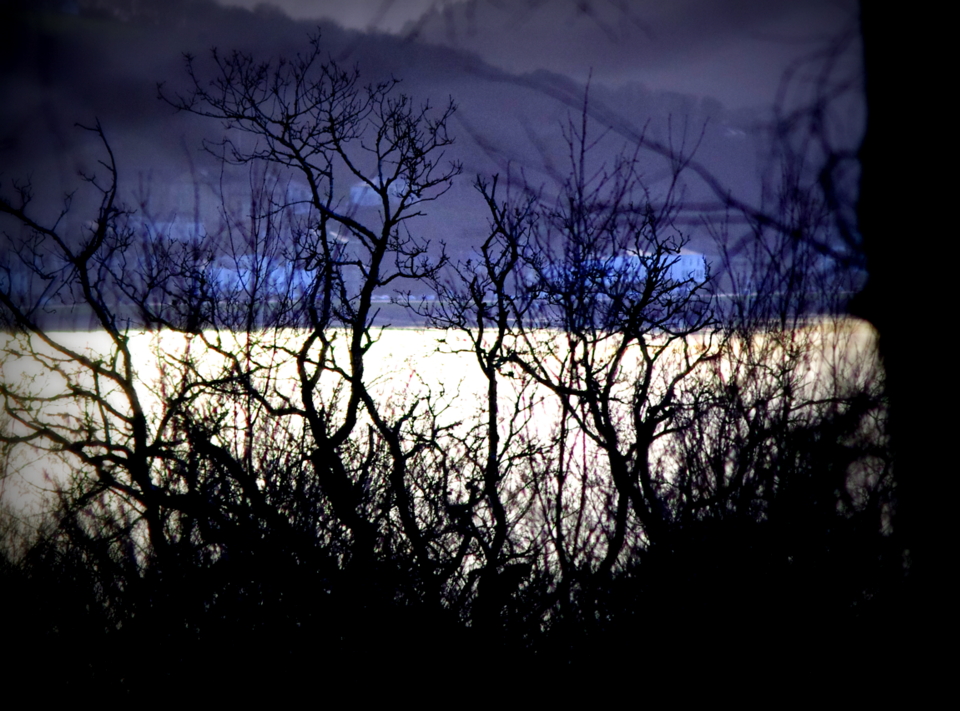
Meanwhile out beyond the branches, through forks and crooked boughs, the real world looks so angular, so predictable. I would stay in the woods. At least for a while.

It is the morning after the night before.
We had a night full of music and friendship- this morning my fingers are very sore as playing for hours is a rarity for me these days. Head is OK though as I was restrained in the drinking.
Blessings to you all this new year.
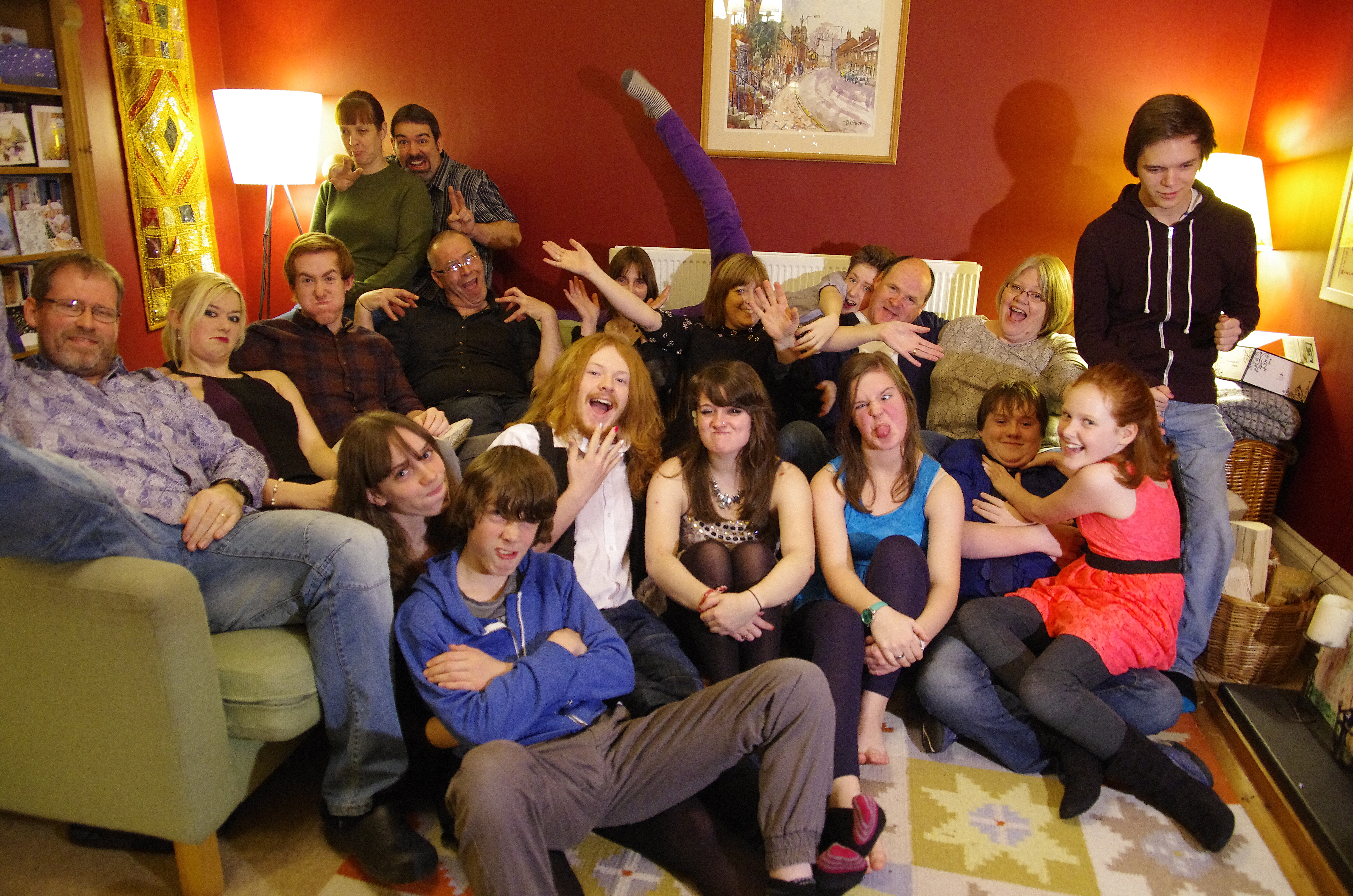
This is our group photo of those actually sleeping at the house;
 this fragile tent