Leadership in small missional groups, reviewed…

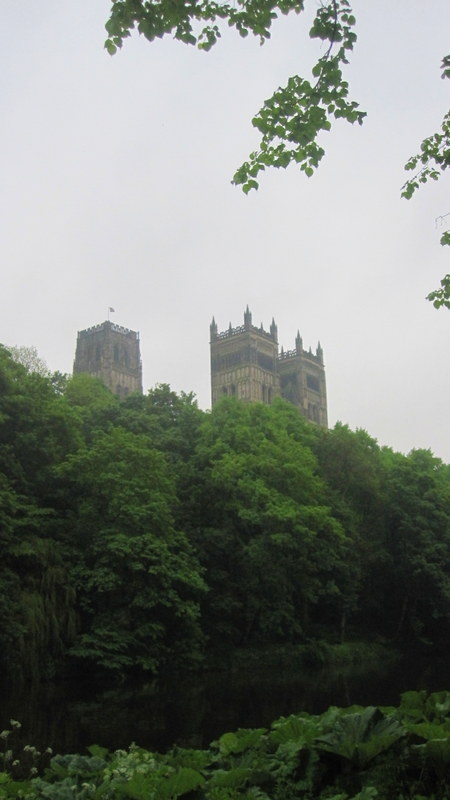
IMGP6016

We took a trip up to Aberdeen yesterday to meet up with friends from Gairioch Church. As part of their planning/organisation, they have a bi-annual ‘sounding board’, where they invite some outsiders like us to come and be part of a conversation about where they are up to, where they are heading and to discuss challenges they are working through. Michaela and I always feel like frauds as what they have achieved is special, and the thought that we might have some expertise to offer seems to us a little silly- however, it all seems to come out in the conversation.

Yesterday a lot of conversation was caught up around the issue of leadership; particularly the kind of leadership that might be the best way to work with small groups of families and individuals engaged in what we have called ‘missional’ groups. It is an old theme for all of us involved in the essentially fragile practice of community. Some questions never quite go away;

  • How do we lead without becoming oppressive? How is power shared, or at least mitigated?
  • How do we lead in a way that does not create passivity and dependency on the part of those we journey with?
  • How do we lead in a way that creates safety, warmth and stability?
  • Who looks after whom?
  • How are specific responsibilities shared and encouraged?
  • Where does the buck stop?

Within my own community, these questions are still largely unanswered. We find temporary solutions only, which is a weakness but paradoxically also sometimes a strength.

My rough conclusions from conversation yesterday where that three things are vital in trying to deal with leadership in small groups; Context, purpose and developmental stage.

Context might mean the place where people meet, the nature of the group in terms of comfort with one another, experience of individuals within it etc. Leadership has to emerge from what the group is comfortable with. Our context is a small town in which most of our members have done with ‘religion’- we have been inoculated against the formality and rigidity of leadership structures, at least in part because of our own and others failure. Leadership for us had to be small. It had to be shared.

The purpose of small missional groups will of course have some variability. At times we work together on specific tasks- food banks, art installations, kids events, worship services, community projects. Some tasks clearly benefit from a leader, an organiser, an agitator. Someone needs to see the big picture and hold everyone else to account for delivering what they said they would deliver. This probably does not need to be the SAME person each time, as we all have different skills and experiences.

However, the starting point of most small missional groups is community. Our hope and conviction is that our activism will grow out of our connectedness, our common place of becoming. We are a constant experiment of turning an inside outside; of practising the art of love so we can learn to be deliberate in our love of others outside the group (an easy thing to write but an extremely difficult thing to achieve.)  If this is the ultimate purpose of our group then leadership is probably much more akin to facilitation. The role of the leader is to create safe space for others to adventure in, not necessarily to direct what happens within it.

Interestingly enough, the skill set required to create (or curate) this safe space is not one that many of we pioneering far-horizon kind of folk find easy to operate within. Safety and predictability bores us. Our pushing at the edges frightens others. This tension is very real to any of us who have been in these groups. Currently I am sweating within mine as most people are content with what is but I am wanting more…

Which brings me to the issue of developmental stages. Groups like ours have a trajectory that typically involves something like this;

dreaming – gathering – planning – forming – conflict – reforming (repeat last two stages several times) – ending.  

Leadership at different parts of the groups life may need to be very different. I think there is also a need for EXTERNAL leadership (or at least facilitation) at times to bring new perspectives and refreshment.

I have great hopes for Garioch church. They are a lovely bunch of folk who are asking all the right questions. The model of church – deliberately small enough to be around a table, but networked with bigger relationships – is one that really appeals to me.

If you are interested in this issue, you might be also find some use in a few previous ramblings on the subject;

Leadership, networking and the trajectory of pioneering groups.

Leadership in small missional communities.

Church in the margins- gender and leadership.

Rollins on leadership.

Leadership in the new context, lessons for post-charismatics.

Leaderless organisations.

Reflecting on the life of small ‘missional’ groups.

What the hell is so wrong with trying to be politically correct?

You hear it all the time; “It is political correctness gone MAD”, or “I am not very politically correct, but…” It is almost as if this thing called political correctness is a social evil alongside farting or slapping an old lady.

People love to trot out examples of political correctness ‘gone mad’, particularly the right wing media, who seem to regard it as some kind of insidious communist attack from within- perpetrated by a 5th column of Trotsky loving social workers. Here are some of the stories that have been doing the rounds;

Blackboards in school being renamed “chalkboards” to avoid offending black people.
Some schools having a “holiday tree” rather than a Christmas tree every “Winter Holiday Season.”
City councils banning Christmas to avoid offending Jews, Muslims, neopagans, and other non-Christian folk.
Manholes being renamed “Personnel Access Units” to avoid offending women.

“Baa baa black sheep” banned as having racist conotations.

Crowbars being renamed as they may have been called after ‘Jim Crow’ racist stereotype.

The problem is with these stories is that they are mostly celebrated separate from any verifiable evidence that they ever happened, but even when some evidence does exist, shawn of all context it is impossible to engage with any kind of dialogue about what was behind decisions that some poor bureaucrat was struggling with.

Reaction to what is perceived to be ‘political correctness’ sometimes seems rather hysterical- you could even say that it has ‘gone mad.’

But language does matter. How we talk about issues and words we describe people with shapes both the we see them, and the way others around us see them.

Language is a moving target however. I was reminded of this recently by a discussion about words like ‘cretin’, ‘lunatic’, ‘spastic’, ‘moron’; you still see them in old medical files where I work. They used to be diagnostic categories, but they became words of abuse. To be given labels like this was to wear a curse on a badge.

If it is ‘political correctness’ to seek speak of people who have been broken and marginalised with dignity and respect- then I am all for political correctness. I would much rather err on the side of the small people than worry about what the right wing tabloids think.

Who wants to be a billionaire?

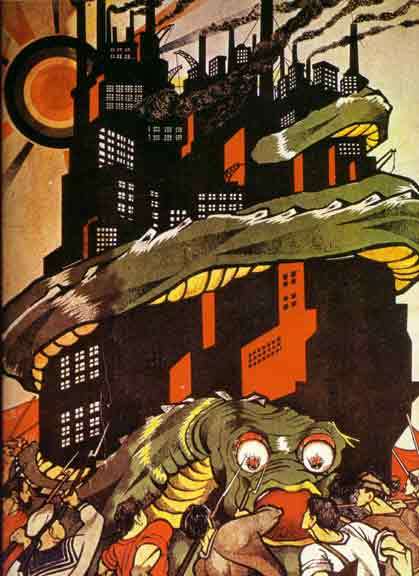
capitalism3 It is official. The UK has more Billionaires per head of population than any other country. London alone has 72. Makes you proud to be British doesn’t it? The nation where the rich get richer (because they deserve it) and the poor get poorer (serves them right; lazy scroungers that they are.) More locally, to me at least, Scotland has 7 Billionaires, up from 6 last year. This from the BBC;

The Grant-Gordon whisky family tops the Scottish element of the list with a fortune of £1.9bn.

.

There are now 104 billionaires based in the UK with a combined wealth of more than £301bn, the list says.

.

The Grant-Gordon Banffshire distilling family have ousted Mahdi-Al Tajir from the top spot in Scotland. Al-Tajir, whose interests include a development of luxury homes at Gleneagles, is worth £1.67bn, according to the list.

.

Sir Brian Souter and Ann Gloag, the siblings who founded the Stagecoach transport empire, have become members of the billionaire club for the first time. They share a fortune of £1bn – an increase of £270m on last year.

.

Other Scots on the super-rich list are Sir Ian Wood and family whose £1.32bn fortune comes from oil services and fishing, and the Thomson family, owners of publisher DC Thomson, who are worth £1.2bn.

.

Former Harrods owner Mohamed Al-Fayed, who owns an estate in the Highlands, is estimated to be worth £1.3bn, while Jim McColl, of engineering business Clyde Blowers has an estimated fortune of £1bn.

Setting aside the morality of concentrating so much wealth in the hands of individuals, two questions seem important-

  1. Do these people create prosperity for the nation- for working people- commensurate with the position their own assets gives them?
  2. Does their wealth produce anything of worth?

As you look down the short list of Scottish Billionaires, the arguments supporting positive answers to these questions seem weak. Whisky, posh flats, posh shops, mega profits from former privatised industry (transport) paid for by subsidies from the tax payer. There are a couple of industrialists there however. It is impossible to look at this list and not feel that Piketty’s analysis of how wealth rises exponentially, like some kind of run away greed machine, in capitalist economies. I quoted this previously;

Anyone with the capacity to own in an era when the returns exceed those of wages and output will quickly become disproportionately and progressively richer.

.

The incentive is to be a rentier rather than a risk-taker: witness the explosion of buy-to-let. Our companies and our rich don’t need to back frontier innovation or even invest to produce: they just need to harvest their returns and tax breaks, tax shelters and compound interest will do the rest. Capitalist dynamism is undermined, but other forces join to wreck the system.

.

Piketty notes that the rich are effective at protecting their wealth from taxation and that progressively the proportion of the total tax burden shouldered by those on middle incomes has risen. In Britain, it may be true that the top 1% pays a third of all income tax, but income tax constitutes only 25% of all tax revenue: 45% comes from VAT, excise duties and national insurance paid by the mass of the population. As a result, the burden of paying for public goods such as education, health and housing is increasingly shouldered by average taxpayers, who don’t have the wherewithal to sustain them.

.

Wealth inequality thus becomes a recipe for slowing, innovation-averse, rentier economies, tougher working conditions and degraded public services. Meanwhile, the rich get ever richer and more detached from the societies of which they are part: not by merit or hard work, but simply because they are lucky enough to be in command of capital receiving higher returns than wages over time. Our collective sense of justice is outraged.

.

The lesson of the past is that societies try to protect themselves: they close their borders or have revolutions – or end up going to war.

Piketty fears a repeat.

Perhaps then we need to watch carefully for those who tell you that the poor and broken are the problem- they are not, they are the consequences of unsustainable wealth creation by the few. Watch too for the convenient scapegoat-makers, the border-closers, the nationalists. They tend to play right into the hands of the super rich. It is a distraction from the real operation of capital, and a convenient way to wall wealth away from taxation. It also pretends that the problem of austerity is caused by the poor outsider, come to steal our jobs, our houses, our NHS facilities. Blessed are the poor, but who wants to be poor? We all want to be Billionaires…

It’s all about poverty, stupid!

classroom1_465x343

Some sobering news for education systems in Scotland, via the Joseph Rowntree Foundation;

  • The gap between children from low-income and high-income households starts early. By age 5, it is 10–13 months. Lower attainment in literacy and numeracy is linked to deprivation throughout primary school. By age 12–14 (S2), pupils from better-off areas are more than twice as likely as those from the most deprived areas to do well in numeracy. Attainment at 16 (the end of S4) has risen overall, but a significant and persistent gap remains between groups.
  • Parental socio-economic background has more influence than the school attended.
  • Children from deprived households leave school earlier. Low attainment is strongly linked to destinations after school, with long-term effects on job prospects.

We have been attempting to tout education as the means by which we make societies more equal for generations now. We tried a tri-partite education system, with children streamed by ability, then we switched to comprehensive education. We tried experimental community schools for a while (I went to one) then sort of gave up and said that the problem was caused by bad schools, bad teaching.

You could argue that the politicians employed the old divide and rule trick- they made schooling all about choice, individuality and parent power – none of these things bad in their own right, but they were sold to us using league tables (which masked the inequality by making inner city schools look like they were under performing.) The end result is that we as parents increasingly looked after our own. Those that could afford to send our kids to private education felt under even more pressure to do so.

What the Rowntree report makes clear is what we have always known- inequalities in educational attainment are not about bad schools or bad teaching, they are about one thing- poverty. It is not as if every piece of research in this areas has not told us this.

Equality is not something that can be promised to the next generation, no matter how much we hot house our kids through exams. Blair famously said that his three priorities in government were “Education, Education and Education.” The fool forgot that you can not treat a problem be focusing only on one of the symptoms.

The report mentioned above lists a whole set of things that it thinks government can do to narrow the attainment gap between rich and poor, but the reality is that the only guarantee of any kind of change is to bring greater equality of income into our society and lift poor people out of poverty.

social class


Reflections on going backwards…

William walks the sands

Most of us measure our lives by the progression of a career.

We start out with dreams; spaceman, nurse, vet, train driver, deep sea diver. These dreams are fed or squashed by teachers, parents, careers officers. They tell us it is all so serious, so crucial; we have to find the right path.

So we stumble forwards through school exams, college courses, university. The pressure is intense. Each threshold contains the possibility of complete failure.

But most of us make it through to some kind of job. The bottom rung. The starting block in the race of life.

About a quarter of a century ago I started my first job as a social worker. I was 23, naive and desperate to do something that mattered- to mask my own brokenness behind (often futile) attempts to mend others. I worked hard in a small team under intense pressure from inner city problems that most people would never believe existed. Most of my colleagues buckled under the strain- none of them are still working in social work.

As I too began to come apart at the seams, I also progressed my career. I became a specialist, then a therapist. Later I became a team leader, then an area manager. I was climbing.

Except that when you climb higher into the machine, what you find is not a more finely honed sense of what social work is all about. The idealism that took us into the profession is gone. The value base that we espouse (person centredness, an identification with the poor and those in need) has largely been forgotten. These things are not measurable, have no performance targets, so have no worth in this new world.

You also find that power attracts a certain kind of personality. Some people seem born to trample on the fingers of others and call it good management. The games that we play to win pointless hollow victories. The damage we do to each other (and to ourselves.) Often, quiet competence is punished, whilst those who can play the power game advance. It came to a point where I felt myself neither competent nor able to raise myself to scratch for power, so I got out.

But I still need to make a living, so eventually I find myself doing agency work, back at the bottom of the rung. From one perspective, the last 25 years never existed. I have gone no where, done nothing.

Meanwhile I am looking at applying for permanent jobs with salaries that are less than I have earned for more than a decade. And it is all rather sobering.

winding road

However, I am still having to learn over and over that life is NOT about rising up, succeeding, earning ever more money. This kind of life is one that is killing the planet and making us all unhappy.

What I am learning again are the simple pleasures of doing something because it is good. Listening to people’s stories with ears wide open. Meeting people on the edge and encouraging them to shuffle back a bit.

Life is not lived in straight lines. Thank God.

Wilderness retreat, Garbh Eileach, 2014…

Looking beyondI am back after a wonderful trip to Garbh Eileach, largest island of the Garvellachs which lie in the Sound of Mull. It was a real contrast to our last trip to Eileach an Naoimh, just a couple of miles away- Garbh Eileach is wooded and alive with birdsong and the skittering of red deer. Unfortunately this means lots of ticks, but no paradise is perfect this side of eternity.

11 of us went this time- mostly old friends now, and at times I laughed so much I thought I would tear something. There was lots of stillness and prayer too however as well as Golden Eagles and glorious seascapes. The weather was mixed but you get what you get in these parts and still feel grateful.

Here are a few pics;


Larchlap…

our house, top left

Neighbours


When did ‘Hearts of Oak’

Turn to larchlap?

Our British empire shrank so much

That every inch of encroachment must

Set loose the legal shock troops-

For every privet leaf

Is sacred


I have rights

That prove you wrong

But this fence

(already skewed by weather)

Makes victims

Out of both of us


Promised days…

Come on in to the green stuff

I am tired almost beyond sleeping. So here I am uploading photos.

Last weekend we took some time to walk up to the view point high above Benmore Gardens. It made me think again of these words, from Song of Songs, chapter 2;

Get up, my dear friend,
fair and beautiful lover—come to me!
Look around you: Winter is over;
the winter rains are over, gone!
Spring flowers are in blossom all over.
The whole world’s a choir—and singing!
Spring warblers are filling the forest
with sweet arpeggios.
Lilacs are exuberantly purple and perfumed,
and cherry trees fragrant with blossoms.
Oh, get up, dear friend,
my fair and beautiful lover—come to me!
Come, my shy and modest dove—
leave your seclusion, come out in the open.
Let me see your face,
let me hear your voice.
For your voice is soothing
and your face is ravishing.

Rumours of deeper things…


tents, in high wind

I am heading off with a group of friends to a small Hebridean Island for one of our ‘wilderness retreats’ next weekend.

Spring is here. Yesterday we played our first cricket match of the year (both Will and I out for 0 on a wet sappy pitch) and the garden is full of shy colours. I yearn for wild places.

My awareness of the significance of the wild in understanding myself, as well as trying to understand God, is a constant work in progress. I can make few definitive statements in relation to either. All I can say is that experience is more important than definition. So I continue to place myself in places where I hear rumours of deeper things…

In deep meditation

A few years ago I wrote a series of ‘dispatches’- short poems really- that I tied laminated onto bright card, then tagged to the top of canes. We have used them a few times, laid out along cliff tops or on circular routes around wild headlands. I was reviewing some material for this trip and decided not to use them again, but realised that the dispatches say almost everything about my own hopes and prayers for encounters with God. Here they are;

1.

There are rumours-

Like smoke signals blurred in desert wind
They say

He is here

Not in metaphor
Not whipped up in the collective madness of charismata
Not just politely suggested by the high drama of religious ritual-

Here

Sweating
Breathing
With mud on his shoes
2.

Should I hide?

Should I stay in a fold of ground
And hope he does not walk my way?

I could never meet his eye
Knowing that the hidden parts of me will be
Wide open
3.

How do I prepare?

I have no fine things-
No fine words
My shield of sophistication
Is broken

I am soft flesh laid bare
I am a fanfare to repeated failure

I am herald only to this
Hopeless
Hope
4.

But this King wears no stately form
Wants no majesty

He walks gently
And has a humble heart

And he is-

Here
5.

Put down those things you carry
Sit with me a while
Stop making things so complicated
It is much simpler than that
6.

Start from where you are
Not where you would like to be
Not where others say you should be
There may come a time
When I will warm your heart towards a new thing

But right now
I just want to warm your heart
7.

It is not for you to cut a way into the undergrowth
Or make a road into the rocky places
Rather let us just walk
And see were this path will lead us
You and I

8.

All around you is beauty
See it

Smell it

Feel it falling like manna
9.

Look for softness in your heart
There I am
Look for tenderness
And it will be my Spirit
Calling you to community
10.

My yoke rests easy
If you will wear it

And my burdens lie soft on the shoulders
If you will lift them
11.

You are wrapped up in me
And I am bound up in you

We are held together by soft bindings
Like tender shoot and stake
Like mud and gentle rain
Like worn shoe and weary foot
Like tea and pot

Like universe and stars
Like ocean and rolling wave
Like fields and each blade of grass

There is now
And there is our still-to-come

Coming

12.

And he was gone-

But still I am not alone

The Spirit is stirring the waters