The power of the event…

I have spent much of the day in a horizontal position, after coming a cropper yesterday running to escape a hail storm- falling down some stairs onto a low wall. Most of the damage done was to the ego (thankfully it was dark) but I have a bruised and battered lower back.

From a prone position, I have watched too much pointless TV.

Which set me wondering again about the way life just slips by- measured according to bites of tertainment

Entertainment

Infotainment

Leisuretainment

After a day in front of the box I am craving something to happen that is real- that has significance. A real conversation, a new encounter, or something creative and beautiful.

But what I did was to switch on the laptop and look out across the great wide web, full as it is with ephemera, all pretending towards significance.

And I came across this video of U2 doing a ‘secret’ concert in downtown Brooklyn NY.

Of course, this is a just a bit of clever media manipulation by a great rock and roll band- but you can see the effect that their presence had on people.

Their experience of the mundane was transcended by the extraordinary.

These kinds of moments are always rather precious- even for people like me who incline towards the cynical, hiding behind observational distance.

It makes me think again about church. I have spent a lot of time using music to try to create ‘events’. Often I failed- but sometimes these events did transcend the mundane. And it is hard not to be seduced by the high of playing music to thousands of people, or tens of people. It becomes a way of making a mark- a stab at significance.

In Aoradh, we do not really do these kind of things any more, but the power of events as a way of giving people opportunities to collectivise spiritual experiences is still part of our repertoire. This is the reason for our up and coming Sky lanterns event in a couple of weeks…

But the pursuit of experience can be addictive- even idolatrous. Real life does not happen on a stage. It happens in the press of ordinary things.

But we all need to kick up our heels from time to time…

The insatiable moon film trailer…

We were discussing a book by Mike Riddell that I loaned to our friend Pauline the other day- called ‘Sacred Journey’. It is a good book for those of us long on the road, and still trying to make sense of the spiritual nature of this life of ours.

And I remembered that one of Riddell’s other books, a novel, had recently been made into a film.

I went searching, and discovered the trailer…

I am trying to decide whether to read the book or wait for the film- anyone seen/read either?

It seems to be about the two issues closest to my heart- mental illness and God- and looks great.

Perhaps need to wait for it to be released on DVD, I can’t imagine it coming to our local flea pit…

Vodpod videos no longer available.

Adventing…

I have decided to change the word ‘advent’ into an adjective rather than a verb.

Then, rather than being merely a calendic description, it might become a spiritual practice.

Instead of being a commercial break before the main consumption, it might then become a period of reflective anticipation.

Instead of being something to rush headlong past towards a glittering destination, we might start to savour the journey.

So tomorrow, the first Sunday of Advent- always on or around St Andrews day- I am going to begin…

…adventing.

Advent sky lantern launch…

Aoradh are planning a massed sky lantern launch on the banks of the river Clyde as a way of celebrating the season of Advent.

In doing this, we pray that we can learn how to wait in hope for the coming of light into darkness.

This is a repeat of an event we did last year- some photos of which are here.

We will be using lanterns made from 100% biodegradable materials- with no wire that can be of potential risk to any animals.

We will be selling the lanterns at a local shop, and making others available free for schools and community groups. And profit will go to a Christmas charity.

Here is the poster-

If you are fairly local it is well worth coming to join us- the spectacle is wonderful.

And the process of making prayers that float upwards is very moving.

This is the blurb that we include with the lanterns-


The light keeps shining in the darkness, and the darkness can never put it out…


As part of our Advent festivities, Aoradh invite you to be part of a celebration of light.


Each year, we are plunged into a whirl of busyness around Christmas- all the presents we buy, the cards we send, the pressure of making ready for a feast. All these things are good, but it is so easy to lose sight of the Christ-child. We wanted to encourage one another to step aside, and reflect…


Our intention is to use these paper sky lantern as carriers of our hopes, expectations and prayers in this season of waiting, and so make our deliberate preparation for the coming Christmas.


You are invited to write prayers and thoughts on the lantern, and to be part of a MASS SKY LANTERN LAUNCH from the West Bay Dunoon, on Sunday the 12th of December, from 5.00 pm– weather permitting.


(NB We will need fairly calm, dry conditions for the mass launch to take place. If we are not able to launch on the Sunday, then we will go for 5.00 on Monday- then Tuesday and so on.)


The spectacle of a large number of sky lanterns rising over the Clyde together is something that we hope will live in our memories, as a visual reminder of the rising possibility of hope.


And of light flickering in the darkness…


Be careful as you write on the lanterns- they are fragile!


Sex, sin and the emerging church…

A deliberately provocative title, which I hope you will forgive me for.

I have been thinking about sin. This was brought home to me recently when watching the BBC programme ‘The Big Silence’, in which this statement was made-

If you have not got a pure heart, you can not see/hear God.

There is a debate as to whether this is true, and whether any of us can ever lay claim to purity of heart- but the issue has nagged at me a little, and I have learnt to listen to this kind of nagging.

Because in all the discussions, books and  blogs about emerging church (in the broader sense of the term,) you do not see the word ‘sin’ used very much. Sure, it is there or there abouts in the debates about atonement and the nature of sexuality in particular, but the concept of holiness and purity as goals for life have largely been left behind. They belong to a different church movement, and between ‘them’ and ‘us’ is a respectful distance at best.

Perhaps this is because the emerging church discussion has largely started out as a reaction to the excesses of a certain kind of spirituality- it is in part revisionist and reformist, despite having sweeping influence in so many areas of church. So in rejecting fixed inflexible positions and seeking to open up possibilities for new encounters with God, and new connections with culture, the debates often assumed that participants had a common starting position- Evangelical, orthodox Christianity- with all it’s assumptions and fixed world view.

So, most of us were probably well versed in an awareness of our sinfulness, and the price paid, in terms of substitutionary atonement of Jesus. And also of how the process of maturity was one of becoming more holy- measured in terms of personal, private behaviour.

Evangelical Christianity regarded ‘the problem of sin’ as the centre of everything- and the mission of Church was to save people from the consequences of this sin. To be honest, in my experience, what happened when you had been ‘saved’ was a little more mixed. We assumed that we Christians will then be on a journey towards purity and holiness, where sins are ‘dealt with’ and we become more like Jesus.

Between you and me, this was not my experience- neither subjective nor observational. Church often became a place where external measures of maturity- such as length of time ‘on the road’ and ‘gifting’- was at odds with our real, private selves.

There was also the fact that we overemphasised the private, personal aspects of sin as opposed to other vital parts of the life of faith- serving others, working for peace and justice, living in community.

And finally there was the problem of sin-definition. Sex was right up there- particularly homosexual sex (incidentally, did anyone see this Jewish take on the issue that is causing such controversy? HT Graham Peacock) This kind of sin, along with others, depended on a particular view of Biblical authority, which has come under considerable challenge.

My contention is that as a result of these issues, the debates around what is emerging have tended to leave the issue of ‘sin’ to one side.

Anyway- back to the point of this piece. Any reading of the words of Jesus will have to acknowledge the centrality of the call to holiness- by which I mean an honest process of coming to terms with all the things within out motivations, our behaviour and our lifestyles that are not compatible with the life of Jesus within us.

And, in the old language, this sin becomes a wall separating us from God- in terms of our ability to hear from God, and to live in the flow of the Spirit in our lives. Sin does spiritual damage.

Given too that sin is a source of actual damage in our lives- to our external relationships with people and the world as well as to our inner development, then I wonder if we have let slip some important principles for life.

Our call it to be a holy nation (not a Holy Nation- if you get my drift.) In order to do this, we Christians walk a path with and towards and encounter with the Living God. And there is accountability for the way that we do this.

And if (like mine) your lives are cluttered with all sorts of things that you know they should not be- then this ought to be an issue for us all. It ought to be an issue for church- even Emerging church.

I have been thinking about how we might bring the issue of sin into the new context, and made a list of principles that made sense to me-

Focus on yourself– not other people.

Categorising other groups as sinful is a bad idea- for what ever reason.

Let those who are without sin throw stones- the rest is up to the voice of God in the life of individuals. Concentrate on listening to God, and for the rhythms of grace. Some people may need direction, but let them seek that for themselves when prompted by the Spirit.

Excluding people from your group because of sin is dangerous, and should only be an absolute last resort- where the alternative is damage to other individuals in the group, or to the group itself.

People are more important than policies.

Collective sin is possible- but again, apply this to your own group in humility.

I do not think God requires purity before he engages with us- rather he requires a contrite heart, and a desire to turn away from the stuff that we know it wrong.

Process is important- and ritual. The old practices of confession and deliberate corporate repentance.

Watch for the things that you hold secret. There may come a time to bring them into the open- in a trusted quiet place. But this requires great trust and security- and this is special, rather than ordinary.

Watch for the things that are tolerated in your community- the lessons of history teach us that in our collectives we easily accommodate to things that individually we might despise.

 

All Saints Eve meal…

We had our monthly Aoradh family day meal tonight- which happened to coincide with the dreaded Halloween.

Dreaded in my case, as I find the increasing madness around Halloween difficult to stomach. The ‘traditions’ we are inheriting are very recent ones- which owe more to 1970’s American films than they do to any folk traditions native to these islands. This does not in itself make them bad- but in this case, I struggle to understand the point of the whole thing.

An evening to dress up as ghosts and mass murderers and walk the streets eating sweets and chocolate…

Actually, when you put it like that, it sounds rather fun doesn’t it?

And that is the other struggle. We took a decision years ago that as Christians, we wanted to keep away from it all. It had too much of the darkness, and not enough of the light. It sided with the wrong half of the tradition- preferring the celebration of devils and demons that was supposed to be a precursor to the celebration of All Saints Day– a day which passes unnoticed.

But this means that our kids have always missed out on the fun bit, although we are certainly much less strict than we used to be- William went to the school disco, and Emily is old enough to make up her own mind.

But then I see some of the things going on, and my resolve stiffens again.

In the middle of Dunoon, a local hall has set up a little fake graveyard. And above it, they have strung some stuffed white sheets, hung from the neck and splashed with red paint. Quite creative really. Certainly a lot of time was taken.

Except that when I saw them, it looked like ‘strange fruit‘.

And also reminded me of the people who killed themselves by hanging over the last year. Relatives of whom may well be driving past…

Tonight, we shared a meal with our Aoradh friends, and it was lovely. To mark the evening, we decided to play a game of pass the parcel.

We turned of the lights, and passed the parcel in the dark, and each layer of the parcel had a candle, and some words about light. The candle was lit, and the words read.

And as the game went on, it got lighter, as more and more candles were lit.

Eventually we got to the middle- a large candle, and some indoor sparklers.

Which we lit, and prayed.

It was simple and profound, and once more made me very grateful for my friends.

Scientology, does it scare you a little?

I watched this video today- after a Guardian article revealing how hard the Church of Scientology had tried to suppress it’s general release

I knew next to nothing about Scientology, apart from its association with some Hollywood stars and the controversy about the allegedly abusive way that its leaders behaved towards one another.

Then there was the way that BBC heavy weight correspondent John Sweeney got into conflict with the Scientologists– the famous panorama programme where faced with wierd wind up tactics, he lost it during an interview and shouted and bawled.

Read his account of how he was treated by Scientology thugs during the course of his investigation- it is difficult to imagine any other church being able to justify such behaviour, no matter how much pressure it feels itself to be under. They call it their ‘attack the attacker’ or ‘fair game’ policy, and involves using tactics that would make Peter Mandelson blush.

I do not like knocking other faiths. It is an easy hit- poking fun and finding fault with things you do not believe. The question is whether Scientology is a faith, or a manipulative cult, surviving through the misuse of power, money and legal process.

L Ron Hubbard, founder of Scientology was a science fiction writer who decided to start a religion- allegedly boasting that it was the best way to make a million.

He started with a self help book, where he pans psychiatry, and suggested an alternative way of dealing with life via a process of ‘auditing’.  This from Wikipedia-

In the mid-sixties, the Church of Scientology was banned in several Australian states, starting with Victoria in 1965. The ban was based on the Anderson Report, which found that the auditing process involved “command” hypnosis, in which the hypnotist assumes “positive authoritative control” over the patient. On this point the report stated,

It is the firm conclusion of this Board that most scientology and dianetic techniques are those of authoritative hypnosis and as such are dangerous … the scientific evidence which the Board heard from several expert witnesses of the highest repute … leads to the inescapable conclusion that it is only in name that there is any difference between authoritative hypnosis and most of the techniques of scientology. Many scientology techniques are in fact hypnotic techniques, and Hubbard has not changed their nature by changing their names.

What do Scientologists believe? I spent some time trying to understand the basics, but I am afraid, in the end, I just did not care. Feel free to check it out yourself though.

Power, wealth, psychological pressure, manipulation and the American dream of success- all mixed up into a religion.

Ways of reading the Bible…

Some time ago, I posted some questions about how we understand and encounter the Bible. Someone asked me to post some answers to my questions, so I had a go at this here.

It has been quite a journey for me over the last few years- trying to come to terms with a faith that I no longer had faith in, and then discovering along the way that I was not alone, and that there were different ways to approach an understanding of God, and in particular, different ways to approach our primary source material on the life of faith- the Bible.

This process has been painful, and at times I have wondered whether my faith will survive. But the outcome has been one of renewal. The Spirit of God was once again stirring the waters…

The process of change has involved a period deconstruction- a doubting and shaking loose things that had previously seemed unassailable and absolute. This is the painful bit- when everything seems to go into freefall.

The ’emerging church conversation’- carried out largely through blogs and websites- seemed to me to be comfortable with unanswered questions. In fact after every truth and every tenet, we added a question mark.

But then there comes a time when something new starts to emerge and it is time to construct again. It feels to me that this is where we currently stand. We do not need bombastic pronunciations or new religious structures- rather it feels that our heads have come out of the clouds, and we can see further.

Along the way, I have found Brian McLaren’s writing to be a life giving. I know others have a different experience- for some his style can drag, for others his aim is too low brow, as the are more used to the theological arguments than I am- but he has taken me places that I had not dared to go alone.

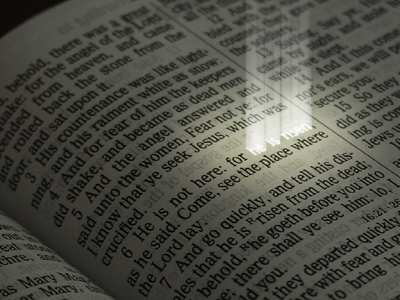
(Photo taken in a semi-ruined abandoned croft house on the island of Bernera, off Lewis, Western isles. A family bible left open above an empty fire place…)

In reading his new book (slowly and in small chunks) I came across a study guide he had written, which focussed on different ways of reading scripture, and found it so helpful that I wanted to give it a plug.

You can download it here.

But here are a few highlights-

We have been shaken loose from our previous ways of reading the Bible- the ‘modern’ way- which seemed to be all about using the text as a blueprint so that we can categorise and systematise faith. McLaren compares this to the ways that the Americans use their constitution- where each word is given equal legal weight, and is enforceable in a way divorced from emotion or wider ethical considerations.

But having shaken loose- what other ways of reading the Bible are left?

McLaren lists 14 possible ways of encountering Scripture-

  1. Narrative reading- where we get into the story, the context and history from which the words emerge from.

  2. Converstional reading- where we engage with the different conversations across the generations embraced in the Bible- for example Jesus with the religious powers of his day, the Priests and the Prophets, the Jews and the Gentiles.

  3. Missional reading- in which we ask we ask, in each passage of Scripture, how is God extending God’s overarching mission of blessing all nations through a called and commissioned community of people.

  4. Political/Economic reading- the skew of God’s attention towards those who suffer injustice at the hands of earthly empire involving money, sexuality, power, violence, and law.

  5. Rhetorical reading- in which we look for what the text it trying to do, rather than just what it is saying.

  6. Literal reading- “…when readers of the Bible develop sensitivity to the ways poets, protesters, storytellers, activists, priests and mystics use language, the Bible is liberated from its constitutional captivity to be the wild, inspired, and impassioned collection of literary artifacts that it is.” McLaren suggests that people who say they are taking the words literally often are doing the very opposite- approaching the test through a very narrow hermeneutic.

  7. Close reading- better readings of scripture will fit in with the small details of the narrative- the bits that we easily miss that the writer chose to include in the text, which is rich in culture and traditions that we easily miss.

  8. Communal reading- the Bible is complex and hard, and the only way we can really engage with it is through the broader community- firstly in terms of “the community of the dead” where we listen respectfully to how previous generations have understood scripture, whilst understanding their skew towards a western, wealthy, white, male perspective. Secondly we look for the voices of minorities- those who have been forced to the margins. It is not ONE perspective, but rather both/and.

  9. Recursive reading- understanding of the Bible, and emphases within it change, ebb and flow across generations, and within lifetimes. This might be one of the ways that the Holy Spirit brings renewal.

  10. Ethical reading- text applied without ethics have allowed our faith to justify slavery, genocide, anti-Semitism, oppression of women and gay people- therefore we have to accept that interpretation is a MORAL ACT, so we should test an interpretation by reason and scholarship,using our rational intelligence, and a sense of justice and ethics. How might I treat people if I follow this interpretation? Whom might I harm? What unintended socialconsequences can we predict if this interpretation is widely embraced? Could people be vilified, harmed, or even killed because of this interpretation? McLaren points to those in Scripture who have wrestled with God in the face of his seeming injustice… Job, Moses, Abraham.

  11. Personal reading- “the reader is himself or herself in the predicament the text addresses. So faithful readings are habitually humble, expectant, open, and hungry and thirsty to encounter the Living God. Even the “professional” reader and teacher of the Bible must remain forever an “amateur” too …”

  12. Mystical reading- we must “…develop the habit of mystical openness, receptivity not only to understanding from the text but to enlightenment from the Holy Spirit, not only to interpretation but to revelation, not only to intelligent engagement with the text but also to personal abduction by its message.”

.

Finally McLaren points to one further reading, and makes clear that he believes this one to be the most controversial of his readings.

It is the one that might make people worry about the undermining of Biblical authority

Christo-focal reading

McLaren proposes that we no longer approach the Bible as a collection of words of equal weight- but rather that we approach all other words through those of Jesus.

He suggests we need to leave behind three old ways of reading the Bible that have perhaps dominated-

  1. Flat reading- where we see all Jesus’ life and words pressed down and flattened to the same level as those of Abraham, Moses,David, Isaiah, Paul, and Jude. This results in the raising of the Bible above Christ- which is a kind of idolatry. For example, it might be biblical to commit genocide by quoting Deuteronomy 7, but one could never claim it is Christ-like.
  2. Descending reading- where we start with an ideal state in Genesis, and then it all goes wrong, leading to a time when God is going to destroy everything, and Jesus is but a lifeboat for a few. Or the other decent comes from the fall too- “the problem is sin and the solution is law-keeping, with sacrifice-making as a back-up plan. The rest of the story descends from this high point, so that the life and ministry of Jesus have value to the degree that they solve the problem.”
  3. Ascending reading- “Moses’ teaching was good, David’s perspectives were better, Isaiah rosehigher still, John the Baptist ascended even higher, and Jesus was really wonderful andunique, but the crowning revelation comes with Paul and his writings.”

What McLaren proposes is something more radical- “When Jesus is the focal point of the story, he is the climax, the hero, the summit, the surprise, the shock, the revelation that gives all that precedes and all that follows profound and ultimate meaning. If we follow this approach, we’ll speak less about the Bible as the supreme Word of God and more about Jesus as the supreme Word of God. We’ll let the person of Jesus –including and integrating his birth, life, teachings, miracles, death, resurrection, abiding presence, and ongoing mission through the Holy Spirit – become the light in which all interpretations are evaluated, the key in which all interpretations are played, the leader behind which all interpretations arrange themselves as followers, and the meaning in which all interpretations have meaning.”

If we start to apply these ways of reading the Bible, how might our understandings change?

This my friends, is our work-in-progress…

Silence…

Vodpod videos no longer available.

1st collector for Silence…
Follow my videos on vodpod

I have just watched this programme on the i player. I have been looking forward to it for some time, as our friend Maggie, who is a retreat director at St Beuno’s abbey in North Wales, had mentioned that some of the programme was filmed there.

It did not disappoint.

The format of the programme is simple- take a fairly random assortment of people and soak them in silence, led by Catholic monks who are able to guide them on the journey. It is reality TV that seems very real. Then end is not to make people Christian- rather to allow them to encounter themselves, and in doing so, to encounter God.

Here are a few things that hit me as I watched the programme-

Silence is a gateway to the soul, and the soul is the gateway to God.

Yet I find silence hard. For most of us, life is a process of constantly seeking distraction from- life.

It is a lifetimes work to find the silence that allows us to hear the voice of God.

Ah, well perhaps there is hope for me yet. How ever much life I have left…

Both the purpose and the means of the process is- purity of heart.

I know my heart a little- and it is not pure.

My spiritual encounters in the past have tended to revolve around repeatedly saying sorry for things that I know I will do again. As I became older, the pervasive guilt I felt as a young man trying to be Christian has ebbed away- which is good- but perhaps this might also mean that I am more comfortable with my impurity.

If you have not got a pure heart, you can not see God.

Is this true? How pure does it have to be? Or is it just something to do with desiring purity, and genuinely seeking to deal with all the things that get in the way?

The God of Surprises is going to give you some wonderful surprises.

I hope that this is true for these folk in the programme.

And I hope it is true for me, and you.

Because life without the surprise of God is half life, or no life.


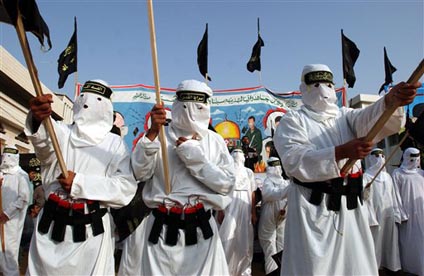
Terrorism and Muslims…

Two words that are often used together in the press and perhaps in our consciousness.

We tend to be of the view that whilst not all Muslims are terrorists, most terrorists are Muslims.

Until you look at the evidence that is.

Brian McLaren posted a link to this information on loonwatch.com-

In my previous article entitled “All Terrorists are Muslims…Except the 94% that Aren’t”, I used official FBI records to show that only 6% of terrorist attacks on U.S. soil from 1980 to 2005 were carried out by Islamic extremists.  The remaining 94% were from other groups (42% from Latinos, 24% from extreme left wing groups, 7% from extremist Jews, 5% from communists, and 16% from all other groups.)

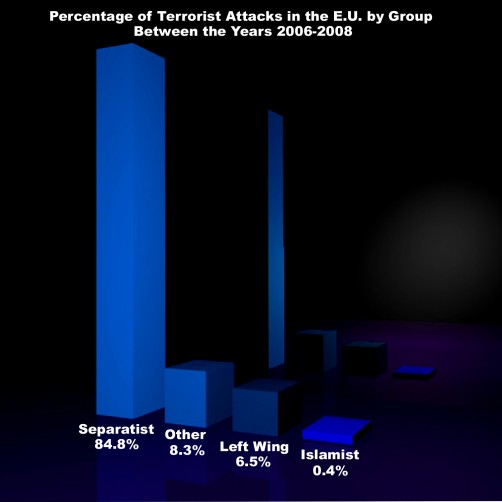
In Europe, data from 2007-2009 showed similar patterns-

The results are stark, and prove decisively that not all terrorists are Muslims.  In fact, a whopping 99.6% of terrorist attacks in Europe were by non-Muslim groups; a good 84.8% of attacks were from separatist groups completely unrelated to Islam.  Leftist groups accounted for over sixteen times as much terrorism as radical Islamic groups.  Only a measly 0.4% of terrorist attacks from 2007 to 2009 could be attributed to extremist Muslims.

Forgive me if I come over all ranty- but I think we need to know this.

We need to consider this in relation to the foreign policies pursued on our behalf by our governments.

And we need to seek understanding with those whose faith is different to ours, not demonise and misconstrue.

And where violence and terror is being propagated in the the name of God, we should perhaps also understand that God has been used as an idolatrous way of achieving power before, and he will be again.

And that violence repaid with violence leads only to more… violence.