Loving the enemy…

Been thinking again about love…

I was ‘bounced’ today by a particularly aggressive and difficult colleague. She had an issue with something I had done, which she perceived as somehow disrespectful towards her, and she very assertively diced and sliced me- with eloquent arrogance and sneering silences.

As usual, I did not cope well with the direct assault, and so bumbled my way to an apology (which I did not really mean, as I still do not know what I am supposed to have done wrong) and then threw in a few disjointed defensive positions of my own.

She put her sunglasses on and went on her icy way, leaving me grinding my teeth over what I should have said.

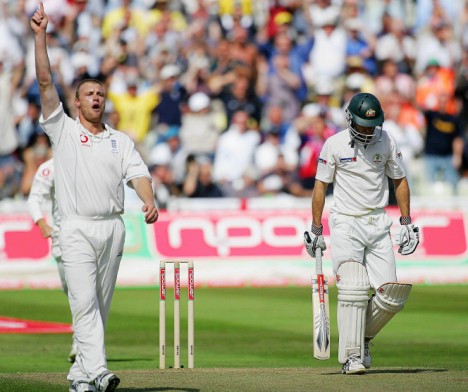
I had a lovely drive to Bute, listening to Test Match Special, but even hearing about Flintoff destroying the Australian’s did not drive away the cloud that hovered above the aerial of my car. A cloud of controlled ritualised aggression out there in the ether, just out of reach.

flintoff

Ah… such is my condition. Despite my small and hopefully developing ability to be assertive, some situations still turn me to jelly. I wish I was tougher- a relisher of conflict as a resolver of problems and a way of defeating my enemies. A fast bowler pounding up a cloud on a flat wicket and humbling the emphemeral batsman before me…

Or sometimes I do.

Because no matter how my frailties weigh on me- no matter how unjust the day dawns. At the end of it all-

There is love.

But, Lord help me, I am not yet at that end…

Faith and the internet- ‘Beyond Belief’…

belief

Check out this really interesting radio 4 programme- this episode digs into the relationship between faith and the internet… including the bloke from Ship of fools, and St Pixels.

The discussion ranges from internet addiction, through to whether church can ever be ‘virtual’. Someone quotes ‘The word became FLESH and dwelt amongst us…’

You can download it as a podcast here.

Worshipping with wood…

DSCF4058

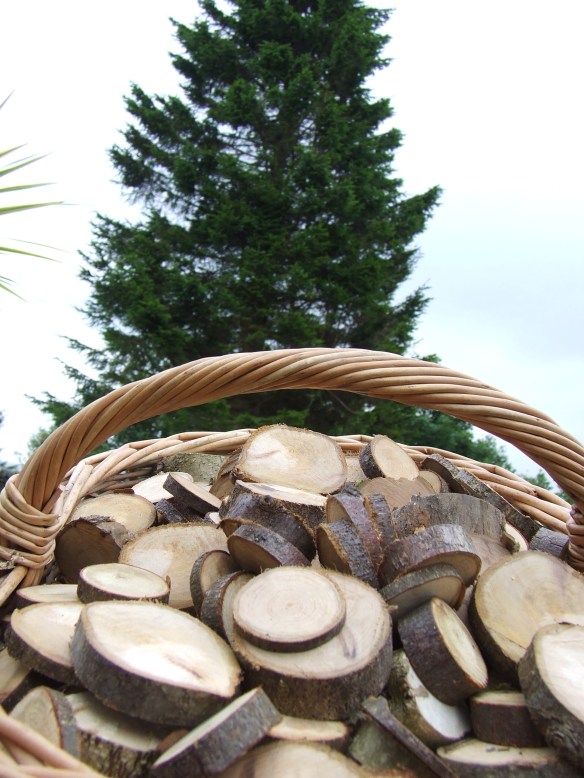
I spent a few hours this afternoon cutting slices of wood to use as part of a worship installation that Aoradh are putting together for Greenbelt.

It occurred to me that this too was worship.

Each cut, all noise and spewing sawdust. Each tree-disc a little slice of branch, still holding the shape of years of growth.

DSCF4060

I was suddenly aware that every one of these pieces of wood was intended to be held in someone’s hand. People I have never met will be asked to use these things as prayers and statements of hope for life.

And that what I was doing was holy.

Worship.

DSCF4068

Happy 500th Birthday John Calvin!

So, this week marks the 500th birthday of John Calvin, something which, given the preoccupations of this blog, was something I did not think should pass unmarked.

Happy Birthday John.

You turned your world upside down, and we stand in your shadow.

Or at least we did. Some say it is time to walk out on our own adventure.

To make our own reformation.

Praying for patience and grace on our own modern versions of Michael Servetus.

calvin

You can listen to a radio programme called Beyond Belief here that reflects on the enduring legacy of Calvin- half an hour of theology and reflection- well worth a listen.

Jesus shifts product…

Hmmmm…

Is this just not a little too near the truth?

Because we have seen enough of this stuff-

But then there is all of this-

I wonder what the modern day equivalent of tipping over tables in the temple forecourt would be? It might be uncomfortable for us all!

Because if we understand Jesus right, I think we have nothing to sell, but much to give.

The Epic of Gilgamesh and ancient scripture…

gilgamesh_louvre

I have been thinking a little about ancient times recently- so humour me while I scratch a familiar itch- that of the relationships between culture, history and the formation of faith through the interpretation of Scripture.

I heard some of the ancient poetry from the Epic of Gilgamesh read out on a TV programme recently. It was beautiful…

‘Gilgamesh, where are you hurrying to?
You will never find the life for which you are looking.
When the gods created man
they allotted to him death,
but life they retained in their own keeping.
As for you, Gilgamesh,
fill your belly with good things;
day and night, night and day, dance and be merry,
feast and rejoice.
Let your clothes be fresh,
bathe yourself in water,
cherish the little child that holds your hand,
and make your wife happy in your embrace;
for this too is the lot of man.’

But Gilgamesh said to Siduri, the young woman,
‘How can I be silent,
how can I rest,
when Enkidu whom I love is dust,
and I too shall die
and be laid in the earth for ever.’

One translation of the full text available here.

A summary of the text, and discussion about some of the themes is available here.
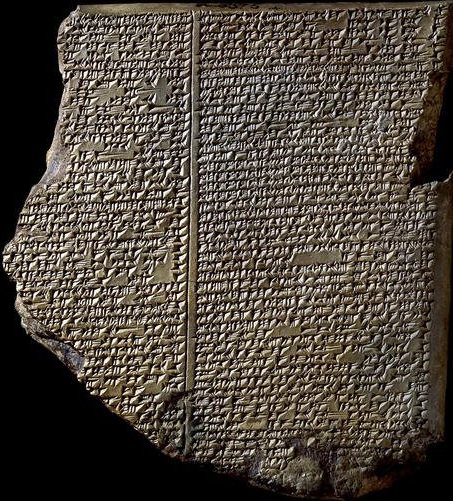
The Flood Tablet, relating part of the Epic of Gilgamesh -Nineveh 7th Century BC

I had heard of this ancient writing before, but knew little of it, so set off to find out more. It interested me for several reasons-

  1. As far as I can understand, this poetry is amongst the earliest literature known to have been written down, emerging from a little known civilisation that pre-existed the Ancient Assyrian and Babylonian empires- back to the earlier Sumerian peoples.  The poetry was held as significant to cultures for the next 3000 years, before being lost into history until tablets telling the story began to be unearthed in the 19th Century AD. The amazing endurance of the story, and it’s survival on tablets of stone is fascinating and intriguing.
  2. These civilisations occurred in the middle east, in the areas now known as Iraq and Iran, and the more understanding we have of middle eastern culture in this time of war and the ‘demonisation of the other’ the better.
  3. The Epic of Gilgamesh is a poetic recording that pre-exists the recording of the oral tradition that became the Hebrew Bible. There are many parallels between the creation stories in Genesis and those described in the Epic, as well as an account of a great flood. Clearly there are many differences too, but I find myself once again interested in the origins of Scripture- and its relationship with the culture and context that it was inspired within.
  4. There are also echoes of what appear to be perennial human pre-occupations- the origin and meaning of life, friendship, courage, and the approach of death. Consider again the poetry of Solomon from the book of Ecclesiastes- and compare this with the words from the Epic above…

7 Go, eat your food with gladness, and drink your wine with a joyful heart, for it is now that God favors what you do. 8 Always be clothed in white, and always anoint your head with oil. 9 Enjoy life with your wife, whom you love, all the days of this meaningless life that God has given you under the sun— all your meaningless days. For this is your lot in life and in your toilsome labor under the sun. 10 Whatever your hand finds to do, do it with all your might, for in the grave, [c] where you are going, there is neither working nor planning nor knowledge nor wisdom.

11 I have seen something else under the sun:
The race is not to the swift
or the battle to the strong,
nor does food come to the wise
or wealth to the brilliant
or favor to the learned;
but time and chance happen to them all.

12 Moreover, no man knows when his hour will come:
As fish are caught in a cruel net,
or birds are taken in a snare,
so men are trapped by evil times
that fall unexpectedly upon them.

(Ecclesiastes 9, NIV)

King-Solomon-Russian-icon

So the question on my mind, is whether this has any significance for how we Christians might engage with ancient Scripture, and in turn, encounter the Living God?

I have written some things before about my own struggles with these issues-  I asked a series of questions, which I tried to give my own incomplete answers to here.

But I find myself increasingly divorced from the way of understanding scripture that I grew up with in the left-of-centre-charismatic-evangelical-fundamentalist churches that gifted me with faith.

This is because the assumptions through which they appeared to approach scripture no longer make sense to me. They seem to include these-

  • The Bible is complete, sufficient, without error or contradiction, and was given to the Church complete as a gift from God.
  • Any challenge to the absolute authority of the Bible has to be resisted at all costs.
  • Any sources outside the Bible- be they writings of other early Christians, or the spirituality of other cultures- all these things are at best dangerous, or at worst, deceptions of the devil.
  • Appreciation and interest of history is highly selective, and should be focussed on the agenda and issues emerging in the 200 years following the Reformation.

I now find myself drawn into new areas of adventure- based on a new set of questions and assumptions. These are not my own, but rather ones that have ‘emerged’ into my experience of faith through a process of re-engagement. They include some of these things-

  • We stand on the shoulders of many other people of faith, who have been drawn by God into incomplete but inspired understandings.
  • Some of this was written down, and some of this writing survived and endured.
  • Over the period of one and a half thousand years, and after much deliberation, some this has been gathered together to form what we know as the Bible.
  • The original meaning of some of these words is lost to us.
  • But the words are still an amazing gift to us, as the Holy Spirit makes them sing again in our context.
  • Let us never pretend to understand fully or finally, or to restrict God to our narrow context or viewpoint.
  • Our ultimate engagement with the God is through the person of Jesus, and the promptings of the Holy Spirit.
  • But we too will fall short.
  • And others  that follow us will need to find their own adventure.

God bless them as they write their own Epics.

Standing amongst Saints…

DSCF3919

I live in a lovely place.

Most days in the course of my work, I travel around Argyll- and I often visit the island of Bute.

Bute is an interesting place. It is the most populated of Argyll’s many islands- with a busy capital. It is not without it’s problems, like many small communities. The island has a rich history.

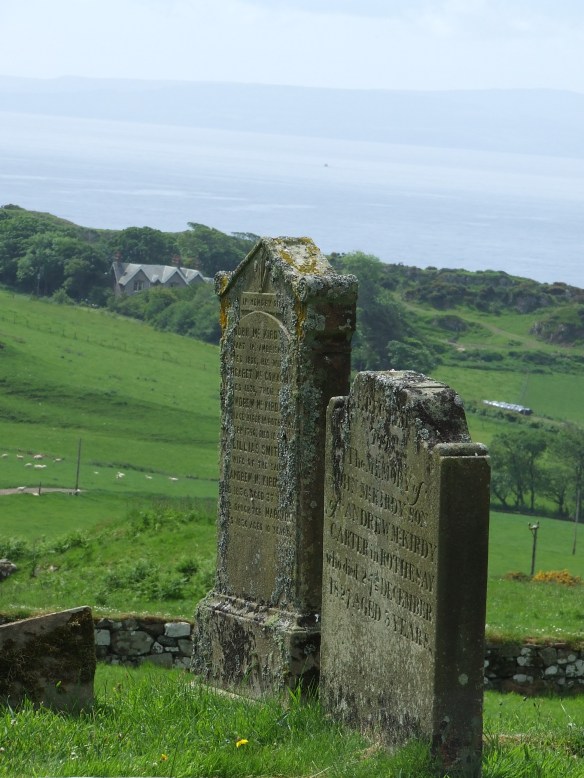
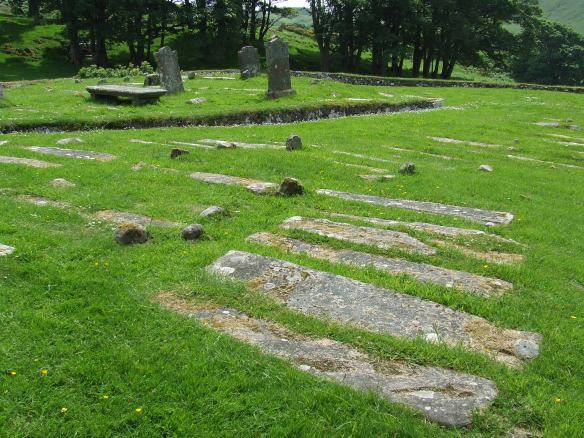
Last week I took a lunch break, and drove out to one of my favourite places- the church of St Blane.

It is a special place. Cupped in a south facing hillside on the south tip of the Island, overlooking the island of Arran, and its small neighbour, Holy Island, another early Christian site, now used as a Buddhist retreat .

The site was thought to be the location of a monastery established by St Catan, contempory of St Columba. He was one of the Ulster missionary saints who journeyed to Scotland to convert the wild Celts in the mid sixth century. St Blane was thought to be his nephew, who took over as abbot after Catan. Blane established other Monasteries, including one on the site of Dunblane Cathedral.

What might life have been like for these early saints? How did they make sense of life and faith and mission?

The site on Bute is rarely busy. It is surrounded by mature trees, full of the sound of rooks croaking. Centre stage is a medieval ruin, which fell out of use around the reformation. The story goes that the minister refused to have any truck with this new fangled religion…

In 1560 the parish priest, Sir James McWararty, refused to embrace the Protestant faith, and he also refused to relinquish his occupation of St Blane’s. He was still living in the nearby manse in 1587, and it seems that the response of the authorities was simply to leave the church to fall into disuse rather than tackle Sir James directly.

He must have been a formidable bloke.

And here we are, at another set of crossroads in the history of faith in Scotland. I wonder what marks we will leave that people might read in another 1500 years?

And if we make any- what they will make of us?

DSCF3920

DSCF3923

Earth Abbey, and Grow Zones…

Thanks to Si Smith for the link to this project which looks really great…

The guys behind this initiative have combined their faith and passions into a collective called ‘Earth Abbey’- their website is well worth checking out.

This is what they are about…

  • A rich relational life between human beings
  • A compassion toward the earth and its creatures
  • A sense of interconnectedness of all life
  • Wisdom and justice in relationships
  • Human fulfilment and the nurture of the inner life
  • A way of living that leaves the earth better than we found it

Sounds great.

I wonder whether we can gather something similar in Dunoon?