The new book is out!

Forgive the conceit, because here is a plug for my new book!

listingcover

‘Listing’ is a collection of poetry and meditations mostly inspired by some of those great lists in the Bible- the fruit of the Spirit, the Beatitudes, the ‘love’ passage in Corinthians and the ‘seasons’ passage in Ecclesiastes 3.

It is published by Proost- and available by clicking here.

Here is the Proost blurb from Jonny Baker;

Listing is a little gem, a surprise that came Proost’s way over the horizon from Chris Goan. He loves crafting words, playing with words, chewing over words, creating and re-creating worlds with words. His poems and meditations are a delight, spinning off from and opening up new takes on familiar verses of ancient wisdom from the scriptures. It’s the second book from Chris on proost. The first is the wonderful meditation he wrote to go along with Si Smith’s images of Christ’s journey into the wilderness ‘40’. The books is available as both hard copy or to download as pdf.

Thanks Jonny!

Go on- Buy two and give one away…

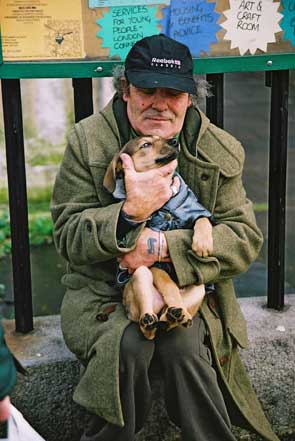
Grace, ungrace and brokenness…

homeless3

For a day job, I manage social work services for people with severe and enduring mental health problems. For the last twenty years I have been a mental health worker and therapist, working in hospitals, GP surgeries, prisons, day centres and clinics.

Even as I have become very frustrated with the nature of organised social work- the inevitable beauocracy, the compartmentalisation of humanity, the feeling that we police people, but do not really help- I have continued to be driven by the hope that broken people can mend.

And the conviction that comes from my faith that people forced to the edges of society by their experience of life can teach us much about our own experience, and in meeting this, we meet Jesus.

I found Philip Yancey’s wonderful book ‘What’s so amazing about grace‘ really helpful at a time in my life when I was struggling. One of the concepts he introduced was the concept of ‘Ungrace’.

Grace is not easy to define but we usually recognize it when we see it. Yancey describes it as `the last best word’ of the English language because in every usage it retains some of the glory of the original. His story-telling style takes `grace’ from a religious context and puts it in the market place, moving it from theological discussion to practical application.

What is obvious to me, is that as we develop as humans, the soil we grow in can be full of the nutrients of grace, or poisoned by a kind of toxicity that can put a stain down generations… you could say that people are grace-impoverished, living in the shadow of ungrace.

That is not to say that this is the only formative or defining force that is acting on us. Illness sometimes just IS- with no clear causal factors, and equally, some grow strong out of dreadfully difficult situations. Grace is built into all of us somewhere deep down.

Today was a fairly typical day, this morning in an Adult Protection meeting, discussing a man who has mental health problems, but is killing himself with drugs and living in squalor. And when you look at his earlier experience, it was easy to see why. In the afternoon, I chaired another conference on a woman who had been admitted to hospital after a fall, but seems to have rapidly deteriorating dementia. A life unraveling after broken relationships, isolation and depression.

Ungrace.

Yancey describes our world as being `choked with the fumes of ungrace’. But, he adds, `occasionally a grace note sounds, high, lilting, ethereal, to interrupt the monotonous background growl of ungrace’.

Grace comes from the outside as a gift.

Grace billows up.

Grace happens.

As for me- I listen for those grace notes.

And hope that I might learn to echo them…

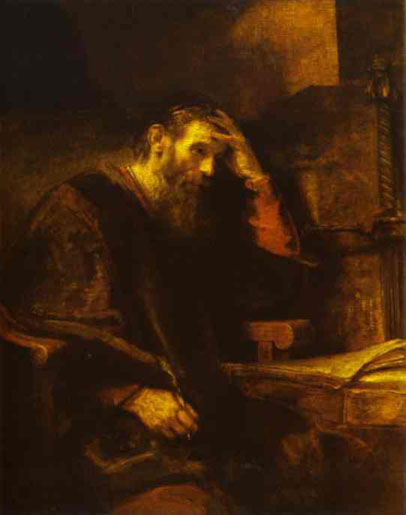
Melvin does St. Paul…

rembrandt-saint-paul-in-prison

Ah the joys of Radio 4.

If any experience refines and celebrates my sense of connectedness with the place of my birth, it is listening to Radio 4. And because I am often on the road driving around Argyll, the station has become my faithful traveling companion.

This morning is a case in point- Melvin Bragg speaking to theologians  about the impact of St Paul on western civilisation. You can listen again, or down load the podcast here.

Enjoy!

Holy Spirit mojo…

So what does the Lord require of you? To act justly, love mercy and walk humbly with your God.

Micah 6:8

I have been struggling a bit recently. Nothing dramatic- I am well used to low level angst. But I had this feeling of being shadowed and somehow beyond reach.

If I dig into what this was about, then some of it seemed to begin in the aftermath of a few difficult exchanges- some of them on-line discussions.

Like I said, I have learned to live with these shadows. I know myself well enough to see them as part of who I am and to have become aware that Grace is more powerful- and also that the ongoing transformational encounter with God that I have had is a process– not a magical event.

I can even believe that this process can be seen as the turning of negative things to positive-

So intense sensitivity can become a way to be sensitive to others.

Introspection and introversion can become creativity and contemplation.

Damage and depression can become empathy and openness to others who had emotional pain, and passion for social justice.

Isolation and social awkwardness can be mediated through an increasing awareness love and the value of friendship and community.

Doubt and insecurity can be turned to become instead the holy, restless longing for the ‘thing just beyond’- just outside the known. They can drive us to seek after God, and to reach out a little further beyond the safe places.

And like all of us, once I identified the things I was good at- once I had found my areas of expansion- I found a platform of security to build confidence and direction.

When the things that we define ourselves by are challenged- when we fall flat on our faces, or when others take a look at what we stand on and find it wanting- this can be hard.

So when confronted with others whose confidence and self assuredness exceeds my own, and they take a swipe at the things I stand on, I tend to shrink a little. Not nearly as much as I used to, but still, I struggle.

The issues that have laid on me heavily have been these-

• How an attempt to network can lead to a perception of empire building. And how unsatisfied I am with my response to such a challenge- which has been simply to withdraw.

• A suggestion that the life I found in ‘emerging church’ conversation is just male dominated argumentative posturing.

• And that unless I moved to live in the inner city and sought to do church with people in poor estates then my faith, and my chosen social work career, and by implication my whole life, has no value.

• A need to look beyond- to ask ‘what next Lord?’, well aware that I will never be fully satisfied with my own efforts towards life and love.

In the face of these challenges, I found myself shrinking inwards- still active and functioning, but lacking vitality. But God has this way of pouring in hope again, despite my capacity to let it leak out.

This is what I think he has had to say to me.

Put down those things you carry
Sit with me a while
Stop making things so complicated
It is much simpler than that

Start from where you are
Not where you would like to be
Not where others say you should be
There may come a time when I will warm your heart towards a new thing
But right now
I just want to warm your heart

All around you is beauty
See it

All around you are people I love
And I rejoice as you learn to love them too

Look for softness in your heart
There I am

Look for tenderness
And it will be my Spirit
Calling you to community

It is not for you to cut a way into the undergrowth
Or make a road into the rocky places
Rather let us just walk
And see were this path will lead us
You and I

For my yolk rests easy
If you will wear it
And my burdens lie soft on the shoulders
If you will take them up

DSCF3469

Scarba- Aoradh wilderness trip…

(L to R) Simon R, Nick, David, Andy, Simon M and me

(L to R) Simon R, Nick, David, Andy, Simon M and me

I am just back from our visit to the beautiful Scarba

6 of us went out on Saturday, via a chartered boat from Ardfern. The intention was to find some space inside and out, and try out some of the wilderness meditations we have been working on (see here for a selection.)

Scarba is a small island Between Mull and Jura in the Inner Hebrides off the Argyll coastline. It is surrounded by some of the most dramatic tidal waters in the world. To the east is the Gulf of Corryvrecken, with it’s famous whirlpool. On the other side, the Grey dogs tidal race.

The forecast was rotten, but we had two glorious days, with the occasional shower making the sky and sea all the more dramatic. I have a sun burnt head as I forgot a hat!

We were camping, but had the use of a bothy for evenings and shelter- thanks to the owners of the Island for their generosity in letting us use it!

So we abseiled down cliffs, explored caves, scrambled over heather and bog, set up meditation walks, sat around fires, walked ancient mysterious flagged pathways, and stood on places where early Christian monks worshiped. The deer and wild goats watched from a distance, and overhead a Sea Eagle wheeled in the wind.

Oh and we laughed. We laughed a lot. Whiskey was shared and bad jokes honoured.

Single malt, smoke, sharing

Single malt, smoke, sharing

Part of my motivation for visiting places like this should be obvious from what I have already written. For me, however, there are other things driving me.

Men and spirituality.

Not easy bedfellows.

Men do lots of theological arguing, and perhaps like a nice new project. But setting time aside to seek God- this tends to be a rather alien thing. A huge generalisation I know- but one that may well have some truth.

So I set to wondering whether the problem was not we blokes and the curse of trying to be masculine in the post modern age, but rather the problem was the way the Christian church has anchored and shackled spirituality to a narrow set of activities within organised structures.

What if there are other ways- old and new ways that seek God in small adventures, and in wilderness, and in communing around fires with a good bottle?

Here are some photos from our trip (click to enlarge)…

Protestant sectarianism and emerging church…

The history of Protestantism is littered with division and conflict.

Reformation of what has already been reformed.

Schisms of schisms.

Battles over whose truth is truer and whose understanding of scripture is most enlightened.

The legacy of these truth wars can be seen in the countless Protestant descriptive labels/denominations. Here are but a few as they occur to me;

Lutherans, Wesleyans, Reformed Weslyans, Methodists, Free Methodists, Primative Methodists, Baptists, Southern Baptists, Reformed, United Reformed, Assemblies of God, Anglican, Church of Scotland, Episcopal, Quaker, Shaker, Amish, Menonite, etc etc.

This list is in part a noble one. We have learned much from the men and women of God who have celebrated faith within these organisations. Such variety speaks of the freedom that people felt to follow after God in the way they understood him, away from the central powerful control of older forms of religion. It also is a story of fervency, of revival, of movements of the Spirit across whole communities, of great leaders who were bold and true.

But there is a dark side, measured by truth promoted over love and grace, and in a serial fracturing of the unity of the Spirit. Such division can be seismic in terms of the violence done to community in the name of Jesus.

I wonder if this kind of spiritual development can become addictive and even infectious. Almost as if all new Protestant church movements carry a destructive gene within their DNA…

Scotland has had more than a fair share of this splintering and fragmenting. Take the recent very public difficulties seen in the Free Church of Scotland, which splintered as recently as 2000.

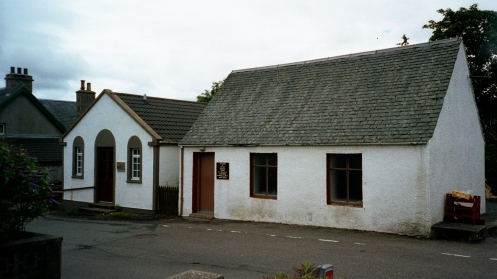
I have used this picture before- taken in a small West of Scotland town about 7-8 years ago. Two churches so close that they are almost touching- but separated by a chasm of doctrine. I should add the proviso that I do not know either of these churches, and the image may miscommunicate entirely. But I think it makes a valid point about a certain characteristic of Protestantism…
two-churches

How did we come to this, we followers of Jesus?

How did Agents of the Kingdom of God, sent out into a broken world to form revolutionary cells characterised by love, somehow sign up instead to be driven towards such segregated exclusivity?

Is this more about psychology than it is about theology? Our tendency to seek a point of expansion and accomplishment, and to measure it against others around us- elevating ourselves by finding others wanting.

I wrote this poem in an attempt to understand these things in myself-

Diplomacy

We meet and move about one another
Probing, exploring borders
Negotiating
Presenting our petition
And revealing this badge of office-
Sewn on sleeves whilst our hearts stay hidden
Revealing carefully edited glimpses
Of whom we want to be
But are not yet.

Then begins the measuring
Of the size of armies
The bore of canon
And the reach of your rockets
As we carefully deploy our camouflaged troops
To occupy the high ground
To hide uncertainty behind
A cloak of accomplishment
And capability.

Sometimes it seems that who I am is only revealed
In understanding what you are not
In seeing you
And finding you wanting
In mapping out your strongholds
And avoiding them
And raising up my tattered flag
Above this uncomfortable alliance.

Why is this important now?

Because I think that this is a real challenge to those of us who are part of the ’emerging church’ discussion, particularly here in Scotland. Some questions-

Is ’emerging church’ just another Protestant reformation- another fractious denomination in the storming and the forming- throwing stones at those whose truth is not our truth, looking around and finding others wanting.

Or are we a break from modernist Protestantism- a more generous, open, embracing movement that seeks unity, not uniformity and is willing to learn humility and to value the other.

Are we Protestant at all? Where are the emerging Catholics?

If something new and hopeful continues to emerge, in all its flawed beauty- how do we(or even SHOULD we) nurture and sustain whatever we become without following a familiar pattern of splinter and schism?

From my point of view, the story is mixed.

Emerging church has no form and no structure- at least in Scotland. It is not a descriptive definition of any way of doing church- rather it is a loose affiliation of malcontents and hopefuls, defining themselves rather by the fact that they are prepared to question and seek.

And because we are human, friction is inevitable. People compete for prominence, and justify themselves by the rightness of their cause, or the small success of their activity.

But brothers and sisters- I find myself longing for something else. Something a little more of the Kingdom, and a lot less of the Empire.

Something characterised by tolerance and love. (Even as I am intolerant and unloving.)

On forgiveness rather than defensiveness. (Even as I defend and find it hard to forgive.)

Of a willingness to enjoy one another without the need to compete. (Even as my own insecurity drives me to do the opposite.)

And a determination to see community as the origin and the means for all things- with one another and with Jesus. And that the quality of these interactions should become the measure of our success. (Even with my own history of broken community, and the wounds I carry because of this.)

This is the church I long to see emerging.

I have not desire to be part of another schism.

Is it possible that we overemphasised the Bible?

perspective

Emphasis is all.

I had a conversation tonight with my friend Nick. We were talking about some planning he was getting into for a programme of Bible study for young people. He was talking about the need to get into the basics of Christianity, and how many of the young people (and some of the older ones) had very little basic knowledge of the tenets of our faith.

I thought about this for a while, and genuinely wondered about what these tenets were- and what I would teach young people if I was in Nicks shoes.

The ’emerging’ conversation has shaken loose a lot of fixed positions for me. It has helped me see that a lot of the things I held to be basic building blocks for faith were perhaps not always so solid- but rather required robust examination. It made me wonder again about an approach to faith that started with one small group of people telling another larger one what it needed to know- facts and figures of faith that they needed to internalise in order to be a proper Christian.

In my discussion with Nick, I found myself making the following statement-

“I think we modern Christians made two particular mistakes in our attempts to engage with God.

  1. We overvalued the Bible- wanting it to provide for us a textbook that creates a Christian, in the same way that a blueprint could make a balsa wood model plane.
  2. We overvalued the need to get our doctrine sorted- the finding and adopting of correct positions in relation to all aspects of faith.

That is not to say that these things are not both wonderful and important- but simply that we over-emphasised them- making them perhaps the only way that Christians could discover God. In order to make this stick, we had to pretend that there was only one way to read and understand the words, and to suppress all less tangible and less ‘objective’ spirituality- rendering it untrustworthy and dangerous.

Sure, the Charismatic movement came along and added a whole new experiential encounter with the power and wonder of God, but ultimately, I would argue that the modern Protestant faith was grounded on the two points above.”

This statement is shot through with faultlines, but I think, on the whole, I stand by what I said.

bible-page

If I am right (and many would strongly disagree!) does it matter?

Does it matter as we seek to engage with young people? Do they not just need to be given some basic truth before we get all post modern and mystical? Perhaps they do. Perhaps the trampoline bouncing that Rob Bell talks about as an image of theology can only really begin once we have set up the trampoline.

But alongside the importance of the written words of the Bible, and the need to establish doctrinal beginnings- I think I would gently suggest that the emergent conversation might challenge us to add in other emphases too. Because people of faith have always encountered God through many other means.

So I am convinced that rightness of doctrine is not the precursor to being acceptable to God. It may be a consequence of this, but as far as I can see, God seems to tolerate a fairly wide spectrum.

And the Bible is wonderful- but many have lived lives in the name of Christ but have never seen one- either because they could not read, or because the canon of scripture as we know it today simply did not exist, or because the Bible was not available to them.

So what other ways to encounter God should be emphasised?

Perhaps we can only start by looking back to the spirituality of pre-moderns, and use this as a set of goggles to consider our own culture. There is much there that we would reject, and count our blessings that we are this side of the reformation- but still…

We see people seeking to engage with God through living encounters– through hardship, pilgrimage and through community. We see lives of service and humility. We see the importance of shared ritual and engagement with God in the passing of seasons and in connection to every day experience.

So might we learn from this as we seek to encounter God in our new changing context? Might we learn again the vitality and meaningfulness of the mundane, and the wonder of small adventures in which the wind of the Spirit blows us into the path of all sorts of opportunities to be shaped and changed?

The Bible will continue to be a gift to our new generations. There will be others too.

Ritual and meaning in post Christian society…

dscf3752

Religion, according to sociologists like Durkheim, plays a vital role in society.

It unites and solidifies our morality, our world view and facilitates social cohesion. According to Durkheim, religion is very real; it is an expression of society itself, and indeed, there is no society that does not have religion.

Since Durkheim, there have been many discussions about the value of religion to society. Some have been critical, and seen organised religion as a form of social control and a supporter of oppression and a reactionary force in favour of the status quo. It seems clear that it has indeed been used for this purpose.

The interesting question for those of us living in a post Christian world in Western Europe, is if organised religion has lost a central place at the heart of society, then are there measurable sociological effects of this on our societies?

As we lose the unifying and cohesive affect of shared faith, might we expect to see an erosion of some of the key aspects of our society? Our social and class structures, our sense of community and belonging etc?

I have been enough of a social science student to avoid making broad unsupported generalisations, and I am yet to find some recent research about this (If you come across any, I would love to hear from you.)However, it is clear that some of the cohesion seen in modern society has now gone. What we appear to unite behind these days is very different from what motivated our collectivisation 50 years ago.

So if Durkheim is right, and all societies have a shared religion, then how might we understand this in our post-Christian western societies? Particularly when the drive appears to be towards increasingly individualistic activities based on ‘choice’.

What brings meaning to life?

What allows us to express our collective consciousness?

Some have suggested that football fills this slot in many people’s lives.

We are just back from a journey down south to visit family in the Midlands. I took the photograph above at the site of the death of a young man killed on a road crossing. Family and friends had left flowers and cans of beer hanging on the railings, as well as football scarves. It occurred to me that what we regard as central to life will shape the rituals and ceremony we use to mark the stuff of humanity.

I also had a conversation with my brother in law- a great bloke. He jokingly described how his i-pod, when set to random, seemed to constantly pick appropriate songs from the thousands stored on it, to fit in with the activity or mood he was experiencing.

Is this evidence of our human need for ritual and meaning beyond the temporal and mundane? For a collectivisation of our consciousness and the need to mythologise this in the form of things sacred beyond the profane?

Or is this a fluid society in the middle of huge social change, struggling to fill what we used to call ‘the God shaped hole’ in the middle of all of us?

However we understand it, the need for meaning and ritual seems pretty universal, even for we post-moderns. And I think that God is not done with us, nor we with him.

Graceless, Jesus-less, political Christianity- American TV style…

Alistair posted a link on his Facebook page of Pat Robertson calling for the assassination of the Venezuelan President Hugo Chavez

I remember being appalled at this at the time, but found whole new waves of indignation in watching it again. I do not know enough about Venezuela to comment on Chavez, who like most charismatic controversial leaders seems to attract as much hatred as he does adulation.

But Robertson had serious aspirations of being President of the USA. Imagine this man as the leader of the most powerful nation in the world. Imagine the easy moral compromises, fueled by twisted religious certainties and paranoia. Imagine the oppression that could well have come down in the name of Jesus.

And as you watch Robertson and his ilk, remember that in the mix are beautiful things- resounding invocations to love, serve and follow Jesus- whilst at the same time at the centre of it all- there is something rotten. Something evil even.

A Christianity sold out to politicical, financial and power hungry interests. Subservient to a narrow bigoted view of the American Way of Life. Allied to money and manipulation.

Sold out to the new Babylon.

Do I exaggerate? You decide.

The Spirituality of the circle…

spiritual_cinema_circle

The spirituality of the circle, which implies littleness, love of little things, and humility, is not easy in our world. We are schooled from an early age to go up the ladder of human promotion, to be outstanding, to succeed and to win prizes; we are taught to fend for ourselves and to be independent. We are taught how important it is to possess knowledge, success, power, and reputation. We are taught to put external values over and above internal ones. However, the Gospels call us to love and live the Beatitudes; to die to ourselves. Community and Growth by Jean Vanier