Creation/Evolution 2- poets and butterflies

The first poem of the Bible concerns the origin of the world- the sweep of creation from formless void to the teeming tangle of animals, vegetables and minerals that make up this wonderful place that we live in. And perhaps most of all, this poem concerns the place of men and women in the order of things – our position in the mind and heart of God, as he unfolds his masterpiece.

This poem of the origin of all life has been one of those battlegrounds that men have argued over for centuries. Modernity, in all its scientific and analytical rigour, pinned the poem to board like a butterfly, and for a while, seemed to destroy its shape by pulling it a part – by measuring its width and depth, and finding no industrial application. From this world view, the poem is an irrelevance – it has no value to our understanding. Like the butterfly, its beauty and simplicity are categorised and filed, at best as a decoration to ornament the progress and rise of mankind.

Some religious people still try to defend the words of the poem. They too have it in a glass case of their own. For them, it has become a sacred artifact. Its words are open for analysis, but only by those who have the looking glass of correct doctrine, and anything that appears to question its absolute truth must be challenged and nullified, lest the power of the words be stolen.

But poems, like butterflies, were never meant to be pinned to boards, or kept in cases – they need to fly. Perhaps the truth of a butterfly can be measured in terms of its constituent parts, but much more than this, we understand the essence of the creature in the light of an early summer day, flickering and dancing in and out of the flowers, seeking nectar and spreading pollen – its flight seeming both impossible and triumphant.

I believe that the poem of life that has been given to us in Genesis is true. I am not a scientist, or a theologian – I am a poet. For poets, truth is given not as a blue print, or a mathematical equation, although these things are wonderful and creative in their own right. Poems bring meaning and beauty in the abstract, in order to make clear the obvious. They are often far more concerned with the why questions than the what, or the how. Poets should have no fear of scientists, who speak a different language.

As for those of us who have faith in the Creator God, I think we should also have no fear as we read the poem of life from the beginning of Genesis. We do not need to defend, or to stand against the scientific community. It makes us look stupid. Think of those folk in an earlier age who found their world view challenged by those who said that the world was not flat, and that rather than the sun turning around the earth, in fact we seemed to orbit the sun. This was the theological dynamite of the medieval age, and as such, was an idea suppressed by the religious powers of the day.

But God is not defined or limited by science – His was the art that birthed the science in the first place!

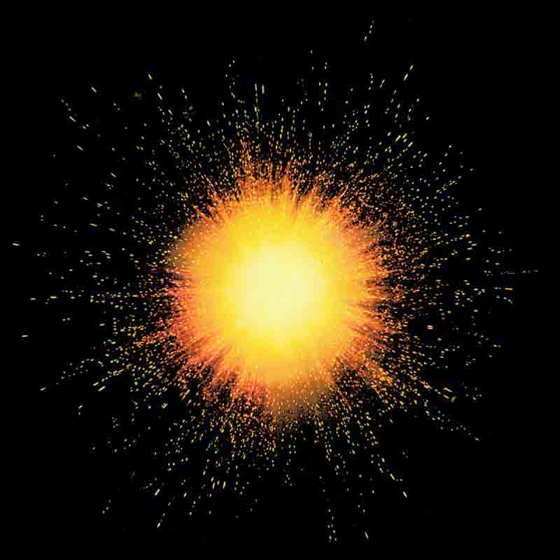
Big bang

Great big bang

In the universe
Who decides
Which way is up
And which is down
Or is it just
Perspective?

And who lit the fuse
For the big bang
Or was all happenchance
Unconnected?

And who holds the stars
As they spin on strings
And turns the worlds
On poles?

Who fired the comets
Out of view
And opened up
Black holes?

You might see these
As loaded questions
Meant to mould you in my image

But I have no simple certainties
Just a pilgrim’s search

For knowledge

26.3.06

Creation/evolution 1

The-Creation-of-Adam-c1510-detail-Poster-C10027868.jpeg (JPEG Image, 400×321 pixels)

I am going to post a few articles around the issue of creation in the next couple of days. This one is by way of an introduction…

You can see the others in the series here and here and here.

I start with a disclaimer. I am no scientist. If you want to engage in a debate about quarks or details of the fossil record- go elsewhere! If you are like me, a Christian who has heard many hard opposing statements, and sometimes felt a little lost in the middle of it all, then you are welcome to join me for what I hope will be a gentle journey around the soft theological edges of the debate.

As far as I can understand things, Christians have taken (very roughly) one of the following positions within this debate.

1. Young-earth Creationists. People who believe that the Earth was created by God, in 6 days, and that the age of the earth can be calculated using the chronology of the Bible, to be about 7 thousand years old. They would cast doubt on any science that contradicts this, for example the fossil record, and claim that the only true interpretation is the biblical one. This position has found ascendancy in American fundamentalist circles.

2. Old earth Creationists. People who would accept the scientific evidence for an old earth, but not for biological evolution. Some would argue for a massive gap between the beginning of the earth, and the creation process, which they would still say took 6 days. Others point to Psalm 90:4, which seems to indicate that Gods reading of time is different to ours. They would suggest that each day might be seen to represent an ‘age’, and that this is consistent with a broad interpretation of the fossil record.

3. Process creationists. Many Christians feel quite satisfied that days=ages is quite consistent with an unfolding creation along evolutionary lines. They point to the way the first three days describe three stages of separation (light from dark, water above from water below, land from sea), leading to various environments, whereas the next three days describe a “filling”-the creation of things to inhabit the environments (lights, birds and fish, land animals and humans). Interestingly enough, this is not necessarily a new position. In AD 391 Augustine wrote a commentary on Genesis in which he said that the days of creation were not literal days but were a way for the writer to talk about the whole of creation. He was insistent that ‘No Christian would dare say that the narrative must not be taken in a figurative sense.

Christians have struggled throughout church history with the problem of reconciling theology with unfolding scientific discovery. It seems that at times, the church encouraged and embraced science as revealing the awesome and glorious work of a Creator God, and at other times, suppressed information that was seen as heretical or contradictory to the current interpretation of Scripture. Western evangelical Christians have rolled up their sleeves and begun a similar battle in the name of defending the faith against the heretic Darwin, and all his disciples. Sympathetic scientists have been engaged, and the battle is fought in the hearts and minds of Christians and in the media, before a bemused general public.

In Christian circles, discussion about these apparent polar opposites is always going to be controversial. I am not trying to be provocative, but this discussion brought me into conflict with a close friend, in a way that surprised me, and it seemed that, in many ways, our discussion mirrored much of the debate present within evangelical Christian Churches.

But back to my ideological clash with my friend. It began with a group discussion about faith, which included several Christians, but also a couple of highly intelligent teenage lads. One of these lads thought of himself as an atheist. We sat on the shoreline of a small Hebredian island, and watched the stars come out in brilliant splendour. Conversation turned to the origin of all of this. However, the discussion soon became something of a theological battleground, although fortunately, our young atheist had left by then.

I later wrote an article about this, which I am going to reproduce here in parts. It became the basis for some hot e-mails between my friend and I. I reproduce it here for the following reasons;

  1. I believe that we do our faith, and our Creator, a disservice by propagating versions of the Creation story in a way that seeks to suppress and close down alternative understandings.
  2. I think that the Genesis story is wonderful and intended to bring light and life to those of us who read it. I do not think it is a scientific blue-print. I think it was inspired by a living God in his engagement with ancient primitive desert dwelling people.
  3. I think the way we apply the concept of truth in this matter is often flawed. We apply modernist propositional ideas of truth to ancient scriptures which have been understood in totally different ways by people of the Book in the intervening period.
Blogged with the Flock Browser

Martin Luther King’s rules of engagement

martin-luther-king-2.jpg (JPEG Image, 347×300 pixels)

We recently finished a study in our house group based around Philip Yancey’s wonderful book ‘What’s so amazing about grace?

Michaela handed out a copy of Martin Luther King’s rules for his civil rights organisation. I think they are wonderful, so here they are…

Meditate daily on the teachings of Jesus Christ.

Remember always that we seek justice and reconciliation, not victory.

Walk and talk in the manner of love, for God is love.

Pray daily to be used by God in order that all people might be free.

Sacrifice personal wishes so that all people might be free.

Observe with both friend and foe the ordinary rules of courtesy.

Seek to perform regular service for others and for the world.

Refrain from violence of fist, tongue or heart.

We had a short discussion about whether these were sufficient for living a Christian life. I am not sure- but i do think that they are sufficient as rules of engagement with the world about us.

In this time when increasingly Christians no longer can guarantee a place at the centre of communities, and we are starting to look for new ways (or old ways) to live missionally, (did I make that word up??) then these rules of engagements seem to me all the more important.

So the next study we are setting out into is ‘Exillio’ as mentioned here

I wonder what MLK would make of it?

Blogged with the Flock Browser

Church abuse 2

The stark finger of God on Flickr – Photo Sharing!

The things we do in the name of the Prince of Peace.

A friend told me a story recently of her family’s experience of church. She grew up in a very strict religious situation, with strong moral and and ethical codes for life. Her parents did their best to provide a Christian home, and her community still tried to live as they saw the Bible telling us to, for example, avoiding work or travel on the sabbath.

About 15 years ago, there was a significant split in the church over doctrine. It was an incredibly painful time for the people involved. My friend’s parents, as people of strong faith and integrity, were at the centre of it all. They were finding it so difficult, that they were considering leaving the church.

At one point they went to see the pastor, to discuss how that were feeling. The pastor told them that if they left the church (in order to attend another one) they would be leaving the Church of Jesus Christ on this earth.

The strain became so great for my friends parents that her mother had a breakdown, and ended up in psychiatric hospital. Her father had a heart attack.

The amazing thing about both my friend and her parents, is that they are all still Christians. Many people, when the scaffolding of Church is stripped away, loose faith. Our Church leadership and activities easily become the conduits through which our spirituality is expressed- the only way that we can approach God. Strip these away, and for many of us, faith goes too, at least for a while.

But the church situation above seems to me to have developed all the characteristics of an unhealthy, abusive, even toxic institution.

The sort of faith whose members Jesus called ‘a brood of vipers’. Whose religious practices brought him to such anger that he overturned tables.

This kind of Pharisaical dogmatism that places people in bondage has often been termed ‘spiritual abuse’. There are some resources available here if you want to check this out further.

In the meantime, let us remember that it is for FREEDOM that we were set free. And those of us who have been enslaved- let us reintroduce them to the table turner…

Blogged with the Flock Browser

Church is in crisis?

This post was originally posted on the Aoradh website.

In Britain, all Church denominations are seeing decline in attendance figures. All are asking questions about what it is that we are doing, and what needs to change. Words like Postmodern and Post evangelical are used, and usually there is a suggestion that the new social context requires new expressions and practices from Church.

There is a feeling that Church is in crisis. This is not necessarily a bad thing, as we usually need crisis to create change. Crisis can be very creative. It can also be very scary and threatening, however, leading to the erection of defensive positions, and even to an Alamo mentality in some.

There is an interesting discussion in one of Brian McLarens books (The secret message of Jesus) where he talks about the crisis facing the Jewish leaders at the time of Jesus birth and early life. Jewish culture and history had been overwhelmed by an invading force. The Roman Empire had annexed Israel, and set up its headquarters in Jerusalem, the city of God. All good Jews awaited the coming of Messiah, who would overcome this evil empire and establish a new Kingdom.

But Messiah seemed to be taking his time, and in the waiting the different stratifications and sects within Judean society adopted fixed positions, partially in response to the crisis. Here are some of them

Essenes. The Essenes all but gave up on Jewish society. It was too sinful, too decadent. They withdrew to the desert, where they sought to establish new communities based on austerity, religious observance and piety. The trappings of Jewish society were spurned, and the Essenes focused their effort and attention on the study of scripture, and the coming Kingdom of Heaven.

What their response to Jesus was, it is not clear. They may have been scandalized by his engagement with ordinary life and ordinary people. They may have been appalled by his apparent party-going, feasting and drinking with unclean and debauched individuals. They may have struggled to understand what he meant by statements like The Kingdom of God is here.

Pharisees. The Pharisees were the evangelicals of their day. They espoused the strict observance of rigid religious codes and laws. They evolved complex legal systems to give shape to every situation, built from the raw material of the Laws given to Moses. Ritual purification through sacrifice and attendance at synagogue and temple was expected of all Pharisees. They also eagerly awaited Messiah, who they saw as heralding a new pure and glorious Jewish Kingdom.

For these Pharisees, the reason that Messiah did not come was because of the sinful state of the nation. Every where there was impurity. Sexual immorality, political compromise and accommodation with the enemy, unclean and unworthy people. So they set out on a mission to clean up society.

Jesus seemed to have no time for the Pharisees at all nor they for him. He seemed to be prepared to hangout with these impure and unworthy individuals, and to break all sorts of religious laws. He taught a perversion of correct doctrinal law, and kept going on about love and forgiveness.

Jesus suggested a radically different path. A radically different New Kingdom.

Herodians. The Kings Herod (there were quite a few different ones) were puppet rulers of a Roman province. Their power came from compromise and political maneuvering. They also had a dreadful reputation for debauchery, incestuous relationships, and murder. Their followers were largely the Jewish ruling class. They were pragmatic realists who may not have liked the situation that the nation found itself in, but recognized the futility of struggle, and the need for peace and stability.
Jesus threatened this stability, because people said he was Messiah. But confusingly, he did not seem to be setting himself against the Romans. He told people to continue to pay taxes, and even HEALED family members of Roman soldiers.

But there was all this talk about the NEW KINGDOM.

Zealots. The Zealots wanted the nation to rise against the oppressor. They lived with the stories of David and Jonathan, who fought in the power of God. If but a few would rise up, surely this would herald the coming of Messiah? After all, was this not the PURPOSE of Messiah?

Jesus invited a Zealot into his inner circle. A man called Judas Iscariot. He seemed to have many of the attributes of a revolutionary. But his message of peace and the loving of enemies found no allies within the ranks of the Zealots.

If there was a New Kingdom, then where was the King, and where were his armies?

Does this have any relevance to the crisis facing Church today? I think it does.

As Christians, our response to the crisis in our age may follow similar paths

  • We might seek to remove ourselves from sinful culture entirely, giving up on this world, and look to the next (like the Essenes.)
  • Or we might seek to hold back the tides of immorality and impure doctrine, to defend the faith (like the Pharisees.)
  • Or perhaps we should just realize that Church has to accommodate and compromise with the changing world about us (like the Herodians.)
  • Finally, perhaps we could fight a Guerrilla warfare against the opposition. We could start to see the enemy as less than human, and that all is fair in the holy game of war.

Our understanding of the Kingdom of God, and the PURPOSE of Church as the collective of this Kingdoms AGENTS, is also challenged by this analogy.

  • Is the Kingdom in the next world- Heaven, when we die? Or is it here, right now?
  • Is the Kingdom based on rules and purity of behaviour and doctrine? Or is it based on sinners?
  • Is the Kingdom to be forwarded by political activity and compromise? Or does it transcend earthy powers and authorities?
  • Is the Kingdom to by promoted by violence and aggression against those who do not recognize it? ( I would include aggressive marketing techniques and media attacks on other denominations, other faiths.) Or does LOVE come first in all things?
  • Is the Kingdom bigger than Church? If so, where should the agents of the Kingdom be? Where is our King?

These are questions, not answers, but I am excited. New things are happening. He is making all things new.

Church is in crisis.

Hooray.

Blogged with the Flock Browser

Church abuse

The scandals that threaten to tear apart the Catholic Church over sexual abuse by priests continue. The religious authorities have to answer to claims that they were complicit, or at best incompetent, in the way they dealt with allegations against clergy who abused their position.

The rest of us should not kid ourselves that vulnerable people have only been abused within Catholic churches though. Most of us have our own stories of abuse- emotional, spiritual, sexual, even physical within churches. Churches are human institutions, and so we bring in all of our human characteristics- for good and ill.

In churches, we add an extra power to some individuals- we give them an authority that seems all the more unassailable, as it comes from God. There will always be some for whom power corrupts, or opportunity gives too much temptation. Perhaps there is something in the entrepreneurial, risk taking spirit of our charismatic leaders that makes them particularly vulnerable to these sometimes spectacular falls from grace.

It it tempting too to demonise these people- see them as less than human. But I believe that few people start out on a path that seeks to manipulate and abuse. Instead, we start out with lofty intentions, seeking achievement and evidence of our gifting to validate life and ministry. Most of us have dark cupboards in which we hide the dark stuff, hoping that it will never see the light of public scrutiny.

What happens then? Why do apparently good men (and good women) go bad?

The shock to most of us is that we have come to think of church as a place set apart from the world around us. We spend our energy trying to get others to become like us, to join our movement of enlightened folk who are better than the world about them- holier, wiser and equipped with the Scripture and the Spirit to prove it.

But perhaps, just like the field of wheat in Mathew 13, the Church has a mix of wheat and weeds, just like the world around us.

If we assume that the church is full of folk who are already fully (or mostly) sanctified- apart from ourselves of course- then we potentially create an institution in which weakness is unwelcome and secret. We fool ourselves into a dualist situation, where the external profession of holiness is more important than humility and honesty.

And this seems to me to be a situation that breeds abuse.

Squeezing my stuff through the eye of a needle 2

Good old Laurie Taylor. He presents a radio programme called ‘thinking allowed’ on radio 4, looking at pieces of social research that say something about British society.

A recent programme had an article about possessions. He spoke to a sociologist who, building on earlier research into our relationship with the things we own, had spent a year speaking to people on a London street, getting to know something about them, the spaces the occupy, and the stuff they fill these spaces with.

I don’t know about you, but I have always had an uneasy relationship with the things I own. I follow Jesus, and he seemed to advocate freeing ourselves from the accumulation of things. He suggested that his followers did not even need two shirts on their backs. However, he also feasted and shared life with his friends (Lazarus for example)in their own houses, and so clearly he was able to appreciate some of the uses to which we can put the things we own.

My hero’s are often people who leave behind ’stuff’, in favour of life that is for God. I have quoted Mother Teresa- “We rob our brothers by all that we own.”

But I know that I can easily be motivated by the getting of, and the enjoyment in, the gadgets and gear that fills my life. It is always something that I have resisted, but I know it is there.

Back to the research. What it seemed to indicate was surprising. There seems to be a direct relationship between the accumulation of precious things- books, photos, treasures etc, that clutter our homes, and the strength, depth and number of our connections to PEOPLE.

If your home is empty and barren, then it is at least possible that your life will lack connections and significant relationships.

Where your treasure is, there is your heart also…? Is it possible that we value most objects because of their MEANING- and this meaning ultimately only has significance in relationship?

Perhaps it might be an interesting exercise to think about a list of your favourite things- a bit like the song. can we measure these things in terms of the degree to which they bring us into relationship with others?

Does this make them good?

I am not sure. Perhaps this idea is seductive- like the possessions themselves. Ultimately, we leave them behind…

But here, almost like a confession- is some of the stuff I value highly. Perhaps it says more about me than I would like!

Musical instruments- the ability to make something lovely out of strung wood.

My laptop- the creativity and connection this brings to me.

The house– space to be alone, and to be with my family and my friends.

Pictures- that record the growth of the kids and the years with Michaela

Books- for obvious reasons

Gadgets- all sorts of clever ways to achieve very little

Cricket balls- I love the feel of the leather in your hand…

The TV remote– It is mine. Step away from the remote control. It is mine.

Change 2


We people of faith seem to have an interesting relationship to change.

  • We celebrate a God who makes all things new.
  • In him, we become new creations- we are born again.
  • We believe in the continual transformative power of the Spirit in our lives.
  • But God is unchanging.
  • And we regard our understanding of TRUTH to be absolute, and therefore unchanging.

We also organise our faith into religious institutions- and institutions are usually extremely change resistant. There seems to be something about the experience of faith that is threatened by the prospect of change. It is almost as if our faith, so deeply felt and yet so fragile, is protected by a scaffolding of external certainty that can not easily cope with any suggestion that individual elements may need to be re-thought, or re-examined.

However, change is a difficult process for most of us as individuals too. I can clearly remember the times of transition in my own life, and none of them were easy. Some where forced- by those life transitions that we all face. Some were made as a result of choices- either positive ones, towards something new and exciting, and/or negative ones, away from things that I have rejected.

One of those pivot point in my own life came about as I began a scary and painful exploration of the tennets of my faith. There was a negative imperative within this- my experience of faith in may new Scottish context had been fraught with difficulties. A church on self destruct mode, an encounter with American fundementalism, and a conviction that something just was not working. There was also a longing for renewal, and a faint hope that new things were possible. But the more questions I seemed to be asking, the more may own scaffolding seemed to be falling away. At one point, I did not know if my faith could survive this.

But it more than survived- I found that it exploded into something wonderful and new.

There is an interesting discussion about change in the introduction to Brian McLaren’s book ‘A new kind of Christian’ . This book has been transformative to many who have encountered it- and caused huge controversy. McLaren is a prophet to some, a demon to many. I devoured his writing like a starving man at a feast.

McLaren described a process of change that begins with disatisfaction and pain. We feel oppressed and captured by our experience- unable to move on.

This becomes funnelled into a narrow space where we begin to look forward, but have no clear idea of what might be to come.

Then the shape of possibility allows us to come out of a funnel. This can be exciting and highly motivating. We might also be very rejecting of the past.

As the new thing takes shape, it opens out into normality, and perhaps the whole thing begins again.

The Church in the west is caught somewhere in this process. Looking for hope, but resisting the unknown. How we need the Holy Spirit. And how we need pioneers who are prepared to head off into the unknown!

Things change 1

Nothing stays the same.

Things all around us a changing. Some of this change is imperceptible, because we have become so inured to it. We are sold this kind of change every time we turn on the TV- newer, shinier things- improved and updated. Our economic system is entirely dependent on our continued addiction to the new, and the rejection of the old.

There seem to have been times through history when the general pace of change in the dominant societal forces make a step-change. Perhaps most of the rhetoric about these periods of history arise from the gifts given by hindsight, but nevertheless, every few hundred years or so, it seems the order of things as we know it comes under pressure. New ways of thinking and structuring ourselves mingle with new technology in a chicken-and-egg symbiosis, and many things that seem constant and reliable are tested by the new reality.

And so the age of castles and feudal allegiances became the age of printing presses, industrial production and scientific enlightenment. Empowerment of mass population leads to revolution and democratic endevour. And we see this new reality in the shape of towns, the growth of new organisations, and even the way we seek to understand and study God.

There was a great programme on BBC two a little while ago, presented by Steven Fry, and called Steven Fry and the machine that made us.

The programme was all about the first media entrepreneur Johann Gutenberg, who is credited with the invention of the first printing press at the very beginning of the 15th Century. Guttenberg went on to print the first Bible that was commonly available to ‘ordinary’ people, printed in his native German.

This invention has been credited to bringing about a step-change in western civilisation. Suddenly, written communication went from linear, individualised copies – owned exclusively by those with the time and money to invest in such time consuming frippery – to the mass market. Nothing was the same ever again.

In 20 years, these early printing presses had already turned out an estimated 20 million books. Fry used the wonderful term benign virus to describe the impact on society.

The Gutenberg Bible could be credited with leading almost inevitably to the Protestant revolution. Suddenly everyone could study the scriptures, and everyone became their own theologian. Or almost everyone. It was resisted of course- change usually is. In many parts of the Christian world, the Bibles were banned.

The step-change described above was perhaps one of the key factors that shaped the path of a society in its tranformation from the medieval world to the birth of moderism.

It has been said that we are in the middle of our own step-change, or paradigm shift.
The modern world, with all its assumptions of rational, ordered predictability, is being swept away by a new media revolution. Where is leads us, and how God will meet with us within it, is uncertain.

Like the Luddites, or the medieval church leaders, there are some for whom such change brings conflict and destruction. They faced new industrial realities- economic forces that were bigger than individuals, bigger than families, bigger than communities. No amount of smashed spinning jennies, or smashed printing presses can alter this.

Does this make change good, or bad?

I suppose this depends on your perspective. But ultimately, it is inevitable. It has few moral or value based imperatives, but rather it is the context into which we Christians bring our own values to bear.

Blogged with the Flock Browser