Into the wild…

A few weeks ago I watched this film.

I had already read the book, but this was one of those few occasions when the film some how took the raw material of the words and took them further. Like taking a charcoal drawing and turning it into a canvas laden with rich oil paint, in wonderful colour.

The film tells the real story of a young man from a privileged but dysfunctional background who turns his back on the modern culture, and decides to live a simple life- one of vital experience, deep relationships and particularly, one of absolute one-ness with the world and it’s wild places. He found his way into the Alaskan wilderness, where his ideals were tested to his own destruction, and he perished alone in an abandoned bus miles from anywhere.

This tragic event is somehow recorded in a way that is life enhancing, and beautiful. In his beautiful life, but tragic death, we are fed little slices of hope.

Life is so fragile, but those who really live- who transcend the narrow half lives that many of us fall into- these people, they seem to have found cracks through which has filtered something eternal, and somehow, more real.

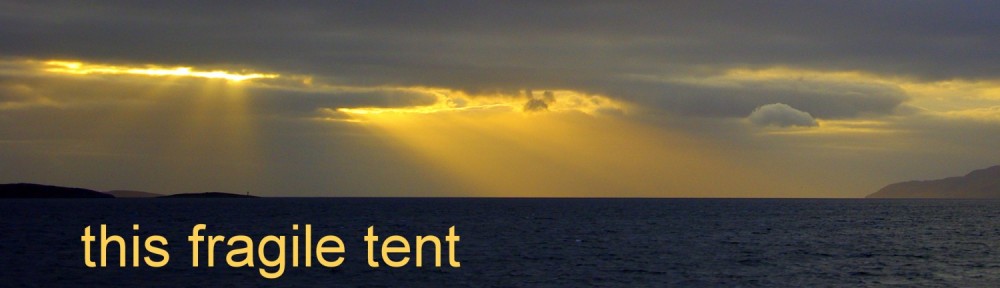
Almost as if the Kingdom of God shines like a shaft of sunlight on the opposite side of the valley.

I was speaking to a friend of mine today who is a policeman. We were discussing the case of a missing woman who walked into the hills locally over a year ago now. No trace of her has ever been found. He told me that this is not such a rare thing in Scotland. People walk into the wilderness, perhaps to escape their demons, perhaps to celebrate them. Some perhaps are looking for an end to life, others it comes to as a surprise.

Not so long ago some forestry workers found a tent as they were clearing an area of forest. Inside the tent was the skeleton of a man who had lain there undisturbed for around 10 years.

Life is fragile.

But life is beautiful.

Lets not waste it.

Blogged with the Flock Browser

Scottish religion?

As an incomer to this, my adopted land, it is impossible not to compare and contrast things ‘tartan’ from what I have known elsewhere. As a follower of Jesus, the greatest focus of this introspective examination has been how we do religion up here.

There is a great discussion about these issues on Brodie McGregor’s blog- which is on this link; http://viewfromthebasement.typepad.com/my_weblog/2007/04/emerging_or_sub.html
Brodie wrote a paper on Emerging stuff in Scotland, that I found really helpful- it is broken into digestible segments in his blog…

But what forms the character a place? Is there a convergence in the nature of the people? Perhaps we learn more than accents, taking on our style of communicating- of relating and of loving- from our environment. Are we also formed by landscape, by the mountains or the flat lands, or our closeness to the sea? Or is it the economy- those that have and have not, those in poverty or plenty?  Perhaps it is also about history, and ancestry, and our place in the story of ages?

Back to the spiritual dimension- of faith and belief, and how we express these things. Does our chosen expression of faith emerge from our own cultural heritage, or does it shape the way we are? I wonder if the way religion is understood and celebrated within any given culture becomes as influential to the formation of our towns and streets and institutions as DNA within our blood streams? Certainly, sometimes it seems that a bit of John Knox, along with a slice of Calvin and a hint of Iain Paisley can be found in every squared away, sensible building and every official institution.

As you travel up the west coast things change again…

But a few years ago, before we lived up here, I was walking through the lovely little town of Gairloch, in Wester Ross. I came across two little churches- so close, they were almost (but not quite) touching. They were separated by a few inches of clear air, but I imagined these inches to be stuffed full of inpenetrateable doctrinal difference.

I do not know the history of these churches, and certainly do not mean to criticise what I have no knowledge of. There may be very good reasons for having two such buildings- each one may be full on Sundays, and they may exist in harmonious fellowship.

But for me- this photograph has come to symbolise something of our Scottish religion.

I have said enough- here is the photograph, it can speak for itself.

Blogged with the Flock Browser

Tags: , , ,

Church?

Over the past few years I have had repeated conversations about Church. The themes of these discussions are as follows;

What is it?
Not a building? (But they are useful- particularly in our climate!) Not an institution? (But we easily organise and concrete ourselves into one.) Is it a movement? (And if so- where is the movement?)

What does it look like?
Not a club that exists for the members interests? (But what energy is left for others because of the demands made to service the club?) Do we all have to look the same? (And if not, why do we?) Not a Lecture hall/concert hall? (Where we gather mainly to receive pieces of knowledge, or to worship from afar?)

What should it look like?
Family? Community? Revolutionary cell? Monastery? Soup Kitchen? Therapy centre? Light on a hill? Circus act?

What is it for?
To defend the faith, and nurture the faithful? Or to does it exist solely to bless and serve those who are not members? Is it to make disciples of Jesus and set them loose on the winds of the Spirit- or is it to control and make safe the flock so doctrine and practice remain pure and unsullied by error or heresy?

What should be it’s priorities?
Preaching and teaching of truth- and the moral yardstick for culture? Social justice and looking after the poor and needy?
The Kingdom of God, in all its glory and majesty- in the future tense, but also NOW?

Mixed in with this talk are a load of sub themes- the death of Christendom, and the winding down of the modern age to be replaced with something fluid and undefined called ‘post-modernity‘, and the desperate need to find both old and new ways to bring refreshment to our communities of faith, so that we might be a blessing to others.

Any of you who loosely wear the ’emergent’ label will be well familiar with these debates- in fact you may be heartily sick of them!

I have spent hours deconstructing Church as I have known it. Through circumstances- geography, theology, difficulty and (I hope) following after God, I now find myself outside institutional church. This position is a gift and a burden all at the same time.

The gift is freedom. Freedom FROM a lot of the things that I have come to reject within churches, and freedom to choose new ways, in small community, looking to the the Holy Spirit for guidance.

The burden is isolation. A need to find new disciplines because the structure given by a wider organisation is no longer there. What about the kids?

I am also aware that at times I have been too keen to reject and harshly criticise what I have found freedom from. There is such a danger of arrogance and pride. As if they were wrong, and I am right- which is clearly nonsense.

So-any conclusions? Perhaps none- but a few working hypotheses…

Church happens when people follow Jesus. It dies when we follow institutions.

Church is seen in the visible marks made by the imperfect agents of the Kingdom of God.

Church is fluid and moving, like water. Place it in a pond and it stagnates- no matter how much is spent on artificial aeration projects.

Church is not me, it is us. It is never mine, always ours. Always HIS.

Blogged with the Flock Browser

Holy Mary, mother of God

This is a duplication of a post from the Aoradh website, and also on the Emerging Scotland Face book group. There was much (heated) discussion on the latter, and you can check it out here http://www.facebook.com/topic.php?uid=11526988099&topic=4447

I post it again with some trepidation, because entirely predictably, it has got me into trouble. Scotland still feels our sectarian separateness deeply. I have come to believe however, that despite genuine doctrinal disagreements, sectarianism has become a kind of sickness for us.

Not just the obvious football tribalism, but also within our churches.
I am from a Protestant background. Many things were given to me as absolute truth. Some of these I cherish, but many others I question and wrestle with.

One of the issues that was self evident to those from my church background was the fact that the Catholic Church was built on, at very best, very shaky foundations. There were debates as to whether it was really possible to be a Catholic AND a Christian. I lived in England, and these ‘truth-wars’ have mostly died down, but here in Scotland, there are many places (even outside football, and inside the church) where we still fight over the same battle lines.

Some of the sectarian positions Christians take up on this issue I can not begin to understand. Politics and social history are mixed in, along with the legacy of hurt and pain from previous generations. This has stained religion on both sides of the sectarian divide. Theological rationalisation for this hatred is very hard to bear though- all the stuff about the Pope being the anti-Christ, and the demonic influence on the formation of various monastic orders. I have heard these things rehearsed by otherwise rational and caring people in my town.

Back to my own prejudice however. When I was younger, these were the facts I knew about Catholics;

  • They prayed to saints, not God.
  • In particular, they prayed to Mary, and appeared to worship her.
  • They did all sorts of things according to Papal edict, not through their own direct study of the Bible.
  • Priests controlled access to God, through confession, absolution and the mass.
  • They had lost the vibrant influence of the Holy Spirit that was so important to my tradition.
  • They lived in a dead religious world of incense, Latin and gold leaf.
  • Rome wields political clout for its own interests.

All these facts I knew because someone told me them. I did not know any practicing Catholics- although I knew a few ex-Catholics (who were a bit like evangelical ex-smokers!) Likewise, it was possible to find evidence to support a negative view of the Catholic Church. Like most large organisations, it contains much that is rightly questionable.

But as I have become older, I have had to re-evaluate this narrow and blinkered view of Catholicism again and again. It is just impossible to avoid the evidence of God at work within and through the Catholic Church. I read and wept over the stories of the courage of the priests who lived out liberation theology under persecution in South America. I met Charismatic Catholics. I saw the immense depth and power of the contemplative traditions from various Catholic Orders, and the beauty in ancient liturgy impacted me perhaps for the first time. I have seen at close hand a Priest who operates in grace and love.

I also became less and less secure in the absolute rightness of my own traditions. I see the Reformation and subsequent Protestant project, in all its messy fervency, as richly blessed by God. But I am also aware of its dark side- the divisive self defeating squabbles, the constant battles of ‘truth’, the condemnation and judgementalism that has allowed our faith to co-exist with rampant capitalism, slavery and imperialism.

I am not Catholic, but now I have great Christian friends that are. I am proud to share my journey with people who have such a rich and complimentary understanding of who Jesus is, and how the Kingdom of God can be made real. I found I had much more I common with these friends than many from my own tradition. They confounded my prejudice, and joined me in my prayers to the Living God. Saints are barely ever mentioned, apart from as examples.

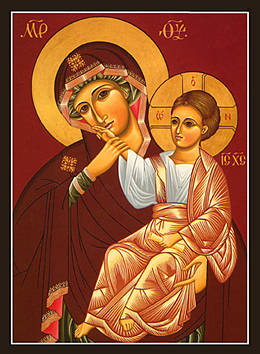
And then we come to Mary.

There is a wide variety of veneration of Mary across the Catholic Church. Many do pray to her directly. It is for those people to decide how that brings meaning to their worship, and not me. To those of us from a different tradition, perhaps we can even learn something from this.

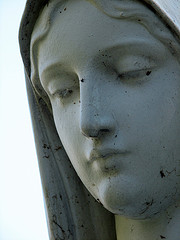
Mary.

The bearer of the Saviour of history.

Virgin who risked all to carry Jesus to us.

This young girl was greeted by an Angel, who told her she was highly favoured

Despite her fear, she said ‘I am the Lord’s servant. Do with me as you like’.

In a burst of prophetic song, she sang this

From now on all generations shall call me blessed, for the mighty one has done great things in me!

Witness to Angels and Stars and Shepherds and wise men.

Protector and refugee in Egypt.

Real woman, wife to Joe, and other kids too.

Proud proud mother of the miracle maker.

Listener of sermons.

Worrier.

Lover.

Observer of arrest and trial.

Follower of the Cross on the way to Golgotha.

Broken hearted as the nails drove home.

Hearer of these words from a dying son

Dearest woman- here is your son (and to the man who Jesus said was the rock on which he would build his Church) Here is your mother.

Taker of the broken body.

Airbrushed out of the faith story by the Protestant reformists as reaction-formation?
Blessed are those who hunger and thirst for righteousness…

Blessed are those who hunger and thirst for righteousness…

Blessed are those whose spirit
Rises to meet mine

And who are never satisfied with

Easy compromise

Blessed are they who lay down their rights
To look for my righteousness

Blessed are they who quest

Beyond dogmadogma1.gif

Into me

Blessed are they as they as they escape
The confines of what is known

To search for more

Blessed are those who are vulnerable
And whose necks are stretched

To my sword

For it will fall

Kindly

And blessed are those dirty streets
Where rests

My manna

Blessed are they

For there I am planting

My Kingdom

Worship list 2. Motivation

What might turn our minds to God?

What brings us to worship? What motivates us within it?

I have not go this sorted yet. But the seeking seems very important. It was this that became the centre of the group called ‘Aoradh‘ that I am a part of.

I started to make a list that was relevant to me, and to some of my friends;

  • An encounter with the transcendent, which left us hungry.
  • The desire to live out this worship in a way central to the whole of life.
  • Jesus.
  • A desire to break down barriers between the so-called sacred and the real world.
  • Dissatisfaction with what has been, and longing for more…
  • A longing for creativity, colour and vitality in worship.
  • A longing to be authentic and true in our worship.
  • New ideas freely available – just a mouse click away.
  • Freedom taken or given, so that we can make our own worship.
  • The experience of community, with worship as a natural consequence.
  • An interest in art as a theological and spiritual tool.
  • An appreciation of the many rich traditions of Christian worship.

Worship list 1

I have spent years participating with, and leading, groups of Christians as we worship God.

We always reminded ourselves that worship was a personal decision, made out of relationship and dynamic interaction with the Spirit of the living God, not something that just (or even always) happens in church meetings.

But it is clear that something special can happen when we gather together and make our worship collective…

But what is this?

After all the years of trying to understand this better, I have more questions than answers. Here are some of them

  • Why do we do it? Yes, I know we are supposed to, but what really motivates us?
  • How do we take our private offerings of worship, and collectively present them to God?
  • Or should we allow our worship to travel on the security and safety of tradition?
  • Is it good to be relevant and progressive in the style of our worship?
  • When do we do it, and what does it look like? Does it always have to be formal, ‘churchy’, and dominated by ‘worship professionals’- in my experience, these almost always have a posh guitar.
  • Is there more than music as a way of collectively worshiping?
  • What practices or attitudes of body and mind might HELP us to worship?
  • What might we expect Him to do as we worship? Is he distant, or active? Is he particularly active as we worship?
  • How much of our worship arises from individual choices or decisions?
  • What might we aspire to, how do we measure the worth of our worship?
  • How much arises as a response to that which is collective and shared – or even proscribed?
  • Does God inhabit the praises of his people, and if so, how can we meet him there?

Some of the answers to questions like this already have the shape of answers given to me by my church tradition. But these answers are rarely complete, but only partial.

How we work out our collective answers to these questions may be different for all of us. But if we do not ask them, my experience is that something in the middle of us starts to whither and die.

Perhaps we become bored and stale.

But could it be that God is bored too?

I have come to think that the enemy of faith is stasis. Even if not everything around us needs to change- we always do.

Blessed are the peace makers…

An excerpt from ‘The Beatitudes’. The rest can be found here;

http://www.aoradh.org/index.php?option=com_content&task=view&id=123&Itemid=62

Blessed are the peace makers…

Blessed are those whose find themselves
No longer vindicated

By the failure of others

Blessed are those whose borders lie open

And whose cartographers no longer

Conspire

Blessed are those who put off
Their badge of office
peace.jpg
And reveal who they are

Not who they want to be

And blessed are those

Who lie down like a bridge
For others to walk upon

Whose sinews take the strain

Of two way traffic

And blessed are those who seek peace
In an age of war

And speak of love
In a time of revenge

Blessed are you

Sons and Daughters

Of the Most High God

Agents of

My Kingdom

Missionality?

To continue the Aussie theme began in my last post- we are just about to begin a study called Exilio in our house group. Thanks to Johnny Laird(http://johnnylaird.blogspot.com/) for the info about this wonderful (but very demanding) resource.

This is a resource produced by Aussie globe trotter Michael Frost and others. It is based on Frost’s book ‘Exiles’, and a study on the book of acts, and the whole point is to help us think about living Missional lives. Its available on this link http://www.forge.org.au/index.php/20070322143/FORGE/Forge-Australia-Info/Forge-Resources.html

This word missional seems to be on the up. Some folk in our group were a bit irritated by it. I suppose it is an attempt to recapture the centrality of mission in the life of Christians.

But for a much better definition- check out Tall Skinny Kiwi (Andrew Jones);

http://tallskinnykiwi.typepad.com/tallskinnykiwi/2008/06/missional-synch.html

Kanyini

Thanks to the heads up from Craig in Australia, I have been doing some research and thinking about the concept of Kanyini. Craig was kind enough to send this to me in connection to some ‘wilderness meditations’ we are working on- finding locations to provide cues and context for drawing close to God (some of this stuff can be found here; www.aoradh.org/index.php?option=com_content&task=category&sectionid=24&id=80&Itemid=62)

The concept of kanyini has been brought to us by a beautiful man called Bob Randall who grew up as an aboriginal boy on the outskirts of a cattle station in central Australia. His father was a farmer of Scottish extraction, but appears to have had no concern for him at all. Like 50,000 other black kids of mixed race (between 1910 and 1970) he was forcibly removed from his family, and sent to school hundreds of miles from home. He was forced to learn the rules of white culture- the clothes, the way of life, the religion. He learnt to appreciate the contradictions between the words of Jesus, and the actions of these, his followers. Since then, he has been a welfare worker, a songwriter, and author, and now, works with Australia’s black community.

To be a native Australian in these times is to be part of a community with huge problems- health, crime, substance misuse, soaring suicide rates. It is a community living in the shadows of the sky scrapers of new Australia, but also in the shadow of what amount to a genocide, in which everything about what has been described as the oldest culture in the world has been all but destroyed.

But it is also the story of a Diaspora of westerners (particularly Celts from Ireland and Scotland) often still under the shadow of their own experience of oppression and injustice, who become in turn the oppressors, murderers and rapists of a whole culture.

It is their story, but it is also ours. It is the story of what happens when we become disconnected from who we are.

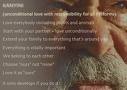
Because to hear Bob Randall speak(check out the links below) is to feel the pull of something wonderful. He describes a culture where people are connected to land. Birds, trees, all living things- they are family. The proof of this connection is that we are… alive! And because everything is connected, everything is OURS, not MINE. Everything is already created in a perfect state and our job is to become part of it.

Bob describes his memory of life as a kid like this;

These were beautiful people, because they lived in a beautiful way.

Bob’s concept of Kanyini feels right. It has simple truth- and seems to encapsulate the idea of community as I understand it should be. It has 4 components

  • belief system
  • spirituality
  • land
  • family

I very much recommend checking out the film about Bob from the schools site below, or there are other links to the Kanyini film on the second link.

www.teachers.tv/video/22396


www.wyldheart.co.uk/kanyini.html