Proost Advent Journey begins again…

Once again we are gathering contributions for a collaborative creative advent journey. Days one (Cameron Preece) and two (Margaret Somerville) are now live over on the Proost blog.

We even have an upload page here to make it simple to join in.

It would be lovely to share this with you, so any contibutitions of creative material that engages with the advent season in ways we can encourage and challenge each other with would be most welcome.

Music, video, poetry, art, dance – anything that we can share digitally with each other.

Go on.

Push outwards towards the light.

Are small boats really ‘tearing our country apart’?

According to our home secretary (herself the daughter of immigrants) this is the problem we are facing, and she has the solutions to the problem.

The solution, it seems is to bring in the most draconian policies against refugees ever attempted.

Why are we doing this?

Is this really a necessary corrective to an unfair, out-of-control, chaotic situation that is dividing our country? Is this about taking back control of our borders and keeping our streets safe from marauding gangs of rapists and pick-pockets?

Or is this just performative cruelty, intended to assuage the far right scapegoating of a tiny minorty? The desperate move of a deeply unpopular government lead by a prime minster seeminly devoid of an ideas that might bring hope of compassion to a country beaten down by cost of living rises, decades of austerity and rampany inequality.

It is almost as if the people who arrive here seeking asylum are not people at all… as if their pain is not our pain, as if it belongs elsewhere. We can justify this lack of compassion only by asserting our own victimhood, and it is this that Reform and Tommy two-names are exploiting as a political blunderbus, aimed downwards at those most vulnerable.

Labour appear to have decided that the answer is to get a blunderbus of their own.

What we are not seeing in this ‘debate’ is any real attempt to address the so-called refugee crisis on the basis of facts. The ecomonic/demographic analysis of the impact of refugees in this country is always secondary to political perspective and the fear and hatred whipped up by those able to use it as a political weapon. Lets push back on this if we can. What can we say about the numbers?

Is the UK facing a particular problem not seen elsewhere?

Well, in terms of numbers of assylum seekers per head of popuation, the UK is in 17th place in Europe so this is clearly a global problem, not a UK problem. If the ratio of brown faces to white faces is the concern here (and I think it might be that simplistic for many) then despite our colonial history which makes our connection to – and responsibiity for – many of the most troubled places in the world, still there are 17 nations within Europe that take more people than we do.

Are there too many people here already?

Is Britain full? Are we being overwhelmed? Numbers can be so difficult to get our heads round, but here are the stats for this year’s immigration to this country from the UK government’s own figures.

The vast majority of immigration into this country is people who come here to work or study.

Is the system broken and out of control?

Here are the numbers of people who are currently in the asylum system, waiting to be processed. As in the Channel 4 documentary clip above points out, people in this system have years of waiting, followed often by seemlingly arbitary and draconian decisions which then go back to court, and meanwhile people live half-lives of waiting in poor accomodation, excluded from participation in economic or community life.

We perhaps have to conclude that this system is indeed broken, but that this has been the result of political choices driven by ideology of the sort that Labour are now embracing.

Are migrants a drain on our economy?

This is certainly the message we see pounded out repeatedly on our media outlets – the cost of hotels, the fact that the NHS cannot cope etc etc.

Leave aside the fact that asylum seekers are not allowed to work, or that the benefits they recieve are miniscule (£49.18 per person per week if they live in self-catered accommodation, or £9.95 per person per week if meals are provided. This money is loaded onto a pre-paid debit card and is intended to cover basic needs like food, clothing, and toiletries.)

Leave aside also how the NHS, and many of our other institutions are dependent on immigrant workers to sustain their activities, or the fact that our aging population desperately needs the creativity, vitality, youth and enterprise brought by incomers.

And consider this report which offers wholy different approach to that which our Labour government are pursuing;

Welcoming Growth – the case for a fair and humane asylum system is a new policy report, supported by PCS, which has launched today (17). The report reveals that every refugee accepted into the UK would contribute over £260,000 to the UK economy if the proposed changes within the report were adopted. This includes a net benefit to the public purse of £53,000 each.

The four key policy changes within the report include:

  • Asylum claims to be processed within six months
  • Legal assistance at all stages of the application process
  • English language support from day of arrival
  • Employment support from day of arrival.

Speaking ahead of the launch in parliament, PCS general secretary Fran Heathcote said: “Today we are witnessing the government neglect its own plans for growth by taking a harder line against some of the most vulnerable people who come to this country, fleeing war, persecution and violence. To threaten refugees with the removal of their only belongings to pay for their cases is frankly a line I would expect from Reform.

“Our report shows that through embracing a humane and fair approach to asylum we could assimilate refugees into our communities whilst ensuring they can contribute and support themselves. This report provides positive solutions, not divisive decisions which continue to fan the flames of hate.”

Other key findings within the report include:

Overall economy – The four changes to the asylum system would mean a contribution to the UK economy from every refugee of £265,788 over 12.5 years from arrival.

Accommodation – The changes to the system would result in a net saving in accommodation costs of £42,000 per asylum seeker over a 12.5-year period from arrival. This equates to a 34% saving in the total cost of accommodation for asylum seekers over the period (from £144,000 to £79,000). This is because by expediting the application process to six months, people can be self-sufficient sooner – meaning housing costs would be paid by the individual, rather than the state, a year earlier.

Public Purse – The four interventions in the model would benefit the UK exchequer by £53,000 per refugee over 12.5 years from arrival. This includes a net contribution of £7,000 for every refugee to the public purse just by expediting the asylum application system to six months and providing legal assistance throughout the process. This financial benefit takes into account all the associated costs of supporting asylum seekers from arrival, as well as the expense of creating and implementing the four proposed changes to the asylum system.

Employment – Every £1 invested in English classes and employment support from day one results in £9 in increased salary–over the 12.5 years from arrival. This equates to a 76% increase in total employment income, reflecting the cumulative effects of faster processing, language training, and employment support. This, in turn, means significant benefit to the economy and public purse.

The London School of Economics (LSE) report, commissioned by PCS and Together With Refugees

If then, these draconian, punishing proposals by appear NOT to be based on actual research, or on factual understandings of the challenges brought by the arrival of refugees on our shores, why are they being proposed at all? I was so heartened to read these words from Rt Rev Dr Anderson Jeremiah, the bishop of Edmonton.

“We are scapegoating asylum seekers for the failures and political divisions caused by successive governments in the last 15 years – the failures of successive governments to address wealth inequality, funding for education, the cost of living and primary healthcare and infrastructure.

“Every day I meet homeless people who have fallen through the cracks in our system. And yet in singling out asylum seekers we are laying the burden of society’s problems on less than 1% of the UK population – when the number of millionaires and billionaires is on the rise.

Jeremiah smiling
Rt Rev Dr Anderson Jeremiah: ‘We can’t isolate one section of people and label them as a problem that can be easily addressed.’ Photograph: supplied

“There are politicians who are trying to hold on to compassion in public life. But at the same time there is a pressure to have a singular problem on which all things can be blamed.

“But we are a connected society. Our environmental crisis is deeply connected to the conflicts which lead to people to our borders. We can’t isolate one section of people and label them as a problem that can be easily addressed. If one part of the body hurts, it hurts the entire body.”

Amen.

How to read a landscape…

I live in a ‘wild’ place – mountains, broken tree-lined shores, deep lochs, forests. I am surrounded by iconic British animals- red squirrels, sea eagles, pine martens, deer. Tourists come here and wonder. Locals are proud. All of us are nature-blind, because this place is anything but wild.

There is this strange thing that happens when we look at the Scottish landscape (or perhaps at any landscape) in that we do not know what we are seeing. Partly this is because we have lost our folk memories of what we are NOT seeing.

Despite every metric pointing to a continual precipitous decline in our ecosystems- a loss of diversity measurable in almost every way, and in different biomes – most of us are not able to grasp just how bad things are here in Scotland. There has been an average 15% decline in abundance of 407 terrestrial and freshwater species since 1994. There has been a 49% decline in average abundance of Scottish seabirds. 11% of species found in Scotland are threatened with extinction from Great Britain. Meanwhile, we thrill to nature propoganda shots of the sea eagles of the noble stag as if all is well.

This film tells a story that we need to hear.

How has it come to this, and what can we do about it?

As mentioned in the video, wealth is at the heart of the problem. Land ownership in Scotland has a particular flavour and pattern that arises from a history that we can not be proud of. This from here.

No other European country has such a narrow base of proprietorship as Scotland. Half of all privately owned rural land is held by 421 people or entities. The roots of such disparities lie in the past. The 18th- and 19th-century Highland clearances emptied the glens and readied them for private takeover. On the continent, and eventually in England, the great estates were broken up by inheritance and land taxes. By comparison, Scotland is still feudal in scale.

There are already fears that Scotland’s new proposed Land Reform Bill has been gutted, ending up with something far less than that recommended by the Scottish Land Commission in their report from 2019. It is hard to escape the power of wealthy elites.

The video above mentions the possible use of a land tax, of the kind proposed by Common Weal.

Land prices in Scotland have risen at a rate
outstripping many other ‘investment assets’ with
stocked commercial forest land in Scotland,
for instance, increasing in value from £8,500
per hectare in 2018 to £21,000 per hectare in
202210 (had such land increased in price only by
general inflation, it would be worth just £9,500
per hectare in 2022). The selling price of such
land has also consistently been over 120% of the
asking price on the market which is indicative
of demand for purchases being substantially
higher than supply. Similar patterns have been
observed in other types of land in Scotland in
recent years so it is not a stretch to say that
communities are simply being ‘priced out’ of land,
even where legislation has made some steps
towards making it theoretically easier for them to
purchase such land assuming they somehow had
the capital to do so. The high profile failure of a
local community to be able to enact a community
buyout of the Tayvallich Estate in Argyll – which
had an asking price of £10.5 million, equivalent
to around £7,800 per hectare – is indicative of
Scotland’s broader failure to enact land reform
and will only be one of many such failures until
reform is embedded. A local land tax can, should,
and must be a part of this reform, not just by
raising revenue which would directly benefit
communities who cannot otherwise access the
land around them but also by acting as a break
or even reversal on the price of land sales (which
would have to factor in the tax burden of the
asset) and, if done right, would bring prices back
down into the range at which communities would
have a better chance of owning the land around
and under their own feet.

Read the whole report here.

For most of us, far from the seats of power in Edinburgh or London, there remains the important, ordinary urgency of learning how to read a landscape.

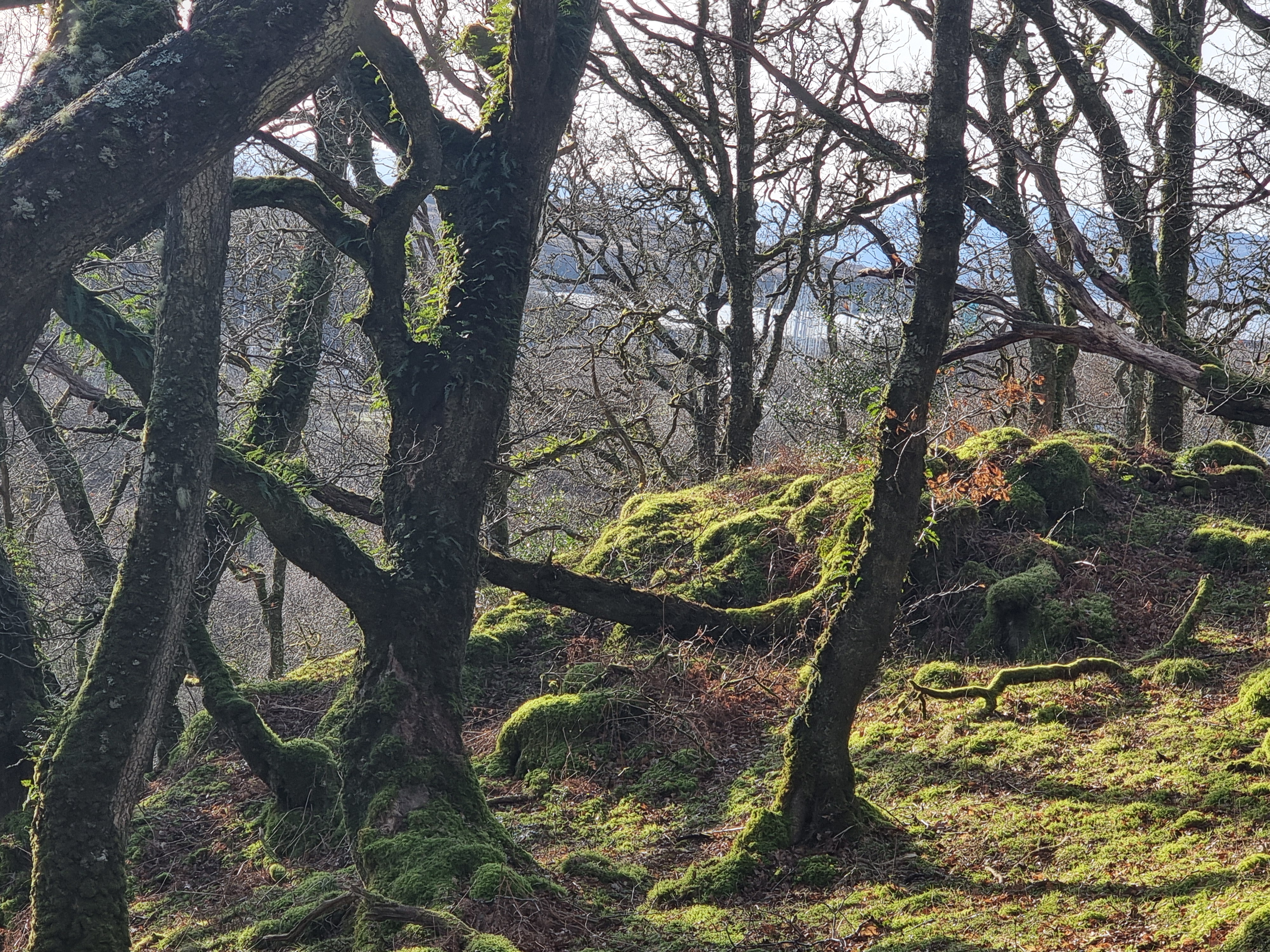
The photograph above is taken just above my house- one of the many many vast plantations of commercial forest in my home county of Argyll. They are better understand as green-brown deserts.

Here in Scotland, our challenge is mostly NOT preservation, it is the urgent need of restoration and recovery of our ecosystems. Think about that- in contrast to other European countries, we have ALREADY lost much of what should be here. In order to see any recovery, the task required is a mult-generational re-seeding and re-populating of our mountains and valleys.

We have to be able to SEE this and imagine an alternative.

Fear and loathing in Los England…

Flags flying in front of York Minster

I am just back from York, where I was attending an Iona Community event. I have started the two year discernment process towards becoming a full member of the community, and this event had two parts- firstly time spent with other new members examining one of the four ‘rules’ that form the basis for membership-

Working for justice and peace, wholeness and reconciliation in our localities, society and the whole creation.

(By the way, if you are interested in the work of the Iona Community, let’s have a chat.)

After this came a day with around 80-90 of the existing full members as we heard from Paul Parker, Recording Clark of the Quakers in Britain. The Quakers don’t have a ‘leader’ – rather Paul’s role is to seek to create good processes for the 450 worshipping groups of friends. He spoke powerfully about quiet diplomacy and the Quaker colective process of testing concern together to develop collective courage. He contrasted the ‘prophet’ role (calling out injustice) from the ‘reconciler’ (seeking to listen and love) role- how they sometimes need to be employed in different ways and in different circumstances. In other words- the two hands of non-violence, in which one is the hand held aloft to say STOP, and the other is open to say ‘I love you, can we talk?’

This discussion inevitably makes me think about the divided and splintered shape of our society just now. How do we engage – as either prophets or reconcilers? Where are the spaces in which either of these things are possible?

And even if we find these places, how will I find the courage?

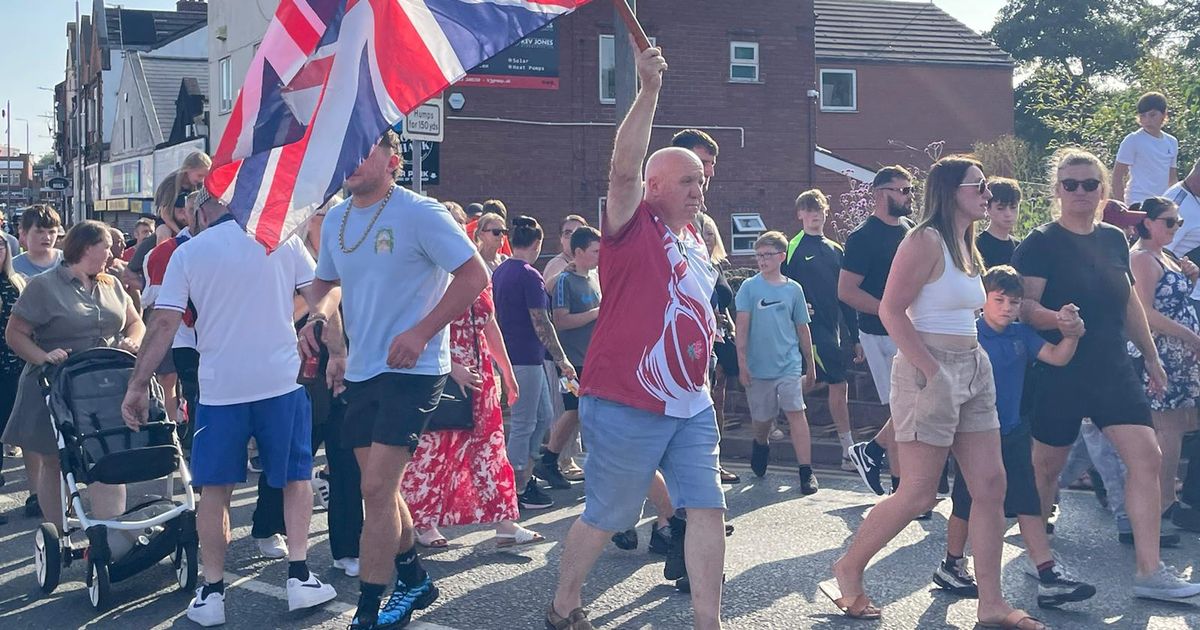
Meanwhile, there is another fear project going on at full tilt. Fear as a political instrument to create division through hatred and scapegoating of the outsider.

As you might expect, I have been trying to explore some of this through poetry. Here is what I am working on…

Be not afraid

I know you are afraid love -
Who can blame you? This broken world
Wobbles so hard it might
Shake us all off.
And all those purple-faced men
Looking for someone else to blame -
If they run out of brown people
They might wave their flags at us.

We should beware my love
For there are those for whom your fear spells opportunity.
They nurture it in toxic tubes, so
To spore the very air they feed us, and
None of us are immune because
Even those of us with those lumps in our throats
Must still breathe.

So, forgive my riding high on this highest horse
Because I need to tell you this;
If we always fear of what you do not know
It will rob our future of hope
It will tuck us up in defended spaces
Seeking only safety
Watching the world through narrow arrow slits
Flexing that persistent itch in our trigger fingers
But if we always fear the stranger
How will we ever make new friends?

I know you better my beloved -
Your heart beats beauty on your sleeve.
I know you would mend the broken if you could
With that clever glue called kindness.
I know you would never eat alone
When someone close was starving.
I know you were never made for hatred
When the core of you is love;
When the heart of you is love;
When at the bones of you is love;
When in the mess of you;
Is love.

So love.


New proost poetry podcast with Samara Pitt…

One of the delightful things about our Proost project is that it enables us to walk the edges and find others that are doing the same. We try to gather some of this edge walking via our two podcasts- one that has a more general focus (and includes trying to do Proost ‘buisiness’ out in the open), the other one gathering poets and poetry- as this seems to have always been a strong and important strand of what we are about.

Today I was delighted to listen and share this conversation;

Where does poetry go? What is it for? How might it be used in the service of justice, peace and reconciliation? How does this relate to spirituality?

In this episode, our Talitha talks to the poet, musician and activist Samara Pitt about her practice, her songs and her love of words. In particular, she describes a process of turning poetry into song – an almost magical process…

Samara describes herself like this;

Samara is a 7th generation coloniser-inheritor living on the unceded land of the Wurundjeri Woirurrung people in the hills outside of Naarm/Melbourne.

She has lived and worked in several different intentional communities, most recently at Gembrook Retreat where the community invites people on to the land to encounter God in creation and to equip each other to live a soulful life.

She loves singing, singing with others, and putting music to words that help us listen more deeply to Country and to soul. Drawing on the liturgical tradition of sung refrains as a congregational response to the reading of a psalm, she has just started to compose short songs based on the repetition of short phrases, designed to help us dwell with the emotion and beauty of words and harmonies. They are also a grateful tribute and offering to the writers.

You can find more of Samara’s work – and support it – here.

Here is Samara’s account of her poetry choices for this episode.

Butterflies

Shaun Tan is one of my favourite writers and illustrators working in these lands now called Australia. His books are haunting and beautiful. and help me to look at the ordinary through the lens of wonder and imagination. This is taken from his book Tales from the Inner City which explores the mythic presence of the more-than-human world in the midst of our cities.

The hunger

The lyrics come from Kerri ní Dochartaigh’s book ‘Thin Places’, a mix of nature writing and Troubles memoir about growing up in in the midst of violence in Derry and the role of nature in helping her find peace and healing.

The halos and the rocks

Gout Gout is an up and coming Australian sprinter who gave the most poetic statement I’ve ever heard from an athlete in a press conference, when he was asked if he still feels normal. I found another slam poetry style quote from him about how he ‘steps light but presence heavy’, and then added my own line imagining the cycle of preparing for, running and coming down after races.

Turn towards the darkness

I found these lines in a book by Chris Anderson called ‘Light when it comes’. Based on the spiritual practice of ‘examen’, these words suggest that we turn to face darkness rather than flee from it.

Seatree artist retreat- help needed…

For years now, we have been trying to get a project over the line. It has often seemed like it was never going to happen, but now we are finally on the cusp of making it reality.

When we moved to our house, we were not looking for lots of land. Our brief was simple – a smaller house, with room for a pottery studio in which we could work and run workshops, and a small vegetable patch to grow as much food as we could. The aim was for a simple lifestyle, as environmentally sustainable and low impact as possible. Things did not quite work out in the way we planned…

Firstly, we ended up buying a house that came with a large area of overgrown woodland. When we moved, it was impossible to explore most of it, choked as it was by invasive rhodedendron and buddleia. I felt the responsibiity to care for this land keenly – to take out the invasive species and let the old oak trees breathe. I have since spent a long time and lots of hard work trying to do just that – and slowly it has started to transform the woodland back to what it always should have been- a pocket of beautiful oak rainforest, perched above the Clyde estuary…

The other thing that did not go to plan was that we had an unfortunate brush with officialdom. When we moved to our new house, we asked a series of questions of Argyll and Bute planning department about what permissions we needed to obtain to work from home and run pottery workshops for members of the public. We were told (by e-mail) that we required none. Accordingly, we built workshops and pretty soon a third of our income was made up of people paying for pottery workshops.

Unfortunately, following a complaint from a neighbour about us running a business from home, the planning department conducted an investigation, and decided that although our activities were not in breach of planning, the building we had erected as our workshop was not deemed to pass building regulations for recieving members of the public. We appealed, on the basis that we had previously been informed by e-mail that building regulations were not required, but to no avail. Conspiracy theorists might well enjoy the fact that our beloved council deleted all documents and e-mails relating to our enquiries, meaning that the ombudsman was not able to rule in our favour. Such is life. We adapted and moved on…

My mum died. Here she is, sitting in a garden, her favourite place in the world. She never got to see our new garden, here in the Clyde, being too ill to travel north. When it came to a share of the small amount of inheritance from the sale of her house that was coming to us, I wanted to make something that might form a lasting memorial.

Could we use it to build a new workshop? Something that enhanced the woodland, built from sustainable materials and using low impact construction methods?

Even better, could we make a space in the woodland that might become a haven for people – for artists and makers to spent time creating and recharging their passion?

Fortunately, we have a friend who runs a company who have the skills to make something like this happen. Without Stuart and his company Fynewood, we would have given up long ago as we have tried to navigate the labyrinth of planning. Along with Ronan (who handles design and planning) we came up with something…

We now have planning consent to put up two small buildings – one a micro-lodge with shower and amenities, the other a workshop with disabled access loo. We intend to make the whole site fully accessible to people in wheelchairs by putting in a graded pathway and decking.

We will then use the premises in a number of different ways;

  • A place for people to make artist retreats. People will be able to book both the accommodation and the workshop for either four, seven or eleven nights.
  • We intend to make some slots available at low/no cost to artists who would otherwise not be able to participate.
  • Our own workshops. Pottery, retreat days, poetry and writing days.
  • Guest workshops. Working with our network of artists and creatives, to host a wide range of arts, crafts and writing.
  • Bookings by other artists to run their own events.

As you can imagine, the costs of making this happen is a real challenge – particularly as these costs have been rising constantly, making everything much more expensive than when we started this process. Conditions imposed by the planning department have raised these costs further – we are still negotiating some of these conditions.

Despite this, we are pressing forward, determined and very grateful for the support of Fynewood.

But now we need your help.

Firstly, there is this survey.

If you are an artist, and you have ever taken, or would like to take, an artists retreat, then we would love to hear from you.

If you have undertaken workshops, would like to start or attend more, we would love to hear from you.

If you have run workshops yourself, we would love to hear from you.

Crowdfunding

The next way you might be able to help is to support this project more directly – specifically with the accessibility side of the project. Feel no pressure, but if this project connects with things that you find important and you have some spare cash to put towards it, then we would be most grateful.

Back in 2020, we were amazed when our crowdfunded ‘shop shed’ was so well supported. We decided to reach out once more to our wonderful supporters.

We have set up a new crowd funding portal, with a set of rewards as before – both physical things, but also the opportunity to book in advance as a way of investing in the future.

You can take a look here.

Creative Scotland have a system of match funding crowdfunded donations (up to a combined total of £10K) so your contributions might count for double!

Help us make this plan a reality. Help us create a space for hospitality and creativity, Let us bring good things out of this good ground, together.

On that thing called prayer…

Hasan Baglar’s ‘Danlock’ has been crowned the grand prize winner of this year’s Cewe Photo Award (Image credit: Hasan Baglar)

I have been thinking a lot about prayer recently. I am starting a 2 year discernment process towards a decision of becoming a full member of the Iona Community. I will be committing myself to doing my best to keep the ‘rule’ of the community- which includes the following;

Daily prayer, worship with others and regular engagement with the Bible and other material which nourishes us.

Prayer is something I have never been ‘good’ at, even in the days when I tried hard to be good at it. In more recent times, I have moved to a point where I mostly do not pray – at least not in the way I used to understand what it was and what it was for.

I grew up with an understanding of prayer as a means to persuade God to aid our cause. The degree to which God was willing to accede to our entreaties and lists of requests was always something of a problem. It was very tempting to over-claim – or to build castles of consequence on shaky coincidences. Those times, for instance, when God miraculously granted us a free parking space, or a friend to talk to just when we needed them.

My wife Michaela was prayed for by good people for years because of her experience of chronic illness which left her ill and unable to participate in many things others took for granted. Some even suggested her lack of healing was due to unconfessed sin, or lack of faith.

Then her illness got better, overnight. It confounded medical people and confused us…

…particularly as my theological journey has taken me to a place where I no longer believe in an interventionist God. My current way of trying to resolve all of these contraditictions is through process theology – or sometimes open relational theology.

But this is all very ‘head first’ stuff.

For any theology to be real, it has to sing in our souls. The complexity of open relational ways to try to describe the way that a divine being might interact with our broken humanity is beyond more of us, particularly during the inevitable struggles and challenges of our lives.

What part has prayer to play in these struggles?

How might I/we concieve of a spiritual practice of prayer that is meaningful, relational, dynamic and useful?

I saw this quote from a new book the other day;

On the strength of this quote alone, and in the shadow of my own struggles with prayer, I ordered the book.

But these are not new questions for me, so I have some other provisional answers about what I think of as prayer now. They have broadened out to include this list (which is not in any kind of order)

  • Breathing
  • Seeking connection in forest
  • Singing
  • Caring and hoping for friends
  • Dancing
  • Looking for resonance in art
  • Hoping
  • listening to bird song
  • Deep talk around a fireside
  • Making art
  • Seeking goodness
  • Listening to people who are hurting
  • Pilgrimage

You may well think that this list is a good list, but not a prayerful one…

Above all, my current thinking is that I need to pray with a pen in my hand (or more commonly a keyboard under my fingers.) For me, my poetry is above all, prayer.

So I finish with this poem, which I wrote this morning;

I will not pray

I will not pray for miraculous intervention

But I will try to pray for those

Who cannot pray

I will not sing those hymns of adoration

Yet still I sing for those

Who cannot sing

I will not seek your soul to save

But I will search the wildest places for

The beautiful but broken

I will not rend my clothes to mourn

Instead, I mark those names that

Were never known

I make no promise as a lover

Except to look in love for those

Whose love has been emptied

I will not pray for favour, or for better weather

But whatever roof I have is

Yours to share

Hyper-polarisation and political violence…

Even from here in rural Scotland, the death of a 31 year old hard right Christian gun advocate has been inescapable. Perhaps it was the horrific irony of the moment of his death- shot during a discussion about gun violence, or the controversial nature of many of his views, most of which where framed in Christian language as if from some kind of MAGA prophet.

For many on one side of the political divide, he is a martyr for his faith, achieving the Protestant equivalent of sainthood. His ’cause’ is a like a flag to be picked up on the battlefield against rising hoards of athiest islamic left-wing nut-jobs massing at the border seeking to replace the great American theocracy with trans-gender abortion and lesbian weddings.

Meanwhile, over in the other camp, people are actively celebrating Kirk’s death. A young father, aged 31, cut down in his prime is an evil that has been greeted with glee. There have been righteous protestations of condemnation of violence, but always these have been posed alongside discriptions of the outrageous things that Kirk said and represented. The message is clear- he brought this down on himself.

What might this moment represent to us with the hindsight of history? Might it be the moment when we realised that the politics of polarisation an only ever lead towards violencehat – that this kind of language, when used quite deliberately as a political strategy to breakthrough democratic deadlock, might destroy our fragile peace?

Or will it instead mark the point when that destruction entered a new phase towards the end game that was to come? Only future-us can know the answer…

Two important issues stand out to me. The first is this one;

Hyper-polarisation

Perhaps this article from back in 2016 – which already feels like an age ago – is a good place to start in understanding this phenomenon.

Bringing all of this together in Why Washington Won’t Work, Marc Hetherington and Thomas Rudolph paint a picture of a nation overwhelmed by dislike and distrust of the other side and, consequently, a political process incapable of compromise and mired in gridlock. It is easy to see how this sort of distrust and dysfunction manifests itself in assumptions about the motivations (malice, greed, bigotry, moral bankruptcy, or most charitably, naiveté) of those on the other partisan team. Those on the other side no longer just disagree about the issues, they are bad people with dangerous ideas. This paves the way for efforts to delegitimize electoral outcomes and the leaders they produce by way of conspiracy theories and claims of fraud and rigging. Perhaps most dangerously, it also can be used to justify nearly any effort to thwart the opposition.

Let’s be clear- this phenomenon is not going away. In some senses this is because it is a deliberate political strategy- create division using simplistic fear-based stories then exploit this opening by offering a ‘solution’. This is pretty much the whole strategy of The Reform party in the UK, but you can find plenty of examples on the left too. The Cambridge Analytica saga should have been the moment of awakening on the danger to our democracy of this kind of politics, but this seems to have been largely forgotten. Rather than choosing to find ways of regulating and reforming, we moved on.

Polarisation is also an emergent property of our increased reliance on social meda, both in terms of the way that algorythms feed us ever more extreme versions of what it feels will engage our interest, and also because of how we increasingly export a part of our ‘selves’ in the form of on-line avotars that then become places of disembodyment and almost ritualistic tribal defence and offence cycles.

Polarisation perhaps also emerges from our own fragile bruised humanity. This from here;

 central theoretical assumption is that ideological extremism is rooted in a psychological quest for personal significance: A desire to be respected and to matter in the eyes of oneself or important others (Kruglanski et al., 2014; see also Webber et al., 2018). People can acquire such a sense of personal significance through the combination of many sources, such as family, work, and the pursuit of meaningful goals. Sometimes people may experience a loss of significance, however, when they encounter grievances such as humiliation, injustice, or insecurities. Such grievances prompt a sense of meaninglessness, and therefore stimulate a desire to restore a sense of personal significance through a worldview in which perceivers are focally committed to specific ideological goals. Put differently, extreme ideologies help perceivers to restore a sense of significance through a worldview in which they appear to be supporting a meaningful cause.

Some studies have pointed out the way that this ritualistic process might be compared to religion, in the way that it becomes a set of goggles – or a hermaneutic – through which all facts or opinions become mediated, and this takes us to the second of the issues that occupy my thoughts in relaiton to this dreadful shooting.

Christianity and extreme ideology

Kirk’s avowed and much proclaimed Christian faith has been a central part of both his political activities and the subsequent narrative around his death. As someone with many friendships and social media contacts with people across the spectrum of the Christian faith, I was still a little shocked when I read a post this morning that said something along these lines;

So touched by his life and story. At his heart was communicating deeply held truth and wisdom in many matters, in spite of the flack, and the risk. He might have been outspoken but to me he clearly had a heart to teach, demonstrate and guide a generation of whom so many are lost. When society is chaotic and unstructured people suffer, when we accept God’s ways for life there is joy, peace, security. Above all of his debating he said faith and finding Jesus is most important. Tonight I’m praying people once again find their identity in Christ, who is a firm foundation to build our lives on. Praying Christians can speak the truth in love to a world that needs to hear it.

My first response to this was through the lens of my own place on the polarised spectrum. Had this person not seen all the lies, the misogyny and racism? Had they no concerns about the rise of American Christian nationalism? Surely they must recognise the disconnect between the way of Jesus and the politics Kirk espoused?

Then I stopped and started to think about how extreme narratives are pulling at us all, particularly in the religious sphere. We, above all, have to find ways of building bridges, not barracades. It seems that – sadly – we religious people are very much part of the problem. This from here.

Conservative and liberal Christians, like all liberals and conservatives, are inclined to denigrate those on the other side of the political spectrum; and each side is convinced that the other side is treated more leniently than their own side in the media, and by other third parties that try to give an objective account of matters under dispute (3639). However, how have Christians on the two sides of the political divide dealt with discrepancies between their own political positions and the apparent dictates of their faith? Some, no doubt, have felt pressure to moderate their positions to achieve greater congruency with traditional Christian teachings. Others may have narrowed their reference group and, for those whose faith is highly central to their personal identity, engaged in attempts at persuasion and proselytism. However, we argue and attempt to demonstrate empirically, contemporary American Christians also have adjusted their perceptions of Christianity itself. More specifically, they have adjusted their perceptions of the political positions that Jesus of the New Testament would hold if he were alive today.

A provocative series of studies by Epley and colleagues showed that the egocentric tendency to believe that others share one’s beliefs is more pronounced when individuals are asked about God than when they are asked about the average American or various prominent individuals (40). The present research is distinct from those studies insofar as its focus is more specifically on such “projection” in the views and also the priorities that liberal and conservative Christians attribute to Jesus Christ. Our specific hypotheses are very much in the dissonance tradition (26). The dissonance researchers reversed conventional formulations by focusing not on the effects of attitudes on behavior but on the effects of behavior on subsequent attitudes. We essentially reverse conventional formulations by focusing not on the effects of religion on political views but the effects of political views on the content of religious beliefs.

What can we do about it?

There is the question.

The egotistical polariser in me wants to call out the lies and wrong doing of the other. The peace maker in me wants to draw us all back towards compassion and the way of love as a precurser to all things. I want the latter to win, in me as well as the world…

… and so I choose to tread carefully. I try not to do battle, particularly one line. When I do so, I try to make sure that I react in service of justice for others, not myself.

And I fail, regularly.

Art as agitator/discomforter/confronter…

This image is everywhere.

Why? is it because it is ‘good’ art? I am not sure how to judge such a thing. Is it because it is brave and fearless in the face of unyielding bureacracy? Perhaps there is some of this here. Is it because it captures a mood- a national feeling against an unjust law? I hope so. God knows, we need our post-modern Prophets even more than the ancient Israelites did.

There remains something else too that makes me slightly uncomfortable- the celebrity mystique of protest art that is allowable somehow because it has been owned by the establishment – permissable as a democratic safety valve that pretends towards non-conformity whilst at the same time playing the art game as well as everyone. The Banksy machine is very well oiled after all…

He even made a self-aware film in which he describes the rules of the machine…

Michaela tells me that the inverse snobbery in me never allows me to fully enjoy anything that is popular, and this skews me towards art that is made on the edge, the fringes rather than the centre. The irony here is that I love art that challenges our culturual assumptions injustices but in order to do this, it has to break through the algorythms somehow to reach large numbers of people… just as Banksy has managed. For art to engage, it has to find vehicles that will allow it to travel.

Here is a case in point. I was recently asked to supply some poetry for an art exhibition entitled ‘A colourful world’. The idea was to place some poems on coloured cloth and drape them in the entrance. I suggested this poem from 2014 as it seemed to fit the theme rather well. Each three-line verse taking a different colour as inspiration. It was my attempt to consider the beauty and brokenness of this wonderful life that we have, in all its different colours…

Blue hangs like a limp flag above him

Stirred only by half-a-breeze

Always waiting for tomorrow

.

Light falling through these trees

As if through ten green bottles

Hanging on for the fall

.

In a crush of commuting greys she wore bright orange

Less to draw attention to herself, more in blazing protest

Against complicity, against the curse of ordinary compliance

.

Yellow says hello

As the summer strips the grass to straw

And flowers forget their gazing upwards

.

Red bowl of the sun in a darkening sky

Curtaining so fast that I reach out

Grasping as to cup it, to keep it close

.

Pink flesh unfolds like a flower

This fragile child, as if fearing the late frost

Now wrapped up safe in mother

.

The night is purple, not-quite-dark

Wide open like the mouth of a whale

Or the space between stars

.

Black like before-life, like un-pregnancy

Like before the big bang roared outwards into us

Before love made anything possible

.

Grey like the day she came to say “The time has come for leaving”

The sun itself was choked by cloud

The very sea was weeping

.

Water falling down on these old rocks

Gilding them with liquid silver

This normal place, anointed

.

Age has turned your hair pure white

Like the soul that dances in you

You are cathedral and I, your evensong

.

Sunlight makes alchemy from mountains

Now gold in the evening mist

Far beyond the wealth of kings

.

Brown like the ground where we lay down

The earth is pillow-soft

And waiting

After accepting this suggestion , the curator later gave me a print-out of the poem with crosses next to the verses he wanted. Black, pink and brown where all out, as was white. He only wanted ‘positive’ verses, or ones he could understand. He wanted a kind of ‘Hallmark’ poetry that was pretty, ornamental, but unchallenging. When I suggested this was not the way that most of us experienced this colourful world, or wanted to engage with it through art, he told me that I would have to deal with the ‘complaints’. In the end, we did use most of the poem, but it left me thinking again about art gatekeeping.

Photo by Tracy Le Blanc on Pexels.com

What does this look like at my end of the market? Where are the organisations that would foster/network/encourage/publish this kind of art?

Of course, in this internet age, we are all our own agents, our own publicists… each one of us has the same chance, right? The same access to the communal megaphone? Except it does not seem to work like that. In a world in which we all have access to mass connection, it has remains as true as ever that the media IS the message.

Art that challenges can not play by the same rules. It must find other ways to support and sustain itself.

It is for this reason that I am involved in the Proost project, which is an attempt to network and bring together a community of artists around the intersection between faith and social justice. This is not about selling product (although this has to be part of it) rather it is about finding a collective voice.

This meet up is a chance to be part of what Proost might become. We would love you to be part of it.

Saturday will be a day for networking, sharing ideas and making art together.

There will be a ceilidh in the evening!

Sunday will be outward facing, inviting the wider community of Castlemilk into spaces we have created. There will be live Raku firings and other installations.

We are very grateful to St Oswalds, Kings Park Parish Church and to the wider diocese for hosting and trusting us.

For more information, check this out

Proost poetry podcast: A conversation about the poetry of Mary Oliver…

New pod is out! This time, a lovely conversation between two good friends about the poetry of the much-loved writer Mary Oliver.

If you are not familliar with her work this pod will be a great introduction, but even for those of you (like me) who know many of her poems, this chat will open much more to you.

The chat is hosted by Proost’s own Ali Matthew, speaking to her friend Liz Hoare.

Liz recently retired from teaching spiritual formation at Wycliffe Hall, Oxford where she was also Dean of women students.

Ordained in the Anglican Church, her parish ministry has been in the rural Church in the north of England. She now works part-time at St Bede’s Pastoral Centre in York as a member of the ecumenical spirituality team with a focus on spiritual direction. A life-long reader of poetry and novels, she loves being outside in the garden or walking the family dog. Liz is married with a young adult son.