Bible nasties- soft conclusions…

During April, I wrote a series of 5 posts (the first of which is here) chewing on how we might understand some of those difficult passages of the Bible which appear to portray God as a mass murderer, who commands rape, child sacrifice and even cannibalism.

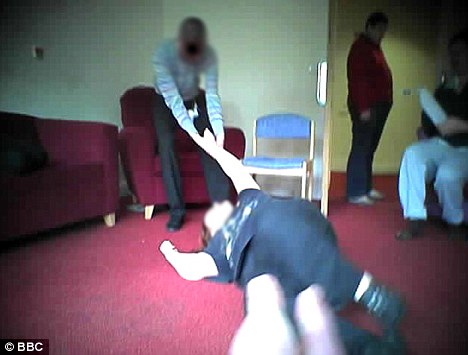
For example, this one. Mass murder, mass rape- but the keeping of a trivial oath- all in the name of the living God.

I began by considering some apologetics- here. There were some glimmers of hope of explanation, but on the whole, I found the business of trying to explain away the contradictions of a violent, murderous loving God (as apparently described in the Bible) impossible.

Next I chewed a little on the way Jesus seemed to deal with the hard judgmental, ‘scriptural’ truth that religious people hit him with. I noted that when he talked about the truth that would set you free, he did not seem to define this truth by a narrow interpretation of the written words that were handed down to him.

Next, I wondered about this word ‘context’- and how we needed to attempt to understand the nature of the cultures and historical times that the Bible stories emerged from- often violent, bloody and dynastic. Inevitably reading the Bible like this is a slippery slope towards liberal re-interpretation (as any good Evangelical will tell you.) I am sliding…

Then I got into a bit of  a philosophical ramble about the nature of truth- which to be honest, did not help much. The basic conclusion that I suppose I might take from all this is that truth is almost always nuanced, subjective, debated and interpreted according to perspective.

Finally, I wondered about hell and listened to Francis Chan suggesting that our understanding of hell may well be a rather recent invention.

I am no theologian- although I have been trying to make sense of this stuff for most of my life, so I suppose this might give me some personal source material, even though I lack the breadth of study. But I think the time has come for me to commit myself to some soft conclusions arising from the above.

Soft- because they will be imperfect, and incomplete. They will need to be reviewed and be open to challenge and modification.

Soft too because it is so easy for conclusions to become self referential, self sustaining, and the bedrock for further and more lasting distortions. Perhaps it is even impossible for this NOT to happen.

But conclude I will, because (as discussed in a previous post about (un)belief) I think it is time to step aside from the deconstruction of faith, and start to build again.

So here are my shallow, portable foundations- you could even say the flat surface for my fragiletent-

The stories in the Bible are open to our interpretation, to our questions even to our doubts. They are open in this way because God is open in this way. God is bigger than our understanding, or the understanding of the ancient writers of the Book.

There are many way to approach a reading of Bible passages- context is important, but Brian McLaren lists 10 other ways here– we have got stuck with a either/or approach- either literalism or myth. Perhaps we need to address this tired polarity by giving other things a try for a while.

This might steal away the mystique and sacred from the Bible for some- but this might be a good thing, as we could  have stumbled into a kind of idolatry, where we venerate a book, rather than who the book is about.

In trying to approach the book with this mindset, there are countless potential beartraps and cellar stairs to fall into. So we need to start with the body of knowledge within the church- both recently and more ancient. But be prepared also to work our understandings out as (Rollins again) “faithful skeptics”. And we should do this in community.

We do not need to have the answers to all of our questions. The questions too can be holy.

We are followers of Jesus- and we need to start with the stories about his life. This can be challenging enough after all! After that, we can then use our understanding of him to work backwards and forwards into history. But let us not try to make everything fit. It sometimes will not! And where it does not seem to fit- this can be a window for the Spirit too.

And speaking of the Spirit- he is present, NOW- not just in the pages of a book, but in all sorts of ways-

friendship

sunsets

dreams and visions

Kindnesses and moments of sublime grace

Music and dancing

Wisdom

Gentle promptings of guilt and remorse, as well as longing for things to be better

In the midst of us, and also in wild places, stirring the waters

Poetry

Silence

And because of this- we are not alone in this search. We are not powerless nor unenlightened. Rather we might expect the unexpected. The God of Surprises.

And finally- back to all that murdering and raping and child sacrificing. Did it happen in the way described? Well, perhaps. The times these things happened were full of such things. But as much of these stories were written down centuries after they happened, and survived through oral tradition, you would expect that there would be a reframing process- a self justification process. A God-on-our-side process.

Even if through the whole thing, there is a God-in-the-middle who still emerges as we read these stories.

Did it happen that way because it was what God commanded- what he demanded to assuage his lust for blood and vengeance?

My soft conclusion to this is-

No.

You might not concur, which is fine- but don’t lynch me please.

Because the other useful fact that has emerged for me came from Helen’s comment on one of the previous posts in this series- regarding the fact that our faith had overemphasised hard belief and doctrine- whereas perhaps more important than this is how we live- how faith sets us on a journey.

Travel on.

Gypsy boy…

Did anyone listen to this on the radio the other day?

A new series of The Choice begins this week with the story of Mikey Walsh.

He grew up in the closed world of the Romany gypsies.

Rarely at school, he seldom mixed with anyone outside his community with its colourful characters and strict family code. And despite its violence and hardships, it was the life that Mikey loved.

Eventually he was faced with the agonising decision of whether to turn his back on everyone and everything he knew …..and face an alien world with no education and support… knowing he would never be able to return.

What a powerful story- full of humanity and grace. A story of violence, community, love, prejudice and dealing with homophobia- a leading to a kind of reconciliation.

I defy anyone to listen to this programme (which you can do on the i player) and not be moved…

Walsh has written a book entitled Gypsy Boy- attracting rave reviews, and almost certain to become a film.

May he and his family flourish.

Aoradh meditations, Monday, Psalm 148…

This week it is my turn to write a daily meditation for Aoradh. I will post them here too.

This time I will write around the exuberant praise of Psalm 148. A challenge for introspective types like me…

Psalm 148

Praise the LORD from the heavens;
praise him in the heights above.
2 Praise him, all his angels;
praise him, all his heavenly hosts.
3 Praise him, sun and moon;
praise him, all you shining stars.
4 Praise him, you highest heavens
and you waters above the skies.

Stand with the Angels

At the roof of the world

And shout with joy

At the wonder of it all

For the space that goes for ever

And we,  just shapes

Suspended

Breaking the frame…

Great programme on radio 4 today- The Luddite Lament

In The Luddite Lament, the award winning folk singer John Tams looks back at the machine breakers of the 19th century, through the prism of the songs they inspired.

Two hundred years ago parts of Britain were on the brink of rebellion – and you could be imprisoned for singing a song. There were said to be more troops on the border of Yorkshire and Lancashire than on the Continent with Wellington. The reason? Men armed with hammers, pikes and even guns were attacking mills in protest at the introduction of new machinery. Luddism began in the Midlands in 1811 and swept northwards to Yorkshire and then Lancashire.

In many ways this is the historical context that I emerged from- northern industrial Albion. I was born in Nottinghamshire, amongst the old mill and mining towns, before moving to live in Lancashire- on Fox Lane, front line of the old technological industrial transformation. The Step Houses opposite from my old house were built as weavers cottages, purchased by families through perhaps the worlds first Mutual Friendly Society. They flourished, until the coming of the machines that could replace all that artistry and skill with a powered weaving frames.

There is a rumour that my old local pub was used as a courthouse and prison to house some of the rioters before their transportation to Australia.

The Luddites are a footnote in history, most remembered as a name used as a term of abuse. This tends to be the fate of failed revolutionaries, particularly working class ones. They tried to break the frames that others would place around them- but this was a battle that the mill owners and the power mongers could never afford to let them win.

Perhaps the only part of the stories of these people who fought to preserve their way of life that has been preserved are the handful of songs– mentioned in the programme above.

The machines that swept aside the Luddites ushered in global industrial capitalism, but by the time I was growing up, the machines had moved on. A new surge of greed resulted in the destruction of more communities- history was being reframed as Thatcherism swept the north of all its heavy industry. We had our own Luddites, in the form of the National Union of Mineworkers. They too tried to weild Enoch’s hammer but they could not break the frame either. It broke them.

We do well to remember our history, and our songs- particularly when they tell the stories of the powerless and disenfranchised, at times when the weight of industrial-military power is used to aid the greed of the few.

General Ludd's Triumph. 
.
No more chant your old rhymes about bold Robin Hood
His feats I do little admire.
I'll sing the achievements of General Ludd,
Now the hero of Nottinghamshire.
Brave Ludd was to measures of violence unused
Till his sufferings became so severe,
That at last to defend his own interests he roused,
And for the great fight did prepare. 

The guilty may fear but no vengeance he aims
At the honest man's life or estate;
His wrath is entirely confined to wide frames
And to those that old prices abate.
Those engines of mischief were sentenced to die
By unanimous vote of the trade,
And Ludd who can all opposition defy
Was the grand executioner made.

And when in the work he destruction employs,
Himself to no method confines;
By fire and by water he gets them destroyed,
For the elements aid his designs.
Whether guarded by soldiers along the highway,
Or closely secured in a room,
He shivers them up by night and by day
and nothing can soften their doom.

He may censure great Ludd's disrespect for the laws,
Who ne'er for a moment reflects
That foul imposition alone was the cause
Which produced these unhappy efrects.
Let the haughty the humble no longer oppress,
Then shall Ludd sheathe his conquering sword;
His grievances instantly meet with redress,
Then peace shall be quickly restored.

Let the wise and the great lend their aid and advice
Nor e'er their assistance withdraw,
Till full-fashioned work at the old-fashioned price
Is established by custom and law.
Then the trade when this arduous contest is o'er
Shall raise in full splendour its head;
And colting and cutting and squaring no more
Shall deprive honest workmen of bread.

This one was probably written in (or at least about) the town of Sutton in Ashfield, where I was born-

Ye kind-hearted souls, pray attend to our song,

And hear this true story which shall not be long;

Framework knitters of Sutton, how ill they are used,

And by the bag-masters how sorely abused.

Chorus

Derry down, down, down derry down
They’ve bated the wages so low for our work

That to gain half maintainence we slave like a Turk;

When we ask for our money comes paper and string,

Dear beef and bad mutton or some suchlike thing.

Chorus
Bad weights and bad measures are frequently used–

Oppressive extortion–thus sorely abused;

Insulted and robbed, too–we mention no names–

But pluck up our spirits and bowl in their frames.

Chorus
Good people, oh pity our terrible case,

Pray take no offence though we visit this place;

We crave your assistance and pray for our foes,

Oh may they find mercy when this life we lose.

Chorus

Round the table craft evening…

If you are within striking distance of Dunoon and enjoy a good natter whilst learning some craft skills then you need to know about Blue Sky Craft Workshops.

These are run by fellow Aoradh conspiritors Michaela (my wife) and Pauline.

They have a facebook page here.

The next event is an ‘Embellishing’ workshop- livening up bags, clothing with beads buttons and felt. I am expecting to be wearing interesting underpants from now on. This will be THIS THURSDAY at our house. There is a small charge- let me know if you are interested and I will pass you on to Michaela.

There are a few more planned-

June 23rd- Button Bangles

July 21st- Wind Chimes

August 13th Poetry and word art (with press ganged local poet- yours truly!)

An introduction to cricket for the uninitiated…

We are supposed to be playing cricket on Sunday at the Vale of Leven cricket club, just below Loch Lomond.

And I mean just below- torrential rain is forecast, so I reckon we are likely to be rained off again- as we were last week…

Cricket suffers a little from jokes at it’s expense, but I reckon this is often to do with ignorance- as in the sense of not knowing what it is all about. The trouble is though, when people ask me to explain the rules, they start to glaze over by the second sentence.

However- thanks to the wonders of t’interweb I can now bring to you- the wonderful mysteries of the game of cricket!

On standing in a place of (un)belief…

I have been thinking about that old polarity of faith/unbelief recently. This because of a few significant conversations with friends who have been grappling  with their faith, and also because it has long been an issue for me.

The old Evangelical way of understanding faith is all about assurance- we would quote Hebrews 11 v1-  Now faith is being sure of what we hope for and certain of what we do not see. Faith was something breathed into us by the Holy Spirit- it was about certainty, security, muscular purposefulness. Without faith it is impossible to please God.

Except it never felt that way. And so I wondered if God could ever be pleased with me.

Over the years I became more open about the  insecurities of my faith- and discovered that I was far from alone. Sure, I know some lovely people who have not a shadow of doubt- they would echo the words from Hebrews. Some seemed to relax into a beautiful kind of faith, which became a deep well of joy in their lives. To be with these people is a great blessing.

But many others, like me, experience faith as a fleeting presence- ebbing and flowing. Sometimes within grasp, at other times a million miles away.

More recently I have discovered that my faith, rather than being the polar opposite of doubt, can actually flourish in the presence of doubt. It is not that doubt cancels out faith- rather that the honest place of uncertainty and not knowing becomes the means through which I seek to humbly approach God. And sometimes, there he is…

I may well carry temperamental characteristics that skew me towards this kind of faith- but I also wonder if some of this (un)believing (a nod to Pete Rollins for this parenthetical trickery) has been fostered by engagement in all of that deconstruction that happened around the Emerging Church Conversation (Capital letters seemed appropriate!) (Perhaps I am overdoing the parenthesis a little now?)

We became very used to unravelling it all- questioning everything, shaking the theological tree right down to its roots. And once you start, everything is up for grabs. Substitutionary atonement? Biblical Authority? Hell? Virgin Birth? Holy Spirit wackyness? An Interventionist God? Everything has a question mark.

I think that those of us that went through this have a faith that in many ways is stronger- but at the same time is far less concrete- far less dogmatic and assured. What Pete Ward described as ‘Liquid Faith’ may well have the capacity to move like water flowing through our postmodern culture- but there is also a danger that it finds a crack and disappears out of sight- at least for a while…

But there comes a time when deconstruction is not enough- we need to start laying down some more big stones on which to place some of our smaller ones. Or if the brick wall analogy does not work for you- time to stop jumping up and down on the theological trampoline and to rest on it’s soft sprung surface.

I think our starting point in this constructing is becoming clearer. In the words of NT Wright-

And how long must it be before we learn that our task as Christians is to be in the front row of constructing the post‐postmodern world? The individual existential angst of the 1960s has become the corporate and cultural angst of the 1990s. What is the Christian answer to it? The Christian answer is the love of God, which goes through death and out the other side. What is missing from the postmodern equation is, of course, love.’

(Sorry forgotten where I got this quote from…)

Others leaders within this debate are increasingly beginning to commit themselves to foundational beliefs- and in some cases getting a bit of a kicking in the process. I am still working on this for myself, but I have been thinking about what might help me navigate within all this creative flow- in my state of (un)belief.

Here are some of the principles that make sense to me-

  • Cynicism– it is almost always a bad thing- corrosive like battery acid. And it is infectious too. I must strive to remain hopeful- which is to say, uncynical.
  • .
  • Choice- despite my resistance (cynicism?) towards the evangelical three card conversion trick, I continue to think that faith is a choice- we choose to believe, even in the presence of unbelief. That is not the same thing as ‘pretending’, it is about putting ourselves in the place of seeking, hoping and yearning for God, and learning to live in his ways.
  • .
  • Open to encounter- It is my continued hope, and sometime my experience, that God is to be found in the most unlikely of places- “Lovely in limbs and lovely in eyes not his.”  My reaction against the ways I formerly was told to expect to encounter God (primarily through preaching and ecstatic worship) has opened up the possibility of all sorts of other encounters. And I am going to stay open to them as much as I can.
  • .
  • Open to tradition- I strive too to learn from how others have understood God, both in the past, and recently. It is easy to either rely on a narrow, pre-selected set of references- the good guys, the stars of the Greenbelt festival speaking circuit. I must navigate further, and avoid the simplistic romanticisation of older men and women of faith also- the celtic saints also had feet of clay.
  • .
  • Faith encountered through praxis and ritual- Sometimes the shape given to faith by tradition, by ritual and by practice is vital. More than just dead habit, it may become the place in which faith is rediscovered.
  • .
  • Faith in community- sharing common encounters- Can faith ever exist in total isolation? Perhaps- if you are a pillar saint. But Jesus talked about his church. The essence of the followers of Jesus was discovered in the collective- in the sharing of stories and the life of love. In this way faith is tested and sometimes broken- but often shared and strengthened.
  • .
  • Transcendence– there is much that I do not know. Much that my head can not grasp nor make sense of. But there is often this singing in my spirit- there in all sorts of small things- art, small kids, new leaves, the smell of seaweed. These things often seem to transcend my own narrow experience, and open up the possibility of something much bigger, much more eternal. And this brings me again to God.
And may God find his way to us through the cracks of our unbelief.

Strange political times…

About a year ago, in response to the looming general election result, I made some political predictions on this blog– always a risky thing to do. Here is what I said, as I seem to have been proved strangely sage-like…

  • We are going to have a minority Conservative government held together by a vague alliance with the Lib Dems. The alliance will be bought by the promise of a referendum on proportional representation.
  • This will create turmoil in the Tory party, as PR is unlikely to serve them well (in terms of seats.)
  • Actual reform of the voting system will not happen for a long time, and when it does, it will be a fudge that goes only some of the way, but perhaps only for the House of Lords.
  • The current hung parliament will achieve very little, and there will be another election in 2 years- whenever the Conservatives think that they have a chance of winning an absolute majority.
  • Brown will resign.
Frankly, some of these predictions were rather obvious. But others are still working themselves out. I still reckon that we are heading for another election next year- the alliance with the Lib Dems is being weakened by two things- firstly, the breakdown of the ‘Nick effect’- his star is waning visibly- he got in bed with the Devil, and the Devil appears to be dancing all over him. Secondly, the voices of criticism in the party are starting to be heard, led perhaps most visible by the always eloquent, if sometimes gaff prone, Vince Cable (the next Lib Dem leader?)
This morning, on radio 4, Vince Cable said something like this

 “Some of us never had many illusions about the Conservatives, but they have emerged as ruthless, calculating and thoroughly tribal.

“But that doesn’t mean to say we can’t work with them. I think they have always been that way, but you have to be businesslike and professional and you have to work with people who aren’t your natural bedfellows and that is being grown-up in politics. We are going to continue to do that.”

For a while at least.
Strange indeed that Cable, a serving minister, can talk like this about his colleagues in government. But then these are strange times. Even Cable would not stray so far from his party’s agreed line- there is now a visible distance between Clegg and Cameron.
Perhaps in no small part due to the humiliation over the referendum result of the Alternative Vote system- itself a pale compromise of what the Lib Dems were seeking to achieve- Proportional Representation.
In a conversation last week (and this time you will just have to take my word for it) I predicted this result- a resounding no. I reckoned that this was partly a punishment vote for Clegg, who has given us a Tory slash and burn government, and also because of the innate conservatism of the British people in making any changes to our unwritten constitution.
The other cataclysm of the recent elections is the collapse of the Labour party up here, and the rise of the Scottish National Party. I find it harder to make any predictions about this change- it is much closer to my sensitive bits somehow. I will have to have a bit of a think about this…