It feels as though winter is with us now- the trees are almost bare apart from a few rattly dry leaves. Frost is on the windows of the car, and the sky has a cold clarity that brings out the wonder in me.
Not that I linger long before the expanse of it- rather I shiver and feel the beckoning call of the fireside.
Tonight our housegroup met- we watched the second of the recent ‘Big Silence‘ series.
As ever there was much laughter first though- my favourite story tonight was from Pauline, who described taking her grand kids on the train into Glasgow, and being uncomfortable as they were sitting next to some loud sweary young people.
“It was great last night” shouted one. “We got pissed and talked about good stuff like drink and sex and zombies!”
I watched him spending months and months creating a painting of John Ogilvie, Catholic son of a Scottish Calvinist, who was hanged for ‘refusing to accept the King’s spiritual jurisdiction’.
For Howson, the creative process was a tortuous one- constantly making and remaking the work, whilst struggling with depression and suicidal feelings.
Along the way he was diagnosed as suffering from Aspergers syndrome, and his assets are now managed by a Guardian.
I have met Howson at an art exhibition we staged as part of an Aoradh event- he cuts an odd and rather shambolic figure, but his genius is without doubt. It arises out of his own twisted brokeness which seem to be the compost in which this wonderful art grows.
Which set me thinking again about creativity- where it comes from, and what can set it loose.
For Howson, this is not a risk free joyful process- it is crowded with self doubt and self criticism. But above all, his creativity is driven– he is compelled to create.
My own experience is far more limited- in terms of my creative talent, my drive and thankfully even my measure of existential angst. But there was something in watching Howson tonight that very much resonated with me- and no doubt would do with lots of creative people.
For us, creating things brings life.
But it also pitches us on a rollercoaster of emotion- joy, doubt, uncertainty, crises of confidence.
But not getting on the rollercoaster is simply not an option.
Of course it is not that long ago that we were all used to dial up speeds (remember that annoying connection noise?)- but these days 1.9 meg is pretty slow. I am currently getting about 54 KB/sec.
But I am just back from a night in Glasgow, where Michaela and I went to see Jools Holland (Sorry- not really my cup of tea, talented though the band were) and then we spent a day shopping in the city.
It was lovely to walk a city with my wife, but it was so busy. Cars everywhere, fighting for a few inches of space, and to be a few seconds faster away from the lights.
So it was good to get the ferry over to the place where even cyber space has been slowed down.
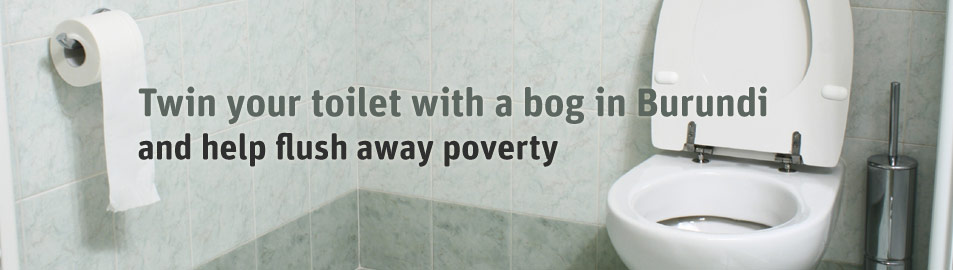
International charities Cord and Tearfund have linked up to bring you Toilet Twinning: a unique way to help transform lives in poor communities across the world.
Since the launch of Toilet Twinning in 2008, more than 1,500 latrines have been built in Burundi – providing safe loos for at least 9,000 people! So… squat’s it all about?
There’s a serious message here though-
up a stink
It’s out of order! 1 in 3 people across the world don’t have somewhere safe to go to the toilet. Bad sanitation is one of the world’s biggest killers: it hits women, children, old and sick people hardest. Every minute, three children under the age of five die because of dirty water and poor sanitation. And, right this minute, around half the people in the world have an illness caused by bad sanitation.
Women and girls suffer most
In Africa, half of young girls who drop out of school do so because they need to collect water – often from many miles away – or because the school hasn’t got separate toilets for boys and girls. Not having a loo puts people at risk of being bitten by snakes as they squat in the grass and makes women and girls a target for sexual assault as they go to the toilet in the open.
Big job
We must do what we can to make a difference.
Providing people with clean water and basic sanitation is one of the most cost-effective ways to release people from poverty: for every £1 spent on water and sanitation, £8 is returned through saved time, increased productivity and reduced health costs.
Missing the target
In 2000, 189 countries from across the world signed up to the UN’s Millennium Development Goals. The plan was that we’d all work together to end extreme poverty by 2015. But little action means some targets will be missed by DECADES. If we carry on like this, it’s predicted we won’t hit the sanitation target in sub-Saharan Africa until the 23rd century.
So if anyone wants to buy us a toilet twin for our downstairs loo, I will forever more poo with pride!
I was driven by a desire to do a job that had at its very centre the desire to help other people. I think this was driven by a number of things- my own troubled childhood, a social conscience that was stoked by a progressive education and perhaps above all, my faith.
It was a mix of motivations that I have never quite escaped- despite the frequent screaming frustrations of working within a bureaucracy, and the early disillusionment with the idealism of being a genuine change agent- working both within and against the state.
It survived the huge pressure of work in inner city Greater Manchester with people in mental health crisis- in what could be a very scary, violent place. It survived because I met some wonderful people, and there was value in kindness and caring, even if I often felt impotent and ineffectual when faced with such overwhelming need.
It survived work as a therapist in GP surgeries- seeing 6-7 people a day with a wide variety of brokenness. Along the way I became more aware of my own brokenness- and aspired to become a wounded healer.
It survived a move to Scotland, and an encounter with a different kind of stress- where the busyness was driven by isolation and lack of resources over a wide rural area.
It has even survived a move into management, with all the power mongering and encounters with the sociopaths.
But under the recent onslaught, the flame flickers dimly. I am tired. My blood pressure is high. I suffer from cluster headaches. Sleep fluctuates. All the classic signs of approaching burnout.
But then- it has been a bad day. And there are still better days- perhaps tomorrow…
And I am trying to do the right things to try to keep the balance towards the centre.
In the hope that the motivations that took me into social work survive, well- survive social work.
A man whose difficult childhood turned him into himself- into his own imagination. A difficult, mercurial man, born into extraordinary times. An intelligent man, with a precious gift.
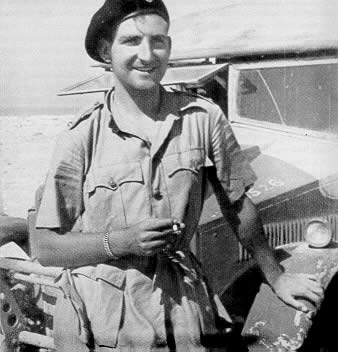
A man who was to die three days after the D day landings, but whose poetry remains as a means of communicating the nature and horror of war.
Here is one of his poems, entitled ‘How to Kill’
Under the parabola of a ball,
a child turning into a man,
I looked into the air too long.
The ball fell in my hand, it sang
in the closed fist: Open Open
Behold a gift designed to kill.
Now in my dial of glass appears
the soldier who is going to die.
He smiles, and moves about in ways
his mother knows, habits of his.
The wires touch his face: I cry
NOW. Death, like a familiar, hears
And look, has made a man of dust
of a man of flesh. This sorcery
I do. Being damned, I am amused
to see the centre of love diffused
and the wave of love travel into vacancy.
How easy it is to make a ghost.
The weightless mosquito touches
her tiny shadow on the stone,
and with how like, how infinite
a lightness, man and shadow meet.
They fuse. A shadow is a man
when the mosquito death approaches
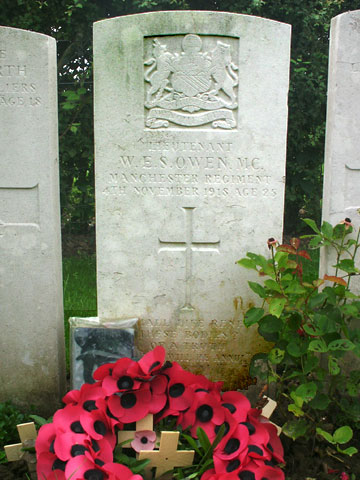
There was an interesting discussion on the radio a few days ago about war poetry, during which the question was asked again about why the voices of the Sasoon, Brooke and Owen are so powerful and evocative even so many years (and so many wars) later.
They capture for us the humanity and inhumanity of war in language so vivid and immediate that it resonates still.
But what of the war poets since? Can you name one? What poems told the story of the second world war, or the countless ones since? How many names can you bring to mind?
I read some poetry, but I can name none.
Perhaps this is because the voices of the world war poets bring something to us of a different time, when gentlemen went to war and discovered that there was nothing gentlemanly about industrial slaughter. A time when poetry was at the centre of literature and the arts, and when other forms of media were limited and closely managed.
Wars since then have increasingly been media events. Propaganda became as important as bullets, and image is all.
I wonder, in our mad information overloaded world, if the modern day equivalent of the poetry of Owen and Sasoon is the website Wikileaks.
But I am a poet (if that does not sound too pompous!)
So as we approach another remembrance day, here is a poem about war, and a poem hoping for peace-
A time for war
There is a time for all things under heaven
.
A time to dig trenches and put up barbed wire
Then run to our deaths into withering fire
A time for mass graves, for mums to wear black
Time to kill and to maim- a time to attack
.
A time to dehumanise, a time to breed hate
A time to decide the whole nations fate
A time when all truth is wrapped up in lies
For secret policemen and neighbourhood spies
.
A time to manipulate the news and the media
A time of unassailable powerful leaders
A time of expedient centralised power
Cometh the man in this our dark hour
.
A time for Guantanamo, a time for Auschwitz
A time of gas chambers and motherless kids
A time to throw rocks and let loose the rockets
A time for dead eyes fixed in dead sockets
.
A time for insurgents, a time to suppress
To disappear dissidents, and people oppress
Of brave freedom fighters and terrorist cells
A time for Robin Hoods and William Tells
.
In some foreign field or in our back yard
In red sucking mud or ground frozen hard
Lie the bones of our children who answered the call
Now glorious dead with their names on a wall
.
A time to break up and time to destroy
A time to make men of every small boy
Over by Christmas or just a bit more
Now is the time for us to make war
A time for peace
There is a time for all things under heaven.
.
There must come a time when canons will fall silent
And men start again to look beyond the battlements
Into the scarred and empty fields
Seeded still with land mines
.
There is a time to strike the white flags of surrender
And put away the banners of victory
A time when triumphalism
No longer seems to honour
The broken bodies
And the freshly dug graves
.
There must also come a time when displaced people
Dare to step beyond the bounds of the refugee camp
And walk the long road home
.
Surely too the day will come when guns will be melted into garden forks
And tanks will pull the plough
A time for doves instead of hawks
And lions to learn care for the cows
.
A time will come too when borders are open
And bitterness and hate are eroded by the resilience of a new generation
My hands are sore this week- lots of shaping and cutting and shaving- and I am more used to soft office work. Repetitive strain injury has nothing on vibration white finger.
The writer appreciated people who make things with their hands, even if they are not very bright.
So- for craftspeople everywhere-
With what wisdom shall he be furnished that holdeth the plough, and that glorieth in the goad, that driveth the oxen therewith, and is occupied in their labours, and his whole talk is about the offspring of bulls?
He shall give his mind to turn up furrows, and his care is to give the kine fodder.
So every craftsman and workmaster that laboureth night and day, he who maketh graven seals, and by his continual diligence varieth the figure: he shall give his mind to the resemblance of the picture, and by his watching shall finish the work.
So doth the smith sitting by the anvil and considering the iron work. The vapour of the fire wasteth his flesh, and he fighteth with the heat of the furnace.
The noise of the hammer is always in his ears, and his eye is upon the pattern of the vessel he maketh.
He setteth his mind to finish his work, and his watching to polish them to perfection.
So doth the potter sitting at his work, turning the wheel about with his feet, who is always carefully set to his work, and maketh all his work by number:
He fashioneth the clay with his arm, and boweth down his strength before his feet:
He shall give his mind to finish the glazing, and his watching to make clean the furnace.
All these trust to their hands, and every one is wise in his own art.
Without these a city is not built.
And they shall not dwell, nor walk about therein, and they shall not go up into the assembly.
Upon the judges’ seat they shall not sit, and the ordinance of judgment they shall not understand, neither shall they declare discipline and judgment, and they shall not be found where parables are spoken:
But they shall strengthen the state of the world, and their prayer shall be in the work of their craft, applying their soul, and searching in the law of the most High.
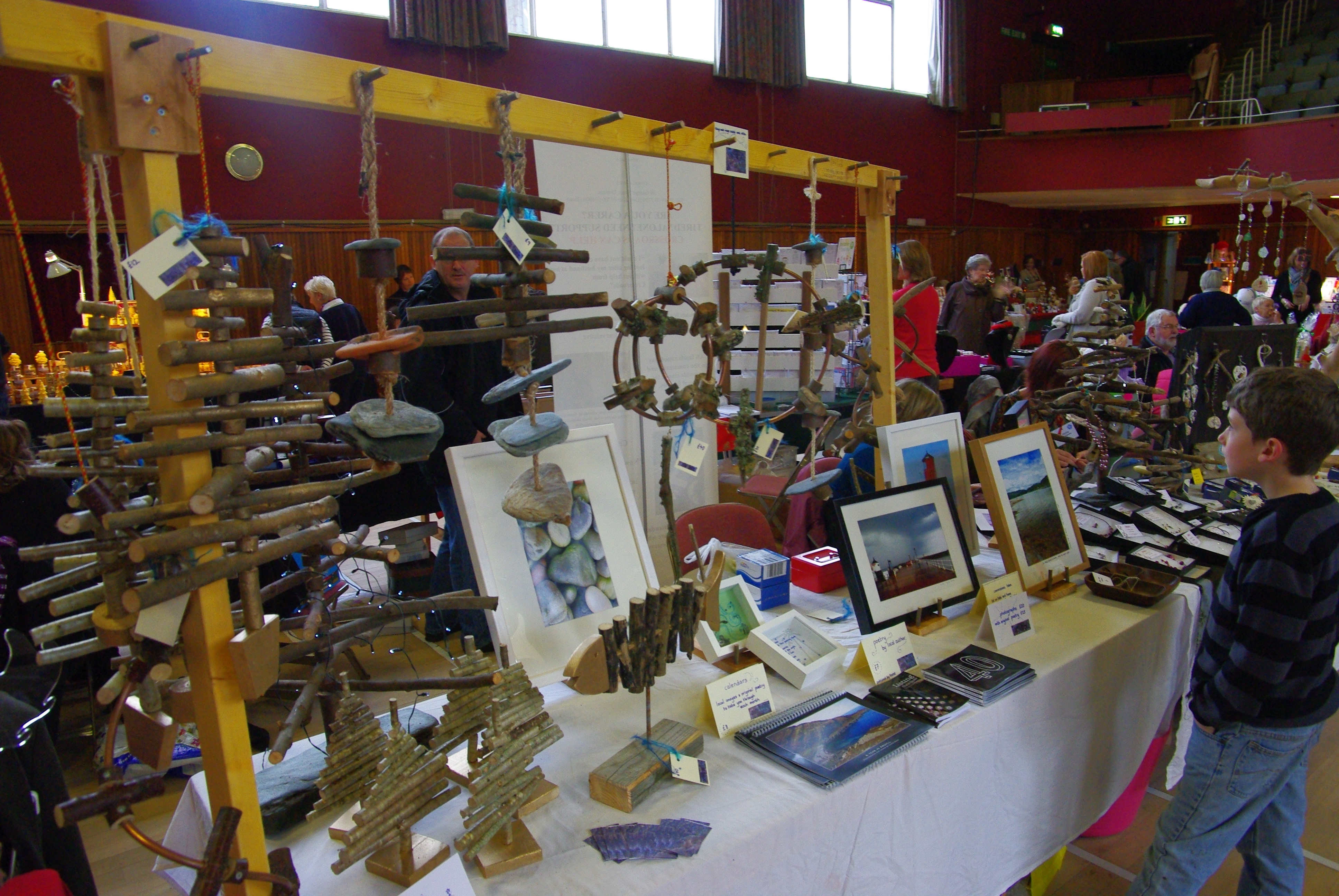
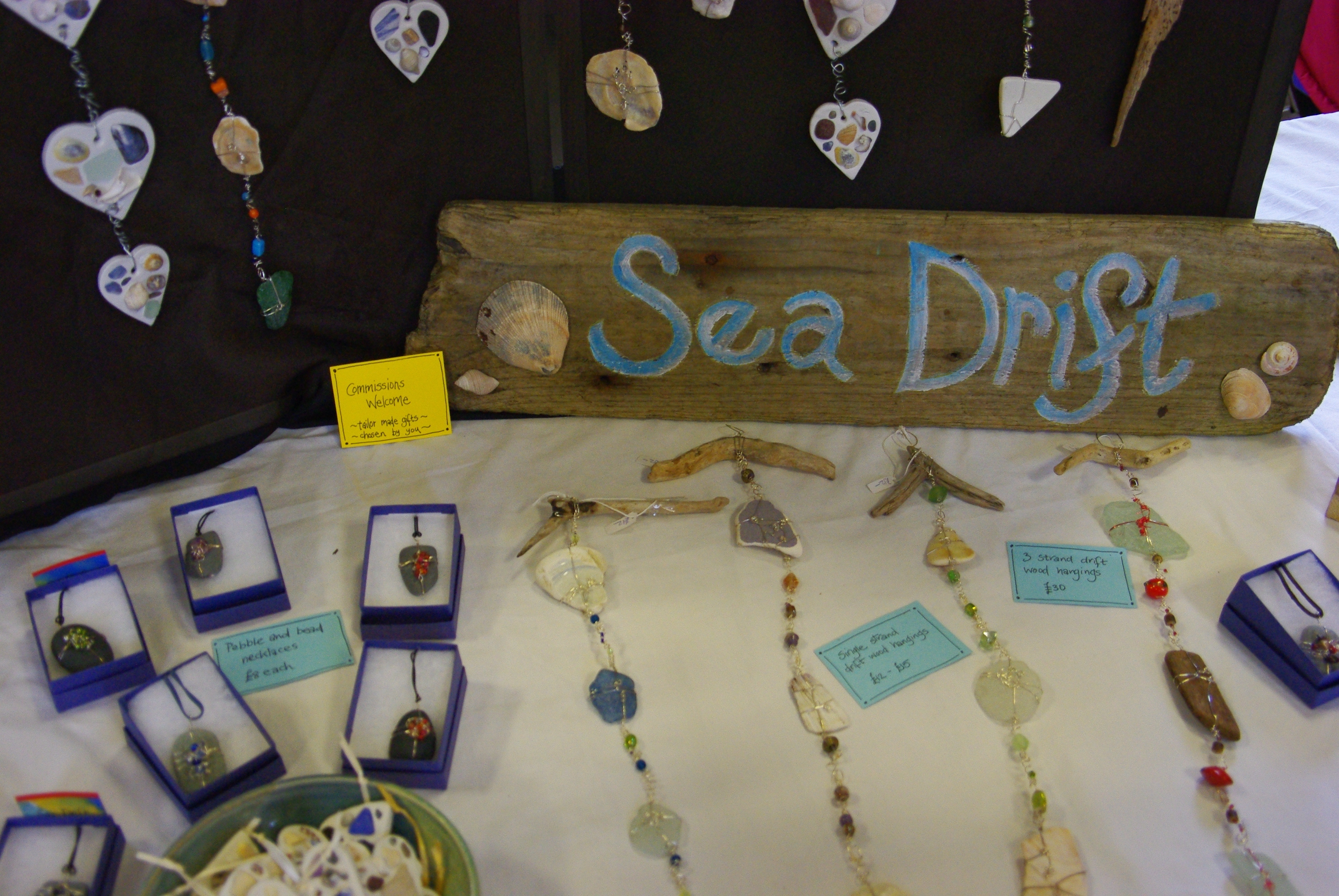
Michaela, Pauline and Helen spent a day behind a stall today, selling crafts. Pauline is an old hand, but for the rest, it was a new thing.
We made all together around 250 quid, which ain’t half bad, considering two of the three crafty contributors where experimenting with prices and ideas.
I chickened out- reserving my energies for being the removal man.
It is hard work this commerce- up at 7, and I sat down again 12 hours later.