Happy birthday Emily…

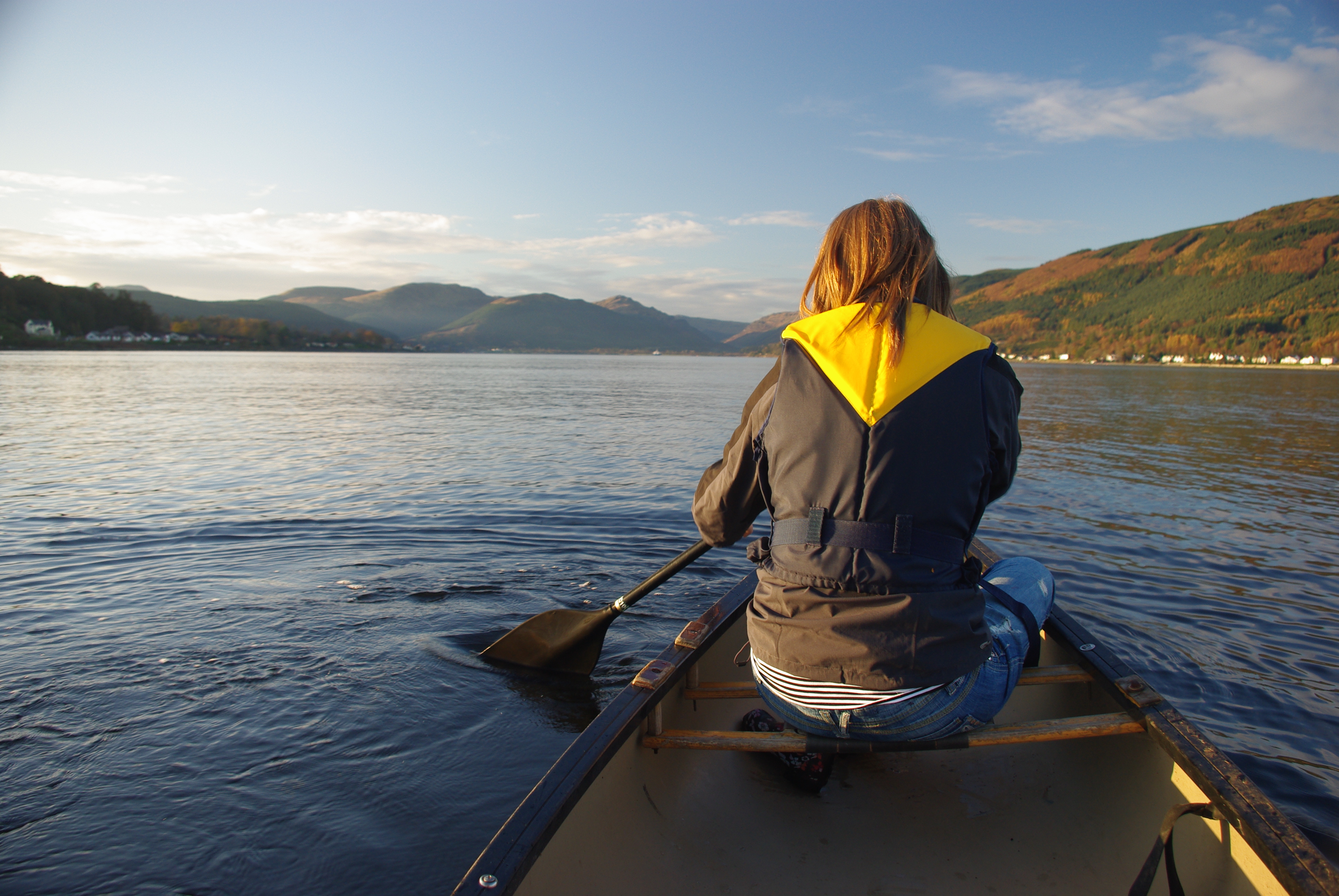
Emily, canoe, holy loch

My lovely daughter Emily hits 19 today. Paddling off into the future…

She came home with friends last night and we had a late night laughing and playing games. These are the things that light my life, and I am so proud of her…

A couple more photos, including my very favourite (the last one);

My snow angel 1

William and Emily, Dun I, Iona

Michaela with Emily, some time in the late nineties, Keswick.

Absent voices…

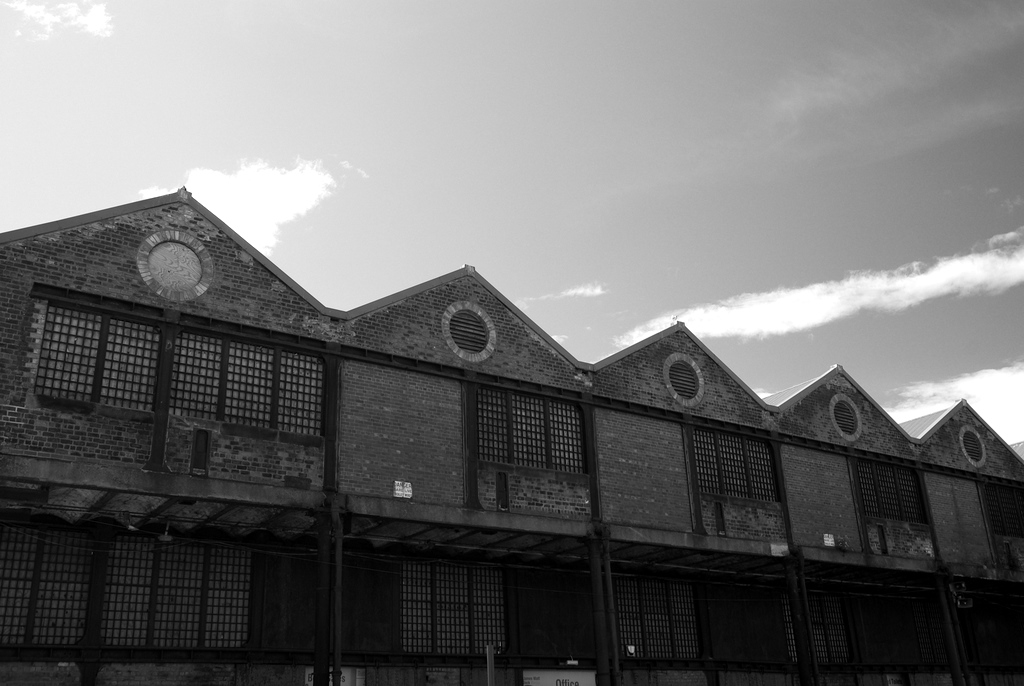
sugar warehouse, Greenock dock

Several times a week we drive past some old buildings on what is left of the old docks in Greenock, known as the sugar sheds. These cavernous places are remnants of the once mighty Greenock sugar industry, in which huge quantities of the stuff was brought down the Clyde from the colonies in the West Indies to be converted into all the stuff that we are now addicted to.

The buildings are stunning- like vast Cathedrals, with light filtering down from high windows. It has massive cast iron doors and columns that shout out with Victorian pride.

More recently I have been looking forward to a project called Absent Voices, which has gathered together artists poets and musicians to this end;

Absent Voices is an artist-led project centred on the Scottish town of Greenock, telling the creative story of Greenock’s sugar industry. Using the category A listed Sugar Sheds on James Watt Dock as a catalyst, eight artists are working within the community and reaching out to the wider world. Absent Voices is principally funded by the Heritage Lottery Fund.
.
The artists in Absent Voices are:Alec Galloway, Greenock born glass artist & musician; Alastair Cook, an established Edinburgh-based artist; Anne McKay, a Gourock based painter and folklore archivist; Rod Miller, a Greenock artist and photographer; Yvonne Lyon, a musician & songwriter of international renown; Kevin McDermott, singer songwriter of Kevin McDermott Orchestra; Ryan King, glass artist and musician and Alan Carlisle, glass artist and recording engineer.
.
The Sugar Sheds is category A-listed building which sits at James Watt Dock in Greenock: this vast red-brick and cast-iron former sugar warehouse with its distinctive zig-zag exterior sits in the shadow of Greenock’s Titan Crane and opposite Greenock Morton FC’s Cappielow Stadium. It has not been used for sugar-making since the 1960s. Its doors were shut on sugar completely in the mid 1990s. Prince Charles is a known supporter of retaining the former sugar warehouse and even visited the building in 2002 to add his voice to a campaign to save it from demolition. Despite several attempt to demolish it and a fire in 2006, it has now been made wind and watertight and part of it is currently used as storage space. The building was used as a venue during the 2011 Tall Ships Race, which opened many eyes to its potential as a space which could be used for public events.
.
Old gate, sugar warehouse, Greenock dock
I scoued the Absent Voices website, and there is hardly a mention of the despicable origins of the sugar cane that was being processed in Greenock. The voices that seemed well and truly absent were those whose lives were lived in service of the plantations where the sugar was grown.
.
The notable exception I am proud to say, appeared to be our friend Yvonne Lyon, who has included slave songs in her exploration of songs of work. (However, it later turned out that the website might not fully represent the actual content of the exhibition- see below!)
.
I am particularly sensitive to this because of the debate around this rock on the shore a few hundred meters from my front door. It is a legacy of a time when our relationship with colonial exploitation and oppression made it possible, if not essential to regard the ‘others’ as less than human.
.
In case you think I am making a bit of a mountain out of a molehill, check out the Scottish government’s own description of the Triangular trade, from their own website. Here are a few bits that are relevant to Greenock;
.
…from the 1750s onwards ships did leave from Port Glasgow and Greenock for the triangular trade, often transporting enslaved Africans to Virginia as well as the Caribbean.
.
After the American War of Independence the slave trade was consolidated into the ports of London and Liverpool, and Scottish investors and merchants invested through those routes. A steady direct trade was maintained with the Americas with the importing of slave-produced goods throughout the period and beyond.
.There are dominant architectural reminders of Scotland’s importance in the trading of sugar produced by enslaved labour, such as giant sugar warehouses in Greenock. Leading up to 1813 – 1814 one of the largest sugar companies in the world operated from Greenock. These warehouses signify the major role of Scottish plantation owners.
.
By the early 19th century they owned a third of the plantations in Jamaica (which was the largest producer of sugar).The British Islands of the Caribbean and the colonies of the Americas were owned and run by British settlers and administrators. It was common for merchants in Britain to establish their own plantations or create relationships with agreed suppliers for plantation goods. Therefore it was British people who bought, sold, and oversaw the enslaved.
.
Networks or communities were often established that resulted from ties back home. Alexander Horsburgh, the surgeon with responsibility for business affairs on the Hannover, noted in his journal in 1720, that there was an established Scottish network in Barbados, Antigua and St Kitts. The Hannover sailed from Port Glasgow and Horsburgh was instructed by its Scottish owners which Scottish plantation owners to contact with his cargo of enslaved Africans. These included Colonel William McDowall of Wigtonshire, a plantation owner on St Kitts.

.

Lady Nugent, the wife of the one time Governor of Jamaica, also noted the high presence of the Scotsmen on the islands. That Scottish presence started in the early years of the colonies and continued. Mrs Alison Blyth noted on her visit to Jamaica in 1826 that:

“…the Lord indeed knoweth. I always thought that wherever I went I would be proud of my country but here I feel almost ashamed to say I am a native of Scotland, when I see how her sons have degenerated”.

In telling the story of the Sugar Sheds, I am genuinely staggered to hear that this dark history of the sugar trade was not in any way engaged with in a meaningful way. Sure, the Sheds were built well after the slave trade officially ended, but they were built using wealth and prosperity that still cost the lives of hundreds of thousands, and represent the rich corner of a triangle of misery. The people cutting the sugar may no longer have been slaves, but the lives of the freed workers of the Caribbean were if anything made worse by the abolition of slavery.

During my lunch break today however, I took a walk to the McLean Museum to actually visit the Absent Voices exhibition. I looked at the paintings, listened to the songs and watched some of video footage. It was really lovely, and a large part of the content clearly confronted the relationship of the sugar trade to slavery. It was art at its best- asking uncomfortable questions and making us confront issues that lie buried.

Why is this central part of the exhibition missing from the publicity and the website? Was it ‘mission creep’ from what was intended only to focus on a local Greenock landmark? Certainly there are not Caribean or African artists involved in the project.

I was particularly moved by Anne McKay’s paintings, some of which feature the spirits of the slaves in the hills looking down over Greenock…

If you get a chance, go along and take a look.

Light from top window, sugar warehouse, Greenock dock

Bringing home the silverware…

team photo, Innellan Cricket Club, Royal Botanical Gardens Edinburgh CC

We had a great night last night at Inellan Cricket Club’s annual dinner. Previously these things have been all male affairs, a bit like stag nights, but this year we made an effort to make it a family affair.

I am not really what you might describe as ‘clubbable’. I am not always at ease in social groups and tend to find my place at the edge of things when I can, looking in. In the scheme of things, a cricket club seems a slight thing- we are hardly saving the world. We are hardly contributing to the great cultural life of the nation. However, I would like to suggest to you that in these times when our culture has splintered and broken down into indvidualised consumer components, there is a deep value in clubs like ours. They are part of the glue that is helping us cling together.

The club is going through one of those transitional phases, when a lot of the long standing players, who carry the memories and the traditions of the club, are one by one slowing down, nursing broken bodies and choosing to hang up their bowling boots. Some of them are turning to that most dreadful of sports, the graveyard of leisure pursuits; golf….

Last night, as he has done for decades, the MC and heart of the evening was Gordon McKissock, president and sartorial example to us all as he took centre stage. But this was for the last time, as Gordon is stepping down as president and player. He will be very much missed, and I am secretly hoping he might yet change his mind.

Quite simply though, the club needs new players more than ever. In the new year I think it is time for an advertising campaign…

But last night was all about celebrating the history and traditions of the club, which was formed some time back in 1985. It has been a place full of characters, and the stories told of their exploits are rich and long. Some of this history has been gathered into the prizes awarded each year- the Duck Cup, supposedly for the player with the most ducks in the year, but often awarded fairly randomly. The Wayne Pursely trophy for the best fielding- in memory of a young former player who died. Then there is the Tim Weal trophy, in memory of a true bearded original, known for umpiring on a chair with a beer hat in place. This trophy is awarded to someone who has done something really stupid, on or off the field of play. There are usually many candidates.

This morning our mantelpiece has a few more objects. Matt was rightly awarded the fielding trophy for some outstanding catches and run outs.

Will got the best batting average this year- which amazed us all, but was reflective of consistency with the bat all year. He has now done the double as he won the bowling trophy last year.

The only trophy I have ever won previously was the ‘most improved player’ (won this year by young James.) My name is on this trophy underneath my son Wills, who had won it the year previously. It seems I am forever destined to be out shone by him as this year I won the bowling trophy, and my name is underneath Will’s again. Next year the batting trophy for me I assume!

However,  I did beat him to one other trophy- this year, perhaps by some fluke, and perhaps reflective of the rather low standards we set this year, I was awarded the player of the year cup, for a combination of batting, fielding and bowling. It is all downhill from here folks… for me anyway. Will and Matt, that is another thing all together.

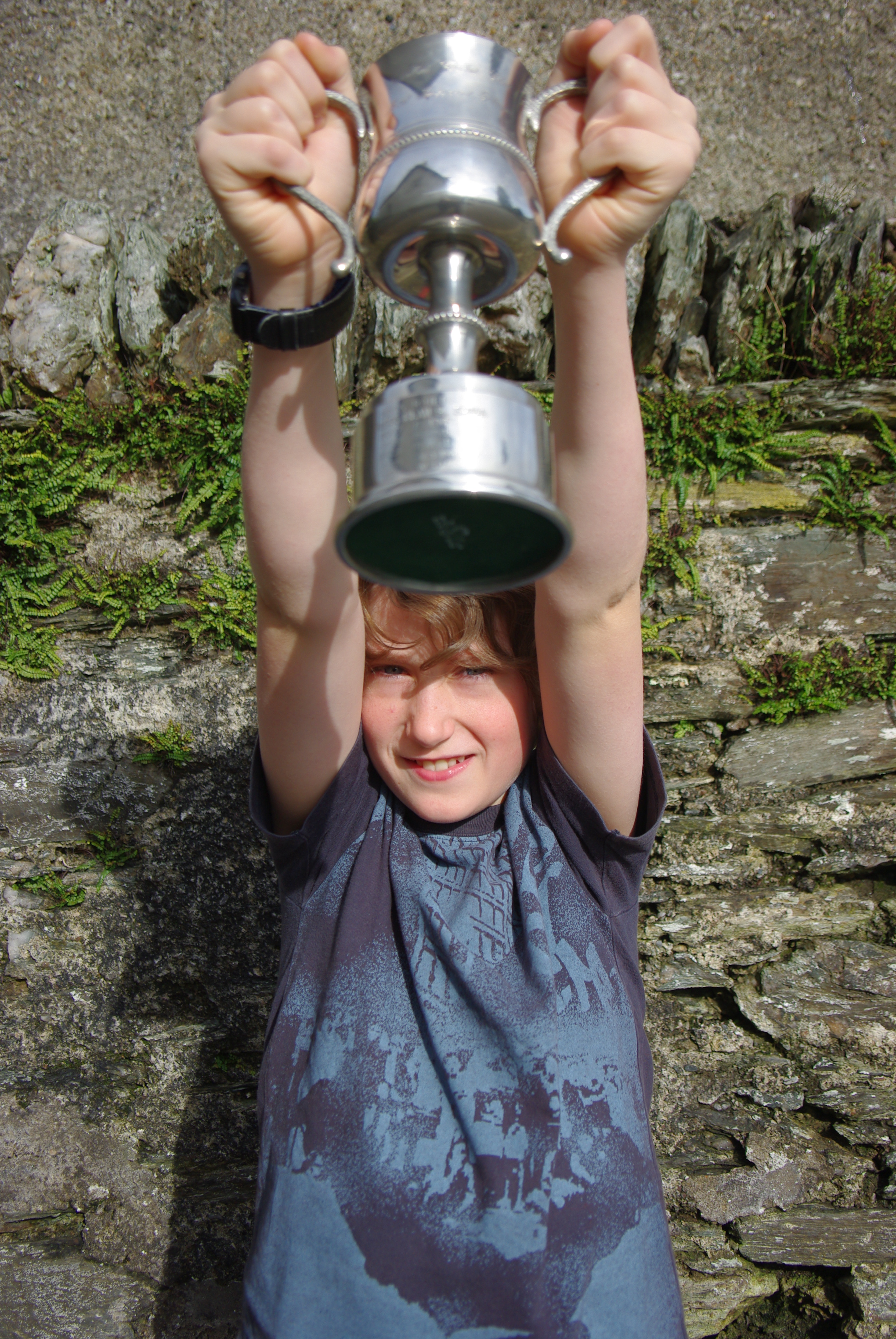
Here is Will when he won his first ever trophy;

William, cricket cup

Growthism; like trying to cure an alcoholic with vodka…

economic_growth_3

I know that this blog has been full of discussions about politics and economics recently- sorry to those of you are are not interested, but here is another one…

I have been looking for new ideas, alternatives to the monocultural madness that seems intent on cycling us through boom and bust, and subjugating all morality to the single imperative of economic growth, or Growthism. 

Cameron has been at it again- warning us all that another economic crisis is on its way. Naomi Klein and her Shock Doctrine comes immediately to mind. Whip up the fear then continue to push through all those exploitative policies while we are sll too emotionally and physically distracted to mount an effective resistance.

And what is the disaster that Cameron is prophesying? Simply this- the bursting of another bubble of business confidence and the terrible spectre of the lack of economic growth. 

Real people can and do suffer during such times (although not Cameron and his ilk it seems) so this should be a matter of concern, but quite frankly we have been here before, and we will be here again. The alcoholic analogy works I think- we are addicted to the consumption of our planet, even though it makes us sick and may ultimately kill us all.

Monbiot, writing today in The Guardian, say as much and says it well;

If it goes down soon, as Cameron fears, in a world of empty coffers and hobbled public services it will precipitate an ideological crisis graver than the blow to Keynesianism in the 1970s. The problem that then arises – and which explains the longevity of the discredited ideology that caused the last crash – is that there is no alternative policy, accepted by mainstream political parties, with which to replace it. They will keep making the same mistakes, while expecting a different outcome.

To try to stabilise this system, governments behave like soldiers billeted in an ancient manor, burning the furniture, the paintings and the stairs to keep themselves warm for a night. They are breaking up the postwar settlement, our public health services and social safety nets, above all the living world, to produce ephemeral spurts of growth. Magnificent habitats, the benign and fragile climate in which we have prospered, species that have lived on earth for millions of years – all are being stacked on to the fire, their protection characterised as an impediment to growth.


Is it not also time for a government commission on post-growth economics? Drawing on the work of thinkers such as Herman Daly, Tim Jackson, Peter Victor, Kate Raworth, Rob Dietz and Dan O’Neill, it would look at the possibility of moving towards a steady state economy: one that seeks distribution rather than blind expansion; that does not demand infinite growth on a finite planet.

It would ask the question that never gets asked: why? Why are we wrecking the natural world and public services to generate growth, when that growth is not delivering contentment, security or even, for most of us, greater prosperity? Why have we enthroned growth, regardless of its utility, above all other outcomes? Why, despite failures so great and so frequent, have we not changed the model? When the next crash comes, these questions will be inescapable.

Well said George.

Opening tomorrow; The Collective…

The collective pop up shop dunoon

We are entering another chapter- not really sure where it will take us, but then I have never been great at that planning thing. Whilst I am back doing the salaried wage slaving for a while, Michaela has been hard at work inspiring and curating a new project in Dunoon involving a pop up shop selling art and crafts.

Along with about a dozen other makers and creators, they have more or less started a craft co-operative around this new space- the idea is that everyone clubs together the cost of the rent, insurance etc and takes turns on a rota to actually staff the shop.

Sounds simple doesn’t it? The reality has been lots of hard work. They set up a core team of people who would plan things, negotiated with the shop owner and the property agent, then spent days painting and preparing the shop and sorting out the systems required to make it run.

I have to say it looks really lovely.

So if you are local and want to find some gifts that have been locally lovingly crafted, check out The Collective!

You can give them a like on FB too- search for ‘The Collective pop up shop’.

Finally, we are starting the process of converting our ReCreate website into an on-line shop. There is quite a lot of Michaela’s pottery there already, and more will be added as time unfolds…

Here are a few photos I took in the shop yesterday…

The language of compassion in public discourse…

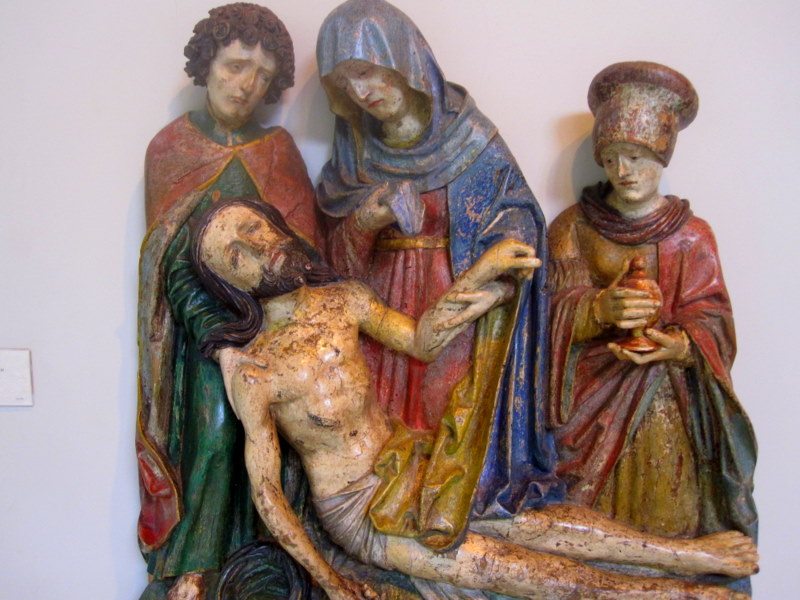
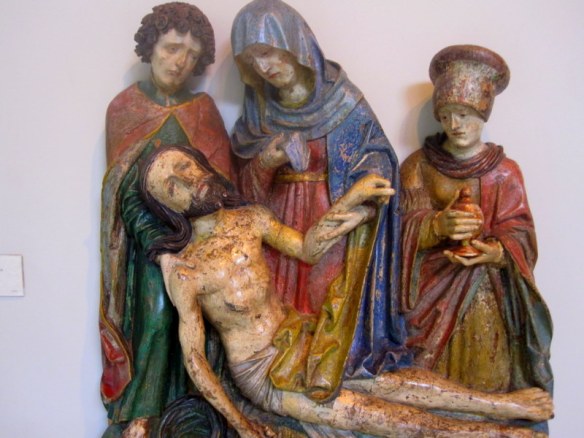
Carved statues, mary, jesus

I started a new job on Monday- a return to management- I am currently the service manager for mental health in Inverclyde, until March of next year at least. It is a full on position managing nurses, social workers, OTs and all sorts of other bits and pieces, within the all too familiar context of austerity. Time will tell whether I survive.

Today I was reading a report from the Mental Welfare Commission into the tragic death of a woman by suicide. You can read the whole thing here, but this is a summary;

The Mental Welfare Commission for Scotland has recently conducted an investigation around the new benefits system.

We investigated the case of a woman who tragically took her own life in December 2011.  She had recently had a work capability assessment following which the Department for Work and Pensions (DWP) decided her benefits were going to be reduced. She was on incapacity benefit and was told she would not be able to be transferred to Employment and Support Allowance so would receive Jobseekers allowance

Ms DE was a woman in her fifties who had worked for most of her life but had been experiencing mental and physical health issues so was signed off work and receiving incapacity benefit. She intended to return to work when she was able to. Ms DE had a teenage son and was engaged and planning to get married in 2012.  She had been receiving care and support from her GP and her psychiatrist for over 20 years. Her doctors had never been worried during this time about her taking own life.

During our investigation we spoke with people who were involved with Ms DE’s care and treatment. We discussed the case with relevant officials from the DWP. We also conducted a survey of psychiatrists to find out how they felt the system was affecting their patients.

We found that the decision was made on the basis of an assessment that contained insufficient information about her mental health. The work capability assessment needs to be more sensitive to mental health issues.

We were also disappointed at how the DWP communicated with Ms DE.  We felt that not enough effort was made to contact Ms DE and this meant she was not given the opportunity to fully engage with the process. She was not treated as a vulnerable claimant and so was not given any additional support to help her with the process around the assessment by the DWP.

The full report breaks down the DWP process in detail and reveals it for what it is; a stark, hollowed out way in which bureaucracy, influenced by a context of social and political antagonism towards ‘scroungers’, can lose all humanity. People are reduced to numbers, statistics, problems to be dealt with.

Consider this; could it be that we have lost the very language within our politics that allows us to talk about people on benefits with anything other than contempt?

By this I mean that we no longer talk about poverty as if it was something to be understood then compassionately engaged with. Instead we talk of social exclusion, sink estates, problem families. We play the blame game. We come to think of people as if they were zombies, whose toxic presence has to be eliminated.

We no longer talk about progressive taxation and striving towards greater equality of opportunity, of education, of health. Rather we focus on consumer choices, on league tables and blame-the-professionals if they do not deliver value for money.

We no longer talk about the ourselves in the collective, apart from economic statistics. Rather we have become increasingly focused on individual consumer rights, our small suburban kingdoms hedged off from the hoards lurking outside.
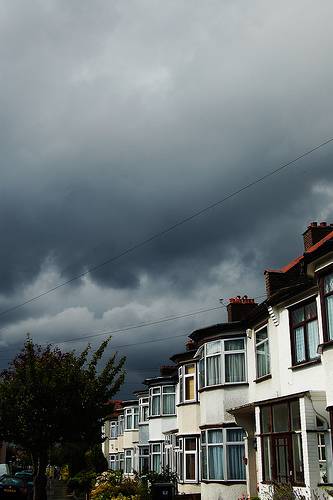
suburbia-croydon-england-rain-by-homemade-flickr


Language is important. I know the term ‘political correctness’ has become such a hefty bat to wave at lefty people like me (It has ‘gone mad’ apparently) but I long for words of compassion, of grace, of mercy to be heard in the corridors of power again. Enough of all these words of judgment, of condemnation, of weasel-worthiness masking privilege and complacency.

And I immediately find myself turning again to the words of Jesus, because what gives rise to these words is not our politics, but rather the Spirit within us. Here is the nearest thing to a manifesto that I have ever found in the Bible.

May they get you (and me) into lots of trouble.

Matthew 5 The Message (MSG)

1-2 When Jesus saw his ministry drawing huge crowds, he climbed a hillside. Those who were apprenticed to him, the committed, climbed with him. Arriving at a quiet place, he sat down and taught his climbing companions. This is what he said:

“You’re blessed when you’re at the end of your rope. With less of you there is more of God and his rule.

“You’re blessed when you feel you’ve lost what is most dear to you. Only then can you be embraced by the One most dear to you.

“You’re blessed when you’re content with just who you are—no more, no less. That’s the moment you find yourselves proud owners of everything that can’t be bought.

“You’re blessed when you’ve worked up a good appetite for God. He’s food and drink in the best meal you’ll ever eat.

“You’re blessed when you care. At the moment of being ‘care-full,’ you find yourselves cared for.

“You’re blessed when you get your inside world—your mind and heart—put right. Then you can see God in the outside world.

“You’re blessed when you can show people how to cooperate instead of compete or fight. That’s when you discover who you really are, and your place in God’s family.

10 “You’re blessed when your commitment to God provokes persecution. The persecution drives you even deeper into God’s kingdom.

11-12 “Not only that—count yourselves blessed every time people put you down or throw you out or speak lies about you to discredit me. What it means is that the truth is too close for comfort and they are uncomfortable. You can be glad when that happens—give a cheer, even!—for though they don’t like it, I do! And all heaven applauds. And know that you are in good company. My prophets and witnesses have always gotten into this kind of trouble.

 

Talking about inequality again…

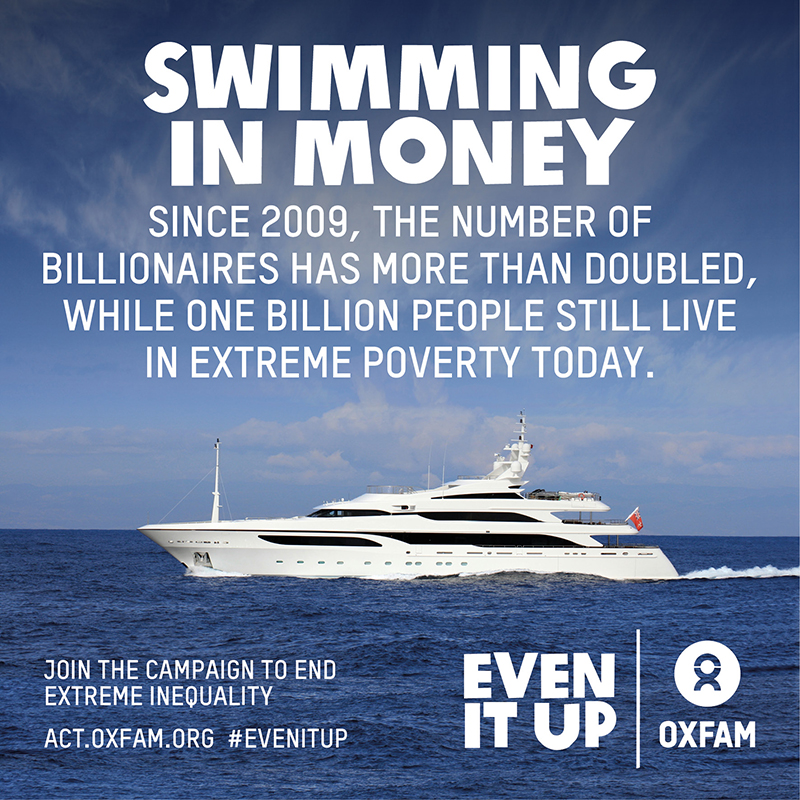
boat_fb_en

I know, it has been a bit of a theme recently; increasing inequality and the inevitable rise of poverty as the 1% grab more, whilst reframing the economic narrative around ‘austerity’ and creating fear of feckless insiders (benefits scroungers) and the undeserving outsiders (immigrants.)

The story of the decision of the UK government to cease involvement in rescuing immigrants from drowning in the Mediterranean sea has to be seen within this overarching narrative. We can send troops to fight Islamic militants in the (oil rich) middle east but saving the lives of people who are trying desperately to find a way to reach the promised land of wealth and opportunity will only ‘encourage more people to come’. More than 2,500 people are known to have drowned or gone missing in the Mediterranean since the start of the year; who knows what the real number is. The point is, not all lives are equal.

Some of the old dividing lines seem more fixed now than ever; North/South. Black/White. Man/Woman.

mum_fb_en

The me-first mythologies behind understanding poverty, in which we come to believe that any measures to tip the balance back towards the have-not’s are somehow immoral, as they might somehow undermine human endevour/entrepreneurial effort, are pernicious heresies that have to be challenged.

Oxfam has started a new campaign, called Even it up, asking campaigners in 37 countries to unite behind the call for a more equal world.

How is it fair that a select few have more money than they could spend in several lifetimes, while millions of people around the world struggle to buy food for their families or send their children to school? Such extreme inequality is threatening to undo much of the progress made over the past 20 years in tackling poverty. Oxfam say that this inequality is not inevitable, rather is the consequence of economic and political choices being made in our name. Here are some of the facts as Oxfam sees them;

1. The world’s richest 85 people have as much wealth as the poorest half of humanity / half of the world
2. Since the financial crisis the number of billionaires has more than doubled and at least a million mothers died in childbirth.
3. Half a million dollars. That’s what the richest 85 people made every minute last year.
4. Today there are 16 billionaires in sub-Saharan Africa, alongside the 358 million people living in extreme poverty
5. Seven out of ten people live in countries where the gap between rich and poor has grown in the last 30 years.
6. A third of the world’s richest people amassed their wealth not through hard work, but through inheritance.
8. Every year, 100 million people are pushed into poverty because they have to pay for health care.
9. Getting all girls into primary school could cut the number of women dying in childbirth by two-thirds.
10. More than half of the world’s workers are in vulnerable or unstable work.
11. Without action it will take 75 years to achieve equal pay between men and women.
12. In 2013, tax dodging by rich elites cost the world at least €156 billion – enough to end extreme poverty twice over.
14. Developing countries lose billions of dollars due to corporate tax dodging.
15. Today, a small tax of 1.5% on billionaires could get every child into school and deliver health services in the poorest countries.


75years_fb_en


UK kids describe what living in poverty is like…

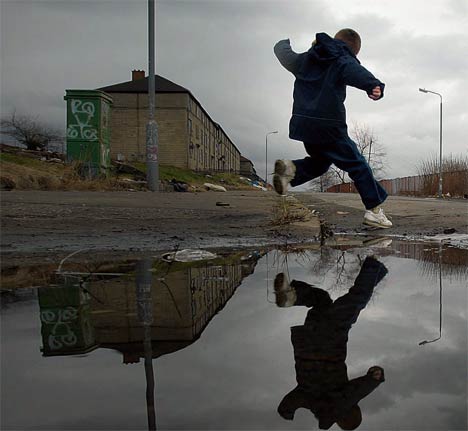
poverty2804_468x431

I read this article in the Guardian today. It was hard to finish it.

Firstly because it was heartbreaking reading about kids trying to get by, trying to transcend the shit that we subject them to. Trying to hide from the harsh glare of the hierarchy.

Secondly because I was one of those kids.

35 years ago however was a better time to be the child of a single mother living on benefits. They were worth more in real terms than they are now. There was also a generally more benign societal view towards the poor; it was the role of the state to try to support and assist- even though in many ways it always failed, still there was this desire to strive towards a more equal society.

But what I remember most of all was not the lack of stuff, the absence of material possessions, holidays, mobility, choices. What I remember most of all was the shame. I was a head taller than anyone else in my class and it was impossible to hide. I entered every encounter with a sense of being less-than. Things that came easy to others took huge effort. My awkwardness and alienation was like a force field which was every bit as visible as my odd clothing.

It comes to me still, in moments of vulnerability; we never quite escape the children we once were.  We are primarily social beings after all…

Perhaps gradation and discrimination over minor difference is a human characteristic- from the playground onwards. But poverty, this is the source of so much ordinary day to day evil. It is not motivating, it is not romantic, it does not forge any kind of community spirit. Poverty brutalises, degrades, isolates and defeats people. It perpetuates itself through a thousand small failures.

I got out. I clambered onto a ledge of safe solid respectability and mostly ignored the vertigo. Most of the others can not. My whole working life has been concerned with trying to grapple with the reality of this for huge sections of our population.

The scary thing is, it is getting worse.

boat_fb_en