Save Dunoon Pier…

Dunoon pier, late autumn light

Dunoon has this lovely old wooden pier at it’s centre, jutting out into the Clyde Estuary – a relic from the golden age of Clyde Steamers, when half of Glasgow took their trips doon the watter. In fact, the pier is the last surviving one of it’s type.

We have been fortunate enough to use some of the old buildings on the pier for worship/art events in the past. Piers are lovely places- neither one thing nor the other and lend themselves well to art/worship/meditation. Check out this event for instance.

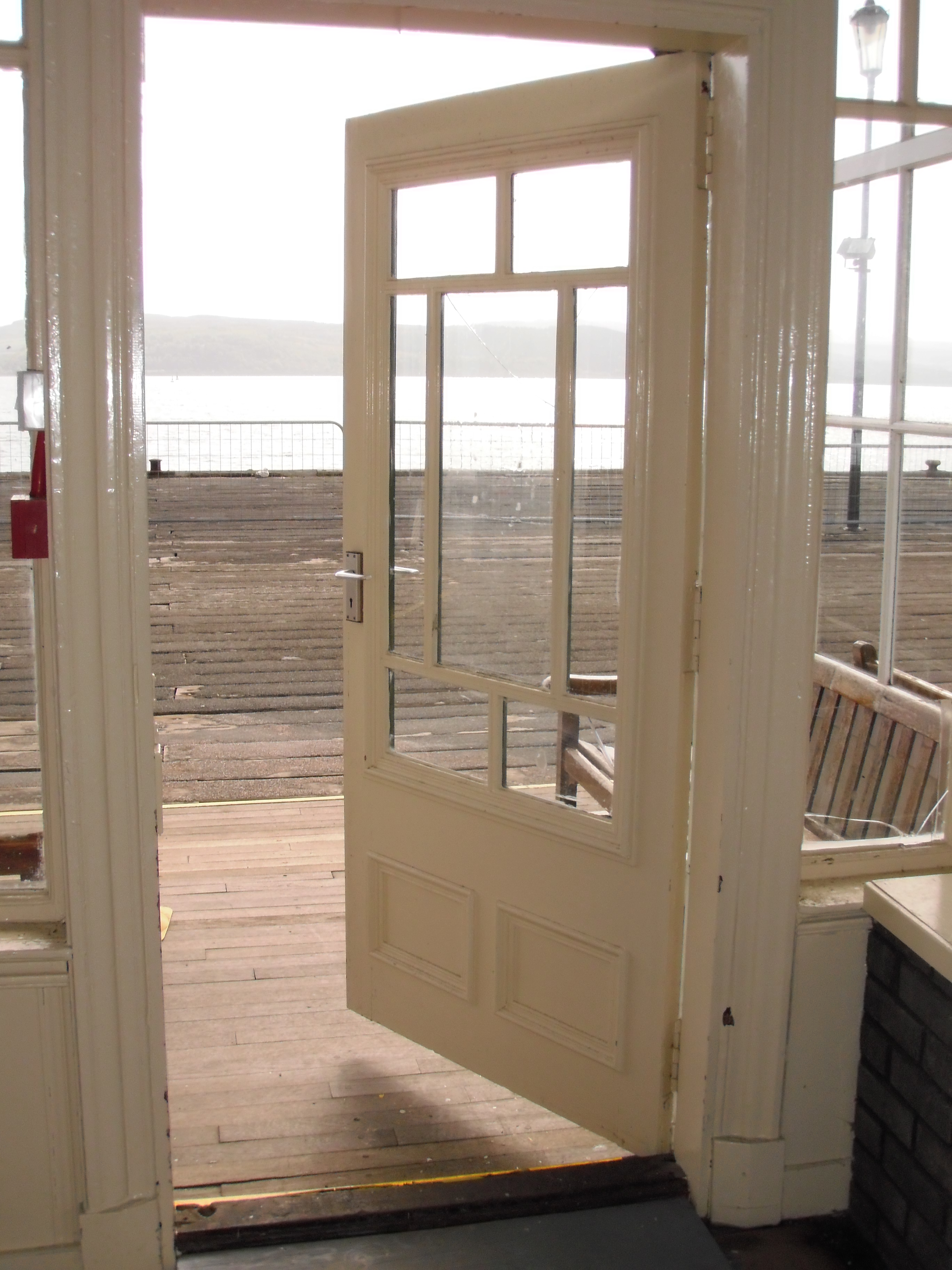
Out of the front door, Dunoon pier


A couple of years ago the pier lost it’s purpose as a working landing place for the ferries- partly because of a new linkspan, but also because there is not longer a car ferry link to the town centre. It needs a fortune spending on it, and we are watching it’s slow decline into the sea, despite it being a listed building of national importance.

You can help raise concern about this pier by signing the petition intended to put pressure on Argyll and Bute council to find the resources to actually do something with the pier- to bring it back to life again…


You were made to choose…

Psychological determinism is something I feel the need to resist.

You might have guessed that from posts like this one, in which I react to the seeping snake oil that is personality testing. One of the reasons that I react against all this kind of stuff is the fact that it would tell us that we can not change- that our die was cast in the DNA we grew from and therefore we should just conform to our stereotype.

I do not concur because I do not think the science can support such narrow determinism. Also I stand as a person in much need of change. I am not the best that I can be. I am not the finished article. At age 47 the broken bits of me still need mending and the sinful bits of me need forgiving more than ever. I no longer have the excuse of immaturity.

This short TED talk says some interesting and hopeful things about the continuing possibilities of change;

To succeed is to destroy ourselves; economic growth and fossil fuels…

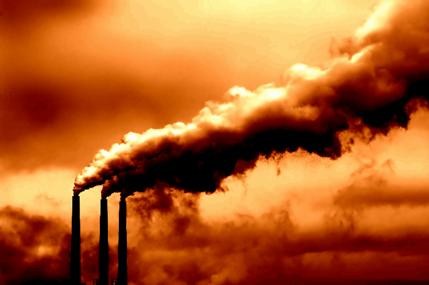
economic_growth_3

We all kind of know that the system of economic growth we are hooked on is not sustainable. However, it is so pervasive in how we understand the world that envisioning life without it is almost impossible. Take the concept of ‘economic growth’. Put simply, without growth we stagnate. Without an overall increase in the stuff we consume, own, or waste year on year, quarter by quarter, our economy is seen to be failing. In fact our politics dwells in the ever present fear of the spectre of of this terrible thing called recession. So much so that we allow them to sacrifice support to the poorest and weakest of our number by cutting social supports in the name of ‘stimulating growth.’

There was a brilliant article by George Monbiot in The Guardian yesterday in which he said this;

Let us imagine that in 3030BC the total possessions of the people of Egypt filled one cubic metre. Let us propose that these possessions grew by 4.5% a year. How big would that stash have been by the Battle of Actium in 30BC? This is the calculation performed by the investment banker Jeremy Grantham.


Go on, take a guess. Ten times the size of the pyramids? All the sand in the Sahara? The Atlantic ocean? The volume of the planet? A little more? It’s 2.5 billion billion solar systems. It does not take you long, pondering this outcome, to reach the paradoxical position that salvation lies in collapse.


To succeed is to destroy ourselves. To fail is to destroy ourselves. That is the bind we have created. Ignore if you must climate change, biodiversity collapse, the depletion of water, soil, minerals, oil; even if all these issues miraculously vanished, the mathematics of compound growth make continuity impossible.

Put like that, the whole pursuit of economic growth is madness right? Monbiot says more than this however, he points out this kind of economic growth was only ever possible because of the fossil fuels that we have been burning for the last 300 years or so;

Economic growth is an artefact of the use of fossil fuels. Before large amounts of coal were extracted, every upswing in industrial production would be met with a downswing in agricultural production, as the charcoal or horse power required by industry reduced the land available for growing food. Every prior industrial revolution collapsed, as growth could not be sustained. But coal broke this cycle and enabled – for a few hundred years – the phenomenon we now call sustained growth.


It was neither capitalism nor communism that made possible the progress and pathologies (total war, the unprecedented concentration of global wealth, planetary destruction) of the modern age. It was coal, followed by oil and gas. The meta-trend, the mother narrative, is carbon-fuelled expansion. Our ideologies are mere subplots. Now, with the accessible reserves exhausted, we must ransack the hidden corners of the planet to sustain our impossible proposition.

How do we stop this? Monbiot thinks that first of all we have to SEE it, but most of us simply do not;

The inescapable failure of a society built upon growth and its destruction of the Earth’s living systems are the overwhelming facts of our existence. As a result, they are mentioned almost nowhere. They are the 21st century’s great taboo, the subjects guaranteed to alienate your friends and neighbours. We live as if trapped inside a Sunday supplement: obsessed with fame, fashion and the three dreary staples of middle-class conversation: recipes, renovations and resorts. Anything but the topic that demands our attention.


Statements of the bleeding obvious, the outcomes of basic arithmetic, are treated as exotic and unpardonable distractions, while the impossible proposition by which we live is regarded as so sane and normal and unremarkable that it isn’t worthy of mention. That’s how you measure the depth of this problem: by our inability even to discuss it.

Step forward then the politician who is prepared to say that economic growth is no longer desirable nor advisable, and that we need to learn to love what we have, to mend stuff, to share stuff and to live within our localities.

Who is going to vote for such heresy?

Or shall we just blame it all on the immigrants?

History, violence and incubating prejudice…

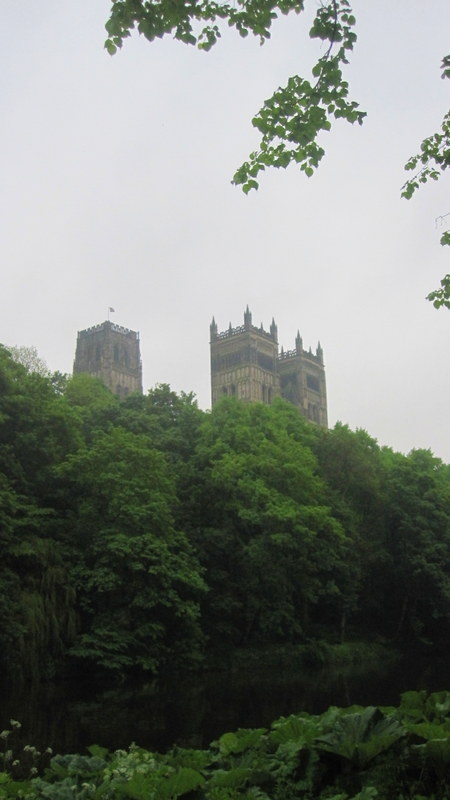
Durham cathedral

We are down in Durham this weekend for a cricket match between England and Sri Lanka (not looking good at the moment as it is raining. UPDATE- it did not rain and they lost badly) It gave us a chance to meet up with friends Graham and Victoria, and for our kids to play a game of car park cricket!

Last night we walked along the river in Durham, and up through the beautiful Cathedral close and the old streets full of university colleges. Durham (despite the hoards of drunken hen parties) is such a lovely place, but it has all sorts of violent history.

A lot of it concerns battles with Scottish armies coming down from the North. For example, this one. Then there was the Northern rebellion (involving Mary Queen of Scots,) then the fear of the Highlanders marauding down from the north which became every child’s nightmare for 200 years or more.

Will and I had a conversation about his history lessons, where they sat and watched Mel Gibson’s Braveheart- something which makes me very cross because to even vaguely suggest that this film is ‘history’ seems to me to be deeply concerning. The teacher did seem to point out some historical inaccuracies (check out the wikipedia entry) but this once again misses the point.

Last night the British public primarily elected the UK Independence Party to represent us at the European parliament. UKIP are a party based around two right wing simplistic ideas; ‘Europeans are not to be trusted’ and ‘we don’t want any more immigrants coming into our country taking our jobs/houses/benefits/hospital beds.’ It is a party that has learned nothing from history, and seems to have effectively engaged the British with cartoon versions of human interaction. Like Braveheart does. My fear is that in a time when minority extremist parties are holding sway in our minds, we need more than ever to remember the lessons of history…

The point I tried to convey to Will is that the greatest danger of these kinds of simplistic good-against-evil depictions of races and creeds is that it makes it possible for powerful people to manipulate one group against the other. If Johnny foreigner is evil; less than human; if he is the problem – the very cause of our difficulties – then we will focus on him and forget all sorts of other issues- inequality, imperialism, injustice, poverty, greed, narrow minded prejudice etc etc.

On a bridge just below the stunningly beautiful cathedral in Durham is an old stone tablet which makes this point in a few different ways. It is carved with these words;

Grey towers of Durham

Yet well I love thy mixed and massive piles

Half church of God, half castle against the Scot

And long to roam these venerable isles

With records stored of deeds long forgot

Inscription, bridge, durham

What the hell is so wrong with trying to be politically correct?

You hear it all the time; “It is political correctness gone MAD”, or “I am not very politically correct, but…” It is almost as if this thing called political correctness is a social evil alongside farting or slapping an old lady.

People love to trot out examples of political correctness ‘gone mad’, particularly the right wing media, who seem to regard it as some kind of insidious communist attack from within- perpetrated by a 5th column of Trotsky loving social workers. Here are some of the stories that have been doing the rounds;

Blackboards in school being renamed “chalkboards” to avoid offending black people.
Some schools having a “holiday tree” rather than a Christmas tree every “Winter Holiday Season.”
City councils banning Christmas to avoid offending Jews, Muslims, neopagans, and other non-Christian folk.
Manholes being renamed “Personnel Access Units” to avoid offending women.

“Baa baa black sheep” banned as having racist conotations.

Crowbars being renamed as they may have been called after ‘Jim Crow’ racist stereotype.

The problem is with these stories is that they are mostly celebrated separate from any verifiable evidence that they ever happened, but even when some evidence does exist, shawn of all context it is impossible to engage with any kind of dialogue about what was behind decisions that some poor bureaucrat was struggling with.

Reaction to what is perceived to be ‘political correctness’ sometimes seems rather hysterical- you could even say that it has ‘gone mad.’

But language does matter. How we talk about issues and words we describe people with shapes both the we see them, and the way others around us see them.

Language is a moving target however. I was reminded of this recently by a discussion about words like ‘cretin’, ‘lunatic’, ‘spastic’, ‘moron’; you still see them in old medical files where I work. They used to be diagnostic categories, but they became words of abuse. To be given labels like this was to wear a curse on a badge.

If it is ‘political correctness’ to seek speak of people who have been broken and marginalised with dignity and respect- then I am all for political correctness. I would much rather err on the side of the small people than worry about what the right wing tabloids think.

Who wants to be a billionaire?

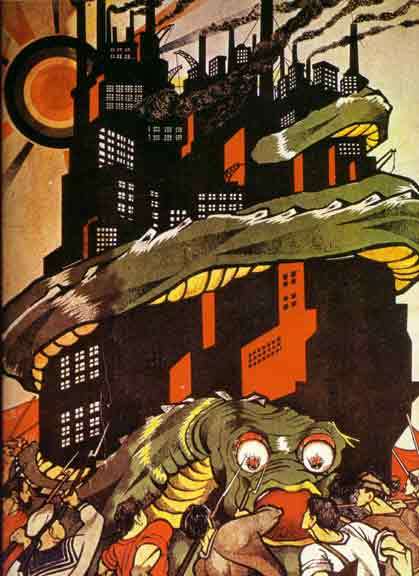
capitalism3 It is official. The UK has more Billionaires per head of population than any other country. London alone has 72. Makes you proud to be British doesn’t it? The nation where the rich get richer (because they deserve it) and the poor get poorer (serves them right; lazy scroungers that they are.) More locally, to me at least, Scotland has 7 Billionaires, up from 6 last year. This from the BBC;

The Grant-Gordon whisky family tops the Scottish element of the list with a fortune of £1.9bn.

.

There are now 104 billionaires based in the UK with a combined wealth of more than £301bn, the list says.

.

The Grant-Gordon Banffshire distilling family have ousted Mahdi-Al Tajir from the top spot in Scotland. Al-Tajir, whose interests include a development of luxury homes at Gleneagles, is worth £1.67bn, according to the list.

.

Sir Brian Souter and Ann Gloag, the siblings who founded the Stagecoach transport empire, have become members of the billionaire club for the first time. They share a fortune of £1bn – an increase of £270m on last year.

.

Other Scots on the super-rich list are Sir Ian Wood and family whose £1.32bn fortune comes from oil services and fishing, and the Thomson family, owners of publisher DC Thomson, who are worth £1.2bn.

.

Former Harrods owner Mohamed Al-Fayed, who owns an estate in the Highlands, is estimated to be worth £1.3bn, while Jim McColl, of engineering business Clyde Blowers has an estimated fortune of £1bn.

Setting aside the morality of concentrating so much wealth in the hands of individuals, two questions seem important-

  1. Do these people create prosperity for the nation- for working people- commensurate with the position their own assets gives them?
  2. Does their wealth produce anything of worth?

As you look down the short list of Scottish Billionaires, the arguments supporting positive answers to these questions seem weak. Whisky, posh flats, posh shops, mega profits from former privatised industry (transport) paid for by subsidies from the tax payer. There are a couple of industrialists there however. It is impossible to look at this list and not feel that Piketty’s analysis of how wealth rises exponentially, like some kind of run away greed machine, in capitalist economies. I quoted this previously;

Anyone with the capacity to own in an era when the returns exceed those of wages and output will quickly become disproportionately and progressively richer.

.

The incentive is to be a rentier rather than a risk-taker: witness the explosion of buy-to-let. Our companies and our rich don’t need to back frontier innovation or even invest to produce: they just need to harvest their returns and tax breaks, tax shelters and compound interest will do the rest. Capitalist dynamism is undermined, but other forces join to wreck the system.

.

Piketty notes that the rich are effective at protecting their wealth from taxation and that progressively the proportion of the total tax burden shouldered by those on middle incomes has risen. In Britain, it may be true that the top 1% pays a third of all income tax, but income tax constitutes only 25% of all tax revenue: 45% comes from VAT, excise duties and national insurance paid by the mass of the population. As a result, the burden of paying for public goods such as education, health and housing is increasingly shouldered by average taxpayers, who don’t have the wherewithal to sustain them.

.

Wealth inequality thus becomes a recipe for slowing, innovation-averse, rentier economies, tougher working conditions and degraded public services. Meanwhile, the rich get ever richer and more detached from the societies of which they are part: not by merit or hard work, but simply because they are lucky enough to be in command of capital receiving higher returns than wages over time. Our collective sense of justice is outraged.

.

The lesson of the past is that societies try to protect themselves: they close their borders or have revolutions – or end up going to war.

Piketty fears a repeat.

Perhaps then we need to watch carefully for those who tell you that the poor and broken are the problem- they are not, they are the consequences of unsustainable wealth creation by the few. Watch too for the convenient scapegoat-makers, the border-closers, the nationalists. They tend to play right into the hands of the super rich. It is a distraction from the real operation of capital, and a convenient way to wall wealth away from taxation. It also pretends that the problem of austerity is caused by the poor outsider, come to steal our jobs, our houses, our NHS facilities. Blessed are the poor, but who wants to be poor? We all want to be Billionaires…

It’s all about poverty, stupid!

classroom1_465x343

Some sobering news for education systems in Scotland, via the Joseph Rowntree Foundation;

  • The gap between children from low-income and high-income households starts early. By age 5, it is 10–13 months. Lower attainment in literacy and numeracy is linked to deprivation throughout primary school. By age 12–14 (S2), pupils from better-off areas are more than twice as likely as those from the most deprived areas to do well in numeracy. Attainment at 16 (the end of S4) has risen overall, but a significant and persistent gap remains between groups.
  • Parental socio-economic background has more influence than the school attended.
  • Children from deprived households leave school earlier. Low attainment is strongly linked to destinations after school, with long-term effects on job prospects.

We have been attempting to tout education as the means by which we make societies more equal for generations now. We tried a tri-partite education system, with children streamed by ability, then we switched to comprehensive education. We tried experimental community schools for a while (I went to one) then sort of gave up and said that the problem was caused by bad schools, bad teaching.

You could argue that the politicians employed the old divide and rule trick- they made schooling all about choice, individuality and parent power – none of these things bad in their own right, but they were sold to us using league tables (which masked the inequality by making inner city schools look like they were under performing.) The end result is that we as parents increasingly looked after our own. Those that could afford to send our kids to private education felt under even more pressure to do so.

What the Rowntree report makes clear is what we have always known- inequalities in educational attainment are not about bad schools or bad teaching, they are about one thing- poverty. It is not as if every piece of research in this areas has not told us this.

Equality is not something that can be promised to the next generation, no matter how much we hot house our kids through exams. Blair famously said that his three priorities in government were “Education, Education and Education.” The fool forgot that you can not treat a problem be focusing only on one of the symptoms.

The report mentioned above lists a whole set of things that it thinks government can do to narrow the attainment gap between rich and poor, but the reality is that the only guarantee of any kind of change is to bring greater equality of income into our society and lift poor people out of poverty.

social class


Reflections on going backwards…

William walks the sands

Most of us measure our lives by the progression of a career.

We start out with dreams; spaceman, nurse, vet, train driver, deep sea diver. These dreams are fed or squashed by teachers, parents, careers officers. They tell us it is all so serious, so crucial; we have to find the right path.

So we stumble forwards through school exams, college courses, university. The pressure is intense. Each threshold contains the possibility of complete failure.

But most of us make it through to some kind of job. The bottom rung. The starting block in the race of life.

About a quarter of a century ago I started my first job as a social worker. I was 23, naive and desperate to do something that mattered- to mask my own brokenness behind (often futile) attempts to mend others. I worked hard in a small team under intense pressure from inner city problems that most people would never believe existed. Most of my colleagues buckled under the strain- none of them are still working in social work.

As I too began to come apart at the seams, I also progressed my career. I became a specialist, then a therapist. Later I became a team leader, then an area manager. I was climbing.

Except that when you climb higher into the machine, what you find is not a more finely honed sense of what social work is all about. The idealism that took us into the profession is gone. The value base that we espouse (person centredness, an identification with the poor and those in need) has largely been forgotten. These things are not measurable, have no performance targets, so have no worth in this new world.

You also find that power attracts a certain kind of personality. Some people seem born to trample on the fingers of others and call it good management. The games that we play to win pointless hollow victories. The damage we do to each other (and to ourselves.) Often, quiet competence is punished, whilst those who can play the power game advance. It came to a point where I felt myself neither competent nor able to raise myself to scratch for power, so I got out.

But I still need to make a living, so eventually I find myself doing agency work, back at the bottom of the rung. From one perspective, the last 25 years never existed. I have gone no where, done nothing.

Meanwhile I am looking at applying for permanent jobs with salaries that are less than I have earned for more than a decade. And it is all rather sobering.
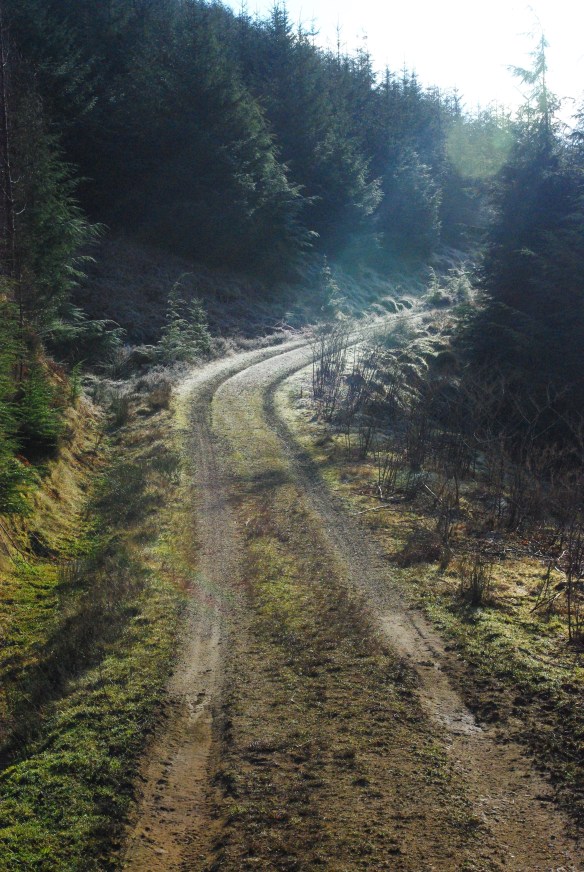
winding road

However, I am still having to learn over and over that life is NOT about rising up, succeeding, earning ever more money. This kind of life is one that is killing the planet and making us all unhappy.

What I am learning again are the simple pleasures of doing something because it is good. Listening to people’s stories with ears wide open. Meeting people on the edge and encouraging them to shuffle back a bit.

Life is not lived in straight lines. Thank God.
Innellan Cricketfest 2014…

Any localish folk who fancy having a go at the fine game of Cricket may be interested in Innellan Cricket Club’s CRICKETFEST event…

6 players in a side, 6 overs each, get as many runs as you can. Simple.

The idea is to give people a chance to feel bat on ball, have some fun and hopefully pick up a few more players for the club.

ICC 6s poster