A 12 year old Egyptian kid does politics and theology…

I do not pretend to know very much about the complexities of the political mess currently affecting Egypt. The main ingredients- the politics, the inequality, the religious extremities – are filtered through a media system that is skewed towards a western perspective, and all too addicted to the easy stereotype.

However, I saw this clip on FB the other day- see what you think. Is it for real? A hoax?

Or is this kid speaking in a clear voice on behalf of his people?

I am tired of attempting to justify religious absolutes, no matter where they come from. We Christians should always remember that Jesus had this way of subverting hard boundaries in the name of love.

When heard through the mouth of this precocious boy, anything else really does seem like nonsense…

Hospital mortality- fact or political smokescreen?

stock-footage-sick-diabetic-women-in-hospital-room

For those of you who read this blog in the USA, where our National Health Service (free at the point of entry, paid for by taxation) is frequently vilified as inefficient and a yardstick for poor patient care, the news today will no doubt support the stereotype you have been given.

Inspectors sent into hospitals with higher-than-expected death rates found evidence of poor practice such as too few staff, inadequate infection control, patients left unmonitored on trolleys for long periods and badly maintained operating theatres, Jeremy Hunt has said.

The health secretary cited the problems uncovered by an inspection team led by the NHS medical director, Prof Sir Bruce Keogh, into mortality rates at 14 hospitals in England, as he confirmed that 11 of them were being put into “special measures” to push through urgent improvements to patient care.

The Guardian

The NHS lives on in the affections of the British People like some kind of slightly eccentric aunt who is always there when we need her, but is someone we would rather not invite for Christmas dinner. Or at least this used to be the case- until these stories started to dominate the headlines.

We are starting to see a polarisation of attitudes- on the one hand, we have a government whose main party (the Conservatives) are instinctively against public sector spending, and see an opportunity for opening up the hugely lucrative health sector to the white heat of the market forces, whilst on the other hand, others see this whole episode as a smash and grab raid. This was one of the comments made below the Guardian article above which sums things up rather well;

Reduce staffing levels by cutting funding.
Watch as lives are lost due to this.
Blame the NHS at large for the failings.
Cut more funding as punishment.
Repeat until Privatisation.
Profit.

Except, anyone with half a brain who takes time to look at the basis for these claims will understand that the reality is far from simple. The NHS is a highly complex system, full of endless variation- departments that work well hampered by poor professional relationships with key partners, good management but funding shortages, adequate resources but staffing shortages, areas of total excellence in hospitals that are ordinary etc etc.

The other thing that we have to note are the statistics that the claims of an NHS crisis are being based on.

Check out this summary of the problems of the Hospital Standard Mortality Ratios (HSMRs).

Or this account of what the data means from the Guardian.

There is no doubt that the NHS provides health care to each and every member of this country that is the envy of most of the world. What is more, it does this too everyone, regardless of their spending power, or (as in the US) the quality of their health insurance package (which may well be the same thing.) To any of us who have worked in and around the NHS it is also more than clear that the system is not perfect- no system ever is. It needs constant improvement and review.

But what might kill it in the end is if it becomes a political football used to wage an ideological war.

One further thought about hospital mortality. There will always be variation in hospital mortality rates- but what is the primary cause of this? Is it poor hospitals? Staff who do not care? Bad management? And even if these things play a part in the whole, what is the largest causal factor?

Remember the Black report back in 1979?

Or the Marmott Review as recently as 2008?

The Guardian summarises it all like this;

• People living in more deprived areas are more likely to die in hospital
• Greater deprivation is often found in areas where there is more inequality – i.e. where there’s a large gap between the life expectancies of the richest and poorest
• The impact of poverty on life expectancies appears greater for man than women.

It may be tempting for the media to focus on headline numbers in today’s report but they are unlikely to find any. The NHS medical director has signalled:

However tempting it may be, it is clinically meaningless and academically reckless to use such statistical measures to quantify actual numbers of avoidable deaths.

What’s clear is that several factors contribute to mortality rates and without being able to hold these constant, it is impossible to say how many deaths resulted from weaknesses in the 14 hospitals identified.

I am no conspiracy theorist- but I do think that the Conservatives are seeking to make political capital out of these figures- and to give a message that suits a portrayal of a crisis that is simply not there.

And I also believe that the NHS, in all its cluttered glory, is worth fighting to save, to improve, to celebrate as something that we Brits should be proud of.

Highland short break- special offers!

sgath an tighe, bluebells

Sorry to go all commercial, but regular readers of this blog will know that this year we opened some of our house as a bed and breakfast. We are half a season in, and have really enjoyed sharing our house with guests from all over the world.

In these difficult times, we are well aware that many folk are looking to make their hard earned cash stretch as far as they can, and so have decided to offer a couple of special offers- one of which is an exclusive one to readers of this blog!

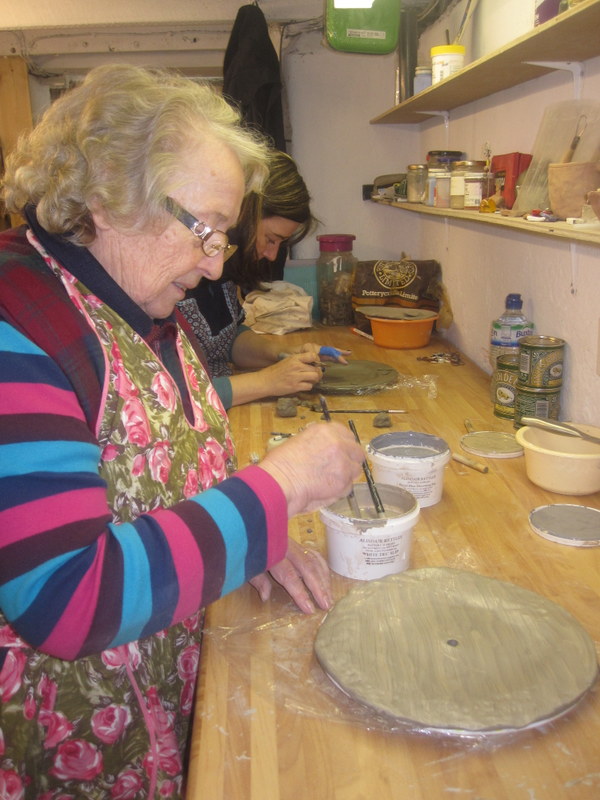
Through the Visit Scotland ‘Surprise yourself’ , people who book two nights in our B and B are entitled to a free pottery taster session in our pottery;

netta potting


However, if you mention ‘this fragile tent’ when you book a couple of nights, then you will get a 10% discount of the cost of your stay too!

The weather has been beautiful up here over the past week or so- temperature in the 20’s, blue sky above the mountains and lochs, space, quietness and peace yours for the making.

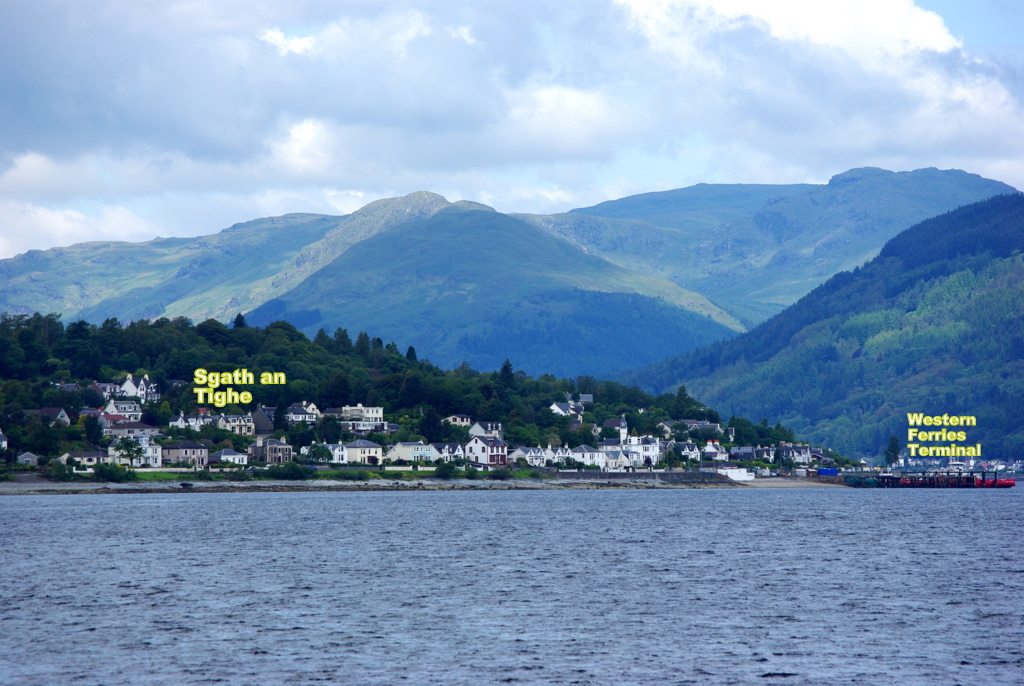
We are closer than you think, on the edge of the National Park, near Dunoon;

sgath an tighe

How to get ahead in Evangelism; find yourself a killer story…


taming_the_tiger_book


…in this case, a kung-fu-killer-assassin story.

For those who have not heard of this book (like me) it tells the ‘true’ story of the life of Evangelist Tony Anthony, who claims to have been taken to China by his grandfather, a Kung-Fu grand master, at the age of fourm where he was trained in the martial arts and became Kung Fu world champion three times. He then moved to Cyprus, becoming an elite bodyguard to businessmen, gangsters and diplomats before being jailed in Nicosia Central Prison for a series of thefts from hotels. It was in prison that Tony Anthony says he became a Christian.

His book has sold 1.5 million copies worldwide, and from the profits Tony set up Essex-based global evangelism charity Avanti Ministries. He traveled the world preaching, visiting prisons and telling his story.

Except it now looks like his story was not true. Check this out.

Finally the Evangelical Alliance and Avanti Ministries were forced to publish a statement;

In October 2012, the Evangelical Alliance received a detailed complaint about the validity of the testimony of an Avanti Ministries’ evangelist, Tony Anthony, and his book Taming the Tiger.

Following discussions between Evangelical Alliance and Avanti Ministries, Avanti agreed to set up an independent panel nominated by the Alliance to investigate in a confidential manner the allegations against Tony Anthony.

The independent inquiry panel was made up of three respected members of the UK council of the Evangelical Alliance: John Langlois (chair of panel), Keith Civval and Robert Amess.

The panel produced its report on 26 June 2013 and concluded, based on the evidence submitted to it, that large sections of the book Taming the Tiger, and associated materials, which claim to tell the true story of Tony Anthony’s life, do not do so.

Both the Evangelical Alliance and Avanti Ministries take serious note of the findings of the report and as a result Avanti has concluded that it is not appropriate to continue to support Taming the Tiger.

The board of Avanti Ministries are now considering the ramifications for Avanti Ministries’ future.

The Alliance and Avanti Ministries would like to thank the independent inquiry panel for their diligence in producing its report.

The Alliance and Avanti Ministries are deeply saddened by the findings of the panel. However, they recognise the good work that Avanti and Tony Anthony have done over the years around the world and the impact this will have on the charity, and specifically Tony and his family.

What is it that makes Evangelicalism vulnerable to con men and fantasists like Tony Anthony?

Or to put it slightly differently, what is it about Evangelicalism that makes all sorts of dodgy means justifiable because of the eternal end- that of saving souls?

I have been giving this some thought, as someone who has been in and around Evangelical churches for much of my adult life;

Firstly, Evangelicalism owes much of its methodology to salesmanship. There is this wonderful product (eternal life) and our job is to ensure market penetration, by any and all means possible.

Because the emphasis is on the sale, not the life long (earthly) warranty of the product, then the most important thing that our energies can be put to is the process of selling. All other things are secondary.

Some people are very good at selling- these people are given the respectful and elevated title ‘Evangelist’. But really they are just good salesmen. They have a slick method and a killer sales pitch. However, selling stuff is by its very nature a dark art. It involves manipulation, psychological game playing. It is divorced from real life, real community, real relationships. Most people who are good at this kind of stuff are not necessarily people who we really want to see in powerful leadership positions (even if that is exactly where they tend to be.)

Some salesmen might rightly be called by another title- sociopaths.

Finally, salesmen who are able to sell their evangelical product on the global media market- these people can not only feed the mansions of heaven, but they can also feed the Christian media machine.

Beware the salesman (or woman, although they tend to be men.) What they claim to be offering is often not what you end up buying.

Reading culture through art…

DSCF7670

It is a statement of the obvious that art operates as a window onto culture. If some alien was trying to understand who we are, what motivates us, what we hold as important, they would only need to take a look at our creative output; our film/TV in particular. I love watching films made in other cultures- Chinese films for instance- all those heroic, stunningly shot epics of love, honour and discipline. They give me hope for mankind as China will surely hold the reigns of the coming Empire.

Our recent trip to the Tate Modern on the South Bank threw all this back into my mind. It was a riot of odd objects and ideas. The first challenge is always to find a way into the language that is being used- and this takes a lot of time for people who are unused to this kind of art.

Many pieces I walked past, bemused. Some seemed too heavy handed- empty canvasses with a slash down the middle, boxes of wood with a hole in each end and light inside. It was possible to ‘get’ what they were doing, but move on quickly. Often I failed to understand why THIS object was thought worthy of a national gallery (a pile of melted plastic, a ‘cage’ made out of what looked like turds threaded on wire) but I was more than happy to engage with them anyway.

Then there were all the Turners, Picassos, Hepworths and the like. These tended to be crowded about by a kind of repellant hushed awe. I found myself moving swiftly on, propelled by a combination of my own sense of inadequate knowledge and a discomfort with celebrity-art.

What stood out for me were pieces that used language/symbolism that I already understood- they used cultural references that were familiar to me, but seeing them in a large gallery changed them, opened them up a little.

There were these slices of timber for instance- beautiful already, then sliced and diced and patterned by industrial saws so that each one held a difference set of cuts. Somehow they held my imagination- I wanted to touch them. The combination of polished wood and industrial process was suddenly very meaningful;

sculpture, tate modern

Then there were little things like Bruce Nauman’s ‘Violence, violins, silence’;

violence, violins

Perhaps my favourite piece however was one called Active Poetry, by Polish conceptual artist Ewa Partum, back in the 1970’s.

eva partum, active poetry

This was a dark room, with projected old 8mm film and a tumble of letters. Partum took parts of famous literary texts, cut them up into letters and scattered them in natural settings. She used typefaces of the kind often used for propaganda. In doing so she asks little questions about literature, history, nature, creativity.

It is this kind of art that has become such a useful tool in making ‘alternative worship’ installations. Here is the film;

A contract between Scotland and God…

covenant flag

Back in 2009 I wrote a post about Jean Darnell‘s prophecies in relation to Scotland. The point of the post was to dig into some of the hopes that certain parts of the church hold on to up here- hopes for a revival, for a new Holy Nation that becomes a beacon of truth for the whole of Europe. I suspect that there are people who hold to this hope in all countries, and from all faith backgrounds- although it is perhaps fair to say that Scotland has had more than most.

I was reminded of this when watching a recent BBC documentary called ‘The History of Scotland’. Episode 2 is available on the i player, and tells the story of the Covenanters.

I remembered a wee on-line spat with someone who commented on the post I wrote about Jean Darnell. Check out the comments on the post. 

Most of us in the British isles know very little about the Covenant, and how the power of religion became the engine for slaughter, civil war and repression. We know some of the key events- the ‘English’ civil war, Cromwell, beheading Kings and then reacting against it all afterwards. We might also know something about the  clashes between Catholic and Protestant religious movements, but this seems like a decorative footnote in history- like an antique frock coat in a museum. 

I wonder though whether this part of our history is more important to engage with than ever, in this time of the rise of fundamentalist religion. 

So here we go…

The Reformation smashed apart some of the old established religious hierarchies. John Knox, brought the teaching sof Calvin back to Scotland. and in 1560 Scottish Parliament adopted a formal system of  presbyteries. Men came to beleive that the Scottish church was the closest to perfection on earth. This was the church that all churches should emulate.

However, this was the age of Kings- power was dynastic, and fickle. Charles the first of Scotland, England and Ireland, seemed to be undermining the purity of the Presbyterian church in a series of cuts. Anglican priest undertook his coronation service, bishops were imposed, a prayer book insisted upon. Charles was imposing himself between man and his God, using the ways of Anglicanism, which was seen as Catholic-light. All this led to trouble. Preachers denounced, rabbles were roused, Priests were beaten up, books were burned.

In 1638 some of the outraged faithful organised themselves on a new path. Taking inspiration from the covenant God made with the ancient Israelites, they wrote a document that captured what they believed to be the role of a perfect king- one limited by the law of God, and married to the perfect church. The document fell in fertile soil, and stimulated an uprising of religious fervour- Scotland could be the perfect kingdom, a new Israel. 60% of Scotlands adults signed the covenant- many swept up in the excitement of it all, some bowing to pressure- failure to sign was shameful, Popish. This pressure led inexorably towards extremism, fundamentalism, madness even.

In a time of fractious relationships across the Union, the Covenanters (as they were now known) raised an army. Charles was weak and his hired army was defeated twice. Charles had his own problems with a troublesome parliament at home and the English civil war began.

In the first year of the war, Scotland took no part, but in 1643, Parliamentary forces, who had been repeatedly defeated by Charles forces, sent to Scotland asking for help. In return for help- in return for this help they promised the establishment of a Presbyterian Kirk in Scotland and Ireland. 20.000 men sent and they turned the tide. 2 years later, Charles surrendered. The defeated King was asked to sign the Covenant, but this was like asking Charles to reject his understanding of God, and who he was in the whole order of things. He refused.

Charles made a secret deal with loyal noblemen in Scotland, offering a 3 year trial of a Presbyterian kirk in all his kingdoms. Old loyalties remained. This split the Covenanter movement. Ordinary people did not want to fight for the vague promises of a non covenant King. These became called the PROTESTORS.

However, the Nobles marched south- they were defeated at Preston by Cromwell. The Protestors saw this as evidence of Gods favour, and fired with the certainty of their election, they seized Edinburgh.

What happened then will be vary familiar to anyone who has been close to the Taliban in Afghanistan. In a period known as the ‘Rule of the saints’ backsliders were executed, holes made in tongues, ears nailed to posts, the ungodly were harried and purged. No sin was left unpunished, public floggings were held on every street corner. Yet these times were remembered later as the ‘golden age’ of Protestantism.

The interesting thing is that this kind of extremist collective madness was only possible in a political vaccum- a time in which the moderation and stability of state has been suspended, smashed. Like Afghanistan, or Iraq perhaps, before or after  the odd invasion.

In 1649, King Charles the first was tried to treason. On the 30th of Jan he was executed. Monarchy was abolished- in England at least.

However, in Scotland, the Covenant still needed a signature; the Scots still wanted a king. They invited Charles’ son to come and be king. In order to be King, he needed to sign the covenant. He signed.

Cromwell could not let this lie- he had by now replaced the Union of old Kingdoms with a new Commonwealth, and to protect his embryonic new order he came north in 1650 with his army. For a while, things were in the balance. At Leith the Covenant army was twice the size of Cromwells, but decided to purge itself of ungodly elements (who tended to be the professional soldiers.) Cromwell killed thousands and put the rest to flight. The Rule of the Saints was over.
Cromwell was brutal- the English armybecame an army of occupation in Scotland.

1653, Cromwell became Lord Protector- almost-King. Then Cromwell died and 11 years of guilt unleashed. The spectre of the headless king stood over the nation- people were appalled. Things had gone too far.

So in 1660, Charles, son of Charles, becomes King of England and Scotland.  The old world was re-made and in this new/old world there were no room for the Covenant. It was made unlawful. Copies were collected and burnt by hangman.

Charles appointed bishop0s and archbishops, made all swear allegiance. All of Scotland’s ministers had to find a noble patron. Many could not or would not.

Alexander Peden- (“Prophet Peden”) was one such minister. He left his Kirk and began preaching in open air to thousands of men in South West Scotland- often armed men.

But things were changing in high places; the direction was back towards Rome. In 1670 Charles made secret treaty with Catholic King of France for money and arms to make sure his power remained. National conversion to Catholicism. Needed to be kept secret- and so those who accused him of Papery were sent to Bass Rock, including Peden, who spent 4 years on Scotland’s own Alcatraz.

IMGP2900
Everything that has been achieved by Protestors (and the Covenanters) was being undone. The faithful were desperate. The accursed Bishops were a figurehead of all that was evil and so in 1679, 9 men chased down the coach pf the Archbishop of St Andrews and assassinated him in front of his daughter.

It was a  terrorist act and there was a reaction. Battles were fought again in which initially the Protestors did well, taking the city of Glasgow. Hopes were raised- could ‘The Golden Age’ return?

Then began three weeks of discussion. Should the ungodly be allowed to fight.? Were they wanting to unseat the king, or persuade him to sign the Covenant only? Theology was argued. Factions formed and split then split again. And then Cromwell attacked. 400 were killed, 1200 were taken prisoner, the rest fled. What followed became known as ‘the killing time’. Many preachers executed.

In 1681, a young Protestor called James Renwick climbed up pikes to retrieve and bury the heads of 5 executed Covenanters. He became leader of remaining Protestors,  Who made a new declaration and formed what were called ‘United Societies’. They rejected Stuart Dynasty. Rennick, along with his 6000 followers, wanted to start second civil war.

Meanwhile, James, Charles brother was declared heir to throne as Charles had no legitimate children and he was CATHOLIC. Fires of unrest started to smolder, and something needed to be done. The plan was this; an Oath was framed demanding all citizens reject the united societies. Failure to take oath was punishable by death. Soldiers sent into south west- and over 90 people were killed by summary execution- no courts, not appeals.

James came to throne in 1685. Now there wereCatholic monarchs in France and Britain. William of Orange in the Netherlands, James Nephew, had a claim to the crowns of Britain. He was not Catholic and had been at war with France for years. He prepared to make his move.

Meanwhile, Catholics became majority in Government. Only the United Societies remained as an opposition, so a price was placed on Rennicks head. Rennick wanted to become a martyr so after a skirmish in which he killed some of the men sent to detain him, he allowed himself to be taken and was executed in 1688.

Then William of Orange landed in Devon with 15000 men, and James support withered.  It seemed to be decided that this  was not an invasion- but rather a glorious restoration. Protestant army offices defected to Williams army and noblemen across the country declared their loyalty to William. James’ position was untenable  and so he fled the country. In 1689, William was crowned King of the union of Scotland, England and Ireland.

Significantly, he made a new covenant between crown and parliament- a bloodless covenant 50 years after it all started.

Bloodless in England that is- some noblemen in Scotland remained loyal to James- became known as Jacobites– and this is a whole different story- leading to a whole lot more blood letting down the line. There was a kind of compromise between William and the Protesters. This split in the Kirk though- and itsplit in the country. In the north, loyalty remained- a ticking time bomb which would take many more lives.

So, when all is said and done, what is the legacy of the Covenanters? They are still held as heroes by many- particularly within certain tribal religious groupings.

Where they martyrs in the service of civil liberty, of religious freedom in the face of oppression? Where they serving the cause of the Kingdom of God? Is there example enlightening to us across the (few) generations since their passing?

What was left of the message of Jesus in their war cries? The knew nothing of mercy, nothing of moderation nothing of peace.  Their only interest was  in securing power for their own brand of religion. One nation under God, sermons every day, twice on Sunday. All others will surely go to hell.

Their religion was the religion of empire- not of the Kingdom of God. This may sound like after-the-event rationalisation, but I think we owe our history (and the its victims) more than this.

Final words go to Neil Oliver, presenter of the BBC programme;

Once this was God’s country- but it is no more.

Thank God for that.

Perfect is the enemy of good…

cave-art

“If I can not do great things, I can do small things in a great way.” Martin Luther King Jnr.

Bear with me on this one.

Our culture places high value on polished excellence. We are schooled to laud our would-be-celebrity-achievers; singers who shine through the harsh (if manufactured) glare of TV trials, sports men and women who dedicate their lives to their pursuit of victory.

Along the way, there is indeed a love of a glorious failure, but this depends still on almost reaching the top.

But the fact is that few of us will ever reach extraordinary heights in any given pursuit- that it why such achievements are called extra-ordinary. Despite what we are sold as some kind of democratisation of celebrity , most of us are (and will always be) different shades and hues of ordinary.

What happens when the gap between our achievement and our aspiration (no matter how unrealistic) yawns wide?

I suppose most creative types live in and around this feeling- it is hard to ever feel fully satisfied with what we produce. Insecurity and frustration usually live alongside all the highs and acclamations.

But those of us who live in the ordinary – who make art, music, sport, etc out of base metal – faced with the obvious imperfections of what we make, the temptation is simply to give up. Then all that is left is to experience life vicariously through some kind of media interpreted version of creativity.

Perfection of this kind is shiny plastic. It is unachievable and often irrelevant to real things, real relationships and the mess of real life. It serves as distraction only.

There are other kinds of creativity that capture much more of who we really are. They tend to be shared in small spaces and to have little or no monetary value. Words will be miss-spelled, chords may be duff, the fine brush strokes of a hand will blur slightly. This art emerges from the ordinary- but is no less transcendent.

To strive to be better, to go deeper, further, higher- these are good things, but we can choke on fine food- we also need cabbage and brown bread.

Let the mirage of perfection never steal from us the beauty of what is good.

Pride before fall…

I know- all that sport-as-analogy-for-life stuff is so passe, but sometimes it is good to come up against your own fragility.

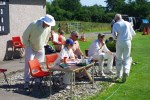
So here we go- some pictures of me playing in a single wicket competition.

It works like this- you draw names, and then bowl/face two overs each against your opponent. I drew Brendan, who was merry with ale in the mid day sun, so I had a good chance- even though he can play. I bowled first- and in two overs, despite smashing a few sixes, he was out three times. Your final score is divided by the amount of times you are out, and so I needed a mere 4.5 runs.

I did not get them.

Drive


Nice leg glance


Out

Where the wind comes from…

weather vane 2

The wind blows wherever it pleases. You hear its sound, but you cannot tell where it comes from or where it is going. So it is with everyone born of the Spirit. John 3;8

A few months ago, my friend (and former next door neighbour) Terry, looked up at the pointy bit of our house and said “That needs a weather vane. I’ll make you one.” Terry is a man who has a gift with all things metal and mechanical- he mends steam traction engines for a living at the moment, so he certainly has the skills.

A few weeks ago, they were passing through on their way on holiday in a camper van, when good as his word he handed me a lovely weather vane, made in his workshop down in Leyland, Lancashire.

He has placed an old Christian symbol on the top, an Ichthys, used in the early church as a sign of meeting, of hospitality.

The next task was to summon up the courage to actually put the vane up on the highest point of our house. Today I managed to overcome shaky knees and do the deed.

Thanks a million Terry!

weather vane 1

William- almost 13…

IMGP4764

Tomorrow William becomes a teenager. Gulp.

Last night he had a party- themed around Bugsy Malone gangster stuff. Everyone came dressed as a gangster or a moll, and after loads of food, music and watching the film on a big screen, everyone went outside to have a massive custard pie and water pistol fight. They had a ball- despite the almost impossible midge level last night (the worst I can ever remember around the house.)

Each event like this, for parents, is one to savour, to store in precious memory banks. This may be the last of those innocent children’s parties we ever throw for one of our kids- the age of party games, of jelly, of passing the parcel is now gone.

But each step along this life journey with our lovely kids has been nothing but beautiful- even the tough bits act as counterpoint only. Through them we are blessed beyond anything I could ever have expected when we started out…

Some more photos;