Make the world better- return to the hope of community…

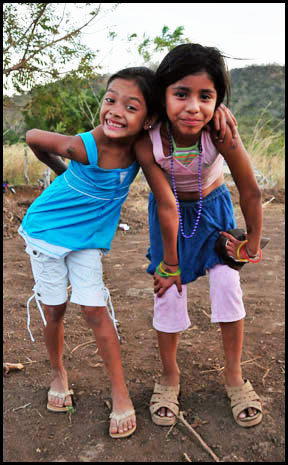
two_girls_forweb

Michaela sent me a link to a lovely site called The MOON Magazine– she had discovered it through her day job, which involves running a local community project called a ‘Time Bank’.

The ethos of time banking is to encourage people of all abilities and skills to donate time (which might range from proof reading, gardening, teaching Russian, feeding fish etc etc) in return for using the skills of someone else. Obviously there are practical benefits from this – we can get stuff done that we have not the skills to do ourselves – but the much greater benefit is found in the deep satisfaction that people get from doing something useful, and in making connections with other people. It answers some deep human need, and is the very foundation of community.

For example, we have made a ‘direct exchange’ with an accountant, who helps us with all the complex taxation stuff for our small business, in return for me cutting her grass. Not only do we get to provide one another with a service that fits our skill set, but we also get to meet interesting people, share lives and stories.

The MOON magazine is full of stories like this- things that people have done that make a difference to our relating to one another in a time when the prevailing culture would trend towards our isolation in boxes looking at screens (as you and I are doing right now!)

Check out these films for example.

The man who started Time Banks, Edgar Kahn has an article there in which he says something which chimed very much with my previous post;

It’s not that money and price aren’t useful; but we must not mistake them for the only determination of value. All of us have domains in our life that we define as priceless, where a reduction of their value to market price is unacceptable. Our relations with our loved ones, our families, our friends, for example, are not for sale. Some of us think that same principle applies to other domains: justice, democracy, spiritual realms, the planet.

We cannot let market price define value for a very simple reason. Price is determined by supply and demand. If something is scarce, its price is high. If something is abundant, its price is low. If sufficiently abundant, it has no market value; it is worthless.

Consider what that means: every quality that defines us as a human being is abundant. Every quality that enabled our species to survive and evolve is abundant. What are the qualities our species needed? Here’s a list: our ability to come to each other’s rescue, to care for each other, to work together, to come together to make decisions, to stand up for what’s right, to oppose what’s wrong. If we accept the message that money sends about value, then being admirable human beings is worthless.

Money sends another message: Your worth is determined by how much money you make. But most of the money in world markets is generated by money making money from money….

…Back in ancient Greece, Aristotle characterized such exchanges as making “barren metal breed.” Today making money takes the form of digits breeding digits in cyberspace. Now, as then, we seem to turn to oracles and soothsayers to divine a future that remains beyond our control or theirs.

Time Banks stem from an awareness that we cannot grant money an exclusive power to determine value. We need another medium of exchange that defines value differently and that sends a different message. Msg. Charles J. Fahey, a priest of the Diocese of Syracuse, New York, who was the director of Catholic Charities, put it this way, decades ago, when he announced: “I have good news and bad news for you,” which he summed in the words, “We have no money. All we have is each other.”

Amen.

If you want to change the world, if you want to make life deeper, more fulfilling, more satisfying, then build community. Find friends you can laugh and share with, hold things in common. Stop thinking that money is going to help with any of this- beyond a certain level, money just enslaves both those that have it and those that want it.

(By the way, those last things were not original ideas, they should rightly be attributed to Jesus.)

Neoliberalism- what comes next?

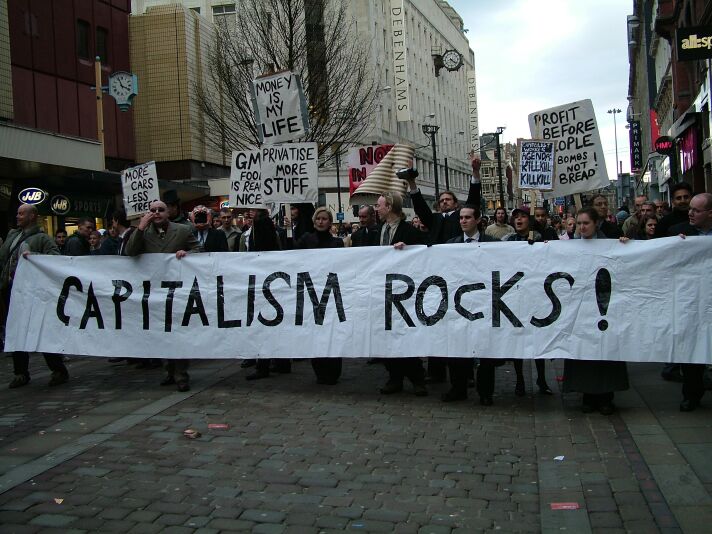
capitalismrocks

Regular readers of this blog will know that I have written a lot about the political-economic status quo- if indeed there is such a thing in these times of economic turmoil. Some of this has been about challenging some of the ‘common sense’ truisms that we have become so used to that we hardly question. Some of too has been my way of expressing frustration and protest in the face of manifest injustice – a system in which the rich get richer, live longer, are better educated etc etc, whilst the poor are blamed as feckless and ‘skyvers’.

Throughout I have also felt this constant desire to see an alternative- a better way to organise our commercial fiscal and tax system. I can catch glimpses of this, in small things between individuals and groups, but the system will tell us that what we have, beyond a bit of tweaking, is as good as it can get.

It is this kind of thinking that allows those of us that call ourselves followers of Jesus to also accept greed, avarice, unjust economic relationships and exploitation as somehow morally justifiable, even necessary components of our society.

Egalitarianism, redistributive taxation and collectivised centrally controlled economies- these have been proved to be bankrupt ideas (we are told) which stultify and stagnate entrepreneurialism and innovation. We only have to look at the failure of communism, and the spectre of British industry circa 1976.

I came across an article in a journal called Soundings, which is a left wing journal interested in a new kind of politics. They are publishing a book online, a chapter a month, called After Neoliberalism? The Kelburn Manifesto.

The first chapter is available here– and sets the scene with some analysis of where we are now. It makes as much sense as anything I have read for some time. Here are a few extracts;

Every social settlement, in order to establish itself, is crucially founded on embedding as common sense a whole bundle of beliefs – ideas beyond question, assumptions so deep that the very fact that they are assumptions is only rarely brought to light. In the case of neoliberalism this bundle of ideas revolves around the supposed naturalness of ‘the market’, the primacy of the competitive individual, the superiority of the private over the public. It is as a result of the hegemony of this bundle of ideas – their being the ruling common sense – that the settlement as a whole is commonly called ‘neoliberal’…

Ideology plays a key role in disseminating, legitimising and re-invigorating a regime
of power, profit and privilege. Neoliberal ideas seem to have sedimented into the
western imaginary and become embedded in popular ‘common sense’. They set the
parameters – provide the ‘taken-for-granteds’ – of public discussion, media debate
and popular calculation.

One key strand in neoliberalism’s ideological armoury is neoliberal economic
theory itself. So ‘naturalised’ have its nostrums become that policies can claim
to be implemented with popular consent, though they are manifestly partial and
limited. Opening public areas for potential profit-making is accepted because it
appears to be ‘just economic common sense’. The ethos of the ‘free market’ is taken
to licence an increasing disregard for moral standards, and even for the law itself.
Commercialisation has cultivated an ethos of corruption and evasiveness. Banks,
once beacons of probity, rig interest rates, mis-sell products, launder drug money,
flout international embargoes, hide away fortunes in safe havens. They settle their
‘misdemeanours’ for huge sums that hardly dent their balance sheets. Similarly,
when private firms that have been publicly contracted fail to meet targets they are
allowed to continue. Graduates stacking supermarket shelves are told they don’t
need to be paid because they are ‘getting work experience’. Commercialisation
permeates everywhere, trumps everything. Once the imperatives of a ‘market
culture’ become entrenched, anything goes. Such is the power of the hegemonic
common sense.

All this strikes me as a good analysis of the heart of our culture- one that has been shaped by the ‘common sense’ that we have been given. It is really hard to challenge this kind of hegemony – even in our selves, our own understanding, our own lifestyle, let alone that of other people.

What is needed is a new kind of ‘common sense’. A new kind of way of understanding the world that we live in, and the economic relationships we have with one another.

Christians already have this of course- what I would term the common sense of the New Kingdom. This kind of common sense values people before profit, seeks to form relationships of love and service. Quite how Christianity became so intertwined with Capitalist Colonialism I have no idea. Other than at some point we decided that being like Jesus was simply impracticable- against common sense.

It will be interesting to watch the unfolding to the Kelburn Manifesto to see if the left might yet have something to teach Christians…

Creativity and failure…

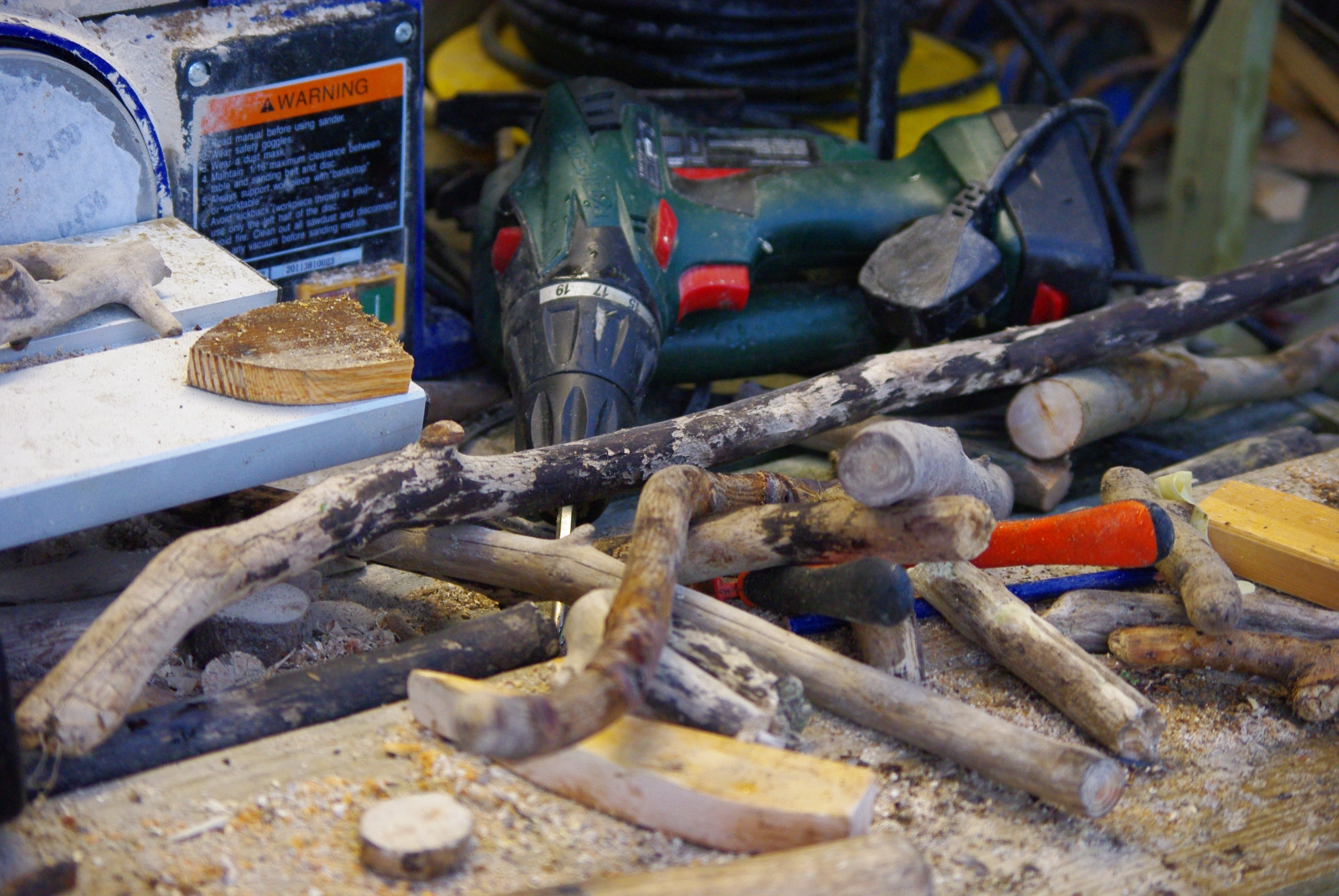
Workshop bench

I spent most of today sorting out my workshop. I began making things out of wood a few years ago as some kind of therapy to assist with the stresses and strains of my day job. There is something about using your hands to create something that is really special- you begin with chaos, work through an idea, and then for good or ill, it is finished.

Well, not always to be honest as I was discovering today. It was like idea archaeology- each layer held evidence of a project, most of them unfinished rejects, bits of carving that went wrong, sometimes hours in the making, now gathered for the fire.

Some of the work could be recycled- bits were still usable. However, the idea, the moment of creativity had gone. All that hope and optimism and quiet excitement had gone from the object- it was just wood again.

As I rebuilt shelves and sorted piles of carefully collected driftwood into some kind of order, it occurred to me that all creativity is like this. It is necessary to immerse ourselves in the dust and dirt of what we a trying to create- but there are no guarantees of the final outcome. Failure is part of the process.

My workshop is still not sorted out- it needs another day of cleaning and tidying, ready for a season of creativity again. I find that I have to have a blank space- so I can stop worrying about what I used to do and get on with something new.

The other reason for having a really good sort out is that this year we are taking part in an event called Cowal Open Studios

Here is the link to our page on the website.

If you are here or here abouts in September, you can take a look into my cave, or have a go at some pottery…

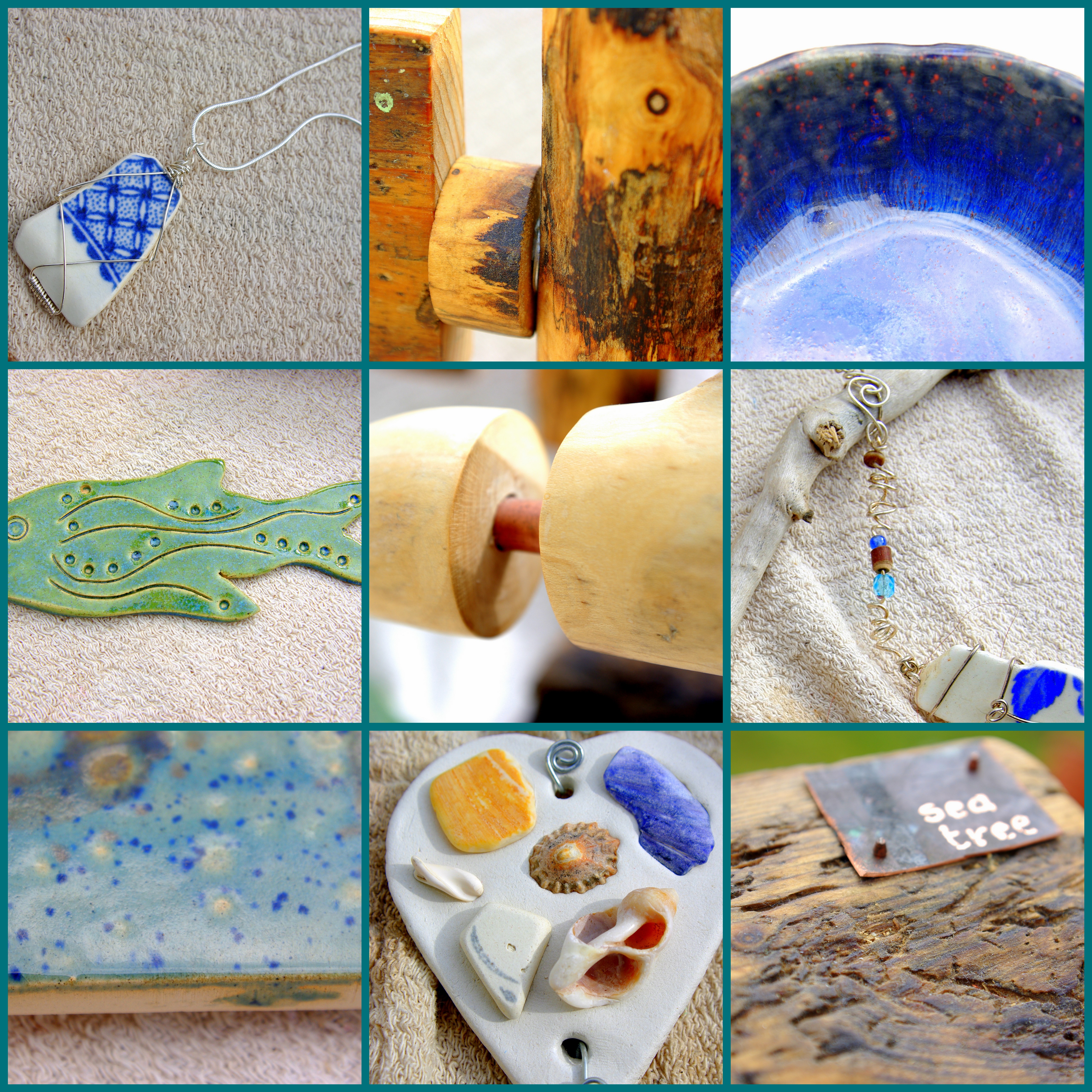
Here is the photography I did for the website;

cowal arts 2

Our cricket season begins…

Cricket, Kilmartin glen

First game of the season for Will and I today- always a day to celebrate in our house. (Although the photo above is an old one from last year taken at Dunadd in Mid Argyll.) People who do not understand the noble game may stop reading now!

Today we played for the Greenock 2nd 11 in a cup match round in Helensburgh- against their 1st 11. Actually we only had 8 players in the end- so it was a bit of an uphill battle!

The pitch was, well, moist. The balls from the fast bowlers broke through the turf and either sat up to be smacked, or beetled along the ground. There was some turn, but slow slow turn. I did not bowl today but Will sent down a few overs- he got a googly back through the gate to bowl one of their openers. He also bowled the last over.

I dropped two catches- one should have been taken, the other whilst running in from the boundary- just managed to get a painful finger on it a deep mid on.

I batted at number 3, but by this time the wind had dried out the pitch a little and the ball was spinning and kicking up- I hit a couple of boundaries and then edged one to first slip- out for 11. Grrrr. William did really well too- he made 8 in a last wicket stand of 30 odd, looking comfortable for about 5 overs before a loose defensive shot was taken at silly point.

All out for about a hundred in reply to their 250.

But we both had a great day!

The other bombs…

The media has been constantly picking over the terrible scenes from Boston yesterday- in particular some footage taken on a mobile telephone of the bombs going off- each time in slow motion. There is something fetishistic about it all, despite the utter horror.

At the same time we have had endless speculation about who did it, why they did it, and heard the eye witness testimony of anyone and everyone who was there and prepared to discuss what they saw, and how horrible it was.

Three people dead, over a hundred injured, all reduced to endless infotainment.

iraq-car-bomb

It may come as a surprise to hear that these were not the only bombs that exploded in the middle of packed innocent humanity yesterday. In a wave of bombing across Iraq, at least 27 people were killed and over a hundred injured.

The news told us next to nothing about these other bombs. They were not newsworthy. People in Iraq die all the time, and are not like ‘us’ – there is no shock value, no sense of righteous outrage therefore no airtime required.

Please do not misread what I am saying. The death of an 8 year old boy on the streets of Boston is appalling, despicable, dreadful. But so is the death of an 8 year old boy on the streets of Iraq.

The news has never been just a provider of neutral, bald factual information- it has always been a cultural construct. There was a discussion on the radio this morning about how in the past the news could be regarded as a unifying force- we gathered round the wireless at set times, and (for good or ill) the news collectified our sense of being- it told is who we were.

Those days are gone. Now we can not escape the news- it comes at us full speed from a thousand different sources. It is spewed out so fast and the media machine is so hungry, that content now is increasingly instant, but somehow entirely predictable and repetitive. Stories are slotted into grooves dependent on what we are thought to expect- what will hold our attention, and cause us to retweet items, and share them on facebook.

Is this a problem? When it supports western centric colour blind prejudice it certainly is. Perhaps there are other issues too. Check out this article. Here are a couple of extracts;

In the past few decades, the fortunate among us have recognised the hazards of living with an overabundance of food (obesity, diabetes) and have started to change our diets. But most of us do not yet understand that news is to the mind what sugar is to the body. News is easy to digest. The media feeds us small bites of trivial matter, tidbits that don’t really concern our lives and don’t require thinking. That’s why we experience almost no saturation. Unlike reading books and long magazine articles (which require thinking), we can swallow limitless quantities of news flashes, which are bright-coloured candies for the mind. Today, we have reached the same point in relation to information that we faced 20 years ago in regard to food. We are beginning to recognise how toxic news can be.

News misleads. Take the following event (borrowed from Nassim Taleb). A car drives over a bridge, and the bridge collapses. What does the news media focus on? The car. The person in the car. Where he came from. Where he planned to go. How he experienced the crash (if he survived). But that is all irrelevant. What’s relevant? The structural stability of the bridge. That’s the underlying risk that has been lurking, and could lurk in other bridges. But the car is flashy, it’s dramatic, it’s a person (non-abstract), and it’s news that’s cheap to produce. News leads us to walk around with the completely wrong risk map in our heads. So terrorism is over-rated. Chronic stress is under-rated. The collapse of Lehman Brothers is overrated. Fiscal irresponsibility is under-rated. Astronauts are over-rated. Nurses are under-rated.

News kills creativity. Finally, things we already know limit our creativity. This is one reason that mathematicians, novelists, composers and entrepreneurs often produce their most creative works at a young age. Their brains enjoy a wide, uninhabited space that emboldens them to come up with and pursue novel ideas. I don’t know a single truly creative mind who is a news junkie – not a writer, not a composer, mathematician, physician, scientist, musician, designer, architect or painter. On the other hand, I know a bunch of viciously uncreative minds who consume news like drugs. If you want to come up with old solutions, read news. If you are looking for new solutions, don’t.

Society needs journalism – but in a different way. Investigative journalism is always relevant. We need reporting that polices our institutions and uncovers truth. But important findings don’t have to arrive in the form of news. Long journal articles and in-depth books are good, too.

Dying is easy…

armchair

A poem written whilst reflecting on conversations with people contemplating suicide. Not one person, I hasten to add.

My previous post might suggest the reason for my preoccupation.

Dying is easy

She told me she was not afraid of death

No- she was ready

It was hanging like a curtain between us –

This last taboo

For her, death was just waiting

A vacant arm chair under her weary body

It promised nothing more

Than nothing

But as for me, I felt death to be

Foreign

A country I knew existed

But never planned to visit

Moldova perhaps

Belize

Dying is easy

She said

And I believed her


The last taboo…

A friend of ours gave us a book to read the other day. Nothing unusual about that, we are blessed with friends who know what moves us, and love to share things they have discovered.

However, this friend is from a different generation- she is almost 80 years old, and has lived a life of adventure. Her father was a famous movie producer/director, who fled from the Nazis and lived his life in England. She grew up in a privileged world, against which she rebelled, becoming an author, a book editor, and eventually meeting her husband, who had been a pilot in the war. They then spent much of their married life living aboard boats, making their last voyage out to St Kilda when her husband was almost 80. Sadly he died about 6 years ago. Since then our friend has travelled the world- Australia, China, India to name but a few of her destinations. In her deep grief she has decided to live life to the full.

Strange then that she is a firm advocate of euthanasia- the right to choose when and where she wants to end her life. Our friend is a firm atheist and humanist, and brings a fierce integrity to her understanding of death.

Or perhaps it is not strange at all. Perhaps the strangeness is to be found in our own attitudes towards death.

The book she gave us is this one;

seize the day

Marie de Hennezel is a gifted psychologist who works as part of a remarkable team of doctors and nurses in a hospital for the terminally ill.  In this eloquent book, she shares her unique perspective on what life and death really mean – and explores how talking about death, and facing up to it, can actually help us lead more abundant lives.

The men and women who come to the palliative-care unit do not always know that they are dying.  It is de Hennezel’s aim to bring them and their loved ones to this knowledge, and then to encourage them to live each day as fully and serenely as possible.  Through insight and humanity, and the unforgettable people she helps, we learn how precious the final days of a person’s life can be and how deeply moving it is to share these moments with someone else.

In an age where people hesitate to talk about dying, Seize the Day lends us the strength to confront the mysteries of death, gives us hope and celebrates the courage of the human spirit.

It is a beautiful book, full of life, grace and deep love of humanity.

Though I walk in the shadow of death, I will fear no evil. So says the psalm that we always hear at funerals. It has often occurred to me that when those words were written, the culture that sang them had no concept of an afterlife. By this I mean that the Old Testament makes no mention of life after death- it was not part of their religion, their culture or their understanding. Yet when we hear the words of Psalm 23 at funerals, we are using them precisely to give us hope of life beyond.

I make this point not as criticism- I too hope and believe that we are spirit as well as body.

However, it is worth thinking again about how our culture has sanitised and compartmentalised death almost as if to pretend it will never happen.

We come to believe that death can be defeated- by healthy life style, good eating, expensive health care. There is so much to distract us from the fullness of what life can be- all that entertainment, electronic isolation etc.

What Marie de Hennezel reminds us of is that we can choose whether we LIVE or not, but we can not choose whether or not we will die. And that to understand this makes us live in a way that transcends the temporal.

Our friend, approaching the end of her life, is putting her affairs in order. But she is very much alive.


Hermit…

hermit


Have you been following the story of Christopher Knight, who aged 19 walked into the woods in Maine and lived there alone for the next 27 years, surviving by making raids at night to steal food and camping gear? He lasted all those winters with no fires lest he was discovered, wrapped in sleeping bags, until he was arrested stealing food in a trap laid for him. He is now in prison, exhibited like a circus freak.

Writing in the Guardian, Jessica Reed said this;

…for me, hermits, tramps and assorted train-hoppers are a source of hope. They remind me that no matter how caught up we might be in the rat race, there is always a way out. If towering buildings, fumes and overcrowded buses become too overwhelming, those freedom seekers remind us that we can make the choice to just opt out and hit the road. It’s not a lifestyle which would be adopted by many – the vast majority of us would never dare to leave our comfortable life behind – but it is there…

… those who truly master the art of the disappearing act acquire an unworldly quality: they become ghosts, mysterious presences, part of the local folklore, floating unshackled in the wild. This may not be what Thoreau had in mind when he spoke of transcendentalism, but for me it comes pretty close to transcending what capitalism expects of its subjects…

…If the truth be told, I really wish they hadn’t caught him.

I feel the same- sad that he is not still out there in his tent, reading the changes in nature, familiar with the birds and looking forward to everything that spring has to offer.

Which is strange, as I am at my most content when at home with my family. I love to be with my friends and hold on to a high ideal of community. But I entirely understand the longing for a cave or a shelter in the deep woods that is all my own.

There is of course a long tradition of seeking solitude and isolation in the Christian tradition. I always get the impression that famous religious hermits even then had something of a freak show value- they became some kind of celebrities and their stories live on even now.

There was Simeon Stylites for example;

On one occasion, moving nearby, he commenced a severe regimen of fasting for Lent and was visited by the head of the monastery, who left him some water and loaves. A number of days later, Simeon was discovered unconscious, with the water and loaves untouched. When he was brought back to the monastery, it was discovered that he had bound his waist with a girdle made of palm fronds so tightly that days of soaking were required to remove the fibres from the wound formed. At this, Simeon was requested to leave the monastery.

He then shut himself up for one and a half years in a hut, where he passed the whole of Lent without eating or drinking. When he emerged from the hut, his achievement was hailed as a miracle.[2] He later took to standing continually upright so long as his limbs would sustain him.

After one and a half years in his hut, Simeon sought a rocky eminence on the slopes of what is now the Sheik Barakat Mountain and compelled himself to remain a prisoner within a narrow space, less than 20 meters in diameter. But crowds of pilgrims invaded the area to seek him out, asking his counsel or hisprayers, and leaving him insufficient time for his own devotions. This at last led him to adopt a new way of life.

In order to get away from the ever increasing number of people who frequently came to him for prayers and advice, leaving him little if any time for his private austerities, Simeon discovered a pillar which had survived amongst ruins, formed a small platform at the top, and upon this determined to live out his life. It has been stated that, as he seemed to be unable to avoid escaping the world horizontally, he may have thought it an attempt to try to escape it vertically. For sustenance small boys from the village would climb up the pillar and pass him small parcels of flat bread and goats’ milk.

In this last and lofty station (15 M high, 1M square), the Syrian Anachoret resisted the heat of thirty summers, and the cold of as many winters. Habit and exercise instructed him to maintain his dangerous situation without fear or giddiness, and successively to assume the different postures of devotion. He sometimes prayed in an erect attitude, with his outstretched arms in the figure of a cross, but his most familiar practice was that of bending his meagre skeleton from the forehead to the feet; and a curious spectator, after numbering twelve hundred and forty-four repetitions, at length desisted from the endless account. The progress of an ulcer in his thigh might shorten, but it could not disturb, this celestial life; and the patient Hermit expired, without descending from his column.[3]

This degree of asceticism, to a lazy and easily distracted contemplative such as myself has a similar effect to the story of Christopher Knight.

The possibility of a life beyond what we understand is tantalising- not because it offers a real choice to us, but because it allows is to imagine a life beyond. A richer, more vibrant, more connected life; to the order of things, and to God.

where the wild things are

Looking back into empire…

Mount Stuart

Michaela was just showing me some of the photographs she sneakily took on our visit to Mount Stuart yesterday. Sneaky because they do not approve of people taking photographs. I always wondered why. Is it because the flash might affect the posh fabric, or because they want us to buy images from the gift shop?) She is not one for breaking rules, but makes an exception in the cause of the class consciousness (80s throwback there in honour of Margaret Thatcher.)

Mount Stuart (according to our tour guide) was one of the last great houses to be built in this country; the old one burnt down in 1877, so the owners set out to spend spend spend in high Victorian style- a display of wealth beyond what most people can dream of even now. Electric lighting, central heating, heated indoor swimming pool, every modern convenience, priceless paintings by old master, Gothic carving and painted walls, Stained glass. No expense was spared.

stained glass, mount stuart

Marble chapel, Mount Stuart

What was created was already going out of fashion as it was completed in the years before the first world war. Baronial towers, a marble chapel, religious imagery everywhere. It must have seemed like the centre of Gods order for the universe- the rich man at the centre of his own world.

The house was only possible because of one thing- vast quantities of cheap labour. In the building (involving years and years of work by hundreds of skilled craftsman) and then in the running (an army of gardeners, housekeepers, kitchen staff etc.)

The interesting thing is that, in some respects it was never finished. Each column and stone cornice in the house was to be intricately carved- but not all of it was finished. Our guide told us this was because so many people were killed on the slaughtering fields of the first world war that the skills were simply gone.

unfinished carving, mount stuart

You could argue that this war was the logical end for all this stacking up of empire plunder- a war that should of ended all wars. It did not work out quite like this though. And the interesting thing is that this massive house is still privately owned.

This from Wikipedia;

John Colum Crichton-Stuart, 7th Marquess of Bute (born 26 April 1958 in RothesayIsle of Bute), styled Earl of Dumfries before 1993 and from this courtesy title usually known as Johnny Dumfries, is a Scottish peer and a former racing driver. He does not use his title and prefers to be known solely as John Bute.[1] The family home is Mount Stuart House on the Isle of Bute

…He ranked 616th in the Sunday Times Rich List 2008, with an estimated wealth of £125m. (26th in Scotland with £122m in 2006)

He lives with his family in London and at Mount Stuart House, 5 miles south of Rothesay on the Isle of Bute, PA20 9LR.  In 2007 Dumfries House inCumnockAyrshire was purchased for the nation for £45 million.[5]

John Bute, a rich man, who is the son and grandson of many other rich men.

It really is difficult not to love his house- but the culture that made it possible still casts a huge shadow over all of us- and in many ways, our current government, stacked as it is with rich men who are the sons of other rich men, will be very at home there.

New FB page for Proost Poetry Collection…

typewriterletters

We have set up a Facebook page to support the gathering of poetry for an up and coming book.

You can see it here.

(Or if the link does not work (FB is always a difficult thing to link to) then just search for ‘Proost Poetry Collection’ on FB.)

Hopefully this can become a portal for questions, encouragement and support around this project. Please go and ‘like’ it/share it with friends.

Here is the first post- which hopefully gives a bit more flavour of what the project is all about;

Welcome friends.

This is the first post on our new page. We invite you to use this as a means of sharing ideas, discussion and to encourage one another as we seek to compile a collection of poetry.

Why are we bothering to do this? Well, I suppose firstly because some of us think that poetry is important. We need our poets now more than ever- we need to be challenged, to be stirred, to see through the surface of things into new and deeper meanings. In this way, poetry is closely related to prophecy – of the Old Testament kind – less about the prediction of shadowy future events, more about shining truth (a fickle beast admittedly) into our current situation.

Some would tell us that our culture has lost its soul and become merely what we consume. We have become a nation of short lived consumer events, connected by constant streams of media content. Poetry is the opposite of this. It has little or no monetary value, it can not be quickly consumed, and it has this way of asking questions more than providing easy answers.

There are lots of collections of poems out there of course- why another one? Well this one will be different for the following reasons;

1. It is a collection that is written by people on deliberate spiritual journeys. You could say this about most poetry of course, but we are particularly interested in what being a follower of Jesus might mean in our culture.

2. Having said that- we are not really looking for ‘Christian’ poems. By this I mean poems written from a narrow religious perspective, using the language and theology of Church (with a big C.) Poems like this tend towards propaganda- they close down the questions.

3. It is a deliberately open, non-elitist collection. We are happy to include works from published poets, but Proost exists to encourage, agitate and to give voices to those who would not normally be heard- the awkward squad, those who have the gift of not fitting in.

4. That is not to say that quality is not important too- but the way we understand quality is more to do with how well the poems become vehicles for other people to travel. Pure technical genius is not enough (but would be great!) Clever tricks with technique are not enough (Although they are fun if you are of a certain mind set!) However, words that move us, that catch the wind of the Spirit, that challenge, that question, that move us emotionally, spiritually- these are words we want to hear.

5. The collection is intended to be used for personal reflection. We think that arranging different poetic voices into broad themes allows access for people who do not usually read poetry. The success of the Bloodaxe books (Being Alive, Staying Alive etc) tells us that this format has value.

6. The collection is also intended to be a source of material for group use- to be read where groups of people gather, be that in churches or any other gathering. Some poems become new liturgy- ways that people can speak words together.

Finally, this is not a project driven by a desire for commercial success. Any profits made will be used by Proost in work to support  other emerging artistic talents. In the words of the song ‘There ain’t no money in poetry, that what sets the poet free’. We are able to reward contributors by offering a free download from the Proost site- a collection of all sorts of wonderful books, music, films. This will be one per contributor, irrespective of how many poems are included. We know that this is a meagre reward for your talents- but hope that you will nevertheless feel the satisfaction of being included in this book.

Let the poetry begin!

Chris