Ecomonomic lie number 3- austerity affects us all…

Austerity

Back to my little mini series about economics. Don’t expect deep learned insights- I did study economics as part of a social science degree 25 years ago, but I was a very poor student. However, there are many approaches to economics- here are a few;

Technical/systematic- clever people who claim to understand the ebb and flow of the complex currents that move in the deep oceans of international finance. They know the difference between M1, M2, and M3. They advise the powerful and hold the fate of millions within their sterile computer generated models. Here, the economy is a desperately complex, ever changing thing, that is not just human in origin, it is supra-human. We are all subject to it, in the same way as the Ancient Greeks lived in the shadow of Mount Olympus. The gods are capricious, mysterious, vengeful and unmoved by ephemera. Our high priest-economists are expected to placate the gods, but they are after all gods and so there is the constant threat of earthquake wind or brimstone…

Political- I contend that most politicians know very little about point 1. They have to pretend they do, like the emperor and his new clothes. They have to pretend to be in control of the gods. They have to present deep ocean complexity in the form of simplistic decisions. All the better if the issue can be polarised, and if their are people/groups to be blamed. So we see two narrative techniques being employed at present-

  1.  The economy is constantly compared to a household spending plan. It has to be about prudence, good management, respectability- the image is a solid middle class family who budget carefully for their two holidays, their new sofa and retirement plan. Except that the economy bears no resemblance to a middle class household budget. Houses can not print their own money for a start. They can not set their own tax rates, they can not invest huge sums in education or health or in nuclear arsenals. And of course not all households are the same. Some are broken, bankrupt.
  2. The other narrative I have already hinted at- it is the narrative of blame. Our lifestyles are under threat from the fecklessness of the poor or the tidal wave of immigrants- the strivers are carrying all these skivers on their backs. We no longer talk about social class because stratification in our society has fragmented- but in case you are in any doubt, check out any mumber of tabloid newspapers- the Express, the Mail, the Sun. They are full of stories of benefits dodgers, single mothers getting posh social housing, dark skinned swarthy outsiders who are clogging up our hospital wards. For a while, the bankers got some mud thrown at them- but mud does not stick to shiny power for long.

The economics of justice- There is another approach to economics of course- one which both politicians and technical economists are aware of, some even motivated by- it is the analysis of the flow of capital from the poor to the rich, and the operation of the machine that makes this happen. It points us to the conquest of poor countries, whose raw materials are used to make the toys of the rich. It also points us to the remarkably persistent and stable gulf between the rich, healthy, educated minority and the rest- both globally and locally.  I make no excuse for this statement; these are the economics of the Kingdom of God.

Two stories sum up this gulf within the UK at the moment. Firstly, this one;

Lamborghini Veneno

The eurozone may still be in recession, but there is little gloom at the Geneva motor show, where Lamborghini, Ferrari, McLaren and Rolls-Royce have launched luxury supercars costing up to £3m each.

While European car sales dropped by 3.3m last year – the equivalent of a car company the size of Fiat failing to sell any cars at all – super-luxury cars are rolling out of the showrooms in ever increasing numbers.

“Most the world is suffering from recession, yet there are clearly people who can buy a Lamborghini at €3m (£2.6m) a pop,” said Paul Newton, auto analyst at IHS Global Insight. “Bentley, McLaren, Rolls are all doing well. There is clearly a market for the most expensive of cars, whereas the mass market manufacturers are nearly all suffering, especially in Europe. It’s the definition of a two-speed economy.”

Philip Harnett, product manager of Rolls-Royce’s latest €245,000 Wraith model, launched at the Geneva show on Tuesday, said that while the global economy was in the doldrums “some people are doing very well and they want to reward themselves”.

He said it was important for staff morale that high-flying company executives continue to buy the most luxurious cars. Executives told him that “the day I turn up for work in a Morris Minor is the day the staff will start to worry”.

(From the Guardian Tuesday 5 March 2013.)

Then, by way of contrast, this story;

Houses in Middlesbrough

One of the most acute concerns about the government’s so-called “bedroom tax” – which from April will force anyone “underoccupying” social housing to either downsize to a smaller property or face a cut in their housing benefit – is the severe shortage of smaller properties available to move to.

The National Housing Federation suggests there are 180,000 social housing tenants underoccupying two-bedroom homes in England, yet fewer than 70,000 one-bedroom properties are available.

From 1 April, anyone living in social housing who has one unoccupied bedroom will have their housing benefit cut by 14%, rising to 25% for households with two spare bedrooms.

Maureen Hagan, 58, lives in a three-bedroom property in Grangetown, Middlesbrough, with her 18-year-old granddaughter, whom she took in five years ago. She will now see her housing benefit cut by 14%, even though she says she requires the extra bedroom in order to meet standards set by social workers, as she is fighting to bring another young relative out of foster care and into the family home.

She feels that the welfare reform is out of sync with the rate of inflation, and calls for the government to prolong the introduction of the cuts. She spoke of her recent struggles to meet utility payments: “That was before that bedroom tax on top of everything else. What am I going to do then?”

Hagan expects to face a £14 cut to her housing benefit each week – more than half her weekly shopping budget.

“I can’t afford to buy makeup. I’d like to buy it but I can’t. I’d like to buy my own clothes; the charity shop’s my clothes shop, and it has been for a number of years.”

(The Guardian, Friday 8 March 2013)

Both of these extremes are a direct result of the current economic circumstances affecting us all. One part of our society profits- gets richer, amuses themselves with more toys.

The other folk (whilst watching Top Gear on Sunday night) have decisions to make about whether they move house because they are mere grit in the cogs of the system. Their fate is irrelevant to the ultimate prize. If they can not consume, they have no value.

We are not all ‘tightening our belts’, or ‘feeling the pain’. We are not all making the same sacrifice.

There are of course other possibilities. Some are about managing the economy better- taking a Keynesian approach to stimulating our economy again. But this does little to change the game- it just clarifies a few of the rules.

Poverty is not a choice, it is an economic necessity to ensure growth. The alternative is revolution- if not of the Marxist kind, then perhaps the Jesus kind, which takes the emphasis off power, and puts it on love. Against this there is no law.

Off to pastures old…

M and I are down to the lakes for a couple of days- a present from the kids for Christmas- they found a deal in a hotel near Cockermouth.

Poor Michaela is riddled with a cold, so I think we will be tea-shopping, lake-side walking and standing arm in arm looking at views.

And perhaps contemplating how things change. It is not so long ago that the mountains of the lakes were like Eden to me- they pulled at me like a much loved but half remembered memory. So trips up there with Michaela were quite rare as I was often off into the hills alone or with friends. The times we did go together – taking boat trips and carrying our little ones in back packs – were special too however.

But how odd to be going without the kids. It is almost like a rehearsal for the next stage of life, which is upon us, like it or not.

Emily received her first offer from a University this week- she has an unconditional offer from Glasgow Caledonian to go and do Psychology there. Not her first choice, as she wants to combine physiology with psychology, but well done her anyway as we wait for the other responses.

Which all seems a long road from this trip to the lakes;

Michaela with Emily, some time in the late nineties, Keswick.

The false-god of economic growth…

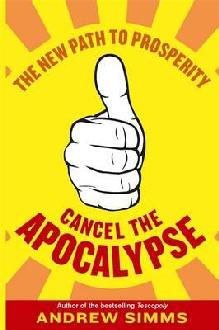
Interesting article in the Guardian today about this book;

GetImage


Interesting title- considering discussions about apocalyptic end times obsessiveness in some parts of the Christian world. A timely reminder of how we can get snarled up in religion at the expense of hope for the future this beautiful planet.

The book opens up again the question about what we can do as a nation to break economic mono culture that we have spent ourselves into. Here is a quote from the article;

Consume less, he says. Be sceptical about new technology. Slow down. And do not fall for the modern political class’s post-Blair belief that history is bunk, and to draw on the past is to be a hopeless throwback: it is only a comparative blink since the second world war found millions of people reshaping their lives in the cause of a common endeavour, and the same thing could yet happen again.

And then there is the fetish of growth, or rather growth-ism. As Simms points out, the idea that economies necessarily have their limits was being voiced when capitalism was still young: in 1848, John Stuart Mill argued that “a stationary condition of capital and population implies no stationary state of human improvement”. A century and a half later, Adair Turner, a former director of the CBI, told Simms that if anyone thinks “the most important objective of public policy is to get growth from 1.9 per cent to 2 per cent and even better 2.1 per cent”, they’re worshipping a “false god”, and “extra growth does not automatically translate into extra human welfare and happiness”.

These are pretty ordinary thoughts, but ones that the dull noise coming from Westminster renders almost exotic – and essential.


Christianity and Capitalism- to resist or to accommodate?

I have been dwelling on economics over the past few weeks. One of the things that has often troubled me has been the role that Christianity has had to play in developing a culture of enforced inequality, both locally and globally. At best we have become guilty by association, at worst we provided the moral justification for the whole shebang and then enshrined it in liturgy.

I have written about this before- if you are interested you might like to check out these posts;

Capitalism; a conspiracy against the common good?

Capitalism and Durkheim

capitalismrocks

Jason Clark has an interesting piece on his blog about the relationship between Evangelicalism and Capitalism, particularly in the US. It is a tough read, but basically, he contrasts two potential kinds of analysis which he characterises as ‘Cultural dispisers’ and ‘Cultural accomodators’.

Firstly the dispisers;

William Connolly, in his 2008 work Capitalism and Christianity, American Style, sets out firstly to diagnose how the ‘capitalist project’ has been perverted and warped by its resonant relationship with conservative right-wing Christian religious beliefs.[1]

Connolly describes how this relationship between an Evangelical right-wing ethos and capitalism is best understood through ‘assemblages’ of media, churches, cultural consciousness, and a ‘spiral of resonances’ that produce the Evangelical capitalist resonance machine.[4]

Connolly’s response to this contention and diagnosis is to suggest that it is within an alternative and ‘counter political movement’,[6] a democratic and left-wing visualisation of a new ethos, that capitalism might be redeemed.[7]

Now for the accommodators;

Pete Ward, in his 2002 work Liquid Church, offers an account of the relationship with Evangelicalism to capitalism that contrasts starkly with those of Milbank and Connolly.

Where Milbank would warn us of the complicity of the Evangelical Church in conforming to the practices of capitalism, and Connolly of the pathologies of the Christian ethos that shapes those practices, Ward critiques the Church for failing to embrace commodification as a spiritual practice and suggests that the Church should be engaged with it even more. For ‘rather than condemn the shopper as materialist Liquid Church would take shopping seriously as a spiritual exercise.’[17] Where the underwriting of commodification by ecclesial practice is inherently evil for Milbank, according to Ward it is a vital and theologically necessary ecclesial practice to the Church.

I have not read Connolly’s book, but I have read Pete Ward’s Liquid Church- which is a great book, although I do not think the points made by Jason do it full justice. What Ward was seeking to do was to get the church to engage fully with the culture we are part of- to flow in its veins. He reckons that it is only by doing this that we understand, that we become relevant, that we can become part of the mission of God for our times. I am not sure that this is the same thing as ‘accommodation’.

Ward uses the example of advertising as a case in point- he suggested that rather than dismissing all such commercialism as ‘of the world’ and therefore having no spiritual significance for the followers of Jesus, rather we can learn so much about the collective spiritual yearnings of our age from advertising. Is this accommodation, or is it being engaged as thoughtful critics?

I am much more convinced by Mike Frost’s book Exiles, in which he compares Christians living in our post-modern, post-Chistendom world to the Jews exiled in Babylon. It is simply not possible to live lives of isolation- neither is it our calling. Rather we have to learn to live as engaged, loving, active agents of the Kingdom of God. This might involve the celebration of aspects of culture, or it might also require us to resist other elements- injustice, prejudice, the power of the strong over the weak. This also brings us into contact with the language of sin and evil- the ways of living that tear into each other and destroy us.

The other polarity that Jason proposes in his piece is that of the dispisers. This is not a word I would have chosen to apply to myself in relation to Capitalism- more because I do not think it would be honest. At the same time as asking my intellectual and theological questions about Capitalism I am very conscious that my whole lifestyle is wrapped up in it.

Back to the direct relationship between Christianity (particularly Evangelical Christianity) and Capitalism. How might we characterise the ways that faith has accommodated? I started making a list;

  1. By emphasising personal, individual salvation above all else. The only useful purpose of mission is to save people from hell after they die.
  2. By embracing success culture. We use the same corporate structures, we reward our religious successes as we would our CEO’s, we value hard measurable outcomes, we construct programmes.
  3. We make mission a kind of hostile take over. Business success involves out performing the opposition, and rejoicing in their bankruptcy. So it is that we see any form of religion not our own as our economic enemies.
  4. Christianity is a lifestyle choice that requires no change to the way we live our economic lives. Yes, I know there is the old ‘tithing’ argument around Evangelical churches, but we drive the same cars, live in the same houses, take the same holidays, fill our lives with the same gadgets- or (and here is the sting) even if we do not have these things, we aspire to them.
  5. We bought into lives characterised by individualism over the collective. The model given to us by the life of Jesus and the early church was all about the collective- how we live for one another, how we hold things in common, how we find ways of including the poor, the weak. Yet these things are not really part of our DNA.
  6. We failed to demonstrate any kind of radical alternative. The best that we have been able to offer is how to live as better Capitalists- more sensible, more responsible, with greater probity.
  7. We did not see injustice, inequality, poverty, unfair taxation, usury, over consumption, environmental destruction, as any of our business. Which relates to point 1.
  8. And where there was visible discomfort with Capitalism, we lacked any coherance, we lacked leadership, we did not become a critical movement. Rather we splintered and focused on totemic side shows live homosexuality and women bishops- all of which is destroying our credibility anyway.
  9. Our mission to the poor was conditional on redeeming them to become like us. Difficult one this, but stay with me. There is lots of wonderful Christian history of engagement with the poor from the Salvation Army right through to local soup kitchens. These activities clean up the edges of Capitalism- but also justify the dominant ethos. It encourages us to lift people back into becoming productive consumers. Like us. It does not suggest that the problem might be in any way systemic.
  10. We forgot that the Church exists not to give us a better life, but to serve the lost and the least. If we are serving the lost and the least, how can we have convinced ourselves that our unsustainable greedy lifestyles are God-given rewards for our moral superiority- which we Brits built an Empire on, and then passed the baton to the USA?

So, the question at the head of this piece- to resist, or to accommodate?

I think we need to resist what should be resisted, and to where there are seeds of justice, of beauty, of grace- there we should plant ourselves alongside and accommodate for all we are worth.

And what would church look like if we took each of these 10 points above and reversed them?


Is it possible to earn a living from being creative?

marcel creating

A little while ago I was talking to a friend about the life choices we made as young people, and whether we regret them. I was heading towards social work from an early age- my own rather damaged situation made me want to be a helper and a healer of others, and I was convinced by the call to live a life of service, which seemed to me to be the only life possible for followers of Jesus.

A quarter of a century later, social work chewed me up, and if it has not quite yet spat me out, I am like gum without the spearmint, but even so I am not quite sure whether I would have made a different decision with the benefit of hindsight.

Being sensitised and tenderised by life has the obvious effect of making you more inclined to towards being sensitive and hopefully tender towards the other- hence the social work. Having said that, social work these days seems to give less priority to kindness, and the soft arts of gentle encouragement. The best of us still hang on to these skills, but they are not measurable and so do not fit into any performance management plan I have seen of late. This probably explains my alienation at least in part.

This sensitivity also drives you into yourself, resulting in introspection or a retreat into imagination and the rich inner life of the mind. This second part of who I am has been less developed- certainly as a means of earning a living. There ain’t no money in poetry, that’s what sets the poet free as the song goes. I have wondered often about how people actually make a living through art.

There was an article in the Guardian yesterday entitled 10 things about being an artist that art teachers don’t tell you which made some interesting points about all this. It started with a stereotype about the struggling angst ridden artist starving in a garret;

If popular opinion is anything to go by, the creative sector is a huge gamble, braved only by reckless, or masochistic, individuals. But if you’re an art student, you need to know if this “make or break” view bears any relation to reality.

The author then spelled out the following 10 things that they had discovered as an art student;

Here are 10 honest truths about work, life and leisure in the creative industry.

1. Many artists work freelance. A study by the Arts Council finds that 41% of creative workers are self-employed. Temporary work contracts can make for an interesting and varied career, though periods of unemployment between jobs are a reality for some artists.

2. Freelance artists budget carefully. Being self-employed means you are without pension, holiday pay or maternity benefits. Contingencies such as falling ill or having children require pre-emptive financial planning.

3. Artists self-promote. Many showcase their talents on Facebook, Twitter, Tumblr and Linked in, as well as on their own websites. Having a good online presence shows employers that you are self-motivated and digitally literate.

4. Artists love socialising. Networking events are the art world’s equivalent to job hunting, but with less misery and more booze. Whether you’re searching for commissions or trying to advance your career, networking gives you the chance to meet industry professionals and expose yourself to new opportunities.

5. Many artists form collectives to publicise and exhibit their work. Kate Rowland, an illustrator from the collective After School Club explains: “Being in After School Club is great for motivation. It allows us to utilise each other’s skills, therefore we have more resources to help one another. It’s kind of like a creative support system. And lots of fun.”

6. It’s all about your portfolio. The visual arts are less grade-centric than other disciplines. An art director at a graphic design company once told me he’d think twice about hiring someone with a first-class degree, as he worried they’d have no time for hobbies outside of work. In his words, not mine, “they might be really boring”. This isn’t to say you shouldn’t aim high – another employer might appreciate a first-class candidate. Rather, you should focus on making your portfolio the best you can possibly make it. A good body of work speaks louder than grades.

7. Some artists supplement their income with a second job. Doing so gives them financial security while they exercise their creative passions. Take a look at some of these prolific “double jobbers”.

8. Many artists take on internships to help kick-start their career. Working for a company can prepare you with essential industry skills and improve youremployability. The question of payment is a hot potato – in general, the shorter the internship, the less likely you are to get paid.

9. Job opportunities are growing. There are currently over 1.9 million people working in the creative industries. However, by 2016, the government expects this figure to skyrocket, with an additional 1.3 million new jobs in the private sector alone.

10. The creative sector is characterised by high levels of job satisfaction. As a result, the industry is highly competitive and jobs are sought after. If you have the passion and the motivation to stay ahead of the game, then a creative career can be an exciting and rewarding experience.

There you go- perhaps I should have gone down a different path.

Perhaps I still might get there…

Capitalism and democracy- joined at the dollar?

capitalism3

This is not an attack on Democracy by the way- I can think of no better system for the governance of nations. However, there is a real question about the operation of our own democracy and the symbiotic relationship between democratic states and rampant consumer capitalism.

The relationship is so strong that it is not really possible to imagine democratic state that does not organise its fiscal matters according to the rules of international capital. Neither the other way round.  Ah- but what about China, I hear you ask? Here is  from The Guardian, Sunday 17 February;

When, during a recent TV debate in France, the French philosopher and economist Guy Sorman claimed democracy and capitalism necessarily go together, I couldn’t resist asking him the obvious question: “But what about China?” He snapped back: “In China there is no capitalism!” For the fanatically pro-capitalist Sorman, if a country is non-democratic, it is not truly capitalist, in exactly the same way that for a democratic communist, Stalinism was simply not an authentic form of communism.

This is how today’s apologists for the market, in an unheard-of ideological kidnapping, explain the crisis of 2008: it was not the failure of the free market that caused it, but the excessive state regulation; the fact that our market economy was not a true one, but was instead in the clutches of the welfare state. When we dismiss the failures of market capitalism as accidental mishaps, we end up in a naive “progress-ism” that sees the solution as a more “authentic” and pure application of a notion, and thus tries to put out the fire by pouring oil on it.

When you think about it, the co-existence of capitalism and democracy is a strange pairing. Hitler used to say that the logical end result of democracy was communism. Marx suggested the same, from a rather different perspective. Both seem to have been proved entirely wrong. The end result of inequality, globalisation, banking crises, depressions, high unemployment, destruction of the environment is- more capitalism. And we all vote for the party that strong arms our austerity packages that supposedly free up the market to solve our problems for us.

Why do we do this?

I am just reading Tony Benn’s book ‘Letters to my Grandchildren’.

letters


Benn is quite clear that our democracy is not- well, not democratic. It never has been- it allows for endless manipulation by those in power. The rhetoric of democracy is simply that- rhetoric. He lists some methods of control often employed;

  1. Violence
  2. Religion
  3. Via employment- fear of unemployment
  4. Debt
  5. Fear of dangerous enemy- USSR, Terrorism, Hitler, Kaiser etc
  6. Fear of immigration
  7. Fear of crime
  8. Demoralisation- a feeling that only the ruling educated elite have the skills to run things
  9. Cynicism- in all the media- ‘they are all the same’ ‘nothing ever changes’ etc.

There are many more means of control. The strange thing is that I do not even think that these are always deliberately exercised. I am not a conspiracy theorist. Rather I think that we have made a monster that constantly feeds itself- and we sit at it’s feet, hoping to get fat on the scraps- or at very least hoping that it does not notice us and devours someone else.

What to do about it? That is the question…

Scottishness and the search for self…

I read this lovely book recently;

untitled

I will not go into any detail about what it is about, except to say that if you love poetry, landscape and humanity you will love this book. It is a beautifully written travelogue/memoir and obituary of the great poet Norman McCaig.

One of the things that resonated with me was how the book tried to grapple with Scottishness. Up here we are heading towards a referendum on whether Scotland should exist as an entirely separate country to the United Kingdom. The old confused profusion of ideas around history, identity, sense place in landscape, feelings of old injustices to be avenged, or old alliances to be celebrated- it is all there  just below the surface.

Andrew Greig talks with such eloquence about Norman McCaig’s generation- McCaig was a conscientious objector in the second world war and had a deep suspicion of nationalism wherever he saw it. I share this feeling. I have an outsider’s discomfort with borders and in-groups. I struggle to think of anything positive that came out of nationalism- it has so much power to bring out the worst of what we are, but rarely the best. It throws up statues of lots of dead people.

However, there is another kind of Scottish identity in Greig’s book- as he moves from city to mountainside there is a profound sense of place- a love of landscape. A sense of one-ness with the roll and curve of the land. A sense of understanding that others too have been here, and in some sense are here still. I have had plenty of glimpses of this in my own adventures. There is a generosity as well as a cruelty to mountains- they do not care about accent.

There is also this lovely piece of writing that I thought I would reproduce here- which is another image that stuck in my mind. Greig starts to think about his father;

…it began as a yarn about how he and his classmates, in the early years of the last century, would challenge each other to walk for as long as possible carrying a penny gripped between thumb and forefinger, the arm hanging down. It may seem an easy thing to do laddie but  no matter how hard you try sooner or later it will drop. Muscular fatigue, numbness, something like that. And I thought, what a fantastically futile thing to do, and how deep and Scottish a teaching it must have been, yoking together money, endurance and the inevitability of loss.

Then my father went on to say how, still carrying his penny, as a boy he once stopped in a gale under a Scots Pine. He stood against it, thrilled – not a word he had much use for – to feel bark shift against his back. He said he’d imaged the tree a mast, and yearned to be sailing where the wind was blowing…

I love this simple little story- of how we get caught up in futile loops, and imagine them to be significant.

But how there is a wind in the trees, and if we would let it, it has the power both to root us where we are, and also to call us to something far beyond.

How the two are related.

And so it is that we can be Scottish (even I) and still both bigger, and much smaller.

Another year under the belt…

birthday_candles

Thanks for all your good wishes friends! Another year older…

Whisky, flapjack, new music to listen to, new books to read, people I love to spend time with= man blessed.

We are heading over to Glasgow later for a meal out, perhaps the pictures, then staying overnight before hitting a couple of art galleries tomorrow.

RSA animation’s take on the failure of Capitalism…

I may have posted this before, but given my recent posts thought it worth posting again. It crams so many ideas and concepts into such a short video. The bottom line however is that something ain’t working!

It was done in the early days of the ‘credit crunch’ in an attempt to grapple with what went wrong- what caused this current economic crisis.

Chocolate and the New Kingdom…

chocolat-470-75

I offer you this for St Valentine’s day…

Michaela and I sat and watched the film Chocolat last night. We have both seen it before, but were moved again by its power.

If you have not seen it, it is set in a French village soon after the second world war into which a stranger and her little girl who come to open a chocolate shop. There is magic about the woman and about the chocolate. Her kindness and the glorious excess of her chocolate creations start to change people- to open them up, to make them hope again. And there are those who do not like this- particuluarly the ultra religious mayor, who is able to control the local parish priest. There is a puritanical backlash, against both the woman and against some gypsies who are in the area.

Except, the magic is still in the woman, and in the chocolate, and there is a change. I will say no more, not wanting to spoil the film for  you- but there is plenty still to enjoy in the gentle comedy and the lovely acting (Judy Dench, Johnny Depp, Juliette Binoche.)

There is also some rather profound theology. After the pivoting point of the film, this happens;

It reminded me so much of Babettes Feast– the image of a God of exuberance, who draws us into a dance of joy, of consumation, of love.

So, my friends, may your day be full of Chocolat…