Asylum…

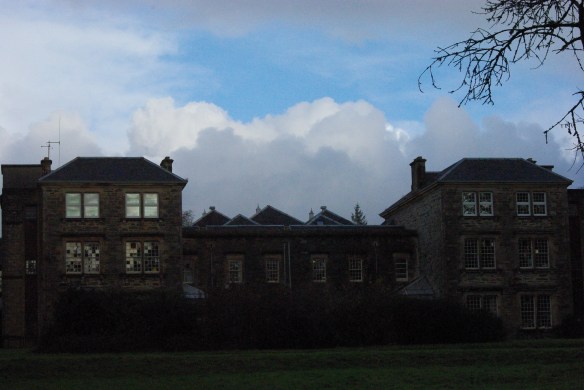
Argyll and Bute hospital 3


Something I wrote for a Greenbelt event a couple of years ago- which came back to me recently when discussing brokenness. Originally it was written to make comparisons between organised church and psychiatric care.

There was a concern in the land

In every town the roads were lined with beggars

There were homeless orphans and widows cast out onto the streets

Lunatics were stoned by children

And melancholics drowned their sorrows with gin

The pain of it all was in the middle of us

The Jesus in the least of these

Was weeping


So the good people gathered

“What is needed” they said “Is asylum.”

A safe home where broken people can live out their lives in care-

Protected from all of the mess of life,

Fed and warm and watered.

So money was gathered

Stones were shaped and raised

Staff were retained and clothed in starched clothing

-The heavy doors were opened wide in welcome


And so they came- the halt, the sick, the lame

The motherless and the pregnant child

All those broken by worry and grief

The shakers and the mutterers

All the awkward squad

The outsiders now came inside

They were home at last
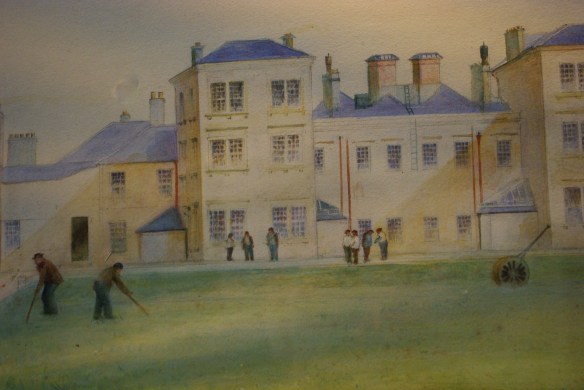
old painting, Argyll and Bute hospital grounds


It went well for a while

All was orderly and planned

Starved frames filled out

Songs were sung again in the entertainment hall

Gardens were laid and tended

Sheets danced in the evening sunlight

And a bell rang out to warn of the dowsing of night candles


But time passed, and shadows fell

Budgets were tight, and the paint peeled on windows

The good folk who had once been so generous had other calls on their coin

A few still visited on feast days but for the most part

Out of sight became out of mind.
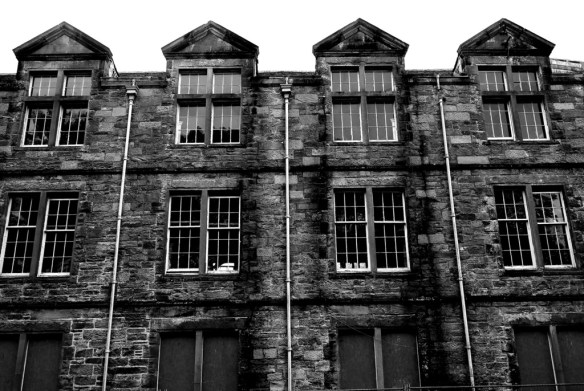
uniformed building


And there was trouble

The awkward squad was still awkward

The asylum split into ‘us’ and ‘them’


‘We’ had roles- uniforms and clipboards, rotas and registers

Big bunches of keys danced at our belts

We had dreams- of advancement, romance and families

We had homes away from this home


‘They’ stood the other side of our desks

Dirty and lacking in motivation

Ungrateful and manipulative

Un co-operative with our assessments

Lacking insight into the nature of their dysfunction.

They had ceased to be like us

Rather, they lived out regulated half-lives

They ceased to be flesh

And became instead a collection of paper

In manila folders
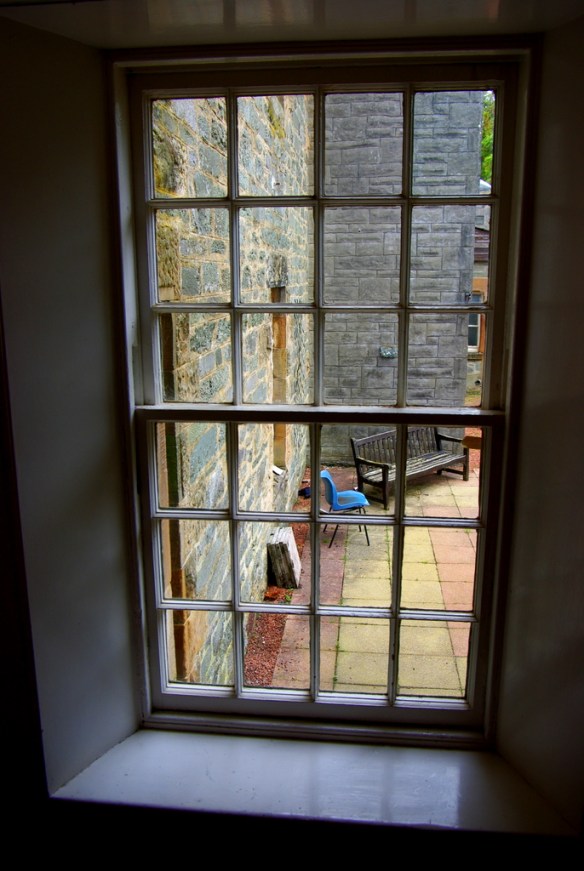
listening

Despite all the material provision- something was missing

Despite all the person centred plans, the person was not at the centre

Despite the close press of humanity, there was no family

Despite all the risk assessments, there was no adventure

Despite all the planned activity, there is no purpose

Despite the safety of the high walls, I am still destroyed


So it was that care became captivity

Individuals became invisible

And home became hollow

And toxic

While Jesus in the least of these

Was weeping
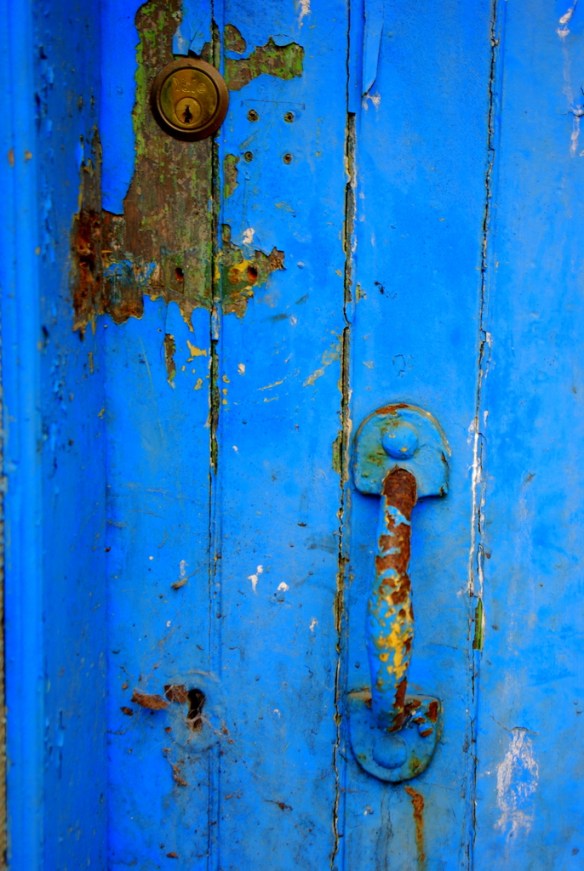
locked door

Kierkegaard on poetry…

brazen bull

Soren Kierkegaard had this way of throwing stories into the middle of his philosophising. Here is one of them;

What is a poet?

An unhappy man who in his heart harbours a deep anguish, but whose lips are so fashioned that the moans and cries which pass over them are transformed into ravishing music.

His fate is like that of the unfortunate victims whom the tyrant Phalaris imprisoned in a brazen bull, and slowly tortured over a steady fire; their cries could not reach the tyrant’s ears so as to strike terror into his heart; when they reached his ears they sounded like sweet music.

And men crowd around the poet and say to him, “Sing for us soon again”—which is as much as to say, “May new sufferings torment your soul, but may your lips be fashioned as before; for the cries would only distress us, but the music, the music, is delightful.

Kierkegaard is describing something that most familiar- art arising from introspection, sensitivity, dysfunction, hurt. Art that does not heal, but rather is a plaster over an open wound.

Poetry like this has no choice but to be written. You might as well tell a cut to stop bleeding.

Hmmm.

Creative breaks…

IMGP3342

Work is progressing on our second B and B room (although this is a photo of the first!)  Just carpets and curtains to sort out now, and then we can get everything put together.

We are hoping to offer some weekends of themed ‘creative breaks’ over the next few months. These will be a chance to escape to lovely Dunoon and make something beautiful. It is amazing what we can achieve when given space to do so. This bowl was made by Issy in our pottery a couple of weeks ago, on her second ever attempt at moulding clay;

IMGP3544


The idea is that we will be setting out a list of creative weekends people can book in for, but also guests in the B and B, or our holiday cottage, will be able to get creative too- making some pots, or a range of other activities.

More info to come!

Counting what we are becoming…

uk-census-language-007


Details of the 2011 UK Census are filtering out of the Office for National Statistics. The Guardian is teasing out some of the headliners- here are a selected few;

• The population of England and Wales on 27 March 2011 was 56.1 million. This is a 7% increase (3.7 million) from 2001, and 55% of that is due to immigration.

• The number identifying themselves as Christians is down 13 percentage points. In 2001, 72% (37.3 million) called themselves Christians. In 2011 that had dropped to 59% (33.2 million).

• Interestingly, Christianity is not down everywhere. Newham, Haringey, Brent, Boston and Lambeth have all shown increases in the Christian population.

• The number identifying themselves as having no religion has increased by 10 percentage points from 15% (7.7 million) in 2001 to 25% (14.1 million) last year.

• 13% of residents were born outside the UK (7.5 million). Just over half of these (3.8 million) arrived in the last 10 years.

• The census shows 2 million households in England and Wales where partners or other household members are of different ethnic groups, 47% more than in 2001.

• India, Poland and Pakistan are the top three countries foreign-born people in England and Wales come from.

• The Muslim population was up from 1.55 million to 2.7 million, an increase of 1.15m from 2001 to 2011. Muslims now make up 5% of the population, compared to 3% in 2001.


So we are seeing a picture of an increasingly ethnically diverse nation, which intermarries more and increasingly sees itself as not needing organised religion.

However we also see a rise in people who view themselves as Muslim, probably through immigration rather than conversion.

The British Humanist Association have already commented on this change;

In spite of a biased question that positively encourages religious responses, to see such an increase in the non-religious and such a decrease in those reporting themselves as Christian is astounding. Of course these figures still exaggerate the number of Christians overall – the number of believing, practising Christians is much lower than this and the number of those leading their lives with no reference to religion much higher.

Religious practice, identity, belonging and belief are all in decline in this country, and non-religious identities are on the rise. It is time that public policy caught up with this mass turning away from religious identities and stopped privileging religious bodies with ever increasing numbers of state-funded religious schools and other faith-based initiatives. They are decreasingly relevant to British life and identity and governments should catch up and accept that fact.

Andrew Copson, quoted in The Guardian.

I have some sympathy with Copson’s comments. The age of Christendom is over.

But the Kingdom of God is near.

The Sane Society…

Erich-Fromm-9303242-1-402

I read this in The Guardian today;

The late philosopher and psychologist Erich Fromm wrote in the 50s that if prevailing trends that put economic production before human engagement continued, we would all eventually occupy a dangerously unbalanced society, peopled by alienated individuals living atomised existences, lacking in empathy, quick to judge because judgment by others is always anticipated, equipped with “the greatest material power without the wisdom to use it”. What might halt the march to misery, he argued idealistically in The Sane Society, was sharing experience, living by “love, reason and faith”.

Very prescient. In the UK our morally bankrupt government is attempting to buy it’s way out of a triple dip recession using a combination of benefits cuts to the poorest and tax cuts to the Corporations whose greed led us into this mess in the first place.

Fromm was a Jew who grew up in Germany, before the rise of Nazism forced him to flee. His writings often struggle with the reality of what world war and genocide can teach us about the development of humanity. He proposed a list of eight basic needs that we all have in order to live a fulfilled life;

Relatedness Relationships with others, care, respect, knowledge.

Transcendence Being thrown into the world without their consent, humans have to transcend their nature by destroying or creating people or things. Humans can destroy through malignant aggression, or killing for reasons other than survival, but they can also create and care about their creations.

Rootedness Rootedness is the need to establish roots and to feel at home again in the world. Productively, rootedness enables us to grow beyond the security of our mother and establish ties with the outside world. With the nonproductive strategy, we become fixated and afraid to move beyond the security and safety of our mother or a mother substitute.

Sense of Identity The drive for a sense of identity is expressed nonproductively as conformity to a group and productively as individuality.

Frame of orientation Understanding the world and our place in it.

Excitation and Stimulation Actively striving for a goal rather than simply responding.

Unity A sense of oneness between one person and the “natural and human world outside.”

Effectiveness The need to feel accomplished.

If he is right, how do we achieve these things in a society captured by commercialism and disembodied lifestyles?

Fromm was a Socialist humanist who nevertheless also said this;

In the nineteenth century the problem was that God is dead; in the twentieth century the problem is that man is dead.

The ‘Shaping Of Things To Come’ event, reflections 2…

missional

Here is the word of the moment (from Michael Frost);

Excarnation

…defined as the burial practice of removing the flesh and organs of the dead, leaving only the bones. More of this later.

Frost gave a whistle stop tour around what he saw as cultural trends. He suggested that he was less concerned about the process of getting people back to Church, and more about the irrelevance of church within our cultural context; in particular, the fact that we have failed to pose the right questions, or to articulate alternatives.

He used the following analogies;

The Gate Lounge (Airport waiting room)

(An idea pinched from Martin Baumann.) The suggestion is that increasingly we engage with our world as tourists, in a place of constant transition. We live in, and create, sterile artificial environments that we pass through quickly, always on the way to the next non-real, commercially curated experience. This leads to a kind of life where we skim over the surface, living a commodified experience that lacks satisfaction.

It also leads to a disconnection from place, community, belonging.  Frost mentioned the film ‘Up in the air’, which I reviewed previously on this blog here.

Screen culture

We are increasingly a culture whose head is down- always looking at our tiny screens. Life is lived in the abstract, and we develop two selves- a screen self, and a real self.

Frost mentioned the novel ‘The Lost Memory Of Skin’, about a man who is addicted to internet pornography, but has never had real sex.

Dualism

Here the church may have contributed to its own disconnection, as we have presented a polarised perspective on everything- heaven/hell,  earth/heaven, world/church, flesh/spirit. Jesus is presented as living in the soul and waiting in heaven, not incarnate- flesh blood and spit here, right now.

Likewise church has followed the same disembodification as the rest of our culture- we learn through sermon podcasts rather than the process of experiencing and testing truth in community. We create individual worship experiences in auditoriums with a stage at the front and us, eyes closed, seperated from those around us.

Back to the word, ‘excarnate’. We human beings are made to experience the infinite depth of what we inhabit. We are tingling flesh on tingling flesh. Strip away these parts of what we are, and all we become are dry bones.

Frost described a communion service he once attended- a large empty church with the floor covered in black plastic. In the middle of the room was a mountain of stinking, oozing, rotten rubbish- the human kind- every kind of filth. The putrid juices ran out in rivers into the room and the communicants struggled to stand clear, and to cope with the smell.

Then two people in swimming costume entered the room, and walked towards the filth. They waded in, first ankle deep, then up to their waists. From there they led a service of communion.

The imagery is astringent. We follow Jesus- God-who-took-on-flesh, whilst at the same time living a world that increasingly avoids touch.

I am not sure whether you find this analysis of current cultural trends to be exaggerated? Frost is of course an agitator, but I there is something in what he describes that make me sit up and pay attention. Whilst engaging with our culture, seeking to understand and participate within it, we also have a duty to understand the Zeitgeist, and where necessary, to oppose- and perhaps most importantly (in the way of Jesus) to oppose by example.

Frost described how his community (Small boat, big sea) are seeking to do things differently. They have agreed to apply this method, and to hold each other accountable for it. Each week they will;

Bless three people- with words, gift, favour

Eat with three people- sharing their table as an image of Kingdom

Listen deliberately

Learn from the life of Jesus

‘Sent’ consider life as a mission

In this way, we might not exist only in our ‘head’ (excarnate) but encounter God in practice- in the mess of real flesh.

Aghhh. Shopping.

out of town shopping precinct

Now is the time for all good people to make a pilgrimage to an out of town shopping centre.

We will drive to a massive windy car park, and stare wistfully at the beckoning horizon, as we prepare to enter the zone of artificiality.

The temperature will be controlled to allow us to just about keep our coats on. The music will twitter in the distance with some kind of seasonal faux-bonhomie. The walls will be tastefully decorated with carefully designed Christmas blandness.

Each shop you enter will be selling more or less the same thing, with a slightly different labels. The music will be louder, and every step you take will have been carefully planned to maximise your market potential.

Not us though.

Michaela and I made our Christmas shopping trip last week- we took a trip into Glasgow which is not something we do often. Despite our determination to ‘do Christmas differently’ (mentioned ad infinitum on this blog) some shopping is still necessary, so we decided that we might as well have a day out together.

We went to a famous old shopping street called Byers Road- and revealed our country naivete by trying to buy some food from Subway only to then realise that it was actually a subway station.

Byers road is full of vintage clothing and charity shops- which have moved into the spaces left as the major chains have moved out of town into Bland Land. Instead of bemoaning the death of our city streets however (which would be disingenuous as they are clearly nor ‘our’ city streets) Michaela and I visited all of the charity outlets. We immersed ourself in bric-a-brac, delighted in stacks of old LPs, and a strange mechanical pencil sharpener made in the old East German Republic.

We also bought presents for the Kids- and I suddenly felt a deep sense of pride that I was able to be sure both of them will be delighted with what we have bought.

That is not to say that there will not be over consumption in our house at Christmas. It will be full of far too much stuff as we celebrate the coming of Jesus into poverty. We will over eat, over drink and stay up late watching pointless films. But if shopping is required at all, this is my preferred kind…

For those making a new beginning…

closed gate

(… like me.)

My friend Terry sent a copy of this lovely poem by John O’Donahue the other day;

In out-of-the-way places of the heart,
Where your thoughts never think to wander,
This beginning has been quietly forming,
Waiting until you were ready to emerge.

For a long time it has watched your desire,
Feeling the emptiness growing inside you,
Noticing how you willed yourself on,
Still unable to leave what you had outgrown.

It watched you play with the seduction of safety
And the gray promises that sameness whispered,
Heard the waves of turmoil rise and relent,
Wondered would you always live like this.

Then the delight, when your courage kindled,
And out you stepped onto new ground,
Your eyes young again with energy and dream,
A path of plenitude opening before you.

Though your destination is not yet clear
You can trust the promise of this opening;
Unfurl yourself into the grace of beginning
That is at one with your life’s desire.

Awaken your spirit to adventure;
Hold nothing back, learn to find ease in risk;
Soon you will be home in a new rhythm,
For your soul senses the world that awaits you.

No new thing happens without the possibility of falling flat on your face in failure.

What I am learning is that most people who fail do not regret the adventure- and that out of this failure there comes new adventure.

So much better than the ‘gray promises that safety whispered’.

For today at least…

Retreat weekend…

Forgive the commercial, but…

We are putting the finishing touches on our B and B/guest accommodation, and also planning the first of our retreat weekends up here in Scotland  (or the first of our ‘Recreate’ retreats anyway.)

If you are interested in starting out the next year with a period of reflection and retreat, this might be just the thing for you;

These weekends are intended to allow individuals and couples to set time aside to reflect, pray, meditate and share some evenings around a fireside. Our starting point for entering into meditation here is Christian spirituality- of a generous open kind.

The spaces at our house will allow for three double bedrooms, one twin, and one single, and it would be lovely to fill these.

We will divide our time into periods of silence – where guests are welcome to use prepared spaces in the house, the garden, or to take walks along the shore – and times of sharing.

There will be an opportunity to be part of morning and evening rituals, and to use clay and other art materials to aid reflection and meditation.

We have decided to offer a discount for this first retreat, and so the total cost for the weekend (including accommodation, all meals, craft materials, etc) will now be £140 per person, with discount for couples or those who are happy to share a room. We think this is great value, and hopefully makes it possible for people on modest incomes to benefit from time out.

If you are interested and want to know more, drop me a line here- chris@aoradh.org