Buy Nothing Day…

This Saturday is Buy Nothing Day!

We are being asked to consider our immersion in the stuff of commercialism and over consumption as Christmas approaches, by stopping buying stuff for one day.

It might be harder than you think.

It’s time to lock up your wallets and purses, cut up your credit cards and dump the love of your life – shopping.

Saturday November 24th 2012 is Buy Nothing Day (UK). It’s a day where you challenge yourself, your family and friends to switch off from shopping and tune into life. The rules are simple, for 24 hours you will detox from shopping and anyone can take part provided they spend a day without spending!

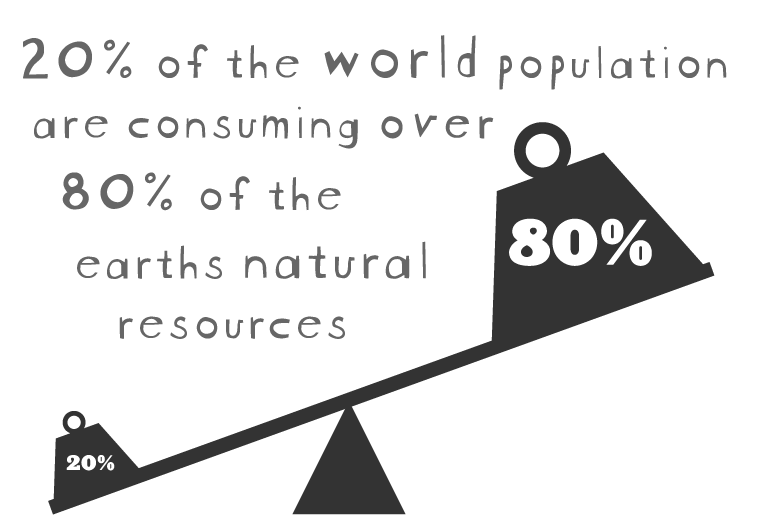
Everything we buy has an impact on the environment, Buy Nothing Day highlights the environmental and ethical consequences of consumerism. The developed countries – only 20% of the world population are consuming over 80% of the earth’s natural resources, causing a disproportionate level of environmental damage, and an unfair distribution of wealth.

We know all this of course- we the middle class, the former activists, those tired by the tension between a moral imperative and western lifestyle.

Will one day make a difference? This is of course up to us- but we have to start somewhere…

I liked this from the Guardian;

So perhaps it’s time for a new kind of materialism, based on an economy of better, not more: one that is rich in the good-quality work created by providing useful services, that makes things which last and can be repaired many times before being recycled, allowing us to share better the surplus of stuff we already have. It is emerging now in things ranging from furniture to tools, cars, fridges, clothes and food. “Repair, reduce, re-use, recycle”, long a mantra of green economists, could be the basis of a new economic model that performs the neat trick of boosting demand without increasing consumption

The Church of England- “…a national embarrassment.”

…so said a Bishop after the recent failure of a Synod vote to allow women bishops.

I have just been reading through the comments on the Guardian article for a (possibly unrepresentative) straw poll. Here are a few highlights;

So the head of the C of E is the Queen, but they don’t want to have female bishops?

Nice one, institutionalised religion in this country failing to learn from the mistakes of US extreme right wing politics. Decreasing their markets. Perhaps they enjoy being irrelevant.

Are we not equal in the eye of the Lord? No. He’s saving the socialist paradise for the afterlife.

Bloody hell. I despair. Where now?

I’m sorry, but the Biblical prohibition(s) on women holding positions of authority and engaging in a regular teaching ministry within the Christian church do not embody ‘centuries of entrenched sexism’. It is, rather, the plain teaching of Scripture, which is why the vast majority of Christian denominations have held to this doctrine for centuries. There is clearly spiritual equality between men and women (Ephesians 5.33; 1 Peter 3:6; Galatians 3:28) and Matthew 22:30 also implies that gender distinctions will cease to exist in the next life (as souls have no biological sex). However, the Apostle Paul also forbids women from teaching and holding authority in the churches (1 Timothy 2:11-15). The Apostles were all male. People who do not take the Bible seriously really should question whether they are Christians at all for if we do not define the religion of Christ according to its foundational documents then there is absolutely no other way for it to be defined and we may as well make it up as we go along, as Welby and other supporters of women bishops and ministers are doing. How a woman organises her life in the secular sphere is entirely her own business, but in the Christian church leadership is clearly intended to be male.

Surely, Church in crisis as there is no God?

Life’s full of contradictions so is the Bible.
That’s what makes it so fascinating.
Look hard enough and the truth shines out.
Look out for the good bits.

A woman without a mitre is like bread and fishes with a delivery bike.

Family name…

I have just spent a few days down in Nottinghamshire visiting family. My mother has been diagnosed with cancer, so had to go into hospital for a lumpectomy- and we wait the news as to what further treatment she requires. All very scary.

Because I went down on my own this time, I stayed with my mother- the first time I have slept in the house that I was born in since the say before we married 22 years ago. This has some disadvantages, as she has no hot water, and no central heating (beyond a few ineffectual storage heaters.) She suffers from a fresh air fetish and even with a hard frost, each room had open windows. I had taken the precaution of making sure I had my down sleeping bag, which I slept in under the duvet!

However, it also gave me time to sit and talk about family. The murky details of my family background are complex, and full of things that most upright folk would rather had been swept under the carpet. Some of it I knew, but some I did not.

So, it goes something like this;

My great grandfather was born some time around 1850 in Lincolnshire, the illegitimate son of a local landowner. His father took some responsibility for his offspring, but not much- he set his son up as a farm labourer. It does not seem to have been a happy arrangement- he was a bitter and angry man, who treated his own sons poorly. My Grandfather was born around 1883, and as soon as he was old enough, left home to go and work in the Nottinghamshire coal mines.

In case you are wondering how I could have a Victorian Grandfather, read on…

He married and settled in Kirkby in Ashfield, in the shadow of the Summit Pit. He had two children, both boys. Unfortunately, his wife was sick most of her adult life, and a large portion of his earnings went on medical bills- this was long before the advent of the Welfare State.

The boys grew- one was wayward, and rebelled against my Grandfather liberal use of the leather strap. He left home, but was killed riding a motorcycle. By then, his mother was long dead.

The other boy had children of his own- one of whom survives.

In the meantime, in the housing shortage during the second world war,  my Grandfather moved into a former railway carriage. Quite why he needed a housekeeper in such a situation I have no idea- but such arrangements seemed to be common. So it was that my 43 year old Grandmother escaped her work in a munitions factory and moved into the Railway carriage with my Grandfather- then aged 60.

My mother was born shortly afterwards- into every kind of poverty. Her parents seemed to have little idea as to the needs of a child- particularly in terms of emotional needs. She had no birthday presents, no Christmas presents. The shame of being the illegitimate child of this situation was so powerful that when my Grandfather died in the 1970’s, at the ripe old age of 93, she was terrified at the prospect of the vicar officiating at the funeral discovering that his family name was not the same as her maiden name. So much so that she began hyperventilating as she tried to explain. Such is the power of childhood shame.

The story became more difficult for her- a bad marriage, lots of bitterness, and no small amounts of damage done to my sister and me.

However- what this conversation enabled me to see, perhaps for the first time ever, was a chain of ungrace stretching back 160 odd years. All those damaged people trying to find ways to live better.

And I was reminded of some hard old words from Exodus 20;

…for I, theLord your God, am a jealous God, punishing the children for the sin of the parents to the third and fourth generation of those who hate me…

And feel little comfort for how the words go on;

…but showing love to a thousand generations of those who love me and keep my commandments.

The sins of the fathers are very human ones. I am not sure about all the judgement stuff in Exodus, but I am sure about the fact that damaged people can easily do damage, and that bitterness infects other people in ways that are hard to understand even in hindsight, even when right in front of our eyes.

May the scars we carry soften. May we not nurture any new hate.


Remembering those who died at arms…


Another Remembrance day. Another 11th hour of the 11th day of the 11th month. Bands and sober crowds with the occasional glint of gold on the chest of men in blazers and regimental ties.

For me, this day always sets off cognitive dissonance. Remembering this kind of death can easily become a kind of glorification; an elevation of war to the great heights of human endeavour. The mass death of men in the flower of youth is so much more marketable than the quiet work of peacemakers, be that in our neighbourhoods or around a table at the UN.

But die they did, and whilst I can not rejoice at their death, nor pretend that being gutted by a shard of shrapnel can ever ennoble, I can pause and pray that we might yet learn something from all the carnage.

And I think the Bishop of London said it this morning quite well- the greatest lesson for us is to acknowledge that war happens when we allow poisonous hatred to flourish in our societies. When we scapegoat, when we point fingers, when we place ourselves inside and others outside.

The endless fascination with the second world war (which I share in part) always takes place with an underlying assumption about how plucky England fought a lonely crusade- a holy war- against the evils of fascism. Our Knights rode Spitfire steeds to slay the Teutonic dragons.

In this stained glass portrait of war it becomes impossible to feel the shame of all the empire building, the asset grabbing and the dreadnought building that Britain indulged in for hundreds of years beforehand- factors which any high school historian has to acknowledge as the fertile fields in which the seeds of both world war were nurtured.

So on this 11th day of the 11th month let us see war for what it is- a terrible failure. Each life lost paid the price of this failure.

Each battle won obscures the failure slightly but failure it remains.

Welcome to the new Archbishop…

At the time of writing this, we await the likely announcement that Justin Welby, the current Bishop of Durham, will be the next leader of the Anglican Communion. There is a 15 min radio profile on him here.

Here is my gathering of a few facts about him;

Eaton school. Most expensive fee paying school in the land, where the rich and autocratic send their kids.

Trinity College Cambridge. Member of the Christian Union, a very Evangelical Grouping known as ‘the God Squad’. The dean however (in contrast to Dean of John Robinson, was a liberal radical, famous for a controversial liberal theology book called ‘Honest to God’.)

Evangelical. Attended Holy Trinity Brompton, Charismatic in outlook.

Joined an Oil Company, became treasurer. Very rich.

1989 gave it up to become parish priest.

10 years ago, fast rise up church hierarchy- Dean, Bishop of Liverpool, Bishop of Durham (less than a year.)

Now Archbishop?

Where does he stand on those totemic issues that have the capacity to rip the church apart? Apparently he is supportive of women in ministry, but his views on homosexuality are less clear. He has suggested that he supports the ‘churches position’ on the matter, which might suggest he holds to traditional teaching.

However, others have suggested he has really good skills relevant to the post- being a great communicator, intermediary, good with managing money and engaging with issues. This as contrast with the outgoing Archbishop, Rowan Williams, who was a brilliant, deeply spiritual, cerebral character.

Leadership matters. We only have to look at the things happening in the Roman Catholic Church at the moment under the leadership of Pope Benedict as he tries to roll back changes made in the church over the last 40 years since Vatican II.

The Anglican Communion is a very different animal however- much more about the vicarage kitchen table than the Papal palace. I hope and pray that Justin Welby will be a leader who we will look back on with same affection as most will be doing on his predecessor.

Why do Glaswegians die young?

Health inequalities- what causes them? Why do people in some parts of the UK have an average lifespan of years and years longer than people who live in other parts?

Glasgow is a case in point. Life expectancy at birth in Glasgow is the lowest in the UK –over six years below the national average for Glaswegian men (71.6 years, compared with a UK average of 78.2 years), and over four years below average for Glasgow’s women (78 years, compared with the UK average of 82.3).

In previous discussions, we suggested that this difference was primarily caused by pockets of extreme deprivation in the inner cities- an underclass who die young through high risk lifestyles skewing the statistics. However this may well not be the case.

This from the Guardian;

 …the conventional wisdom that Glasgow’s ill health is all down to poverty, bad diet and bad behaviour is, at best, partial and, at worst, misleading. Despite years of research and decades of evidence that something has gone terribly wrong in the heart of Scotland’s largest city, the underlying causes of Glasgow’s fatally poor health remain something of a scientific mystery.

Poverty alone doesn’t account for Glasgow’s dismally low life expectancy. Other British cities – Liverpool and Manchester, for example – have rates of deprivation every bit as high as Glasgow, yet their life expectancies are substantially higher. What’s more, even Glasgow’s most affluent citizens, those in the top 10% of the income distribution, die significantly younger than their counterparts in other British cities. At best, according to the epidemiologists’ calculations, deprivation accounts for less than half (around 40%) of Glasgow’s “mortality gap” compared with the rest of the UK. The other causes are still unknown.

This is quite a statement. For many years research had pointed clearly to the fact that poverty is the single most likely indicator of life expectancy. What other options are there that might explain the Glasgow situation then?

With colleagues at NHS Scotland and the University of Glasgow, Walsh has devoted much of the past five years to uncovering what makes Glasgow so different, compared with other, similarly deprived British cities. If you think deep-fried Mars bars are to blame for Glasgow’s ill health (as many English commentators seem to), then think again: obesity rates in the city are actuallylower than in some English cities.

Nor can Glasgow’s infamous penchant for alcohol and cigarettes explain the puzzle. According to the largest health surveys in England and Scotland, Glaswegians neither binge-drink nor smoke more than their peers in Liverpool or Manchester. Drug abuse (particularly heroin), knife crime, murder and suicide are all significantly more prevalent in Glasgow than in other cities. But that only prompts the question – why is this the case? What is it about life in Glasgow that seems to predispose some of its citizens to such destructive behaviours?

“Lots of people have their own pet hypotheses about it,” Walsh says. In a recent research paper, Walsh, McCartney and their co-authors, Chik Collins and David Batty, assessed no fewer than 17 competing explanations for Glasgow’s ill health. There are theories that blame the weather (perhaps it is vitamin D deficiency or chilly winters?), those that blame the data (perhaps Glasgow is simply poorer than it looks?), plenty of theories that blame the Glaswegians (a culture of hedonism, sectarianism or alienation) and still others that point the finger at the Tories (a “political attack” on Glasgow, conducted by Margaret Thatcher’s government). Some have more supporting evidence than others, but all are unproven, says Walsh. “The main thing to say is that it’s not going to be one thing. It’s going to be a combination of different factors interacting,” he says.

Point of death may not be the best measure of a life, and population wide stats tell little about individual experience- but I believe that this gap in life expectancy is a terrible blight on our country which should really be much higher up the political agenda.

Well done Will!


This was William about 4 years ago in France, sending down a delivery on the campsite. It seems a long time ago.

This week, after two trials, he was selected to be part of the Regional Development Squad for under 15s. He is only 12 so this is quite a vote of confidence in his potential. For those who understand the language, it is his wrist spin bowling that resulted in his selection- although his batting has come on in leaps and bounds this year too.

The boy could go far…

Guy Fawkes…

We gathered to celebrate the failed terrorist plot to blow up the houses of Parliament today.

(Or from a different perspective…)

They gathered today to burn another Catholic freedom fighter in effigy.

The photo above freaked me a little- it looked like a man being burnt on a cross- which would be slightly appropriate I suppose.

So I chose to engage with the bonfire and fireworks (both of which I love) as a means to remember a time when Protestant and Catholic were set against one another, and truth tribalism was let loose on the land like a pack of raging wolves.