Secret agent…

There is a strange appeal in the idea of the secret agent. All that subterfuge and daring in the service of the higher calling.

I am convinced that for most of our time, we question too little, protest far too infrequently, and in the name of politeness tolerate far too much injustice. Or at least I do- perhaps you are different.

Of course most of the time, spitting out splenetic screeching opposition will achieve little. This is where the secret bit comes in. Time to work in the shadows of the Empire- whatever this Empire might be.

The insurgency of God is rising.

Shhhhhh.

Or to put it another way- this from the Emergent Village daily minimergent;

While complying can be an effective strategy for physical survival, it’s a lousy one for personal fulfillment. Living a satisfying life requires more than simply meeting the demands of those in control. Yet in our offices and our classrooms we have way too much compliance and way too little engagement. The former might get you through the day, but only the latter will get you through the night.

Daniel H. Pink

Bob Holman and the rejected MBE…

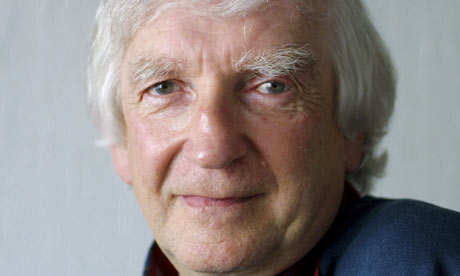
I have written before about this man- who has been a bit of a hero of mine since my student days, because he seemed to have found a way of combining many of the things I valued- Christianity, socialism, social action, community work, radicalism in the service of social justice.

You can watch a short clip of him telling his story on Greenbelt TV– and if you look carefully you will see me in the audience!

Today I heard that he had been nominated for an honour in the Queens list – an MBE – but he turned it down. In this article he explains why;

The honours are bestowed by the monarchy. As a democrat, I am opposed to a queen and other royals who wield great public influence in spite of never having been elected. Yes, the queen has displayed dignity and upheld certain moral values, but the one who succeeds her because of biological inheritance may be very different.

The nature of the royal influence is rarely questioned. The princes usually enlist in the armed forces and so identify with Britain’s aggressive wars. It is unthinkable for any member of the royal family to be a pacifist.

The royals possess enormous riches. The queen’s personal fortune is estimated at £310m, plus possessions valued in billions. The state supports her with an annual £32m. Yet at the very time her jubilee is being celebrated at huge cost, the poor are getting poorer, the unemployed more numerous, the gap between those at the bottom and those at the top wider. Every week, theTrussell Trust opens more centres to distribute food parcels. I have met several families who can no longer afford to send their children on holiday.

The unelected monarchy reinforces and sanctions inequality. The BBC and most of the press pour undiluted praise on the royals while imposing a virtual gag on the views of republicans. No senior politician has the courage to question the continuation of the monarchy. Taking a gong or title is an expression of support for the royals.

My proposed MBE was “for services to the community in Easterhouse, Glasgow”. Last week, I was at a community project called Family Action in Rogerfield & Easterhouse (Fare), which I helped to start 22 years ago. Serving at the cafe was a man who has been a volunteer since the start. He cannot manage paid employment but his loyalty is such that he has been elected to Fare’s board of directors. Another long-term helper works six days a week as a security guard on minimum wage. He takes one holiday a year and joins the under-canvas camp where he toils as a cook. Fare’s grants have been cut – so much for the “big society” – and three staff were to be made redundant. The rest of the workers, nearly all local residents, agreed to a 7% cut in their own modest incomes so that the three could be kept on. And many more. Why should I get a royal reward for services to Easterhouse and not them?

I am an egalitarian. I believe that a socially and materially equal society is more united, content and just. The royal honours system is designed to promote differences of status. It is made clear that those who are made knights or dames are socially superior to those given CBEs, OBEs or MBEs. But all are socially above those without honours. These imposed differences hinder the co-operation, interaction and fellowship, which are the characteristics of equality. Refusing a royal honour is a small step but one in the right direction.


The good death…

I have been thinking about death recently.

This was no blinding flash of my own mortality, more something glimpsed through the eyes of friends and their families.

Firstly, three of my Aoradh chums lost their mothers. All women of deep faith, gone to meet their maker. To watch close friends go through the pain of losing a parent so unexpectedly, and to watch them mourn with grace, has been an honour. Blessed are those who mourn.

Then today I spent a while talking to another friend, whose 88 year old mother also died a couple of days ago.  My friend is not a person who openly celebrates her faith, but her mother was a devout believer. This is the story of her death;

My friend rushed down to be at her mother’s bedside after an unexpected call about an admission to hospital. This involved several hours of anxious driving, but her mother was still very much alive and alert   to greet her daughter.

So it was that my friend was able to spend several hours sitting at her mothers bedside. Her mother faded visibly however and as she weakened the words were fewer, until behind her oxygen mask my friend heard her mother mouthing some words. All she could make out were ‘glory’ and ‘God’.

My friend and her brother called the hospital chaplain, who administered last rites.

As the Priest uttered his final words, she died.

This was no fairy tale- after her passing there was an all too familiar eruption of family disputes about the funeral plans, the will, and who was to blame for what.

Death waits for us all.

Yet most of us still regard it as some distant foreign country – Botswana perhaps – we are aware of it’s existence, but have no plans to go there.

Typified by another story from the week gone by. Another friend – a fantastically vibrant and active 80 year old, recently back from her travels in the far East – had a mild stroke. She is home now, a little weaker down one side, but making a good recovery. Michaela called to see her and she was on good form, but appeared very glad to have a visitor.

She said something rather interesting- that it was mostly her younger friends that have been in touch. Those in an older age range almost seem traumatised by the imminence of death, brought closer by the frailty of a peer.

She is an atheist, a signed up member of Exit but she has strong views of dying well.

Because there is such a thing as a good death. 

Mine might be near or far, but I pray that either way I will meet it with courage and hope for the next adventure.

I am reminded of this post, and this poem;

Life still flickers

.

I have heard it said that

Dead men walking

We are

Corporeal

Tenderised

Like veal

Blown by flies

.

But life still flickers

Faint but strong

Vibrating these hollow veins

And the voltage you make

Is a current

Wired to the nape

Of my neck

.

Because this thing we are

Is more than just

A bottle

For blood

So much more than just

Shapes

Mixed from mud

.

Beautiful creature

Sing, spirit-

Sing

Fathering…

Did anyone see this report the other day?

In our 50 years of research in every continent but Antarctica, we have found that nothing has as strong and consistent an effect on personality development as does being rejected by a parent — especially by a father — in childhood,” said study co-author Ronald Rohner, director of the Ronald and Nancy Rohner Center for the Study of Interpersonal Acceptance and Rejection at the University of Connecticut, in Storrs.

Study author Rohner said fathers may have a greater impact on a child’s personality because children and teenagers pay more attention to the parent who seems to have greater interpersonal power, or influence, in the family’s power hierarchy.

He explained that when a father is perceived as having more power, even if he spends less time with the children, he can have a greater impact. That’s because his comments or actions seem to stand out more notably. This is despite the fact that, all over the world, mothers tend to spend more time with kids than fathers do.

Rohner said the research shows that society tends to place too much emphasis on the impact of mothers on children, often blaming them for troublesome personality traits or behaviors, even into adulthood. “We need to start giving greater acclaim to dads, and put them on an equal footing with moms in terms of their impact on children,” he said.

“Our work should encourage dads to get really involved in the loving care of their children at an early age,” Rohner said. “Their kids will be measurably better off.”

The publishing of this report so close to Fathers day is I am sure no accident, but nevertheless it does seem to be saying something relatively new. Most previous research into parenting has focussed on mothering- in both a positive and negative way. Mothers have been both blamed and beatified. This study is clearly suggesting that we fathers have more impact and influence than we could have suspected.

Which is rather sobering.

I am the proud father of a soon-to-be 12 year old and a 16 year old who are quite simply the best thing that ever happened to me, however, I never knew my own father in childhood. The amniotic fluid that I squelched in was rather lacking in certain nutrients and I can never be sure how this affected me, for good and ill.

What I can long for though is for this next generation to know something more, something better and more whole…

‘Problem families’…

So, the government has revealed it’s plan to deal with all those anti-social, work shy, boozing and school absconding families that are the scourge of our towns and cities. Hear what a rather belligerent Eric Pickles had to say about it all on the Today programme here.

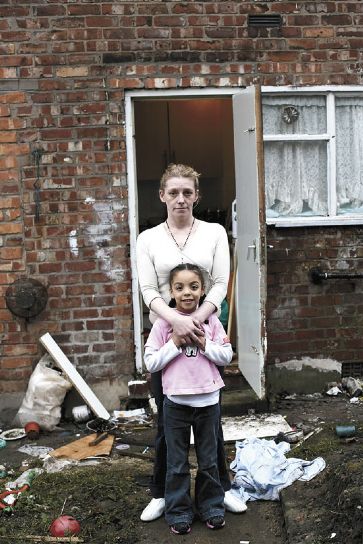
It is the latest in a long line of government attempts to intervene in the lives of those who have fallen through the holes in our society. We used to talk about social class of course, but this has been out of fashion for some time. The last Labour Government used the language of ‘social exclusion‘, and poured resources into education and measures to deal with child poverty. There is some evidence of success, in that by the end of their term of office, 900,000 children appeared to have been lifted out of poverty- see this article in the Guardian for some discussion about this.

Since then, austerity has opened the door to widespread reductions in benefit, an undermining of family support services, and now, the measures to help ‘problem families’.  Note the subtle change in emphasis. No longer is poverty, crime and family dysfunction a matter of economics or a measure of the failure of society- rather it relates to the failure of individuals. We are using the language of blame.

But what can be done, particularly in these times of austerity, to change the lives of those people in our society who are most vulnerable? Might Pickles’ policy of identifying these ‘problem families’, then bringing to bear a wide range of support along with some targeted spending actually help? Is he not just applying good common sense?

By the tone of some of Pickles’ comments over the past few days, it is clear that he has little interest in learning from those of us who have been trying to work in support of the poorest and most broken in our society. They are fluent in social work he said. The Daily Mail loved it;

‘Sometimes we have run away from categorising, stigmatising, laying blame,’ he said. The Government is spending £450million to try to lessen the problems these families cause, which are calculated to cost taxpayers £9billion a year.

The problem of course, is that in the UK (as in the USA) poverty is politics. And politics loves to simplify and make one dimensional protestations. Often there are scapegoats.

Again, what can be done about these ‘problem families’?

It seems we have two broad approaches, which I will characterise as ‘Pickles’ and ‘Politically correct’ (or ‘PC’.)

Pickles

Poverty is a matter of morality. It is about poor choices made by people who are a drain on everything that is good about our society.

There may be some who are the deserving poor- Tiny Tim on his crutches, the elderly yokel who has run out of turnips. For these people, the parish has its Poor House.

However, there are also those who have found a way to sponge of the system. What is worse, there is a whole industry of people whose job appears to be about supporting them in this.

These people are a threat to middle England- to those of us who do work hard, cut our front lawns and live prudently within our means. They are the source of disease, crime and noise pollution.

What is needed is a good sharp shock, delivered in a targeted way.

All this liberal research about the causes of poverty is left wing twaddle dressed up as ‘science’.

PC

Poverty is about economics. People are shaped by the place in society they are born into- their opportunities and life chances are largely given to them, not matters of choice.

There are huge vested interests in society that keep things this way.

Poverty brutalises. If you live in a survival economy, and have few opportunities for escape, then small wonder that you will be more likely to find release through drugs or alcohol. Why are we surprised too that some turn to crime?

The human spirit is unquenchable – after all, many still escape the poverty trap – but many others need nurture. They need hope, not condemnation. To blame poor people for poverty is like blaming Jews for the  Holocaust.

People do not chose to be poor. Neither (with a few exceptions) do they chose to live on benefits. They do this because they do not have hopes for a real alternative. This is a failure of society, and one that any good society should try to change, no matter how difficult this might be.

The most effective means of changing the lives of the poor is to raise their income.

In the absence of this, a whole range of community based activities are required, guided by careful research, learning from previous interventions so as to avoid the many mistakes of previous attempts at social engineering.

Regular readers of this blog will already suspect which of the two camps I belong to.

But they might also be surprised to hear me say that I believe that both have merit. There is a moral dimension to all of life that we ignore at our peril. Remember Durkheim and his Anomie? We all have personal responsibility for the choices we make, even if for many of us, these choices are limited by our experience.

There is that old parable that Jesus used in Matthew 25- another one of those passages where Jesus was trying to explain something about the Kingdom of God;

14 “Again, it will be like a man going on a journey, who called his servants and entrusted his wealth to them. 15 To one he gave five bags of gold, to another two bags, and to another one bag,[a] each according to his ability. Then he went on his journey. 16 The man who had received five bags of gold went at once and put his money to work and gained five bags more. 17 So also, the one with two bags of gold gained two more. 18 But the man who had received one bag went off, dug a hole in the ground and hid his master’s money.

19 “After a long time the master of those servants returned and settled accounts with them. 20 The man who had received five bags of gold brought the other five. ‘Master,’ he said, ‘you entrusted me with five bags of gold. See, I have gained five more.’

21 “His master replied, ‘Well done, good and faithful servant! You have been faithful with a few things; I will put you in charge of many things. Come and share your master’s happiness!’

22 “The man with two bags of gold also came. ‘Master,’ he said, ‘you entrusted me with two bags of gold; see, I have gained two more.’

23 “His master replied, ‘Well done, good and faithful servant! You have been faithful with a few things; I will put you in charge of many things. Come and share your master’s happiness!’

24 “Then the man who had received one bag of gold came. ‘Master,’ he said, ‘I knew that you are a hard man, harvesting where you have not sown and gathering where you have not scattered seed.25 So I was afraid and went out and hid your gold in the ground. See, here is what belongs to you.’

26 “His master replied, ‘You wicked, lazy servant! So you knew that I harvest where I have not sown and gather where I have not scattered seed? 27 Well then, you should have put my money on deposit with the bankers, so that when I returned I would have received it back with interest.

28 “‘So take the bag of gold from him and give it to the one who has ten bags. 29 For whoever has will be given more, and they will have an abundance. Whoever does not have, even what they have will be taken from them. 30 And throw that worthless servant outside, into the darkness, where there will be weeping and gnashing of teeth.’

This parable always seemed so unfair and cruel to me- un-Jesus-like. I have heard it used as a capitalist manifesto, but I do not think it has anything to do with money- I think it is something to do with wasted lives though. We have a call to live abundantly- not in terms of how much we gain and consume, but rather in terms of how we love and create.

However, there is more. Jesus had much to say about our duty towards the poor. He was never into the blame game. He seemed to prefer the company of those who had little. He seemed to invite his followers to do the same;

Luke 14:12-14 He said also to the one who had invited him, “When you give a luncheon or a dinner, do not invite your friends or your brothers or your relatives or rich neighbors, in case they may invite you in return, and you would be repaid. But when you give a banquet, invite the poor, the crippled, the lame, and the blind. And you will be blessed, because they cannot repay you, for you will be repaid at the resurrection of the righteous.”

These are not easy issues. They can not be dealt with by one dimensional politics, or well meaning liberal intentions.

Ultimately, the success or failure of Pickles’ latest pet project will not be at his cost- it will be felt by those most vulnerable people in our society.

Making games work…

My mate Nick has written a book!

This is the blurb;

Are you someone who occasionally runs games to help people to learn?

.
Would you like those games to work better?

.
Do you want people you work with to gain even more from your training?

.
If this is you then “Making GamesWork” by Nick Smith is definitely worth reading.

This book takes you through all the steps you might want to consider from initial planning to final evaluation, in an easily-readable style. It can be read as a whole or you can dip in to get advice on the bit of games-running that you most want to improve.

.
You will learn:

  • How to plan a good games session to meet your learning outcomes
  • What to say in your briefing
  • How to run the game and intervene successfully
  • Suggestions for reviewing to draw out the learning
  • Example games to illustrate each chapter
  • Safety considerations to be aware of
  • What you need to be a good facilitator of games
  • How to design a game to use the equipment available

“‘Making Games Work’ fills a significant gap among books about team activities. It is a plainly written guide from one practitioner to another about how to get the best value from team games/tasks/activities/challenges. It is full of tips and tweaks for adapting activities to suit different groups, different situations and different objectives. Every part of the process can be adjusted. Nick Smith points out the choices at every turn – whether briefing, monitoring, reviewing, evaluating, designing or redesigning activities. After reading Making Games Work I am confident that your tried and tested activities will be getting a makeover or two.”

Roger Greenaway, Reviewing Skills Training

.
“This is without a doubt a book that should be available to all instructors, teachers, facilitators, youth workers, in fact anybody that works in the field of developing personal and team skills.”
Teresa Thorp, Grafham Water Centre

.
“ When it comes to practicing a craft, a skilled craftsman will select the correct tool from his tool box. Nick, a time served master craftsman, has assembled his tools, laid them in this tool box and allowed us to choose which tool we would like to use. With sound advice from his experience, as to which tool will work best, he has delivered a service to the outdoor training world. Thanks Nick!”

Ian Ross, Lagganlia Outdoor Education Centre

Nick has been running games as part of team and leadership training for 20 years. People regularly seek him out for advice on how to make games work with particular groups or for specific learning outcomes. He has a passion for helping people to enjoy the process of discovering and reaching their full potential.

Nick is a freelance outdoor instructor and life coach- his blog/website is here. (You might recognise one of the kids in his header as my son Will.)

Nick is one of the leaders of our Wilderness Meditations too.

You can get hold of a copy of his book here.