The wisdom about Solomon…


Old Melvin Bragg did it again this morning- great discussion on what we know (and don’t know) about King Solomon. You can listen again to this programme (and all sorts of others spanning years and years) here.

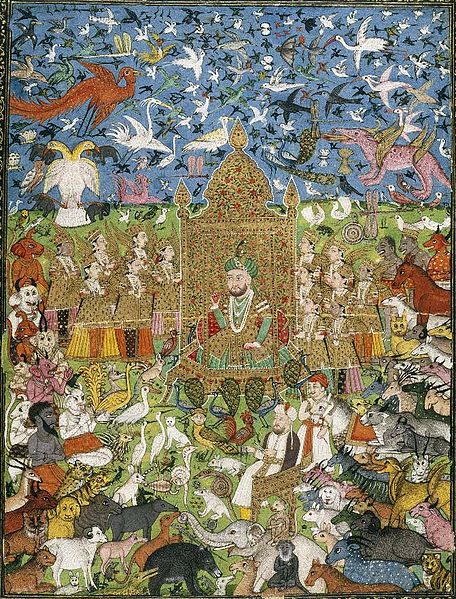
Solomon- the archetypal enlightened Oriental monarch, the nearest thing we have in our adoptive western tradition of a Sun King. He is said to have lived in relative peace, accumulated great wealth, a vast harem of wives and concubines, built temples and palaces and a network of ‘chariot towns’ in an expanding Kingdom. He was said to have been visited by great Queens, and to have ‘satisfied’ them. Along the way, he asked God to grant him wisdom, and is accredited with authorship of several books in the Bible- Ecclesiastes, Proverbs, Song of Songs. He is revered in Hebrew tradition as presiding over a golden age, and in the Islamic tradition as a prophet.

The truth of all this is in the dust. No certain evidence of his existence, or that of his great building projects, has been found. Authorship of his books in the Bible are almost certainly more complex. Having said that the written record of the minutiae of his life in the Bible are beyond almost any other comparable ancient figure. There is no doubt that Solomon is a dominant Icon in the history of us.

He is also a flawed figure. The Bible story talks about his enslaving of the people, and his descent into the paganism of his many wives. He accumulated vast wealth and thousands of horses- all on the back of slavery. According to scripture, God was not pleased, but rather than destroy his Kingdom in Solomon’s lifetime, God decided that the Kingdom would not stand. Solomon’s sons fought, argued and it all fell apart.

The interesting thing is that despite the obvious flaws that the Hebrew tradition records in this great leader, we remember mostly the wisdom and the glory. We somehow root for Solomon- we envy him his achievements- his wealth, his women, his worldly wisdom.

This led me to wonder what wisdom might these stories communicate to us, here, now? Why are these stories so central to the Bible story? Whatever the historical truth of these stories, what truth do they have to our spirits?

It is all there I think- the pursuit of a nationhood of conquest and empire. The accumulation of wealth and fame. The exploitation of women and sexuality. The enslavement of the powerless individual towards the wealth of the few. The demonisation of those outside the boundaries as less-than-human.

Then there is the rise and inevitable fall. Like boom and bust economics. And at the core of it all, the loss of the core of things- the turning from what is good and pure towards idolatry.

I look at this story through what we know of the journey that was to come, and perhaps most of all through the person of Jesus; who had no stately majesty, no wealth, no interest in power, other than power-to-save. Jesus who came to proclaim that other word that we have heard too much of over the last few days in the UK- Jubilee.

Jubilee not in the sense of a celebration of wealth and pompous privilege. Jubilee that had nothing to do with looking backwards towards an empire now gone, and had nothing to do with jingoism or nationhood. Rather it was about this;

The Spirit of the Lord is on me,
because he has anointed me
to proclaim good news to the poor.
He has sent me to proclaim freedom for the prisoners
and recovery of sight for the blind,
to set the oppressed free,
to proclaim the year of the Lord’s favour.

(See Luke 4 and Isaiah 61)

The focus shifts to the little people like you and me.

Solomon has had his day. May all Kings and Queens take note.

Statistically speaking…

Today is the 4 year anniversary of this blog. As a birthday present, I thought it appropriate to go for a new header- a cropped part of this photo;

We bloggers have a guilty secret called statistics. Sure, our motivation as we write is absolutely pure and totally high minded, but it also kind of helps for this to be represented numerically!

WordPress give you a whole range of different means of measuring your success (or lack of it.) Here are some of mine;

All time visits; 260,628

Busiest day; 1,029 (April 23rd 2012)

Number of posts; 1338

Number of comments; 1685

So there you go. The secret is out.

One step from eternity…

We have just been here;

Along with some friends, we spent the long weekend camping on the Ross of Mull, overlooking Iona- which is the most beautiful place I have ever been to.

And here is the evidence;

We walked a lot, swam, ate, cooked bread and baked spuds in makeshift ovens made of sand and driftwood fires.

Whilst there we heard of the mother of one of us having become seriously ill in hospital. The distance and ferries stopped any rush to her bedside- all that was possible was to stay and pray. To sit in such beauty with such a burden must have been an incredible rush of emotions- but it felt as though the place, and our community, was holding us.

We are delayed only by our hearts beating.

And each one beats with all the treasure of the universe.

Honest doubt and fundamentalism…

I have been listening to some of this series on the old wireless during my travels this week- Richard Holloway‘s journey through the emergence of doubt in the wake of faith. Compulsive listening for old pilgrims like me.

For those of us on a quest for honest faith, we have also to be honest about doubt. The two things are intertwined, as I have written about previously. Doubt then is not the opposite of faith, but rather the means through we we engage, wrestle and ultimately it can become the way that we move towards light.

Today the discussion centred around the issue of revelation– the idea of an interventionist God, who reveals himself to his followers through dreams, visions, prophecy, and people ‘hearing his voice’.

Some of these ‘voice hearers’ began to write down these words, and it is these words that we go to most often as we seek fresh revelation.

One little morsel that impacted me today was this one, concerning the writings of Origen

Origen was a hugely influential scholar, theologian and writer of the early church, writing in Alexandria in the second and third Centuries after Christ. His views soon were controversial- he was a universalist and believed in the pre existence of souls. He was condemned later as an apostate- but perhaps we should regard him as a theological adventurer, putting forward ideas and theories for us to chew on.

Today his views on scripture were mentioned. The gospels that were circulating at the time (and there were many more than the 4 we have in our Bible now) had all sorts of areas of disagreement and contradiction. This might be hardly surprising if we read these as eye witness accounts, or scholarly collections of stories.

We might also expect a gospel to bear in some way the perspective, the creativity, the agenda of its particular author- one person might focus on one aspect of the life of Jesus- love for example, anther might be more interested in proving some other theological issue. You could describe this as observer bias.

This is of course not a problem if you understand this as you read- in fact it can be extremely enriching to view the life of Jesus from different perspectives- this is the whole point of us still having 4 gospels in our Bible is it not? However it becomes a problem when you start to treat the text not as revelation through a man, but rather the very ‘Word of God’. Then you have to deal with the contradictions in a whole different kind of way. You have to make it all fit into one homogeneous whole. As we used to hear said- ‘inerrant; without error or contradiction’.

It seems that back in the second and third Centuries there were already disputes about the validity of scripture as the inerrant Word of God. Origen however suggested that God had deliberately allowed these contradictions/disagreements to remain in scripture precisely to remind us that it was not to be taken literally– rather it was to be engaged with, wrestled with, questioned and debated.

In this time of the rise of fundamentalist doctrine, this ancient heretic might well have some more agitation to do for this generation too…

(Really) ancient music…


I am not talking cheesy middle of the road, or even a bit of pretentious played-on-cat-gut-strings-baroque.

Apparently some blokes were poking round a cave in Germany recently, and discovered these;

Here is the story from the BBC;

The flutes, made from bird bone and mammoth ivory, come from a cave in southern Germany which contains early evidence for the occupation of Europe by modern humans –Homo sapiens.

Scientists used carbon dating to show that the flutes were between 42,000 and 43,000 years old.

The findings are described in the Journal of Human Evolution.

A team led by Prof Tom Higham at Oxford University dated animal bones in the same ground layers as the flutes at Geissenkloesterle Cave in Germany’s Swabian Jura…

…musical instruments may have been used in recreation or for religious ritual, experts say.

And some researchers have argued that music may have been one of a suite of behaviours displayed by our species which helped give them an edge over the Neanderthals – who went extinct in most parts of Europe 30,000 years ago.

Music could have played a role in the maintenance of larger social networks, which may have helped our species expand their territory at the expense of the more conservative Neanderthals.

To put this in perspective- these flutes are old.

They were ancient long before any kind of Empire- the British, the Spanish, the Moorish, the Monghol, the Roman, the Egyptian, the Babylonian, The Hittite.

The last ice age was still carving our valleys in which we still live.

And people were sitting around fires and laughing at the day. The air was alive with the conversation as people burped out their shared meal. Smoke swirled and children slept in the shadows. Then someone brought out the instruments.

What did they play? Where there other instruments too?

Did they sing? And if so, what did they sing about?

We know that in the area around these caves complex carving and paintings were being produced. Check out the Venus Figurine for example. People were abstracting their experience with art. They were seeking after collective meaning.

All of which is a rather amazing window into where we came from, and perhaps who we still are now, and will be in the future.

Humpback rescue, Loch Fyne…

There was a fantastic story in our local paper today, about some fishermen out diving for Scallops in Loch Fyne. They were a couple of miles NE of Tarbet, when they spotted what they thought was a big tree in the water, surrounded by buoys.

When they approached, the ‘tree’ blew water from it’s blow hole. It was a humpbacked whale- one of the most beautiful and mysterious of all the whales. This creature, normally at home in the deepest ocean, had come into the Loch and somehow become entangled in the fleet of lobster creels. Creels are usually laid out in a string of 8 or 10, with marker buoys.

Humpbacked whales travel on average 16000 miles each year. Who knows where this one has spent the winter. The males produce a complex song each year- specific to each pod of whales. They compete to extemporise and develop the song, for reasons that are unclear- possibly for mating purposes. Over the singing season the song will develop because of all these changes. Then, the seas will be silent again, until the next year, when the pod will start again exactly where they left off the year previously.

Humpbacked whales can be well over 50 feet long, so who knows what courage it took for one of these scallop divers (Chris Denovan) to decide to get in the water with it? They knew that the poor creature was close to exhaustion, and they decided that they could not leave it to suffer.

Chris managed to cut it free from the creels, and ‘after two hours of building up courage I went back to cut the tangled ropes and buoys from it’s fluke’. 

Well done Chris- what a fantastic story.

I discovered some footage on you tube;

Here it is, swimming away. May it sing for many seasons yet;

Twisting with our fate…

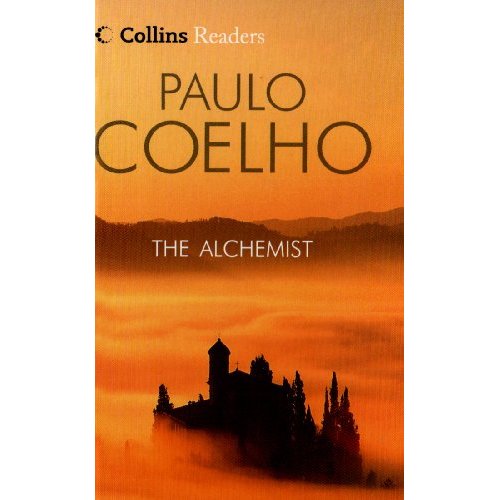
I am reading this book at the moment;

I have heard people talk about it for years- it was written in 1988 after all, and became a publishing phenomenon in the early 90’s. At some point it arrived on one of our bookshelves, but I always avoided it because of some vague association in my mind with new age self fulfilment self help books.

However, different time of life and all, and different spiritual outlook, so in search of a book to read on the ferry that fitted easily in my pocket, I picked it up.

And I am really enjoying it.

Enjoying the writing and the story telling- which is ‘magical realism‘. A shepherd boy who meets a king who tells him his destiny, and he sets off on a journey in search of this destiny, along the way finding the depth of things – the Soul of the World. 

But also enjoying the theological questions that it is bringing to me. In many ways the book proposes a spirituality that is a mash up of all sorts of influences- a bit of Jesus, a lot of Eastern mysticism, a lot more Coelho.

It suggests that each of us have a destiny, which we discover by listening to our hearts and following the omens and signs that the Soul of the World scatter in our way. Most do not dare to follow this destiny as it involves risk and pain, but when we do, the whole world conspires to deliver what we desire.

At first, there is what Coelho called ‘beginners luck’, we start out, and things fall in place. But the journey towards destiny always involves testing.

On the face of it this kind of simplistic magical thinking is the exact reason why the book has remained on the shelf for so long. It is too much like the prosperity gospel charlatans or the ‘success is yours if you go for it’ nonsense.

What rescues the book is its gentle thoughtfulness, and words like this;

We are afraid of losing what we have, whether it is our life or our possessions or our property. But this fear evaporates when we understand that our life stories and the history of the world were written by the same hand.

What has been occupying my mind is this question of fate. This post discussed some of the issues around vocation, and I suggested that I did not believe that God had a golden path planned out for us. In a reply to this, Paula suggested an alternative something like a flow chart with lots of different potential paths.

But as I think about the heart of the matter – the desires that in in the middle of us – I have to acknowledge the thought that we each carry unique individuality and creativity. The accident of our birth impedes or facilitates how this might shape our lives, but ultimately the degree to which this uniqueness is worked out is about the choices we make.

I wrote this line recently about God ‘twisting with our fate’. Mingling with us, laughing with us, prompting us, singing with us in success and holding us in failure.

Is this the same thing that Coelho is painting- the same fragments of the truth from the Soul of the World?

All I can say is that life is not for standing still, and movement has to have some direction, even if the way is indistinct and fraught with danger.

Child protection- are you happy with what we do in your name?

This will be of little interest to most people. Children in care are not our business- someone else will deal with it. Bloody social workers probably.

I have written a lot about the terrible scandal over the death of Peter Connelly. Anyone who works within social work, even people like me who work with adults, is likely to have been profoundly affected by what happened to this 17 month old toddler, and the media/political witch hunt that followed.

A new study by CAFCASS has been published today suggesting that Local Authorities are now reacting more quickly and appropriately as they intervene into the lives of our most vulnerable children. Good news then?

Anthony Douglas, Chief Executive said, “After the panic that came with the Baby Peter media storm, the intensive reviewing by local authorities of cases has paid off for children: the intervention they need is coming earlier and cases are drifting less. Local authority staff are to be praised for this improved performance and local authority members should be praised for their political bravery in supporting these vital but not always locally popular services.

I think it is worth digging a little bit deeper into this issue.

Firstly- the numbers. The removal of children from their families under protection orders is at an all time high- it rocketed following the Baby Peter scandal, and remains around 62% higher than before 2007/8. This amounts to 9.2 care applications per 10,000 kids in our country- although in some parts it is much higher- 30.1/10,000 in South Tyneside for example. Over 10,000 children were removed from their homes under protection orders in 2011/2012 for the first time.

Perhaps this is the right number of orders- what should have been happening previously to prevent the deaths of children like Peter Connelly. The report appears to believe so;

In the vast majority of cases (85.4%), Guardians believed that the local authority’s care application was the only viable action to keep children safe and that there was no other alternative to court proceedings.

Leaving aside the dubiety over the 15% (around 1500) these figures really require deeper enquiry, and a much greater public debate about what they might mean.

Firstly, we need to stop pretending that this a simple issue- that if one profession (social work) do their job properly then the ragged edges of our society will be all neat and tidy and out of sight. It is significant the one of the notoriously difficult categories of concern being applied to orders is on the increase- that of neglect. I have been in and around the homes of enough kids from troubled family backgrounds to know that emotional or even physical neglect is a fluctuating and complicated picture, often very difficult to define and understand. 50% of parents in these situations have mental health problems, 60% will have problems with addictions.

We also need to stop making this about the ‘other’. Think about your own background. There is no doubt in my mind that my sister and I would have been the subject of great concern. Would I wish to have been removed from home, or would I wish that efforts could have been made, no matter how difficult this might have been, to improve things within my home?

This is the real crux of the issue. We seem to live in a culture that wants to divide a problem into victim and evil perpetrator. So our assets go into intervention, not prevention, support or long term partnership.

The machinery and administration of child protection sucks in the time of social workers like a massive bureaucratic sponge. Back to the study again;

Douglas said councils with effective early intervention programmes designed to help struggling families before their problems reached crisis point were more likely to take fewer children into care. Some guardians who responded to the survey said they felt a lack of early intervention, resources, respite care and family support contributed to the higher numbers of care applications.

Many councils, including my own, have fought hard to preserve child care budgets. However, in a time of austerity, when millions are being cut from local authority spending capacity, this does not convert to more resources to prevent family breakdown or to monitor and support families in need. What it amount to is that the same pot of social workers do almost solely crisis driven child protection work. Any family support is a side show, usually staffed by unqualified workers or run by voluntary agencies.

We have had our own recent high profile enquiry after all. It is perhaps significant that this enquiry did not hit the national consciousness like the Baby Peter one did. These girls were already in care. 

What happens to kids who come through the care system in the UK? By any measure, it is almost universally bad. Educational attainment? This from the BBC;

A third of looked after children reached age 16 in 2006 without any qualifications compared to only 2% of all children that age.

Not to mention the huge increase in likelihood of problems in later life- suicide, mental illness, poverty, homelessness etc.

The fact is, it is easy to provide ‘rescued’ kids with warmth, shelter, food and basic care. What is far more difficult is to create an environment in which they might thrive. In some case this is about the lack of specialist services- counselling, or highly skilled behaviour modification – but more often it is simply that services are under resourced, under valued and  out of sight.

The fact is, this is not inevitable. Despite the likely damage inflicted of kids removed from familiar home and environment because of sometimes traumatic experiences, these kids are not irreparably damaged. They should not be written off as economically lacking viability.

Amelia Gentleman, writing in the Guardian, gave voice to what those of us who have worked in the system already know;

“There is a desire in the UK to keep children out of care at all costs. Care is seen as something that you turn to when all else fails,” he said. “In Europe, they take more children into care, at a younger age, and do more with them.”

“There was increased regulation in the wake of several years of abuse scandals related to children’s homes,” she said. “People were very concerned that allegations could be made about staff’s conduct.

“Somehow that translated into … keeping a distance between young people and their carers, as a way of keeping them safe. We lost the focus on emotional warmth. It went so far as to stop staff giving children hugs when they actually need them.”

Let us not pretend that changing this will be cheap. In Germany, where outcomes for kids in care are MUCH better than ours, they spend roughly 4 times per child what we do on their care. From the Guardian article again;

“We need highly qualified people to look after these children to help them overcome whatever has happened to them in their life before care – neglect, abuse. There is a need to ringfence the sorts of resources you need to get it right,” said John Kemmis, chief executive of Voice, an advocacy organisation for looked-after children. “We have to invest more money in the system.”


So, this is being done to and with our children on behalf of you and me;

  • More children in care
  • Less focus on prevention and family support
  • A child care system that is not working

There are signs of change- but until the national debate changes, little else will I am afraid. Time to shake the tree.

The perils of social media for the unchaste fingers…

I was over in Glasgow today with Emily, who looks like she is going to continue her 6th year studies at a Cardonald College. It was a gorgeous hot day and we went by ferry train and bus. The first two were efficient and pleasant, the latter far less so.

At some point of the journey, as you do, I picked up an abandoned newspaper of the tabloid variety, and found myself reading about a Vicar called Paul Shakerley, a (loose) Canon of the C of E in Doncaster who (shockingly) was recorded as having a pierced tongue. Perhaps this was some kind of behaviour modification technique to control his utterances, but unfortunately he seems to have been less careful about his Facebook status updates;

“I think I will put my feet up. I’ve done f**k all today other than jazz lesson and visit a friend. I hear the fizz of tonic in my gin beckoning. Alas, I have religion tomorrow. At least I’m not preaching this week. Preaching next week at St Mary Abbotts Kensing-ton though. Best make that a good one eh?”

‘Piss myself! H, you are so funny!!! It was good to share over lunch yesterday and at the URC Homelessness “event”. I say “event”. It was hardly worship, was it?

‘I hope you managed to get home okay. It was late by the time the URC and Methodists finished. Good job we are Anglicans eh?’

The ‘do religion’ bit made me laugh out loud, as did a Facebook group he joined called ‘I want to get back with my ex…!’…LOL jk…I’d rather s*** in my hands and clap!’.

I suspect I would like this bloke. I would not want to be his Bishop though. I hope he comes through this bit of silly season journalism intact. I should add that I have absolutely no problem with a swearing vicar, and suspect that Jesus would not have either.

We people who display our lives on line- through whatever combination of narcissism, grandiosity and strivings after significance- we constantly make decisions about what is appropriate to share with others. For people like me, this all started as exercise in honest creativity, but often I find myself wondering if I expose too much.

Old habist die hard though…