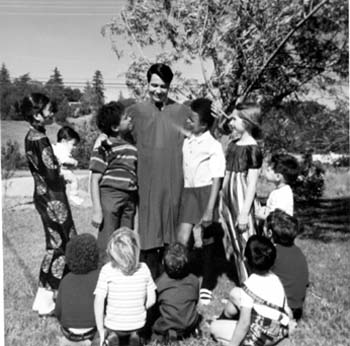
Jim Jones, and surviving the sociopaths…

I was listening to the radio this afternoon in my office whilst tidying up some papers, and was captivated by this programme

The compelling true story of two sisters, Annie and Carolyn Moore, who died in the mass suicide at Jonestown in Guyana on November 18th 1978. Over 900 people died that day, followers of Peoples Temple and its leader, Jim Jones. This documentary drama is one family’s experience of Peoples Temple, which began with the highest ideals. It’s told through the actual letters between Carolyn & Annie and their parents back home.

This told the story of Jim Jones and his People’s Temple church right to the bitter end- from the unique perspective of insiders- people who kept faith in Jones right to the very end. Two women who were in leadership positions in Jonestown, and whose parents even seemed supportive of their involvment.

What was fascinating is a kind of insight that emerges as to how people would be prepared to follow this man- prepared to put their faith in him- to believe in the world he created, and be even be prepared to die at his suggestion…

Attempts to make sense of what happened at Jonestown have tended to paint Jones as something other than human. He is seen as evil personified, able to cast a mystical spell over the brainwashed people he surrounded himself with. They, in turn, we tend to see as weak lambs to his slaughter.

But hearing this programme made me think that this was too easy.

There was so much about Jones that was attractive, and I could imagine how seekers after a radical spiritual way of life could be attracted to him. How I might have been interested in the way of life he offered…

Another thing I began to wonder about was the degree to which the dreadful end to the People’s Temple and Jonestown was an extreme example of a more common experience- namely the power we ascribe to leaders in religious/church contexts.

I came across this post recently, by Bill Kinnon, where he quotes from this series, which discusses the role of sociopathy in church, and in Christian leadership. I have a mental health workers suspicion of easy labels given to human patterns of behaviour- but perhaps it is worth lingering with this concept for a while…

Here are a few quotes that Bill uses-

The Sociopath is unable to develop any kind of true, loyal attachments to people. This inability to be genuinely connected to others renders their experience of life bland, colorless, boring, and tedious. Consequently, they turn to power, not love and relationship, as the primary motivational factor for their lives. The sociopath seeks to gain power through which she can find some sense of connection to humanity by causing the suffering of others. The more she is able to make another suffer or hurt, the greater her sense of personal power, and the more exciting and invigorating life becomes. (Dr Martha) Stout says that the motivation for self aggrandized power is so strong in the sociopath that many of them work hard to place themselves in leadership positions because the authority of an office or position gives the sociopath the tools and avenues she needs to both feed and fuel her mental illness.

It is stunning the extent to which Christians forgo what they know to be true, pure, and right when they get to sit across the table from a powerful and charming bishop, pastor, or seminary professor. Studies show that otherwise normal and healthy personalities will do some of the most atrocious things in their blind allegiance to an official with a title.

The suggestion made here is that around 1 in 25 people could be described as having sociopathic tendencies, and that sociopaths will tend to gravitate towards situations where they can exert power, control and manipulation. Places like church.

Gulp.

I have posted before about the phenomenon that has come to be known as church abuse. (See here and here for example.) Many of us carry hurt and scars from finding ourselves part of church situations where leadership goes badly wrong. There are of course many reasons for this, and throwing around accusations of sociopathy at our leaders is unlikely to help.

But there are wolves who come dressed as lambs. When we see a hint of tooth or claw, may we have the discernment and the courage to recognise what we see.

There are some suggestions as to what to do when you are confronted with leadership like this here.

If you are in this situation- God be with you. It can be extremely difficult.

Protesting Shakespeare…

My daughter often tells me stories about her school that make my eyebrows shoot up.

Now don’t get me wrong, I am not likely to go all 1970’s and say ‘It was not like that in MY day.’ I went to an experimental community school, where all sorts of unorthodox educational theories were tested out (and some of them found wanting!) I was interested to note that the website of the school today makes no mention of it’s radical background.

I mention this, as some of Emily’s accounts of her current schooling still leave me rather puzzled and concerned. Here is a sample-

The kids were shown ‘Braveheart‘ in history- as a way of understanding Scottish-English history. Now even accepting that most of the Scottish establishment loves to have a go at all things English, to suggest that the story portrayed in this film has even a passing resemblance to history is stretching it some, wouldn’t you say? Rather like learning about the dinosaurs by watching the Flintstones.

Then there is English literature. The chosen books for were Harry Potter, and one of the Philip Pullman series. Fine romping entertainment- but literature? Give the teachers their due- some kids simply do not read any more, so starting with something easily digested is not a bad thing… but today, they began talking about Shakespeare. Like generations of kids before them, the kids suggested that Shakespeare was boring. And when they learnt he was English, they all booed. The teacher told them not to worry as they were going to study the worlds greatest ever poet, Rabbie Burns soon.

Now I am not planning to argue about who the worlds greatest poet is/was, and even though I am no great fan of Burns, I am happy to concede that he is in the mix.

But I so hope that narrow prejudice will not be reinforced in our schools, and that my kids will be enthused by teachers who have a love for beautiful inspiring words.

So, by way of my little protest- here is a little Shakespeare (from one of Hamlets hugely cynical speaches)…

What a piece of work is a man, how noble in reason, how
infinite in faculties, in form and moving how express and
admirable, in action how like an angel, in apprehension how like
a god! the beauty of the world, the paragon of animals—and yet,
to me, what is this quintessence of dust? Man delights not me—
nor woman neither, though by your smiling you seem to say so.

Hamlet Act 2, scene 2, 303–312

Merciful heaven,
Thou rather with thy sharp and sulphurous bolt
Splits the unwedgeable and gnarlèd oak
Than the soft myrtle; but man, proud man,
Dress’d in a little brief authority,
Most ignorant of what he’s most assur’d—
His glassy essence—like an angry ape
Plays such fantastic tricks before high heaven
As makes the angels weep; who, with our spleens,
Would all themselves laugh mortal.

Measure For Measure Act 2, scene 2, 114–123

Winter makes cathedrals out of ice…

Took a lovely walk with the Mosley’s yesterday afternoon. Up into the hills and down Pucks Glen.

There had been a partial thaw, but the path was treacherous in parts.

Worth it though- for the company, the joy of seeing kids having fun in the wild, and for this-

Winter’s own towers and minarets.

A Cathedral for a while…

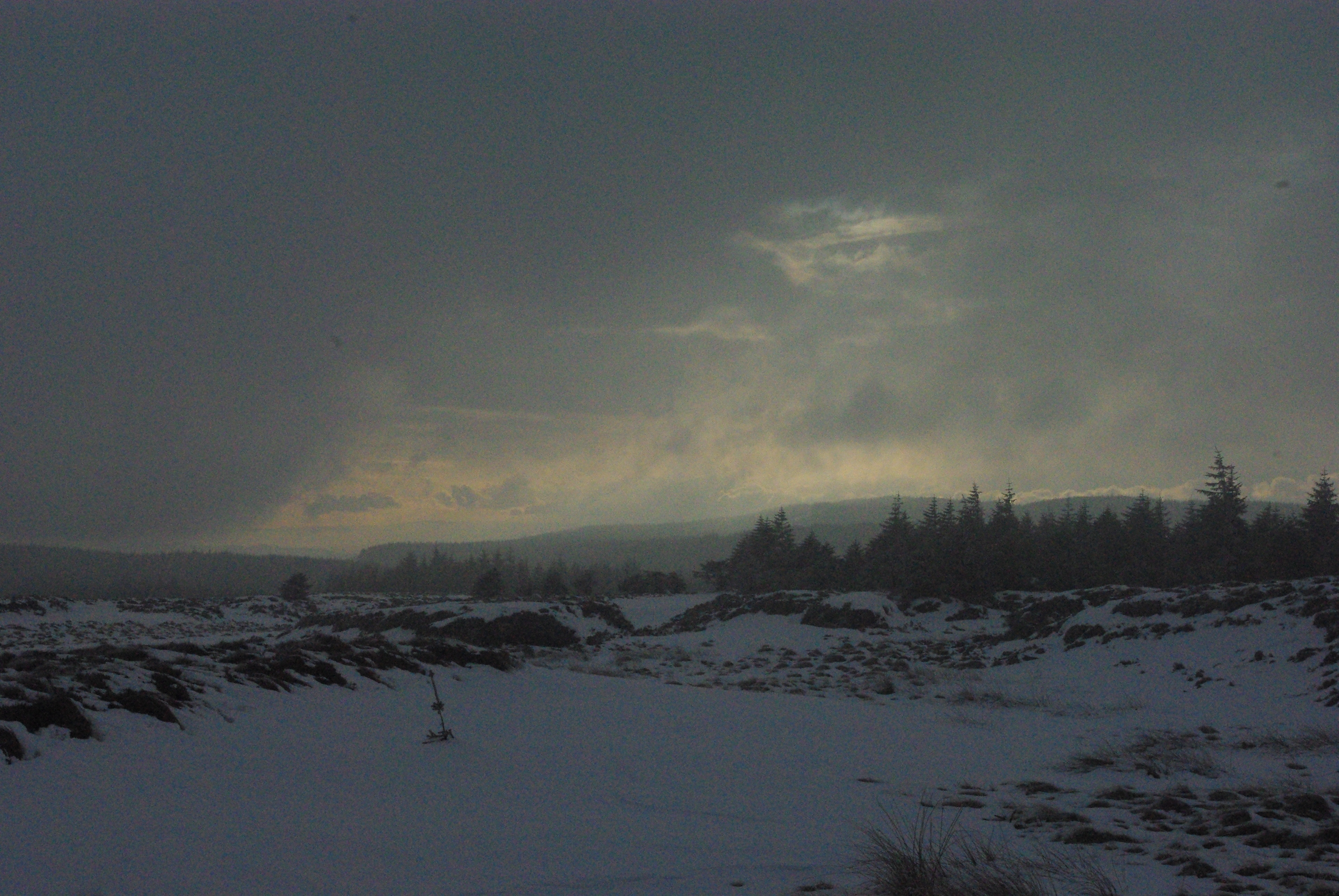
A walk in the snow…

It has been very cold here recently- like most of the UK, it has been colder than most people can remember over the last weeks.

Dunoon is usually insulated from the deep cold that other parts of Scotland experience, because of our closeness to the sea. But last night, it was minus 7 degrees C outside our house, and the temperature has not been above freezing for weeks.

Along the shore, the rock pools have frozen over, and between the tides, the seaweed collects white frost.

We have not had the heavy snowfalls here that have been common elsewhere. Glasgow and Paisley (but a few miles away) are deep white, but we have the remains of snow, turned to ice for the most part.

Apart from in the hills that is.

So I decided to go look for some.

I wanted to find virgin snow- the high up powdery stuff that does not ball under your crampons. It has been a while since I kicked my way into this stuff.

I set off into the familiar hills above Bishops Glen- the forestry tracks giving way to fire breaks in the plantations, then out onto the open hillside.

And I found snow.

Lessons on community and theology from the Africans…

Following on from earlier posts digging into the issue of community, I have been thinking about Ubuntu.

No, not the open source software package (although it may well be good- anyone using it?)

Ubuntu derives from a Bantu word from Southern Africa, but seems to be regarded as describing a classical African world view. It interested me because of this man

Desmond Tutu- an eccentric, playful, humble statesman whose way of following after Jesus will be remembered in history. For him, the idea of Ubuntu entered into his understanding of theology- in this way-

One of the sayings in our country is Ubuntu – the essence of being human. Ubuntu speaks particularly about the fact that you can’t exist as a human being in isolation. It speaks about our interconnectedness. You can’t be human all by yourself, and when you have this quality – Ubuntu – you are known for your generosity.

We think of ourselves far too frequently as just individuals, separated from one another, whereas you are connected and what you do affects the whole world. When you do well, it spreads out; it is for the whole of humanity.

Archbishop Desmond Tutu, 2008.

Another quote I liked was this one-

Louw (1998) suggests that the concept of ubuntu defines the individual in their several relationships with others, and stresses the importance of ubuntu as a religious concept. He states that while the Zulu maxim umuntu ngumuntu ngabantu (“a person is a person through (other) persons”) may have no apparent religious connotations in the context of Western society, in an African context it suggests that the person one is to become by behaving with humanity is an ancestor worthy of respect or veneration. Those who uphold the principle of ubuntu throughout their lives will, in death, achieve a unity with those still living.

Dirk Louw- from here

Here is the man himself-

Is there a lesson here for us in the west during our ongoing post modern transition into… whatever we will become? Bill Clinton thinks so-

What interests me is not so much the large scale, international challenges of this word- but rather the small scale, individual person to person way of understanding it. Because this seems to me to be of crucial importance to us. As a culture, we value individualism, personal choice, self actualisation, the democratisation of every minute of life. These things may be good, but like many good things, too much of them may well damage our health.

Because the push for these things can make a god out of ‘me’.

And it can so easily build barriers and create distance between the ‘we’.

How might this be happening? I would contend that increasingly we communicate via machines. We collectivise on line, we form ‘community’ that has no real cost as it can dissolve at the click of a computer key.

We followers of Jesus have a different calling on our lives- characterised by the word ‘love’ and the fruiting and flowering of the Spirit- not just in our narrow lives, but in our relationships.

Perhaps our calling in this changing time is to rediscover a simpler, older way of living, characterised by Ubuntu.

I loved this quote from a recent TV programme about Desmond Tutu-

” I am not an optimist, but I am a prisoner of hope…”

Amen Bishop, amen.

More on the ’emerging’ word (weary sigh…)

If this is a new issue for you, it might be worth reading some earlier posts on this blog- here, here and here.

I have been reading various blogs and comments about the jolly old Emerging Church. It all went something like this-

TSK kicked it all off here. In an interesting piece of reflection, he suggested that EC had progressed to a point where the early radicalism and controversy had more or less subsided, as ideas from the early debates and conversations are increasingly adopted by mainstream churches. Here, for example in the UK, by the Church of England, the Methodists, the Church of Scotland and the United Reformed Church amongst others.

TSK also gave a list of more global church developments that have moved from left wing to become more mainstream in this post.

The kiwi feller is far better placed than me to make general statements about the state of the Emerging world. However, he seems to have tweaked a dragons tail. Others, notably Tony Jones appeared to feel that TSK was saying that the EC was OVER. So he had a bit of a go- taking a swipe at a couple of other church movements along the way.

Then there was the inevitable (and rather graceful I thought) response  from TSK here. And other issues started creeping in- marriage, homosexuality, Marx… how I weary of these shallow self defeating arguments. I have met some of the folk involved, and communicated with others. They may be good folk, but this kind of discussion is not good.

It seems an inevitable progression of fragile allegiances of activists however. Eventually they collect as many reasons to disagree as they do to co-operate… and we followers of Jesus continue the same discordant path that we are so familiar with over the last 2000 years.

If this is how we in the EC (or whatever we come to call it) deal with one another- then perhaps we have no right to any kind of organisational future…

I spent a couple of days chewing on it.

The first thing that surprised me, is that I found I did not really care whether the EC was ‘over’ or not. I think I would have done previously. Perhaps this in itself is an indication of some kind of change afoot…

I should be clear that I still hold the term (and the conversation that is around it) in great affection. It is still a label I find useful- in terms of defining who I am, and the streams of good things and good people that it connected me with.

Here in Scotland, it seems to me that we still need connection, encouragement and hope for new things. We are some distance behind other parts of the UK in engaging with the decline of church, and the post modern realities of an unfolding new Scotland. It seems to me that we have more need for the label here still…

As I see things from Dunoon, we still face some real challenges here.

If TSK is right, and established church is adopting the ’emerging’ stuff- then I for one celebrate this. These ideas can be carriers of new life into our declining faith organisations.

But I fear it too. Because establishments tend to kill movements in the cage of their own tradition- or dilute the ideas in a brew that has too many existing constituents for the new yeast ever to succeed. Also-  activists are not good at joining, and tend to be unwelcome in polite circles.

To put it another way- ’emergence’ can be seen as a lifeboat for sinking ships of faith. A way for the empty pews to fill, and leaky roofs to be made secure again. A way of returning to the past. A change of language but business as usual.

For people like me, this will never be enough.

What we hoped for was a new move of the Spirit of God- inspiring and shaping us to think new thoughts about the mission of Jesus. Driving us out of our narrow traditions and religious boxes to where the people are. Not in order to hit them with our bible clubs and capture them for the Lord, but rather to serve and bless wherever we can.

Has this happened already?

Perhaps in a thousand small ways, it already has. A very different kind of revolution.

An emergence…

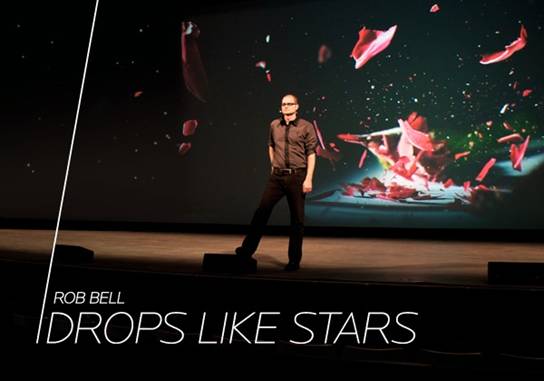
Rob Bell in Scotland (and other places near you)…

So Rob Bell brings his brand of super hip preaching/performing to Scotland.

His latest tour is called ‘Drops like stars‘ and calls in to Perth Convert (Oops I meant to say CONCERT) hall on March the 19th- organised by Dundee for Christ.

Is it worth the trek accross hill and glen to hear him speak?

Despite my reluctance to endorse celebrity Christianity- I think the answer to this question is yes. I heard his speak at Greenbelt recently, and his disarming and deeply insightful intelligence was quite something. I went cynical, but came away a fan.

The blurb for this current speaking tour contained this

We plot, we plan, we assume things are going to go
A certain way and then they don’t and we find ourselves
In a new place, a place we haven’t been before, a place
We never would have imagined on our own,

And so it was difficult and unexpected and maybe even
Tragic and yet it opened us up and freed us to see
Things in a whole new way

Suffering does that—
It hurts,
But it also creates.

How many of the most significant moments in your
Life came not because it all went right, but because
It all fell apart?

It’s strange how there can be art in the agony…

The Drops Like Stars tour is a two
Hour exploration of the endlessly complex
Relationship between suffering and creativity—
And I’d love to see you there.

The ‘light and shade’ nature of Spiritual formation has been a recent theme here, so I will get hold of the book, even if I can not get to Perth…

And if there is a T-shirt…?

Lessons on mindfulness from early French photographers…

I was listening to Johnathan Miller talking about early photography on Radio 4’s Front Row programme this evening.

Apparently, photographers struggled to convey the idea of movement.

In fact, because of the long exposures needed by photo chromatic material available, photographs of street scenes were eerily empty when developed. Movement rendered people invisible- blurred into oblivion.

It was only people who were still whose image could be captured.

So- to all you preachy types, I give you this as a sermon illustration.

Something to do with the need to find stillness- to linger and to be fully present. To learn the art of mindfulness and openness to God and others.

Otherwise we become caught up in a lesser life- lived in a fast pace, here, then gone.

In which I find myself reacting against positive thinking…

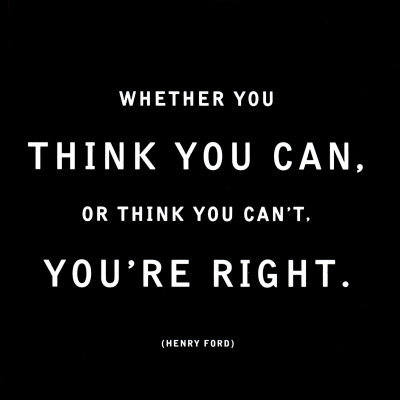
…there is no kind of problem or obstacle for which positive thinking or a positive attitude has not been proposed as a cure. Having trouble finding a mate? Nothing is more attractive to potential suitors than a positive attitude, or more repellent than a negative one. Need money? Wealth is one of the principal goals of positive thinking. There are hundreds of self-help books expounding on how positive thinking can “attract” money – a method supposedly so reliable that you are encouraged to begin spending it now. Practical problems such as low wages and unemployment are mentioned only as potential “excuses”. The real obstacle lies in your mind.

I read this today in an article in the weekend Guardian by Barbara Ehrenreich, author of a new book entitled ‘Smile or die, how positive thinking fooled America and the world‘, and ‘Bright Sided, How the Relentless Promotion of Positive Thinking Has Undermined America ‘. I have read neither books, but they appear to be part of an increasingly vocal critique of a certain kind of ‘positive-speak’ found in so much self-help material, life coaching and cognitive behavioural therapy (CBT.)

Positive-thinking is a dominant idea that has spread far beyond pyramid selling schemes or Oprah-like self help. It has persisted in cancer treatment, despite contrary research and is force fed to employees at almost every team meeting. It has also found it’s way into our churches, and mingled with fundamentalism to create a kind of unassailable world view that pushes up more than one mega church.

It is something I have been thinking about recently- for several reasons. Firstly, I have practised as a CBT therapist, and so know a lot about the strengths and limitations of ‘positivity’. CBT has a strong wind behind it at the moment in almost every sphere of human activity. In my field (psychiatry) it has more or less replaced all other forms of talking treatments.

However the second reason for my interest and pre-occupation comes from my own introspection. Like most people who are of a sensitive, somewhat artistic, creative bent, I can be somewhat mercurial. More than this, it could perhaps be said that I tend towards the melancholic. It is who I am. At times, I struggle with the consequences of this, but after many years of counselling (on both sides of the ‘couch’,) I know myself well enough to understand where this comes from, and to understand something of the strengths and weaknesses that I am skewed towards. It is the engine for much that is good, including my creativity, and ability to see the need in others.

Along the way, I have met many people who have set themselves on a determined path of self advancement and fulfilment- often fuelled by charismatic and inspirational speaking from other shiny high achievers who exhort you to step forward into a brighter more fulfilled future, just like they did. Some of them may even have achieved this- although this often seems to require quasi-religious self delusion. Many others feel guilty and worthless because they fall short of these plastic-fantastic ideals.

What is the harm in encouraging people to think beyond their limitations and reach out for something better- more hopeful, more vitalising and fulfilling? There is good here I think…

But still, what I find myself asking, is whether the dominance of positivity can also have a negative impact on our society?

I have always felt curiously ill at ease with faced with it- recognising other people’s apparent certainty in the benefit of positive outlooks and attitudes, whilst always wanting to add a big ‘BUT….’

Others are not so reticent in their willingness to critique this dominant world view. Perhaps this is in part a political/economic critique- this from another Guardian article, entitled ‘Welcome to the bright new world of positive living’-

In an economy overseen by optimists, house prices would always go up, stock markets would never crash. Positive thinking became not just the language of the mainstream but, on both sides of the Atlantic, political dogma and economic principle too. An ideology that originated in America has fanned out across the English-speaking world, and from there to everywhere else, hand-in-hand with the doctrine of free-market economics.

It’s globalisation by any other name, according to Eric Wilson, a professor of English, who wrote a book called Against Happiness . “The self-help movement has attempted to commodify experience,” he tells me. “It’s intimately tied into capitalism. Buy this package and, almost like a technology, it will move you forward with the goal of a trouble-free life.”

The article also quotes Oliver James, psychoanalyst and author of books such as ‘Affluenza‘.

“It’s snake oil,” he says, “and I explicitly reject it. Positive psychology and cognitive behavioural therapy and the idea that anybody can be anyone are American ideas involving what’s basically a sort of magical thinking. The purest example is The Secret, which is a disgraceful book. It’s just wicked really. It doesn’t have any kind of basis whatsoever. It says: if you want something you just have to wish for it, like my four-year-old does. It’s a kind of psychology for toddlers.”

For James, the push towards positive thinking has been bound up in a certain kind of economic world view, characterised by this kind of way of living-

The quasi-religious dominance of positivity has perhaps become a distraction or worse a justification of this way of living, that borrows selectively from world religions-particularly Buddhism and Christianity- to make a new heresy that simply fits better in a fast moving corporate world.

But moving away from Macro economic forces and back to the individual level- how about those folk whose lives appear to have been genuinely transformed by the power of positive thinking?

Good luck to you I say. May your life be blessed, in order that you in turn my bless others. I would also caution these people by suggesting that not everyone is like them. Not everyone will benefit from being squeezed into their narrow mindset, which to others can easily become an oppressive mental straight jacket.

There is suffering in this world.

And pain.

And sickness.

And imperfection.

And failure.

And brokenness.

And weakness.

And depression.

And periods when nothing seems to make sense.

And finally, there  is death.

(But in the middle of all of this- there is Grace.)

I would contend that these things define our humanity. They are not things to be suppressed and denied as invalid or minor irritants. They might be things to embrace, to acknowledge or to allow to shape a different form of transformation- one based not on achievement or success, but rather based on a counter cultural world view given to us by Jesus in Matthew chapter 5. Where the weak and poor find blessing, and the first are last and the last first.

And strength is made perfect- in weakness.

There is in me, I have to acknowledge, a skew towards the poor and weak. I think this is most congruent with trying to live in the way of Jesus. I think he told us to focus on the needs we see in others all around us- and he certainly did not promise a trouble free life. But in all this, I acknowledge that we continue to hope for transformation, and healing. We need to inspire hope in those around us  for something new, and better.

But the measure of this ‘better thing’ is too often seen in a kind of ‘success’ that turns my stomach. It is far too much about ‘me’ and tends to make a commodity out of ‘you’.

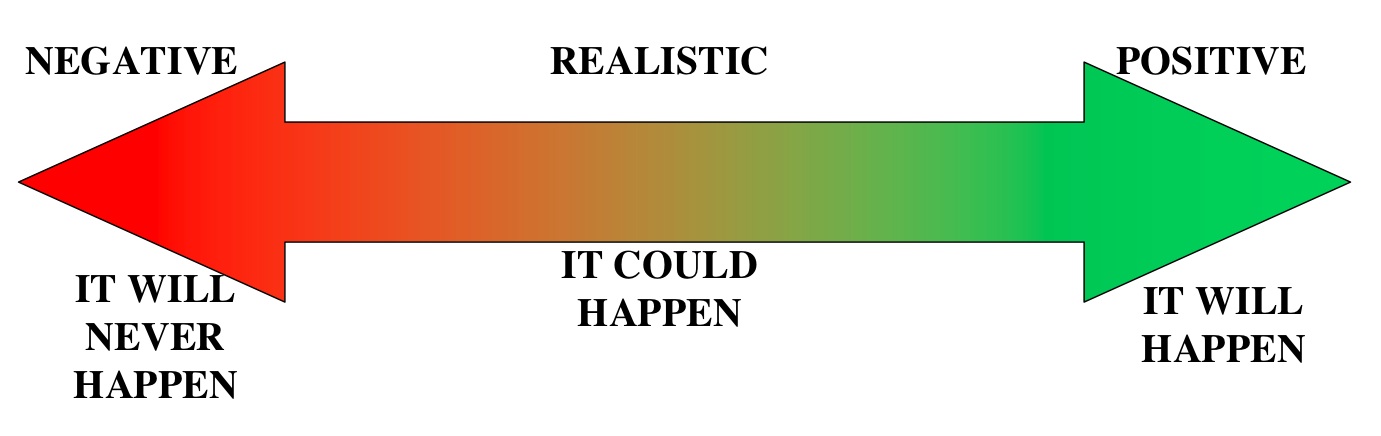
Perhaps too often, it brings me to this!