Message in a bottle- Scarba…

On the last morning of our recent trip to Scarba, I made this little video clip.

The Whiskey bottle was emptied around our fire.

The message inside was one of the meditations we used, with our names on the back. I threw it as far as out into the Gulf of Corryvreckan as I could, in the knowledge that the whirlpool could spit it out as far as it is possible to imagine.

Was this a terrible contribution to the pollution seen in these wild places? We had a philosophy of taking only pictures and leaving only footprints. The beach that we camped next to was already littered with plastic of all colours and shapes…

Perhaps- but the romanticism of the action seemed beautiful to me. And a glass bottle- despite the risks if broken- seems to me to be more easily swallowed by the sea and made into beach glass.

If you find it, let us know!

Scarba- Aoradh wilderness trip…

(L to R) Simon R, Nick, David, Andy, Simon M and me

(L to R) Simon R, Nick, David, Andy, Simon M and me

I am just back from our visit to the beautiful Scarba

6 of us went out on Saturday, via a chartered boat from Ardfern. The intention was to find some space inside and out, and try out some of the wilderness meditations we have been working on (see here for a selection.)

Scarba is a small island Between Mull and Jura in the Inner Hebrides off the Argyll coastline. It is surrounded by some of the most dramatic tidal waters in the world. To the east is the Gulf of Corryvrecken, with it’s famous whirlpool. On the other side, the Grey dogs tidal race.

The forecast was rotten, but we had two glorious days, with the occasional shower making the sky and sea all the more dramatic. I have a sun burnt head as I forgot a hat!

We were camping, but had the use of a bothy for evenings and shelter- thanks to the owners of the Island for their generosity in letting us use it!

So we abseiled down cliffs, explored caves, scrambled over heather and bog, set up meditation walks, sat around fires, walked ancient mysterious flagged pathways, and stood on places where early Christian monks worshiped. The deer and wild goats watched from a distance, and overhead a Sea Eagle wheeled in the wind.

Oh and we laughed. We laughed a lot. Whiskey was shared and bad jokes honoured.

Single malt, smoke, sharing

Single malt, smoke, sharing

Part of my motivation for visiting places like this should be obvious from what I have already written. For me, however, there are other things driving me.

Men and spirituality.

Not easy bedfellows.

Men do lots of theological arguing, and perhaps like a nice new project. But setting time aside to seek God- this tends to be a rather alien thing. A huge generalisation I know- but one that may well have some truth.

So I set to wondering whether the problem was not we blokes and the curse of trying to be masculine in the post modern age, but rather the problem was the way the Christian church has anchored and shackled spirituality to a narrow set of activities within organised structures.

What if there are other ways- old and new ways that seek God in small adventures, and in wilderness, and in communing around fires with a good bottle?

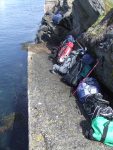
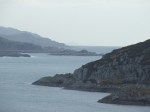
Here are some photos from our trip (click to enlarge)…

Protestant sectarianism and emerging church…

The history of Protestantism is littered with division and conflict.

Reformation of what has already been reformed.

Schisms of schisms.

Battles over whose truth is truer and whose understanding of scripture is most enlightened.

The legacy of these truth wars can be seen in the countless Protestant descriptive labels/denominations. Here are but a few as they occur to me;

Lutherans, Wesleyans, Reformed Weslyans, Methodists, Free Methodists, Primative Methodists, Baptists, Southern Baptists, Reformed, United Reformed, Assemblies of God, Anglican, Church of Scotland, Episcopal, Quaker, Shaker, Amish, Menonite, etc etc.

This list is in part a noble one. We have learned much from the men and women of God who have celebrated faith within these organisations. Such variety speaks of the freedom that people felt to follow after God in the way they understood him, away from the central powerful control of older forms of religion. It also is a story of fervency, of revival, of movements of the Spirit across whole communities, of great leaders who were bold and true.

But there is a dark side, measured by truth promoted over love and grace, and in a serial fracturing of the unity of the Spirit. Such division can be seismic in terms of the violence done to community in the name of Jesus.

I wonder if this kind of spiritual development can become addictive and even infectious. Almost as if all new Protestant church movements carry a destructive gene within their DNA…

Scotland has had more than a fair share of this splintering and fragmenting. Take the recent very public difficulties seen in the Free Church of Scotland, which splintered as recently as 2000.

I have used this picture before- taken in a small West of Scotland town about 7-8 years ago. Two churches so close that they are almost touching- but separated by a chasm of doctrine. I should add the proviso that I do not know either of these churches, and the image may miscommunicate entirely. But I think it makes a valid point about a certain characteristic of Protestantism…

two-churches

How did we come to this, we followers of Jesus?

How did Agents of the Kingdom of God, sent out into a broken world to form revolutionary cells characterised by love, somehow sign up instead to be driven towards such segregated exclusivity?

Is this more about psychology than it is about theology? Our tendency to seek a point of expansion and accomplishment, and to measure it against others around us- elevating ourselves by finding others wanting.

I wrote this poem in an attempt to understand these things in myself-

Diplomacy

We meet and move about one another
Probing, exploring borders
Negotiating
Presenting our petition
And revealing this badge of office-
Sewn on sleeves whilst our hearts stay hidden
Revealing carefully edited glimpses
Of whom we want to be
But are not yet.

Then begins the measuring
Of the size of armies
The bore of canon
And the reach of your rockets
As we carefully deploy our camouflaged troops
To occupy the high ground
To hide uncertainty behind
A cloak of accomplishment
And capability.

Sometimes it seems that who I am is only revealed
In understanding what you are not
In seeing you
And finding you wanting
In mapping out your strongholds
And avoiding them
And raising up my tattered flag
Above this uncomfortable alliance.

Why is this important now?

Because I think that this is a real challenge to those of us who are part of the ’emerging church’ discussion, particularly here in Scotland. Some questions-

Is ’emerging church’ just another Protestant reformation- another fractious denomination in the storming and the forming- throwing stones at those whose truth is not our truth, looking around and finding others wanting.

Or are we a break from modernist Protestantism- a more generous, open, embracing movement that seeks unity, not uniformity and is willing to learn humility and to value the other.

Are we Protestant at all? Where are the emerging Catholics?

If something new and hopeful continues to emerge, in all its flawed beauty- how do we(or even SHOULD we) nurture and sustain whatever we become without following a familiar pattern of splinter and schism?

From my point of view, the story is mixed.

Emerging church has no form and no structure- at least in Scotland. It is not a descriptive definition of any way of doing church- rather it is a loose affiliation of malcontents and hopefuls, defining themselves rather by the fact that they are prepared to question and seek.

And because we are human, friction is inevitable. People compete for prominence, and justify themselves by the rightness of their cause, or the small success of their activity.

But brothers and sisters- I find myself longing for something else. Something a little more of the Kingdom, and a lot less of the Empire.

Something characterised by tolerance and love. (Even as I am intolerant and unloving.)

On forgiveness rather than defensiveness. (Even as I defend and find it hard to forgive.)

Of a willingness to enjoy one another without the need to compete. (Even as my own insecurity drives me to do the opposite.)

And a determination to see community as the origin and the means for all things- with one another and with Jesus. And that the quality of these interactions should become the measure of our success. (Even with my own history of broken community, and the wounds I carry because of this.)

This is the church I long to see emerging.

I have not desire to be part of another schism.

Nicolosi and the ‘cure’ for gay people…

joseph-nicolosi

There was an interview/discussion on the radio 4 Today Programme this morning featuring the controversial American psychologist Joseph Nicolosi. You can listen again here.

This man appears to have a lot of exposure in the US- and I started a bit of internet searching to see what I could find out about him. Here is a bit of a trawl through some of the main organisations and players in this issue;

He is one of the brains behind NARTH- the National Association for research and therapy of  homosexuality. Check out the many stories on the site by people who appear to have been ‘cured’ of their sexuality.

Conservative religious groups like focus on the family have embraced this viewpoint wholeheartedly. Check out their ‘Love won out’ conference.

The American Psychological Association condemned the findings, and released this primer entitled ‘Just the facts’.

The Royal College of Psychiatrists are quoted as saying this by the BBC here.

The Royal College of Psychiatrists (RCP) said there was no evidence that the treatment worked, and that it was likely to cause considerable distress.

An RCP spokesman said: “There is no sound scientific evidence that sexual orientation can be changed.

“Furthermore, so-called treatments of homosexuality create a setting in which prejudice and discrimination can flourish.”

The Royal College said the American Psychiatric Association had concluded there was no scientific evidence that homosexuality was a disorder and removed it from its diagnostic glossary of mental disorders in 1973.

The World Health Organisation’s International Classification of Diseases followed suit in 1992.

So what is Nicolosi actually saying?

As far as I can see, his theory is based on a rather unsophisticated simplistic view of the acquisition of gender, shaped through parenting style and in particular, interaction with male authority figures. Then there is a lot of quasi-scientific language used to wrap it all up in. Here are some quotes (from here);

  • There is no such thing as a homosexual. … That’s the first thing we teach our clients when they come in. You’re not a homosexual. You’re a heterosexual with a homosexual problem. And your homosexual problem has to do with early things… things that happened to you in your childhood. Emotional traumas, hurts, childhood wounds that have set you up for homosexual activity.
  • In the relationship between the mother and the son, over-emotionally involved, strong personality, dominant personality. The father is quiet, withdrawn, non-verbal, non-expressive, and/or hostile. The son is temperamentally sensitive, shy, introverted, artistic, imaginative. … That child with that temperament in a particular family dynamic will set him up gender deficit, and that gender deficit becomes compensated through homosexual activity.
  • We advise fathers, if you don’t hug your sons, some other man will.
  • If he reaches out to the father who is not interested, he will experience what we call a narcissistic hurt. … And so he surrenders his masculine strivings. He says basically to his father, “If you’re not interested in me, I’m not interested in you.” … And that narcissistic injury produces an adult, a homosexually-oriented adult, who is cautious, fearful, easily hurt, easily slighted, easily offended, self-protective – that is what we call the shame posture. If men get to see me they’re not going to like me. There’s something inferior about me.
  • Homosexuality is not about sex, it’s about your sense of self. If you change your sense of self, your homosexuality will become a non-issue. Homosexuality is a masculine inferiority. It’s a striving to connect.
  • So the faith is a very important dimension to bring in because it gives not only direction, but because it gives the interior resources. It gives that inner power to pursue the direction. So our Christianity isn’t just telling us what to do, but it’s giving us the power to do it. And I have found that whatever the person’s religious convictions are at the beginning of therapy, it usually deepens naturally in the course of therapy.

By way of contrast- I came across this series of clips from a Gay activist who had been invited to attend the ‘Love won out’ conference. They seemed to be very graceful…

There is no surprise that Nicolosi’s message has been greeted with such enthusiasm by Conservative Christians. It ticks all the right boxes. In fact, it seems to fit rather too well, and we have to ask which came first-the ‘science’ or the ideology?

So, what do I think? I am going to make some general statements, then tell a story.

If Nicolosi is right, then homosexuality is indeed a result of dysfunctional experiences in early life. I am afraid this is rather too simplistic for me. Why do people who have the same experience in childhood (Positive or negative) develop such different sexuality? Most human characteristics develop through the interaction between both nurture AND nature. This means that causality is almost always impossible to be categorical about, even where dysfunction (which is often a social value judgment) is agreed upon- for example where people are mentally ill.

Science that begins with a narrow ideological/theological perspective is likely to be extremely problematic. Morality is not usually very scientific. But then science is never value free either- there are always interests that will introduce bias. I think we have a duty to be as honest as we can be about these however.

It is clear that there are many stories of people who claim to have been ‘cured’ by therapy of their homosexuality. I have no doubt this is true for some- as the variety of human experience is wide and wonderful. I would expect some to people to remain straight (a small group though) most to revert, and many to be damaged and disillusioned.

Gay=dysfunction? This is almost certain to perpetuate prejudice against one group of people. Perhaps this is acceptable, if your reading of the Bible allows you to draw hard lines on this issue. I think we are called to love first however- and to stand with the oppressed, not to pile stones as projectiles.

Statements that equate homosexuality with sexual molestation in childhood are simply not supported by evidence.

Blaming parents? An easy hit. Psycho-dynamic therapists have done similar things for lots of issues. There was this dreadful phrase ‘schizophrenogenic mothers’ who were supposedly the cause of schizophrenia…

Now- the story.

I used to work in a northern English town as a mental health therapist running clinics in GP surgeries. GP’s would refer people to me for assessment after which we might agree a referral elsewhere, or a short run of therapy from myself.

In this context I met lots of wonderful people- most carrying wounds. Some had had very difficult and abusive backgrounds. Many had experienced depression and anxiety. Others were living with grief. Others had secrets that were eating away at them.

I met one man whose story stayed with me. He lived with his wife of 45 years. They had three children, all long grown up and gone. He was desperately unhappy.

Soon after marriage his secret was out. He had been having homosexual affairs.

With all his might he wished that these overwhelming sexual urges that he had experienced as long as he could remember would just go away. And it being the 1960’s, and homosexuality was still illegal, and classified as a mental illness, he sought treatment.

A hospital in Manchester offered behavioural modification through the application of aversion therapy. This involved being exposed to erotic images and at the first signs of sexual arousal, he was subjected to electric shocks.

Over a considerable period of time he yo-yo’ed through life, in out of his family, gay then straight, a member of his society, then a pariah.

Now here he was. Estranged from his children, still caught up with the same confusion and pain. His wife an alcoholic. Life almost over.

Wanting and waiting to die.

Whatever your theory of sexuality- whatever moral stance you adopt- this man life has been blighted by societies response to his sexuality.

So Lord help us. Let us learn the position of love. And have no agendas that we subject others to.

And for my money- Nicolosi, go home.