I could be talking about Christmas and New Year. I am blessed by time off work, and sit waiting for old friends to negotiate the mess that the storms have made of Greenock and join us for our regular NY house gathering. This may well be the last time we meet in this old place- assuming a hoped for sale goes through. Who knows where we will be in a year?
Who knows where any of us will be in a year?
I could also be talking about the hole in the middle of living. We start out with a million possibilities, even achieve a few of them. At the end of the day, no matter how many mountain tops we reach, the best of us remains to be found in family and the love we leave behind stored up in the DNA of our young ones (now perhaps not so young.)
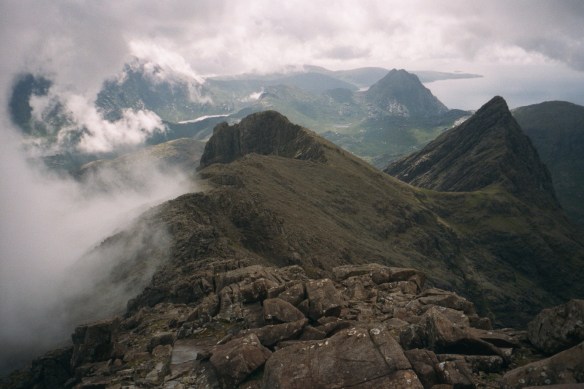
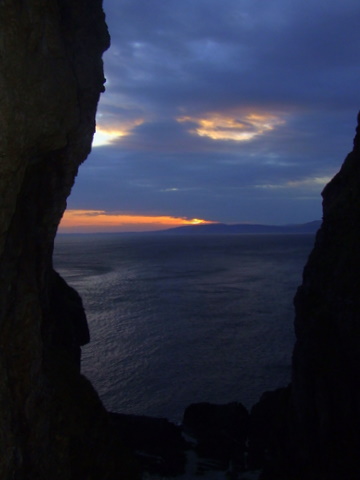
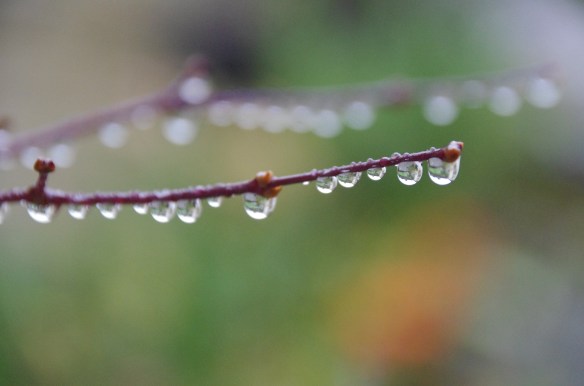
I was beautifully reminded of this by a song on an album called ‘The Joy of Living, a tribute to Ewan McColl‘; a gift from my brother in law. I have always been a little negative towards McColl. Despite his towering folk and radical left wing credentials, he always seemed to be to be a stern and austere figure, who made stern and austere music. This album changed all that for me. It is full of incredible songs; songs of working men, Gypsy persecution, and this one, written after age had prevented him completing a climb up a Suilven. (Not the picture above, that is one of my favourites, taken from high on the Cuillin on Skye.)
If it does not make you weep there is something wrong with your soul.
Farewell you northern hills, you mountains all goodbye
Moorland and stony ridges, crags and peaks goodbye
Glyder Fach farewell, Cul Beag, Scafell, cloud-bearing Suilven
Sun warmed rock and the cold of Bleaklow’s frozen sea
The snow and the wind and the rain of hills and mountains
Days in the sun and the tempered wind and the air like wine
And you drink and you drink till you’re drunk
On the joy of living
Farewell to you my love, my time is almost done
Lie in my arms once more until the darkness comes
You filled all my days, held the night at bay, dearest companion
Years pass by and they’re gone with the speed of birds in flight
Our life like the verse of a song heard in the mountains
Give me your hand then love and join your voice with mine
We’ll sing of the hurt and pain and the joy of living
Farewell to you my chicks, soon you must fly alone
Flesh of my flesh, my future life, bone of my bone
May your wings be strong, may your days be long, safe
be your journey
Each of you bears inside of you the gift of love
May it bring you light and warmth and the pleasure of giving
Eagerly savour each new day and the taste of its mouth
Never lose sight of the thrill
And the joy of living
Take me to some high place of heather, rock and ling
Scatter my dust and ashes, feed me to the wind
So that I will be part of all you see, the air you are breathing
I’ll be part of the curlew’s cry and the soaring hawk
The blue milkwort and the sundew hung with diamonds
I’ll be riding the gentle wind that blows through your hair
Reminding you how we shared
In the joy of living
May the journey through and beyond this Christmas be full of simple joys. May you rise again as the days lengthen, and dare to believe that there is more, there is better.
May hope be lubricated by love.
Open the sky
Open the sky and let some light in
Let this night be night no longer
Let stars shine down in shafts of love
Illuminating our ordinary things
All dowdy with dirt and common use
Let donkeys laugh out loud
For now the basest things
Are silvered up in grace
Covered all in kindness
For he is coming
Not to penthouse or suburban comfort
Nor to plump the cushions of those who have too much
Not to stroke the fragile ego of fame or celebrity
Nor to strengthen the arm of the powerful
Not to expand their empty empires
Nor to defend the borders they made from a scratch in shifting sand
Not to shape a new religious prison from seductive certainties
It has been weirdly warm in the UK this last week- up into double figures even up here in Scotland. Last week it was winter, now it is something else and the feeling it brings to me is a quiet unease. Something is out of kilter.
Meanwhile the news channels remain full of anti-Christmas, in stark contrast to the dichotomous forced festivities that surround us. Politicians continue to use fear to manipulate us towards some ill defined goal. Advent indeed.
Sometimes it seems that everything must fall.
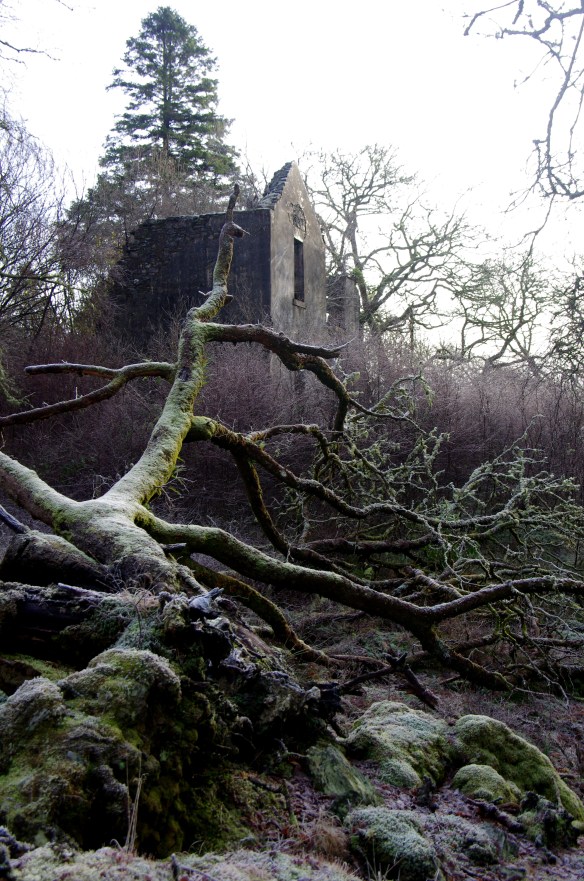
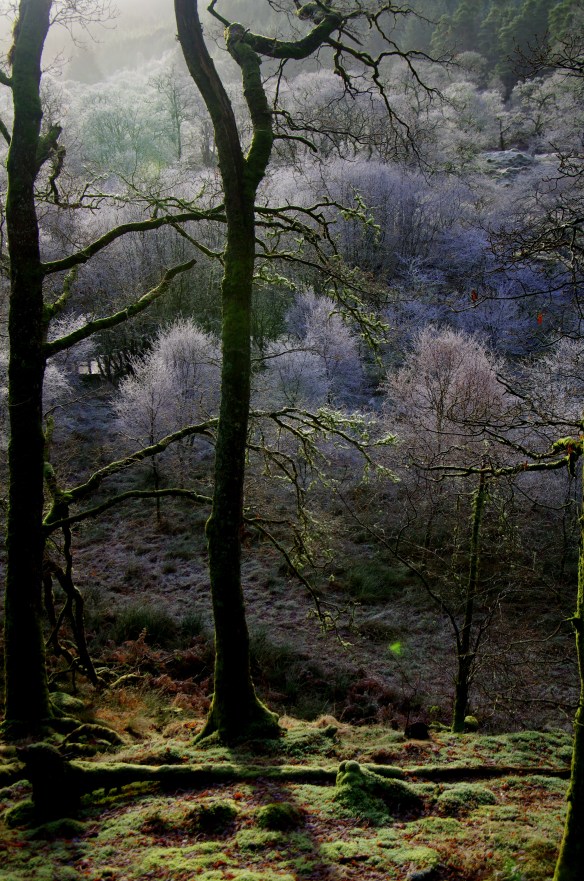
Last weekend we crunched up into the Argyll forest, laced as it was in a crust of ice. It was stunningly beautiful, even in winter stasis. Wild places like this have a way of reminding us that sometimes there is a season to stop; to re-gather; to become rather than just to consume. They remind us that there is an interconnected fabric behind everything and we are just a small part of the whole.
In the midst of the woods we came across branches wrapped up in something that from a distance looked like cotton wool, but as we came closer it looked like some kind of fungal growth, fluted and fragile like the baleen of a whale.
When I gently placed a finger on the substance, it was revealed to be ice. What might have caused such a thing? Why only here and there? We noticed that the conglomerations were only on branches broken off by storms and hung up in the canopy. Perhaps it was something to do with warming exhale of moist decomposition held like a ghost in the cold air.
It appealed to the poet in me. It seemed as like the shadow left behind as spirit went free. Almost as if the tall tree was releasing its essence back to unite with the Spirit behind all things.
I realise that this might sound like some kind of reversion to animistic primitive spirituality; the sort that sees our ancestors in every stone and tree (although who am I to question the meaning others make from what is never fully known?) It is just that I have come to believe that God is not locked up in our religious buildings or our cherished and overly defended doctrines.
He is in everything.
The coming of Messiah was not the first time God entered the world- he was always here. Rather it was the first time he became one of us, so that we might finally see that those apparently urgent things we find so pressing are often just passing distractions from the real business of learning the way of love. Certainly I have lots to learn yet.
When the time comes for our own exhalation, may the shape we leave behind be every bit as beautiful.
Michaela has been reading Richard Rohr’s daily meditations on her phone. She often gets excited and texts me things she is reading. The other day it was all about something called dark grace. The idea that God is not interested in the bits of us that are shiny and bright- rather he loves the dark shadowy bits; those parts of us that we hide. Those parts that we are shamed by, where we are bruised and broken.
To these areas, God sends dark grace. Grace that rests on our hidden places.
I wrote this poem…
Dark Grace
It was not to show light that light entered this world
For light is never seen in the bright light of day
It can only fall on those bruised and oft-used places
Where darkness lies
Like old oil
In the sump between us
For this is no artificial lime light, pointed only
To make even greasepaint appear appropriate
No, it glows in the hollow places
Revealing the rainbow slick
In the ink-black blood
Pumped from subterranean veins
This light lights kindly on every ugly corrugation
Lingers on warts and shines from my slick fat flesh
It knows me, not as I would be, but in the sewer I swim in
The second Sunday in Advent is traditionally associated with the word hope. Here it is, written on the side of our house by Marcel, a German graffiti artist.
It is a difficult word for melancholics like me; it leaves no room for cynical detachment.
It is a fragile word, floating like a blown egg in rough seas.
Any journey worth making requires lots of hope. The Advent journey more than most, as it is towards the uncertain idea of Emmanuel; the hope of God with us, God amongst us.
God making flesh out of love.
Practically speaking, Advent is also about hoping for things to once again be made new. For the past-present-future revolution of God to be set loose again in the spirits and minds of those who have seen beyond the tinsel into something so amazing that it might yet change everything.
Some years ago, I wrote a poem on a desert island- thought to be a place on which St Brendan started a monastery between some of those incredible voyages he took off in different directions. I was struck by another word; Perigrinatio, or ‘holy voyaging’, which was one of those spiritual practices that defined the mission of the early Celtic church. Monks got into a boat and set off. They had no plan, no mission statement, rather they had the wind and the waves and the tides. It was evident that if and when they made a landing, this was surely the place where God must have sent them.
I think we would be wrong to describe this kind of journey as passive and unthinking. To make a journey into the unknown is always foolish in part, because only a fool risks the uncertainty of the high seas. What the monks were doing was deliberately casting themselves into the mission of God. They were making a prayer out of movement, a prayer out of vulnerability and dependency.
By the time you read this, we will probably be bombing Syria. The war rhetoric is almost impossible to counter, because it is not based on rational analysis of evidence, or even of recent history. It is significant that if any history is mentioned, we go back to just one date; 1939. We invoke the myth of appeasement and the wisdom of that old war monger, Winston Churchill.
In the face of violence and fear, something must be done. Preferably something that is clean and clinical, with all bloodshed exported and outsourced.
George Monbiot quoted from this study in the Guardian today, which makes some staggering points about just how ill considered our death dealing has become. Of the 11 military adventures the researchers analysed, they found that five had no discernible impacts on subsequent terrorism. Six were followed by more terrorism than there had been before. This means that if our main objective in making ‘war on terror’ is to reduce the risk of terror attacks, then we are fighting a losing battle.
In the wake of the attacks on the twin towers, following a side show attack in Afghanistan (on the basis of some justification, but again very little strategy or awareness of history) the arguments were stacking up for an invasion of Iraq. There was huge effort to convince the public of the reason they should be fearful of the totally fictitious weapons of mass destruction that were pointed at each and every one of us. However there was very little understanding of the likely consequences of military action waged by a hated superpower against those who already saw themselves as being victimised by ‘The great Satan’.
There were other voices of course. At the time they were often dismissed as left wing lunatics or (as Cameron would have it now) ‘Terrorist sympathisers’. Remember this from 1992? (Notice the man sitting over his shoulder on the back row.)
Benn warned before the invasion that it would end in hundreds of thousands of innocent deaths and an increase in terror attacks. No one believed him.
It is always worth remembering that if it were not for the invasion of Iraq, and the subsequent imprisonment of thousands of young militants in prison camps, there would be no ISIS. This article is worth reading as a description of just how important American run prisons were in the formation of the organisation and the motivation of members.
The question is, if these military interventions are not based on thoughtful engagement with fact, or understanding of history, why are so many convinced that they are necessary? What does motivate those who are seeking war? I am not a conspiracy theorist and so I am not prepared to suggest that the desire for war is entirely about control of oil resources, or a secret plot to distract us all from some dastardly political design.
Perhaps some feel that evil has to be confronted directly. If so we are very selective in our confrontations- yesterday’s hero soon becomes the villain of today- think the Mujaheddin of Afghanistan.
Perhaps others want to hit back at the perceived source of violence and fear that assails them- after all, it has become normal to bomb these far off points- NOT to bomb almost seems neglectful of government responsibilities.
There is also a hang over from imperialist thinking that would suggest that Britain has to be in the fight, otherwise we will lose power, status, influence. Almost as if war is a measure of power.
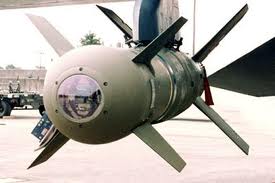
Finally there is the fetishization of weapons and weaponry. How proudly we heard of the uniqueness of our war machines, in particular, our ‘Brimstone’ missiles that range down, god-like, to smite the evil below.
Cameron’s speech in the debate today was described as an ‘impassioned plea’ for air strikes. Corbyn was recorded as saying that Cameron had ‘failed to make the case’. Passion for war makes me shudder. Let us have some more reasoned humanity please…
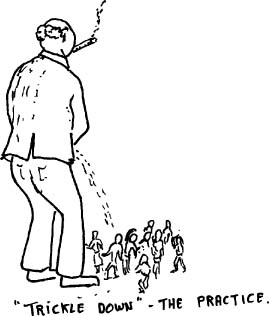
Given the growing gulf between rich and poor in the UK, itself one of the wealthiest in the world, I decided to post it here…
The Trickle-Down Theory of Happiness by Philip Appleman
Out of heaven, to bless the high places,
it falls on the penthouses, drizzling
at first, then a pelting allegro,
and Dick and Jane skip to the terrace
and go boogieing through the azaleas,
while mommy and daddy come running
with pots and pans, glasses, and basins
and try to hold all of it up there,
but no use, it’s too much, it keeps coming,
and pours off the edges, down limestone
to the pitchers and pails on the ground, where
delirious residents catch it,
and bucket brigades get it moving
inside, until bathtubs are brimful,
but still it keeps coming, that shower
of silver in alleys and gutters,
all pouring downhill to the sleazy
red brick, and the barefoot people
who romp in it, laughing, but never
take thought for tomorrow, all spinning
in a pleasure they catch for a moment;
so when Providence turns off the spigot
and the sky goes as dry as a prairie,
then daddy looks down from the penthouse,
down to the streets, to the gutters,
and his heart goes out to his neighbors,
to the little folk thirsty for laughter,
and he prays in his boundless compassion:
on behalf of the world and its people
he demands of his God, give me more.
Philip Appleman, “The Trickle-Down Theory of Happiness” from New and Selected Poems, 1956-1996.
And many people shall go and say, Come ye, and let us go up to the mountain of the Lord, to the house of the God of Jacob; and He will teach us of His ways, and we will walk in His paths: for out of Zion shall go forth the law, and the word of the Lord from Jerusalem. And He shall judge among the nations, and shall rebuke many people: and they shall beat their swords into plowshares, and their spears into pruning hooks: nation shall not lift up sword against nation, neither shall they learn war any more.—Isaiah 2:3–4
Here we are again.
Starting a new journey towards hope.
Setting out in uncertain times
towards a rumour glimpsed only in the shape of the stars
and the smell of something strange
in the changing of the weather.
Have I journey left in these brittle bones
what did it ever mean before?
How many false donkeys and tin foil angels can one man take?
We know that this Messiah fell from heaven not
on feathers, but to the stab and scratch of straw.
I get the humility, but when will things be different?
When will Kalashnikovs be melted into spades?
When will missiles be just fireworks in the shining sky?