Chautauqua…

pirsig


Currently I am reading Robert Pirsig’s Zen and the Art of Motorcycle Maintenance. Somehow I never got round to it before. I am enjoying it- Prisig has a lovely way with words and a great love of ideas, images, philosophy.

One word he uses a lot is this one- Chautauqua. 

I would like to use the time to talk in some depth about things that seem important. What is in mind is a sort of Chautauqua — that´s the only name that I can think of for it — like the traveling tent-show Chautauquas that used to move across America, […] an old-time series of popular talks intended to edify and entertain, improve the mind and bring culture and enlightenment to the ears and thoughts of the hearer. ( Pirsig, p.17)

The origin of the words seems to be a movement founded in the 19th C that provided education and entertainment to isolated farming communities via a kind of travelling circus- complete with lectures, discussions and workshops. They fed a hunger for knowledge and self improvement.

Pirsig uses the word whenever he introduces as new concept, a new idea.The Chautauqua becomes the vehicle by which the mind can travel. The fact that this story is happening in the context of a motorcycle journey (with his curious son as a pillion passenger) makes the Chautauguas all the more vital.

I mention this as it made me think again about the way we encounter the words of the Bible. Might it be better to see them as a travelling circus tent full of ideas, concepts, poetry, philosophy? A spiritual Chautauqua. Those of us that visit and engage do so as people eager for the fun of the journey, able to debate, question, laugh, cry, heckle or just listen in awe.

So, rather than academic stuffyness, or unassailable unapproachable holiness. Rather than being ‘The Word of God’, might we see the Bible as Chautauqua?

A tent at the side of the road in which to exchange ideas about who God is…


Being in two minds…

Michaela tends to listen to one album over and over again- sometimes just one song. Currently we have a CD on in the car just about every day- Duke Special’s Oh Pioneer.

I am in two minds about the Duke. He writes some lovely lovely songs and has a stage persona that is almost unique- we have seen him live a few times at Greenbelt Festival. however his music often comes a little too close to musical theatre for my comfort. It is songcraft in the tradition of Cole Porter, with dreadlocks and a delicious Northern Irish accent.

Having said all that- most of us are one thing and also the opposite. I was thinking about this today looking at risque birthday cards on the mantle next to a celtic cross. It made me think of one of the Duke’s songs. I think I get where he is coming from, but frankly I could be wrong…

In case you thought I have been harsh on the Bible of late…

There has been an awful lot on this blog recently about the Bible- apologies to those of you who are not interested in such debates. But hey, it is MY blog after all, and I think these things are more important now then ever.

How else do we find a rudder in the mess of what we are becoming, unless we ask these deep searching questions?

This is NOT the same thing as trying to hold back time- trying to return us to some faux Victorian world view. We need to be free to re-encounter the words of the Bible, to debate it, to question it and allow ourselves to be questioned by it. My recent posts have been a bit about trying to make some space for this.

I saw this today- Steve Chalke of Oasis kind of saying the same thing;

<p><a href=”http://vimeo.com/86521708″>Restoring Confidence in the Bible</a> from <a href=”http://vimeo.com/user12741304″>Oasis UK</a> on <a href=”https://vimeo.com”>Vimeo</a&gt;.</p>

The oldest versions of the Gospels…

alexander-600

I just watched this programme.

It tells the story of a couple of Victorian twins, both widows, who in later life went on an adventure into Egypt, searching for the very earliest versions of the written scriptures. Their names were Agnes and Margaret (nee) Smith and they were born in Irvine just over the water from where I live.

There is a book that tells the story here.

Their motivation, apart from their obvious love of adventure, was to try to answer some of the questions about the authenticity of Scripture. How can we know that the stories in the Gospels have not been changed/added to over the millennia?

In their time, Christians felt under attack (they often do to be fair.) Darwin was a contemporary, and it seemed that secularism was on the rise everywhere. What was needed was scholastic, academic proof. The Bible must be unlocked, codified, allowed to shine. As I have hinted at a few times on this blog of late, the legacy of this way of treating the Bible may well have given us some real problems, perhaps even locking our faith into a kind of idolatry in which the Bible becomes a 4th person of the trinity, and the primary one at that.

But having said that, please do not miss-understand me; in no way do I wish to suggest that the books of the Bible are not truly remarkable in every way. This TV programme revealed this beautifully.

However it also reveals how if we require an inerrant final version of the words we are in trouble. The authority of the text requires it to be accurate, preserved through time by God to give us everything we need to answer all moral questions.

A case in point is that the ancient Scriptures that the Smith sisters discovered in St Catherine’s Monastery in the Sinai, dating from the late 4th C AD, included the book of Mark- more or less as we would recognise it. However there is no description of Resurrection or Jesus meeting his disciples. It seems almost certain that some elements of the story were added later. (Wikipedia has an account of some of this here.)

Does this matter? Well it was dynamite to the Smith Sisters, who initially tried to keep it secret. Bible scholars are still trying to make it all fit, tidy it all up, but what if a new velum text is discovered that pokes holes?

If you are interested in reading a bit more about the reliability of translation of the Gospels, there is a good summary on the Patheos website here. It will remind us that there are many textual variations in the early copies of the gospels, but also reminds us that this is in no small part because, compared to all other such manuscripts, we have so many.

The Bible will always be a key source of knowledge about who God is, how he engages with us, and how his followers have tried to understand him. But crossing each sacred t and dotting every holy i seems to me to be a fools game.

Treasure the questions and live wide open to love in the way of Jesus. The Bible will point the way if we will let it. But let us do this in a way that is honest, not anchored to a inflexible dogma based on eyes carefully closed to certain aspects of what we claim as truth.

camel

By the way- Old Testament history- this is another story. Bible historians have tried really hard to evidence the stories told of the Ancient Hebrew- the Kingdom of David for example. No clear evidence that it ever existed in the Archaeological record. Moses leading the slaves out of Egypt? No evidence for this either.

There was an amusing story about Camels in the Bible written by Andrew Brown in The Guardian the other day. I quote;

There are 21 references to camels in the first books of the Bible, and now we know they are all made up.

Some of them are quite startlingly verisimilitudinous, such as the story of Abraham’s servant finding a wife for Isaac in Genesis 24: “Then the servant left, taking with him 10 of his master’s camels loaded with all kinds of good things from his master. He set out for Aram Naharaim and made his way to the town of Nahor. He made the camels kneel down near the well outside the town; it was towards evening, the time the women go out to draw water.”

But these camels are made up, all 10 of them. Two Israeli archaeozoologists have sifted through a site just north of modern Eilat looking for camel bones, which can be dated by radio carbon.

None of the domesticated camel bones they found date from earlier than around 930BC – about 1,500 years after the stories of the patriarchs in Genesis are supposed to have taken place. Whoever put the camels into the story of Abraham and Isaac might as well have improved the story of Little Red Riding Hood by having her ride up to Granny’s in an SUV.

How can you tell whether a camel skeleton is from a wild or tamed animal? You look at the leg bones, and if they are thickened this shows they have been carrying unnaturally heavy loads, so they must have been domesticated. If you have a graveyard of camels, you can also see what proportion are males, and which are preferred for human uses because they can carry more.

All these considerations make it clear that camels were not domesticated anywhere in the region before 1000BC.

Again, does this matter? Well considering the way that the Zionists use these ancient texts to justify their conquest and dominance, we have to agree that it does. The shaping of these stories was always political; many of them influenced by exile in the Babylonian empire, where they were first recorded.

But… if you look you will see the fingerprints of grace in and around all of it, camels or not.
Activist, interrupted…

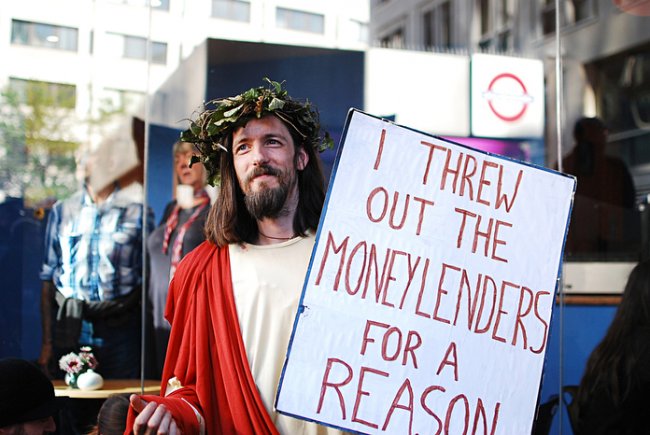
occupy-london-protests Activist, interrupted  

.

I am caged up by comfort

Degraded by constant distraction

Drowned by this deluge of information

that leaves me knowing nothing

.

Once my world was monochromed

In the dark lay corporation, empire, profit

Freedom, justice, peace – they danced in the light

And though the duality was naïve

I knew my enemy

.

When did I sign the armistice?

Was it the career?

The mortgage?

Either way I am defeated

Wheezing still from old mustard gas

.

But tonight

By the light of hooded flashlights

There will be a small Revolutions

Anyone want to buy a lovely old house?

sgath an tighe, bluebells

Well friends, it looks as though we will be selling our lovely old house.

It has been quite a journey over the last year or so. Back in 2012 I took redundancy from my job as a social work Area Manager. It was a move into the unknown really- I wanted to write more, and to find a more creative way of making a living. Of course the first thing we had to do was to consider our costs- foremost of these was our house.

We started out with a bit of an epiphany- perhaps the house could be part of the means by which we could support ourselves. It used to be a hotel (it had 9 bedrooms then!) but we had slowly renovated it to be a family house, in which we loved to offer hospitality to others. Michaela also ran craft evenings and pottery classes.

So, we took advice from wherever we could, transformed a couple of bedrooms, and offered our annex out for holiday lets. It was all brand new to us with more potential than certainty in everything we did. Along the way there was the inevitable investment in all sorts of things- renovations, furniture, websites, graphic design, on line publicity.

We have a shared narrow driveway up to the house, which goes over land belonging to a neighbour. After they were refused planning permission to convert outhouses into holiday accommodation, they complained to the planning department about what we were doing. More than this, they engaged high powered planning consultants to fight their corner. What may have started as sour grapes seems to have became a campaign of righteous indignation.

Despite previous verbal advice that we did not need planing permission to do the small scale things we were using the house for, the planning department decided that the combination of things were not commensurate with a domestic dwelling, even with the historical usage of the house. They advised us to submit a planning application to convert the house to a hotel. We did this after great complication and expense, over a year ago only to be told in the last month that it would need to go to the planning committee (local councilors) but planning officers would recommend a refusal.

At committee, local councilors were split in their opinions and decided on a site visit to talk to us all and consider things anew. It all hinged on the vehicular access. This has not happened yet.

In the interim however, we were hit with the news that huge amounts of money would need to be spent on the house because of building control/fire regulations. Remember that we only have two bedrooms (out of 6 in our part of the house) that are used for B and B, but these will need to be sound proofed, new fire proofing added to walls, door added to the top of the stairs, etc etc. These adaptations are not needed for a small B and B, but are for a ‘hotel’.

It was the final straw.

So, we decided to revert to plan A- it is time to sell up, simplify and find a place where there is enough space to live and to set up workshop space for pottery etc.

Now begins another phase in our lives- the end of something, but perhaps the beginning of something else. It means packing up our family home, dealing with a decade of accumulation, and finding something new. It also means developing different ways of earning a living. As they say, there ain’t no money in poetry, that’s what sets the poet free.

It would be easy to feel great bitterness- towards our neighbours (who seem to have a history of being involved in neighbourhood disputes) and towards the blind bureaucracy of the local council. We are determined to feel bitterness towards neither. People act out of their own frame of reference and many are unable to transcend this, either because of rules and regulations or because of personalities.

There are some things worth fighting for, but there is also the path of grace.

Last year I wrote a post reflecting on the nature of home ownership, and what it may be doing to our society. I was trying hard to get to grips with this in the on going context of what was happening above. It seems all the more prescient now.

A place called England…

This was Ian Adam’s ‘Morning Bell’ today. I love June Tabor’s voice, but this chimed with me particularly as the tone of the debate around Scottish independence often seems so ungenerous, spiteful even. This song celebrates a kind of England that I still love. It rises up from the soil, from the chaotic mix of people. It is less about empire, more about those who resisted it…

MAGGIE HOLLAND’S ORIGINAL VERSION OF A PLACE CALLED ENGLAND

I rode out on a bright May morning like a hero in a song,
Looking for a place called England, trying to find where I belong.
Couldn’t find the old flood meadow or the house that I once knew;
No trace of the little river or the garden where I grew.

I saw town and I saw country, motorway and sink estate;
Rich man in his rolling acres, poor man still outside the gate;
Retail park and burger kingdom, prairie field and factory farm,
Run by men who think that England’s only a place to park their car.

But as the train pulled from the station through the wastelands of despair
From the corner of my eye a brightness filled the filthy air.
Someone’s grown a patch of sunflowers though the soil is sooty black,
Marigolds and a few tomatoes right beside the railway track.

Down behind the terraced houses, in between the concrete towers,
Compost heaps and scarlet runners, secret gardens full of flowers.
Meeta grows her scented roses right beneath the big jets’ path.
Bid a fortune for her garden—Eileen turns away and laughs.

So rise up, George, and wake up, Arthur, time to rouse out from your sleep.
Deck the horse with sea-green ribbons, drag the old sword from the deep.
Hold the line for Dave and Daniel as they tunnel through the clay,
While the oak in all its glory soaks up sun for one more day.

Come all you at home with freedom whatever the land that gave you birth,
There’s room for you both root and branch as long as you love the English earth.
Room for vole and room for orchid, room for all to grow and thrive;
Just less room for the fat landowner on his arse in his four-wheel drive.

For England is not flag or Empire, it is not money, it is not blood.
It’s limestone gorge and granite fell, it’s Wealden clay and Severn mud,
It’s blackbird singing from the May tree, lark ascending through the scales,
Robin watching from your spade and English earth beneath your nails.

So here’s two cheers for a place called England, sore abused but not yet dead;
A Mr Harding sort of England hanging in there by a thread.
Here’s two cheers for the crazy diggers, now their hour shall come around;
We shall plant the seed they saved us, common wealth and common ground.

By the way- the reference to the Diggers, in case you missed it, is to this lot– another part of our English history that we often forget.

Investing in fundamentalist ‘science’…

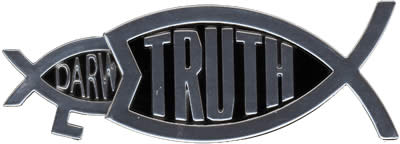
darwin truth


My friend Graham posted something on FB the other day about the Creation Museum, a vast expensive building and education center to spread the truth about Creationism and the heresy of evolution.

There are some photographs here that give you a rather tongue in cheek take on some of the exhibits.

For those of you who thought that Creationism of this kind is a fringe, even lunatic belief- think again. The museum is huge, must have cost a fortune, and is the centre of a thriving industry of teaching materials (mostly home schooling) for the religious right in the USA.

They teach that the world is 6 thousand years old. All evidence to the contrary (which can not be true or the Bible would have said something different) is debunked, countered with sometimes bizarre logic. Dinosaurs died in the flood- which also explains fossils. Eroded gorges like the grand canyon were made because of the receding flood waters. It must be true because it has been declared to be so by creation ‘scientists’.

If you want to know more about what Creationist would have us know about science, and the truth that can be found in the Biblical account, then check out this debate. It is rather long, so skip about a bit;

Does this matter? Michaela contends that it does not- she does not care how old the earth is, or what people chose to believe about it. In one sense I agree with her. The American mid west with its enclosed rigid enculturised religion stands for so much that I find problematic, so I should not be surprised that they put up multi million dollar museums to tell us that the world is flat (to be fair I am not sure they do think the world is flat- which is interesting in itself, as they seem to have ignored that part of the Bible’s description of how things are.)

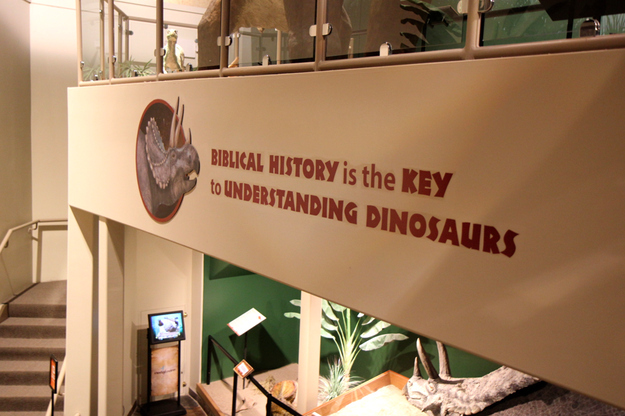
On another level it does matter however- it relates to Bible-worship. If you elevate the words of a book (or your interpretation of the words of a book) above everything else – above science, above good sense, above grace, above what we know about the way Jesus behaved – then you will end up with this;

bible, dinosaurs


Image from here.

Of course it is, because the Bible is full of dinosaurs…

For the record, I believe that the world was created. How this happened, and how it still is being worked out in expanding creativity is the business of science.

The meaning of it all is the business of faith.

Because science can tell us an amazing story, but can never tell us why. It can never tell us about supernovas and the thousands of years their light takes to reach us, but it can not tell us much about why, out of all the million eyes watching, ours are the only ones (we know of) that are able to consciously reflect on the beauty of what we are seeing.