Another year…

Ruth-Sheen-and-Jim-Broadb-006

I have been trying to write a novel for a while- I say trying as it is a stop-start thing, with an emphasis on the stop. I have little cameos, pictures, characters waiting for their journeys to unfold. Most of all, I have this feeling for what it is all about- the love I have for people, trying to make sense of life and one another and in the midst of all the mess this thing called kindness, lying like bullion in compost.

I found myself looking through a window into the book I have not written tonight- watching Ken Loach‘s Another Year. Loach always saturates you in a kind of beautiful discomfort. Brilliant acting, improvised scripts, woven together to make the closest thing to political art that British cinema has ever achieved.

The couple at the heart of the film are happily married, heading towards gentle retirement, but their calm centre seems to become an anchorage for all sorts of people for whom life has been anything but happy. At first, your sympathy is all for the couple as their lives are invaded by drinking, sobbing, lonely men and women. Slowly however, you start to wonder whether one lot of happiness must always form a counter point to the brokenness of others- almost as if the couple are some kind of monsters, whose well being depends on their sense of superiority over the lesser beings they are surrounded by…

Watch the film. If the book is ever finished, I only hope that the life in it is half as vivid, half as true.

Happy pills…

prozac

The use of antidepressants has surged across the rich world over the past decade, according to the Organisation for Economic Co-operation and Development, raising concerns among doctors that pills are being overprescribed.

Figures show that doctors in some countries are writing prescriptions for more than one in 10 adults, with Iceland, Australia, Canada and the other European Nordic countries leading the way.

Separate data from the US shows that more than 10% of American adults use the medication. In China, the antidepressant market has grown by about 20% for each of the past three years, albeit from a lower base.

From here.

I feel considerable conflict in relation to this issue.

Happy pills, hand in hand with consumer capitalism. For every crisis created, there will be a market opportunity.

I spent years talking to people about their medication, whether it was working or not, whether the dose was right, whether they were taking it, when they were taking it. I then spent more time talking to doctors and nurses about this medication.

Along the way I also sat through quite a few drug reps talks, sweetened as they were with a ‘free’ lunch and lots of goodies emblazoned with the name of the next so-called wonder drug, each one more effective, with less side effects, and targeted at some sub grouping pulled from DSM 5.

I know many people who swear that these tablets have saved their lives. I know many other people who just swear as the only real help they feel they have been offered came in a small plastic bottle. I know creative people who say their creativity was robbed, others who suddenly found themselves able to focus again.

Some say that the medication drove them right towards suicide. Others say the ‘rebound effect’ that led them to feel so terrible when they tried to wean themselves off the drug has meant that they think they will need to take them for the rest of their lives.

This film sums up this experience brilliantly;

Do the drugs work? As someone said in the clip above, it depends on how you try to measure success. They can indeed reframe the emotional glasses through which we see the world, to a lesser or greater degree, for good and for ill. They do this in subtle ways, but use a blunderbus to achieve it.

I have no doubt whatsoever that they are vastly overused, medically over rated and sold to us in a way that would shame the shadiest used car salesman. I also have considerable conviction that they are not the answer to most of the psychological/emotional turmoils that life will surely bring us- and that history will not look on our use of them kindly.

But tell that to your friend whom life has broken, and all she has is the motivation to get out of bed in the morning gifted by a pill that makes the duvet ten per cent lighter. There are still the kids to feed and the washing to be done and without her wage there will be no Christmas this year.

We do what we can, with what we are given and often life is hard. If not a pill, then what else will help us survive?

But I hope for me and you far more than survival. May your depths be overshadowed by hills kissed by sunlight.

I hope to see you somewhere on the road between the two…

Proost poetry collection, editing, editing, editing…

words1

A few people have asked how this project is getting on. The answer is that it is progressing nicely, but is a whole load of hard work! This is why the blog has been quiet of late- and I expect it to remain quiet for a while.

Hard work like this is no bad thing however as I find myself immersed in lovely words. I hope that we will start to release some sample poems in the run up to releasing the book, but in the first instance, I wanted to share with you another one written by a friend of mine, Susan.

I have two reasons for doing this- firstly because Susan is a wonderful poet who is far too modest, and also because of the subject matter.

Winter is upon us.

But this too shall pass…

Thaw

Out of two dead aired weeks

Ice and snow crusted over

All things living, when only

The birds hardy enough

To fly from there to here

In the hope I had remembered

To fill the feeders  made

Themselves visible and sadness

Scabbed over my heart:

Sudden joy

A mild Late February dusk

Song from every hidden branch,

The world filled with urges,

The drive to survive

Faith returns -the garlic shoots

In strong green lines

The kale still stiff

The rituals of soil call me:

Tomorrow I begin again.

Are people with high moral beliefs more likely to act them out?

sin

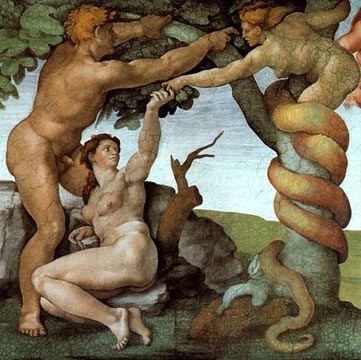
It has always been a bit of a strange thing to me how followers of Jesus came to be seen as collectively ‘holier than thou’. How over the millennia we serially get caught up in elaborate morality systems, measuring others by how much they share the same code and punishing those who do not.

It is not as though this was the model for life that Jesus gave us. As far as we are able to understand his way of teaching, way of living, he seemed to react against those in his time who lived this kind of religious life. Remember all those exchanges with the Pharisees, who had a rigid rule to measure everything against. By total contrast, Jesus seemed much keener for his disciples to live deeply and fully, opening themselves up to the wild ways of the Spirit and subjugating all sorts of rules to the overarching principle called love.

Having said that, let us not pretend that morality has no place within the life of faith. It is not as if anything goes. Choices we make in life have consequences – even passive choices. But those outside the holy huddles will often accuse those inside of rank hypocrisy, suggesting that we do not live according to our principles, let alone live up to the life of Jesus. Remember these words attributed to Ghandi?

I like your Christ. I do not like your Christians. Your Christians are so unlike your Christ. The materialism of affluent Christian countries appears to contradict the claims of Jesus Christ that says it’s not possible to worship both Mammon and God at the same time.

Or these, which he wrote in his autobiography;

 I heard of a well known Hindu having been converted to Christianity. It was the talk of the town that, when he was baptized, he had to eat beef and drink liquor, that he also had to change his clothes, and that thenceforth he began to go about in European costume including a hat. These things got on my nerves. Surely, thought I, a religion that compelled one to eat beef, drink liquor, and change one’s own clothes did not deserve the name. I also heard that the new convert had already begun abusing the religion of his ancestors, their customs and their country. All these things created in me a dislike for Christianity.

All of this starts for me to highlight the fact that although shaping our souls towards love may involve a constant processions of moral choices, morality itself should not be the starting point.

There was a story in The Guardian yesterday that made a rather different point about morality- suggesting that there might be an inverse relationship between highly developed ethical/moral belief and ethical/moral action. In other words, perhaps those who have rigid moral belief might be LESS likely to act on these beliefs.

Ethical philosophy isn’t the most scintillating of subjects, but it has its moments. Take, for example, the work of the US philosopher Eric Schwitzgebel, who’s spent a large chunk of his career confirming the entertaining finding that ethicists aren’t very ethical. Ethics books, it turns out, are more likely to be stolen from libraries than other philosophy books. Ethics professors are more likely to believe that eating animals is wrong, but no less likely to eat meat. They’re also more likely to say giving to charity is a moral obligation, but they were less likely than other philosophers to return a questionnaire when researchers promised to donate to charity if they did. Back when the American Philosophical Association charged for some meetings using an honesty system, ethicists were no less likely to freeload.

One take on this is that ethicists are terrible hypocrites. As Schwitzgebel points out, that’s not necessarily as bad as it sounds: if philosophers were obliged to live by their findings, that might exert a “distortive pressure” on their work, tempting them to reach more self-indulgent conclusions about the moral life. (And there’s a case to be made, after all, that it’s better for people to preach the right thing but not practise it than to do neither.) But another possibility bears thinking about. It’s plausible to suggest that ethicists have an unusually strong sense of what’s right and wrong; that’s what they spend their days pondering, after all. What if their overdeveloped sense of morality – their confidence that they know what’s what, ethically speaking – makes them less likely to act ethically in real life?

Hmmm, what if our churches carry a similar kind of ethical corruption? Later the article describes something called  “moral licensing”, the deep-seated human tendency that leaves us feeling entitled to do something bad because we’ve already done something good. It explains why people give up plastic bags, then feel justified in taking a long-haul flight, obliterating the carbon savings. It’s also why, if you give people a chance to condemn sexist statements, they’ll subsequently be more likely to favour hiring a man in a male-dominated profession.

How might this play out in our religion? A focus on those parts of us that are good so we can blind ourselves to those parts of us that are not? A compartmentalism that means we can live externally moral religious lives whilst compromising on some of the most basic ways of loving our neighbours.

One reaction to this (a very common one in our churches) is the call from the pulpit to be MORE moral. The call to purify, to get our moral codes sorted and organised. The degree to which this ever works is rather doubtful, to my mind at least. We are all of us a complex mess of aspiration and failure at the surface and subliminal levels; old sinful habits die hard in me.

What we need to do then, we followers of Jesus, is to return to trying to understand his relationship with morality. We have to remember that the moral leaders of his day clearly regarded him as immoral. He drank, he mixed with the unclean and ungodly, he broke religious rules, he disrupted churchyness, smashed up tables, upset good people and seemed to prefer low-lifes.

Morality was something to be challenged, to be tested, to be subjugated towards love. Morality was not to be seen as the goal, or the most valid measure, not even of righteousness.

Just as well, otherwise we are all screwed.

Economics students rebel…

EconomicsHome

I tweeted this story a couple of days ago.

Then I heard about the revolting students of Economics from the University of Manchester , who have accused their lecturers of blinkered adherence to the very economics that got us in the trouble that we are in. So much so that they started a group called The Post-Crash Economics Society;

We are The Post-Crash Economics Society and we are a group of economics students at The University of Manchester who believe that the content of the economics syllabus and the way it is taught could and should be seriously rethought.

We were inspired to start this society when we heard about a Bank of England Conference called ‘Are Economics Graduates Fit for Purpose?’ At this event leading economists from the public and private sphere came together to discuss whether economics undergraduates were being taught the right things in the light of the 2008 Financial Crisis. This chimed with some of our frustrations about the economics we were learning and so we decided to set up a society that would through doing research, organising events and running workshops seek to bring this discussion to Manchester. That was at the start of the 2012/13 academic year.

As of today we have a fully-fledged society, a book club, an incredibly successful launch event led by world class economists, many student and academic supporters, a petition that is constantly gaining signatures, links with a national network of economic societies and organisation and even more passion and determination to change the current state of economic education!

Where do we find the new economic thinking then? What alternatives are there to the Neo-Liberal hegemony that grips our political an economic establishments so firmly that anything else seems to lack ‘common sense’?

Today Radio 4’s ‘Thinking Allowed’ programme carried an extended discussion about Neo-liberal economics, defined interestingly NOT as a kind of super conservative laissez faire free market thing, but rather as a hyper interventionist big government approach that promotes a certain kind of economic policy (aggressive venture capitalism) to the exclusion of all others. Impose a certain kind of market society, because the market can process information much better than individual human beings. Any problems with markets can be fixed by the evolution of new markets.

There was an interesting discussion led by Robert Sidelski, who described John Maynard Keynes prophecy that by now we should all be working a 15 hour working week, as individual wealth would have increased 8 fold (Written back in the 1030s.) Living standards have indeed gone up but we remain caught in wage slaving. There have been endless improvement in productivity, but we never seem to have enough.  Sidelski called this ‘insatiability’, which has been unleashed as never before by capitalism.

Why?

Is this about greed, and the almost total lack of moral controls on this? Sidelski suggested that greed has become the lodestone of our culture. All other standards yield to the need to make money.

He also suggested that society gets richer, relative wants become more important than absolute needs– so the real issue is how we consume relative to others- leading to us all comparing what we have relative to what others have constantly, a madness that is stoked and fed by advertising.

Is there any economic alternative to this? Marx would say this is unsustainable delusion, and it is very hard to argue that he was wrong. It is not as though this wealth brings happiness or satisfaction!

Everything has been reduced to gadgets- leisure has been commoditised by gadgets. Leisure is not easily seperated from consumption. We seek to make time (particualarly holidays) SPECIAL by increasing consumption and gadgetisation, not seeing them as about activity unyoked from purpose.

Sidelski quoted Keynes from 1930, reflecting on the possibility of people set free from all this consumption and pursuit of money;

I see us free, therefore, to return to some of the most sure and certain principles of religion and traditional virtue-that avarice is a vice, that the exaction of usury is a misdemeanour, and the love of money is detestable, that those walk most truly in the paths of virtue and sane wisdom who take least thought for the morrow. We shall once more value ends above means and prefer the good to the useful. We shall honour those who can teach us how to pluck the hour and the day virtuously and well, the delightful people who are capable of taking direct enjoyment in things, the lilies of the field who toil not, neither do they spin.

From Economic Possibilities for our Grandchildren (1930)

Do you think the Post-Crash Economics Society are looking for this kind of economic theorising?

I hope so, and may their voices become louder…

Falling off the edge of the world…

waiting for ferry, portavadie


I have had a loooong 12 hour working day, involving a trip to Campbeltown to chair some conferences. I took the first ferry over Loch Fyne from Portavadie to Tarbet, and had time to stop and take a few photos.

Campbeltown is a wonderful strange place- right out on the far western extremities of Kintyre. Go too far and you call of the edge of the world (or I suppose, end up in Ireland.) I walked around the town to clear my head between meetings and marveled at the fact that all the shops closed at lunchtime- presumably so the shop keepers could go shopping. It is like a place in its own micro-time zone. In a good way.

A storm was on the way, and I missed the ferry on the way back by about 2 minutes, which meant I either waited for an hour (with the risk that the ferries would be off) or drove home the long way, via Lochgilphead and Inveraray. I reluctantly did the hard miles.

It was good to be home- but my, how beautiful is the place in which I live and work.

Is it time for the left to take hold of the Beatitudes again?

jesus-christ

Regular readers of this blog will have noticed that I often find myself mulling over the passages of the Bible that start in Matthew chapter 5, usually known as ‘The Beatitudes‘. I wrote an extended set of poetic meditations on these at a key point of my faith journey. These poems became a large part of my book ‘Listing’.

At the time, what I thought I knew about being a follower of Jesus had been broken down, smashed, deconstructed, so I desperately wanted to engage once more with the core of what Jesus called us to- and the Beatitudes are really the best place to start.

One of the things you come up against immediately is how impossible it all seems. Who can really live like this? What on earth did Jesus mean? Yet still, for people like me, there is this soaring tingling sense of excitement every time I read Matthew chapter 5. There is something so right about it all- simple, lovely, beautiful.

However, I read these words in the context of living in our western consumer culture, and this also brings me to total dissonance, because in many ways, the words of Jesus are simply not compatible with our way of living.

We can do three things with this;

  1. We can decide that the words have to be read in the wider context of the Bible, and that Jesus was not really meaning it to be our manifesto for all time. He knew that it was impracticable to live like this, so merely wanted to make our sinful state clear to us, in order to accept his forgiveness.
  2. We could use his words as a critique of culture, seeking to understand where our system – in its pursuit of profit, wealth, ascendancy, distraction, celebrity, shallow experience – has got things wrong.
  3. We can really try to live according to the beatitudes.

It will be no surprise to you that I am caught between 2 and 3.

I was reminded of this by an article that Thomas posted on Facebook the other day, in which Peter Ormerod reflects on the decision by the Christian Socialist Movement to ditch the S word, and call themselves instead, Christians On The Left. He began by re writing the beatitudes to make them more culturally appropriate;

When Jesus saw the crowds, he went up the mountain, and after he sat down his disciples came to him. Then he began to speak, and taught them, not saying: “Blessed are the rich, because your wealth trickles down and everyone’s a winner.

“Blessed are those who are full, because that means you’re not scrounging off the rest off us.

“Blessed are you who are laughing now, because you’re obviously hardworking, responsible, decent people.”

It would be reductive and misleading simply to describe Jesus as a leftie. And Marko Attila Hoare wrote earlier this week of the dangers in ascribing a particular view to a particular political wing. But it’s safe to say that, in terms of the left’s usual causes célèbres, Jesus does pretty well: nonviolencesupport for outcasts and outsidersthe redistribution of power and wealth in favour of the powerless and poorforgivenesstaxationreconciliationfigs.

He rather hit the nail on the head when he suggested that the problematic word was not necessarily ‘Socialism’, but rather that increasingly meaningless word ‘Christian’;

Many who might sympathise with the teachings of Jesus would scarper from anything Christian. Often, they’d have good reason to. It can mean judgmentalism, ludicrous doctrine and bad parties. Worse, it can mean bigotry, violence and terrible parties. The Christian right – embodied in the UK by groups like Christian Concern – has been so successful at promoting its ideology that you may well think Christians care only about what jewellerythey’re not allowed to wear, what days they’re forced to work, and gay men having big, gay sex. Christians have often done a great job of killing people who disagree with them, too, which doesn’t really help.

Probably the kindest thing one can day about “Christian” is that it’s meaningless. It somehow describes the beliefs of both the Westboro Baptist church and Desmond Tutu. It’s barely even biblical, appearing only twice in the New Testament (and one of those times merely tells where it was first said). Jesus didn’t use it ever.

In any case, it seems that Jesus cared less about what people believe than what they do. The sheep and goats are separated on account of their actions, not their beliefs. The man who said “no” but did God’s will was favoured over his brother, who said and did the opposite, and so on. Those who thought God was happy with them were brought up short, and told that actually God was happier with the people they saw as sinners. Labels weren’t his thing.

Ormerod concludes by suggesting that Christians need to have a louder voice- to shout about the beatitudes…

If we can’t do this now, in the face of a broken political and economic system as it cuts and slices its way to greater riches by attacking the poor, the sick, the refugee, then what use are we?

Talking of Christians on the Left- check this out;

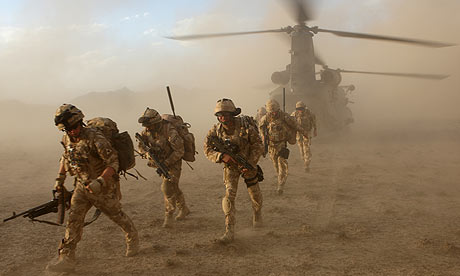
Sorrow for those who die in wars is not the same thing as soldier-worship…

British-troops-in-Afghani-001

Picture from The Guardian.

Another remembrance Sunday is upon us. Images of all those thousands who died like cattle in the first world war will flood the screens, along with a Spitfire fly past. Our more recent maimed young soldiers will be wheeled out, or teeter out on the carbon fibre blades that replaced their legs.

There was a great article in the guardian today which used the phrase ‘soldier worship’ to capture something of what tends to happen at these times. A quote;

We should not feel compelled to point out that those brave men and women are fighting in Afghanistan to secure our safety every time the military is mentioned. First, because it is not true that they are; and second, because such blustering at the merest glimpse of camouflage clothing is an obvious and embarrassing capitulation to dogma.

What is the dogma being referred to here? I would like to suggest that it is the myth of the hero-soldier, fighting for our freedom, our way of life, our nationhood. True reverence (or true worship) for the heroic sacrifice they make on our behalf is to elevate the soldier onto a public plinth. This is not necessarily the same thing as rewarding individuals, rather it becomes a political hermeneutic through which we view current wars.

We in Britain have been evangelised into this new religion to a certain extent by what happens in the USA. It seems to me that it is only a recent thing that the word ‘hero’ was used each time a soldiers were mentioned in this country; not so in the USA where ‘veterans’ are regarded as we might someone who walks in to a burning building to bring out children.

Is it just me who feels a little uncomfortable every time I see the words ‘Help for Heroes‘?

I think I should be clear that I am NOT saying that soldiers should not have our respect, or our assistance in the event of injury. Even the shameful conviction of a Royal Marine commando this week for torturing then shooting a prisoner should not suggest that soldiers like killing people, or have universally lost their humanity. What it tells us rather is that war brutalises, damages and degrades everyone involved in it, even (and perhaps particularly) those who are victorious, all powerful.

In my years as a therapist in primary care, I saw a lot of ex-servicemen. The area around Bolton and Wigan has always been a big recruiting ground for the army in particular. I remember their stories, fractured and halting as they were, vividly. Mostly they were seen backwards through broken relationships, alcoholism, even prison. A man who had served in Cypress, unable even to describe the terrible things he has seen. Another man describing the slaughter of Iraqi conscripts in the first Gulf War. These were men for whom the war itself was almost the best part of them. But it was also the end of ease, comfort and self assurance. Part of this was always guilt for what they had done- sometimes personally, sometimes collectively, often just because they survived when others did not.

Are these men heroes? Some of them may well be incredibly brave, and had dreadful experiences. however, to continue to espouse soldier-worship does something to the way we view war itself. Despite telling human stories from war, it does not humanise war; it runs the real risk of idolising it. By viewing conflict only through the eyes of the mostly masculine gadget-laden machinery operated by our own heroic boy-adventurers is a remarkably effective way of taking our eyes of the nature of the conflicts themselves.

Think of all those war films- even the ones that are regarded as ‘anti-war’. Who are the lead characters? Whose life and death experiences hold our fascination? Almost every one of these films, brilliant and moving as many of them are, are long hymns sung in the church of soldier-worship.

A few years ago I wrote a post entitled Losing small wars, but not not learning lessons. I tried to outline some of the myths that we were being asked to swallow in relation to our current war making;

We have been brought up to view our own military misadventures as essentially good versus bad- the plucky resourceful Brit against the Towel-head/Hun/Jap/Red. We always triumph in the end- true character always does.

This ignores all the evidence to the contrary- the mounting body bags, the torture of prisoners, the resounding “NO!” echoing from the population of all these countries that we are supposedly liberating.

Then there is the stench of post imperialist self-interest, and the feeling of being manipulated by murky spinners of media messages- all of that gung ho ‘smart’ bombing and ‘shock and awe’-ing.

The discussion mentioned above identified some key myths that we really should watch out for (along with a few of my own suggestions)-

  • “Failure is not an option”- we will win. We. Will. Win. Or at least give it the appearance of victory.
  • “This year is the pivotal year”- as each one seems to be.
  • More money will win ‘hearts and minds’.
  • You can’t trust the locals.
  • The hero myth- glorious death. Dulce et decorum est.
  • War will solve our problems.
  • You can fight a war on terrorists by terrorising their communities in return.

The only way to humanise war is to understand that the enemy is flesh and blood too, has children, dreams, fears, irrational and rational passions and beliefs. We have to remember the hundreds of thousands of people, men, women, children, whom have died very un-heroic deaths in our recent wars. Whom have lost un-heroic limbs and have very un-heroic disfigurements.

In the meantime, this Remembrance Sunday, it is right to remember all those who died.

But let us not use the word glory– the first world war killed that one.

Neither let us use the word honour- their is no honour in war. World war two made this clear.

And as for the word hero, let us use this word sparingly and apply it most fervently to those who make peace in the face of violence.

Bob Fraser releases THREE albums all at once!

wpaaea14d2_05_06

My old friend Bob Fraser has been remarkably productive of late. It is great to see him recording and gigging again.

I was singing Bob’s songs long before I knew him. He was the creative force behind a Christian rock group back in the 70’s called Canaan (check out this article for a retrospective.) He also wrote a number of worship songs that we sang in church- including one that became a standard called ‘You are the Rock on which I stand’.

Bob now has a new website, where you can order one of his three (yes, three!) new CD’s- including a Christmas themed one. I reckon that this means that Bob has now recorded at least 20 albums of his own, plus involvement in lots more- quite a musical legacy.

If you like easy going thoughtful country rock then check Bobs new stuff out!

Raptor…

Air Force, Army leaders discuss new UAS concept of operations

Raptor

.

“The traffic was murder this morning”

He said, adjusting the gas strut of his over-padded chair,

Punching in his password whilst

three thousand miles away the drone tunes to his direction.

.

He is surgeon,

Slicing clinically into canker

He is justice with a joystick

He is freedom at the press of a blood-red button

He has the wings of a dove and

Carrion claws of a vulture.

He takes his coffee black

With no sugar.

.

The screen throws green reflections at his designer glasses

The other side of the world lies dark

But still this unblinking eye in a moonless sky

Scans for movement

Waiting to unleash risk-free

Mechanical malevolence

.

At this elevation

People have no faces.