Reading history through objects…

Last year there was a cracking radio series entitled ‘The history of the world in 100 objects’, which concerned itself with objects chosen from the thousands in the British Museum. It was impossible not to be reminded of this as we walked around the museum last week.

What I loved about the series was the way that the presenter (Neil MacGregor, Director of the British Museum) was able to use each object as a time capsule, or some kind of window into where we came from.

Most people who read the Bible find an extra frisson of fascination around objects that have some connections to Bible history. Two of these objects had me thinking again about the way that we use history not just like a distorted telescope lens, but more like a kaleidoscope. The light we see at such distance is bent by all sorts of assumptions and overlaid constructions- never more so than when the Bible is involved.

The first object (or set of objects to be more accurate) is this one- the Lachish relief.

lachish relief

This relief is from a time of  around 3000 years ago- and this too was a time of war. (It is estimated that there were only around 50 Million people in the world then, but still there was an the urge to fight!) In this instance, the fighting recorded was the great siege of Lachish in Judea, 701 BC by King Senacherib.

Lachish is first mentioned in the Bible as one of the cities taken by force from its existing inhabitants by Joshua. In Joshua 10, it is recorded that the King of Lachish started out as an ally of the Israelites, fighting alongside them, before ‘God gave Lachish to Israel’, who ‘took it in two days and killed everyone’. Despite this, somehow Joshua remains our hero. He was establishing Gods promised holy nation…

Jump forward around 4 centuries or so, to around 1000 BC, the kingdom of Judah had more powerful neighbors in the form of the  Assyrian Empire, stretching Iran to Egypt, and maintained by the all powerful Assyrian war machine.

Good King Hezekiah, who seemed to get all the worship purity stuff right, made some rather bad political decisions and defied the Assyrian King Sennacherib.

In 2 Kings 20 there is a story of one of Sennacheribs men delivering insulting blasphemous words about the lack of power of the Jewish god when faced with the power of the sword. Here Hezekiah cleverly pays off the Assyrians, and eventially God kills first most of their army, then Sennacherib himself gets his comeuppance.

The story from the Assyrian records are rather different;

 “In my third campaign I marched against Hatti. Luli, king of Sidon…fled far overseas and perished…In the continuation of my campaign I besieged Beth-Dagon, Joppa, Banai-Barqa, Azuru, cities belonging to Sidqia who did not bow to my feet quickly (enough); I conquered (them) and carried their spoils away.  The officials, the patricians and the (common) people of Ekron –  who had thrown Padi, their king, into fetters (because he was) loyal to (his) solemn oath (sworn) by the god Ashur, and had handed him over to Hezekiah, the Jew (and ) he (Hezekiah) held him in prison, unlawfully, as if he (Padi) be an enemy-had become agraid and had called (for help) upon the kings of Egypt (and) the bowmen, the chariot(-corps) and the cavalry of the king of Ethiopia, an army beyond counting-and they (actually) had come to their assistance.  In the plain of Eltekeh, their battle lines were drawn up against me and they sharpened their weapons.  Upon a trust (-inspiring) oracle (given) by Ashur, my lord, I fought with them and inflicted a defeat upon them…I assaulted Ekron and killed the officials and patricians who had committed the crime and hung their bodies on poles surrounding the city…I made Padi, their king, come form Jerusalem and set him as their lord on the throne, imposing upon him the tribute (due) to me (as) overlord…As to Hezekiah, the Jew, he did not submit to my yoke, I laid siege to 46 of his strong cities, walled forts and to the countless small villages in their vicinity, and conquered (them) by means of well-stamped (earth-)ramps, and battering-rams brought (thus) near (to the walls) (combined with) the attack by foot soldiers, (using) mines, breeches as well as sapper work.  I drove out (of them) 200,150 people, young and old, male and female, horses, mules, donkeys, camels, big and small cattle beyond counting, and considered (them) booty.  Himself I made a prisoner in Jerusalem, his royal residence, like a bird in a cage.  I surrounded him with earthwork in order to molest those who were leaving his city’s gate.  His towns which I had plundered, I took away from his country and gave them (over) to Mitinti, king of Ashdod, Padi, king of Ekron, and Sillibel, king of Gaza.  Thus I reduced his country, but I still increased the tribute and the Katru-presents (due) to me (as his) overlord which I imposed (later) upon him beyond the former tribute, to be delivered annually.  Hezekiah himself, whom the terror-inspiring splendor of my lordship had overwhelmed  and whose irregular and elite troops which he had brought into Jerusalem, his royal residence, in order to strengthen (it), had deserted him, did send me, later, to Nineveh, my lordly city, together with 30 talents of gold, 800 talents of silver, precious stones, antimony, large cuts of red stone, couches (inlaid) w3ith ivory, nimedu-chairs (inlaid) with ivory, elephant-hides, ebony-wood, box-wood (and) all kinds of valuable treasures, his (own) daughters, concubines, male and female musicians.  In order to deliver the tribute and to do obeisance as a slave he sent his (personal) messenger.”

Ancient Near Eastern Texts – Relating to the Old Testament edited by James B. Pritchard, Princeton University Press, New Jersey 1950, quoted here.

The next scene in the relief is the aftermath of battle- people fleeing burning city. This is seen as the first ever depiction of that all-too-familiar modern phenomenon; mass refugees. Why did the Assyrians want to show this in their propaganda? Was it a warning to all those who would challenge the powers of the great king? Note however that the exiles were not all murdered, they travel with their livestock and belongings. The Assyrians showed a degree of humanity that Joshua seems to have lacked.

The great king Sennacherib was assassinated by one of his sons however as described in the Bible- the cycle of war continued.

Cyrus cylinder

One of the other objects I wound myself staring at was this one- the Cyrus Cylinder.

This is one of several such cylinders that have been found in the walls and buildings of ancient Babylonian cities and palaces- it seems that the builders of these places wanted some kind of record to remain in the foundations of what they made.

The text on the Cylinder praises Cyrus, sets out his genealogy and portrays him as a king from a line of kings. The Babylonian king Nabonidus, who was defeated and deposed by Cyrus, is denounced as an impious oppressor of the people of Babylonia and his low-born origins are implicitly contrasted to Cyrus’s kingly heritage. The victorious Cyrus is portrayed as having been chosen by the chief Babylonian godMarduk to restore peace and order to the Babylonians. The text states that Cyrus was welcomed by the people of Babylon as their new ruler and entered the city in peace. It appeals to Marduk to protect and help Cyrus and his son Cambyses. It extols Cyrus as a benefactor of the citizens of Babylonia who improved their lives, repatriated displaced people and restored temples and cult sanctuaries acrossMesopotamia and elsewhere in the region. It concludes with a description of how Cyrus repaired the city wall of Babylon and found a similar inscription placed there by an earlier king.

Again, readers of the Bible will remember Cyrus-

His treatment of the Jews during their exile in Babylon after Nebuchadnezzar II destroyed Jerusalem is reported in theBible. The Jewish Bible’sKetuvim ends in Second Chronicles with the decree of Cyrus, which returned the exiles to thePromised Land from Babylon along with a commission to rebuild the temple.

‘Thus saith Cyrus, king of Persia: All the kingdoms of the earth hath Yahweh, the God of heaven, given me; and He hath charged me to build Him a house in Jerusalem, which is in Judah. Whosoever there is among you of all His people – may Yahweh, his God, be with him – let him go there.’ (2 Chronicles 36:23)

This edict is also fully reproduced in the Book of Ezra.

In the first year of King Cyrus, Cyrus the king issued a decree: ‘Concerning the house of God at Jerusalem, let the temple, the place where sacrifices are offered, be rebuilt and let its foundations be retained, its height being 60 cubits and its width 60 cubits; with three layers of huge stones and one layer of timbers. And let the cost be paid from the royal treasury. Also let the gold and silver utensils of the house of God, which Nebuchadnezzar took from the temple in Jerusalem and brought to Babylon, be returned and brought to their places in the temple in Jerusalem; and you shall put them in the house of God.’ (Ezra 6:3–5)

As a result of Cyrus’s policies, the Jews honored him as a dignified and righteous king. He is the only Gentile to be designated as Messiah, a divinely appointed leader, in the Tanakh (Isaiah 45:1–6). Isaiah 45:13: “I will raise up Cyrus in my righteousness: I will make all his ways straight. He will rebuild my city and set my exiles free, but not for a price or reward, says Yahweh Almighty.” As the text suggests, Cyrus did ultimately release the nation of Israel from its exile without compensation or tribute. Traditionally, the entire book of Isaiah is believed to pre-date the rule of Cyrus by about 120 years. These particular passages (Isaiah 40–55, often referred to as Deutero-Isaiah) are believed by most modern critical scholars to have been added by another author toward the end of the Babylonian exile (ca. 536 BC).[90] Whereas Isaiah 1–39 (referred to as Proto-Isaiah) saw the destruction of Israel as imminent, and the restoration in the future, Deutero-Isaiah speaks of the destruction in the past (Isa 42:24–25), and the restoration as imminent (Isa 42:1–9). Notice, for example, the change in temporal perspective from (Isa 39:6–7), where the Babylonian Captivity is cast far in the future, to (Isa 43:14), where the Israelites are spoken of as already in Babylon.[91]

Here we have a king from outside the chosen people, appointed by God, showing the kind of tolerance, respect for human rights and concern for peace that had been a scarce commodity.

And this very object remains as a testimony to who he was.

Human history; the rise of power, or the journey towards love?

I am interested in understanding who we are, why we are, what we are becoming- in the light of the fact that we are more than flesh that just becomes dust- we are people who have been travelling for millenia towards a deeper encounter with God, however we understand this.

I look at all this through my own distorted set of lens- but I do so consciously. So rather than co-opting history to glorify our own slice of empire (which was the origin of the British Museum after all) perhaps we can understand history in the light of who Jesus was.

In this way, small thing, small people, voices from the margins- these things become important. Great powers less so- they come and go, empires rising and falling like epidemics.

In-groups are broken- we are set free from narrow religious/geographical/ethnic boundaries. Now we can look for the marks of grace and love wherever we find them.

And we can learn to value above all the fruits of the Spirit- love, joy, peace, patience, justice, compassion.

Even when looking back.

Reading culture through art…

DSCF7670

It is a statement of the obvious that art operates as a window onto culture. If some alien was trying to understand who we are, what motivates us, what we hold as important, they would only need to take a look at our creative output; our film/TV in particular. I love watching films made in other cultures- Chinese films for instance- all those heroic, stunningly shot epics of love, honour and discipline. They give me hope for mankind as China will surely hold the reigns of the coming Empire.

Our recent trip to the Tate Modern on the South Bank threw all this back into my mind. It was a riot of odd objects and ideas. The first challenge is always to find a way into the language that is being used- and this takes a lot of time for people who are unused to this kind of art.

Many pieces I walked past, bemused. Some seemed too heavy handed- empty canvasses with a slash down the middle, boxes of wood with a hole in each end and light inside. It was possible to ‘get’ what they were doing, but move on quickly. Often I failed to understand why THIS object was thought worthy of a national gallery (a pile of melted plastic, a ‘cage’ made out of what looked like turds threaded on wire) but I was more than happy to engage with them anyway.

Then there were all the Turners, Picassos, Hepworths and the like. These tended to be crowded about by a kind of repellant hushed awe. I found myself moving swiftly on, propelled by a combination of my own sense of inadequate knowledge and a discomfort with celebrity-art.

What stood out for me were pieces that used language/symbolism that I already understood- they used cultural references that were familiar to me, but seeing them in a large gallery changed them, opened them up a little.

There were these slices of timber for instance- beautiful already, then sliced and diced and patterned by industrial saws so that each one held a difference set of cuts. Somehow they held my imagination- I wanted to touch them. The combination of polished wood and industrial process was suddenly very meaningful;

sculpture, tate modern

Then there were little things like Bruce Nauman’s ‘Violence, violins, silence’;

violence, violins

Perhaps my favourite piece however was one called Active Poetry, by Polish conceptual artist Ewa Partum, back in the 1970’s.

eva partum, active poetry

This was a dark room, with projected old 8mm film and a tumble of letters. Partum took parts of famous literary texts, cut them up into letters and scattered them in natural settings. She used typefaces of the kind often used for propaganda. In doing so she asks little questions about literature, history, nature, creativity.

It is this kind of art that has become such a useful tool in making ‘alternative worship’ installations. Here is the film;

London…

flags, horse guards parade, buckingham palace

Emily, Will and I are just back from a few days in London- the first time I have been there since around 1987. We all had a great time.

We were staying with Malcolm and Alison, who looked after us brilliantly. Thanks to both of you! Alison officiated (if that is the right word) at her first communion service (she is an ordained Anglican minister) whist we were there and it was great to share this with her. Malcolm was Emily’s guide for three full days work experience in a big city hospital- she was able to be in the operating theatre for brain surgery, the removal of tumours from tiny babies and all sorts of extreme events.

William and I became tourists. We rode impossibly crowded underground trains, walked miles and miles and miles, gawped at the houses of parliament, Buckingham Palace and all sorts of other landmarks.

We went in loads of wonderful free museums- the British, the Natural History, the Science.

We watched a play (The Tempest) at the Globe theatre.

We tried to watch a 20/20 cricket match at the Oval, but it was abandoned because of rain after only two balls being bowled.

We spent an hour or two wandering the wonderful wackyness of the Tate Modern (more on this later.)

We all missed Michaela, who has had other things on up in Dunoon (including entertaining the Princess Royal!) and it is good to be home…

But it has been a great time, thanks to the generosity of friends. May they be blessed.

The Duckworth Lewis Method…

I am a recent convert to the music of The Duckworth Lewis Method.

Made up of Irishman Neil Hannon (he of The Divine Comedy fame) and Thomas Walsh, they make melodic, strangely addictive pop music themed around- cricket! I had more or less left them alone previously as I have never really enjoyed comic songs- the music I like is usually introspective (some would say miserable.)

Tomorrow we are heading down to London for a few days, thanks to the hospitality of Alison and Malcolm. Emily is spending some time with Malcolm in his work as an Anesthetist at Kings Hospital, and William and I are going to visit some museums. He has never been to London, and the last time I was there was some time around 1987.

Will and I also have tickets to go to watch cricket at The Oval- so I thought I would share a little DLM music with you…

Some of you might need a little background to fully appreciate the song; it concerns a moment in the history of crickets greatest rivalry, between Australia and England, who play regular series of Test Matches for a tiny urn called ‘The Ashes.’ England are in the ascendancy at the moment, but for decades we always came second best in a two horse race. Much of this was down to a bleached blonde cocky Aussie called Shane Warne, whose ability to impart spin on a cricket ball mesmerised the hapless English batsman time and time again. He burst onto the scene in 1993, bowling what came to be called ‘The Ball of the Century.’ This was the first ball he ever bowled in England, to the rotund senior pro Mike Gatting. Gatting represented the old way- and Warne made him look like a dinosaur.

For the years before Warne, spin bowling was a junior cousin to fast bowling- all those tall West Indians who hurled the ball down at terrifying pace. Warne took what was a sedate largely toothless skill and turned it into something sexy, dangerous and full of spit and venom.

There is a beautifully written account of the impact of the ball here.

Or you could just watch it yourself;

Or  just set all that aside and chuckle to the DLM version of the story;

The vicar who danced at a wedding…

This made me smile and laugh and cry a little with the joy of it all.

As the Guardian put it;

If you want to believe there is still some hope for the Church of England, YouTube has the evidence right here: a video of the Rev Kate Bottley leading her congregation in an exuberant and joyful disco dance routine in the middle of an otherwise strait-laced wedding service.

It is one of those things that makes you feel good to be human. It’s a celebration of ordinary, lumpy people that manages to reframe without snobbery or affectation the Betjeman verse about a couple of lovers in a Bath teashop: “She such a very ordinary woman / He such a thumping crook. / But both, for a moment, little lower than the angels / In the teashop’s inglenook.”

This matters not because it shows the Church of England being “trendy” or up to date or anything like that. Few things could be further from London’s Hoxton than disco dancing in rural Nottinghamshire. But it does show that there are bits of it which can still connect with the people around them. This matters. The median age of Anglican congregations is now 61. That’s nearly twice the age at which most women in Britain get married.

The couple in this video were not churchgoers, and had lived together for years before they got married. They only went to a church after it was suggested by the stately home where they held their reception. But they managed to get a ceremony there that did both solemnity and joy, which are things that weddings need.

I doubt that Bottley will ever become a bishop. At the moment she is not even a full-time parish priest. She works three days a week looking after three rural churches, and two days a week as a chaplain. But it isn’t bishops who will keep the church of England going. In fact it’s largely bishops who have screwed it up over the last 30 years. Ordinary people doing unglamorous jobs like part-time vicaring are the ones who will keep it from appearing entirely as a sour and self-obsessed sect – the ones who know it is much better to be silly than self-important, and much better to be provincial than pompous.

A contract between Scotland and God…

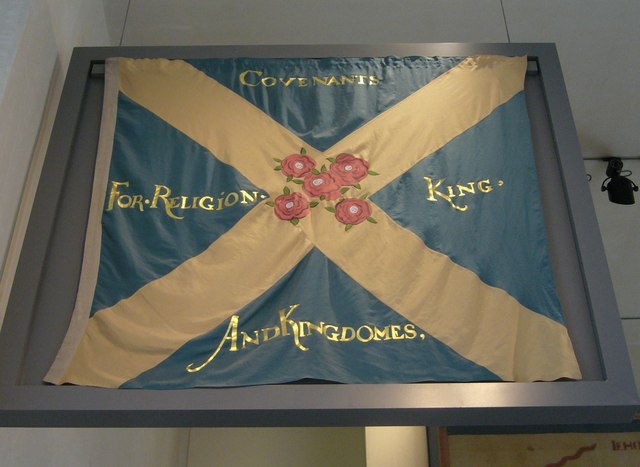
covenant flag

Back in 2009 I wrote a post about Jean Darnell‘s prophecies in relation to Scotland. The point of the post was to dig into some of the hopes that certain parts of the church hold on to up here- hopes for a revival, for a new Holy Nation that becomes a beacon of truth for the whole of Europe. I suspect that there are people who hold to this hope in all countries, and from all faith backgrounds- although it is perhaps fair to say that Scotland has had more than most.

I was reminded of this when watching a recent BBC documentary called ‘The History of Scotland’. Episode 2 is available on the i player, and tells the story of the Covenanters.

I remembered a wee on-line spat with someone who commented on the post I wrote about Jean Darnell. Check out the comments on the post. 

Most of us in the British isles know very little about the Covenant, and how the power of religion became the engine for slaughter, civil war and repression. We know some of the key events- the ‘English’ civil war, Cromwell, beheading Kings and then reacting against it all afterwards. We might also know something about the  clashes between Catholic and Protestant religious movements, but this seems like a decorative footnote in history- like an antique frock coat in a museum. 

I wonder though whether this part of our history is more important to engage with than ever, in this time of the rise of fundamentalist religion. 

So here we go…

The Reformation smashed apart some of the old established religious hierarchies. John Knox, brought the teaching sof Calvin back to Scotland. and in 1560 Scottish Parliament adopted a formal system of  presbyteries. Men came to beleive that the Scottish church was the closest to perfection on earth. This was the church that all churches should emulate.

However, this was the age of Kings- power was dynastic, and fickle. Charles the first of Scotland, England and Ireland, seemed to be undermining the purity of the Presbyterian church in a series of cuts. Anglican priest undertook his coronation service, bishops were imposed, a prayer book insisted upon. Charles was imposing himself between man and his God, using the ways of Anglicanism, which was seen as Catholic-light. All this led to trouble. Preachers denounced, rabbles were roused, Priests were beaten up, books were burned.

In 1638 some of the outraged faithful organised themselves on a new path. Taking inspiration from the covenant God made with the ancient Israelites, they wrote a document that captured what they believed to be the role of a perfect king- one limited by the law of God, and married to the perfect church. The document fell in fertile soil, and stimulated an uprising of religious fervour- Scotland could be the perfect kingdom, a new Israel. 60% of Scotlands adults signed the covenant- many swept up in the excitement of it all, some bowing to pressure- failure to sign was shameful, Popish. This pressure led inexorably towards extremism, fundamentalism, madness even.

In a time of fractious relationships across the Union, the Covenanters (as they were now known) raised an army. Charles was weak and his hired army was defeated twice. Charles had his own problems with a troublesome parliament at home and the English civil war began.

In the first year of the war, Scotland took no part, but in 1643, Parliamentary forces, who had been repeatedly defeated by Charles forces, sent to Scotland asking for help. In return for help- in return for this help they promised the establishment of a Presbyterian Kirk in Scotland and Ireland. 20.000 men sent and they turned the tide. 2 years later, Charles surrendered. The defeated King was asked to sign the Covenant, but this was like asking Charles to reject his understanding of God, and who he was in the whole order of things. He refused.

Charles made a secret deal with loyal noblemen in Scotland, offering a 3 year trial of a Presbyterian kirk in all his kingdoms. Old loyalties remained. This split the Covenanter movement. Ordinary people did not want to fight for the vague promises of a non covenant King. These became called the PROTESTORS.

However, the Nobles marched south- they were defeated at Preston by Cromwell. The Protestors saw this as evidence of Gods favour, and fired with the certainty of their election, they seized Edinburgh.

What happened then will be vary familiar to anyone who has been close to the Taliban in Afghanistan. In a period known as the ‘Rule of the saints’ backsliders were executed, holes made in tongues, ears nailed to posts, the ungodly were harried and purged. No sin was left unpunished, public floggings were held on every street corner. Yet these times were remembered later as the ‘golden age’ of Protestantism.

The interesting thing is that this kind of extremist collective madness was only possible in a political vaccum- a time in which the moderation and stability of state has been suspended, smashed. Like Afghanistan, or Iraq perhaps, before or after  the odd invasion.

In 1649, King Charles the first was tried to treason. On the 30th of Jan he was executed. Monarchy was abolished- in England at least.

However, in Scotland, the Covenant still needed a signature; the Scots still wanted a king. They invited Charles’ son to come and be king. In order to be King, he needed to sign the covenant. He signed.

Cromwell could not let this lie- he had by now replaced the Union of old Kingdoms with a new Commonwealth, and to protect his embryonic new order he came north in 1650 with his army. For a while, things were in the balance. At Leith the Covenant army was twice the size of Cromwells, but decided to purge itself of ungodly elements (who tended to be the professional soldiers.) Cromwell killed thousands and put the rest to flight. The Rule of the Saints was over.
Cromwell was brutal- the English armybecame an army of occupation in Scotland.

1653, Cromwell became Lord Protector- almost-King. Then Cromwell died and 11 years of guilt unleashed. The spectre of the headless king stood over the nation- people were appalled. Things had gone too far.

So in 1660, Charles, son of Charles, becomes King of England and Scotland.  The old world was re-made and in this new/old world there were no room for the Covenant. It was made unlawful. Copies were collected and burnt by hangman.

Charles appointed bishop0s and archbishops, made all swear allegiance. All of Scotland’s ministers had to find a noble patron. Many could not or would not.

Alexander Peden- (“Prophet Peden”) was one such minister. He left his Kirk and began preaching in open air to thousands of men in South West Scotland- often armed men.

But things were changing in high places; the direction was back towards Rome. In 1670 Charles made secret treaty with Catholic King of France for money and arms to make sure his power remained. National conversion to Catholicism. Needed to be kept secret- and so those who accused him of Papery were sent to Bass Rock, including Peden, who spent 4 years on Scotland’s own Alcatraz.

IMGP2900
Everything that has been achieved by Protestors (and the Covenanters) was being undone. The faithful were desperate. The accursed Bishops were a figurehead of all that was evil and so in 1679, 9 men chased down the coach pf the Archbishop of St Andrews and assassinated him in front of his daughter.

It was a  terrorist act and there was a reaction. Battles were fought again in which initially the Protestors did well, taking the city of Glasgow. Hopes were raised- could ‘The Golden Age’ return?

Then began three weeks of discussion. Should the ungodly be allowed to fight.? Were they wanting to unseat the king, or persuade him to sign the Covenant only? Theology was argued. Factions formed and split then split again. And then Cromwell attacked. 400 were killed, 1200 were taken prisoner, the rest fled. What followed became known as ‘the killing time’. Many preachers executed.

In 1681, a young Protestor called James Renwick climbed up pikes to retrieve and bury the heads of 5 executed Covenanters. He became leader of remaining Protestors,  Who made a new declaration and formed what were called ‘United Societies’. They rejected Stuart Dynasty. Rennick, along with his 6000 followers, wanted to start second civil war.

Meanwhile, James, Charles brother was declared heir to throne as Charles had no legitimate children and he was CATHOLIC. Fires of unrest started to smolder, and something needed to be done. The plan was this; an Oath was framed demanding all citizens reject the united societies. Failure to take oath was punishable by death. Soldiers sent into south west- and over 90 people were killed by summary execution- no courts, not appeals.

James came to throne in 1685. Now there wereCatholic monarchs in France and Britain. William of Orange in the Netherlands, James Nephew, had a claim to the crowns of Britain. He was not Catholic and had been at war with France for years. He prepared to make his move.

Meanwhile, Catholics became majority in Government. Only the United Societies remained as an opposition, so a price was placed on Rennicks head. Rennick wanted to become a martyr so after a skirmish in which he killed some of the men sent to detain him, he allowed himself to be taken and was executed in 1688.

Then William of Orange landed in Devon with 15000 men, and James support withered.  It seemed to be decided that this  was not an invasion- but rather a glorious restoration. Protestant army offices defected to Williams army and noblemen across the country declared their loyalty to William. James’ position was untenable  and so he fled the country. In 1689, William was crowned King of the union of Scotland, England and Ireland.

Significantly, he made a new covenant between crown and parliament- a bloodless covenant 50 years after it all started.

Bloodless in England that is- some noblemen in Scotland remained loyal to James- became known as Jacobites– and this is a whole different story- leading to a whole lot more blood letting down the line. There was a kind of compromise between William and the Protesters. This split in the Kirk though- and itsplit in the country. In the north, loyalty remained- a ticking time bomb which would take many more lives.

So, when all is said and done, what is the legacy of the Covenanters? They are still held as heroes by many- particularly within certain tribal religious groupings.

Where they martyrs in the service of civil liberty, of religious freedom in the face of oppression? Where they serving the cause of the Kingdom of God? Is there example enlightening to us across the (few) generations since their passing?

What was left of the message of Jesus in their war cries? The knew nothing of mercy, nothing of moderation nothing of peace.  Their only interest was  in securing power for their own brand of religion. One nation under God, sermons every day, twice on Sunday. All others will surely go to hell.

Their religion was the religion of empire- not of the Kingdom of God. This may sound like after-the-event rationalisation, but I think we owe our history (and the its victims) more than this.

Final words go to Neil Oliver, presenter of the BBC programme;

Once this was God’s country- but it is no more.

Thank God for that.

Perfect is the enemy of good…

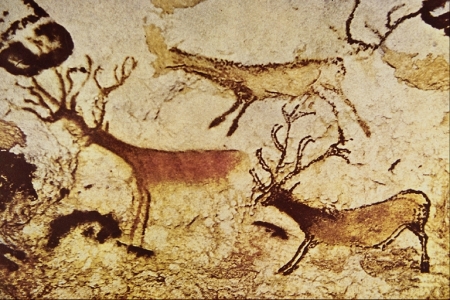
cave-art

“If I can not do great things, I can do small things in a great way.” Martin Luther King Jnr.

Bear with me on this one.

Our culture places high value on polished excellence. We are schooled to laud our would-be-celebrity-achievers; singers who shine through the harsh (if manufactured) glare of TV trials, sports men and women who dedicate their lives to their pursuit of victory.

Along the way, there is indeed a love of a glorious failure, but this depends still on almost reaching the top.

But the fact is that few of us will ever reach extraordinary heights in any given pursuit- that it why such achievements are called extra-ordinary. Despite what we are sold as some kind of democratisation of celebrity , most of us are (and will always be) different shades and hues of ordinary.

What happens when the gap between our achievement and our aspiration (no matter how unrealistic) yawns wide?

I suppose most creative types live in and around this feeling- it is hard to ever feel fully satisfied with what we produce. Insecurity and frustration usually live alongside all the highs and acclamations.

But those of us who live in the ordinary – who make art, music, sport, etc out of base metal – faced with the obvious imperfections of what we make, the temptation is simply to give up. Then all that is left is to experience life vicariously through some kind of media interpreted version of creativity.

Perfection of this kind is shiny plastic. It is unachievable and often irrelevant to real things, real relationships and the mess of real life. It serves as distraction only.

There are other kinds of creativity that capture much more of who we really are. They tend to be shared in small spaces and to have little or no monetary value. Words will be miss-spelled, chords may be duff, the fine brush strokes of a hand will blur slightly. This art emerges from the ordinary- but is no less transcendent.

To strive to be better, to go deeper, further, higher- these are good things, but we can choke on fine food- we also need cabbage and brown bread.

Let the mirage of perfection never steal from us the beauty of what is good.

Pride before fall…

I know- all that sport-as-analogy-for-life stuff is so passe, but sometimes it is good to come up against your own fragility.

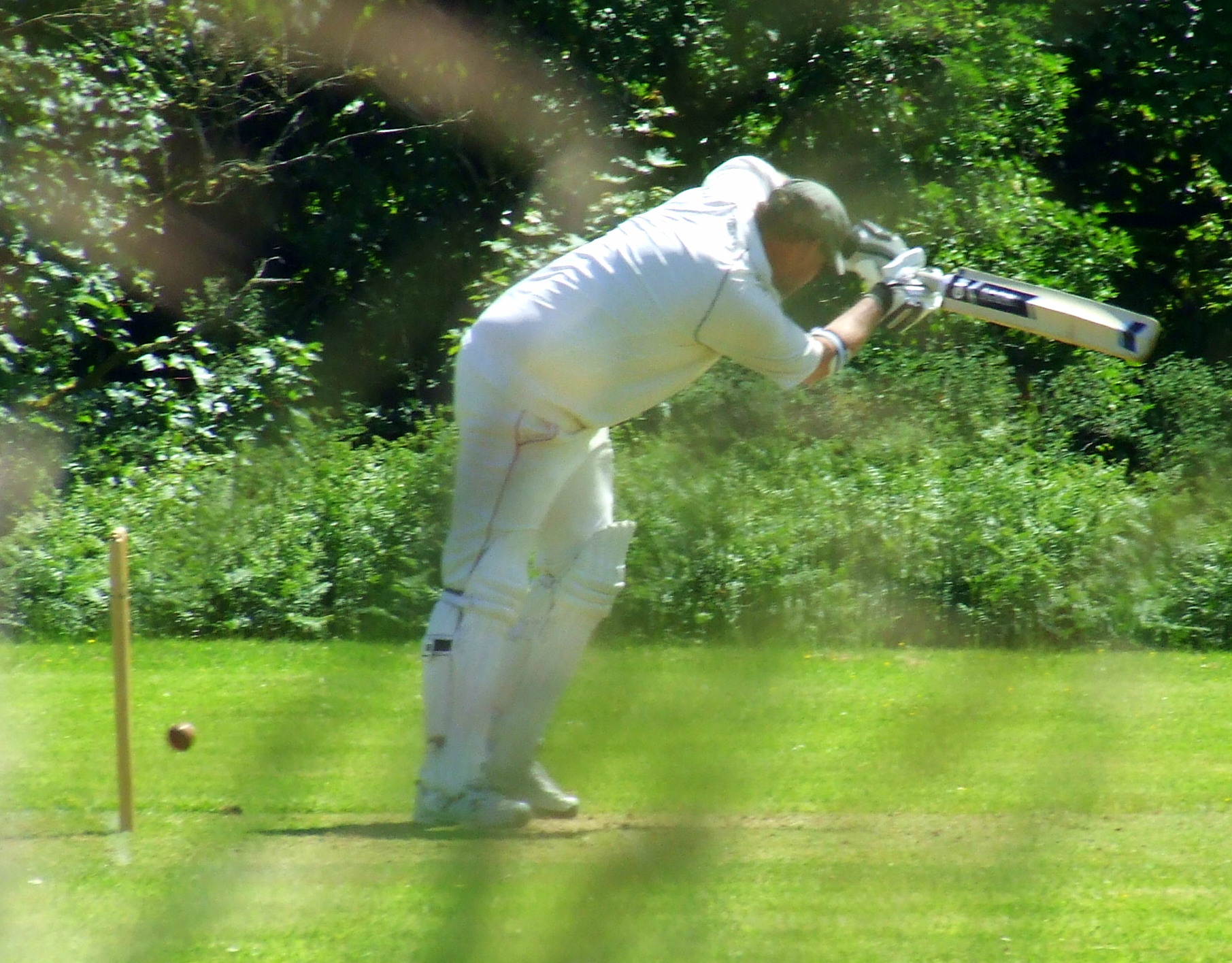
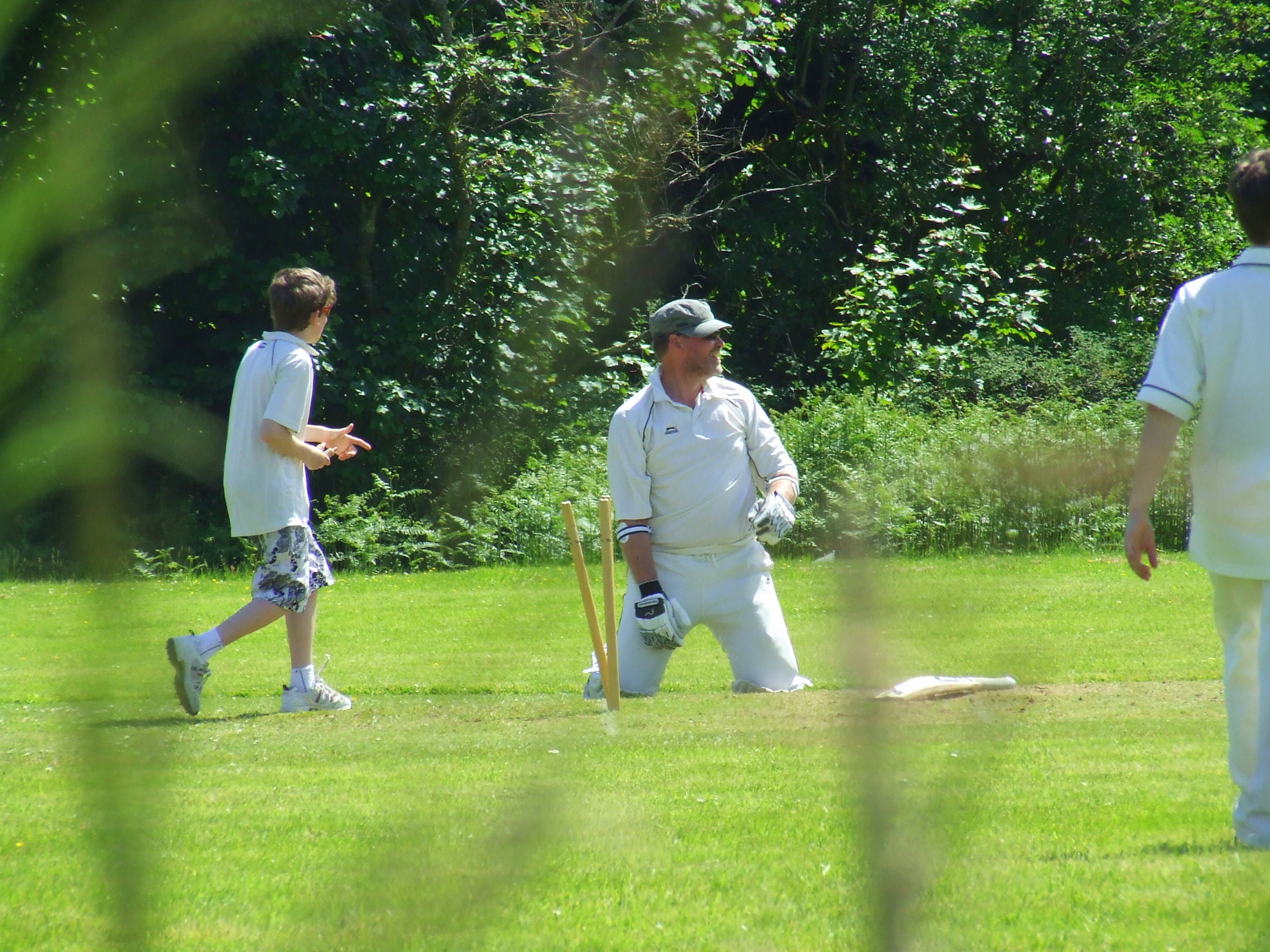
So here we go- some pictures of me playing in a single wicket competition.

It works like this- you draw names, and then bowl/face two overs each against your opponent. I drew Brendan, who was merry with ale in the mid day sun, so I had a good chance- even though he can play. I bowled first- and in two overs, despite smashing a few sixes, he was out three times. Your final score is divided by the amount of times you are out, and so I needed a mere 4.5 runs.

I did not get them.

Drive


Nice leg glance


Out

Where the wind comes from…

weather vane 2

The wind blows wherever it pleases. You hear its sound, but you cannot tell where it comes from or where it is going. So it is with everyone born of the Spirit. John 3;8

A few months ago, my friend (and former next door neighbour) Terry, looked up at the pointy bit of our house and said “That needs a weather vane. I’ll make you one.” Terry is a man who has a gift with all things metal and mechanical- he mends steam traction engines for a living at the moment, so he certainly has the skills.

A few weeks ago, they were passing through on their way on holiday in a camper van, when good as his word he handed me a lovely weather vane, made in his workshop down in Leyland, Lancashire.

He has placed an old Christian symbol on the top, an Ichthys, used in the early church as a sign of meeting, of hospitality.

The next task was to summon up the courage to actually put the vane up on the highest point of our house. Today I managed to overcome shaky knees and do the deed.

Thanks a million Terry!

weather vane 1