The Holy Atheist Church…

atheist-church

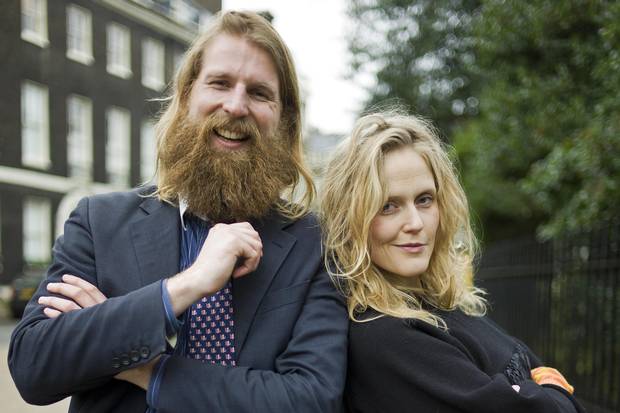
I am sure many of you have heard of the Atheist church services put on by comedians Sanderson Jones and Pippa Evans in London. Around 600 non-believers have been gathering in Bethnal Green since January to listen to inspirational talks, sing songs accompanied by a live band, make friends and volunteer for good causes. Meetings are about to move from monthly to fortnightly.

It now seems that they are taking the idea to international heights- there is already a monthly event in New York, with ‘services’  to begin soon in Los Angeles, Chicago and Seattle.

A ‘religious’ service without God, I hear you ask- what is the point? This from here; 

The Sunday Assembly was created after Jones attended a Christmas carol service and enjoyed the sense of community: “There were so many wonderful things about it, but at the centre of it there was something I didn’t believe in. And for me, life is such an absolute gift so why can’t we talk about that?”

He added: “I’d always thought there’d be people in other parts of the world who would like this. It was picked up by the media and more than 750 people around the world have written to us saying they’d like a Sunday Assembly in their town.” At the New York meeting, the congregation sang songs by the Beatles and Queen, and closed with Proud Mary by Creedence Clearwater Revival. Guest speaker was Chris Stedman, a humanist chaplain at Harvard.

It coincided with the city’s Gay Pride march, so the theme was “coming out”. Jones said: “People in the US talk about coming out as atheists. I’d think, what’s an ‘out’ atheist? That’s bonkers.”

Jones visited nine other US cities where people asked for advice on setting up assemblies. In the UK, branches will launch in Bristol this weekend and Exeter and Brighton in September. Jones and Evans kick off a global roadshow on October 20, with 40 assemblies in 60 days. Locations, decided by demand via their website, include Australia, France and Scandinavia.

Evans, a Christian until she was 17, said: “When I stopped believing in God, I didn’t miss God but I did miss church. And that’s the point of the assembly, meeting like-minded people and bolstering each other up.”

Jones added: “Atheists are very good on reason, and science, but that doesn’t get you jumping out of bed in the morning. This is about being alive.”

All of which sounds quite lovely to be honest- anything that celebrates community, encourages people to do good things and to live life in a deeper and fuller way is OK with me.

I suspect that God might agree too.

What does it mean however to call yourself an Atheist? It suggests a little more than just indifference to the idea of a supreme being at the centre of it all.

Perhaps some might describe it as a religion that sets out to describe all other religions as wrong. There are after all a lot of those kind of religions.

As a Christian, I was brought up to see atheists as evil, deluded, the enemy. Agnostics were perhaps redeemable, but atheists were active opponents of God. They were sticking two fingers up at the divine and would have eternity to regret their foolishness. Militant atheists like Dawkins have done nothing to erode the battle lines.

I found this article by Andrew Brown in the Guardian really helpful, in which he describes six kinds of atheism (based on American research);

The largest group (37%) was what I would call “cultural non-believers”, and what they call “academic” or “intellectual atheists”: people who are well-educated, interested in religion, informed about it, but not themselves believers. I call them “cultural” because they are at home in a secular culture which takes as axiomatic that exclusive religious truth claims must be false. Essentially, they are how I imagined the majority readership of Comment is free’s belief section.

They are more than twice as common as the “anti-theists” whose characteristics hardly need spelling out here:

If any subset of our non-belief sample fit the “angry, argumentative, dogmatic” stereotype, it is the anti-theists. This group scored the highest amongst our other typologies on empirical psychometric measures of anger, autonomy, agreeableness, narcissism, and dogmatism while scoring lowest on measures of positive relations with others … the assertive anti-theist both proactively and aggressively asserts their views towards others when appropriate, seeking to educate the theists in the passé nature of belief and theology.

Nonetheless, these people made up only 14% of their sample, and all other research that I know of would place their proportion much lower.

The other two noteworthy groups are those to whom religion is completely and entirely irrelevant, “non-theists”, and what the researchers call “ritual atheists“, who overlap quite a lot with “seeker-agnostics”, both of whom might be targeted under the marketing category known as “spiritual but not religious”. What defines them is the ability to treat religious practices as something like acupuncture or Chinese medicine: something that works even though the explanation is obviously nonsense:

One of the defining characteristics regarding ritual atheists/agnostics is that they may find utility in the teachings of some religious traditions. They see these as more or less philosophical teachings of how to live life and achieve happiness than a path to transcendental liberation. Ritual atheist/agnostics find utility in tradition and ritual.

As the authors observe, this covers a large spectrum of American Jewry.

(One further category, “activist“, is used to label those who hold strong beliefs on ethical and environmental issues. Pretty much what the term means in lay parlance.)

I think the English, or more generally European results, would be different. The typologies are broadly the same, but since Christianity is much less of a marker in European culture wars, and certainly not an active one in the UK, you would expect the distribution of categories to be different, and for people to be very much less self-conscious about unbelief and less likely to regard it as a salient feature of their personalities.

Atheism is an honest response to lack of belief.

However, most of us who continue to try to live with faith in God have to admit to the presence of doubt, and I for one think we should be honest about this.

I liked the perenthetical trickery of  Pete Rollins who talks about (a)theism. Contained in all our ideas about God is also the idea that what we know is always incomplete, imperfect and error-strewn. He would contend that the only honest way to approach God is to start from the point of (a)theism- where our theories about God are confronted with our unknowing.

Gravity gets us all in the end my friends, and may we all fall into the arms of a loving God.

Hospital mortality- fact or political smokescreen?

stock-footage-sick-diabetic-women-in-hospital-room

For those of you who read this blog in the USA, where our National Health Service (free at the point of entry, paid for by taxation) is frequently vilified as inefficient and a yardstick for poor patient care, the news today will no doubt support the stereotype you have been given.

Inspectors sent into hospitals with higher-than-expected death rates found evidence of poor practice such as too few staff, inadequate infection control, patients left unmonitored on trolleys for long periods and badly maintained operating theatres, Jeremy Hunt has said.

The health secretary cited the problems uncovered by an inspection team led by the NHS medical director, Prof Sir Bruce Keogh, into mortality rates at 14 hospitals in England, as he confirmed that 11 of them were being put into “special measures” to push through urgent improvements to patient care.

The Guardian

The NHS lives on in the affections of the British People like some kind of slightly eccentric aunt who is always there when we need her, but is someone we would rather not invite for Christmas dinner. Or at least this used to be the case- until these stories started to dominate the headlines.

We are starting to see a polarisation of attitudes- on the one hand, we have a government whose main party (the Conservatives) are instinctively against public sector spending, and see an opportunity for opening up the hugely lucrative health sector to the white heat of the market forces, whilst on the other hand, others see this whole episode as a smash and grab raid. This was one of the comments made below the Guardian article above which sums things up rather well;

Reduce staffing levels by cutting funding.
Watch as lives are lost due to this.
Blame the NHS at large for the failings.
Cut more funding as punishment.
Repeat until Privatisation.
Profit.

Except, anyone with half a brain who takes time to look at the basis for these claims will understand that the reality is far from simple. The NHS is a highly complex system, full of endless variation- departments that work well hampered by poor professional relationships with key partners, good management but funding shortages, adequate resources but staffing shortages, areas of total excellence in hospitals that are ordinary etc etc.

The other thing that we have to note are the statistics that the claims of an NHS crisis are being based on.

Check out this summary of the problems of the Hospital Standard Mortality Ratios (HSMRs).

Or this account of what the data means from the Guardian.

There is no doubt that the NHS provides health care to each and every member of this country that is the envy of most of the world. What is more, it does this too everyone, regardless of their spending power, or (as in the US) the quality of their health insurance package (which may well be the same thing.) To any of us who have worked in and around the NHS it is also more than clear that the system is not perfect- no system ever is. It needs constant improvement and review.

But what might kill it in the end is if it becomes a political football used to wage an ideological war.

One further thought about hospital mortality. There will always be variation in hospital mortality rates- but what is the primary cause of this? Is it poor hospitals? Staff who do not care? Bad management? And even if these things play a part in the whole, what is the largest causal factor?

Remember the Black report back in 1979?

Or the Marmott Review as recently as 2008?

The Guardian summarises it all like this;

• People living in more deprived areas are more likely to die in hospital
• Greater deprivation is often found in areas where there is more inequality – i.e. where there’s a large gap between the life expectancies of the richest and poorest
• The impact of poverty on life expectancies appears greater for man than women.

It may be tempting for the media to focus on headline numbers in today’s report but they are unlikely to find any. The NHS medical director has signalled:

However tempting it may be, it is clinically meaningless and academically reckless to use such statistical measures to quantify actual numbers of avoidable deaths.

What’s clear is that several factors contribute to mortality rates and without being able to hold these constant, it is impossible to say how many deaths resulted from weaknesses in the 14 hospitals identified.

I am no conspiracy theorist- but I do think that the Conservatives are seeking to make political capital out of these figures- and to give a message that suits a portrayal of a crisis that is simply not there.

And I also believe that the NHS, in all its cluttered glory, is worth fighting to save, to improve, to celebrate as something that we Brits should be proud of.

Highland short break- special offers!

sgath an tighe, bluebells

Sorry to go all commercial, but regular readers of this blog will know that this year we opened some of our house as a bed and breakfast. We are half a season in, and have really enjoyed sharing our house with guests from all over the world.

In these difficult times, we are well aware that many folk are looking to make their hard earned cash stretch as far as they can, and so have decided to offer a couple of special offers- one of which is an exclusive one to readers of this blog!

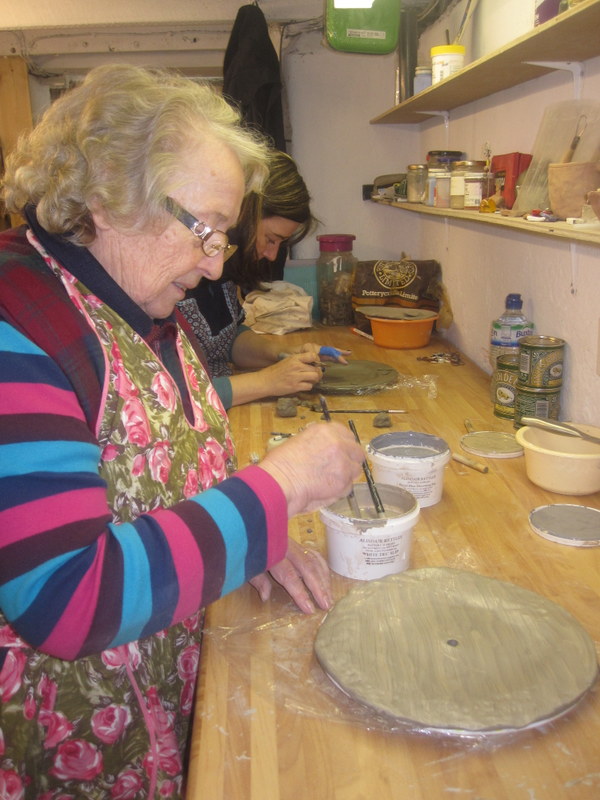
Through the Visit Scotland ‘Surprise yourself’ , people who book two nights in our B and B are entitled to a free pottery taster session in our pottery;

netta potting


However, if you mention ‘this fragile tent’ when you book a couple of nights, then you will get a 10% discount of the cost of your stay too!

The weather has been beautiful up here over the past week or so- temperature in the 20’s, blue sky above the mountains and lochs, space, quietness and peace yours for the making.

We are closer than you think, on the edge of the National Park, near Dunoon;

sgath an tighe

Vanier on community…

jean-vanier

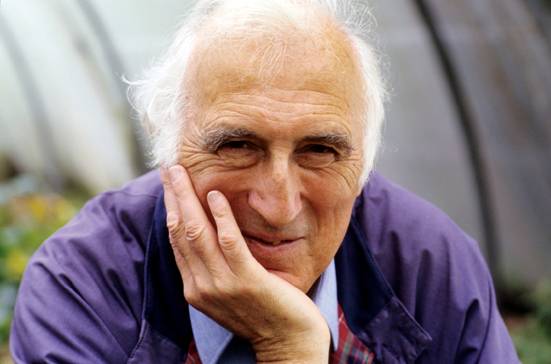
‘Community can be a terrible place because it is a place of relationship; it is the revelation of our wounded emotions and of how painful it can be to live with others, especially with ‘some people.’ It is so much easier to live with books and objects, television, or dogs and cats! It is so much easier to live alone and just do things for others, when one feels like it…. While we are alone, we could believe we loved everyone’.

Jean Vanier ’Community and Growth’
I pinched this quote from my mate Graham’s blog.
.
Because Vanier puts into words what most of us instinctively know to be true. Our relating is mostly driven by self- our need for friendship/entertainment/validation/collaboration.
.
It is this kind of relating that allows us to believe that we live ‘good’ lives, that we are ‘nice’ and that we are ‘Christian’ even.
.
My experience is that community first teaches us that we are none of these things.
.
Most of us recoil at this point- surely there must be something wrong with the people we are communing with? Joe is a pain the arse, Gill is a power hungry despot-in-training, Jim has far too many opinions and should just shut up before I slap him. Better to just go home and watch TV.
.
I confess I have watched a lot of TV.
.
But still, there is community. They have not kicked me out yet…

How to get ahead in Evangelism; find yourself a killer story…


taming_the_tiger_book


…in this case, a kung-fu-killer-assassin story.

For those who have not heard of this book (like me) it tells the ‘true’ story of the life of Evangelist Tony Anthony, who claims to have been taken to China by his grandfather, a Kung-Fu grand master, at the age of fourm where he was trained in the martial arts and became Kung Fu world champion three times. He then moved to Cyprus, becoming an elite bodyguard to businessmen, gangsters and diplomats before being jailed in Nicosia Central Prison for a series of thefts from hotels. It was in prison that Tony Anthony says he became a Christian.

His book has sold 1.5 million copies worldwide, and from the profits Tony set up Essex-based global evangelism charity Avanti Ministries. He traveled the world preaching, visiting prisons and telling his story.

Except it now looks like his story was not true. Check this out.

Finally the Evangelical Alliance and Avanti Ministries were forced to publish a statement;

In October 2012, the Evangelical Alliance received a detailed complaint about the validity of the testimony of an Avanti Ministries’ evangelist, Tony Anthony, and his book Taming the Tiger.

Following discussions between Evangelical Alliance and Avanti Ministries, Avanti agreed to set up an independent panel nominated by the Alliance to investigate in a confidential manner the allegations against Tony Anthony.

The independent inquiry panel was made up of three respected members of the UK council of the Evangelical Alliance: John Langlois (chair of panel), Keith Civval and Robert Amess.

The panel produced its report on 26 June 2013 and concluded, based on the evidence submitted to it, that large sections of the book Taming the Tiger, and associated materials, which claim to tell the true story of Tony Anthony’s life, do not do so.

Both the Evangelical Alliance and Avanti Ministries take serious note of the findings of the report and as a result Avanti has concluded that it is not appropriate to continue to support Taming the Tiger.

The board of Avanti Ministries are now considering the ramifications for Avanti Ministries’ future.

The Alliance and Avanti Ministries would like to thank the independent inquiry panel for their diligence in producing its report.

The Alliance and Avanti Ministries are deeply saddened by the findings of the panel. However, they recognise the good work that Avanti and Tony Anthony have done over the years around the world and the impact this will have on the charity, and specifically Tony and his family.

What is it that makes Evangelicalism vulnerable to con men and fantasists like Tony Anthony?

Or to put it slightly differently, what is it about Evangelicalism that makes all sorts of dodgy means justifiable because of the eternal end- that of saving souls?

I have been giving this some thought, as someone who has been in and around Evangelical churches for much of my adult life;

Firstly, Evangelicalism owes much of its methodology to salesmanship. There is this wonderful product (eternal life) and our job is to ensure market penetration, by any and all means possible.

Because the emphasis is on the sale, not the life long (earthly) warranty of the product, then the most important thing that our energies can be put to is the process of selling. All other things are secondary.

Some people are very good at selling- these people are given the respectful and elevated title ‘Evangelist’. But really they are just good salesmen. They have a slick method and a killer sales pitch. However, selling stuff is by its very nature a dark art. It involves manipulation, psychological game playing. It is divorced from real life, real community, real relationships. Most people who are good at this kind of stuff are not necessarily people who we really want to see in powerful leadership positions (even if that is exactly where they tend to be.)

Some salesmen might rightly be called by another title- sociopaths.

Finally, salesmen who are able to sell their evangelical product on the global media market- these people can not only feed the mansions of heaven, but they can also feed the Christian media machine.

Beware the salesman (or woman, although they tend to be men.) What they claim to be offering is often not what you end up buying.

Wilderness retreat, September, some places left…

The Garvellachs, in the distance

We are planning another wilderness retreat Friday 20th – Sunday 22nd September, for a group of blokes from Garioch Church, Aberdeen. They are particularly interested in finding a way to explore what we might understand to be ‘male spirituality’.

We will be heading out to the Garvellachs again, weather permitting! The last time we tried to get there (in May) the rising swell meant that landing was too big a risk, and so we ended up on Scarba- which was brilliant too.

At present there are 6-7 of us, so room for a few more if anyone wants to join us? Expect costs to be around £50-60, depending on how many actually come (due to fixed costs of boat.)

If you want to come, let me know soon, as there are a few folk interested.

It is a fabulous place to spend time being still…

Jonny and Paul, fire

Accidental beauty…

Table


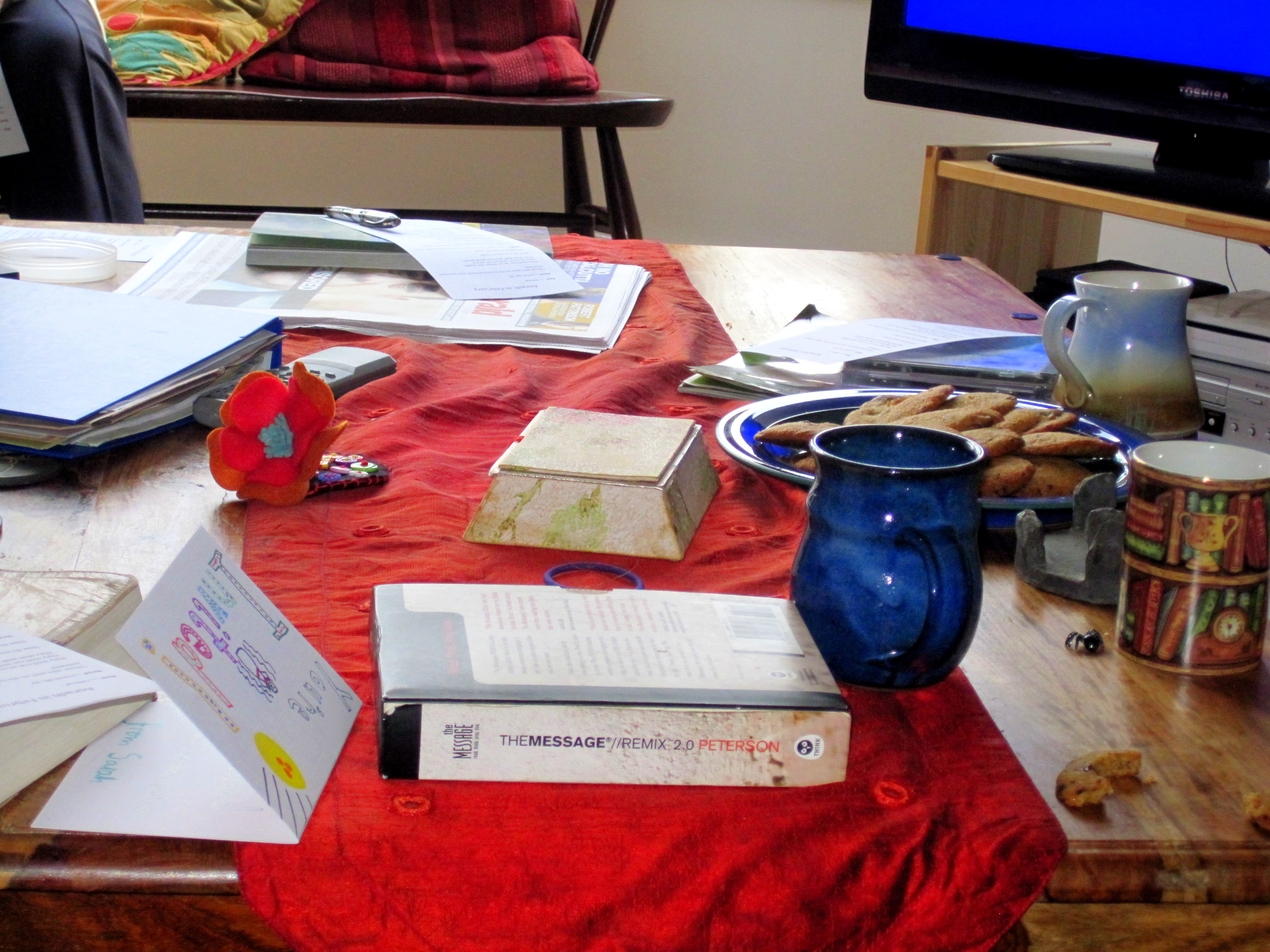
The small group I am part of – Aoradh– have spent years planning activities and events. Labyrinths, prayer rooms, worship spaces, stations, meditation walks through the forest and along the sea front, etc. At present we are taking something of a rest- there is a lot of pressure and busyness around with members of Aoradh, and so the ‘external’ side of what we do has taken a bit of a back seat. I really miss this- not just for the fact that an important dimension of who we are- the collective ‘mission’ outwards- is missing, but also because I miss the creativity.

Having said that, planning creative events is not always easy. Creative people can easily be caught up in their own ‘thing’, we do not easily listen to the other. My experience is that these planning events work best when visible enthusiasm is combined with patience, love and grace. When these are lacking it can be a tough place to be.

A friend posted something on Facebook the other day called ‘Say Yes‘,  written by an American Pastor called Jenny McDevitt. I really liked this;

A few years ago, on a friend’s recommendation, I read Tina Fey’s book Bossypants. Her writing is equal parts funny, crass, and brilliant (and if you can’t stomach all three, it’s probably best to leave this one on the shelf and ask me for a summary). More than a few pages dramatically changed the way I approach ministry, including her explanation of improvisation.


Improv, she says, depends upon four basic rules. First, say, “yes.” Agree with whatever your partner (or community, or congregation) has created. Second, say, “yes, and.” Agree, and then enter into the creative process yourself and start contributing. Third, make statements. This is a gentler way of saying, don’t be the person that only asks questions. That puts pressure on everyone else to come up with all the answers. Once again, contribute. Help create. And fourth, understand that there are no mistakes, only opportunities. Something didn’t go as planned? Look around and see what unexpected beauty has emerged accidentally. It’s almost always there.


Each one of these is worthy of your consideration. For me, it has been transformative to enter each conversation with a church member assuming I will do everything I can to say yes to whatever idea, scheme, or dream they bring with them. Obviously, I can’t say yes immediately to everything. Sometimes it takes conversation and creativity so we can both say yes to an adapted idea. Sometimes it takes questions to understand the spirit behind the idea, so we can find a different way forward that honors the original intent. (And yes, it’s true: there are times when I have to say no. That’s another post for another day.)


Saying yes has changed the way I approach ministry with others, but also the way I approach daily tasks myself. Shifting the evaluative question from “How could this go wrong?” to “How could we make this work?” invites open, positive dreaming and dialogue. It fosters an expectation of creativity. Frankly, it demands that I be more creative, constantly.


For the community, it communicates that we are all in this together. We’re on the same team, working toward the same goals. Saying yes is not blind acceptance; it is shared initiative and creativity. It honors what people bring to the table, and opens doors to possibilities I would have never imagined on my own.


Theologically, saying yes affirms the ministry of all God’s children and reminds us that creation itself is sacred. In the big picture, saying yes is to look at death, and offer life. It is to look at fear, and offer companionship. It is to look at the dark, and offer light. It is to look at hate, and offer love. In a world that is all too quick to say no, to say yes is to pry open the gates of the kingdom a little bit wider every time.


Poetry collection- still looking for submissions…

typewriterletters


I am gathering poems for a collection of poetry to be published by Proost.

This collection came from the idea that poetry could and should be a valid expression of our spiritual journeys, our protests, our pain, our longing and our hopes. It also came from a conviction that many people write poems, and even the best of these often have no outlet- no way of connecting with other people.

I had no real way of knowing what people would send, but all I can say is that I already have some fantastic writing. I sat on the train coming back from London reading poems that made me cry- one of the best measures of a poem in my opinion!

However- if you are hovering and wondering whether or not to send something in- please do.

The best poems for this collection are not necessarily the ones written by ‘poets’- rather they are ones written by people who have been opened up by something deeper, and are suddenly able to express this on paper.

There are also some of you who I am waiting for content from. You know who you are – don’t make me come and fetch them!