Love, no matter what…

The Archbishop of Canterbury, speaking in the House of Lords, appears to believe that the new Gay Marriage Bill will undermine family life.

Welby told peers the bill had created confusion, adding: “Marriage is abolished, redefined and recreated – being different and unequal for different categories. The new marriage of the bill is an awkward shape with same gender and different gender categories scrunched into it – neither fitting well.

“The concept of marriage as a normative place for procreation is lost. The idea of marriage as covenant is diminished. The family in its normal sense predating the state and as our base community of society is weakened.

“For these and many other reasons those of us in the churches and faith groups, who are extremely hesitant about the bill in many cases, hold that view because we think that traditional marriage is a cornerstone of society and rather than adding a new and valued institution alongside it for same gender relationships, which I would personally strongly support to strengthen us all, this bill weakens what exists and replaces it with a less good option that is neither equal nor effective.”

Welby said that his concerns did not stem from faith but from what he believes is the best for society. He said: “And so with much regret, but entire conviction, I cannot support the bill as it stands.”

I have never really understood this argument. How does allowing same sex couples to marry undermine or devalue marriage for the rest (the majority) of us? How does it create confusion? Am I less committed to love and to my children because same sex couples also are able to formally cement life long relationships? I say this with respect to the archbishop and to friends of mine who have the same views, but your argument does not make sense to me.

I am forced to conclude that the real issue is not really the ‘sanctity of marriage’ (which is a highly confused concept all on its own) but rather a pervasive discomfort with the morality, theology and physiology of homosexuality itself. People I speak to who take this view, when pushed, often reveal a conviction that being gay is not ‘natural’, and marriage needs protection from some kind of creeping militant homosexual liberalism. I DO understand this argument. Change of what we hold to be right and true is always tough- particularly when deeply held religious beliefs are involved. Our culture has been on a journey of change over the past decades in relation to homosexuality and this kind of change takes time, conversation and mutual exchange on all sides.

I have made my contributions to this debate already on this blog, but as the vote in the House of Lords draws close, I will add this thought- are there higher considerations? Is not the greatest thing that we celebrate as humans love? 

Michaela and I watched this last night- grab a cuppa and watch;


A weekend of Cricket…

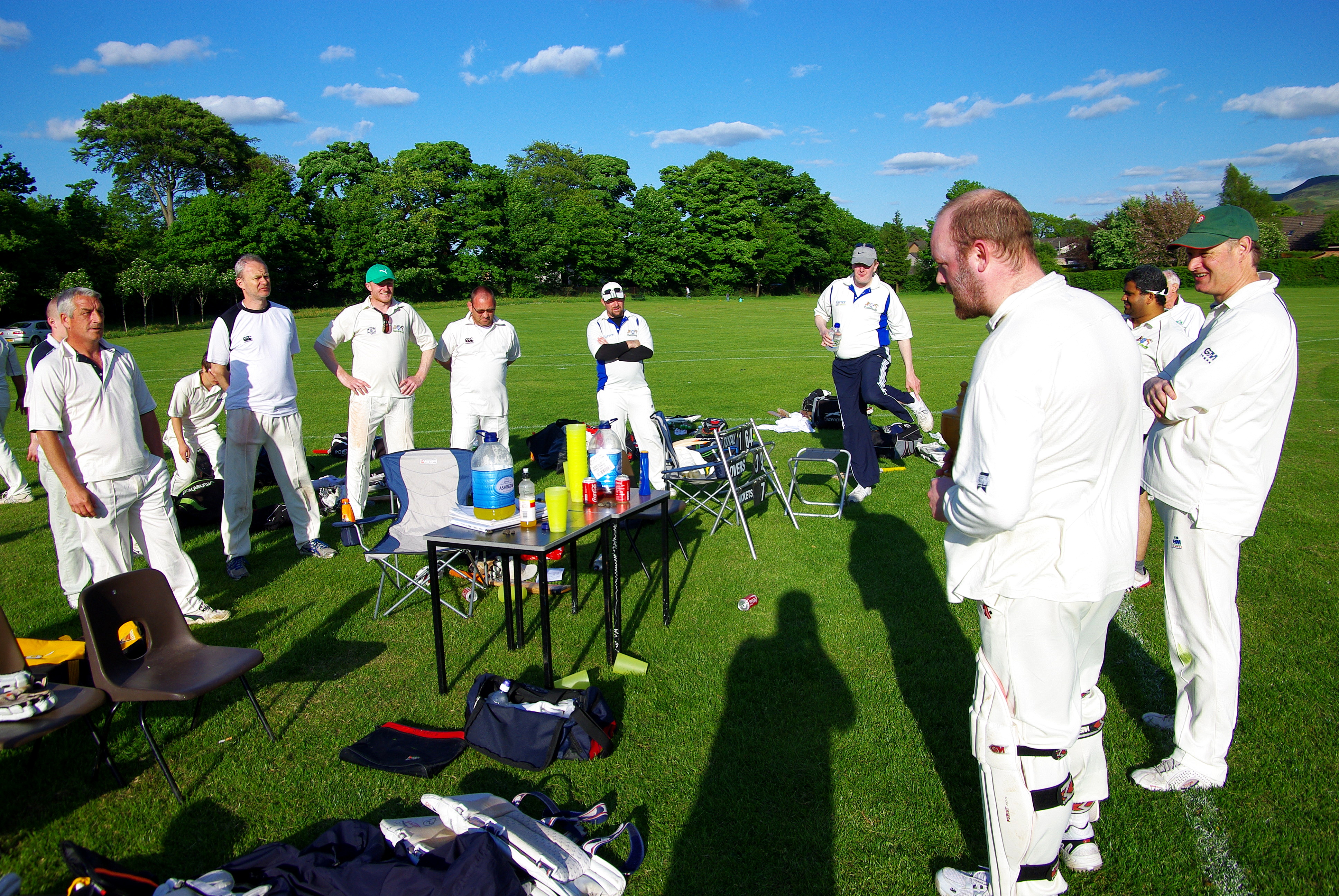
Skippers Robin and Mark exchange the Ashes

Apologies- I know that many of you have no interest in cricket, but this is my blog after all, so here we go again! 

I am rather stiff and sore after playing two games of cricket this weekend- a great rarity in our climate. Yesterdays game in particular was played in glorious sunshine and we are all a little sunburnt.

One of the great pleasures of my middle age is to play cricket in the same team as my son William, who (aged 12) is already better than me as a bowler– we both bowl wrist spin but his has far more fizz and venom, and he can turn the ball both ways with no appreciable change of action. I have the edge in the batting, but not for much longer I am sure- this is mostly about power, not technique.

Only a father who loves cricket will know how much pleasure this gives- I am sure this is true in any sport, but cricket has a kind of sepia timelessness that makes the embrace of the new generation all the more beautiful. Promising kids are cherished by everyone on all sides and old men playing into their twilight years seem to lose twenty years as they smile at a youthful shot well played through the covers – even against their own bowling.

This weekend contained two very different kind of games (both of which we lost!) The first one, played in Greenock on Saturday, was a 2nd XI league match against Prestwick. They rattled up a formidable total after a series of nearly-outs gave them a head start. William and I bowled late- he got a good wicket, but I at least kept things tidy and slowed down their scoring. I batted down at number 8, and when I came in victory was already a forlorn hope. However, I whacked a few and finished with 37 not out, a score well bettered  by young Harry Briggs (aged 14) who made a lovely 57 (there is a match report and scorecard here.) There was an intensity to this cricket- there were few jokes, lots of shouts and loud groans, and damage was done in the dressing room when wickets fell cheaply.

The other game was rather different. We traveled to Edinburgh to play a Royal Botanical Gardens CC, a long time fixture,with Innellan Cricket Club, played for our own cup. Botanics often contain some tasty players as they gather strong fit blokes from Australia as well as home grown talent. However, the emphasis on the game is far more relaxed – the aim is to play friendly cricket in the best kind of way. Winning is important, but not the most important thing- this is that thing called ‘the spirit of the game’; playing well, giving everyone a chance, being honest and fair, having a laugh with friend and foe alike. In fact, the cruelest humour is always reserved for members of our own teams.

Will bowled beautifully again and got a wicket with a perfect curling arc of a ball that defeated a decent batsman in flight and turn. He had every batsman groping and hopping about- much to the delight of their colleagues. I managed a wicket too- a nice one that pinned the batsman plumb in front for an LBW (which I appealed for rather too forcibly, against the gentle friendly tone of the game.) RBG made a healthy 169 at the close, aided by a blistering knock from their tame Aussie.

In a really nice touch our captain let Will and I open the batting- and we spent a few overs teasing each other for each bad shot and enjoying the good ones, until William got a bit too ambitious and hit a shot over the bowlers head to be caught in the deep.  All the clean hitting freedom I had found the day before seemed to have deserted me, but I scratched and edged my way to 25, the point at which we had agreed to retire so everyone had a chance to bat.  I also took one for the team right in the box which brought tears to my eyes from the pain of it and to my team mates eyes for its comedic effect.

Our wickets fell regularly so I came back at the end to accompany our skipper. By then I had a migraine, with all the usual vision problems   (perhaps related to the blow in the testes) so it was a miracle that I hit anything at all, managing only a few runs before timing a drive straight at a fielder and setting off on a suicidal run as I could not see where it had gone. This left the skipper high and dry, but in a typical piece of good sportsmanship the RGB captain invited him to bat on with a runner, as we had only 8 players and this seemed to him to be fair.

Then began one of those pieces of sport that always live in your mind- Robin, our captain, started to open his shoulders, hitting sixes and fours to every side of the ground. Because I was still padded up I acted as runner and almost contrived another run out, having to dive in to make my ground. It was one of the those elbow-skinning, should-know-better, middle-aged dives which has limited forward motion and is more like a rotten tree falling in a wet forest. I was in by about an inch.

We fell just short after 40 overs- 6 runs short in fact – after RGB realised their peril and upped their bowling game in the last over. The game was lost, and no worse for that.

Men in a field, a bat, a ball and lots of laughter. You may laugh at my foolishness, you might justifiably scoff at such a waste of our precious time on earth. What captives were liberated? How many souls saved? How was the cause of humanity served?

All I can say is that you were not there.

IMGP4690

Church, in photographs…

church service


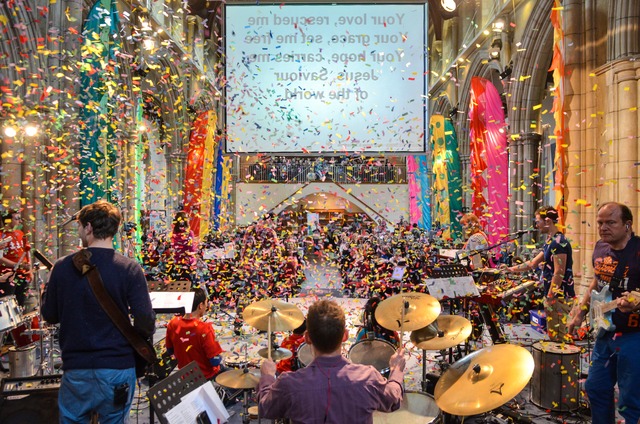
Check out this lovely collection of photographs sent in to the Guardian Witness Assignment entitled ‘Your Church Congregation’. It rather dispels the stories of the death of Church as the pictures of full of life and humanity- real people meeting and trying to share good life in the name of Jesus. I found looking at the pictures quite emotional, despite my journey away from established religion.

There is life in the old girl yet…

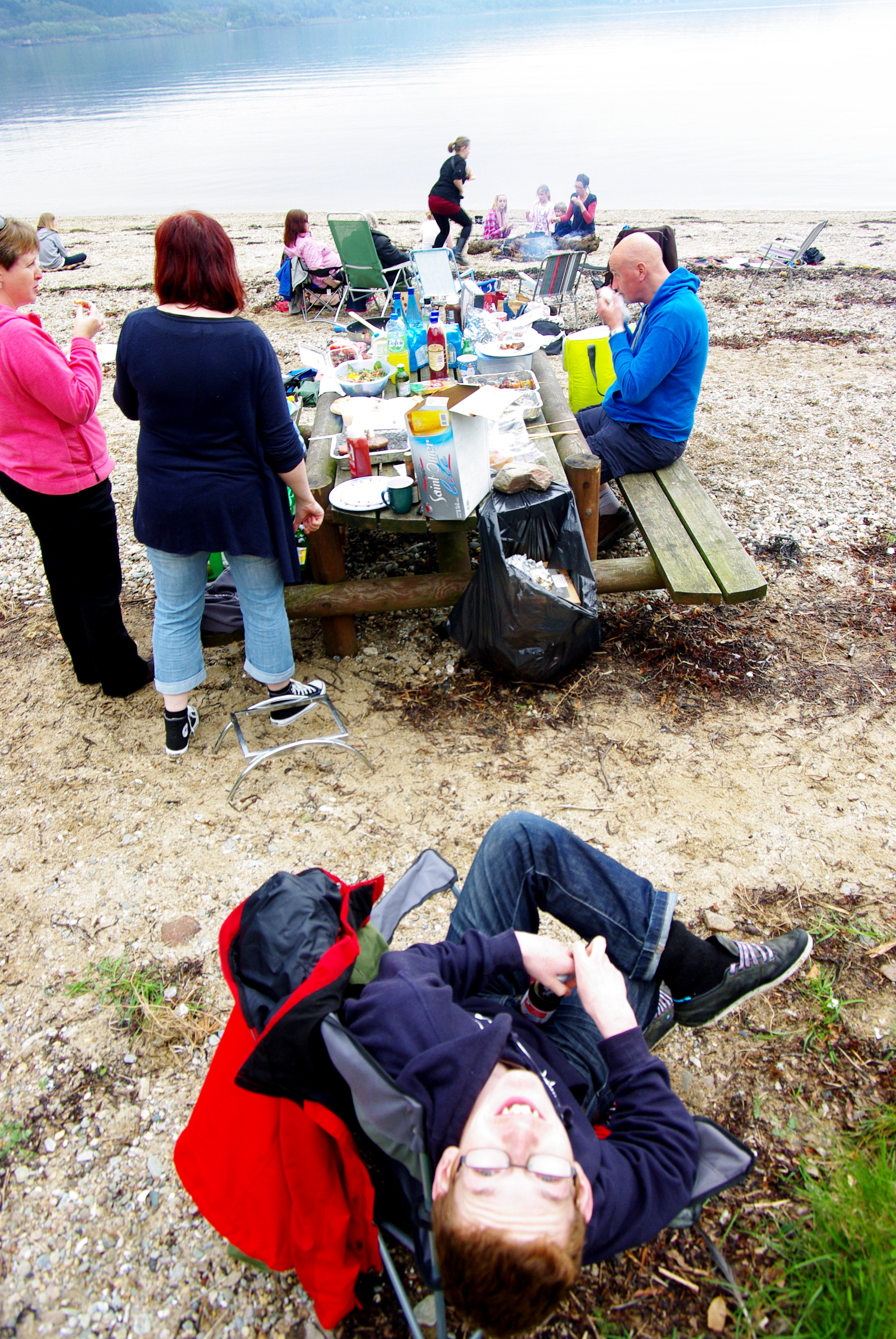
Here is one of my own congregation;

Andrew upside down

Recession=austerity=extremist politics=the rise of fascism…

di canioIs

Is he or isn’t he?

The Sunderland football team manager, Italian former international Paolo Di Canio, caused a storm recently because of his views on Fascism, and his description of Benito Mussolini as a ‘principled man’. He later retrenched, describing many of his friends as black and all appears forgiven at the club- where results are more important than politics.

Di Canio’s views emerged out of a particular socio-ecomomic context. This from here;

Paolo Di Canio’s Roman upbringing may not excuse any fascistic beliefs he once held but it does help to contextualise them. Born in 1968, Di Canio grew up in a country that was violent and divided, as it had been since Mussolini’s rise to power. The 1945 liberation had failed to stimulate the national unity that fascism had claimed it would build and a vicious settling of scores left around 15,000 Italians dead in the three months that followed. There were no trials, no coming to terms with the past and, consequently, no definitive end to the ideological conflict in Italian society.

After students revolted in 1968, northern factory workers joined the fray in the“hot autumn” of 1969, car industry operatives pitched battles with the forces of order on the streets of Turin. Tacitly supported by the police, secret services and more openly by conservative society, rightwing violence erupted in response. The 1969 Piazza Fontana bombing in Milan left 16 dead and more than 80 wounded. Hastily blamed on anarchists, it was eventually traced to a neo-fascist group based in the Veneto region.

All of which is further evidence of these things;

  • Violence leads to violence
  • Divided splintered societies in which there is a huge wealth imbalance become polarised and breed violence
  • It takes generations to change the political mindset of a particular population
  • Economic turmoil leads to extremism

If this is true, it should be no surprise that we see a rise in hate politics across Europe as austerity bites. In the UK we have seen success for the dreadful British National Party, and the prominence of the English Defence League. Both target immigrants as the source of our nations ills- exploiting the baser and most ignoble part of our British isolationist psyche.

In France, Marine Le Pen and her National front seem to be more popular than ever, despite brushes with the law.

In Greece Golden Dawn is on the rise.

Man in camo trousers stands to attention in front of sea of Greek flag-wavers


The mechanisms by which Neo Fascism is finding popularity again are of course complex. In times when people feel desperate and under threat the appeal of someone to blame and an easy fix are always going to be attractive.

There are darker deeper forces at work too – after all, how is it that we do not see the wood for the trees? The cause of our current economic woes has nothing whatsoever to do with inflation or Muslims, and everything to do with the greed of the richest in our economies- who in the UK appear to be doing better than ever. What stops us seeing this so clearly?

I suspect that this is a combination of distraction, aspiration, envy, celebrity worship, and clever manipulation by the ruling elite to maintain the status quo, either by accident or design.

Violent politics flourish in the mess made by capitalism. It has to be resisted…


Leadership, networking and the trajectory of pioneering groups…

network


I am part of a small ‘missional’ group. We had ‘emerging church‘ conversations, flirted with ‘new monasticism‘. We found the old ‘paradigms’ restrictive and so wanted to do a new thing, using new ‘alternative worship‘ styles.

There you go; I have established my credentials- the badges and trendy buzz words that have allowed me to find a groove to travel in, no matter how shallow and indistinct.

The reality is that this language has often felt contrived and pompous, and the journey of our group has been one of ordinary people trying to get along, whilst searching for a way to live out faith that has some integrity and authenticity. Groups like ours are not unusual, even if they are ephemeral, fragile.

Many small groups like ours set out with pioneering passion- they have this idea of the purity of community releasing a power in them to achieve something special. Often they are right- but very soon it will get messy. The enforced intimacy of small community will crack things open quickly- there is no place to hide at times.

Then there is the inevitable reduction in passion that comes over time; things that were exciting always feel stale with repetition. How do you refresh, revitalise and renew. How do you avoid creating a new narrow liturgy that ensnares every bit as much as the ones we gratefully left behind?

This is the trajectory of most small groups- excited start, success, stagnation, crisis, reinvention (or destruction.)

If we are to be sustainable, if we are to make the longer journeys together, then we will probably need some help in the form of some external connections- we will need to speak to people who understand, who have made some of the same mistakes and dreamed the same dreams. Sometimes we may need others to listen to our pain or laugh with our small absurdity.

Groups like ours are inoculated against organised booted-and-suited religion for the most part. However I remember some interesting research from my old group work days within social work.  I nforget the references (I will try to add them later) but it goes something like this;

The success of a group depends to a large extent on the external context it is embedded within. An example of this might be an encounter group within a hospital or a prison. If the group lacks the support of the establishment this might be a plus at first- people feel embattled and react against their context – but it is simply less likely to be successful in the longer term. However, a little external validation seems to go a long way. So if the staff in the wider hospital speak positively of the group, see it as valuable and helpful, the group absorbs it all, and thrives.

Of course, the links to groups like ours is rather tenuous, but it is no surprise to me that many of the pioneers of missional groups that I know arrived at their adventure after many years of established churching. Despite their maturity, experience and a degree of reaction-formation against the context they escaped from, many of them still look back. Some return.

And this is no bad thing.

In Englandshire, there are good supportive links now for ephemeral groups- there is a wider recognition of the value of micro church through movements like CMS and Fresh Expressions. This is much less the case north of the Border in Scotland.

Last night (and this morning) I had a long discussion with David from Garioch Church, around this kind of stuff. We talked about the possibility of a new kind of network- an old theme for me. 5 years ago we tried to start such a network (see here and here for example) but things did not work out for various reasons.

So here is a question to people north of the border who find themselves on the ragged edge of organised church- where do you find your connections, and is it time to try this networking thing again?

The blessings of place…

IMGP4686

I write this sat in the Garden on a delightfully warm evening.

Michaela is in the living room running a craft course with a group of people.

Will has gone for a walk along the sea front with a couple of pals- heading for the shop and an associated sugar rush. Emily is on her way back home from Glasgow after submitting her higher photography portfolio.

Staying in our annex is Sam, along with Becky and his three lovely kids. We spent an hour sitting in the sun with them watching them play with Emily’s old dolls house.

I am waiting for another friend, David, who is staying here overnight on his way back up north. We will no doubt share a dram and lots of good conversation.

Most of which is made possible by the place that we live.

I often feel guilt about our house. It is fairly big (even if definitely not posh) with fantastic views over the sea. In these days of house-idol-worship it might be considered to be in the upper pantheon. The fact is that we bought it reluctantly when it was in a terrible mess and spent 10 years patching it all back together on a shoe string, but despite this it is still grand enough to often make me wonder about our use of the earths resources.

But without the house, many good things might not happen- in our lives, and hopefully in the lives of many others.

This is no excuse- places have the power to sustain, to enrich, to revive. I pray that this may always be true of our house.

Kick start some creativity…

photo-main

My mate Andy Prosser has spent years writing songs, playing music and home recording. He has finally decided to put together an album in a professional studio!

He is funding this through Kick Starter, a crowd funding website. Check it out here – you can listen to some of the demos of his music too.

More importantly, you can donate to the project, pass the link on to others, blog it, Facebook it, twitter it etc etc.

Go on, he is worth it. Andy is a talented bloke who has put in the hard miles as both a musician and a man to allow these songs to be formed in him. We need people of creativity like Andy more now than ever.

Scooping them up for the Kingdom…

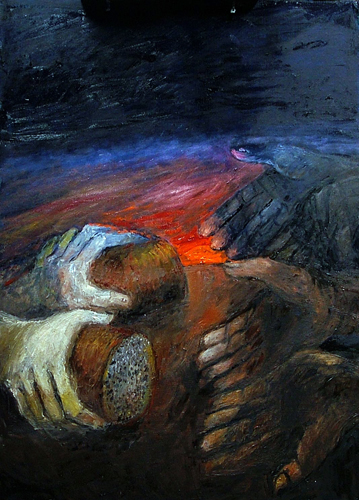
koder-sharing-bread

Lovely chat tonight out at our pub discussion thingy- talking about the Kingdom of God.

It is an old discussion for many of us, but we were chewing again on all those mysterious stories that Jesus told us- those The Kingdom of God is like… stories. Mustard seeds, fields of weedy wheat, women making bread with yeast, corn falling on random ground etc. It is all rather mixed up and mysterious, particularly as the stories from Matthew’s gospel tend to have the odd bit of smiting and burning in torment, all of which does not fit with fluffy-Jesus very well.

We talked too about our understanding of The Gospel- which for most of us used to be the saving sinners from hell when they die thing, and how this version of the Gospel comes mostly from a reading of Paul’s letter to the Romans backwardly applied to the rest of the Bible, when actually the Gospel that Jesus talked about was this one;

Repent, for the Kingdom of God is at hand.

(Or perhaps)

Its time to turn things around, shake things up, take a long hard look at yourself, because there is a deeper, more beautiful way of living that has come to you- the insurgency of God…

Our discussion then turned to what living as an agent/citizen/participant in this Kingdom/Revolutionary movement/Insurgency might mean.

The old understanding of the Gospel made it all simple- saving the lost so that they might go to heaven. Our primary purpose is evangelism. All other tasks are distractions from the Gospel. I find this narrative very difficult on all sorts of levels now, but the mission of the Kingdom is far more challenging, vitalising, engaging- we leave behind the hard in-out legalism and instead have to practice the disciplines of love (Romans 13:10)

This might in the face of it seem rather woolly and directionless, like encouraging one another to go out and be nice. However love is not just a passive thing- it demands action, particularly in the face of desperate need and danger to those who might be regarded as the recipients of our love.

I began to wonder about the old call to ‘save the lost’, usually applied to those who are not like us, so therefore were in danger of roasting in hell.

My friend Pauling put it rather neatly- Love might involve “Scooping a few people up” she said. Some people need scooped. And we might need to do a bit of scoopage.

We laughed- but despite all those old dangers of paternalism/maternalism, sometimes scooping people up- lifting them, holding them, is just what we need to do. The lost and the least, the broken people, the awkward, the lame, the lonely.

We used to call this Salvation, evidenced by conversion. For some this leads to amazing transformation- there is nothing woolly about this kind of love, or this kind of insurgency.

Is it time to reclaim the language of salvation for the Kingdom of God?

We can call it Scoopage if you like.

How to deal with extremists…

ARABIA_SAUDITA_-_terrorismo_islamico

Invite them in for a cup of tea of course.

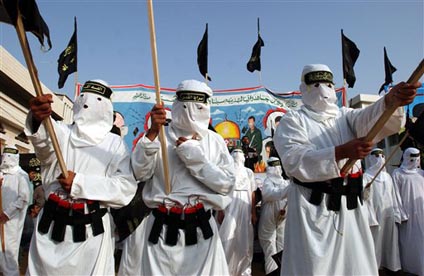
There are scary things happening at the moment- in the wake of the brutal murder of a young man on the streets of Woolwich  in broad daylight, something is being unleashed.

In many ways it feels like the time is right for scapegoats. They are always a useful release or distraction at times of economic trouble. The 1926 great depression led to the great purges in Europe of the Jews. In more recent times Thatcher had a series of social groups to blame- the miners, New Age Travelers, benefits scroungers,

Currently there is a real danger that the next scapegoats will be Muslim.

Politicians start to talk about dealing with radical preachers. Fear is stoked. ‘The other’ is cartoonised and selectively described. The nuances, the complexity of it all is stripped away- there are the good guys (us) and them; the evil, half human terrorists who want to kill us all whilst shouting Allahu Akbar.

How do you deal with extremism? Surely the first thing we have to do is to set aside the dehumanising stereotype and talk. Meet real people and hear stories. Listen to each others world view and seek understanding.

I read a great example of exactly that today; The English Defence League  organised one of their protests outside a Mosque in York. The EDL is a scary far right organisation, with roots in the old British National Party and football hooliganism.  These are not people who like to talk- they would rather throw insults and broken bottles. The people in the Mosque had every reason to feel afraid. However, according to the Guardian, this is what happened;

York mosque dealt with a potentially volatile situation after reports that it was going to be the focus of a demonstration organised by a far-right street protest movement – by inviting those taking part in the protest in for tea and biscuits.

Around half a dozen people arrived for the protest, promoted online by supporters of the EDL. A St George’s flag was nailed to the wooden fence in front of the mosque.

However, after members of the group accepted an invitation into the mosque, tensions were rapidly defused over tea and plates of custard creams, followed by an impromptu game of football.

A young member of York mosque displays his message.

A young member of York mosque displays his message. Photograph: Anne Czernik

Leanne Staven, who had come for the protest, said that she had not come to the mosque to cause trouble but because “We need a voice”. “I think white British who have any concerns feel we can’t speak freely,” she said.

“Change has been coming for a long time and in light of what happened to that soldier in Woolwich there have to be restrictions on people learning extremist behaviour and it has to stop.”

Mohammed el-Gomati, a lecturer at the University of York, said: “There is the possibility of having dialogue. Even the EDL who were having a shouting match started talking and we found out that we share and are prepared to agree that violent extremism is wrong.

“We have to start there. Who knows, perhaps the EDL will invite us to an event and the Muslim community will be generous in accepting that invitation?”

Ismail Miah, president of York mosque, added: “Under the banner of Islamthere are very different politics: democratic politics, the far right, left, central, all over. You can’t target a whole community for what one or two people have done.

“What they’ve done in London is for their own reasons but there’s no reasoning behind it from an Islamic point of view.”