The vicar who danced at a wedding…

This made me smile and laugh and cry a little with the joy of it all.

As the Guardian put it;

If you want to believe there is still some hope for the Church of England, YouTube has the evidence right here: a video of the Rev Kate Bottley leading her congregation in an exuberant and joyful disco dance routine in the middle of an otherwise strait-laced wedding service.

It is one of those things that makes you feel good to be human. It’s a celebration of ordinary, lumpy people that manages to reframe without snobbery or affectation the Betjeman verse about a couple of lovers in a Bath teashop: “She such a very ordinary woman / He such a thumping crook. / But both, for a moment, little lower than the angels / In the teashop’s inglenook.”

This matters not because it shows the Church of England being “trendy” or up to date or anything like that. Few things could be further from London’s Hoxton than disco dancing in rural Nottinghamshire. But it does show that there are bits of it which can still connect with the people around them. This matters. The median age of Anglican congregations is now 61. That’s nearly twice the age at which most women in Britain get married.

The couple in this video were not churchgoers, and had lived together for years before they got married. They only went to a church after it was suggested by the stately home where they held their reception. But they managed to get a ceremony there that did both solemnity and joy, which are things that weddings need.

I doubt that Bottley will ever become a bishop. At the moment she is not even a full-time parish priest. She works three days a week looking after three rural churches, and two days a week as a chaplain. But it isn’t bishops who will keep the church of England going. In fact it’s largely bishops who have screwed it up over the last 30 years. Ordinary people doing unglamorous jobs like part-time vicaring are the ones who will keep it from appearing entirely as a sour and self-obsessed sect – the ones who know it is much better to be silly than self-important, and much better to be provincial than pompous.

A contract between Scotland and God…

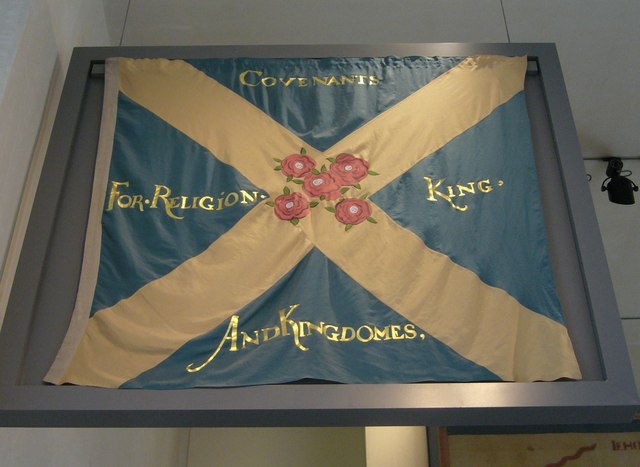
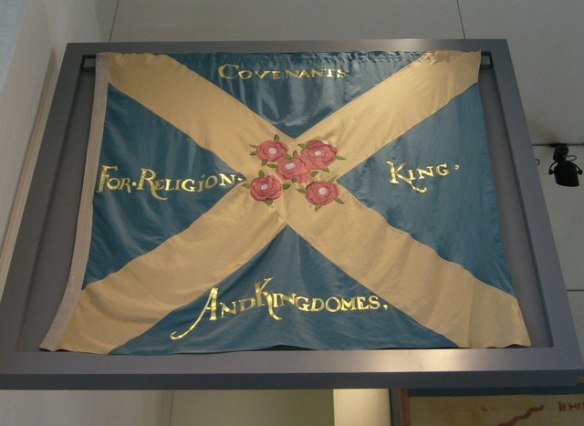
covenant flag

Back in 2009 I wrote a post about Jean Darnell‘s prophecies in relation to Scotland. The point of the post was to dig into some of the hopes that certain parts of the church hold on to up here- hopes for a revival, for a new Holy Nation that becomes a beacon of truth for the whole of Europe. I suspect that there are people who hold to this hope in all countries, and from all faith backgrounds- although it is perhaps fair to say that Scotland has had more than most.

I was reminded of this when watching a recent BBC documentary called ‘The History of Scotland’. Episode 2 is available on the i player, and tells the story of the Covenanters.

I remembered a wee on-line spat with someone who commented on the post I wrote about Jean Darnell. Check out the comments on the post. 

Most of us in the British isles know very little about the Covenant, and how the power of religion became the engine for slaughter, civil war and repression. We know some of the key events- the ‘English’ civil war, Cromwell, beheading Kings and then reacting against it all afterwards. We might also know something about the  clashes between Catholic and Protestant religious movements, but this seems like a decorative footnote in history- like an antique frock coat in a museum. 

I wonder though whether this part of our history is more important to engage with than ever, in this time of the rise of fundamentalist religion. 

So here we go…

The Reformation smashed apart some of the old established religious hierarchies. John Knox, brought the teaching sof Calvin back to Scotland. and in 1560 Scottish Parliament adopted a formal system of  presbyteries. Men came to beleive that the Scottish church was the closest to perfection on earth. This was the church that all churches should emulate.

However, this was the age of Kings- power was dynastic, and fickle. Charles the first of Scotland, England and Ireland, seemed to be undermining the purity of the Presbyterian church in a series of cuts. Anglican priest undertook his coronation service, bishops were imposed, a prayer book insisted upon. Charles was imposing himself between man and his God, using the ways of Anglicanism, which was seen as Catholic-light. All this led to trouble. Preachers denounced, rabbles were roused, Priests were beaten up, books were burned.

In 1638 some of the outraged faithful organised themselves on a new path. Taking inspiration from the covenant God made with the ancient Israelites, they wrote a document that captured what they believed to be the role of a perfect king- one limited by the law of God, and married to the perfect church. The document fell in fertile soil, and stimulated an uprising of religious fervour- Scotland could be the perfect kingdom, a new Israel. 60% of Scotlands adults signed the covenant- many swept up in the excitement of it all, some bowing to pressure- failure to sign was shameful, Popish. This pressure led inexorably towards extremism, fundamentalism, madness even.

In a time of fractious relationships across the Union, the Covenanters (as they were now known) raised an army. Charles was weak and his hired army was defeated twice. Charles had his own problems with a troublesome parliament at home and the English civil war began.

In the first year of the war, Scotland took no part, but in 1643, Parliamentary forces, who had been repeatedly defeated by Charles forces, sent to Scotland asking for help. In return for help- in return for this help they promised the establishment of a Presbyterian Kirk in Scotland and Ireland. 20.000 men sent and they turned the tide. 2 years later, Charles surrendered. The defeated King was asked to sign the Covenant, but this was like asking Charles to reject his understanding of God, and who he was in the whole order of things. He refused.

Charles made a secret deal with loyal noblemen in Scotland, offering a 3 year trial of a Presbyterian kirk in all his kingdoms. Old loyalties remained. This split the Covenanter movement. Ordinary people did not want to fight for the vague promises of a non covenant King. These became called the PROTESTORS.

However, the Nobles marched south- they were defeated at Preston by Cromwell. The Protestors saw this as evidence of Gods favour, and fired with the certainty of their election, they seized Edinburgh.

What happened then will be vary familiar to anyone who has been close to the Taliban in Afghanistan. In a period known as the ‘Rule of the saints’ backsliders were executed, holes made in tongues, ears nailed to posts, the ungodly were harried and purged. No sin was left unpunished, public floggings were held on every street corner. Yet these times were remembered later as the ‘golden age’ of Protestantism.

The interesting thing is that this kind of extremist collective madness was only possible in a political vaccum- a time in which the moderation and stability of state has been suspended, smashed. Like Afghanistan, or Iraq perhaps, before or after  the odd invasion.

In 1649, King Charles the first was tried to treason. On the 30th of Jan he was executed. Monarchy was abolished- in England at least.

However, in Scotland, the Covenant still needed a signature; the Scots still wanted a king. They invited Charles’ son to come and be king. In order to be King, he needed to sign the covenant. He signed.

Cromwell could not let this lie- he had by now replaced the Union of old Kingdoms with a new Commonwealth, and to protect his embryonic new order he came north in 1650 with his army. For a while, things were in the balance. At Leith the Covenant army was twice the size of Cromwells, but decided to purge itself of ungodly elements (who tended to be the professional soldiers.) Cromwell killed thousands and put the rest to flight. The Rule of the Saints was over.
Cromwell was brutal- the English armybecame an army of occupation in Scotland.

1653, Cromwell became Lord Protector- almost-King. Then Cromwell died and 11 years of guilt unleashed. The spectre of the headless king stood over the nation- people were appalled. Things had gone too far.

So in 1660, Charles, son of Charles, becomes King of England and Scotland.  The old world was re-made and in this new/old world there were no room for the Covenant. It was made unlawful. Copies were collected and burnt by hangman.

Charles appointed bishop0s and archbishops, made all swear allegiance. All of Scotland’s ministers had to find a noble patron. Many could not or would not.

Alexander Peden- (“Prophet Peden”) was one such minister. He left his Kirk and began preaching in open air to thousands of men in South West Scotland- often armed men.

But things were changing in high places; the direction was back towards Rome. In 1670 Charles made secret treaty with Catholic King of France for money and arms to make sure his power remained. National conversion to Catholicism. Needed to be kept secret- and so those who accused him of Papery were sent to Bass Rock, including Peden, who spent 4 years on Scotland’s own Alcatraz.

IMGP2900
Everything that has been achieved by Protestors (and the Covenanters) was being undone. The faithful were desperate. The accursed Bishops were a figurehead of all that was evil and so in 1679, 9 men chased down the coach pf the Archbishop of St Andrews and assassinated him in front of his daughter.

It was a  terrorist act and there was a reaction. Battles were fought again in which initially the Protestors did well, taking the city of Glasgow. Hopes were raised- could ‘The Golden Age’ return?

Then began three weeks of discussion. Should the ungodly be allowed to fight.? Were they wanting to unseat the king, or persuade him to sign the Covenant only? Theology was argued. Factions formed and split then split again. And then Cromwell attacked. 400 were killed, 1200 were taken prisoner, the rest fled. What followed became known as ‘the killing time’. Many preachers executed.

In 1681, a young Protestor called James Renwick climbed up pikes to retrieve and bury the heads of 5 executed Covenanters. He became leader of remaining Protestors,  Who made a new declaration and formed what were called ‘United Societies’. They rejected Stuart Dynasty. Rennick, along with his 6000 followers, wanted to start second civil war.

Meanwhile, James, Charles brother was declared heir to throne as Charles had no legitimate children and he was CATHOLIC. Fires of unrest started to smolder, and something needed to be done. The plan was this; an Oath was framed demanding all citizens reject the united societies. Failure to take oath was punishable by death. Soldiers sent into south west- and over 90 people were killed by summary execution- no courts, not appeals.

James came to throne in 1685. Now there wereCatholic monarchs in France and Britain. William of Orange in the Netherlands, James Nephew, had a claim to the crowns of Britain. He was not Catholic and had been at war with France for years. He prepared to make his move.

Meanwhile, Catholics became majority in Government. Only the United Societies remained as an opposition, so a price was placed on Rennicks head. Rennick wanted to become a martyr so after a skirmish in which he killed some of the men sent to detain him, he allowed himself to be taken and was executed in 1688.

Then William of Orange landed in Devon with 15000 men, and James support withered.  It seemed to be decided that this  was not an invasion- but rather a glorious restoration. Protestant army offices defected to Williams army and noblemen across the country declared their loyalty to William. James’ position was untenable  and so he fled the country. In 1689, William was crowned King of the union of Scotland, England and Ireland.

Significantly, he made a new covenant between crown and parliament- a bloodless covenant 50 years after it all started.

Bloodless in England that is- some noblemen in Scotland remained loyal to James- became known as Jacobites– and this is a whole different story- leading to a whole lot more blood letting down the line. There was a kind of compromise between William and the Protesters. This split in the Kirk though- and itsplit in the country. In the north, loyalty remained- a ticking time bomb which would take many more lives.

So, when all is said and done, what is the legacy of the Covenanters? They are still held as heroes by many- particularly within certain tribal religious groupings.

Where they martyrs in the service of civil liberty, of religious freedom in the face of oppression? Where they serving the cause of the Kingdom of God? Is there example enlightening to us across the (few) generations since their passing?

What was left of the message of Jesus in their war cries? The knew nothing of mercy, nothing of moderation nothing of peace.  Their only interest was  in securing power for their own brand of religion. One nation under God, sermons every day, twice on Sunday. All others will surely go to hell.

Their religion was the religion of empire- not of the Kingdom of God. This may sound like after-the-event rationalisation, but I think we owe our history (and the its victims) more than this.

Final words go to Neil Oliver, presenter of the BBC programme;

Once this was God’s country- but it is no more.

Thank God for that.
Perfect is the enemy of good…

cave-art

“If I can not do great things, I can do small things in a great way.” Martin Luther King Jnr.

Bear with me on this one.

Our culture places high value on polished excellence. We are schooled to laud our would-be-celebrity-achievers; singers who shine through the harsh (if manufactured) glare of TV trials, sports men and women who dedicate their lives to their pursuit of victory.

Along the way, there is indeed a love of a glorious failure, but this depends still on almost reaching the top.

But the fact is that few of us will ever reach extraordinary heights in any given pursuit- that it why such achievements are called extra-ordinary. Despite what we are sold as some kind of democratisation of celebrity , most of us are (and will always be) different shades and hues of ordinary.

What happens when the gap between our achievement and our aspiration (no matter how unrealistic) yawns wide?

I suppose most creative types live in and around this feeling- it is hard to ever feel fully satisfied with what we produce. Insecurity and frustration usually live alongside all the highs and acclamations.

But those of us who live in the ordinary – who make art, music, sport, etc out of base metal – faced with the obvious imperfections of what we make, the temptation is simply to give up. Then all that is left is to experience life vicariously through some kind of media interpreted version of creativity.

Perfection of this kind is shiny plastic. It is unachievable and often irrelevant to real things, real relationships and the mess of real life. It serves as distraction only.

There are other kinds of creativity that capture much more of who we really are. They tend to be shared in small spaces and to have little or no monetary value. Words will be miss-spelled, chords may be duff, the fine brush strokes of a hand will blur slightly. This art emerges from the ordinary- but is no less transcendent.

To strive to be better, to go deeper, further, higher- these are good things, but we can choke on fine food- we also need cabbage and brown bread.

Let the mirage of perfection never steal from us the beauty of what is good.

Pride before fall…

I know- all that sport-as-analogy-for-life stuff is so passe, but sometimes it is good to come up against your own fragility.

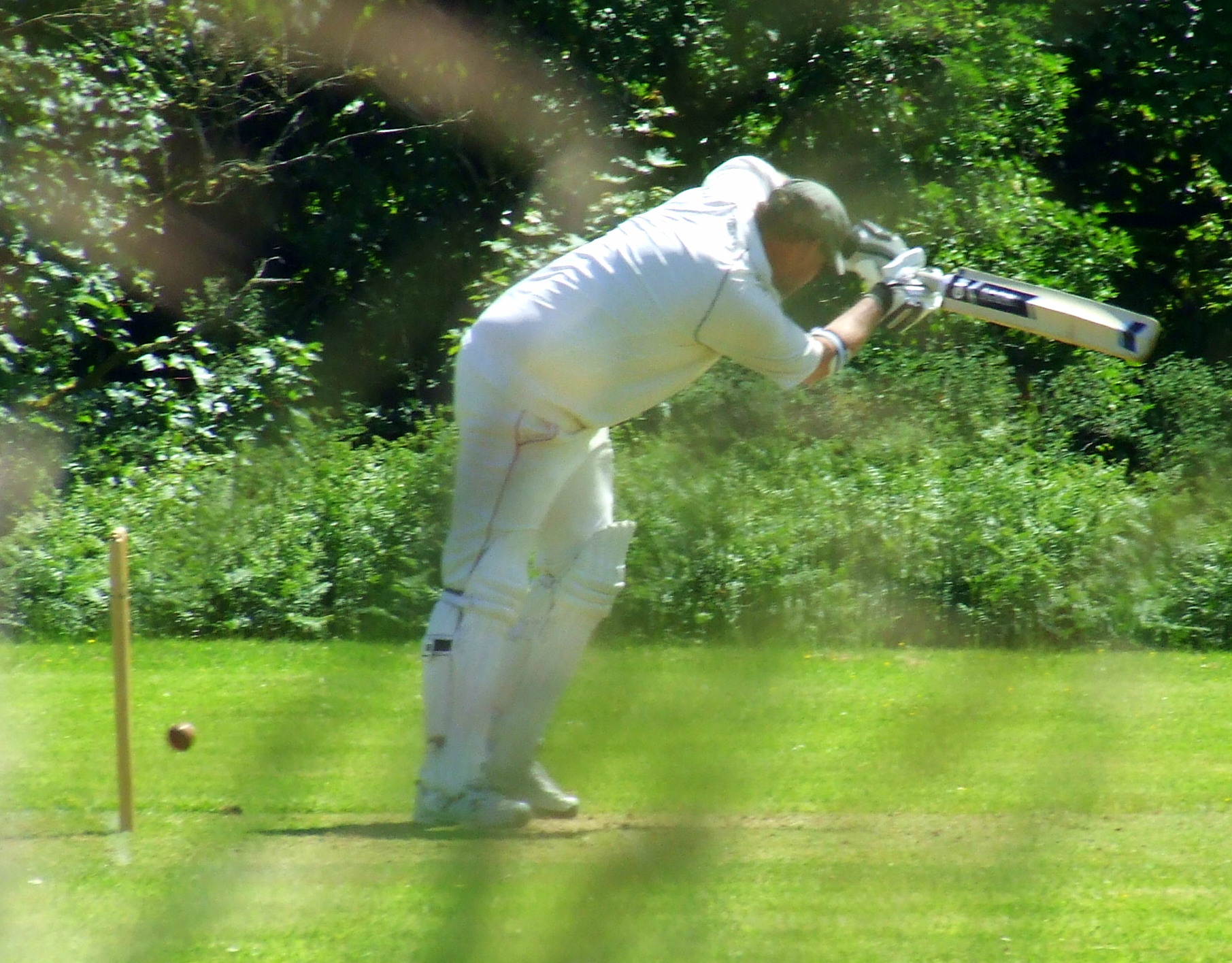
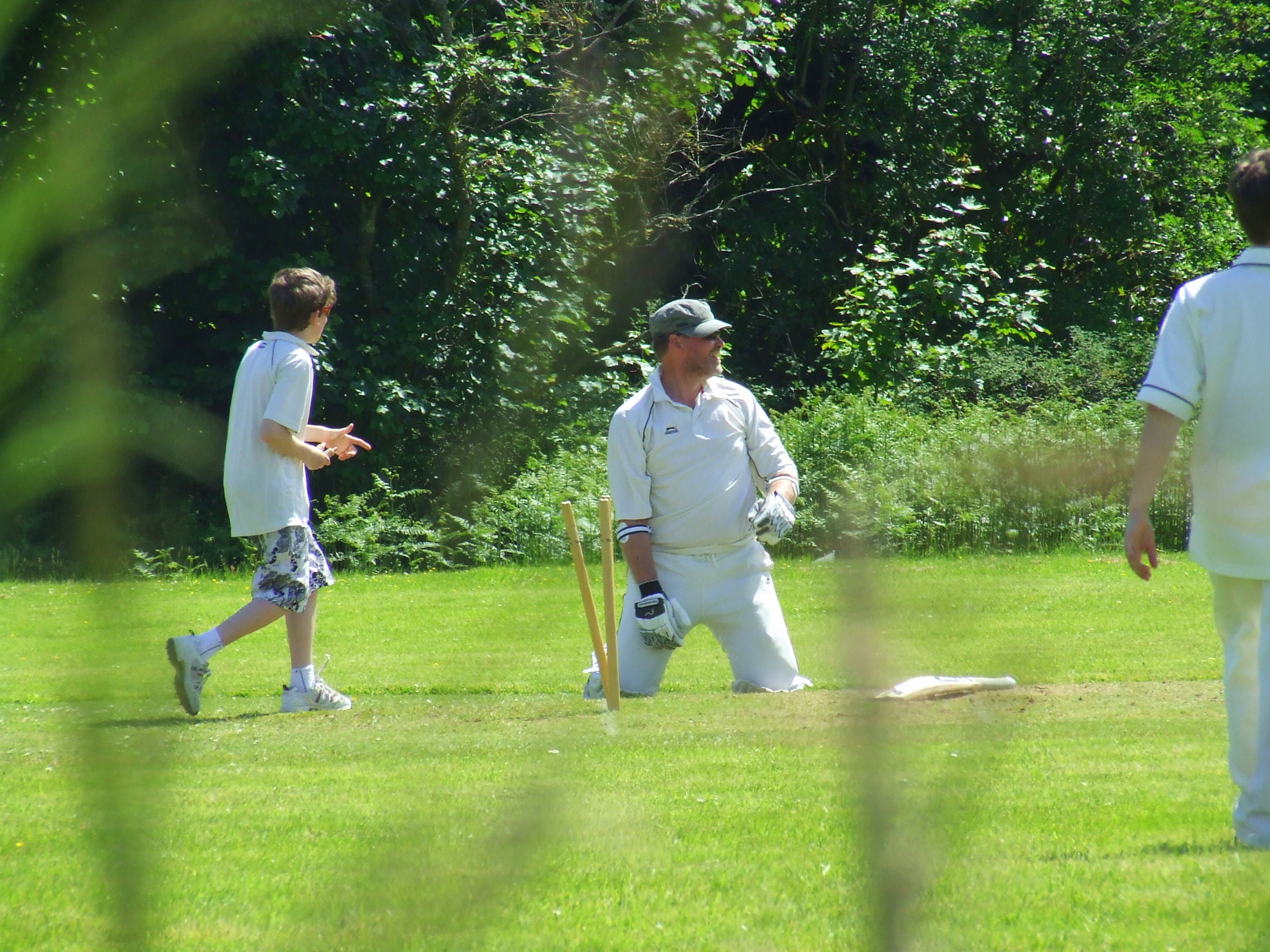
So here we go- some pictures of me playing in a single wicket competition.

It works like this- you draw names, and then bowl/face two overs each against your opponent. I drew Brendan, who was merry with ale in the mid day sun, so I had a good chance- even though he can play. I bowled first- and in two overs, despite smashing a few sixes, he was out three times. Your final score is divided by the amount of times you are out, and so I needed a mere 4.5 runs.

I did not get them.

Drive


Nice leg glance


Out

Where the wind comes from…

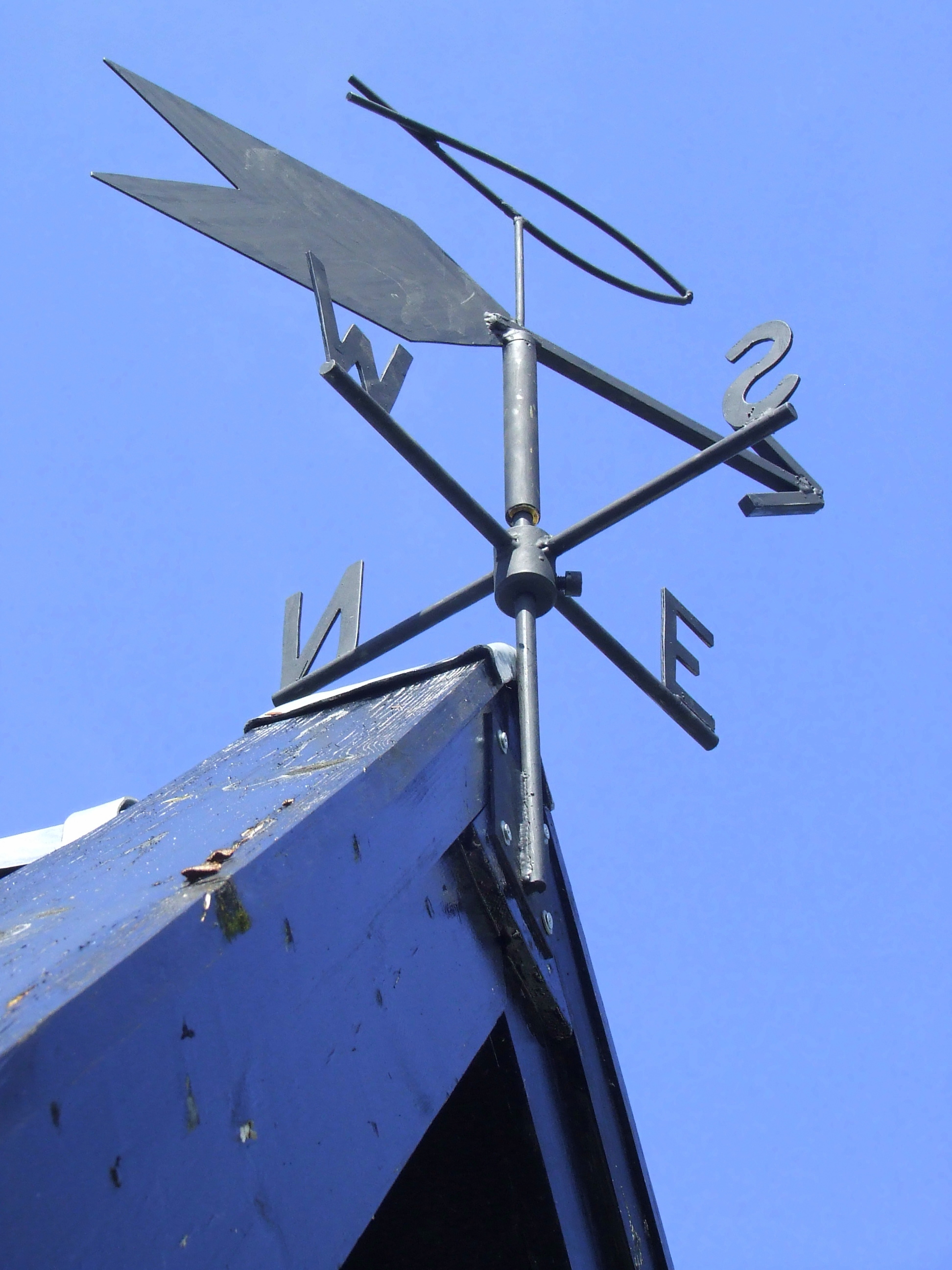
weather vane 2

The wind blows wherever it pleases. You hear its sound, but you cannot tell where it comes from or where it is going. So it is with everyone born of the Spirit. John 3;8

A few months ago, my friend (and former next door neighbour) Terry, looked up at the pointy bit of our house and said “That needs a weather vane. I’ll make you one.” Terry is a man who has a gift with all things metal and mechanical- he mends steam traction engines for a living at the moment, so he certainly has the skills.

A few weeks ago, they were passing through on their way on holiday in a camper van, when good as his word he handed me a lovely weather vane, made in his workshop down in Leyland, Lancashire.

He has placed an old Christian symbol on the top, an Ichthys, used in the early church as a sign of meeting, of hospitality.

The next task was to summon up the courage to actually put the vane up on the highest point of our house. Today I managed to overcome shaky knees and do the deed.

Thanks a million Terry!

weather vane 1

William- almost 13…

IMGP4764

Tomorrow William becomes a teenager. Gulp.

Last night he had a party- themed around Bugsy Malone gangster stuff. Everyone came dressed as a gangster or a moll, and after loads of food, music and watching the film on a big screen, everyone went outside to have a massive custard pie and water pistol fight. They had a ball- despite the almost impossible midge level last night (the worst I can ever remember around the house.)

Each event like this, for parents, is one to savour, to store in precious memory banks. This may be the last of those innocent children’s parties we ever throw for one of our kids- the age of party games, of jelly, of passing the parcel is now gone.

But each step along this life journey with our lovely kids has been nothing but beautiful- even the tough bits act as counterpoint only. Through them we are blessed beyond anything I could ever have expected when we started out…

Some more photos;

Rohr on the relationship between silence and compassion…

It is raining today (here at least) and so you can’t be in the garden. The cricket and tennis are rained off and there is no point watching replays. So instead, take some time to listen to Richard Rohr speaking about how silence equips us to find the ways of justice.

I went on an 8 day silent retreat at the beginning of the year. I am still working out its impact in my life, but silence remains a hard thing to find in this age of information overload.

Rohr- silence/compassion

Rohr on outsiders…

Richard Rohr

My friend Maggy sent me a quote today by the man speaking above- Richard Rohr.

It hit the spot for several reasons. Firstly, Rohr usually has something interesting to say, and his take on the role of the outsider as a source of renewal to the church feels like something important.

Important too as another friend had recieved one of those chain e-mails, and sent it on to me to ask what I thought. This is what it said;

Last month I attended my annual training session for maintaining my security clearance in the prison service.

>

> There was a presentation by three speakers from the Roman Catholic, Protestant and Muslim faiths, who explained their beliefs.

>

> I was particularly interested in what the Islamic Imam had to say about the basics of Islam, complete with video.

>

> After the presentations, question time. I directed my question to the Imam and asked: ‘Correct me if I’m wrong, but I understand that most Imams and clerics of Islam have declared a Holy War against the infidels of the world and, that by killing an infidel, (which is a command to all Muslims) they are assured of a place in heaven. If that’s the case, can you give me the definition of an infidel?’

>

> There was no disagreement with my statement and, without hesitation he replied, ‘Non-believers!’

>

> I responded, ‘So let me make sure I have this straight. All followers of Allah have been commanded to kill everyone who is not a follower of Allah, so they can have a place in heaven. Is that correct?’

>

> The expression on his face changed from one of authority to that of a little boy who had just been caught with his hand in the biscuit tin.’

>

> He sheepishly replied, ‘Yes.’

>

> I then stated, ‘Well, I have a real problem trying to imagine Pope Benedict commanding all Catholics to kill Muslims, or the Archbishop of Canterbury ordering all Protestants to do the same in order to guarantee them a place in heaven!’

>

> The Imam was speechless!

>

> I continued, ‘I also have a problem with being your ‘friend’ when you and your brother clerics are telling your followers to kill me! Let me ask you a question. Would you rather have your Allah, who tells you to kill me in order for you to go to heaven, or my Jesus who tells me to love you because He will take me to heaven and He wants you to be there with me?’

>

> You could have heard a pin drop as the Imam remained speechless.

>

> Needless to say, the organizers of the Diversification seminar were not happy with this way of exposing the truth about the Muslims’ beliefs.

>

> Within twenty years, i.e. 2031, there will be enough Muslim voters in the UK to elect a government of their choice, complete with Sharia law.

>

> Everyone in the WORLD should be required to read this, but with the current political paralysis, tolerant justice system, liberal media and P.C. madness, there is no way this will be widely publicised.

>

> Please pass this on to all your e-mail contacts.

>

I replied to my friend,  but rather than share with you my own ramblings, here is what Richard Rohr had to say;

The Sin of Exclusion  

Those at the edge of any system and those excluded from any system ironically and invariably hold the secret for the conversion and wholeness of that very group. They always hold the feared, rejected, and denied parts of the group’s soul. You see, therefore, why the church was meant to be that group that constantly went to the edges, to the “least of the brothers and sisters,” and even to the enemy.

Jesus was not just a theological genius, but he was also a psychological and sociological genius. When any church defines itself by exclusion of anybody, it is always wrong. It is avoiding its only vocation, which is to be the Christ. The only groups that Jesus seriously critiques are those who include themselves and exclude others from the always-given grace of God.

Only as the People of God receive the stranger, the sinner, and the immigrant, those who don’t play our game our way, do we discover not only the hidden, feared, and hated parts of our own souls, but the fullness of Jesus himself. We need them for our own conversion.The Church is always converted when the outcasts are re-invited back into the temple. You see this in Jesus’ commonly sending marginalized people that he has healed back into the village, back to their family, or back to the temple to “show themselves to the priests.” It is not just for their re-inclusion and acceptance, but actually for the group itself to be renewed.

Adapted from Radical Grace: Daily Meditations,

Poverty UK, revisited…

About-2-million-pensioner-001


image from The Guardian

There have been a series of stories in the press over the past few months, setting an agenda that goes something like this;

Austerity is necessary, we all need to pull in our belts for the sake of the nation

Poverty is avoidable if you work hard. Only those who are lazy live in poverty

We can not afford to continue to pay benefits to scroungers

It is the working ‘squeezed middle’ we need to feel sorry for- those people whose taxes are being used to buy easy lifestyles to people on benefits

This blame the poor attitude is pervasive and seems to play remarkably well- giving us someone to blame, easy scapegoats for the economic woes that assail the nation. Never mind the facts.

We already know that the rich are getting richer.

And that a third of the workforce have held on to their jobs through accepting pay cuts, in a manner unprecedented.

Today, we hear that an extra one million people are now regarded as living in poverty in the UK, including 300,000 children- this from the governments own stats.

One strange stat however is that most of these new children who live in poverty come from working households. All those benefits cuts to council tax benefit, housing benefit, etc, squeezed wages. This from the Guardian says it all;

Oxfam’s Katherine Trebeck said: “It is unacceptable that in the seventh richest country on the planet, we’ve seen the number of people living in poverty increase by nearly a million. With cuts to public services and social security in the pipeline, the number of people living on absolute low incomes will only increase over the years.”

Alison Garnham, chief executive of Child Poverty Action Group, said: “Despite all the talk about ‘scroungers’ and generations of families never working, today’s poverty figures expose comprehensively the myth that the main cause of poverty is people choosing not to work. The truth is that for a growing number of families, work isn’t working. The promise that work would be a route out of poverty has not been kept as wages stagnate and spending cuts have hurt low-income working families.”

Barnardo’s chief executive Anne Marie Carrie said: “This year many of these households will be pushed into financial chaos when the cap on benefits increases take effect, compromising the health and life chances of children as they are forced to grow up in poverty.”

Matthew Reed, chief executive of the Children’s Society, said: “It is shameful that, as one of the richest countries in the world, child poverty is being allowed to increase.”

All these charities are working at the cutting edge of poverty in the UK. The so called ‘squeezed middle’- those of us who might  be forced to alter one or two consumer decisions as a result of cut backs- we rarely come into contact with this kind of poverty.

Angry? We should be.

Decisions taken by our present government are not victimless.