Huibers, a Christian, used books 6-9 of Genesis as his inspiration, following the instructions God gives Noah down to the last cubit.
Translating to modern measurements, Huibers came up with a vessel that works out to a whopping 427 feet (130 meters) long, 95 feet (29 meters) across and 75 feet (23 meters) high. Perhaps not big enough to fit every species on Earth, two by two, as described in the Bible, but plenty of space, for instance, for a pair elephants to dance a tango.
Johan’s Ark towers across the flat Dutch landscape and is easily visible from a nearby highway where it lies moored in the city of Dordrecht, just south of Rotterdam.
Gazing across the ark’s main hold, a huge space of stalls supported by a forest of pine trees, visitors gaze upon an array of stuffed and plastic animals, such as buffalo, zebra, gorillas, lions, tigers, bears, you name it. Elsewhere on the ark is a petting zoo with actual live animals that are less dangerous or easier to care for — such as ponies, dogs, sheep, and rabbits — and an impressive aviary of exotic birds.
Silly Dutch bloke- who had a dream and decided to build an ark- based on the original Biblical measurements (or as near as we can get to them.) It is unclear whether the lenient Dutch drug laws had anything to do with the enterprise. At least he appears to prefer his Tigers to be made of plastic.
I believe he intended to sail it up the Thames during the Olympics- not sure if he was refused permission or if the animals were tardy in their arrival.
I say want to laugh, but actually, what an amazing object Huibers has made:
I could turn all theological and ask questions about the God who was so angry with us all that he decided to wipe out the world apart from a couple of each and the odd pious family.
But lets leave that for now shall we. If the ark visits the Clyde I will visit arm in arm with Michaela. Two by two…
I have just been reading through the comments on the Guardian article for a (possibly unrepresentative) straw poll. Here are a few highlights;
So the head of the C of E is the Queen, but they don’t want to have female bishops?
Nice one, institutionalised religion in this country failing to learn from the mistakes of US extreme right wing politics. Decreasing their markets. Perhaps they enjoy being irrelevant.
Are we not equal in the eye of the Lord? No. He’s saving the socialist paradise for the afterlife.
Bloody hell. I despair. Where now?
I’m sorry, but the Biblical prohibition(s) on women holding positions of authority and engaging in a regular teaching ministry within the Christian church do not embody ‘centuries of entrenched sexism’. It is, rather, the plain teaching of Scripture, which is why the vast majority of Christian denominations have held to this doctrine for centuries. There is clearly spiritual equality between men and women (Ephesians 5.33; 1 Peter 3:6; Galatians 3:28) and Matthew 22:30 also implies that gender distinctions will cease to exist in the next life (as souls have no biological sex). However, the Apostle Paul also forbids women from teaching and holding authority in the churches (1 Timothy 2:11-15). The Apostles were all male. People who do not take the Bible seriously really should question whether they are Christians at all for if we do not define the religion of Christ according to its foundational documents then there is absolutely no other way for it to be defined and we may as well make it up as we go along, as Welby and other supporters of women bishops and ministers are doing. How a woman organises her life in the secular sphere is entirely her own business, but in the Christian church leadership is clearly intended to be male.
Surely, Church in crisis as there is no God?
Life’s full of contradictions so is the Bible.
That’s what makes it so fascinating.
Look hard enough and the truth shines out.
Look out for the good bits.
A woman without a mitre is like bread and fishes with a delivery bike.
We have had a house group at our house for a number of years- some dear friends, a pot of tea and lots of chatter. However, for some time now I have been thinking that it is time to move on into something new. We have floated the idea of starting a local discussion- probably in a pub.
The are a few reasons for this- groups like ours (no matter how lovely) can simply become too familiar, too safe- and the Lion of Judah is not a tame lion. I just think it is time to step out again a little.
Next, those of us who were part of all the ’emerging church’ discussions/conversations/debates/slanging matches perhaps became a jaded with the same theological merry go round. Post modernity, post evangelicalism, post charismatic- we all embraced the questions but had no certainty about where the road might be leading- and that was fine.
But there comes a time when a new direction for our theological journey begins to become a little clearer. All those questions start to find some kind of answer, even if incomplete and held lightly.
Of late, there have been some discussions about ‘teaching’ within Aoradh. I was rather shocked at first as I was not that sure I wanted to teach anyone anything. I was happy to learn alongside others as we journeyed together, but the idea that other people should be shaped and moulded by my (or one of my friend’s) knowledge and wisdom was rather beyond me. At first the whole idea of it seemed a step back towards something that I was glad to leave behind.
But of course, St Paul talked about the gifts given to the body of the church- apostles prophets teachers miracle workers healers helpers organizers those who pray in tongues. I am no longer given to treating the suggestions of St Paul to the people in Ephesus as a blue print for the organisation of ‘church’, but neither am I going to ignore him either!
Having said that, there are a few other positions in St Paul’s list above that still have no certified incumbents. Whilst I hope that we can be respectful of church tradition, I have no real desire to start a journey towards a new clergy. Rather let us use the passion and talent that we can, and encourage the same in others around us. If we have a teacher, let him/her teach.
Or let us just gather to learn together- this still sits much easier with me.
So- if you are in the Dunoon area, do you fancy being part of a discussion group?
My working idea has been to use some of the questions proposed by St Brian of Mclaren in his book ‘A new kind of Chrisitianity’;
1. What is the overarching storyline of the Bible?
2. How should the Bible be understood?
3. Is God violent?
4. Who is Jesus and why is he important?
5. What is the Good News?
6. What do we do about the church?
7. Can we find a better way to address the issue of homosexuality?
8. Can we find a better way of viewing the future?
9. How should followers of Jesus relate to people of other religions?
10. How can we translate our quest into action?
I am determined that any of these discussions has to start and end with respect for a diversity of opinion- and even to embrace this, and if we start to fight truth wars than we will not continue!
Up for it?
Here is a taster of St Brian, talking about Questions 9- pluralism;
Will has been attending a Christian youth club being run in Dunoon by some mates of mine. He is loving it- that lovely combination of chaos, faith, music and food.
They gave him a Bible the other day and it has been sitting on our coffee table staring at me ever since- this one;
It is entitled ‘God’s Game Plan- the athlete’s Bible. Game Ready- get up, gear up, step up.” Inside are Bible references carefully chosen to support the athlete in areas of competition, performance and ‘game plan.’
Everything about it makes me cringe. The marketing exercise, the easy use of selective scripture as ‘performance enhancement’, all that ‘Jesus can make me a winner’ stuff- the mashing up of the message of Jesus with the American Dream.
Then there is this idea of ‘God’s Plan’- some kind of golden path that he has laid out for each of us, which we then have to discern through the application of good Bible study, and woe betide us if we stumble off it. I think this is a damaging idea of who God is- rather what I hope for is a God of new starts, of hope, of encouragement for us to live beautiful lives committed to the love of others.
But I said none of this to Will- he loves his new Bible. I am also very grateful to those folk who chose it for him as something suitable and encouraging.
Also, because we are not attending ‘Church’ regularly these days (as distinct from ‘church’) it is great to see him involved in other things. I remember a conversation years ago when we were discussing how we might best introduce our kids to the great mysteries of faith within the context of ’emerging/missional’ small groups. We all had lots of anxieties about whether we might be somehow depriving them of something important by being outside a large structured formal organisation, with Sunday schools, youth events and a group of peers going on a similar journey.
The conclusion we reached then was a series of questions going something like this;
Do these structured institutional means of creating faith in our young people actually work? Do we create adult disciples? Research might indicate a low success rate over the last few decades. (See summary of Church attendance figures here.)
If we as adults are modelling a dissatisfaction with those organised structures – the typical drive home deconstruction and the sharing of frustrations. What does this teach our kids if we are not prepared to work for something new, something honest and true to who you are as individuals and family?
Is it time for we parents to take responsibility for making a spiritual journey with our own kids rather than handing that responsibility to others?
Finally, we noted that in this fractured, post modern, mass communicating world, people (particularly young people) rarely have one source of information on any given subject. Rather there are multiple sources of information, from a range of physical, virtual and on line media. So it is with information about God. We might seek to control this – to make sure that information given corresponds to our own orthodoxy – but the best we can hope for is to keep channels of discussion open about all those many strands that bombard us.
So it is with our kids. They are asking their own questions about faith- assisted (hopefully) by our example, participation in Aoradh events, as well as formal (even Evangelical) events like Christian camp weeks, and youth clubs like this one. And if this means that he is exposed to the kinds of religion that I have found difficult then so be it- I need to just trust that it is is all in the mix.
Because God’s game plan is after all beyond my understanding.
I have just been reading a review of Greenbelt 2012 by Tony Cummings on Cross Rhythms. Suffice it to say that Tony was not overly impressed. He thought it only a matter of time before GB announced itself no longer a ‘Christian’ festival, and records how he chastised openly gay C of E minister (and former Communard) Richard Coles. He compliments Bruce Cockburn on his music, but regrets lacking an opportunity to correct his theology.
Tony clearly comes from a particular theological position;
The Scriptures have been a light unto my feet wherever I’ve clumsily put them. Put simply, the Bible, all the Bible, is God-breathed. Over the years I’ve had informal chats, often at Greenbelt, with people who’ve called my attitude to the Bible “legalistic” or in more recent times “literalist”. They’ve been hard conversations to conduct in an atmosphere of love. It’s not easy to be gentle and loving when someone’s calling you names and it’s harder still when you’ve come to prayerfully believe that pejorative words like literalist or fundamentalist truly don’t bear any resemblance to what I believe or how I live my life. It seems to me all this theological name-calling, whether it emanates from Bruce Cockburn, Pat Robertson, Martyn Joseph, Dave Tomlinson or thousands more who call Christians deluded charismaniacs, liberal backsliders or post evangelical heretics, are continuing to slander the Church. The love the Bible tells us the Church should have one for another is still elusively far off.
This is an opinion piece and I do not intend to dwell on it too much, apart from an interesting exchange between Tony and Robin Vincent. I missed it, but Robin was part of an event at GB entitled Molten Meditation & Soul Circus’ Sacramental Charismania and Tony Cummings had a bit of a go at it all in his article.
What I find interesting is that the term “charismatic” used to describe a style of worship is increasingly a red herring. I’ve found the use of the gifts, the move of the holy spirit in every expression of church I’ve come across. This years Greenbelt programme actually had the word “charismatic” all over it describing things like the Blesséd Mass and the Accord Evensong and was ever present in the Rend Collective and Andy Flanagan. There’s a real desire to step up and reclaim the term and demonstrate how my video needs to become an archaic curiosity, a snapshot of what once was – so we can move forward without the baggage. To do that we have to lay the baggage at Jesus’ feet – that’s what I tried to do last Sunday night.
It all comes flooding back.
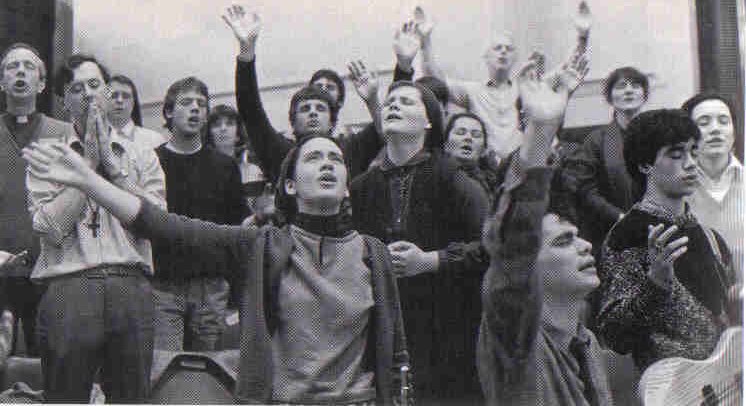
Me on a stage with a guitar and a sense of confused excitement. Something is stirring, there is a crackle in the air like electricity.
I try to find the wavelength with music, reaching out into what for me is mystery, but into which others all around me are claiming to be directly plugged into- wired in to the God-current.
And I hope. I try not to notice all the contradictions. The so called transformational charismatic events that seem to have no lasting significance in people lives. The selective mundanities pasted together to make clear ‘instruction’ from God. The power given to people who claim special gifting, despite their tendency to abuse and wound others.
For me and many others, it became impossible to dwell within all the contradictions of this experience and to this day, I struggle to understand what of my experience could be regarded as genuine, spiritual, God-related and how much just manipulated hot air.
My working conclusion is that both were present, but in what percentages I could not say.
Tony Cummings differentiates between the ‘Charismatic’ and ‘Charismania’. In my many years of immersion within Charismatic churches, I find this distinction very difficult to define. This might be because of my ‘lack of discernment’ (this being one of the spiritual gifts highly valued in Charismatic circles, but totally subjective in application) but also might be simply because these things will always contain both. To be an active participant in the excesses of Charismatic worship has to involve a setting aside of any kind of defensive reserves and going with the movement of the crowd. Whether the crowd is being shaped by Spirit of God, or the effect of a few charismatic individuals on the many is always difficult to say, particularly when being swept up in the moment.
I have been playing with a melody that popped into my head- a burst of folk music that I walked home with the other day and hummed into a recorder so I would not forget it.
Listen! My beloved!
Look! Here he comes,
leaping across the mountains,
bounding over the hills. 9 My beloved is like a gazelle or a young stag.
Look! There he stands behind our wall,
gazing through the windows,
peering through the lattice. 10 My beloved spoke and said to me,
“Arise, my darling,
my beautiful one, come with me. 11 See! The winter is past;
the rains are over and gone. 12 Flowers appear on the earth;
the season of singing has come,
the cooing of doves
is heard in our land. 13 The fig tree forms its early fruit;
the blossoming vines spread their fragrance.
Arise, come, my darling;
my beautiful one, come with me.”
This is one of those passages that when we read it (and ignore all those lurid sexual images that Song of Songs is full of) we have been accustomed to sanctify and imbue with foresight, as clearly the writer must have been alluding to the coming of Jesus. It is in the Bible after all.
And this may well be true, or perhaps we can read it in a much more earthy way- the man and his lover, fully alive, turned on like a spring morning. Humanity at the centre of a Creation re created through sexual electro chemistry.
It is a question I was discussing with a friend last week. She, like me, comes from a background in which the stories of the Bible were regarded as unquestioned absolute fact. The problem is that as you start to take a look at some of these stories, you start to hope that they are not.
But if they are not, then the absolutes that faith has been built from start to come unravelled- if you pull at these bricks the whole wall will fall in.
I wrote a series here called ‘Bible Nasties’ in which I tried to explore some of the issues that arose from my own theological meanderings. You can catch the first one here, and the others via the links in the comments.
However, Brian McLaren does it much better in this article here. Here are a couple of quotes;
Let’s define violence simply: force with the intent of inflicting injury, damage, or death. I think believers in God have four primary responses to the question of God’s violence defined in this way:
1. God is violent, and since we human beings are made in God’s image, we’re free to use violence as one valid form of political communication (to borrow a famous phrase from Carl von Clausewitz), and in fact we are commanded to use it in some cases.
2. God is violent, but in a holy way that sinful humans are incapable of. That’s why violence is generally prohibited for humans except in certain limited cases. In those cases, only those designated as God’s chosen/elect/ordained, acting under God’s explicit direction, are justified in using violence.
3. God is not violent, so human violence is always a violation of our creation in God’s image — both for the perpetrator and the victim. If it is ever employed, it is always tragic and regrettable, never justified.
4. God is not violent, so violence in any form is absolutely forbidden, no exceptions.
McLaren goes on to describe his own struggles with this issue- how the violent version of God contrasts with the other version in the pages of the Bible- the loving, forgiving, self sacrificing one, who eventually casts himself as the victim of violence, not the originator of it. Which version is the truest one, because increasingly it becomes impossible to hold them both together.
McLaren points us to Jesus, and along the way, we again bump into how we understand attonement;
In my own grappling with this subject, a single question has brought things into focus for me: Where do you primarily find God on Good Friday?
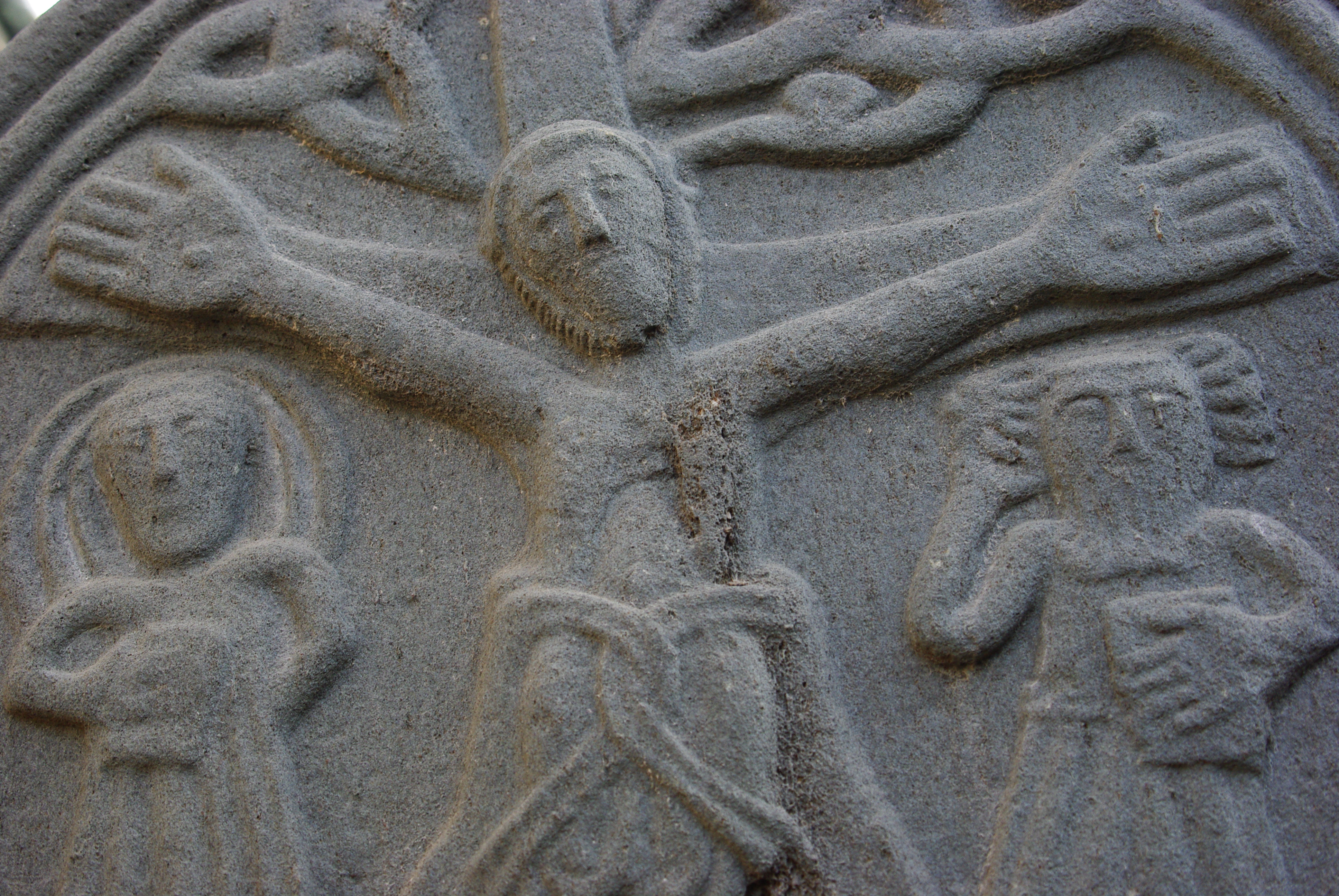
If God is primarily identified with the Romans, torturing and killing Jesus, then, yes, the case is closed: God must be seen as violent on Good Friday. The cross is an instrument of God’s violence.
But if God is located first and foremost with the crucified one, identifying with humanity and bearing and forgiving people’s sin, then a very different picture of God and the cross emerges.
Both locations present a scandal. The former, it seems to me, subverts the entire biblical narrative. God is not then identified with the slaves seeking freedom, but with Pharoah keeping them in their place. God is not with the woman caught in adultery, but with those who want to stone her. God is not with Paul, accepting Gentiles as sisters and brothers, but with the Judaizers, upholding the Law. And God is not hanging on the cross, but stooping over it, pounding in the nail. That’s scandalous in one way.
The latter understanding subverts violence and all those who depend on it for their security, affluence, and happiness. God is with the slaves, not with the slave-drivers. God is found in the one being tortured, not the ones torturing. God is found among the displaced refugees, not those stealing their lands. And God is found in the one being spat upon, not in the one spitting. A very different scandal indeed — and a very different cross, with a very different, but no less profound, meaning.
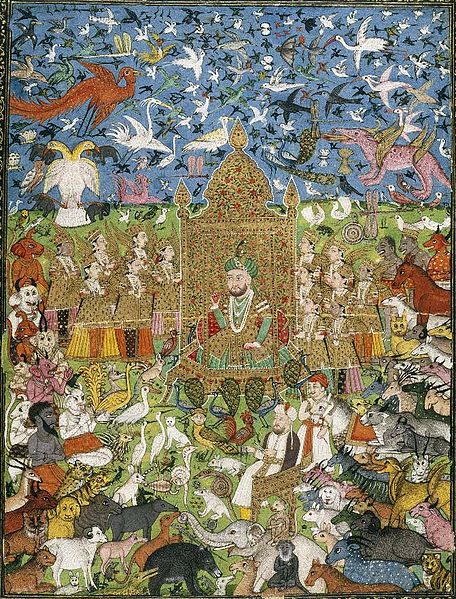
Solomon- the archetypal enlightened Oriental monarch, the nearest thing we have in our adoptive western tradition of a Sun King. He is said to have lived in relative peace, accumulated great wealth, a vast harem of wives and concubines, built temples and palaces and a network of ‘chariot towns’ in an expanding Kingdom. He was said to have been visited by great Queens, and to have ‘satisfied’ them. Along the way, he asked God to grant him wisdom, and is accredited with authorship of several books in the Bible- Ecclesiastes, Proverbs, Song of Songs. He is revered in Hebrew tradition as presiding over a golden age, and in the Islamic tradition as a prophet.
The truth of all this is in the dust. No certain evidence of his existence, or that of his great building projects, has been found. Authorship of his books in the Bible are almost certainly more complex. Having said that the written record of the minutiae of his life in the Bible are beyond almost any other comparable ancient figure. There is no doubt that Solomon is a dominant Icon in the history of us.
He is also a flawed figure. The Bible story talks about his enslaving of the people, and his descent into the paganism of his many wives. He accumulated vast wealth and thousands of horses- all on the back of slavery. According to scripture, God was not pleased, but rather than destroy his Kingdom in Solomon’s lifetime, God decided that the Kingdom would not stand. Solomon’s sons fought, argued and it all fell apart.
The interesting thing is that despite the obvious flaws that the Hebrew tradition records in this great leader, we remember mostly the wisdom and the glory. We somehow root for Solomon- we envy him his achievements- his wealth, his women, his worldly wisdom.
This led me to wonder what wisdom might these stories communicate to us, here, now? Why are these stories so central to the Bible story? Whatever the historical truth of these stories, what truth do they have to our spirits?
It is all there I think- the pursuit of a nationhood of conquest and empire. The accumulation of wealth and fame. The exploitation of women and sexuality. The enslavement of the powerless individual towards the wealth of the few. The demonisation of those outside the boundaries as less-than-human.
Then there is the rise and inevitable fall. Like boom and bust economics. And at the core of it all, the loss of the core of things- the turning from what is good and pure towards idolatry.
I look at this story through what we know of the journey that was to come, and perhaps most of all through the person of Jesus; who had no stately majesty, no wealth, no interest in power, other than power-to-save. Jesus who came to proclaim that other word that we have heard too much of over the last few days in the UK- Jubilee.
Jubilee not in the sense of a celebration of wealth and pompous privilege. Jubilee that had nothing to do with looking backwards towards an empire now gone, and had nothing to do with jingoism or nationhood. Rather it was about this;
The Spirit of the Lord is on me,
because he has anointed me
to proclaim good news to the poor.
He has sent me to proclaim freedom for the prisoners
and recovery of sight for the blind,
to set the oppressed free,
to proclaim the year of the Lord’s favour.
(See Luke 4 and Isaiah 61)
The focus shifts to the little people like you and me.
Solomon has had his day. May all Kings and Queens take note.
I have been listening to some of this series on the old wireless during my travels this week- Richard Holloway‘s journey through the emergence of doubt in the wake of faith. Compulsive listening for old pilgrims like me.
For those of us on a quest for honest faith, we have also to be honest about doubt. The two things are intertwined, as I have written about previously. Doubt then is not the opposite of faith, but rather the means through we we engage, wrestle and ultimately it can become the way that we move towards light.
Today the discussion centred around the issue of revelation– the idea of an interventionist God, who reveals himself to his followers through dreams, visions, prophecy, and people ‘hearing his voice’.
Some of these ‘voice hearers’ began to write down these words, and it is these words that we go to most often as we seek fresh revelation.
One little morsel that impacted me today was this one, concerning the writings of Origen…
Origen was a hugely influential scholar, theologian and writer of the early church, writing in Alexandria in the second and third Centuries after Christ. His views soon were controversial- he was a universalist and believed in the pre existence of souls. He was condemned later as an apostate- but perhaps we should regard him as a theological adventurer, putting forward ideas and theories for us to chew on.
Today his views on scripture were mentioned. The gospels that were circulating at the time (and there were many more than the 4 we have in our Bible now) had all sorts of areas of disagreement and contradiction. This might be hardly surprising if we read these as eye witness accounts, or scholarly collections of stories.
We might also expect a gospel to bear in some way the perspective, the creativity, the agenda of its particular author- one person might focus on one aspect of the life of Jesus- love for example, anther might be more interested in proving some other theological issue. You could describe this as observer bias.
This is of course not a problem if you understand this as you read- in fact it can be extremely enriching to view the life of Jesus from different perspectives- this is the whole point of us still having 4 gospels in our Bible is it not? However it becomes a problem when you start to treat the text not as revelation through a man, but rather the very ‘Word of God’. Then you have to deal with the contradictions in a whole different kind of way. You have to make it all fit into one homogeneous whole. As we used to hear said- ‘inerrant; without error or contradiction’.
It seems that back in the second and third Centuries there were already disputes about the validity of scripture as the inerrant Word of God. Origen however suggested that God had deliberately allowed these contradictions/disagreements to remain in scripture precisely to remind us that it was not to be taken literally– rather it was to be engaged with, wrestled with, questioned and debated.
In this time of the rise of fundamentalist doctrine, this ancient heretic might well have some more agitation to do for this generation too…
In the middle of all the laughter around the campfire on my recent wilderness trip, conversation took a much more serious turn. I found myself in the middle of a rather intense and difficult discussion with one of my friends and Aoradh chums. Some of this was about leadership in Aoradh- which I will return to when I have had a chance to process and discuss it again, but another issue flickered briefly in a way that surprised me- ‘Teaching’.
‘Teaching’ that is, in the traditional Christian/Evangelical sense of the word. Apologies to those not from a background like this, but those that are will know exactly what I mean. All our services revolved around one thing- the climactic 45 minute to an hour long sermon. Through this a skilled preacher would expound on a passage from ‘The Word’, inspiring us, shaping us, challenging us and bring us to repentant response.
This kind of spirituality grew out of Victorian spirituality- a combination of the elevation of the written words of the Bible as the primary (even the only) revelation of God, and the syncretism of faith with modern rationalistic culture. So it was natural to engage with spirituality in the same way that we would engage with the study of medicine or chemistry- in a lecture hall, with the celebrity scientist at the centre, sharing his accumulation of knowledge- even his life long labour- with those eager for understanding.
Along with this of course, scientific rigour was required, along with reliable, testable source material. So faith became something it was possible to organise, define and defend. And we did this above all things by knowledge of the Bible- carefully cross referenced verses, once produced, ended all argument.
Perceptive readers may sense a certain scepticism in the tone of this piece. It is easy to have a go at all this from a post modern cynical perspective. We can point to all sorts of problems that we inherited with this kind of spirituality-
The top down nature of it, casting us in the role of passive receivers, not active questioners
The potential it gives for the misuse of power and control
The one dimensional quality of a lot of preaching- the giving of one man’s (and it usually is a man’s) perspective on ‘truth’
The elevation of the words of the Bible to what I would describe as idolatry- a tendency to treat the words as some kind of unassailable blue print that arrived down on earth on the wings of an angel as the transcription of the very word of God (in case you are wincing at my heresy, there is a fuller discussion of this issue here.)
The changing communication style of the age- the shortening of attention spans, the endless competition of other media has now entered into the human condition.
There is also this question in me about my own experience of listening to preaching. I have had the privilege of hearing some really great preachers- people who hold the attention by their great oration and carefully constructed sentences. Preaching like this is an art form, all the more to be celebrated in this age of the 30 second sound bite. Some of my friends still are responsible for delivering sermons each weekend- and I celebrate their honest creativity- their genuine efforts in the long direction, to bring light into the lives of a congregation through words.
I also love to go and listen to speakers at festivals like Greenbelt- people who bring a totally new and sometimes controversial perspective.
But having said all this, when I consider the shape of my own journey, and try to remember how this was affected by teaching or preaching I have heard, I struggle to remember more than one or two actual sermons/teaching sessions (and even those, not necessarily for the right reasons.) Perhaps I was shaped by the experience more than I can remember the actual events, but considering the countless hours of preaching I have sat through, we might expect there to be much more connection between hearing a message, responding to the challenge, and life changes that flow from this.
I think that we have been caught up in the idea that refining our knowledge of a certain kind of moral interpretation of the Bible equates to something we called ‘spiritual maturity’. It was like a uniform we put on- a way of identifying with the church culture we belong to. But as I look back now, this is not the kind of spirituality that has deep value to me.
It is not that knowledge is unimportant, or that we do not need someone to give us some basic knowledge for the road, but despite all this, spirituality (in my experience) is only discovered in real places, encountering real people and asking questions of the experiences along the way.
I also think that the reductionism of faith down to basic facts is dangerous. It suggests that there is ONE understanding that we should all be conforming to- and increasingly I have found faith to be a glorious question mark, within which there are routes for many lines of enquiry.
Those of you that preach will right now want to tell me that there are other ways to skin the cat- and I would agree with you. Preaching can open up issues, not close them down. Preaching can soar like poetry in the ears of the listener. This kind of preaching I want to hear.
Perhaps preaching is reshaping too- think of all those wonderful TED talks that go viral on t’internet. Like this one;
So, what of our short discussion about teaching in small missional groups? How do we ‘teach’ one another in this kind of context?
The very idea initially took me by surprise. Why would I want to ‘teach’ my fellow community members anything? Does this not assume that I am some kind of God-expert who needs to sprinkle my knowledge on my disciples? Are we not learning together constantly just by living deliberately shared lives of faith? Ideas enter constantly into conversation through books we have read, things we have encountered through the internet etc.
Then I thought of our young people- who perhaps do need to learn some things in order to go through their own process of deconstruction/construction. Is it enough for them to learn in this kind of community chaotic way? Perhaps it is time to think again, if not about teaching, then certainly how we facilitate discussions around particular questions.
It is a work in progress- like most of my theological positions, but some principles seem important to me;
Open spaces. Learning requires safe spaces in which to adventure. We have to be free to get it wrong.
The honest question is worth a million cheap answers.
Community is teaching. Teaching is community.
We learn in different ways- listening, watching, reading, experiencing, discussing.






 this fragile tent