Rediscovering silence…

spiritual_cinema_circle

On Friday (snowy conditions permitting!) I head off down to St Asaph, North Wales, to take an 8 day silent retreat at St Beunos Ignatian Spirituality Centre.  I suddenly know loads of people who are planning a retreat there this year- well, 4 or 5 anyway. It seems that the new direction of many of us who have been on a journey from evangelical/charismatic Christianity, via emerging/missional metamorphosis, is towards older forms of monastic contemplation- and silence in particular.

It is not surprising really when you think about it. People like me who have been immersed in leading worship have always been longing for a deeper connection with God. In the past the methods to connect have included the intense cauldron of ecstatic worship music, through to creating open spaces with non directive ‘stations’, or spending time in wild places watching the changing skies. The journey has been away from the large auditorium towards older, simpler traditions.

I do not think there is any kind of technique that gives us some kind of hot line to God. I do however remember the Abbot of Worth Abbey making statements about “silence being the window to the soul, and the soul being the window to God- it just works that way.”  It feels like the right time to test this theory- not just for me it seems.

Not without some apprehension however! 8 days in my own head. It might be an unpleasant place, a boring place, a dysfunctional place, a darn right depressing place. I expect to miss my home and family desperately. I expect to be tested and broken a little (or a lot.) Or worse than all of this, it could be an empty experience, a waste of time- a self absorbed narcissistic backwater.

Appropriately the Emergent Village minimergent yesterday was as follows;

If we were not so single-minded about keeping our lives moving, and for once could do nothing, perhaps a huge silence might interrupt this sadness of never understanding ourselves and of threatening ourselves with death.

Pablo Neruda

Hmmmm.

Falling into the arms of the Empire…

genesis

For years now we have had a more or less regular ‘housegroup’, which meets (as decreed somewhere in the Bible) on Tuesday evenings. A few months ago we moved out of the living room into a pub- it was time to change things around a bit. We have been using the shape of some of Brian McLaren’s writing to aid our discussion- from ‘A new kind of Christianity’. It is a great book, and has started to put some firmness into parts of my faith that had been decidedly muddied by all of the Emerging Church discussions and debates. (Not that I regret a single question mark!)

Last week we continued a discussion about how we might understand the storyline of the Bible. McLaren (or Bazzer as we decided to call him) suggested that many of us had become used to reading the whole of the Bible backwards through all those towering figures of our theological landscape, back through the Reformation, into the middle ages, then the dark ages, and in particular, the days of the Holy Roman Empire, which Bazzer considers the real cusp of the matter. At this point the new religion (Christianity) became mixed up not only with Empire, but also with Greco-Roman philosophy. The end result it that it is really hard to see backwards because of all the edifices that we have built along the way.

Read the book for more detail on all this, but we tried to chew a little on the Polarity of Greco-Roman thought- giving us the polar opposites of Platonic perfection and the fallen state of mankind. We did this by looking again at those early stories in Genesis- of Adam and Eve with their troubled offspring, the subsistence hunter-gatherers who became farmers, then city builders, and fanally Empire makers- the rise/fall of man.

Here, the Roman Zeus- living in a removed, perfect state, setting impossible goals for his ephemeral people to reach towards, and seeking to rescue a few only be the skin of their teeth (eventually through a legalistic confidence trick with his son Jesus) starts to come unraveled. Zeus is replaced by Elohim.

Looking backwards, we read the early stories of Genesis in the Greco-Roman philosophical polarity- perfection/fallen. The garden was perfect, and as we mucked it all up, we were cast out, imperfect, therefore God could not be around us- Plato again.

But Elohim never mentions perfection- he talks of things being ‘good’, or even ‘very good’. In these stories, the journey from the garden is not one of lost perfection, but rather lost innocence. Rather than going from a perfect state casting us out into the darkness, Elohim makes clothing, avoids issuing the death penalty as promised to those who eat the fruit of the tree, and so on and so on. Elohim constantly engages, constantly circles back into the rise/fall of mankind. Even when they start empire building.

As we talked about this, I saw Michaela becoming frustrated. Eventually she spoke up- “So why did Jesus have to die? What was his mission if not to rescue, to save?”

I have been thinking about this question and the discussion we had the other night. Unsurprisingly, it leaves me with more questions;

If there has been a ‘fall’ of man, is it really the kind of fall I grew up talking about- one of individual sin, inherited by each subsequent generation as part of our human DNA? This kind of ‘fall’ keeps us trapped in the old Platonic polarity. It allowed Evangelical Christianity to focus on private morality to the exclusion of almost all else and  the purpose of the death of Jesus in this understanding is to give a chosen few backdoor perfection– undeserved, but gloriously exclusive.

But there is this other version of the fall of man(kind) encountered in Genesis. It is a fall upwards- away from our root and branch engagement in the soil of the world that we live in- towards enclosure and management of the land first for storage of food, then for personal profit. The more we have the more we want and our ambitions grow to the sky like the tower of Babel. Then there is this word again- Empire. If there is a polar opposite to the Shalom of Elohim it is Empire. Power used and abused. Richness accumulated at the point of sword and on the backs of the slavery of others. From Genesis to Revelation this the Bible is shadowed by Empire. This fall is not an individual one, it is collective.

But Elohim does not retreat even from Empire. He is there in and through it all. Hating some of it, raging against it sometimes- particularly when his people accommodated with it- even became the enslavers themselves.

Back to Michaela’s question- Jesus death, in relation to this collective fall can be understood clearly in his own use of the words of Isaiah, spoken from exile, in slavery to empire;

The Spirit of the Sovereign Lord is on me,
because the Lord has anointed me
to proclaim good news to the poor.
He has sent me to bind up the brokenhearted,
to proclaim freedom for the captives
and release from darkness for the prisoners,[a]
to proclaim the year of the Lord’s favor
and the day of vengeance of our God,
to comfort all who mourn,
    and provide for those who grieve in Zion—
to bestow on them a crown of beauty
instead of ashes,
the oil of joy
instead of mourning,
and a garment of praise
instead of a spirit of despair.
They will be called oaks of righteousness,
a planting of the Lord
for the display of his splendor.

Isaiah 61

Here it is- the kernel of the nut. The Shalom of Elohim; the New Kingdom. A totally different kind of empire. One based on love of one another, on the joy of life and the refusal of the power of Empire.

The first kind of fall- the individualistic perfect/fallen polarity seems to have allowed for Christianity to exist within empire with hardly a ripple. It allows us to set aside the revolutionary stuff and focus on saving the few for the really important stuff, not the Aristotelian stuff of boring reality, but the Platonic promise of eternal perfection.

But the New Kingdom can not exist in the other kind of fallen world without challenging empire. We can not live alongside poverty, injustice disease, broken lives, etc without wishing, praying, working upon it the Shalom of Elohim.

Or can we? The forces of empire are strong after all…

Michaela told a story right at the end of a place she had worked- a job that was supposed to be all about community building- encouraging participation and engagement with marginalised people and groups. A new manager came in who knew all the language, but seemed driven only towards establishing and using power; she was building an empire. The rules of the organisation had changed overnight. Suddenly success was measured by a business model- by conquests won over other ‘competing’ community groups. It tore Michaela apart.

And there you have it; the shalom of God opened wide, but the Empire rises again. But Elohim is waiting…

Reflections on the census- the end of Christendom…

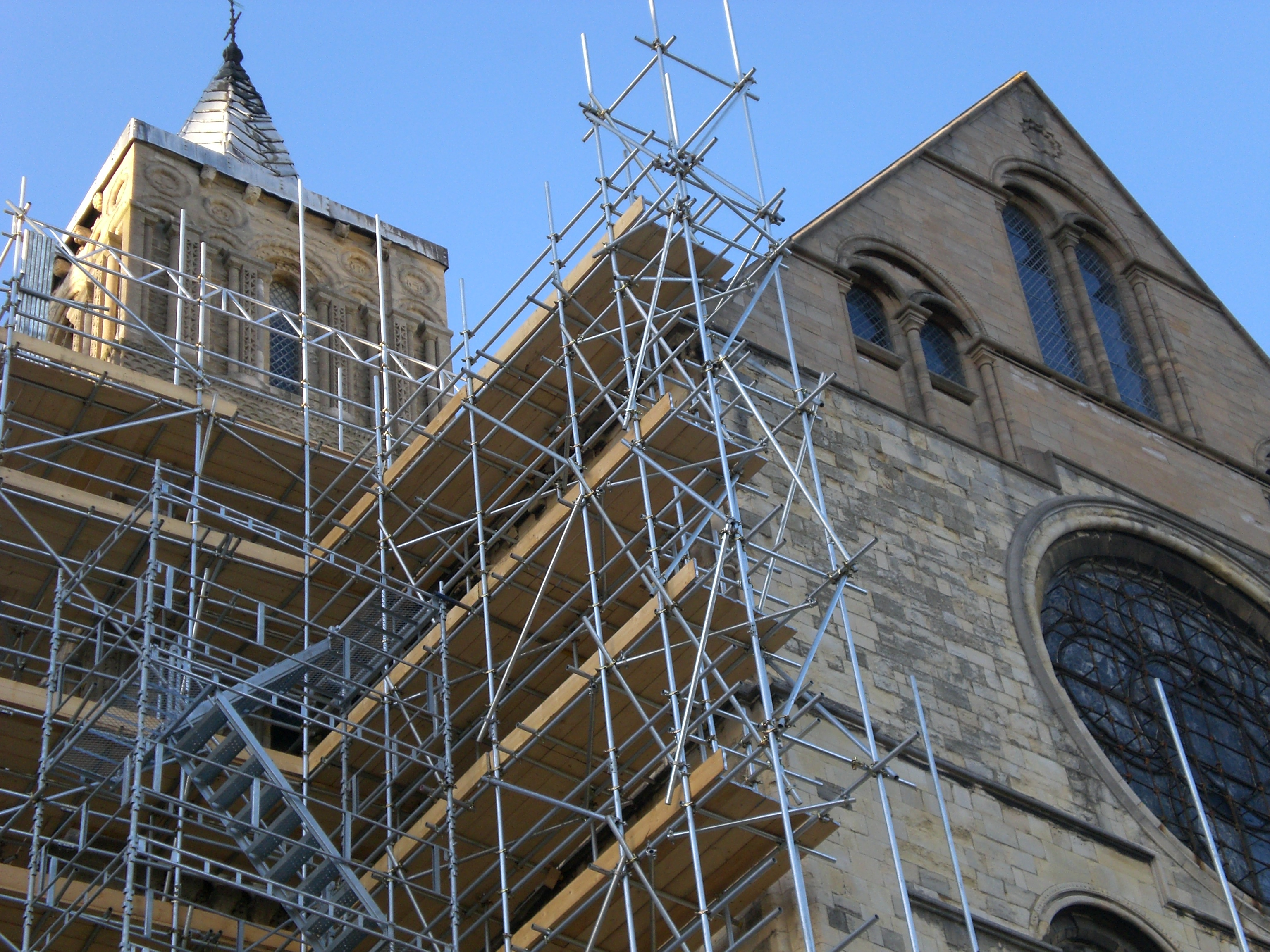
a church under reconstruction?

So, there have been a number of articles and opinion pieces reflecting on the recent 2011 census data, and what it tells us about the nature of religious belief in the UK. Here are some of the head liners in case you missed them;

• The number identifying themselves as Christians is down 13 percentage points. In 2001, 72% (37.3 million) called themselves Christians. In 2011 that had dropped to 59% (33.2 million).

• Interestingly, Christianity is not down everywhere. Newham, Haringey, Brent, Boston and Lambeth have all shown increases in the Christian population.

• The number identifying themselves as having no religion has increased by 10 percentage points from 15% (7.7 million) in 2001 to 25% (14.1 million) last year.

In response, Humanist Nick Cohen, writing in The Guardian, said this;

The number of people who say they have no religion jumped from 15% in the 2001 census to 25% in 2011. If the remaining 75% were believers, this leap in free-thinking would be significant but not sensational. But those who say they are religious are not faithful to their creeds, or not in any sense that the believers of the past would have recognised. Church attendance is in constant decline. Every year that passes sees congregations become smaller and greyer…

…When millions of people tell the census takers they are “Christians”, therefore, they are muttering the title of a childhood story they only half remember. What is more, their spiritual “leaders” know it. Long before the census figures were in, you could hear the screams that always accompany ideologies and institutions history is leaving behind…

…while everything is changing in British society, nothing is changing in the British establishment. England still has a “national” church – even though in 2010 its average weekly attendance was down to 1,116,100 (or 1.8% of the nation’s population). Twenty-six Church of England bishops are automatically granted seats in the House of Lords to support or oppose any legislation they please. On top of the decaying heap sits Elizabeth II: a grumpy priestess-queen, who in theory at least is the state religion’s “supreme governor”. In the education system, almost one-third of state schools are run by religious authorities (and Michael Gove will ensure that number will rise).

This humanist perspective is not without merit. Much of the institutions of religion in the country are indeed relics of a time when religious power was inseparable from the power of the State. Church and Government were connected by bonds at every level. The Church marked out comings, our joinings and our endings. The shape of the religious calendar became the shape of our working life. The very law of the land was approached through (an often flawed) Biblical interpretation.

But this link between ordinary people and institutional Church has been in decline for years. Perhaps the last vestige of this kind of Christendom in the life of the UK was that people who otherwise had no connection to Church, and no active faith journey, would still describe themselves as ‘Christian’. People did this almost by some kind of inherited instinct. The be Christian was to be decent, British, middle class, well mannered, one of ‘us’.

However,  the rigidity exhibited by some parts of the religious hierarchy is increasingly at odds with the culture that it is part of. There are the totemic issues- homosexuality, gender equality. There is the lack of a critical or analytical voice in a time of consumerist economic meltdown. There is the swing towards ultra conservatism in the Catholic Church, and all the sexual abuse scandals that diminish all organisations of faith.

The time for hand wringing and desperate attempts to preserve what Church used to be is long gone, although there are still people who have a passion for preserving the traditions of our institutions. And perhaps we should be grateful to them as they are a repository for our organisational memories. Without them, we lose our connection to tradition, and all the rich variety of previous experience. But it is not enough for faith to be in a museum cage. It is not enough for faith to be an abstract historical curiosity.

I have been chewing on what this might mean for those of us who still try to follow in the way of Jesus. Here goes;

Lies and Statistics.

It is perfectly possible to understand these figures as a reduction in nominal Christianity. A reduction in people identifying with a label that has no relevance to life. In this sense, perhaps there has been no real change in the last ten years- apart from the words we chose to describe ourselves with.

The word ‘Christian’.

It is however significant that people no longer what to wear this as a badge. It is a devalued word, a word that appears to have gathered to it lots of connotations that people have less use for. Ideas of stuffy right-wing judgementalism. A word that has no relevance in the here and now. It is a word that even I use to describe myself with some discomfort. But a decision to walk in the way of Jesus is not an easy choice- he was very clear about that. It is a decision to make an ever new daily adventure, and this is so much more than wearing a comfortable middle class badge.

Incarnation.

The Church is not the place where God resides in these islands- rather he lives in us. The Hebrew Temple was replaced by the human heart. He took on flesh and dwelt amongst us. In and over and through. Along with us and despite us. In the cracks of everything we are. This is not a numbers game- who cares how big your corporation has become?  This is now to be tested in new ways, in a new context.

Mission.

At some point, probably around the time of the Roman Emperor Constantine, the Church became an instrument of the state. The mission of the Church was the mission of the State. God was co-opted by the people in power. We then spent Millenia trying to disentangle the mess of this- movements would rise, then they would fall, or become assimilated. But perhaps we are now in new territory- the mission of God can be set free again in the minds of we his followers. It is not to the strong that the Kingdom belongs, but to the week, the poor, the broken.

Finally however, I find myself taking a more sociological perspective. If nominal religion anchored in the State is in decline this may be no bad thing for faith- but I still wonder if it may be a bad thing for the State.

The Church contains us, or used to. Old Emile Durkheim captured this well- he suggested that people need to be part of something bigger- to be integrated and linked and that when this begins to break down the end result is anomie (a lack of social norms) leading to a time when the anchors and moorings that hold us together are gone.  He believed that anomie is common when the surrounding society has undergone significant changes in its economic fortunes, whether for good or for worse and, more generally, when there is a significant discrepancy between the ideological theories and values commonly professed and what was actually achievable in everyday life- which to my mind describes British society in 2012 pretty well. (There is a great article discussing some of these ideas here.)

Durkheim thought that religion was one of the key social mechanisms that created these bonding social norms. However, he also thought that these old bastions of society where in decline- that the institutions of faith were dying. However at the same time he also thought that they were being replaced by new forms of sacred passions.

The question is- where are these to be found in our society? It is easy for cynics like me to rail against consumerism, ephemeral celebrity entertainment and post modern fluidity of connection and belief, but the story is more complicated.

There is a groundswell of goodness in British society. Some of is might well have roots in Christian traditions and ideas, but we see a turning towards simple living, small community life, and a rising up against the power of the big banks through the Occupy Movement.

We the followers of Jesus always have to find our own mission, our own Peregrinatio.  Here is my prayer for the journey;

Lord stain me with salt

Brine me with the badge of the deep sea sailor

I have spent too long

On concrete ground.

If hope raises up these tattered sails

Will you send for me

A fair and steady wind?

Lamenting…

sad-woman

I was thinking about the world Lament the other day.

‘Laments’ are one of the oldest forms of poetry, for example the Mesopotamian city laments such as the Lament for Ur.  These bear a striking similarity with many of the psalms in our oldest hymn book (pinched from the ancient Hebrews) otherwise known as the book of Psalms. Here are few;

You have taken my companions and loved ones from me;  the darkness is my closest friend.

Psalm 87/88: 18

And even now that I am old and grey, do not forsake me, O God…

Psalm 70/71: 18

The LORD is close to the brokenhearted; he rescues those who are crushed in spirit.

Psalm 33/34: 18

My days are vanishing like smoke … my heart is withered like the grass. I forget to eat my bread…

Psalm 101/102: 3-4


Out of the depths I cry to you, O LORD; O Lord, hear my voice. Let your ears be attentive to my cry for mercy…

My soul waits for the Lord. More than watchmen wait for the morning.

Psalm 129/130: 1, 6

Around one third of the Book of Psalms is written in the form of poetic lament- a cry to God for help in times of distress- help for individuals, but particularly help for the Nation. And, it is recorded, sometimes he listened. At other times he turned his face and watched his chosen people be destroyed by internal wrongdoing and external invasion.

What can we learn from these Laments? How is it that we tend to ignore them in our readings of the Bible- in our claims on a God who gives good things to we his new Chosen People?

I think we can take the idea that it is OK to cry to God in desperation, in anger, in brokenness- that these are part of all of our human journeys.

I also think that we can not believe that God is any kind of talisman for us to wear against the winds of misfortune. It is not whether hard times come, but how we learn to live with love as we move through them.

Finally I think that our approach to the Bible as a set of heavenly testable propositions is severely challenged by the poetry of lament. If the Bible gives all the answers that we need (as long as we apply the correct theological set of goggles) then how come it is written by people who seemed so bereft of answers themselves?

Many (but not all) the poems of Lament in the book of Psalms take a deliberate turn at their end. In spite of all the evidence to the contrary; in spite of the pain, the defeat, the failure of plans and the death of dreams; in spite of all of this- I will worship. I will put myself in the place of trust.

In Emmanuel. God with us. God in us. God through us and God beyond us calling us on.

Local discussion forum thingy…

We have had a house group at our house for a number of years- some dear friends, a pot of tea and lots of chatter. However, for some time now I have been thinking that it is time to move on into something new. We have floated the idea of starting a local discussion- probably in a pub.

The are a few reasons for this- groups like ours (no matter how lovely) can simply become too familiar, too safe- and the Lion of Judah is not a tame lion. I just think it is time to step out again a little.

Next, those of us who were part of all the ’emerging church’ discussions/conversations/debates/slanging matches perhaps became a jaded with the same theological merry go round. Post modernity, post evangelicalism, post charismatic- we all embraced the questions but had no certainty about where the road might be leading- and that was fine.

But there comes a time when a new direction for our theological journey begins to become a little clearer. All those questions start to find some kind of answer, even if incomplete and held lightly.

Of late, there have been some discussions about ‘teaching’ within Aoradh. I was rather shocked at first as I was not that sure I wanted to teach anyone anything. I was happy to learn alongside others as we journeyed together, but the idea that other people should be shaped and moulded by  my (or one of my friend’s) knowledge and wisdom was rather beyond me. At first the whole idea of it seemed a step back towards something that I was glad to leave behind.

But of course, St Paul talked about the gifts given to the body of the church- apostles prophets teachers miracle workers healers helpers organizers those who pray in tongues. I am no longer given to treating the suggestions of St Paul to the people in Ephesus as a blue print for the organisation of ‘church’, but neither am I going to ignore him either!

Having said that, there are a few other positions in St Paul’s list above that still have no certified incumbents. Whilst I hope that we can be respectful of church tradition, I have no real desire to start a journey towards a new clergy. Rather let us use the passion and talent that we can, and encourage the same in others around us. If we have a teacher, let him/her teach.

Or let us just gather to learn together- this still sits much easier with me.

So- if you are in the Dunoon area, do you fancy being part of a discussion group?

My working idea has been to use some of the questions proposed by St Brian of Mclaren in his book ‘A new kind of Chrisitianity’;

1. What is the overarching storyline of the Bible?

2. How should the Bible be understood?

3. Is God violent?

4. Who is Jesus and why is he important?

5. What is the Good News?

6. What do we do about the church?

7. Can we find a better way to address the issue of homosexuality?

8. Can we find a better way of viewing the future?

9. How should followers of Jesus relate to people of other religions?

10. How can we translate our quest into action?

I am determined that any of these discussions has to start and end with respect for a diversity of opinion- and even to embrace this, and if we start to fight truth wars than we will not continue!
Up for it?
Here is a taster of St Brian, talking about Questions 9- pluralism;

Gods game plan…


Will has been attending a Christian youth club being run in Dunoon by some mates of mine. He is loving it- that lovely combination of chaos, faith, music and food.

They gave him a Bible the other day and it has been sitting on our coffee table staring at me ever since- this one;


It is entitled ‘God’s Game Plan- the athlete’s Bible. Game Ready- get up, gear up, step up.” Inside are Bible references carefully chosen to support the athlete in areas of competition, performance and ‘game plan.’

Everything about it makes me cringe. The marketing exercise, the easy use of selective scripture as ‘performance enhancement’, all that ‘Jesus can make me a winner’ stuff- the mashing up of the message of Jesus with the American Dream.

Then there is this idea of ‘God’s Plan’- some kind of golden path that he has laid out for each of us, which we then have to discern through the application of good Bible study, and woe betide us if we stumble off it. I think this is a damaging idea of who God is- rather what I hope for is a God of new starts, of hope, of encouragement for us to live beautiful lives committed to the love of others.

But I said none of this to Will- he loves his new Bible. I am also very grateful to those folk who chose it for him as something suitable and encouraging.

Also, because we are not attending ‘Church’ regularly these days (as distinct from ‘church’) it is great to see him involved in other things. I remember a conversation years ago when we were discussing how we might best introduce our kids to the great mysteries of faith within the context of ’emerging/missional’ small groups. We all had lots of anxieties about whether we might be somehow depriving them of something important by being outside a large structured formal organisation, with Sunday schools, youth events and a group of peers going on a similar journey.

The conclusion we reached then was a series of questions going something like this;

  1. Do these structured institutional means of creating faith in our young people actually work? Do we create adult disciples? Research might indicate a low success rate over the last few decades. (See summary of Church attendance figures here.)
  2. If we as adults are modelling a dissatisfaction with those organised structures – the typical drive home deconstruction and the sharing of frustrations. What does this teach our kids if we are not prepared to work for something new, something honest and true to who you are as individuals and family?
  3. Is it time for we parents to take responsibility for making a spiritual journey with our own kids rather than handing that responsibility to others?
  4. Finally, we noted that in this fractured, post modern, mass communicating world, people (particularly young people) rarely have one source of information on any given subject. Rather there are multiple sources of information, from a range of physical, virtual and on line media. So it is with information about God. We might seek to control this – to make sure that information given corresponds to our own orthodoxy – but the best we can hope for is to keep channels of discussion open about all those many strands that bombard us.

So it is with our kids. They are asking their own questions about faith- assisted (hopefully) by our example, participation in Aoradh events, as well as formal (even Evangelical) events like Christian camp weeks, and youth clubs like this one. And if this means that he is exposed to the kinds of religion that I have found difficult then so be it- I need to just trust that it is is all in the mix.

Because God’s game plan is after all beyond my understanding.

Crash course in Churchianity…

I heard a story about Church the other day from one of my close friends that made my eyebrows shoot skywards. More on this later…

I have spent too long deconstructing institutional Church in all its glorious contradiction. Initially I did this as someone who had been chewed up by a negative experience of church – burnt out by it all – and then latterly, more from a respectful removed distance. Eventually however, all this deconstructing has to stop and we need to start constructing again, or we are remain caught in some kind of pointless cynical loop.

All things change. The usual human cycle of any project of human organisation always goes something like this; new thing-expansion-slowing down-dissatisfaction-deconstruction-emergence of new ideas-start of new thing. 

Except in Churches, things sometimes seem to go so slowly. It is almost as if the religiosity of these institutions becomes a gate for the flood of change. If the shape of Church is God-ordained, defined by theology, supported by Scripture and managed by the chosen ones then how could it ever need to change?

My answers to this question, thought over long and hard, are as follows;

  • Change will happen, even if you try to ignore it.
  • The institutions of Church are human constructs, not divine templates floated down on angel cushions.
  • Church arises in a particular time, place and culture- it answers the questions of this place, and everything about it is shaped by these requirements.
  • But then the time place and culture have moved on, and there is a danger of disconnection.

Sure, many will suggest that culture may change but not The Truth, but I am afraid I do not agree with this either. What we once held as absolute gospel truth on all sorts of things has shifted- the divine right of Kings, remarriage after divorce, the place of women (even though this is still a work in progress.)

Back to the story;

My friend grew up in a Church in the north of Scotland and she frequently visits her parents there still. The Church they attend has a room at the back, with a glass partition between it and the main auditorium. The sounds of the main Church building are piped in by speakers on the walls, but otherwise the room is a smaller version of the main Church- plain, unadorned, lacking in any distractions such as toys or books.

It is known as ‘The Training Room’- where young people learn how to behave in Church. When to stand and sit, how to keep silent and when to sing, how to dress and to maintain proper decorum.

Initially I was shocked. How far have we come from the Jesus way of putting the kids first (see Matthew 19.)

But is this so very different from what we all have to go through in entering Church? We learn first of all to conform- to how to behave; to what is correct. Later on we may be able to question some of the edges of what we have become, but the pressure to conform, to belong, is too great.

Perhaps this might serve us well in part. We DO have things to learn, and we learn best in our collectives. However, these collectives also need to be learning, changing institutions and this is not an easy thing to achieve. In the worst case scenario the choice we have is to accommodate or take the nuclear option- and leave.

Leaving is no panacea of course, because as individuals or small groups setting out on our own we will start to form our own Training Rooms.

The open question for all of us is; how do we remain open, questioning, teachable, lovers of the way (not sitters on the pew?)

I have some flickerings of an idea as to how we might do this- and it is about being a sent people, not a gathered people. It is about going with love, not staying with doctrinal truth.

Hmmmm.

Teaching, preaching- in small missional groups…

In the middle of all the laughter around the campfire on my recent wilderness trip, conversation took a much more serious turn. I found myself in the middle of a rather intense and difficult discussion with one of my friends and Aoradh chums. Some of this was about leadership in Aoradh- which I will return to when I have had a chance to process and discuss it again, but another issue flickered briefly in a way that surprised me- ‘Teaching’.

‘Teaching’ that is, in the traditional Christian/Evangelical sense of the word. Apologies to those not from a background like this, but those that are will know exactly what I mean. All our services revolved around one thing- the climactic 45 minute to an hour long sermon. Through this a skilled preacher would expound on a passage from ‘The Word’, inspiring us, shaping us, challenging us and bring us to repentant response.

This kind of spirituality grew out of Victorian spirituality- a combination of the elevation of the written words of the Bible  as the primary (even the only) revelation of God, and the syncretism of faith with modern rationalistic culture. So it was natural to engage with spirituality in the same way that we would engage with the study of medicine or chemistry- in a lecture hall, with the celebrity scientist at the centre, sharing his accumulation of knowledge- even his life long labour- with those eager for understanding.

Along with this of course, scientific rigour was required, along with reliable, testable source material. So faith became something it was possible to organise, define and defend. And we did this above all things by knowledge of the Bible- carefully cross referenced verses, once produced, ended all argument.

Perceptive readers may sense a certain scepticism in the tone of this piece. It is easy to have a go at all this from a post modern cynical perspective.  We can point to all sorts of problems that we inherited with this kind of spirituality-

  • The top down nature of it, casting us in the role of passive receivers, not active questioners
  • The potential it gives for the misuse of power and control
  • The one dimensional quality of a lot of preaching- the giving of one man’s (and it usually is a man’s) perspective on ‘truth’
  • The elevation of the words of the Bible to what I would describe as idolatry- a tendency to treat the words as some kind of unassailable blue print that arrived down on earth on the wings of an angel as the transcription of the very word of God (in case you are wincing at my heresy, there is a fuller discussion of this issue here.)
  • The changing communication style of the age- the shortening of attention spans, the endless competition of other media has now entered into the human condition.

There is also this question in me about my own experience of listening to preaching. I have had the privilege of hearing some really great preachers- people who hold the attention by their great oration and carefully constructed sentences. Preaching like this is an art form, all the more to be celebrated in this age of the 30 second sound bite. Some of my friends still are responsible for delivering sermons each weekend- and I celebrate their honest creativity- their genuine efforts in the long direction, to bring light into the lives of a congregation through words.

I also love to go and listen to speakers at festivals like Greenbelt- people who bring a totally new and sometimes controversial perspective.

But having said all this, when I consider the shape of my own journey, and try to remember how this was affected by teaching or preaching I have heard, I struggle to remember more than one or two actual sermons/teaching sessions (and even those, not necessarily for the right reasons.) Perhaps I was shaped by the experience more than I can remember the actual events, but considering the countless hours of preaching I have sat through, we might expect there to be much more connection between hearing a message, responding to the challenge, and life changes that flow from this.

I think that we have been caught up in the idea that refining our knowledge of a certain kind of moral interpretation of the Bible equates to something we called ‘spiritual maturity’. It was like a uniform we put on- a way of identifying with the church culture we belong to. But as I look back now, this is not the kind of spirituality that has deep value to me.

It is not that knowledge is unimportant, or that we do not need someone to give us some basic knowledge for the road, but despite all this, spirituality (in my experience) is only discovered in real places, encountering real people and asking questions of the experiences along the way.

I also think that the reductionism of faith down to basic facts is dangerous. It suggests that there is ONE understanding that we should all be conforming to- and increasingly I have found faith to be a glorious question mark, within which there are routes for many lines of enquiry.

Those of you that preach will right now want to tell me that there are other ways to skin the cat- and I would agree with you. Preaching can open up issues, not close them down. Preaching can soar like poetry in the ears of the listener. This kind of preaching I want to hear.

Perhaps preaching is reshaping too- think of all those wonderful TED talks that go viral on t’internet. Like this one;

So, what of our short discussion about teaching in small missional groups? How do we ‘teach’ one another in this kind of context?

The very idea initially took me by surprise. Why would I want to ‘teach’ my fellow community members anything? Does this not assume that I am some kind of God-expert who needs to sprinkle my knowledge on my disciples? Are we not learning together constantly just by living deliberately shared lives of faith? Ideas enter constantly into conversation through books we have read, things we have encountered through the internet etc.

Then I thought of our young people- who perhaps do need to learn some things in order to go through their own process of deconstruction/construction. Is it enough for them to learn in this kind of community chaotic way? Perhaps it is time to think again, if not about teaching, then certainly how we facilitate discussions around particular questions.

It is a work in progress- like most of my theological positions, but some principles seem important to me;

  • Open spaces. Learning requires safe spaces in which to adventure. We have to be free to get it wrong.
  • The honest question is worth a million cheap answers.
  • Community is teaching. Teaching is community.
  • We learn in different ways- listening, watching, reading, experiencing, discussing.
  • Everyone has something to teach.

hmmmm….

Vocation…

Yesterday I received my redundancy letter. It was not a surprise- it has been two years plus in the writing. Neither was it entirely without choice, I have decided not to accept offers of alternative employment within the social work department.

Which brings me to this word-vocation, defined in the dictionary as

vo·ca·tion

[voh-key-shuhn]  Show IPA

noun

1.

a particular occupation, business, or profession; calling.
2.

a strong impulse or inclination to follow a particular activityor career.
3.

a divine call to God’s service or to the Christian life.
4.

a function or station in life to which one is called by God: thereligious vocation; the vocation of marriage.

But also defined here like this;

The idea of vocation is central to the Christian belief that God has created each person with gifts and talents oriented toward specific purposes and a way of life. In the broadest sense, as stated in the Catechism of the Catholic Church, “Love is the fundamental and innate vocation of every human being” (CCC 2392). More specifically, in the Orthodox and Catholic Churches, this idea of vocation is especially associated with a divine call to service to the Church and humanity through particular vocational life commitments such as marriage to a particular person, consecration as a religious, ordination to priestly ministry in the Church and even a holy life as a single person. In the broader sense, Christian vocation includes the use of one’s gifts in their profession, family life, church and civic commitments for the sake of the greater common good.

I entered social work as a vocation. It was almost a priestly thing for me. This might be difficult for others to understand-it is not as though social work has a status that might be seen to deserve respect. But there are lots of parallels- both are concerned with pastoral care, both are (or were) driven by higher ideas and ideology, both are embedded in institutions in the main.

To leave a vocation is no easy matter.

Reading through the second definition of the word (above) I wonder about this suggestion that God has created each person with gifts and talents oriented toward specific purposes and a way of life. This reminds me too much of old conversations about some kind of plan that God has written for each of us in some kind of massive ledger, and woe betide us if, like Christian in Pilgrims progress, we step off the golden path into some kind of career apostasy.

Such determinism has little place in my understanding of our pilgrim journeys, but we all make choices, even if the choice is to not change a thing. I do not know clearly what my vocation is at the moment. I have some clues of course- if I was to get to the very heart of things, it would be to create– to write words that inspire and shape the thinking of others. Whether this is a realistic vocation now has to be tested!

But this bit of the definition above I can stand on firmly;

Love is the fundamental and innate vocation of every human being”

And the application of this in the ways that we come to live, this is the long road that we Christian pilgrims have to travel.

Travel well…

New belief…

Over the past few years, often charted on this blog, the defining codes of faith on which I have sought to live my life has changed considerably.

At first it fragmented. I was no longer sure if I believed at all, let alone had confidence in the traditions I was part of. This was sometimes traumatic. Later however faith began to emerge again less as a set of resounding assertions about the nature of the divine but more as a process of faithful questioning.

In other words, it could be regarded as faith not as the opposite of doubt but rather doubt as an integral part of a living faith journey. I wrote about this before, here.

Along the way, the emphases I place have shifted considerably. I do not think that the correct goal for the life of faith is perfecting our theology- either from the point of view of knowledge, or narrowing down our understanding of ancient text until we have nailed down every errant verse to fit an integrated whole. Rather I think that attempts to do this will always be futile, and distractions from the real business of faith, which is all about how it releases us to live.

This has led me to worry far less about all those ‘questions-in-a-bubble’ theological arguments- the sort that no one really cares about apart from theologians. Such intellectual sparring can be entertaining, but when it is mixed with angry defensiveness or attack in the name of truth I walk away.

But to suggest that what we believe does not matter is foolish.

Our actions are driven in both subtle and obvious ways by the core ideas that we build our lives on. Here is an example from a psychological point of view.

>Core belief;  People are inherently evil and untrustworthy, particularly those who are ‘different’.

>Leading to guiding assumptions; I am at risk, my family needs to be defended, you are a threat, I need to prepare for hostilities.

>Leading to instinctive interactions; Distrust, hostility, defensiveness, aggression, tendency to isolation  and separation.

Everything that Jesus taught us about love is based on the idea that if this becomes the core of everything we believe then our core assumptions about the world and our instinctive reactions to it are all affected. In this way, love is not weak, nebulous and irrational, rather it can change the whole world.

But (unfortunately perhaps) life involves a whole lot of other questions to which we have to at least form working theories, if not absolute conclusions.

So back to the point of this post- the forming of new tenants of faith out of all of the questioning. It is another regular theme on this blog- what to construct after all the deconstruction. There comes a point (or at least there has for me) when I start to feel more comfortable with making tentative statements about what you believe again.

Although as I think about it, as a young man raised in Evangelical/charismatic settings, saying what you believed was not  often necessary- it was obvious as we all kind of knew what was held in common to be ‘true’. The point at which belief was really defined was in the negative- that is when someone (usually outside out immediate group) got it wrong. We could then dissect their incorrect doctrine and discount it and in doing so we could also discount them.

I confess that there is this tendency in me still- I continue to strive towards grace in this as in many things.

What I am starting to construct however, I do not construct alone- everywhere I see a convergence of a new kind of consensus around some basic ways of approaching faith. It seems to me to be cross denominational, but typical of those of us who may have come through all of those ‘posts’ discussions (post modernity, post evangelical, post charismatic, post Christendom.)

So, here are a few of the things that I have come to believe, structured around the ancient Apostles Creed. I expect things to change- I will be carving nothing in stone, nor nailing anything to church doors- these theories are not external, they are made of flesh, some sinew, and even a little muscle.

1. I believe in God, the Father almighty, creator of heaven and earth.

I do. I believe that this unfolding universe began in the mind of God, and he let it all out in a burst of creativity. I also believe that we embody this god-quality of creativity as we are made out of the dust of the heavens, in the image of the Creator- and that this imposes deep responsibilities on us in relation to the heaven and the earth.

2. I believe in Jesus Christ, His only Son, our Lord.

If there is one thing of faith that lives in me, it is the idea, the hope, the person of Jesus. Immanuel, God-with-us, walking in our filth and turning every thing upside down. I believe in the New Kingdom he proclaimed as being here, and near.

And if I believe in Jesus, then what we know of his ways has to be the place that I start from in relation to all other belief. I have to start with the stories and parables he told, and the way he lived his life in relation to everyone around him.

And I have to concede that love is the most important thing- far more important than judgement, or doctrine, so if I am going to make any error, I am going to strive to make it on the side of love and grace. This will inform my relationships to everyone, particularly those who are marginalised or oppressed.

3. He was conceived by the power of the Holy Spirit and born of the Virgin Mary.

To be honest, this is not something I think about often- but I rest on the stories I have inherited.

4. He suffered under Pontius Pilate, was crucified, died, and was buried.

5. He descended to the dead. On the third day he rose again.

6. He ascended into heaven and is seated at the right hand of the Father.

These stories too live in me and inspire me.

7. He will come again to judge the living and the dead.

Perhaps Jesus will come again- but I am not going to spend too much time thinking about this as we were not put on this earth just to hope for some kind of swift exit or heavenly Dunkirk. We are here to learn how to love, and how to put this into action.

I believe that we should not fear judgement from a loving God, and that all of us need grace.

8. I believe in the Holy Spirit,

I do- despite all the charlatans and the hype. I believe in the Spirit of God within us.

9. the holy catholic Church, the communion of saints,

I want to believe that the collectives of the followers of Jesus might be the conscience, the peace makers, the justice dealers, the healers, the party makers and the gardeners of this world. I hope for communities of people who support one another in this direction, whilst learning to love.

I believe that God is present in these gatherings, but also elsewhere. I believe that he reveals himself to people of other faiths, and none.

10. the forgiveness of sins,

Oh yes.

11. the resurrection of the body,

I was never quite sure what this meant- something to do with a day to come when all our bodies will be raised incorruptible. To be honest, I think this is another one of those that I will just shelve with a bit of a shrug.

12. and life everlasting.

Yes, I have this hope that we might be more than flesh but also Spirit, and that those Spirits that leave before us might yet be waiting for us elsewhere.

Is this ancient creed enough to define the central things of our faith now?

As I read it over, I do not think it is. Firstly, I continue to think that we have over emphasised right belief- even to the point of burning dissenters at the stake. The creed is all about belief, and very little to do with our response to it.

What I am hungry for is to see right ways of living and ideas of how love can be put into action.

So I would add to the list above a few of my own;

13. I believe in love

For those reasons above.

14. I believe that we are called to be active subjects of the Kingdom of God, and to participate with him in acts of creativity, healing, peace making, protesting, lamenting, redeeming and the formation of community.

15. I believe in the mission/adventure/pilgrimage that God releases us on.

16. I believe that my ideas of God are incomplete and imperfect, and that not every question can be answered. And that that is OK.