Indigenous spirituality 1 – can we learn from where we came from?

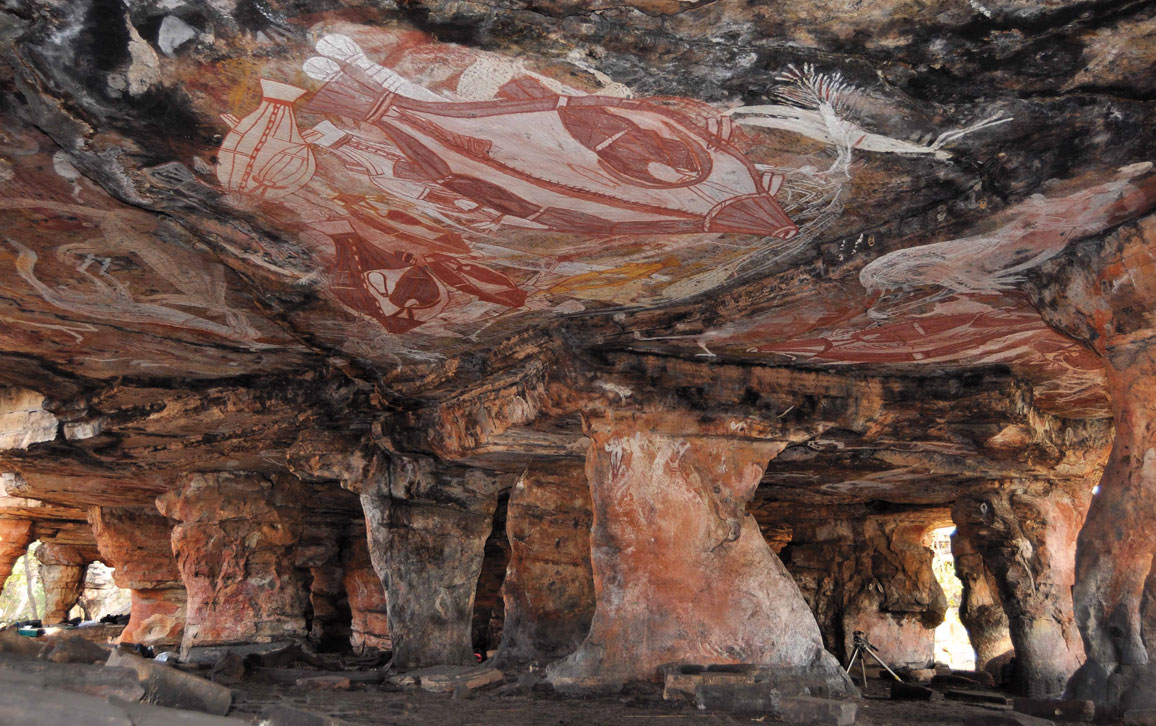
Australian Aboriginal rock art, 28 000 years old

A few months ago, I started a conversation with some people about indiginous spirituality. I had this itch that I wanted to scratch to do with how the Celtic tradition that I had found so deeply compelling might have some things in common with other indigenous spiritualities, so I reached out, looking for others who had connections and knowledge that I lacked.

Celtic idigenous traditions

My quest faced lots of problems. Firstly, reaching a definitive understanding of my own tradition is far from easy. The indigenous religion of the Celts stretches back thousands of years into myth and legend so it is hard enough to say much that is certain, and even harder to understand meanings that belong to a former culture and time. What little is known about the pre-Christian Celts mostly comes to us through highly questionable records of an occupying Roman Empire. Christianity came to these islands and first assimilated, then colonised the tradition, burying it under layers of ‘progress’. Some have tried to tell the Celtic story anew in order to make it meaningful – to me and others – but it can be hard to tease apart the facts from the fancy.

Perhaps this is part of the appeal to spiritual nomads and outsiders to institution like me. What we know as ‘the Celtic wisdom traditoin’ has a malleability that allows us to make it fit into whatever we want it to fit. It has subjective utility, but might be seen to lack authentic objectivity. In acknowledging this reality, it is then for each of us to decide whether the benefits outweigh the disadvantages.

For me, they most certainly do. Perhaps this is because I am a poet, more driven by spirituality of the mystical kind. Travelling in this tradition connects me with something visceral deep inside. It is a ‘feeling’ as much as an intellectual acceptance. I quite understand why friends of mine, more driven by systematic interpretation of scriptures might take a more cautious view.

Like all religious technologies, we must travel with a certain caution, looking around for other perspectives- paying particular attention to those that Empire has marginalised.
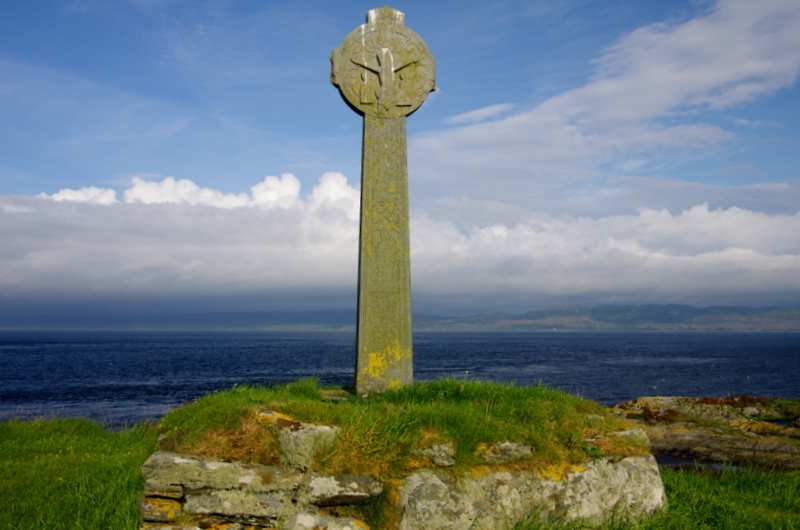
Celtic cross, Inner Hebrides, West Scotland

What do we mean when we talk about the ‘Celtic wisdom tradition’ then?

We have some tantalising clues in the form of stories and legends. Mostly these are survival traditions out on the fringes of the Celtic world- which like all cultures colonised by empire, retreated to the distant edge of its former hearlands – Atlantic coasts and islands or to rural Ireland and Wales.

We can also have some clues about the nature of this tradition from what is absent and outcast from mainstream religion. By this, I mean things that have been suppressed and persecuted that once belonged to ordinary believers. I have said more of this before, here for example. Many others have described and lamented what happened when indigenous, authentic and local spiritualities become subject to the priorities of institution and Empire.

Finally we know it as a deep ‘yes’ that we feel in our souls when we hear about ideas like ‘original goodness’ and hear how all things are connected and held together.

Colonialism and Christianity

Across the world, almost all indigenous cultures have been subjected to our colonial expansion – from St Kilda to Sarawak, through Australia and the Americas and so on. The Celtic experience might have begun earlier, but in many ways it was the same. Religion was an essential part of the ‘civilision’ of ‘native’ cultures – a conquest of the spirit alongside economic or geographical.

There is a problem here for followers of Jesus, in that Christianity has often been the religion of the worst and most oppressive forms of colonialism. I think however that the Celtic experience might heip us to decolonise Jesus from the religion that was made in his name. If we are right to describe Celtic Christianity as an assimilation of a the teachings of Jesus with pre-existing ideas, in such a way as to deepen and give further shape to the connections to earth and spirit, then we might conclude that this version of Christianity did not have at least some of the oppressive overtones that came later. Perhaps colonialism was done to Christianity as much as facilitated by it.

This does not get Chrsitianity off the hook. It remains a religion of the middle east, defined and propogated by the West, that grew and expanded because of the pursuit of Empire and profit.

Perhaps we should burn it all down and start again… but where do we start? How far back do we need to go? Whose teachings and example might be most helpful? Is there really a purer, less compromised, older and more true indigenous spirituality that we can still encounter?

This is still my quest, and it led to me reaching out towards some other people who were trying to make sense of the spirituality they were encountering via indigenous people in their parts of the world- two very different parts of Australis, Canada and Middle England. It has been an interesting journey so far… five white people, trying to make sense of black, brown and red religion.

Can we make connections with other indigenous cultures?

Part of my motivation fot this journey has been a desire to remake/rediscover a religious story that was more earth-connected, more able to provide us with a mass movement away from the damage we are doing to eco-systems. It was this ‘earth connectedness’ I felt in my Celtic roots that seemed to find echoes in other indigenous traditions – connections to land and place, to animals and holy mountains, to the spirit in other things. At least, this is what I had heard glimmerings of in films and books.

Perhaps there was more than this. I started to wonder if all the condemnation of ‘primative’ religion I had grown up with – which was characterised as animistic, or pagan, or pantheistic – had lost some things that really mattered. We were told of the foolishness of a belief that trees or rocks or lizards have spirits. How backwards to worship simple totems or forest spirits. After all, we have the wisdom of the Bible. Look where that got us.

I remembered well the simple goodness of Bob Randall’s Kanyini;

I first encountered Bob as a commentator on cultural breakdown, whilst I was working as a social worker amongst men and women in mental health services, within broken communities in the UK, not Australia. Back then, any implications for religion seemed secondary. Now they seem inseperable.

But in the face of so much variety, so much diversity, is it really possible to make any general statements about indigenous spirituality? Can we claim that it is more ‘earth connected’ or more authentically human? Is it ‘better’ than what we have have experienced in our religious institutions?

This is the conversation I have been having with my four friends from far away – more of this to come.

I will leave you with a quote from the First Nations Version New Testament. This is a book written in English by a first nations pastor in America, working first with prisoners, later with others trying to reconcile the words of the Bible with their own culture and it’s colonial history. Here are the beatitudes, through first nations eyes.

It is the same, but also very different.

BLESSINGS OF THE GOOD ROAD Matthew chapter 5

3“Creator’s blessing rests on the poor, the ones with broken spirits. The good road from above is theirs to walk.

4“Creator’s blessing rests on the ones who walk a trail of tears, for he will wipe the tears from their eyes and comfort them.

5“Creator’s blessing rests on the ones who walk softly and in a humble manner. The earth, land, and sky will welcome them and always be their home.

6“Creator’s blessing rests on the ones who hunger and thirst for wrongs to be made right again. They will eat and drink until they are full.

7“Creator’s blessing rests on the ones who are merciful and kind to others. Their kindness will find its way back to them—full circle.

8“Creator’s blessing rests on the pure of heart. They are the ones who will see the Great Spirit.

9“Creator’s blessing rests on the ones who make peace. It will be said of them, ‘They are the children of the Great Spirit!’

10“Creator’s blessing rests on the ones who are hunted down and mistreated for doing what is right, for they are walking the good road from above.

11“Others will lie about you, speak against you, and look down on you with scorn and contempt, all because you walk the road with me. This is a sign that Creator’s blessing is resting on you. 12So let your hearts be glad and jump for joy, for you will be honored in the spirit-world above. You are like the prophets of old, who were treated in the same way by your ancestors.

SALT AND LIGHT

13“As you walk the good road with me, you are the salt of the earth, bringing cleansing and healing to all. Salt is a good thing, but if it loses its saltiness, how will it get its flavor back? That kind of salt has no worth and is thrown out.

14“As you walk the road with me, you are a light shining in this dark world. A village built on a hill cannot be hidden. 15No one hides a torch under a basket. Instead it is lifted up high on a pole, so all who are in the house can see it. 16In the same way, let your light shine by doing what is good and right. When others see, they will give honor to your Father—the One Above Us All.

FULFILLING THE SACRED TEACHINGS

17“When you hear my words, you may think I have come to undo the Law given by Drawn from the Water (Moses) and the words of the prophets. But I have come to honor them and show everyone their true meaning. 18I speak from my heart, as long as there is a sky above and an earth below, not even the smallest thing they have said will fade away, until everything they have said has found its full meaning and purpose.

Responding to violence and fear…

Charlie-Hebdo-attack-the-next-chapters

You know what I am referring to. The news, your Facetwitter feed, even good old fashioned communication- it is full of the desperate events that unfolded in Paris over the last couple of days. Violence and murder done in the name of religion. Violence that grew like poisonous funghi in the shadow cast by other violence.

Events like this have the capacity to shape our age, for good or ill. Our response to it should be to preach caution, to encourage a sense of proportion and to remind people of history, so we might learn from it.

People of faith have a particular role to play here, given the centrality of theology as both framing narrative and ideological justification for unspeakable barbarity. The meaning of ancient texts has become so mixed up with tribal identity and weight of injustice that perhaps it is only from within religion that violence can be challenged. I know this as the hard, unyielding condemning religion I grew up with was transformed through thoughtful engagement with a different kind of belief.

Giles Fraser had this to say about the relationship between iconography and religion;

But, of course, these terrorists weren’t really interested in theology. They thought that Charlie Hebdo’s cartoonists were insulting their human tribe, a tribe they called fellow Muslims. And maybe they were. But whatever else was happening, it was the atheist cartoonists who were performing the religious function and the apparently believing Muslims who had forgotten their deepest religious insights. For any representation of the divine that leads people to murder each other deserves the maximum possible disrespect.

charlie-hebdo-shooting-tribute-cartoons-cartoonists-12

But back to the point- what should be our response?

I mentioned attempting to retain some perspective. It is so hard to do this when bombarded with so much infotainment/news coverage. Meanwhile extremes are shouted from the margins by those who have a different tribal agenda- Muslims are all evil, as is their religion; we are all under attack from immigrants in our midst; all religion is bad; Christians were right all along etc etc.

Let us remember in this white/anglo-saxon/protestant centric world we inhabit that across much of the planet human life is cheap. The deaths in Paris were tragic, dreadful, appalling. But Yesterday in Nigeria around 2000 people were killed in a different Islamic extremist attack that Amnesty International described as the “deadliest massacre” in the history of Boko Haram. Be honest now- did you know about this? How do you emotionally and intellectually respond?

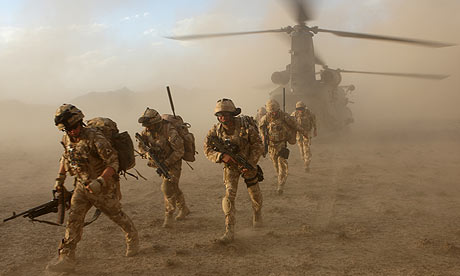
British-troops-in-Afghani-001

Then there are the lessons of even recent history (let us not even mention the dreadful colonial legacy that has far more to do with the creation of terrorism than religion ever could have).

Although we have to start there in a way. At the end of Empire, Britain had lived with terrorism for at least 100 years. The transition from colonial territory to autonomous nation has rarely been peaceful; too many artificial borders imposed on disparate peoples, with a history of being on different sides of the many colonially sponsored conflicts. Britain learned the hard way that conventional warfare is never the long term solution to insurgency and terror. Or rather we had to re learn this again and again, treading a path that is remarkably familiar; concentration camps, secret police, propaganda campaigns that leave no room for dissidents, and along the way many a blood bath; Kenya, Zimbabwe, India, Iraq, Afghanistan, Ireland etc etc. Eventually we had to talk to people. We had to turn away from violence and try to make peace in the face of all sorts of provocations.

Ah- but these conflicts were largely about geography, not about ideology, I hear you cry; modern terrorism has no obvious negotiation point; we can not walk away, because it is coming to us- our homes, our streets. It arises internally from our own ethnic minority communities.

I would suggest that there are more similarities than would first appear, it is just that like all post modern movements, terror has globalised. It has worldwide franchises, but power and motivation are still generated in the conflict zones.

After the attack on the World Trade Centre, America declared a war of vengeance. They were quite open about it at the time. Someone had to pay. First Afghanistan was invaded, with a narrative about evil regimes, then on far shakier evidence (later almost entirely discredited) Iraq. Hundreds of thousands died. The bulging prison camps became training grounds for new terror movements. Surveillance and a suspension of the rule of law was seen as justifiable and expedient. To support the war effort successive governments incited fear in a wider public who, in general terms, had probably never been so safe. Has it worked? Can we really regard the world, even the USA as a safer place, a better place?

15360-f557lc

Here is Owen Jones writing about events in Norway in the wake of their brush with terror;

Three and a half years ago, the far-right Norwegian terrorist Anders Breivik bombed Oslo, and then gunned down dozens of young people on the island of Utøya. His rationalisation for the atrocity was to stop the “Islamisation” of Norway: that the Norwegian left had opened the country’s doors to Muslims and diluted its Christian heritage. But Norway’s response was not retribution, revenge, clampdowns. “Our response is more democracy, more openness, and more humanity,” declared the prime minister Jens Stoltenberg. When Breivik was put on trial, Norway played it by the book. The backlash he surely craved never came.

Here’s how the murderers who despicably gunned down the journalists and cartoonists of Charlie Hebdo do not want us to respond. Vengeance and hatred directed at Muslims as a whole serves Islamic fundamentalists well. They want Muslims to feel hated, targeted and discriminated against, because it increases the potential well of support for their cause. Already, there are multiple reports of attacks in France against mosques, and even a “criminal explosion” in a kebab shop. These are not just disgraceful, hateful acts. Those responsible are sticking to the script of the perpetrators. They are themselves de facto recruiting sergeants for terrorists.

As a nation we are vulnerable to many things in these changing and rootless times. Our chances of early death at the hands of an Islamic terrorist are absolutely tiny. Lots of other things that we live with every day will kill thousands of us; our lifestyles, our motor cars. There is a chance that our over consuming will be the end of our kind.

So let us pause, remember with respect those souls who passed and then try to make peace with ourselves and then with our neighbours.

Jar of peace

Tea, sugar and slavery…

If you were to think of things that define us as a nation, most of us would include our addiction to tea.

Then there is our huge sugar consumption- in tea of course, but also lacing almost all of our other processed foods.

This morning I listened to the wonderful radio programme ‘A History of the World in 100 Objects‘ on Radio 4. It is nearing it’s end, but today’s programme described an early Victorian Wedgwood tea set.

And it brought to be again the need to understand history from the perspective of the small people- not the law makers and war mongers. Because the history of ‘Great’ Britain has often been one of militaristic expansionism, and economic oppression.

Slavery brought us sugar, via the terrible triangle of trade that saw African people stolen from their homelands and shipped like expendable cattle to work in the West Indies.

And tea- this was a much later economic obsession. Stolen from the Chinese, with much double dealing and opium peddling along the way, and increasingly adopted as the drink of high society in Victorian Britain.

But because it was expensive, there was a need to find ways to control the production, distribution and sales of tea on a massive scale. For this, we needed new plantations in a suitable climate.

And of course, we also needed a huge cheap workforce that we could control and dominate.

And so we manipulated, shanghaied and cajoled the poorest of another one of our conquests to move to a country far from their birth and work our new plantations in Ceylon.

To make this seem OK, we had to believe that we were doing them a favour. We had to be able to see these people as less than us, weaker, less human.

So we called them a name that befitted their status- a pejorative name. Coolies.

In the British Empire, coolies were indentured labourers who lived under conditions often resembling slavery. The system, inaugurated in 1834 in Mauritius, involved the use of licensed agents after slavery had been abolished in the British Empire. Thus, indenture followed closely on the heels of slavery in order to replace the slaves. The labourers were however only slightly better off than the slaves had been. They were supposed to receive either minimal wages or some small form of payout (such as a small parcel of land, or the money for their return passage) upon completion of their indentures. Unlike slaves, these imported servants could not be bought or sold. (From here.)

These mass movements of population leave their mark on human politics to this day, as does much of our colonial system. The Tamils who were imported into Ceylon (now Sri Lanka) were fighting a bloody civil war until only last year.

All of which makes my tea taste a bit sour.

And it does not get much better for the tea producing nations today. They are slaves to the free market, with commodity prices rising and falling, and plantations mostly tied to multinational corporations.

All the more reason then to drink tea (and coffee) as well as using sugar that has the fair trade mark– yes I know all about the tokenism thing- but my tea just goes down with more satisfaction.

And given my inherited history, it seems the very least that I should do.

Pat Robertson says Haiti ‘made a pact with the Devil’

Pat has been sounding off again.

Alistair pointed me in the way of this-

Oh dear.

The scary thing is that millions of Americans take what Robertson says seriously.

When Marx called religion the ‘opium of the people’ he perhaps had in mind drug dealers like Pat.

Haiti lives in the shadow of its colonial past. Check out the brief historical summary here. It has not just that America has been a poor neighbour, but you could say a rather devilish one.

Incidentally, the slave revolt that ejected the French happened before Napoleon III of France was born!

Robertson brings shame to Christians with his ludicrous pronouncements.

He does not speak for me. Nor, I suspect, for Jesus.

I have heard lots of talk about corruption, as the worlds press is full of appeals for money and aid. Lest this slow down our willingness to open our wallets- can I suggest checking out OXFAM