Knox casts a shadow…

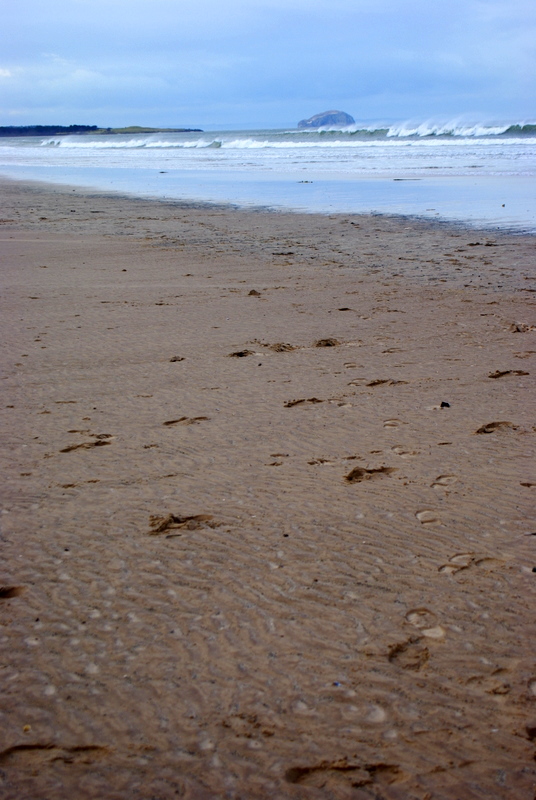
We spent today over in Haddington with my brother Steve and his wife Kate. It was a really lovely time, spent walking around the old market town and visiting one of the lovely beaches that are all over the coast thereabouts.

Haddington is a quiet market town these days, but this was not always the case. It was at one time the fourth biggest city in Scotland, after Aberdeen, Edinburgh and Roxburgh.

As we walked back to Steve and Kate’s house, I noticed a little set of stone stairs, all overgrown and boundaried by old railings. It seemed to lead up to a platform under an old tree. Further investigation revealed a stone monument…

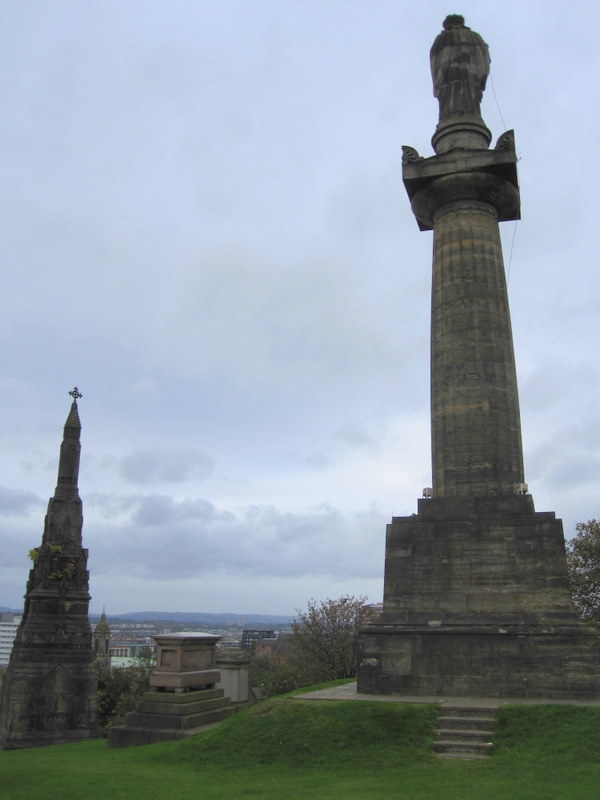
It was hard to read, but basically it commemorated the birthplace of John Knox, protestant reformer, scourge of the unrighteous, whose memory is marked by a far more visible column that towers over the city of Glasgow;


Knox lived a long and colourful life. His reforming zeal burst into a political/religious powder keg and led to armed revolution and murder. Ends justified the means. The Prince of Peace required the intervention of armed mobs.

And it all started in Haddington, when Knox was born a farmer’s son, and lost his mother early. Perhaps in a different place, with a happier childhood…

Today it all seemed to me to be sad, and a little absurd. I found myself asking again what good came out of all this religious warfare. Was any of it necessary? Is there anything that we can still be proud of with the benefit of hindsight?

Knox himself seems to scowl out at us from the pages of history. What kind of splenetic wrath would he subject us to if he could but see the outcome of his reformation?

Meanwhile the sea rolls over the beach and grains grow finer. And I seem to have fewer answers.

And that is OK.

Anthropomorphising God…

We had a lovely evening last night with our friends Susan and Steven. Our kids a great friends, and they live within an easy walking distance. We ate, shared a few glasses of wine, and laughed a lot.

And as ever, we discussed religion a little. Susan is a Buddhist, and it has been really interesting to share stories and perspectives. Sometimes it seems that we share so much, whilst at other times, the differences are stark. Michaela and I have often described how good these conversations feel though- neither of us are trying to win the other to our own perspective- rather we feel a respect and a pilgrim-companionship.

Because neither of us have all of this sorted. Perhaps the adjustment was greater for us in this regard- as we have been schooled in a kind of religion that has to pretend to have all the answers, lest we miss an opportunity for someone to come a realisation of the error of their ways. And of course, there is the spectre of hell waiting for those who do not grasp the ‘truth’.

Hmmm- am I sliding still towards syncretism and universalism? Whilst I may have a lot of difficulties with the narrow way of thinking that I describe above, I remain a Christian.

Last night, Susan commented on her experience of reading ‘The shack‘. Not one of my favourite books, I have to say- I found the extended images too laboured, and the writing a bit too overblown. However Susan’s perspective on the book was shaped by her starting point as a Buddhist- and the fact that the ‘person’ of God is not part of her experience. She would not necessarily see God as an entity, or a being- for her faith is a process of becoming.

Initially, I felt a sense of loss for my friend. Because my faith is driven most of all by a developing awareness of the person of Jesus, and the Father, communicated by the Spirit.

But later, I began to think again about what this might mean- to take a look at my belief from the perspective of an outsider- which is the great benefit of these conversations with people of a different faith.

And because I love words, I started with two words-

Personification

1. (Literary & Literary Critical Terms) the attribution of human characteristics to things, abstract ideas, etc., as for literary or artistic effect
2. (Fine Arts & Visual Arts / Art Terms) the representation of an abstract quality or idea in the form of a person, creature, etc., as in art and literature
3. a person or thing that personifies
4. a person or thing regarded as an embodiment of a quality he is the personification of optimism
.
Then there is this other word-
Anthropomorphism is the attribution of uniquely human characteristics to non-human creatures and beings, natural and supernatural phenomena, material states and objects or abstract concepts. Subjects for anthropomorphism commonly include animalsdepicted as creatures with human motivation able to reason and converse, forces ofnature such as winds or the sun, components in games, unseen or unknown sources of chance, etc. Almost anything can be subject to anthropomorphism. The term derives from a combination of Greek ἄνθρωπος (anthrōpos), human and μορφή (morphē), shapeor form.
.
I am sure that it will be obvious to most of you why these words are important to people of faith. We humans have the propensity to attribute human characteristics to inanimate objects, to animals, clouds, gadgets. We are geared to look for human resonances- and to recognise the human face almost before we are born. It is in our wiring (there we go- I just anthropomorphised my computer!)
.
So this has to raise questions as to the effect that this has on the development of religious belief, and the shape of our personal encounters with the divine.
.
Atheists might suggest that all religion grows from these human characteristics.
.
There are Christian voices that also point out how modernity has become mingled with culture to such an extent that we have remade God in our own image- a western, capitalistic, rationalistic, democratic God. My own personal pocket Jesus.
.
It is very difficult to take this Jesus out of our pocket. We tend to just put him in a different one.
.
It is perhaps interesting to make a comparison of how the different religious faiths deal with this issue of anthropomorphism- Anthropomorphism of God is rejected by Judaism and Islam, which both believe that God is beyond human limits of physical comprehension, a view which has resonance with the Gregory of Nysa’s ‘holy darkness’. The Jewish rejection of the anthropomorphism of God intensified after the advent of Christianity.
.
.
But we Christians, unlike our brothers and sisters in other faiths have continued to seek encounter God through the face of Jesus. Whatever this means…
.
What is left in me is a conviction that God became flesh and lived amongst us. And we have seen his Glory. (John 1)
.
But this incarnation is of a God who lives in us, not a personification of what we are cast heavenwards.
.
Hmmmm…

Religion makes you a better person?

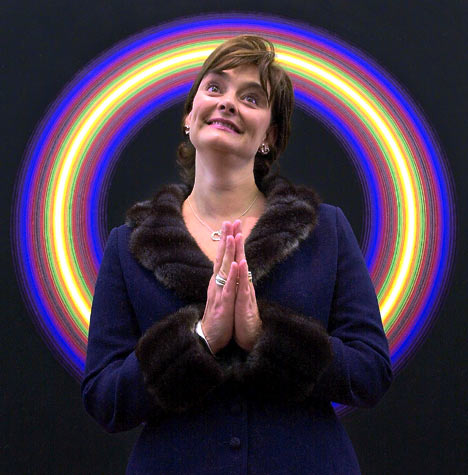
So Cherie Blair has got herself in trouble again

I always feel a little sorry for Cherie- she has been a tabloid target for years. There is something gawkishly vulnerable about her that always made me sort of like her, whilst being a little afraid of her at the same time.

But I suspect she is no fool.

But this latest story- it seems she was sitting as a judge in the case of a man who had suffered some queue rage, and ended up breaking a man’s jaw.

Inner London Crown Court heard that Miah, 25, of Redbridge, east London, went into a bank in East Ham and became embroiled in a dispute with Mohammed Furcan about who was next in the queue.

Miah – who had just been to a mosque – punched Mr Furcan inside the bank, and again outside the building.

Ms Booth told Miah that violence had to be taken seriously, but said she would suspend his prison sentence because he was a religious person and had not been in trouble before.

She added: “You are a religious man and you know this is not acceptable behaviour.”

The National Secular Society soon latched on to the story with a howl of militant evangelical atheistic outrage, feeling that Cherie’s comments meant that she might have treated a non-religious person less leniently.

I suspect that Cherie’s comments have been taken way out of context, and that if we examined most of the summing up comments made by Court Judges when passing sentence, we would find much more juicy morsels to splash around the red top papers.

But the story seems to have stimulated a wider debate about whether religion really does make people behave better- and whether faith makes us better people. And if so- then are Buddhists better than Followers of Jesus, or are Muslims better Pagans?

What do you think? Because I am not sure.

I can not comment on other faither, but I have known a lot of bad behaviour in churches. But I have also noticed that on the whole, people are motivated to do good. For every insensitive bigot, there are a whole lot of other folk who are seeking to live better lives.

In my experience, society is full of wonderful people, who seek to make the world a better place. Some of them have faith which gives a code for life, and a bridge to understanding things in a deeper way.

However we are all capable of such good and such evil. Sometimes religion brings out both.

I have not used one of these voting things for a while- so here we go-

Lord Reith 1, Atheists 0…

Long term TFTD contributor Rabbi Lionel Blue

Each weekday millions of people in Britain reach for their radio and tune to BBC radio 4’s Today programme. It has been my primary window on world news and events for 40 years. In a world of sound bites and looped infotainment it’s continued popularity is remarkable. Thoughtful extended reflections on real issues? Serious journalistic inquiry that makes politicians tremble in their Gucci’s? It will never catch on surely?

Today programme listeners tend to be very protective of their habitual morning listening. We do not like things to change. We do not like things to be trivialised or tarted up. John Humphrey’s can often irritate and annoy with his savant-pedanticism- but he does this as one of ours. Like an older brother at Christmas.

At 7.45 each morning, we are offered a Spiritual slot, called Thought for the Day. A selected bunch of folk from different faith backgrounds are given 120 seconds to reflect on a current issue. It is often bland and esoteric. Sometimes it is beautiful and moving. It is one of those rare ‘pause, breathe in and think’ moments. Or at very least a moment to switch the kettle on.

Step forward the Militant Atheists. They object strongly to their morning listening being corrupted by religion. Particularly when Atheists and humanists are not invited to speak. This from the National Secular Society

“Every edition of Thought for the Day is a rebuke to those many people in our society who do not have religious beliefs…This is so blatant an abuse of religious privilege that we cannot simply let it pass. Our evidence shows that five out of six of the public are heavily on our side. We will be looking at other ways of challenging this unjustifiable slot.”

And so complaints were sent (7 in total) and much huffing and puffing was made in many quarters. The BBC trust sat in leather chairs for quite some time- then rejected the complaint.

The ghost of Lord Reith, Presbytarian forefather of the BBC- rested again in peace…

Of course, we may yet Atheist voices Thought for the day. But I find myself in agreement with The Guardian’s John Plunket who said this-

Introducing secular voices to Thought for the Day wouldn’t just have changed the slot, it would have killed it. As one of its former editors John Newbury said, there is no need for a non-theological Thought-style reflection at 7.50am – there is plenty of that elsewhere on Today and across the Radio 4 schedule.

Evangelical muscular atheism seems to me as anachronistic in these pluralistic times as the street corner preacher in his sandwich board proclaiming the nigh-ness of the end.

And whilst I have no desire to get into pointless arguments with people who have claim to know what can never be known (who remembers last year’s bus campaign?) I must confess to a feeling of more than a little smug satisfaction at the rejection of their complaint…

Charter for compassion

Following on from this post, here is another video relating to an attempt to put together a universal Charter for Compassion.

It attempts to comb together some of the common themes of compassion present in the major religions.

I can hear the cries of horror from certain Christian circles… the fear will be that such a thing might lead somehow to impurity, dilution or syncretism. But I think we have nothing to fear, and so much to gain, through meeting and sharing with people from other faiths.

Particularly in these times…

I am (not) inspired by Pete Rollins…

I have been reading another of Pete Rollins’ books on and off through this past year- this one- ‘The fidelity of betrayal’.

the-fidelity-of-betrayal

It has some great stuff in it, but to honest, I have struggled a bit more than I thought I would to get through it. This surprised me, as I devoured his last book- ‘How (not) to speak of God’.

Perhaps I did not give it a fair crack of the whip, as I read it in something of a piecemeal fashion.

But I think too I may have seen a bit too much of his gig. It goes something like this-

The life of faith is a life of contradiction. Therefore all things we think we know about God, when we really stop and think- we do not really know after all.

All the tenets of faith we were given as absolutes are (not) true.

Faith is formed as we learn to become faithful betrayers of our inherited traditions.

Faith is formed as we  learn our status as (A)theists.

Now I kind of see where he is going with this, and I think the commentary on faith is important and thought provoking. But I can not help feeling just a little weary with the ‘let’s turn this upside down and then see how it looks from the other side’ kind of style. I find myself kind of seeing it coming, then chuckling to myself when it surely arrives.

But then again, I do think this man is an important contributor to the theological and philosophical debate in our time. Let me quote a passage for you to kind of illustrate my dilemma with this book…

In a chapter called ‘forging faith communities with/out God’ (there he goes again- get it?) he has this to say-

…once this is understood, and people are invited to begin to deconstruct their religious systems, individuals will either be brought to a deeper understanding and appreciation of their faith, or they may find they never really had faith in the first place. In the former case the deconstruction will enable the individual to delve deeper into an appreciation of his or her faith, while in the latter the individual will leave such things behind. Both of these are preferable to either mistaking the true miracle of faith for a system of thought or of using that system as a way of hiding from oneself a lack of faith.

Well I guess… I certainly have found myself to be in the former case most of the time, although I have to acknowledge that some of the time I perhaps slipped towards the latter.

Rollins goes on to give some consideration to the creation of spaces that allow people to explore and deconstruct.

Following on from this there is a need to continue the long Christian tradition of forming spaces in which we collectively invite, affirm and celebrate the miracle that lies behind the miraculous, beyond magic, beyond the sacred, and beyond the secular. We need to continue forming places that can render these ideas accessible at an immediate level- a level that does not depend on the contingencies of one’s education or the ability to think in abstract ways (this from Rollins?!)

The question here is not “how do we make these ideas intelligible”, for the miracle itself can be rendered intelligible only as unintelligible. What this means is that the miracle of faith is a happening, an event, that defines reduction to the realm of rational dissection…

…In contrast to forming space that will make sense only to people who are highly educated, we must endeavour to form spaces that make sense to NOBODY, regardless of the level of education- spaces that rupture everyone and cause us all to rethink

Right.

Again- I get it. Faith discovered/encountered/inspired/agitated through performance art. Or as Rollins calls it- Transformance art.

And then I think of my own community, and our experiments with worship curation. The process that Rollins describes seems so far beyond us. It is too hip, too serious, too absorbed in it’s own rhythm somehow… and I find myself slightly and surprisingly alienated.

And I find myself longing for something much simpler- where deconstruction is not the only language we use, but we also construct things that are small, but beautiful.

But I still think we need Rollins- and I am looking forward to what Ikon have to offer at Greenbelt festival this year…

Postcards from the western fringe 7- fishing for souls…

DSCF4472

Had a lovely day today- touring the north of the island with Emily. The weather was mixed, but we even sat on a beach for a while today, before the wind and rain drove us back to the car.

Talking of wind- there was a tornado in Stornoway last night! The school that Will and Michaela are doing classes in as part of the Feis was damaged.

This afternoon we really enjoyed meeting up with Gayle Findlay for a cuppa. She moved up here from Bristol about a year ago, and has a great blog recording some of the transition.

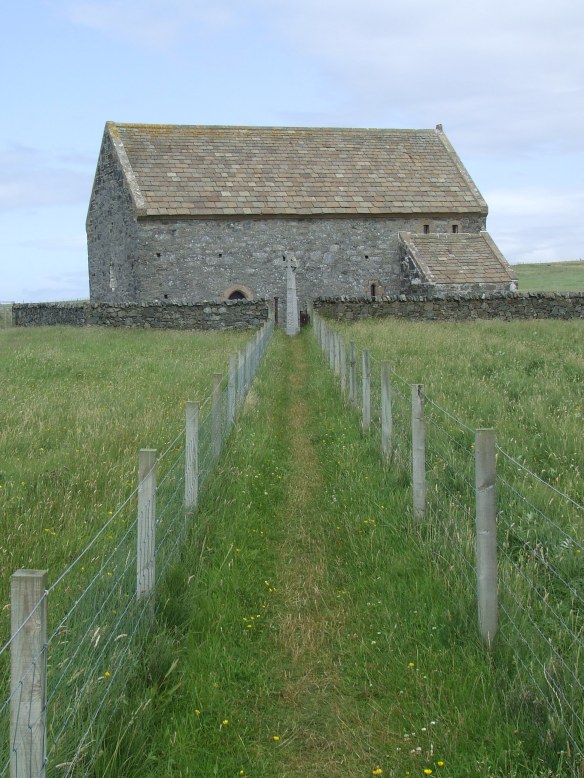
One subject that is hard to escape – both as a visitor to Lewis, and for incomers- is the central importance of a particular kind of rigid faith to just about everything that happens here. It seems to shape the very landscape, or perhaps is a response to the savage environment.

The dominance of the Free Church of Scotland with its severe, Calvinistic and (at least to outsiders) legalistic approach to the life of faith has been the driving force for communities here for much of the last 100 years. The church casts a shadow that I confess (as an outsider) I find oppressive.

In saying this, I do not mean to be offensive to fellow Christians. Their context and journey is so very different from mine. I have been stirred by stories of transformation during the Hebridean revival. It is a story that has been retold to inspire us to eagerly chase after revival. Check out this American video-

I once heard revival described as being like a volcano- all fire, smoke and hot flowing lava. Soon the smoke and fire lessens, but the lava still flows, even if the outer core crusts hard over. Eventually however, the crust is all that is left. It is from this solid rock that the walls of churches are built from.

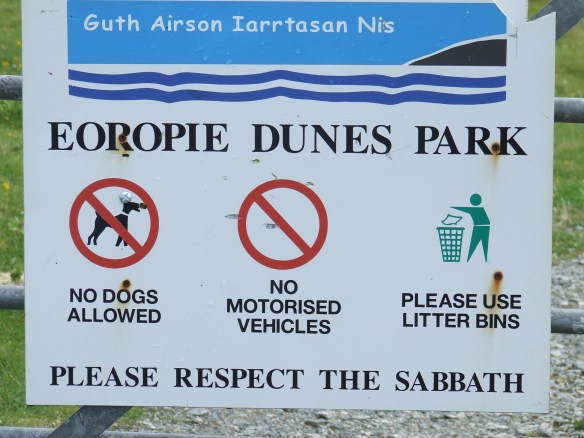
I took two photographs today that kind of summed things up for me. The first was this one-

DSCF4471

In these parts, Children are not allowed to play on the Sabbath. Or not openly anyway.

I note the the Free Church youth magazine is called- Free.

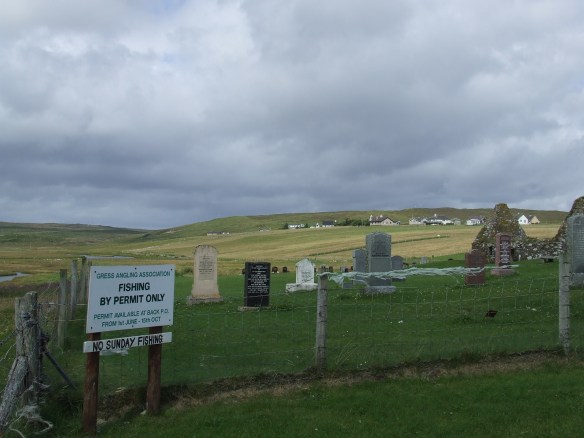
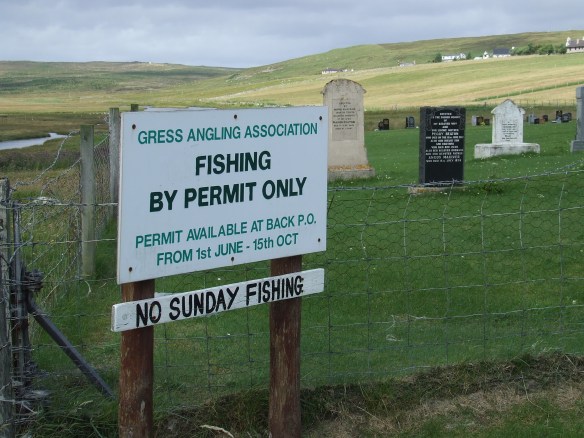
The other photo was this one…

DSCF4450

DSCF4451

There was a river next to this graveyard, but the irony of the fishers for the souls of the dead needing a permit from the kirk made me chuckle.

Particularly as such frivolous practices were not to be indulged in on Sundays.

Religion as poem…

Came across this poem recently, by Catholic poet Les Murray-

Religions are poems. They concert
our daylight and dreaming mind, our
emotions, instinct, breath and native gesture
into the only whole thinking: poetry.
Nothing’s said till it’s dreamed out in words
and nothing’s true that figures in words only.
A poem, compared with an arrayed religion,
may be like a soldier’s one short marriage night
to die and live by. But that is a small religion.
Full religion is the large poem in loving repetition;
like any poem, it must be inexhaustible and complete
with turns where we ask Now why did the poet do that?
You can’t pray a lie, said Huckleberry Finn;
you can’t poe one either. It is the same mirror:
mobile, glancing, we call it poetry,
fixed centrally, we call it a religion,
and God is the poetry caught in any religion,
caught, not imprisoned. Caught as in a mirror
that he attracted, being in the world as poetry
is in the poem, a law against its closure.
There’ll always be religion around while there is poetry
or a lack of it. Both are given, and intermittent,
as the action of those birds – crested pigeon, rosella parrot –
who fly with wings shut, then beating, and again shut.

Not quite sure what I think of this, but liked the fact that it made me think!

poetry-t

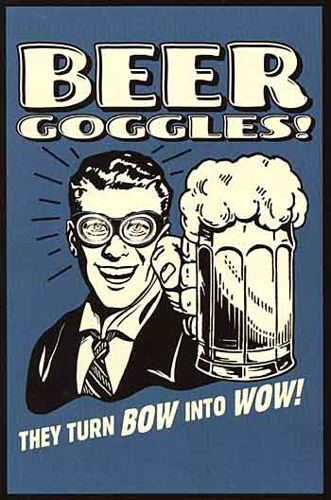
Beer goggles/God goggles…

beergogglesFER_450x502

We were talking about the effect of the religious narcotic on our brains the other day, and someone (I think it was Ali) made the humourous, but accurate, comparison between beer goggles and God goggles.

Perhaps I should more accurately use the words ‘religion goggles’, but I am sure you get the point- the danger of we people of faith just soaking up the stuff of religion, then evaluating everything that we see and hear through a set of lens that are distorted to match our own particular perspective.

The reality is that all of us wear a set of goggles- and none of these are entirely without refraction and distortion. The difficulty is that it is very easy to become so used to the altered images that these become the only reality.

Perhaps the answer is to swop them around every now and again to see things through the (also distorted) lens that others wear from time to time?

beer_goggles3

Protestant sectarianism and emerging church…

The history of Protestantism is littered with division and conflict.

Reformation of what has already been reformed.

Schisms of schisms.

Battles over whose truth is truer and whose understanding of scripture is most enlightened.

The legacy of these truth wars can be seen in the countless Protestant descriptive labels/denominations. Here are but a few as they occur to me;

Lutherans, Wesleyans, Reformed Weslyans, Methodists, Free Methodists, Primative Methodists, Baptists, Southern Baptists, Reformed, United Reformed, Assemblies of God, Anglican, Church of Scotland, Episcopal, Quaker, Shaker, Amish, Menonite, etc etc.

This list is in part a noble one. We have learned much from the men and women of God who have celebrated faith within these organisations. Such variety speaks of the freedom that people felt to follow after God in the way they understood him, away from the central powerful control of older forms of religion. It also is a story of fervency, of revival, of movements of the Spirit across whole communities, of great leaders who were bold and true.

But there is a dark side, measured by truth promoted over love and grace, and in a serial fracturing of the unity of the Spirit. Such division can be seismic in terms of the violence done to community in the name of Jesus.

I wonder if this kind of spiritual development can become addictive and even infectious. Almost as if all new Protestant church movements carry a destructive gene within their DNA…

Scotland has had more than a fair share of this splintering and fragmenting. Take the recent very public difficulties seen in the Free Church of Scotland, which splintered as recently as 2000.

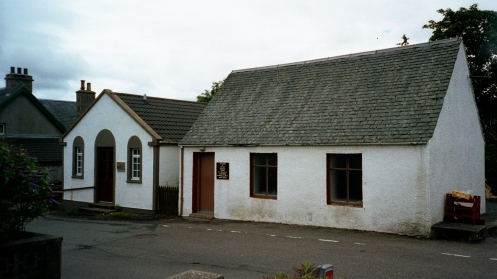
I have used this picture before- taken in a small West of Scotland town about 7-8 years ago. Two churches so close that they are almost touching- but separated by a chasm of doctrine. I should add the proviso that I do not know either of these churches, and the image may miscommunicate entirely. But I think it makes a valid point about a certain characteristic of Protestantism…
two-churches

How did we come to this, we followers of Jesus?

How did Agents of the Kingdom of God, sent out into a broken world to form revolutionary cells characterised by love, somehow sign up instead to be driven towards such segregated exclusivity?

Is this more about psychology than it is about theology? Our tendency to seek a point of expansion and accomplishment, and to measure it against others around us- elevating ourselves by finding others wanting.

I wrote this poem in an attempt to understand these things in myself-

Diplomacy

We meet and move about one another
Probing, exploring borders
Negotiating
Presenting our petition
And revealing this badge of office-
Sewn on sleeves whilst our hearts stay hidden
Revealing carefully edited glimpses
Of whom we want to be
But are not yet.

Then begins the measuring
Of the size of armies
The bore of canon
And the reach of your rockets
As we carefully deploy our camouflaged troops
To occupy the high ground
To hide uncertainty behind
A cloak of accomplishment
And capability.

Sometimes it seems that who I am is only revealed
In understanding what you are not
In seeing you
And finding you wanting
In mapping out your strongholds
And avoiding them
And raising up my tattered flag
Above this uncomfortable alliance.

Why is this important now?

Because I think that this is a real challenge to those of us who are part of the ’emerging church’ discussion, particularly here in Scotland. Some questions-

Is ’emerging church’ just another Protestant reformation- another fractious denomination in the storming and the forming- throwing stones at those whose truth is not our truth, looking around and finding others wanting.

Or are we a break from modernist Protestantism- a more generous, open, embracing movement that seeks unity, not uniformity and is willing to learn humility and to value the other.

Are we Protestant at all? Where are the emerging Catholics?

If something new and hopeful continues to emerge, in all its flawed beauty- how do we(or even SHOULD we) nurture and sustain whatever we become without following a familiar pattern of splinter and schism?

From my point of view, the story is mixed.

Emerging church has no form and no structure- at least in Scotland. It is not a descriptive definition of any way of doing church- rather it is a loose affiliation of malcontents and hopefuls, defining themselves rather by the fact that they are prepared to question and seek.

And because we are human, friction is inevitable. People compete for prominence, and justify themselves by the rightness of their cause, or the small success of their activity.

But brothers and sisters- I find myself longing for something else. Something a little more of the Kingdom, and a lot less of the Empire.

Something characterised by tolerance and love. (Even as I am intolerant and unloving.)

On forgiveness rather than defensiveness. (Even as I defend and find it hard to forgive.)

Of a willingness to enjoy one another without the need to compete. (Even as my own insecurity drives me to do the opposite.)

And a determination to see community as the origin and the means for all things- with one another and with Jesus. And that the quality of these interactions should become the measure of our success. (Even with my own history of broken community, and the wounds I carry because of this.)

This is the church I long to see emerging.

I have not desire to be part of another schism.