Kierkegaard on poetry…

brazen bull

Soren Kierkegaard had this way of throwing stories into the middle of his philosophising. Here is one of them;

What is a poet?

An unhappy man who in his heart harbours a deep anguish, but whose lips are so fashioned that the moans and cries which pass over them are transformed into ravishing music.

His fate is like that of the unfortunate victims whom the tyrant Phalaris imprisoned in a brazen bull, and slowly tortured over a steady fire; their cries could not reach the tyrant’s ears so as to strike terror into his heart; when they reached his ears they sounded like sweet music.

And men crowd around the poet and say to him, “Sing for us soon again”—which is as much as to say, “May new sufferings torment your soul, but may your lips be fashioned as before; for the cries would only distress us, but the music, the music, is delightful.

Kierkegaard is describing something that most familiar- art arising from introspection, sensitivity, dysfunction, hurt. Art that does not heal, but rather is a plaster over an open wound.

Poetry like this has no choice but to be written. You might as well tell a cut to stop bleeding.

Hmmm.

Words and silence…

A lovely poem appeared in my inbox today courtesy of Minimergent (a more or less daily e-mail from Emergent Village.)

It hit a nail on the head.

I have been thinking a lot of how I struggle to pray- how words tend to be hollow- presumptuous, pompous, self seeking. How it seems as though I am speaking more to myself than to God at times.

And how I tend to fill everything I do with words- because words are the medium of my understanding, my meditation, my artistic endeavour.

So this poem makes a suitable prayer. Wordy though it may be;

I who live by words, am wordless when

I try my words in prayer. All language turns

To silence. Prayer will take my words and then

Reveal their emptiness. The stilled voice learns

To hold its peace, to listen with the heart

To silence that is joy, is adoration.

The self is shattered, all words torn apart

In this strange patterned time of contemplation

That, in time, breaks time, breaks words, breaks me,

And then, in silence, leaves me healed and mended.

I leave, returned to language, for I see

Through words, even when all words are ended.

I, who live by words, am wordless when

I turn me to the Word to pray.

Amen.


Madelaine L’Engle  ‘The Weather of the Heart’

Turning…


Turning


I no longer know

Where swallows go

In winter

Or where the wind blows


I look and seldom see

The flicker of fading northern light

And now the sky

Is sleeping


In a nook of last years leaves

Something soft is stirring

What lies dark will find the light

The earth it still is turning

Hands…

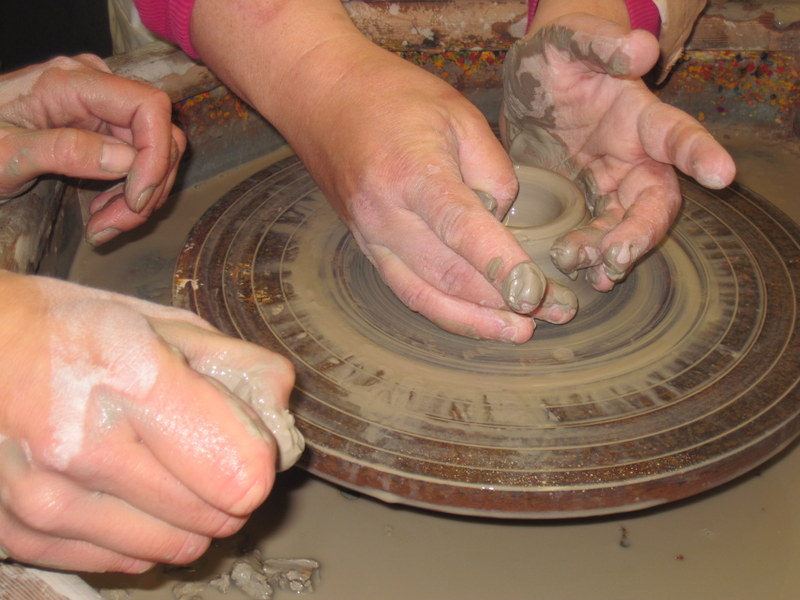
A slight thing, written as I considered making things with my own hands…


Hands


Give me hands that reach and hold

Not hands that grab and grasp

Give me open hands

Not those made into a fist

Give me hands to build

Not tear down or destroy


Give me hands to shape and carve

Not hands to slice or cut

Put these hands in my own soil

Never taking seed sown by others

Let these hands be life lined

Not lifted against another


Let these hands make quiet music

No fife or drums of war

Give me hands that cup the ear

Not hands that push and point

And let these hands not pluck your specks

But take the logs from my eye


All Saints eve…

Another night of plastic ghouls and zombies. Not here though- with very little help or encouragement Will decided he would not indulge in all the Halloween stuff, but rather invite some friends round to a ‘happy party’, where they would celebrate good things. There was no fuss, no angst, no preaching the message of light- just an invitation and lots of lovely kids having fun. They bobbed for apples in freezing cold water, played computer games and sent a sky lantern aloft covered with things they had written about stuff that made them happy.

Bless em all, and the saints that went before them.

And whilst we are on the subject of light here is a lovely poem glimpsed in the Guardian. It is by Francis Belllerby, and in case you have not heard of her (I had not)…

Frances Bellerby, who died in 1975, was born 112 years ago in Bristol. She wrote fiction, essays and poetry. Much of Bellerby’s verse is set in Devon and Cornwall; her first, 1946, collection is named after Plash Mill, her cottage near Upon Cross, on Bodmin Moor. Charles Causley praised, among the many other qualities he admired in her work, her ability to evoke “the ambience and essence of place”.

Bellerby’s poetic locations are coloured by the changing seasons, and may respond to the church calendar, as here. All Souls’ Day, from her Selected Poems, weaves together imaginary and remembered conversation in a hushed, precisely-realised late-autumn setting. The sky is colourless, the “day draws no breath”. Such an atmosphere has an intense, mystical quality for Bellerby. And yet, although a Christian poet, she treats religious experience unconventionally, and seems to have an intuitive grasp of space-time, and the possibility of other dimensions, in those wishful lines: “what the small day cannot hold / must spill into eternity.”

All Souls Day

Let’s go our old way
by the stream, and kick the leaves
as we always did, to make
the rhythm of breaking waves.

This day draws no breath –
shows no colour anywhere
except for the leaves – in their death
brilliant as never before.

Yellow of Brimstone Butterfly,
brown of Oak Eggar Moth –
you’d say. And I’d be wondering why
a summer never seems lost

if two have been together
witnessing the variousness of light,
and the same two in lustreless November
enter the year’s night…

The slow-worm stream – how still!
Above that spider’s unguarded door,
look – dull pearls…Time’s full,
brimming, can hold no more.

Next moment (we well know,
my darling, you and I)
what the small day cannot hold
must spill into eternity.

So perhaps we should move cat-soft
meanwhile, and leave everything unsaid,
until no shadow of risk can be left
of disturbing the scatheless dead.

Ah, but you were always leaf-light.
And you so seldom talk
as we go. But there at my side
through the bright leaves you walk.

And yet – touch my hand
that I may be quite without fear,
for it seems as if a mist descends,
and the leaves where you walk do not stir.

Wind…


The wind blows where it pleases

Sometimes barely breathing

-hardly moving the tender grass

Sometimes raging

-bowing the trees like penitents

But no-one knows where it blows from

Or the place it now is heading

So it is with you, child of the Living God


So give yourself to the wild winds of the Spirit

Ride them like a Storm Petrel

Inches from a dancing sea

Held in the curl of creation

Full of the joy of it all


From John 3 7-9

Taliban poetry- the voice of Jihad…

Emily described a news clip she watched the other day- a mother grieving the death of her son, a Jihadi martyr. The poor woman seemed to veer between terrible loss and the cultural sponsored celebration of his violent death.

The terrible contradictions stayed with me.

All those mothers who are told that God is pleased with the death of their sons. Two thousand American and British mothers in Afghanistan. Twelve thousand Afghanis.

The proud, rich culture of Afghanistan is of course well used to war being waged on its soil by foreign invaders; Persian, Greek, Indian, Russian, British, American. The scarred land becomes fertile ground for the raising of revolutionary warriors, but this is not the point of this piece.

Afghanistan is also rich in the tradition of poetry- Ghazal’s have been written there for millennia recording the human conditions- both the pain of loss/separation and the beauty of love in spite of all the pain associated with it. It should then be no surprise that the Taliban in modern times still tell the story of who they are in poetry.

A new book is out telling some of the story;
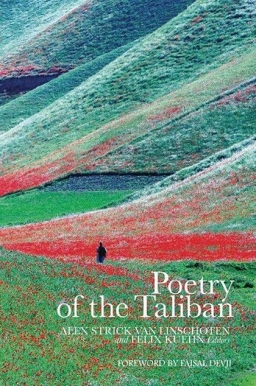
There is more about the book here and here.

There is of course, much war propaganda arising from Afghan recent history;

Moscow still owes us blood,

I write the terms of my debt on the chest of the arrogant.

They will ride the white horses in the red field,

Then we will install the white banner on the Kremlin’s chest.

The day of red blood will become red with the Red’s blood,

The knife that is stuck into the Chechen’s chest today.

My enemy, go and read the history of heroism,

There is a page written about Macnaghten’s chest.

The Pharoah of the time send arrows everywhere, These arrows will finally strike Washington’s chest.

Amid all the glorification of death and the calling for the blood of the foreigner, there appears to be some hope;

 …a great deal of this Taliban poetry will be comprehensible to western readers who are unable to understand Taliban ideology. The major themes are recognisable, even universal, and the dominant form is the ghazal, or love lyric, which links the Pashtu language to the classical civilisations of Persia and India. The poems describe a land of mountains and pines, each stone a ruby, each bush a medicine, and of laughing blossoms, dancing tomorrows, of twilight arriving with its lap full of red flowers (a poem called Sunset, reproduced here, reads more like a product of a Zen monastery than of a Deobandi madrasa).

What is interesting is that the Taliban’s official face and past practice has been so fiercely anti-Sufi, anti-historical, and seemingly anti-culture. This book provides an entirely different outlook. Indeed, in their rich memory of 19th-century British invasions, of Afghan folklore and Islamic heroism, the Taliban poets seem more awake to history than we are.

As well as raillery and satire against the foreign enemy and its local servants, there is self-criticism aplenty. “Humanity has been forgotten by us,” writes one poet. “And I don’t know when it will come back.”

(From the Guardian.)

Poetry will do that. It can not be tied for ever to narrow ideology- it has to fly. Let us celebrate the open hand over the clenched fist. The space forced open by love in a wall of hate- wherever we find it.

Back to the news story that Emily told me about. Here is my own response in poetry;

Jihad Ghazal

They tell me his death was holy and so I should rejoice

But what care I for dancing now?

He is dead

Tender flesh of my sucking flesh

Is now blown by foreign flies

He is dead

They tell me that his death had purpose

But once his life was all the purpose I ever needed

He is dead

So what care I for all those virgins whom I will never meet

And will never bear my grandchildren?

He is dead

They tell me his name will be written in the book of martyrs

And poems will be made from his bravery

He is dead

But what care I for war stories

The songs I sing will smoke the air with sorrow

My precious son is dead

Brokenness as a place of becoming…

Simon and I did a talk at Greenbelt festival about community, based on some of our experiences in Aoradh. We spoke a lot about the challenge, the exposure and the pain of community- how it was impossible to move closer to one another without also being wounded, hurt and (hopefully) changed.

If I were to pick one man to discuss this with in more detail, it would be John Vanier, founder of the L’Arche communities. He speaks and writes with such gentle integrity about his own experience of being broken. I was reminded of this recently when reading a short review of one of Vanier’s books From Brokenness to Community.

When we follow Jesus, writes Vanier, we are called to reject certain aspects of the world. We accept loss of wealth and status and comfort. We embrace downward mobility and climb back down the world’s ladder of success. This process can begin when we discover our mutual brokenness. We acknowledge our poverty and then we understand what it means that Jesus came to serve the poor. We recognize our infirmity and then we discover God doesn’t work primarily through those who think they are well, but through those who know they are sick. All this happens in the context of community—a place of pain and trial, but also reconciliation and celebration. Community is where the ego goes to die, and in its place we find resurrection, communion, and even salvation.

Here is Vanier himself talking about the same things;

It is worth watching some of the rest of the clips in this series. There is a deep sigh in me when I hear him speak about love and community and the possibilities of finding our being as we give it away in love of others. I know these things to be true.

I also know them to be elusive. I know them to be things that can not be grasped or owned- they are not aspirational as one might seek promotion or personal fulfilment- they are rather discovered in the shit of our own failure.

May we find the place of becoming, not because enlightenment is something we can conquer, like some spiritual Everest, but more because this is the only honest and hopeful thing possible when faced with the brokenness in me, and also glimpsed in others.

Our anniversary…

Today is our 22nd wedding anniversary.

And I can honestly say that despite the ups and downs of the long walk together (and to be honest, with Michaela there have been very few downs) I love her more now than ever. I am a man blessed.

I know I am biased, but Michaela is a special person. She has the gift (and sometimes the burden) of being a networker, a host, a listener and a safe place for other people. Just recently we have been so very busy and she rarely stops – either working or meeting people or reaching out in some way. Sometimes people seem to want or expect too much of her and I wish I could protect her from some of this but it is simply who she is.

Today though we are going into Glasgow together. Just the two of us. Even though we have stuff to do, it is going to be OUR time.

Autumn is almost upon us;

Bare branches showing
Cold winds come blowing
Stealing this year away
Curlews are calling
The light now is falling
Dark nights are drawing in

There’s a crack in the church bell
There’s ice in the stairwell
Take care my love
Take care.
Close tight the windows
The day is only shadows
Come sit by the fire
With me

The far distant hillside
Is laced up in moonshine
No thoughts of the valley
Below
And maybe tomorrow
We can beg steal or borrow
Some time for just me
And just you

This house is now sleeping
Old floorboards creaking
The warmth’s all but gone
From the fire
So lets climb these stairs love
Dreams waiting a-bove
Let me lie in your arms
Again

Bare branches showing
Cold winds come blowing
Stealing this year away

September 2007