So, three senior managers find themselves out of work. Two resign and one is suspended pending investigation (Head of Children’s services, Sharon Shoesmith- she will not be back.) Full story here.
I had posted earlier about my own reaction to the tragic news of Baby P’s death and the resignation I felt at the inevitable witch hunt that would surely follow.
Now the Social Work inspection agency (the same one that recently awarded the Haringay children’s services 3 stars for their excellent work) has now found serious failings in leadership, supervision of staff, the sharing of information and, perhaps most worryingly, evidence that kids who are suspected of being abused are not routinely interviewed alone (that is, away from parents.)
So, do I DEFEND these, my colleagues, and their obvious failings?
And should there be a disaster in Argyll involving perhaps, a mother who is mentally ill, and a drug using father, who physically abuse a child in this horrendous way, I hope that by a combination of our closer communities, our good working relationships with colleagues in health and the police, and good practice, that we will be able to intervene and save that child.
The truth is, of course, is that even with our imperfect systems- this happens all the time. We intervene and try to make things better. Sometime we succeed. But never without a cost, that is paid out in the lives of young people as they move on into adulthood.
Argyll and Bute Council had a recent inspection from the Social Work Inspection Agency- it is there for all to read on the SWIA website (here.) It was far from positive. However, after hard work, the replacement of just about a whole management system (somehow, I survived!) and by learning the rules by which we were being measured, the follow up report was much more positive- here.
Children are incredibly fragile. And also incredibly adaptive and resilient. They survive, somehow in appalling circumstances. They even survive the states interventions to protect them.
If they are lucky.
For much of my career I have worked with adults in crisis. Many of them have been the survivors of childhood trauma- sexual abuse, beatings, broken homes and all sorts of other dreadful things. I am always amazed at how people survive…
But the dreadful truth is that dreadful things have happened before, and will happen again. And when they do- those whose task is to try to prevent these things happening will be found wanting.
That is not to say that things could not- SHOULD not- be better. But shock-reaction rarely achieves anything other than shock-defensiveness.
Meanwhile there are some very real issues facing us as we look at our attempts to protect children in our society.
There are the financial ones, mentioned before.
The community ones, in a society where people increasingly lack connection and commonality.
The regulatory ones- the constant drive to eliminate risk and bad practice leads to huge complexity, and individual responsibility for social workers- who in turn, take fewer risks.
And once we remove kids- where do we put them? Foster care placements can be impossible to find, and the homes that have not already been closed are full, and often highly problematic for the kids there.
I hope that the baby P issue will open up this debate, rather than focus on the ritual execution of yet more social work staff.
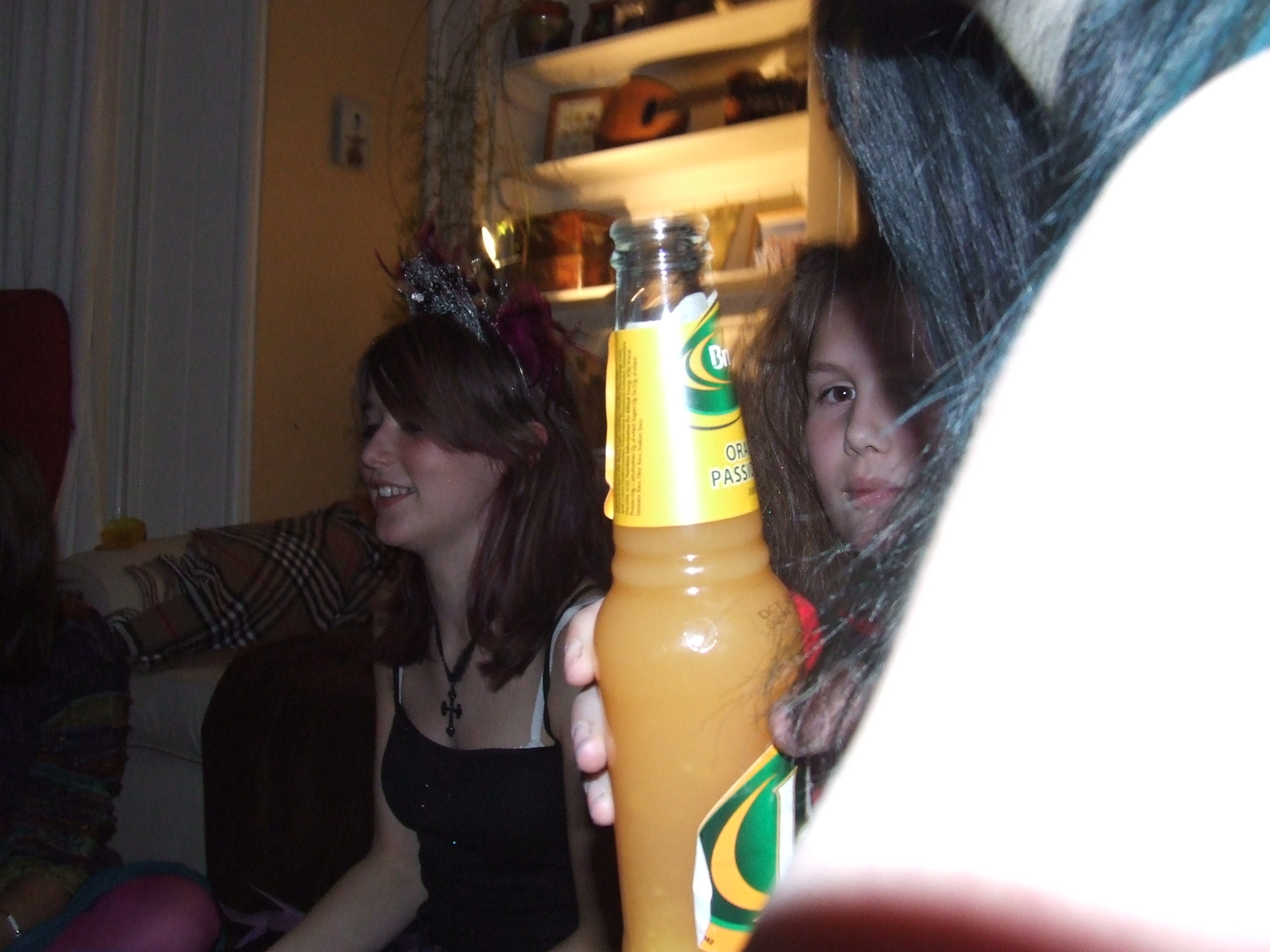
We had a lovely day- a lazy morning of presents and coffee then a trip to a cafe, and finally she had a house full of friends for a party- a kind of Goth fairy party as far as I could see.
For the first time ever, her parents were not required to actually run the party- she did it all herself- meeting, greeting, party gaming and all.
I am very proud of her.
If a little redundant.
Our role in the affair was to clean up afterwards.
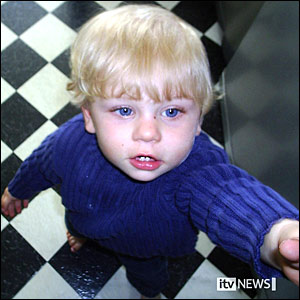
One of the heatbreaking picture of baby P shortly before he died.
I am off work today- a return of an old problem with cluster headaches. Dreadful things- a conveyor belt of Migraines. I think I am over it, and then the vision goes, the sickness and nausea kick in, and the head starts to split…
In between, I am functioning, but not very well.
Almost by way of penance, I have been catching up with some information about the dreadful story of baby P, whose tragic death at the hands of his mother and mother’ boyfriend has been all over the news these past couple of weeks.
I am a social worker, and once again I find that my whole profession appears to be on trial by media and politicians.
There seems no doubt that something went badly wrong with the plan to support and protect this little boy. His body bore the marks and scars of a dreadful litany of injuries. Faced with this information, it seems so simple- he should have been rescued much earlier- at one of the many point of contact. Here is a list of contacts with services;
78 contacts with health workers, doctors, social workers and police
2 health visitors
3 doctors
1 mental health worker
1 policewoman
4 social workers
1 family friend;
1 childminder
10 hospital visits (to at least 3 hospitals)
4 visits to clinic
5 parenting classes (the last two weeks before his death)
Seen by GP 14 times
Seen by health visitor 7 times
Mother seen by mental health worker 4 times
The fact is, society needs someone to blame. Despite all the different agencies involved- and despite the fact that all child protection decisions in England are taken by multi-disciplinary conferences, the finger of blame has fallen on social workers. All the other contacts listed above count for little…
Large numbers of us, in the face of this shock, have mutated into mere gobs on legs, iterating and reiterating the last plausible prejudice that sat on us. A terrible thing has happened, it’s all down to X (fill in the prejudice) and someone’s head should bump bloodily down the steps of the Temple of the Sun, to save us from the wrath of the gods.
This is the second tragic death in the Haringey area of London to make news. The last one sparked a public inquiry (Victoria Climbie- details here.) The shocking failings of services in that case reverberated around the social care world. An inexperienced social worker who appeared to be totally out of her depth was hounded by the press in this case.
I have been a social worker since 1990. Like many of my colleagues, I chose social work as a career because I wanted to make a difference. I wanted to work for something that mattered- and as far as I understood what my faith called me to, what mattered most were those at the broken edges of society- those who are in the most need.
For most of my career I have worked with adults who have mental health problems, but in this capacity have worked with many many family situations where kids were at risk. The simple truth is that outcomes (measured in terms of self esteem, education and vocational acheivement, and later experience of life problems/mental illness) for kids who grow up in troubled situations is not good. Add mental illness, and parental addiction to substances into this mix, and damage is likely to be more severe.
However, if you REMOVE kids from home in the UK and place them in foster care or in group living environments, then outcomes are even worse.
I worked in a childrens home for a while back in 1989, and it nearly broke me. It was a violent, oppressive place, with a high octane mixture of very damaged kids ranging from 7 years old to 17. All of these kids were there because foster placements were either impossible to find, or had broken down because of the extremes of behaviour exhibited by the kids. Thankfully this place has now closed, but the issue of how best to support the most vulnerable kids within our society remains the same.
Most social work departments use a sliding scale of interventions, based on a multidisciplinary assessment. So typically, things will start with a discussion between health, education and social workers, and a plan might involve extra childcare, or home support for parents. Child psychology or family therapy is extremely difficult to access, and often the system is forced to focus on kids in the most need, and to offer supervision, but few solutions. The removal of children from home is always seen as a very last resort.
These are complex issues, that depend on highly complex systems, riddled with bureaucracy and regulation. After each scandal, we kid ourselves that there is a regulatory solution- a way of organising the risk of a further failure away. Whatever the failings in this current case, the simple truth is that kids will continue to be born to dysfunctional and damaged parents, and attempts to protect and support these kids will sometimes succeed, and sometimes fail.
Sometimes they will fail badly, and the results will be tragic.
There are so many variables- team dynamics (within departments and across disciplines), available resources, work loads, culture of the organisations, etc.
Our process presumes that it is normally better for a child to stay with the family, even in a household which falls far below the ideal, and social workers who go to their managers with a recommendation to commence care proceedings know that they will have to put up a very strong case.
When you consider the outcomes of the 60,000 looked-after children in our care, this is hardly surprising. Almost threequarters of them will leave care with no formal qualifications. Only one per cent will go on to enter any kind of university education. One fifth of looked-after children are homeless two years after leaving care; 25 per cent of our prison population has been through the care system. Things have to be really bad at home before care looks like a better option.
Yet in other countries the picture is very different. In Germany looked-after children do extremely well, with 95 per cent of children in the German care system going on to vocational education. Crime committed by looked-after children in Germany runs at 5 per cent of the rate of crime committed by those in our care.
Money is important. In Germany most looked-after children live in small community homes, with fewer than 16 residents. By contrast, more than two-thirds of our looked-after children are placed in foster families which cost less than a quarter of a residential placement in Germany.
Money also hangs in the air at case management meetings, and sets up serious conflicts of interest. It is the local authority managers who decide whether to go for care proceedings. They are also the people who will have to find the money to pay for care.
When budgets are tight, the best interests of the child are not always aligned with the best interests of the local authority. In fact the two can often be contradictory. And in those crucial meetings the social worker, the main advocate for the child’s welfare, is often the most junior person in the room.
As a society we need to look again at our priorities. Unsurprisingly, the current social work witch hunt following baby P’s death has already seen a rise in the numbers of kids being removed form parents. Practitioners will almost certainly take less collective risks. Given the pressures on the systems looking after kids in care, this may well be unsustainable.
Is this what we want?
I think the focus on BLAME masks a societal failure to put the needs of kids first. But given the current financial crisis, I fear that finding a scapegoat or two will be the preferred option…
As for me, I will say a prayer for this baby, and his parents. And for the imperfect workers (like me) who work in an imperfect system, and hope that we can make things better.
Not the coughing theatrically into a stained handkerchief kind- but rather the acquisition of stuff.
We took a day out today to do a whole load of consuming. We went Christmas shopping. Michaela has this list that she does on the computer, complete with reference information and tick boxes. I go along as the bag man really. But hey, I get a day out with my wife.
Today we decided to brave a large ‘mall’ at Braehead near Glasgow. I have been there once before, and Michaela reminded me that I swore I would never ever go there again. But as I could not remember having said it, away we went.
What a place.
It has two polished levels of shopping- lines of every shop you would expect to be there, and not a single surprise. Each shop seems to be selling almost identical items, at almost identical prices. There is a ‘food hall’, in which awful food is sold, at very high prices. The place has not originality, no sense of place- as you walk through it, you could be in anywhere in the UK, or even anywhere in Europe.
What is it about these places that makes me so uncomfortable?
I think it comes from a constant feeling that I am being manipulated.
And that awareness of this manipulation does not help me avoid it.
I find myself a participant in a system that would convince me that it is normal to fill my life with all of this stuff- which as soon as I remove from it’s box will be worthless.
A system that depends on me buying ever more stuff, because any measurable change in the numbers of us who buy it, or the frequency by which we buy it, will send ripples through the economic systems of the world.
And should any caution or fear produce a slight reluctance to continue with this in enough of us, then stock market values plummet, financiers get nervous and banks start to tighten their credit lines. After all most of us depend on this thing called credit to buy our stuff…
Then businesses start to find that there is less need for their goods, and so they in turn slow their production, and people lose their jobs. And these people are no longer earning money, and so can buy less stuff.
And the whole thing starts to wind down into… recession!
So I had better spend more in this mall right? It is my duty to the world…
Oh but every year we say the same. Christmas is defined by this round of acquisition every year. Don’t get me wrong, I like to give stuff to my friends and family, but it seems that what I give them is so… useless, for the most part.
Is there no other way?
Well, not for us this year. We have spent the day consuming after all. But there is always next year…
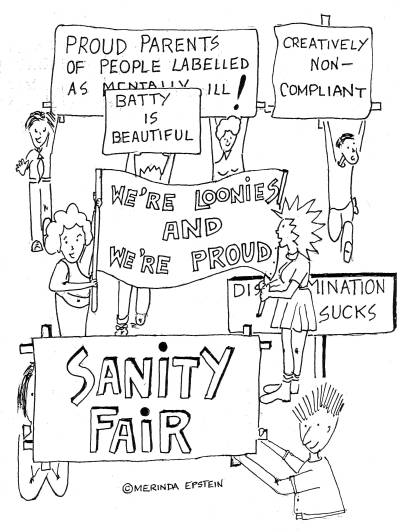
Following on from my earlier post about mental illness stereotypes and the Mental Health Machine, I thought I would post some more of Miranda Epstein’s wonderful cartoons. Check out her site here.
Everyone at work is discussing the first episode of a BBC TV programme at the moment called ‘How mad are you?’
You can check this out on the BBCiplayer on this link
Now I must confess to being someone who loathes reality TV programmes- although I did watch Taransay one (Castaway?) which kicked the whole genre off in the UK. I am a sucker for anything filmed on a small Hebridean island.
However, the idea of this one caught my interest even before I watched it. 10 people in a castle. 5 of them have diagnosed mental illnesses, the other 5 are (wait for it) ‘normal’. They all get to perform lots of tasks and batteries of tests from psychiatrists, who then have to declare who they think is mad, and who is sane.
Anything that challenges the prejudices and stereotypes about mental ill health that still prevail is great as far as I am concerned- particularly if in the process the power relationships get reversed, and the black arts of psychiatry get placed in the hot seat…
I should confess to a bias here- I have worked as a Mental Health Social worker, then as a therapist, and now as a mental health manager. I was drawn to work in this area because my faith lit in me a desire to make a difference- to seek brokenness and try to bring healing. I have been inside the Mental Health system in the UK for most of my working life- and have discovered that it can be a very frustrating and at times an infuriating experience.
At its worst the psychiatric system in this country tends to suck in people at the most vulnerable time of their lives. The next part of their experience is often about LOSS.
Loss of freedom and choice.
Loss of opportunity
Loss of relationships
Loss of employment
Loss of identity
Loss of motivation
Loss of hope
Loss of self esteem
…and once these things are gone, it becomes very difficult to transcend the circumstances you find yourself in. It becomes almost impossible to escape.
Sure, the system also GIVES people things. It offers a kind of sanctuary- either the physical safety of a ward or care environment, or a more emotional/psychological kind of security given by the label- ‘depressed’, ‘schizophrenic’, ‘manic depressive’. It also offers a whole new role- that of a ‘sick’ person, who needs help from the ‘experts’ who can treat them with medication or therapy- people who can take the messy chaos of their humanity and squeeze it through a scientific colander and filter out all the bits that are not helpful. (If only huh? I think we could all do with this process about once a week…)
And all these things too become like prison bars.
There are some encouraging signs though. Some people who have carried mental health labels are starting to take back the power. This can be best seen in the ‘recovery’ movement. Check out this article on the Re-think website, or The Scottish Recovery Network site.
Recovery thinking perhaps grew out of the hearing voices network, who dared to suggest that just because people heard voices, this did not make them less human- it did not make them mad. Many people even questioned the very nature of psychiatric diagnosis- suggesting (not for the first time) that schizophrenia was nothing more than a reaction to trauma- both trauma outside the system, then more trauma within it.
The voices from the recovery movement are mostly those who have been through the system, and managed to come out the other side. They have often found themselves in conflict with the powers within system- because they speak a different language, and do not conform. Some of their rhetoric is seen as (and perhaps actually IS) downright dangerous. They no longer are interested in talking about ‘cures’ to ‘illness’- rather they seek the right to choose their own path, and their own solutions to life crises.
That is not to say people do not need help. We are surrounded by people who are damaged and vulnerable. But many of us in the system, and many others who are subject to it, are convinced it needs to change. And the ideological challenge brought to us by the Recovery movement is like light in darkness.
And so as a Christian, I reckon that this is a flavour well worth seasoning.
About 10 years ago, a some friends of mine were exchanging a computer system.
The receiver of the computer had never had one before, and knew next to nothing about the internet, which, it is interesting to note, was not uncommon 10 years ago. He asked what the internet was all about.
I suggested that it was mainly about 3 things- making money, mad religion and perhaps most of all, sex.
He was most taken with the later of the three, and asked what I meant by sex.
I replied that every sexual perversion known (and a few that are not) was available at the click of a button.
Unable to resist, he asked “Like what?”
Not wanting to reveal any expertise whatsoever, I asked him for suggestions. He (rather quickly I felt) came up with sex with donkeys.
Quick as a flash, my other friend typed into the address bar http://www.donk…….. (best not complete the link just in case I lead you into temptation!)
And there is was.
Which kind of made the point. And then some.
A few months ago, in response to the hysteria around the Olympics, I posted a poem called ‘Cheerleading’ (here).
This item is the most popular one I ever wrote in terms of the ‘hits’ it receives. It has a picture of some Cheerleaders, but I can not imagine that most of the people who visit this post linger there for very long. Poetry probably amounts to a big disappointment.
Which brings me, in a round about way, to the point of this post. A question-
There is one other thing that occurs to me- the viewing of pornography is clearly something that is common to many men (and some women.) It seems at least possible that this secretive and shameful activity is as common amongst Christians as without. It is just that we are even less likely to be open and honest about it. Which will almost certainly make the activity even more secretive and compulsive.
If this is an issue with you, or you just want to protect your computer from uses that you are unhappy with- then you might like to check out X3 watch.
What is happening in the economic world? The news is full of competing ‘expert’ voices- some seeking to reassure and proclaim business as usual, others taking on the role of doom mongers, proclaiming the end of the world as we know it. If the later group are to be believed, then pretty soon we will have to throw away our plastic and start bartering with chickens and baskets of logs…
Whoever we believe, it seems clear that there are huge changes afoot. Here is a quote from this article from The Independent newspaper…
The Western world is in an economic crisis similar in scale to the oil shock of 1973. What we are seeing is nothing less than the unravelling of neo-liberalism – the dominant economic and ideological model of the last 30 years.
The disintegration of Anglo-Saxon-inspired markets has come about largely because of the confluence of two tendencies of the “free market”: speculation and monopoly capitalism. Contrary to received opinion, free markets – unless subject to civil regulation, asset distribution and persistent intervention – always tend to monopoly.
Similarly, there is nothing inherently efficient about free markets – they do not of themselves promote sound investment or wise management. Rather, when markets are conceived wholly in terms of price and return, and when asset wealth and the leverage that this provides becomes as concentrated as it was in the 19th century (which is a scenario we are approaching), then markets encourage nothing other than gambling masking itself as sound investment.
Regulation?
In the free market? What would Thatcher say?
Is this finally the time when the stranglehold that neoliberal thinking has had on the economic world for the last 30 years is broken?
Will the IMF and the World Bank stop deifying the free market?
There seems to be a resurgence of confidence in the old leftist politicians- check out this article from the Guardian newspaper- and the quotes taken from is below;
Sadly, I don’t think this will be the end of capitalism. But there is going to have to be a return to a much, much more interventionist state. As a system for the distribution and exchange of goods, you can’t beat the market. But the mistake a lot of politicians have made is to think that because the market was good at that, it could be good at everything: it could train workers, create infrastructure, protect the environment, regulate itself. Quite obviously, it can’t.
Ken Livingstone, former mayor of London.
I remember the 1930s. What the Depression did then was to stimulate antisemitism. I met Oswald Mosley in 1928 when he was a Labour MP. The next time I met him he was wearing a blackshirt. Where there is fear, there is scapegoating, and that is very dangerous.
Blair and Brown based their politics on a belief in the market: the market answered all your needs and the state had to be kept out. That confidence has now collapsed and New Labour is seen for what it is. You can’t, as New Labour believed, nurse capitalism.
Tony Benn
What next then? Is Tony Benn right, and we live in a time when fear could stimulate the rise of hate politics, where we look again for scapegoats, and we retreat into our tribal enclosures and look with loathing at those outside? History warns us of our tendency look for messiah figures who appeal to the base instincts of the human animal.
Time will tell…
But as for me, the uncertainty and fear that such change brings into our lives is combined with an excitement over the dawning of something new. Capitalism is not dead- but it will not be the same.
If you have seen any of Loach’s other films, you will know roughly what to expect- beautifully filmed characterisations in intimate detail- with improvised scripts and wonderful acting. This film was no exception. Loach has this way of making you squirm uncomfortably, whilst you laugh indulgently, and in fully sympathy with the characters in all their very human flaws and failings. His films can be bleak, but somehow also kind, and life afirming.
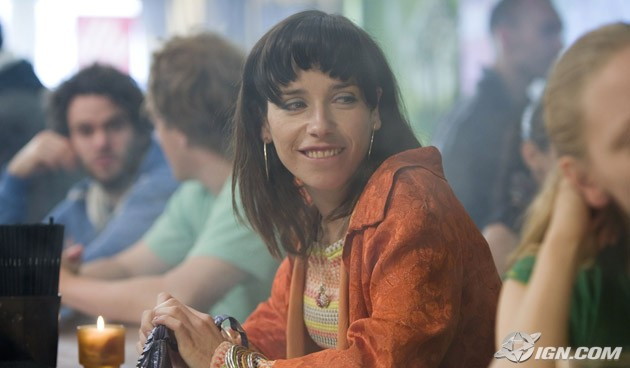
This one follows the life of the main character- the wonderful Poppy, a teacher, whose niceness almost verges on the psychotic. But you come to love her even as you wince at her dizziness.
I heard Loach being interviewed about this film on release, along with a wider discussion about the nature of happiness, both as an individual, and in the collective. This is the source material for this film…
According to Professor Diener the evidence suggests that happy people live longer than depressed people.”In one study, the difference was nine years between the happiest group and the unhappiest group, so that’s a huge effect. Cigarette smoking can knock a few years off your life, three years, if you really smoke a lot, six years.So nine years for happiness is a huge effect.”
Happiness seems to have almost magical properties. We have not got proof, but the science suggests it leads to long life, health, resilience and good performance.
Scientists work by comparing people’s reported happiness and a host of other factors such as age, sex, marital status, religion, health, income, unemployment and so on.
In survey after survey involving huge groups of people, significant correlations between happiness and some other factors are repeated. At the moment scientists cannot prove causation, whether for example people are healthy because they are happy, or whether people are happy because they are healthy. However, psychologists have been able to identify some very strong links.
Standard of living has increased dramatically and happiness has increased not at all Professor Daniel Kahneman, University of Princeton.
There seems to be a strange truth in this research- if you are happy, if you set your life towards good and positive things- if you seek the good in people around you, and look to bring it out- if you spend time with your friends and love well- if you refuse to give up hope for the world around you, and choose to emphasise the good news rather than the bad.
These things will transform life. Even extend it.
This is not the same thing as living under the positive police, and is certainly no promise that you will not be hurt along the way.
So, lets all be Poppys. If not Polyannas.
It seems to me to have something of the Kingdom of God about it…