Meeting and hoping with friends in Largs…

IMGP6324

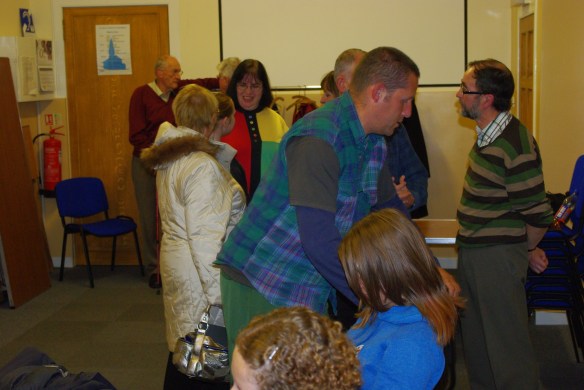
We just spent a lovely couple of hours meeting with some people in Largs.

This was a networking meeting set up by Dave Wilson, to give  an assorted bunch of people the chance to meet up, share stories, and begin to imagine what being a Christian might mean for those of us who find ourselves longing for a more real and authentic way of expressing our spirituality and mission in the 21st century.

There were a couple of folk there who are members (companions?) of the Northumbria Community– a new monastic group that I knew little about, beyond the name. I hope to get to know more.

Then there were a couple of others who had found life in or around Charismatic Catholic organisations.

And many of our stories included much brokenness and pain- the damage that we can do to one another in the name of doctrine and denomination.

There were 4 of us at the meeting from Dunoon too- we set up a few worship stations, and Nick and I played a little music, but to be honest, the conversations were the important bit.

Dave asked the question ‘What next?’, and there was a reticence about wanting to name this as a ‘new thing’- rather people just wanted to meet again, and see what might happen- see what links begin to be made, and where the Spirit will lead us next.

I love meetings like this- full of hope…

If you are in the area (West Scotland) and want to be part of future meetings, drop me a line…

Stormy day on the Clyde…

We had a trip over the water today- making use of some free tickets for entry to National Trust properties that Michaela won in a competition.

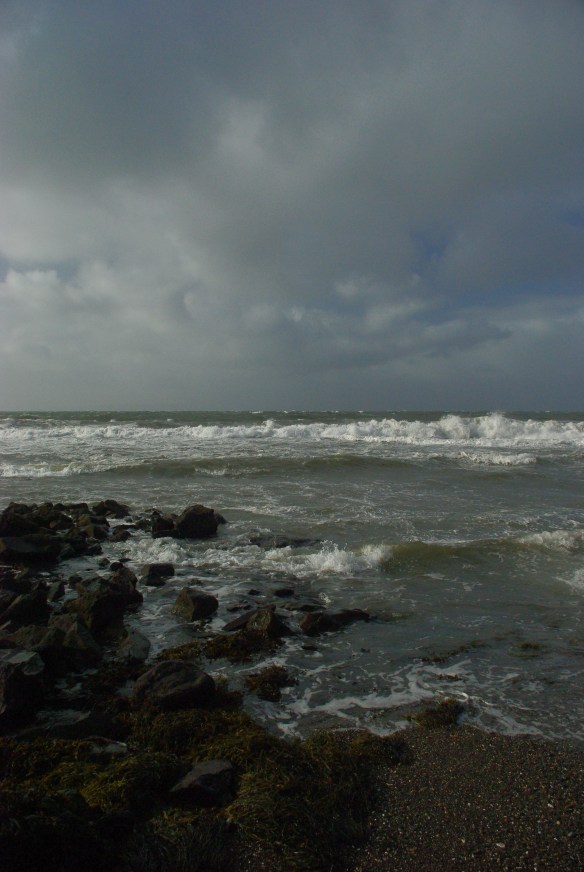
A storm had rattled the old house all night, and the Clyde was still alive with it- flurries of rain, the occasional burst of autumn sunshine, and a dramatic ever changing sky…

We went down the Ayrshire coast, to Culzean Castle…

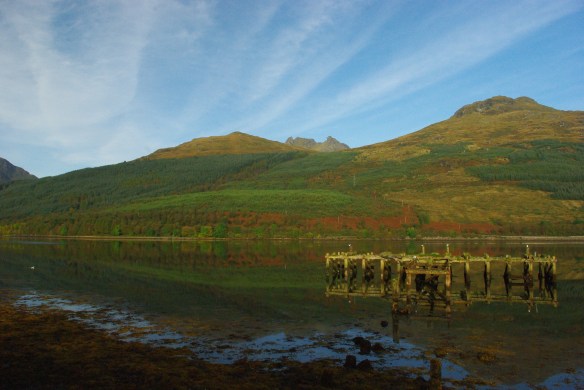
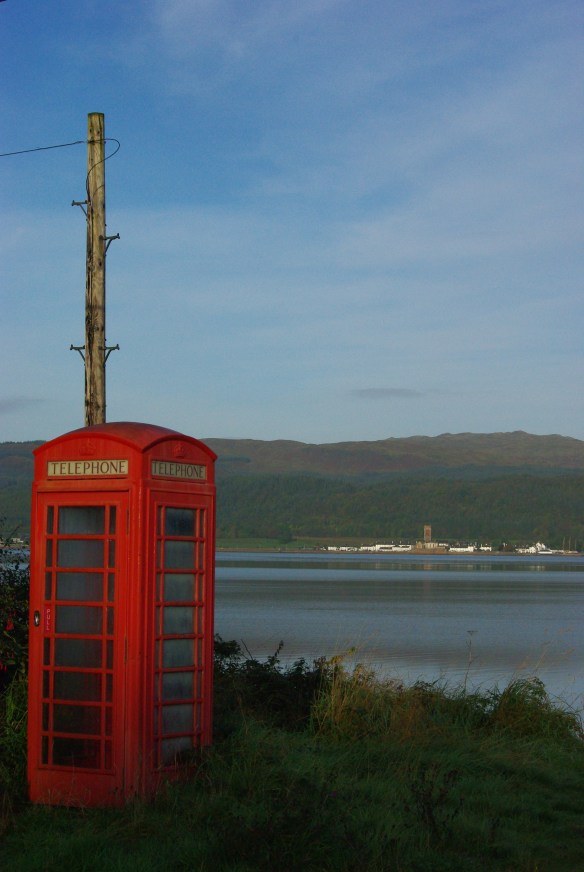
I feel a few more photographs coming on…

IMGP6289

IMGP6304

IMGP6319

On line networking- in case you thought not much had changed…

I have blogged before about my own mixed relationship to internet, and my feeling that on-line social networking is useful, but limited, as a method of human interaction. ( Here and here for example)

Technology continues to develop though, and who knows what is to come that may yet be more nuanced and more human?

However, I remain convinced that our call as Christians is to display beautiful community– a kind that is open, accepting and dynamic. It requires vulnerability, loyalty, commitment and a willingness to forgive, and to learn how to love, despite our constant tendency to hurt and wound and defend.

It may be possible to experience some aspects of this through on-line networking. Indeed, I think I have experienced this in part- but only in part. Online stuff can easily become a male theological ego-bashing debate, or an opportunity to find ascendancy and significance- I wonder whether the celebrity bloggers have taken over the centre stage from the guitar playing worship leaders in our ‘heros of the emerging church’ hall of fame?

But the internet, and the pace of change it is bringing to our WHOLE LIFE- this is undeniable. In case you need any further convincing, here is a clip that Christine Sine posted on her  blog here-

The church and social economy…

community 1

As part of my job, I am currently leading one of the groups responsible for planning a redesign of mental health services. I am enjoying it so far- I like the creative process of developing new things.

The remit of my group is to look at how we develop mental health services in primary care and also to think about how services might help to prevent mental health problems- and contribute to the mental wellbeing of our society.

It is a huge subject, that requires connections across many parts of society- statutory services, housing providers, voluntary bodies, social networks etc etc. It does not take long to realised that mental wellbeing and mental health are very different issues. It is possible to have a severe mental illness, and yet still have good mental wellbeing, but poor mental wellbeing can easily lead to mental ill health. In fact, good health of any sort is simply not possible without goon mental wellbeing.

It is a subject close to my heart, as it resonates deeply with my faith.

I believe that the followers of Jesus are to be a source of blessing for our communities. Too often, we get into pointless condemnation or narrow defensiveness- the foolish idea that we need to ‘defend the faith’ against rising secularism and Godless sinfulness. But the call of Jesus is to show a better way- a way of love and service that transforms lives and communities, and wherever we see the flowering of these good things in society, then we are to savour them with salt, and illuminate them with light.

Because the alternative is grim.

Here is a quote from one of the documents that I have been re-reading for my group-

Across Scotland, the UK and European Union, stress, anxiety, depression,hopelessness, isolation, fear, insecurity and distrust are increasing. We witness daily the effect of this on the lives of individuals, families and whole communities.

Many people in Scotland find themselves isolated and vulnerable due to their mental health status, poverty, class, ethnicity, age, disability, gender, sexuality, homelessness and many other forms of exclusion. The resulting lowself esteem and feelings of being undervalued have serious effects for them
as individuals, for their families, their colleagues, the wider community andScotland.

The consequences of cycles of social exclusion for how people think and feel are complex:

Some people faced with chronic stress and disadvantage may retreat and stop participating. Their social networks reduce, their vulnerability increases, their incomes and security reduce and many spiral into cycles of anxiety, depression and other more severe mental health problems. This not only impacts on them as individuals but can damage relationships between family members, partners, parents,
children and siblings with a chain of negative results-

  • changes in life situations – having babies, getting old, losing a job, becoming disabled, getting ill or family separation – can result in people becoming isolated, vulnerable and excluded
  • others may get resentful and angry and act on these feelings in their personal and community relationships, through aggressive behaviour, violence, abuse, theft or vandalism
  • hopelessness and low expectations may mean some people do things which might be considered to be ‘risky’

Taken together, such experiences are damaging to wellbeing. People, families, groups and communities of interest do not feel involved, connected,safe, secure, caring, creative or active. These types of experiences also affect how communities function: communities can come to feel more and more
vulnerable and close ranks, displaying exclusive attitudes and behaviour; or become divided and disarmed by fear of ‘the other’; or find it hard to believe that it is possible to break the cycle and create a different future.

From the ‘Small change, big impact’ conference report, 2006.

It is possible to get all doom and gloomy when looking at this picture. The question is what can we do about this? How can we break the negative cycles that are at work on individuals and groups? How do we break down isolation and low confidence and self esteem? How do we do this in a way that supports, encourages and empowers, rather than just further labels people as responsible for their own failures?

The report digs into some community projects that have begun to do this, and identified some of the characteristics that appeared significant-

Even though the projects developed independently they articulated a shared sense of purpose: to bring about connectedness

  • With self – A sense of self and worth internally for the individual,
  • With others – A sense of belonging and worth in relation to family, communities of interest and the community
  • With the bigger picture – Creative engagement between individuals,the family, diverse communities of interest and the community that opens doors for a caring and creative society to flourish
  • Between communities of interest and individuals,
  • Spatially – Knowing it is ‘my place, I belong here’ so that people feel safe, involved and want to invest
  • Institutionally – We delivery agents participate too, it effects us also.

It is OUR agenda, our community, our Scotland. We are community too. We are participants with a specific role to facilitate processes that encourage and enhance social development across services to make it easier to respond effectively and holistically to a community as it develops and grows.

The report goes on to speak of the importance of the arts in this process too…

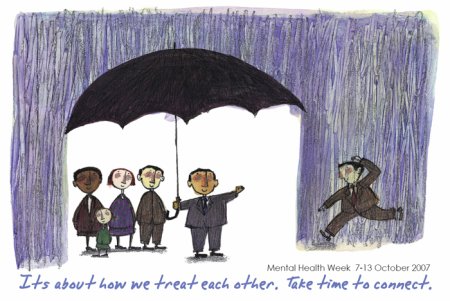
Does this sound familiar? That list of characteristics of groups that build communality, health and satisfaction- does it not sound like what CHURCH is supposed to be? Is it not possible that this is the role that church USED to fill within society?

No longer however. Perhaps we squandered the opportunity, or perhaps the world left us behind. But the challenge to us all- perhaps particularly those of us in church, is how we might again be a blessing to our communities- not so that they might fill our pews again (at least not as an end in itself,) but rather so that we might be change-agents of the Kingdom of God.

This perhaps requires a different set of skills traditionally valued by church- networking, hospitality, reconciliation, listening, neighbourlyness- providing opportunities for real, deep connections between people.

Perhaps it also demands of us that we become JOINERS with others, rather than just INVITERS to our own safe places.
MentalHealthWeek1

Last canoe/camping trip of the year?

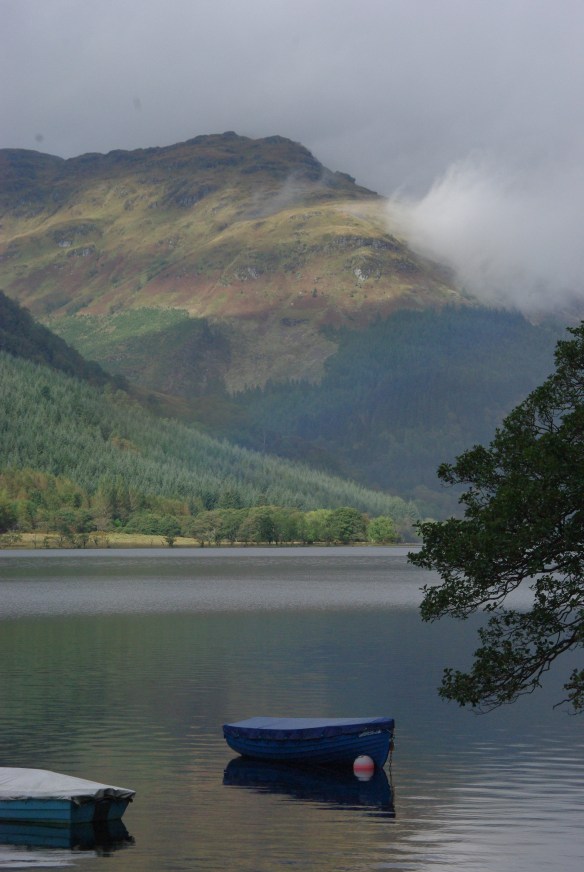
IMGP6190

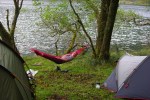
Just back from a little jaunt out to Lock Eck with the Canoe. Will, and my mate Simon and his son Andrew came with me. I a,most did not go as I have been feeling a bit under the weather this week- all headachy and migrainy. But the restorative power of wild places did me a power of good I think.

The autumn is progressing. Some of the old beech trees and oaks are already turning. And the stags were practicing their rutting calls in the early morning…

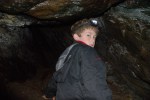
We launched at the Coylet Inn and camped on the other side of the loch. Weather was mixed, but we managed a campfire and a scramble up to explore the Paper cave and a couple of others. Always good fun- particularly for people like me who are six feet five inches tall and, shall we say, well fed ready for hibernation.

Also hit on some new campfire food- some basic bread dough mix (some flour and powdered milk with a bit of salt) mixed with a bit of water into sausage shapes, wrapped round a green stick, and toasted over  the fire. sprinkle on a bit of ketchup- and you have a lovely smoky bit of bread-cum-pancake. Lovely.

So- a few pics. (Taken with my new Pentax KM camera.)

BBC iPlayer – Transatlantic Sessions: Series 3: Episode 2

I am just sitting with a glass of wine, flicking between the cricket (we might actually win this one!) and the sublime ‘transatlantic sessions’ on BBC4.

A long weekend beckons, with plans to canoe and camp, and I have just eaten well with my lovely wife.

Life does not get much better, so I thought I would share the love…

Vodpod videos no longer available.

Jonathan Miller on life, and psychiatry…

Jonathan Miller said this-

I hold all contemporary psychiatric approaches – all ‘mental health’ methods – as basically flawed because they search for solutions along medical-technical lines. But solutions forwhat? For life! But life is not a problem to be solved. Life is something to be lived, as intelligently, as competently, as well as we can, day in and day out. Life is something we must endure. There is no solution for it.

Miller J [Ed] Ch 15. Objections to Psychiatry: Dialogue with Thomas Szasz States of Mind:
Conversations with Psychological Investigators London: British Broadcasting Corporation 1983, p.290, Quoted in this really good article, ‘The mythical self, we make ourselves up as we speak’- here.

Amen Jonathan. Amen.

Oppression, freedom and homosexuality…

stonewall riots

How far we have travelled…

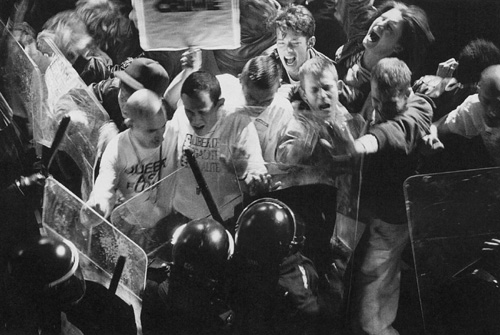
There was a really interesting programme on Radio 4 this morning- part of the ‘Reunion’ series. This is the blurb from the website-

Sue MacGregor presents the series which reunites a group of people intimately involved in a moment of modern history.

Sue Lawley brings together the men and women who founded the gay rights campaign group, Stonewall. She is joined by Sir Ian McKellen, Matthew Parris, Lisa Power, Michael Cashman and Olivette Cole-Wilson.

In 1989 a small group joined forces in a campaign against a law now known as Section 28. This law banned councils from ‘promoting homosexuality’ or ‘promoting the teaching in any maintained school of the acceptability of homosexuality as a pretended family relationship’.

The gay rights scene at the time was radical and activist and there were no campaign groups engaging both gay men and lesbians together. Stonewall aimed to create a professional lobbying group that would fight against the discrimination of lesbians, gay men and bisexuals. Dubbed Stonewall to signal doggedness and to commemorate the New York riots in which gay protestors had fought back against police brutality two decades before, it called for full legal rights, which still seemed a loony-left pipe dream.

Stonewall’s moderate tone attracted criticism from more radical veterans of the gay rights movement, but also lent its advocates greater media respectability and a hearing from government ministers.

Since its inception, Stonewall has led the way with an impressive number of reforms, pressing ministers and taking test cases to court. These reforms include the repeal of Section 28, equalising the age of consent, permitting civil partnerships and overturning the ban on gays in the military. Another legacy has been to allow gay and lesbian politicians into the mainstream – not just demanding equal rights, but as representatives of the wider community.

You can listen again to the discussion- here.

I remember the time in the 80’s when Stonewall were starting to be listened to by the media. I was part of a Christian community who were at best uncomfortable with homosexuality- and at worst rabidly condemning and judgemental towards anyone who ‘came out. Even the most liberal of us who were uncomfortable with the hard doctrine, would have thought that homosexuality was just plain WRONG. Unbiblical. Against the laws of God. Sin.

Listening now to what the protestors were subjected to- I am ashamed.

Why were Christians not standing in the streets alongside these brave campaigners?

Because no matter what your theology, our greatest call is not to condemn people for their private sin, but to stand with the oppressed and the marginalised.

Isn’t it?

Listen to the programme, and I invite you to imagine twenty thirty years into the future, and wonder what people of faith will make of this matter then. Ask how this will compare with other civil rights battles fought in the 20th Century…