Dusk

Dusk

Michaela loves that time when evening turns to dusk
When streetlights shine with purpose
But people have not yet drawn their curtains

There laid naked by approaching night
The secrets of some other sitting room
Are shelved
Are stored in boxes from Ikea
In two dimensions
Animated by the ubiquitous TV sets
Flickering from the corners.

Arm in arm we share clandestine glances
Whispering our words of approval or approbation
And walk on into our own lives.

There was a time when we watched in aspiration
Building middle class castles in our minds
Safe within suburbia
Dreaming of a day when we too would know the security
Of ownership.
A solid sideboard
And stripped pine floors.

Like the moths flapping at the amber streetlights
We are drawn to the artificial arc
Of convention
And conformity
Tied down to the temporal
Walking to stand still.

Michaela and I
We sometimes transcend the tramlines
Or at least we try
We catch a glimpse of another way
The scent of freedom on the breeze
Blown there from another Kingdom
And we start to fly.

I do not believe that Icarus
Melted his wax wings
I think he mortgaged them.

20.2.06

Blogged with the Flock Browser

Idolatry?

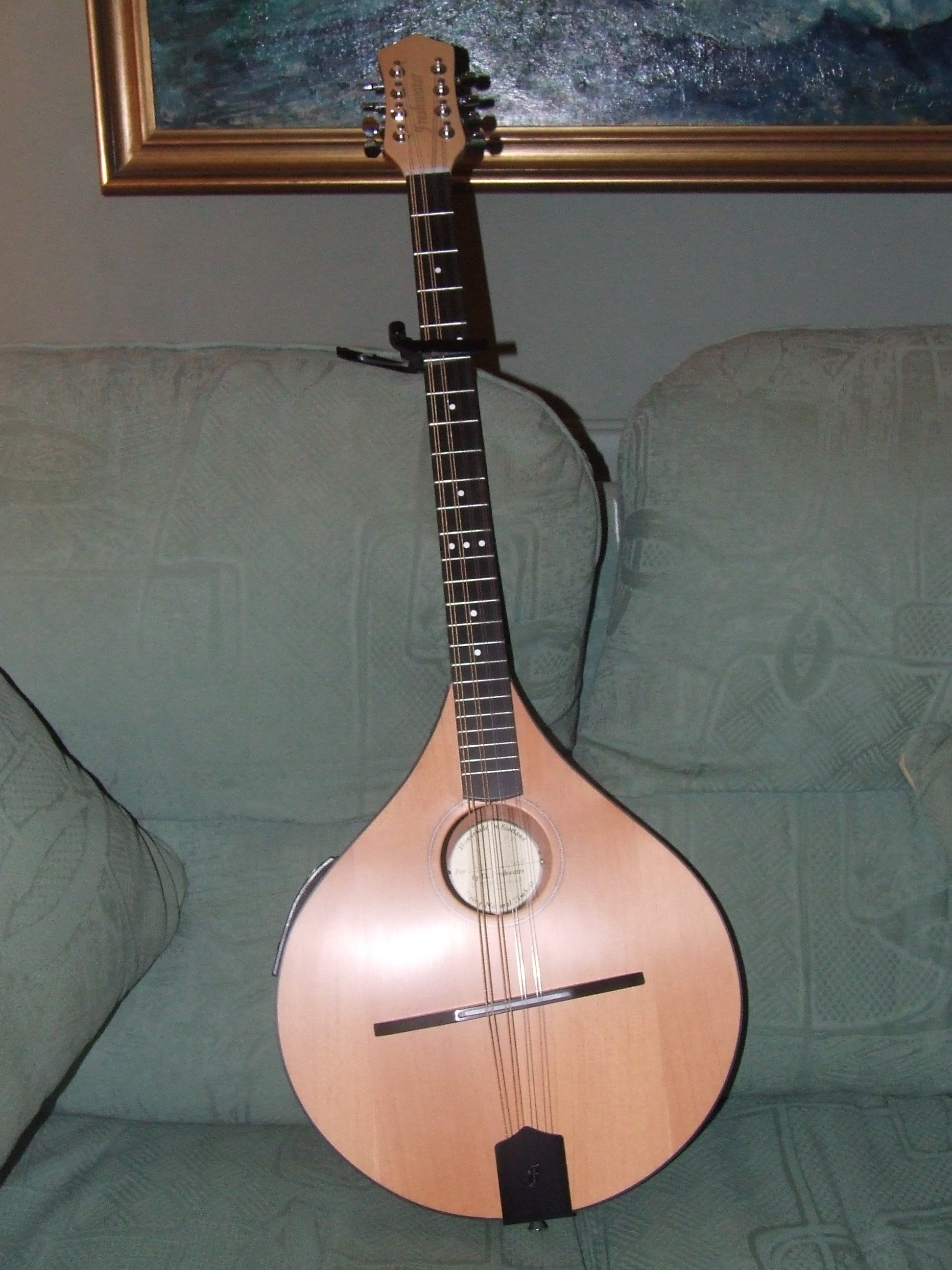
Today I received my bouzouki.

I ordered it many months go from Freshwater folk instruments, and it seemed like it would never come. When it did, there were some problems, which I have yet to sort out with Dave Freshwater, but it is a beautiful thing.

I have wanted a bouzouki for ages… I love the sound they make. For the uninitiated, a bouzouki is a guitar sized Mandolin- 4 strings, each doubled, with a fret board around the length of a guitar fretboard. It makes a sound that, once heard, is very different to guitars, and opens up all sorts of other tonal possibilities. It was originally a Greek instrument, restrung and adapted into Irish folk music by people like Donal Lunny.

One of my favourite bands, ‘A Show of Hands’ use them a lot, and I love the driving energy the closely grouped strings give to fast folk.

For the purists, my instrument is tuned to G D A D, which gives lots of ‘drone’ strings, and lots of lovely open chord sounds. It has been hand made from solid woods, and has a Fishman pick up system.

And it makes me happy to sit in the fading light and fiddle around with the strange familiarity of such a beautiful new instrument.

But, gnawing away at me is this word…. idolatry.

For musicians (not sure if that really includes me, but stay with me…) instruments easily become objects of drooling worship. A good guitar does not make a bad guitarist good, but it certainly makes him/her a whole lot cooler.

Did I NEED a bouzouki? Of course not.

Does owning one improve the quality of my life, or enable me to serve others more effectively? Not really.

So, Lord forgive this man and the grasping teenager within.

And let me learn again that what I have, you gave me, so that I in turn, may be a blessing to others.

But thanks

For bouzouki’s

Blessed are those who hunger and thirst for righteousness…

Blessed are those who hunger and thirst for righteousness…

Blessed are those whose spirit
Rises to meet mine

And who are never satisfied with

Easy compromise

Blessed are they who lay down their rights
To look for my righteousness

Blessed are they who quest

Beyond dogmadogma1.gif

Into me

Blessed are they as they as they escape
The confines of what is known

To search for more

Blessed are those who are vulnerable
And whose necks are stretched

To my sword

For it will fall

Kindly

And blessed are those dirty streets
Where rests

My manna

Blessed are they

For there I am planting

My Kingdom

Worship list 2. Motivation

What might turn our minds to God?

What brings us to worship? What motivates us within it?

I have not go this sorted yet. But the seeking seems very important. It was this that became the centre of the group called ‘Aoradh‘ that I am a part of.

I started to make a list that was relevant to me, and to some of my friends;

  • An encounter with the transcendent, which left us hungry.
  • The desire to live out this worship in a way central to the whole of life.
  • Jesus.
  • A desire to break down barriers between the so-called sacred and the real world.
  • Dissatisfaction with what has been, and longing for more…
  • A longing for creativity, colour and vitality in worship.
  • A longing to be authentic and true in our worship.
  • New ideas freely available – just a mouse click away.
  • Freedom taken or given, so that we can make our own worship.
  • The experience of community, with worship as a natural consequence.
  • An interest in art as a theological and spiritual tool.
  • An appreciation of the many rich traditions of Christian worship.

Worship list 1

I have spent years participating with, and leading, groups of Christians as we worship God.

We always reminded ourselves that worship was a personal decision, made out of relationship and dynamic interaction with the Spirit of the living God, not something that just (or even always) happens in church meetings.

But it is clear that something special can happen when we gather together and make our worship collective…

But what is this?

After all the years of trying to understand this better, I have more questions than answers. Here are some of them

  • Why do we do it? Yes, I know we are supposed to, but what really motivates us?
  • How do we take our private offerings of worship, and collectively present them to God?
  • Or should we allow our worship to travel on the security and safety of tradition?
  • Is it good to be relevant and progressive in the style of our worship?
  • When do we do it, and what does it look like? Does it always have to be formal, ‘churchy’, and dominated by ‘worship professionals’- in my experience, these almost always have a posh guitar.
  • Is there more than music as a way of collectively worshiping?
  • What practices or attitudes of body and mind might HELP us to worship?
  • What might we expect Him to do as we worship? Is he distant, or active? Is he particularly active as we worship?
  • How much of our worship arises from individual choices or decisions?
  • What might we aspire to, how do we measure the worth of our worship?
  • How much arises as a response to that which is collective and shared – or even proscribed?
  • Does God inhabit the praises of his people, and if so, how can we meet him there?

Some of the answers to questions like this already have the shape of answers given to me by my church tradition. But these answers are rarely complete, but only partial.

How we work out our collective answers to these questions may be different for all of us. But if we do not ask them, my experience is that something in the middle of us starts to whither and die.

Perhaps we become bored and stale.

But could it be that God is bored too?

I have come to think that the enemy of faith is stasis. Even if not everything around us needs to change- we always do.

Blessed are the peace makers…

An excerpt from ‘The Beatitudes’. The rest can be found here;

http://www.aoradh.org/index.php?option=com_content&task=view&id=123&Itemid=62

Blessed are the peace makers…

Blessed are those whose find themselves
No longer vindicated

By the failure of others

Blessed are those whose borders lie open

And whose cartographers no longer

Conspire

Blessed are those who put off
Their badge of office
peace.jpg
And reveal who they are

Not who they want to be

And blessed are those

Who lie down like a bridge
For others to walk upon

Whose sinews take the strain

Of two way traffic

And blessed are those who seek peace
In an age of war

And speak of love
In a time of revenge

Blessed are you

Sons and Daughters

Of the Most High God

Agents of

My Kingdom

Osama, how the other half see him…

My friend Ali turned up this evening- he had been house sitting for his sister while she had been on holiday so I had not seen him for a few days.

Ali is a singular kind of guy, who has a taste for the kitsch… and his sister found something in the souks of Marrakesh that she knew she would have to take home for her brother. More of this later…

There is a phantom shadow on our age, cast by the missing outline of the twin towers of Manhattan. This shadow has unleashed a new kind of warfare that has global impact- the ‘war against terror.’ On the one side we have the big battalions bent on imposing rough justice in the name of democracy, and on the other, those who have come to see the west as representing everything wrong with this world of ours.

Many things define the difference found between the supporters of the different sides. One side is mostly rich, the other, mostly poor. But perhaps above all, the defining difference is that of religion. One side is predominantly white, Protestant Christian, the other, Muslim.

It is important I think, to understand the other– to walk a while in his shoes and mark the blisters on his heel.

Otherwise, we may fall to that familiar base human default of dehumanising those who are different, and even demonising those who disturb our understanding of normality.

It seems clear that the Muslim world has a different way of seeing this ‘war on terror’ than predominates even in my liberal, left-of-centre world view. For them, this war is a manufactured, imperialist, brutal assault on a whole way of life- a whole faith group. It is the logical outcome of a long line of injustice perpetrated by or supported by the west (and the USA in particular.) Israel, Kosovo, Somalia, Iran, the Kurds, Chechnya, Israel again, and again…

In this way of seeing the world, the ‘war on terror’ is all smoke and mirrors, behind which is OIL. And religion.

That is not to say that people necessarily condone terrorist violence, but they may understand it, and its root causes in a way that we are not able (or willing) to. Many may resent the further trouble Bin Laden has brought down upon the heads of the Muslim world when he attacked the ‘great Satan’ on September the 11th. But his motivation is clear, and his continued defiance of the whole might of the USA continues to give almost univeral satisfaction.

Back to Ali’s present.

With great ceremony, he began to set up some cheap plastic track on our coffee table. He then placed on the track a tank, driven by a bad representation of George W Bush, and in font of this, Osama Bin Laden, on a skateboard. The tank was battery powered, but the skateboard had a magnet whose polarity opposed a magnet on the tank, so as the tank whirred round the track, the skateboard was propelled in front of it, always out of reach.

Here is a phototof the two protagonists, for your viewing pleasure, and education…

Missionality?

To continue the Aussie theme began in my last post- we are just about to begin a study called Exilio in our house group. Thanks to Johnny Laird(http://johnnylaird.blogspot.com/) for the info about this wonderful (but very demanding) resource.

This is a resource produced by Aussie globe trotter Michael Frost and others. It is based on Frost’s book ‘Exiles’, and a study on the book of acts, and the whole point is to help us think about living Missional lives. Its available on this link http://www.forge.org.au/index.php/20070322143/FORGE/Forge-Australia-Info/Forge-Resources.html

This word missional seems to be on the up. Some folk in our group were a bit irritated by it. I suppose it is an attempt to recapture the centrality of mission in the life of Christians.

But for a much better definition- check out Tall Skinny Kiwi (Andrew Jones);

http://tallskinnykiwi.typepad.com/tallskinnykiwi/2008/06/missional-synch.html

Kanyini

Thanks to the heads up from Craig in Australia, I have been doing some research and thinking about the concept of Kanyini. Craig was kind enough to send this to me in connection to some ‘wilderness meditations’ we are working on- finding locations to provide cues and context for drawing close to God (some of this stuff can be found here; www.aoradh.org/index.php?option=com_content&task=category&sectionid=24&id=80&Itemid=62)

The concept of kanyini has been brought to us by a beautiful man called Bob Randall who grew up as an aboriginal boy on the outskirts of a cattle station in central Australia. His father was a farmer of Scottish extraction, but appears to have had no concern for him at all. Like 50,000 other black kids of mixed race (between 1910 and 1970) he was forcibly removed from his family, and sent to school hundreds of miles from home. He was forced to learn the rules of white culture- the clothes, the way of life, the religion. He learnt to appreciate the contradictions between the words of Jesus, and the actions of these, his followers. Since then, he has been a welfare worker, a songwriter, and author, and now, works with Australia’s black community.

To be a native Australian in these times is to be part of a community with huge problems- health, crime, substance misuse, soaring suicide rates. It is a community living in the shadows of the sky scrapers of new Australia, but also in the shadow of what amount to a genocide, in which everything about what has been described as the oldest culture in the world has been all but destroyed.

But it is also the story of a Diaspora of westerners (particularly Celts from Ireland and Scotland) often still under the shadow of their own experience of oppression and injustice, who become in turn the oppressors, murderers and rapists of a whole culture.

It is their story, but it is also ours. It is the story of what happens when we become disconnected from who we are.

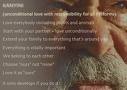
Because to hear Bob Randall speak(check out the links below) is to feel the pull of something wonderful. He describes a culture where people are connected to land. Birds, trees, all living things- they are family. The proof of this connection is that we are… alive! And because everything is connected, everything is OURS, not MINE. Everything is already created in a perfect state and our job is to become part of it.

Bob describes his memory of life as a kid like this;

These were beautiful people, because they lived in a beautiful way.

Bob’s concept of Kanyini feels right. It has simple truth- and seems to encapsulate the idea of community as I understand it should be. It has 4 components

  • belief system
  • spirituality
  • land
  • family

I very much recommend checking out the film about Bob from the schools site below, or there are other links to the Kanyini film on the second link.

www.teachers.tv/video/22396


www.wyldheart.co.uk/kanyini.html


William

My son Will is off to Yorkhill childrens hospital for an operation today. It is only a small, fairly routine thing, and he seems remarkably unconcerned. he has memories of the hospital from previous visits, and to him, it is something of a wonderland of play equipment and friendly staff. He knows that kids are transfered to the operating theatre in electric cars- that they drive themselves!

But sending your lad off to be under the knife- this is hard.

He left with Michaela and his granddad whilst I went off to work..

I walk away

I walk away
And a backwards glance
Sees my son watching me
Watching me leave
Suddenly so vulnerable
So small in his clothes
Shrinking into the folds of his shirt

And my heart stops for a moment
A flashbulb vision hits my minds eye
Of him riding a bicycle
Down a street full of hidden dangers
Out of earshot
But not yet out of sight
Undefended
Needing me
But not knowing it

Like the flicker of a fragile vein
In soft translucent skin
His humanity seems
Improbable
Incredible

And needing the application
Of an armoured shell
To keep out
Shooting stars
Or the odd stray arrow

With a shudder the moment passes
And I offer up a prayer
To keep the wolves
Far from our door
While I head out to slay my days supply of dragons
At work.

17.8.07