We Who Still Wait- advent poetry/art/meditation project…

We who still wait

Our advent collaboration, inspired and curated by Si Smith, and involving Photographer Steve Broadway, Ian Adam’s meditations and poems by me is now available!

You can get hold of it here in dowload for now, but hopefully you can order it in actual paper soon too. (It would make a lovely Christmas present I reckon, in fact some of you might be getting just that!)

Any help with the social media spreading the word thing would be appreciated as ever…

Here is the blurb from the Proost website;

This beautiful Advent product evokes the sense of waiting and watching at this season. Its available here as a download for £3.50.

Expect beautiful poems, challenging punchy prayers and thoughts and some beautiful photography in this devotion resource aimed at taking you through the 25 days of December up to Christmas Day.

From the book, this is from Elizabeth:

They say every flapping scrapping life is 
A brand new miracle
– I see them all in the street
Displayed there by their miracle makers
For the rest of us to worship.


Four great artists have come together to make this book happen.  Chris Goan, Ian Adams, Steve Broadway and Si Smith have brought their collective creative wisdom together to shape a wonderful book and it’s one we’re very excited about here at Proost.

In addition to this version there is also a Bonus Edition available which includes all of Steve’s original photographs for personal use.  That edition is £5.

A hard copy of the book is currently being created and will be made available shortly.

Growthism; like trying to cure an alcoholic with vodka…

economic_growth_3

I know that this blog has been full of discussions about politics and economics recently- sorry to those of you are are not interested, but here is another one…

I have been looking for new ideas, alternatives to the monocultural madness that seems intent on cycling us through boom and bust, and subjugating all morality to the single imperative of economic growth, or Growthism. 

Cameron has been at it again- warning us all that another economic crisis is on its way. Naomi Klein and her Shock Doctrine comes immediately to mind. Whip up the fear then continue to push through all those exploitative policies while we are sll too emotionally and physically distracted to mount an effective resistance.

And what is the disaster that Cameron is prophesying? Simply this- the bursting of another bubble of business confidence and the terrible spectre of the lack of economic growth. 

Real people can and do suffer during such times (although not Cameron and his ilk it seems) so this should be a matter of concern, but quite frankly we have been here before, and we will be here again. The alcoholic analogy works I think- we are addicted to the consumption of our planet, even though it makes us sick and may ultimately kill us all.

Monbiot, writing today in The Guardian, say as much and says it well;

If it goes down soon, as Cameron fears, in a world of empty coffers and hobbled public services it will precipitate an ideological crisis graver than the blow to Keynesianism in the 1970s. The problem that then arises – and which explains the longevity of the discredited ideology that caused the last crash – is that there is no alternative policy, accepted by mainstream political parties, with which to replace it. They will keep making the same mistakes, while expecting a different outcome.

To try to stabilise this system, governments behave like soldiers billeted in an ancient manor, burning the furniture, the paintings and the stairs to keep themselves warm for a night. They are breaking up the postwar settlement, our public health services and social safety nets, above all the living world, to produce ephemeral spurts of growth. Magnificent habitats, the benign and fragile climate in which we have prospered, species that have lived on earth for millions of years – all are being stacked on to the fire, their protection characterised as an impediment to growth.


Is it not also time for a government commission on post-growth economics? Drawing on the work of thinkers such as Herman Daly, Tim Jackson, Peter Victor, Kate Raworth, Rob Dietz and Dan O’Neill, it would look at the possibility of moving towards a steady state economy: one that seeks distribution rather than blind expansion; that does not demand infinite growth on a finite planet.

It would ask the question that never gets asked: why? Why are we wrecking the natural world and public services to generate growth, when that growth is not delivering contentment, security or even, for most of us, greater prosperity? Why have we enthroned growth, regardless of its utility, above all other outcomes? Why, despite failures so great and so frequent, have we not changed the model? When the next crash comes, these questions will be inescapable.

Well said George.

Opening tomorrow; The Collective…

The collective pop up shop dunoon

We are entering another chapter- not really sure where it will take us, but then I have never been great at that planning thing. Whilst I am back doing the salaried wage slaving for a while, Michaela has been hard at work inspiring and curating a new project in Dunoon involving a pop up shop selling art and crafts.

Along with about a dozen other makers and creators, they have more or less started a craft co-operative around this new space- the idea is that everyone clubs together the cost of the rent, insurance etc and takes turns on a rota to actually staff the shop.

Sounds simple doesn’t it? The reality has been lots of hard work. They set up a core team of people who would plan things, negotiated with the shop owner and the property agent, then spent days painting and preparing the shop and sorting out the systems required to make it run.

I have to say it looks really lovely.

So if you are local and want to find some gifts that have been locally lovingly crafted, check out The Collective!

You can give them a like on FB too- search for ‘The Collective pop up shop’.

Finally, we are starting the process of converting our ReCreate website into an on-line shop. There is quite a lot of Michaela’s pottery there already, and more will be added as time unfolds…

Here are a few photos I took in the shop yesterday…

We who still wait; new advent resource…


We who still wait

I have been part of the creation of a new advent resource/book thing that will be out soon.

Si Smith had the idea and curated it, bringing together photography from Steve Broadway, meditations from Ian Adams and poems from yours truly. There is a set of each to take you all the way through advent, available first as a digital download, but soon available as a book also. It has been a real pleasure to be in such creative company…

It will be available on Proost soon- I will let you know when it is out, but it will be part of several lovely things intended to be used during advent- check out the latest Proost newsletter (I will forgive the fact that they missed me out of the blurb for the new book!) that gives a bit of a broad spread of what is there. Si’s wonderful artwork features in several of the pieces…

for now here is one of the poems;

Elizabeth


They say every flapping scrap of life is

A brand new miracle

– I see them all in the street

Displayed there by their miracle makers

For the rest of us to worship


But I am earth

Not sky

I am dry desert soil

Blown around in the ordinary wind

I am empty

And can never be full

What use have I with all this holiness

If I am never whole?


Meanwhile in the temple

An angel

Whispered

Remembering mass slaughter…


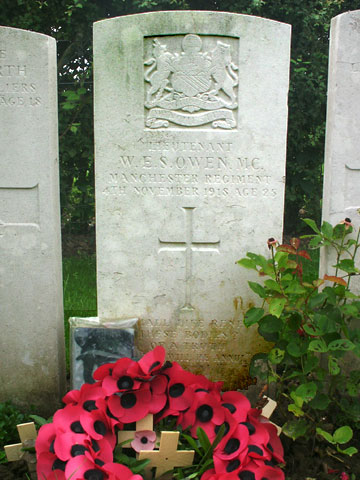
owens-grave

100 years after the beginning of the first modern industrial world wide war, how do we remember?

The quality of our remembering seems to be very important as we humans require the same lessons over and over again if we are ever to learn anything. Empires rise insatiably and claw at one another ever more effectively.

Yet still there is a danger that we remember the dead only as some kind of noble sacrifice in a titanic struggle for goodness, freedom and the rightness of our national cause. But there is no rightness in Empire. For one to rise, another must fall. And there must always be casualties.

So how should we remember?

I found myself first moved by the Tower of London poppies installation, then deeply troubled by it. Troubled because it is one sided, one dimensional. It records only our dead, pouring out of the symbolic Tower of London, itself at the very centre of the old Empire, now overshadowed by the high rise monstrosities of the City of London financial buildings.

Blood should be gushing from the gutters thereabouts, not trailing in a delecate flush of elegant ceramic flowers.

How should we remember?

Perhaps the best way might be to consider a world without Empire. To imagine how we might strive for peace, not conquest. How we might evolve systems that share resources rather than exulting in avarice and subordinating all morality to economic growthism. Is an alternative really so impossible?

I heard a poem recently, written by a young German called lfred Lichtenstein, who was born in 1889 in Berlin, and studied law there until 1913, when he joined a Bavarian regiment for a year’s military service. At the beginning of World War I he was in Belgium, and was killed in action the following year, September 1914, in Vermandovillers. Lichtenstein had published only one small collection of poems, Die Dämmerung, published the year before his death.

In 1913, the year before the beginning of the Great War, he wrote this poem. Imagine it in the context of that river of British poppies;

Prophecy

Soon there’ll come—the signs are fair—
A death-storm from the distant north.
Stink of corpses everywhere,
Mass assassins marching forth.

The lump of sky in dark eclipse,
Storm-death lifts his clawpaws first.
All the scallywags collapse.
Mimics split and virgins burst.

With a crash a stable falls.
Insects vainly duck their heads.
Handsome homosexuals
Tumble rolling from their beds.

Walls in houses crack and bend.
Fishes rot in every burn.
All things reach a sticky end.
Buses, screeching overturn.

1913
—Translated from the German by Christopher Middleton


The language of compassion in public discourse…

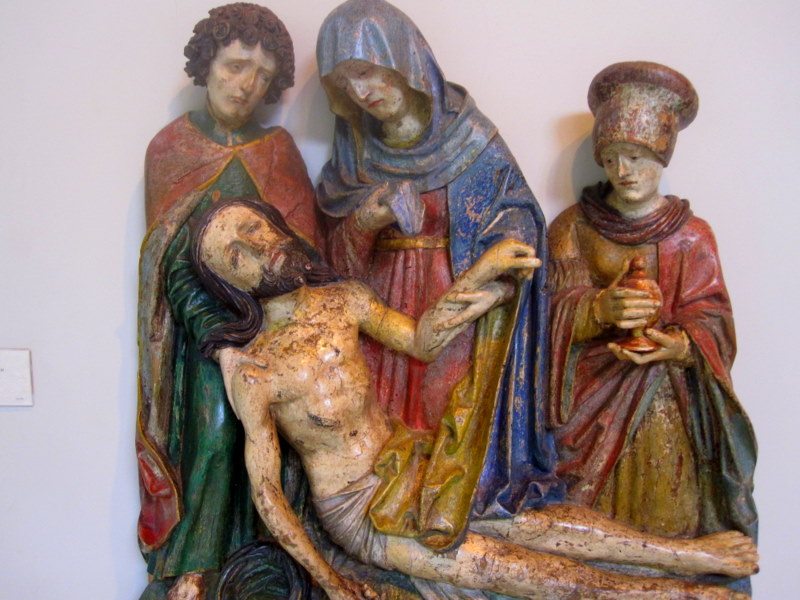
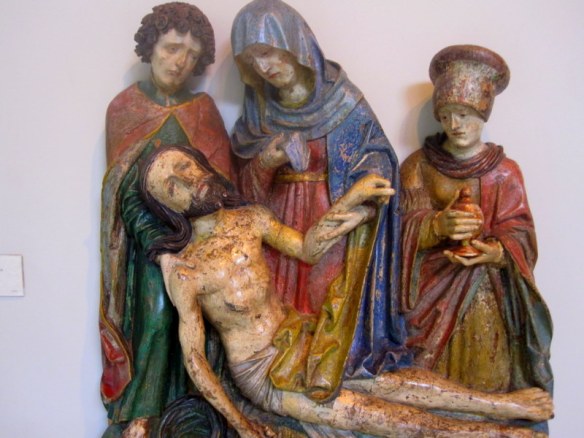
Carved statues, mary, jesus

I started a new job on Monday- a return to management- I am currently the service manager for mental health in Inverclyde, until March of next year at least. It is a full on position managing nurses, social workers, OTs and all sorts of other bits and pieces, within the all too familiar context of austerity. Time will tell whether I survive.

Today I was reading a report from the Mental Welfare Commission into the tragic death of a woman by suicide. You can read the whole thing here, but this is a summary;

The Mental Welfare Commission for Scotland has recently conducted an investigation around the new benefits system.

We investigated the case of a woman who tragically took her own life in December 2011.  She had recently had a work capability assessment following which the Department for Work and Pensions (DWP) decided her benefits were going to be reduced. She was on incapacity benefit and was told she would not be able to be transferred to Employment and Support Allowance so would receive Jobseekers allowance

Ms DE was a woman in her fifties who had worked for most of her life but had been experiencing mental and physical health issues so was signed off work and receiving incapacity benefit. She intended to return to work when she was able to. Ms DE had a teenage son and was engaged and planning to get married in 2012.  She had been receiving care and support from her GP and her psychiatrist for over 20 years. Her doctors had never been worried during this time about her taking own life.

During our investigation we spoke with people who were involved with Ms DE’s care and treatment. We discussed the case with relevant officials from the DWP. We also conducted a survey of psychiatrists to find out how they felt the system was affecting their patients.

We found that the decision was made on the basis of an assessment that contained insufficient information about her mental health. The work capability assessment needs to be more sensitive to mental health issues.

We were also disappointed at how the DWP communicated with Ms DE.  We felt that not enough effort was made to contact Ms DE and this meant she was not given the opportunity to fully engage with the process. She was not treated as a vulnerable claimant and so was not given any additional support to help her with the process around the assessment by the DWP.

The full report breaks down the DWP process in detail and reveals it for what it is; a stark, hollowed out way in which bureaucracy, influenced by a context of social and political antagonism towards ‘scroungers’, can lose all humanity. People are reduced to numbers, statistics, problems to be dealt with.

Consider this; could it be that we have lost the very language within our politics that allows us to talk about people on benefits with anything other than contempt?

By this I mean that we no longer talk about poverty as if it was something to be understood then compassionately engaged with. Instead we talk of social exclusion, sink estates, problem families. We play the blame game. We come to think of people as if they were zombies, whose toxic presence has to be eliminated.

We no longer talk about progressive taxation and striving towards greater equality of opportunity, of education, of health. Rather we focus on consumer choices, on league tables and blame-the-professionals if they do not deliver value for money.

We no longer talk about the ourselves in the collective, apart from economic statistics. Rather we have become increasingly focused on individual consumer rights, our small suburban kingdoms hedged off from the hoards lurking outside.
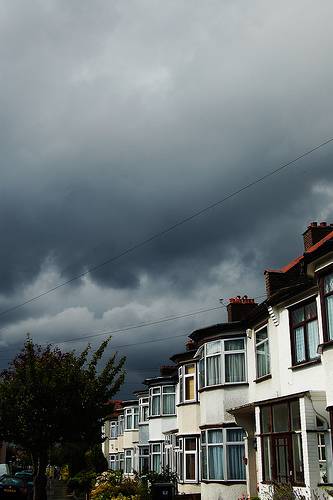
suburbia-croydon-england-rain-by-homemade-flickr


Language is important. I know the term ‘political correctness’ has become such a hefty bat to wave at lefty people like me (It has ‘gone mad’ apparently) but I long for words of compassion, of grace, of mercy to be heard in the corridors of power again. Enough of all these words of judgment, of condemnation, of weasel-worthiness masking privilege and complacency.

And I immediately find myself turning again to the words of Jesus, because what gives rise to these words is not our politics, but rather the Spirit within us. Here is the nearest thing to a manifesto that I have ever found in the Bible.

May they get you (and me) into lots of trouble.

Matthew 5 The Message (MSG)

1-2 When Jesus saw his ministry drawing huge crowds, he climbed a hillside. Those who were apprenticed to him, the committed, climbed with him. Arriving at a quiet place, he sat down and taught his climbing companions. This is what he said:

“You’re blessed when you’re at the end of your rope. With less of you there is more of God and his rule.

“You’re blessed when you feel you’ve lost what is most dear to you. Only then can you be embraced by the One most dear to you.

“You’re blessed when you’re content with just who you are—no more, no less. That’s the moment you find yourselves proud owners of everything that can’t be bought.

“You’re blessed when you’ve worked up a good appetite for God. He’s food and drink in the best meal you’ll ever eat.

“You’re blessed when you care. At the moment of being ‘care-full,’ you find yourselves cared for.

“You’re blessed when you get your inside world—your mind and heart—put right. Then you can see God in the outside world.

“You’re blessed when you can show people how to cooperate instead of compete or fight. That’s when you discover who you really are, and your place in God’s family.

10 “You’re blessed when your commitment to God provokes persecution. The persecution drives you even deeper into God’s kingdom.

11-12 “Not only that—count yourselves blessed every time people put you down or throw you out or speak lies about you to discredit me. What it means is that the truth is too close for comfort and they are uncomfortable. You can be glad when that happens—give a cheer, even!—for though they don’t like it, I do! And all heaven applauds. And know that you are in good company. My prophets and witnesses have always gotten into this kind of trouble.
 

Belonging…

prayer flags

I don’t believe in borders

Or the tyranny of maps

I fear the way they fence us in

And split the white from black

So I will not raise up Saltires

Nor wave the Union Jack

I will not sing those angry songs

My troops will not attack


What makes us what we are?

Whose stories are we telling?

What mix of blood pumps through these veins?

Whose products are we selling?

What shades of grey do we convey?

Whose history compelling?

Who pipes the tunes, who reads the runes?

In whose land are we dwelling?


Send them out or bring them home

These roads are laid wide open

The way of love, the pilgrim path

Requires that chains be broken

Then lay me down in fold of ground

This soil is soft and welcome

The crops we sow must surely grow

The rains fill up the ocean

Talking about inequality again…

boat_fb_en

I know, it has been a bit of a theme recently; increasing inequality and the inevitable rise of poverty as the 1% grab more, whilst reframing the economic narrative around ‘austerity’ and creating fear of feckless insiders (benefits scroungers) and the undeserving outsiders (immigrants.)

The story of the decision of the UK government to cease involvement in rescuing immigrants from drowning in the Mediterranean sea has to be seen within this overarching narrative. We can send troops to fight Islamic militants in the (oil rich) middle east but saving the lives of people who are trying desperately to find a way to reach the promised land of wealth and opportunity will only ‘encourage more people to come’. More than 2,500 people are known to have drowned or gone missing in the Mediterranean since the start of the year; who knows what the real number is. The point is, not all lives are equal.

Some of the old dividing lines seem more fixed now than ever; North/South. Black/White. Man/Woman.

mum_fb_en

The me-first mythologies behind understanding poverty, in which we come to believe that any measures to tip the balance back towards the have-not’s are somehow immoral, as they might somehow undermine human endevour/entrepreneurial effort, are pernicious heresies that have to be challenged.

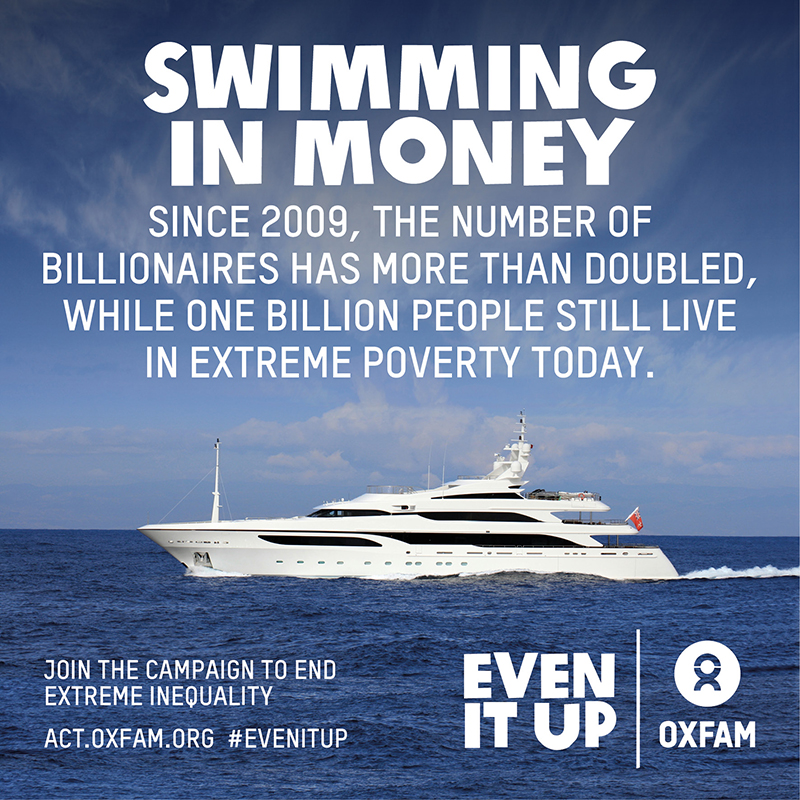
Oxfam has started a new campaign, called Even it up, asking campaigners in 37 countries to unite behind the call for a more equal world.

How is it fair that a select few have more money than they could spend in several lifetimes, while millions of people around the world struggle to buy food for their families or send their children to school? Such extreme inequality is threatening to undo much of the progress made over the past 20 years in tackling poverty. Oxfam say that this inequality is not inevitable, rather is the consequence of economic and political choices being made in our name. Here are some of the facts as Oxfam sees them;

1. The world’s richest 85 people have as much wealth as the poorest half of humanity / half of the world
2. Since the financial crisis the number of billionaires has more than doubled and at least a million mothers died in childbirth.
3. Half a million dollars. That’s what the richest 85 people made every minute last year.
4. Today there are 16 billionaires in sub-Saharan Africa, alongside the 358 million people living in extreme poverty
5. Seven out of ten people live in countries where the gap between rich and poor has grown in the last 30 years.
6. A third of the world’s richest people amassed their wealth not through hard work, but through inheritance.
8. Every year, 100 million people are pushed into poverty because they have to pay for health care.
9. Getting all girls into primary school could cut the number of women dying in childbirth by two-thirds.
10. More than half of the world’s workers are in vulnerable or unstable work.
11. Without action it will take 75 years to achieve equal pay between men and women.
12. In 2013, tax dodging by rich elites cost the world at least €156 billion – enough to end extreme poverty twice over.
14. Developing countries lose billions of dollars due to corporate tax dodging.
15. Today, a small tax of 1.5% on billionaires could get every child into school and deliver health services in the poorest countries.


75years_fb_en