Religion as transformative event…

st-paul-conversion

My friend Pauline gave me this book recently and asked me to read it. Eckhart Tolle began his ‘spiritual journey’ after experiencing a transcendent experience; an awakening.  He thinks that this awakening is available to us all;

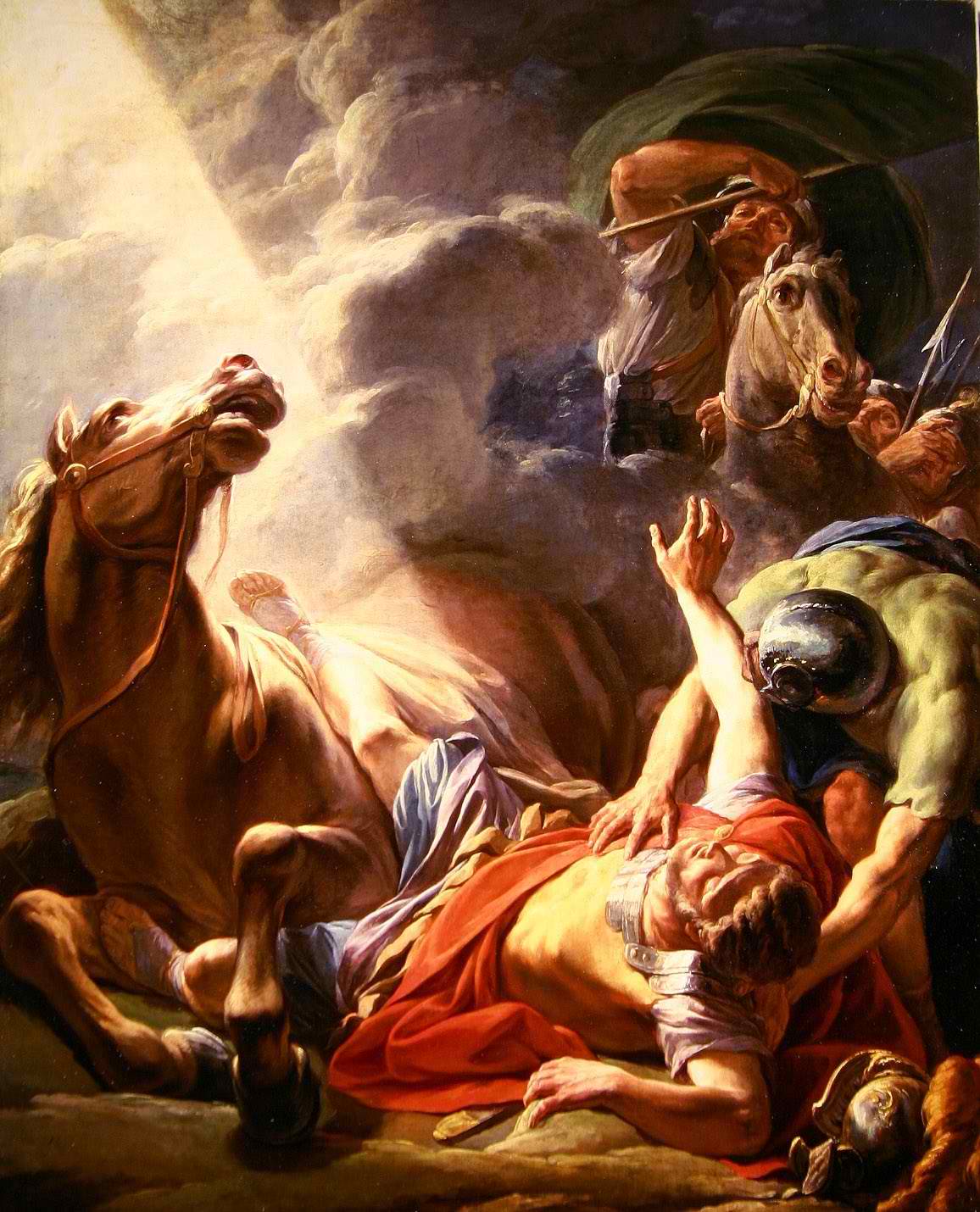
Christians have lauded such experiences (usually called ‘conversion’) for our whole history- from the beginning of our religion with St Paul on the Emmaus road. There was a time in my immersion in charismatic evangelicalism when people seemed to compete with one another to tell as dramatic a conversion experience as possible. Services were organised around ‘testimony’ which usually told how BAD someone used to be, until Jesus saved them and the Holy Spirit zapped them into sublime peace. I am forced to remember that the people who shared these transformations often seemed rather untransformed to me. But perhaps this is unkind- I am a work in slow progress, so who am I to criticise anyone else’s experience of faith?

Christians are often amazed to discover that these ecstatic conversion experiences– religions events- are not confined to the Christian faith.

Ekhart Tolle takes strands from all the world religions to point us towards a deeper, better life, not just for ourselves but for the planet. His language is laced with mysticism – much of what I find to be beautiful. However, I also find myself distanced from it all. I think this is because I am suspicious of quick fixes.

As a troubled child, struggling with an often abusive and emotionally deprived situation, I longed for some kind of tangibly unequivocal experience of the divine. This was less about ‘proving’ God, and more about proving me. It would mean that I was worth something, that I was somehow blessed, accepted. In my mind it also meant that the sinfulness that I knew I contained would be instantly dealt with- and I was hugely aware of how sinful and useless that I was. Ultimately I came to realise that this kind of spirituality was damaging for me- and exposed me and others to all sorts of potential abuse and manipulation.

Everyone is looking for a miracle cure. If only I take this drug, do this thing, follow this ritual, have this product, marry this girl/boy life will be OK. To be fair, Eckhart Tolle is not suggesting instant transformation for us all, but I suspect the wild popularity of his book is based on the fact that he offers a non-specific one- size-fits-all spiritual route to enlightenment within a modern consumer culture.

It feels like the difference between an Oprah Winfrey therapeutic TV event – in which we watch someone apparently deal with their past – and the reality of long term therapeutic engagement, in which two steps forward are often followed by three steps back. Over nearly half a century in and around Christians, my experience of spirituality fits far more with the latter than the former.

Having said all this, there seems no doubt that people are transformed by one off religions events. People are converted, changed, enlightened, filled with the Spirit. Some of these people are inspired to do wonderful things as the result.

Can this be replicated in the hearts of the hopeful, or are transformative events like this in themselves rare, precious? I have been in the presence of many Christian charismatic leaders that have promised ecstatic transformation to others as a matter of course. As I look back on these experiences now, then I am forced to conclude that the hundreds and thousands of people who prayed earnestly for such a transformation did not experience it, even if at times we pretended that we did. This might be about the need to conform to in group pressures, but it seems that it might also be related to a deeper yearning we have for a connection to the divine.

It is not surprising really- psychologists have been trying to understand these events for years;

Ultimately, despite the complex arguments about evolutionary group selection, religious experience is only ever fully understood from the inside. 

We of faith might also counter some of Jonathan Haidt’s points about evolutionary usefulness of cohesive religion by suggesting that we are skewed this way because we are body, mind and spirit. On other words, we all come into the world with that thing we used to call a God-shaped hole.

I have just come to value a spirituality that starts with an understanding of what is broken and what is beautiful in all of us. From there, we can start to learn again that word love, both for ourselves and more importantly, those all around us.

But let us continue to search for our staircase.
How long does it take a nation to deal with it’s demons?

12-years-a-slave

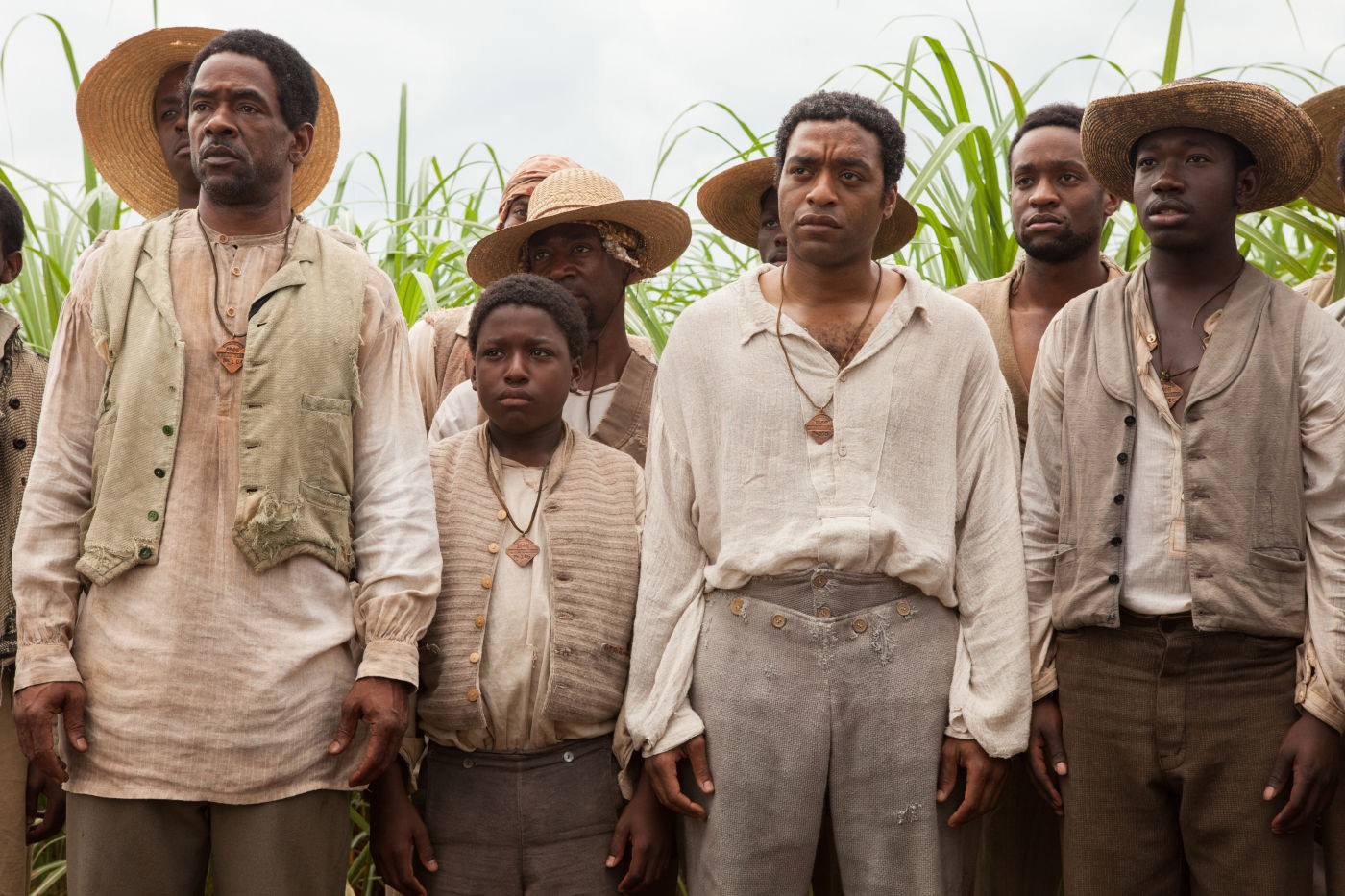
I have just been to the cinema to watch 12 years a slave.

It is a great film- exposing the raw underbelly of the racism that was a formational part of the development of the nation that became the USA. It has to be said that we on this side of the Atlantic are ultimately culpable, but our convulsions in relation to racial equality have been more subtle on the whole.

Think about it though- slavery is entangled with much of our society that might be regarded as our sickness- our addictions to tobacco and sugar, our morning coffee pick me ups. The slavery age set the tone for the rapid economic expansion based on huge profits for an elite. In many ways we all stand on the backs of slaves.

What the film did quite well was to convey how ‘good’ people could come to accommodate such a great evil as slavery- how they regarded black people as less-than. Even there however, I found myself wondering if the film was guilty of showing us the drama through a set of goggles that were entirely of our age- it is impossible not to engage with these black actors as wholly rounded emotional beings, which is of course something that was almost impossible to do from a 19th C perspective.

The film also seemed to show two Americas- the evil South, and the north in which black people lived in nice middle class houses and had the respect of all their peers.

History teaches something slightly different- about how pervasive the imagery of the chicken loving, feckless, sexualised, untrustworthy and unclean negro had become. This stain on blackness spread all over the world- including the free states. Black people were not chained, but neither were they regarded as equal partners. This was true also in my country.

Picaniny

Some would argue that this remains the case today- demonstrated by just about every social statistic you care to examine- educational and vocational achievement, health, mental health, prison numbers, poverty, life expectancy etc etc.

What is it then that makes race such a stubborn social discriminator? Why should the colour of our skin really make any difference to all the things listed above? In the past eugenicists argued it was simply because black people were lower down the evolutionary ladder- they were closer to the monkeys, and therefore good at sport, but not as intelligent as the rest of us. Despite the science of eugenics having been shown to be totally bankrupt, the conclusions peddled by this despicable chapter in the history of science still has resonance with instinctive prejudices that people carry.

There was a point in the film (slight spoiler alert!) where Solomon is free, and standing in front of his family. It is no moment of triumph- rather he is broken, weeping. He has been nothing and he has come to believe this of himself. He has nothing to offer his family as he is nothing.

This is what prejudice does to us- it erodes our sense of self. This is what the ruling classes can never quite understand about the poor. The current discussion about ‘benefits scroungers’ in the UK seems to involve a government made up of privileged people asking why are these people living like this? Why do they not get up and get on? What is wrong with them? They fail entirely to understand the denuding impact of poverty and prejudice on body and mind. From their perspective of ‘everything has always been possible’ they have no concept of how people can become so restricted by circumstance.

American literature has been trying to understand this phenomenon in relation to race for many generations now- from Harriet Beecher Stowe’s Uncle Tom, through Mark Twain’s Tom Sawyer and Huckleberry Finn, onwards into Alex Haley’s Roots. It has always felt like the nation is lagging behind the literature. Perhaps this generation might be the one to finally put away the prejudice, but is seems we still have a long way to go.

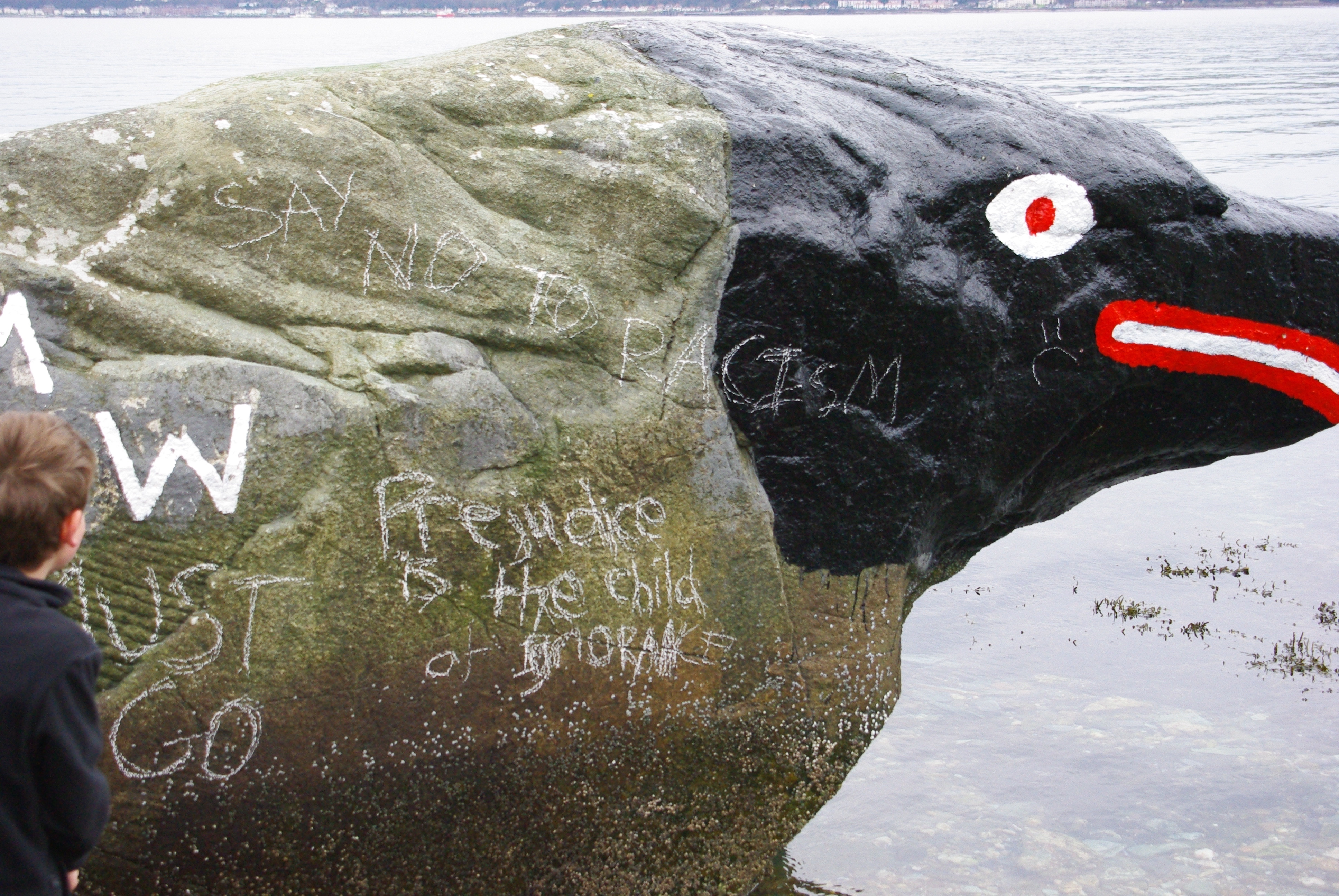
We came out of the cinema today and immediately thought of our local murky past- symbolised by Jim Crow Rock.

I maintain that these things matter, because even though the physical chains have been taken off, there are still many hidden chains that are laced through our societies. Changing this is the work of centuries.

jim crow prejudice

All scripture is useful…

new-dead-sea-scrolls-theory_24016_600x450

If you like your Scriptures crusty and ancient, then you will love the updated on line resource displaying the Dead Sea Scrolls.

These amazing documents contain fragments of include the earliest known surviving manuscripts of works later included in the Hebrew Bible canon– preserved for two thousand years by the hot, dry desert climate and the darkness of the caves where they were placed.

Part of their fame to Christians is the fact that the many fragments contain almost identical versions of OT scriptures that we still read today. This serves somehow to preserve the idea that the Bible is Gods Word, for all time, floated down intact as the ultimate instructional manual for life.

(As a matter of interest, there is a rather good discussion about how we might understand the phrase ‘The Word of God’ here.)

Most Christians I grew up with had no idea about how the library of books they knew as ‘The Word of God’ came to be gathered. They would have regarded such things as irrelevant, dangerous- trickery of those who would stain the purity of the the holy paper. However, the Dead Sea Scrolls give a window into how scripture was understood even before the wranglings over the Christian Canon.

Biblical scholars can not agree about when the Hebrew closed the book on their own collection of scriptures, but it was clear that those who put away the scrolls in the caves of Quran still experienced scripture as a work in progress.

They also used copies of the book of Enoch;

The book of Enoch was not included in the canon of the Hebrew Bible. It tells of Enoch, the great-grandfather of Noah, who lived for 365 years and “walked with God”. The displayed fragment describes the heavenly revolt of the fallen angels, and their descent to earth to cohabit with the daughters of men and to reveal secret knowledge to mankind, a story hinted at in Gen. 6.

The Apocryphon of Daniel (and other fragments of Apocrophal writings, whose significance is mostly lost to us.)

The Dead Sea Scrolls contain extensive apocalyptic literature relating to the final messianic battle at the End of Days. The Aramaic Apocryphon of Daniel describes either a messianic figure or a boastful ruler that will arise as “Son of God” or “Son of the Most High”, like the apocalyptic redeemer in the biblical book of Daniel. The text calls to mind the New Testament proclamation of the angel Gabriel concerning the new-born Jesus: “He will be great, and will be called the Son of the Most High… ” (Luke 1:32)


It is almost impossible to begin an adventure into trying to understand where these scriptures came from without having to set aside the idea that the ONLY relevant writings useful to Christians are contained within the book we know as The Bible. However we might also come to view these books as all the more remarkable.

The papers today are full of a blundering UKIP MEP who has published a charter that he wants Muslims in the UK to sign ‘rejecting violence’. He also has suggest that some Muslim texts need updating, claiming some say “kill Jews wherever you find them and various things like that”. “If that represents the thinking of modern people, there’s something wrong, in which case maybe they need to revise their thinking. If they say they can’t revise their thinking on those issues, then who’s got the problem – us or them?” he added.

The fool thinks you can re-write scriptures for other people’s religions. As if there are not enough blood thirsty bits in our own.

What we need is more understanding, and an open dialogue about how these still-incendiary ancient texts should rest on our post modern souls.

Lagom…

teenagers, shopping mall

In Sweden, despite the mythology of the almost-egalitarian welfare capitalist state, apparently the rich are getting richer and the poor poorer. It is the way of the world, and despite never having been to Sweden I feel a sense of disappointment.

The idea of the existence of a stable, well ordered nation populated by reasonable (if slightly dull) people, dressed in cardigans and listening to too much euro-pop exists for us like some kind of promised land. So much so that the countries of Scandinavia are touted as role models by those selling us the idea of an independent Scotland. We can be like them too if we vote for independence.

Perhaps we can, and I hope that Sweden finds its way back to the principles that gave birth to their national identity- something about being ‘humble towards life, and humble towards success’ (a quote from a recent TV programme about Sweden.)

The Swedes have a word that has no direct translation into English- one of those that I reckon we should borrow. it is this one; Lagom;

The Lexin Swedish-English dictionary defines lagom as “enough, sufficient, adequate, just right”. Lagom is also widely translated as “in moderation“, “in balance”, “perfect-simple”, “optimal” and “suitable” (in matter of amounts). Whereas words like “sufficient” and “average” suggest some degree of abstinence, scarcity, or failure, lagom carries the connotation of appropriateness, although not necessarily perfection. The archetypical Swedish proverb “Lagom är bäst“, literally “The right amount is best”, is translated as “Enough is as good as a feast” in the Lexin dictionary. That same proverb is translated as “There is virtue in moderation” in Prismas Stora Engelska Ordbok (1995).


Enough is as good as a feast. I like that.

Knowing when enough is enough is the trick though.

Cold…

Winter sky from our house


North wind


Weather sun shines or snow falls

Sometimes the old house lies cold

Containing a kind of chill that three pullovers

Cannot keep at bay

It seems impervious to

Obvious external influence

Mercurial

Like me


But both of us are vulnerable

To the direction

Of the wind

The Far Horizon…

Sunbeam trinity


Things have been a bit slow here recently- this is mostly because I have been doing a lot of work editing poetry for the up and coming Proost Poetry Collection. I am really excited about this project now- after huge amounts of work it is finally coming together.

One of the things I have been doing is writing chapter introductions. By way of a teaser here is one of them;


Imagine one of those wet-into-wet Chinese landscape paintings in which

a flower holds your gaze to the foreground,

whilst line after line of mountains

climb and bleed into the distance.

It seems like there will always another ridge line,

another high corrie to cross.


I walk into the rain and the mist

Forced to trust that

there will be other flowers

in places beyond.


There was a time when everything felt permanent, or so we are told. Communities were solidly built around stratified social class structures. People began work at the age of 14 and spent their lives in the service of one employer; the chances are that this was where your parents also worked. Whole towns were organised around the shift patterns at mills/shipyards/mines. We worked together, then drank together afterwards. On Sundays we went to church together.

This was no utopia; there were always those for whom this kind of life felt like a kind of prison. They longed for adventure on the high seas, the promise of the New World. They felt thirst for distant spice filled forests, for tropical islands lapped by warm green waters, for feasting on strange beasts around a pioneer fireside and above all for freedom. Freedom from the tired old ways of doing things, freedom from old obligations and paradigms, freedom from the drab dull monochrome lives lived by their parents. Freedom from things that always remained the same and from the kind of religion that insisted that was how things should be.

Should I stay, or should I go? Perhaps we humans always have to make this decision. The going and the staying are not necessarily geographical concepts. Do we stay with what we know, or do we dare to imagine something new?

As well as putting up the stone buildings that anchor us to place, our faith can also be a mode of travel. Our history is littered with people who were convinced that God was telling them to go somewhere, to do something. These people have acheived amazing things.

I heard a story once that really helped me to understand the flowering of faith in different parts of our history. Revivals hit us from time to time, usually associated with people who are inspired to go to new places and dream of better things. These revivals can be like an erupting volcano, spewing out molten rock that flows out into the cracks and crevices of the landscape. Nothing can stand in its way.

After a while, the flow cools on the outside but it remains hot and plastic within, still moving slowly. However, eventually what is hot cools and solidifies. It can no longer move, but becomes solid rock.

It is from this rock that we build our Church, our religion.

The truth is, we need both those who go, and those who stay. The rocks that form the walls of the old cathedrals are beautiful.

But the mountains are calling me again…

cuilin ridge from Sgur nan Gilean

Call for artists to contribute to an Easter exhibition…

Carved stone cross, crucifixion, detail

I received this today from Heather- looks like a really good project so I thought it worth a plug! Anyone out there who is interested, contact details for submissions are below.

CALL FOR WRITERS AND ARTISTS

Exhibition Title:  “Love.  Loss.  Hope: the Art of Easter, 2014”

Initial Response Deadline  Monday 10th February 2014 at 12:00 noon

Exhibition Dates: Good Friday 18th, Saturday 19th April, daytime and evening (Exhibition may be extended slightly, enquiries are being made)

Location: King’s Factory, Unit 4, Smithton Industrial Estate, Smithton, Inverness, Scotland IV2 7WL  (Home of King’s Fellowship)  The exhibition will be spread in a route throughout this modern commercial unit build – display space dimensions vary considerably.

Works: We greatly encourage submissions across all creative media including screen-based.  Writers, please consider visual text artforms.  Works can be offered for sale.

Background: The exhibition will reflect on a series of incidents in Jesus’ life as he moves towards the cross and his death.  But ultimately the exhibition is about love, loss and hope.

The Bible narrative will be already supplied in printed and audio recordings – leaving you free to interpret or respond to any part of an event.

The exhibition will be grouped into separate areas for each Easter event plus a reception area and a reflective area.  We invite you to exhibit in any of these categories:

  1. Garden of Gethsemane
  2. Jesus is betrayed and arrested
  3. Jesus condemned by Sanhedrin
  4. Jesus denied by Peter
  5. Jesus judged by Pilate
  6. Jesus scourged, crowned with thorns
  7. Jesus takes up his cross
  8. Jesus is helped by Simon to carry cross
  9. Jesus meets the women of Jerusalem
  10. Jesus is crucified
  11. Jesus promises kingdom to the thief
  12. Jesus entrusts John and Mary to each other
  13. Jesus dies on the cross
  14. Jesus laid in the tomb

The reception room theme is “love”, showing Christ’s love in his life, and the Last Supper.  The last exhibition room is a reflective space, themed “hope”.

Curated by: Heather Gregg   Tel: 01463 793494   Email: heather.gregg@googlemail.com

Aim of Exhibition: “To adore is a Door”.  As these works of adoration are placed together in a sensitive setting, I believe that they will become a spiritual door to the reality of Christ.  My prayer is that exhibition visitors encounter him in this space.

This is a Joint Production of King’s Fellowship and Blue Flame.

http://www.thekingsfactory.com/      www.facebook.com/hisblueflame

Alt worship, old school…

ohps


Aoradh met yesterday for our ‘family day’. We have one of these a month at the house of one or other of our members. Everyone brings something to eat and something to contribute to an act of worship- it was lovely.

Yesterday we sang, listened to music, watched a DVD and spoke about starting again, changing things up. Among all the lovely things we did, what stays most in my mind was something that Michaela encouraged us to do using old school technology in the form of acetates.

‘Alternative worship’ (if you have not come across the phrase before) could be understood as a creative democratisation of worship within the Christian tradition. It involves taking old and new rituals and reinventing them, finding renewal and making new community along the way. It might also sometimes veer towards the highly technical- the joke is often made that if the alt. worship scene has a patron saint, then this is likely to be St Jobs of Apple. Contrast this with when the movement started out, when we all dug out our parents slide projectors and borrowed the OHPs from our local schools. Having said all that, our family days have very little in the way of high end technology.

Michaela’s idea was to take a song – an old Vineyard song called Hungry; She took some of the words- the negative ones like hungry, weary, empty, dry, broken and wrote them on a sheet. She then placed an acetate over the original sheet with other words on – satisfy, restore, arms open wide. The words merged, but remained separate.

She then asked us to think of all the things that were weighing us down; all those hard situations, areas of pain and brokenness, and to write them down on a sheet of paper. We then were invited to take a sheet of acetate and write words of hope, with prayers and promises. Then place the acetate over the sheet of paper.

Simple, low tec, but done prayerfully, in the company of friends it was beautiful.

I have my sheers here now. Depression becomes paired with gentleness, with patience, with grace. Awkwardness becomes paired with creativity and love…

Who needs beats and 5 different projections?


Falling crime statistics- what might they mean?

police

One of the more surprising facts about the UK as we continue to experience our economic recession is the fact that crime rates continue to fall. In fact, the most recent crime survey suggests that last year we recorded the lowest crime rates for 32 years, (since the start of the current survey in fact) and the trend is set to continue.

There are some interesting variations- murder rates and violent crime has reduced significantly, as has burglary and car crime. Shoplifting is up however, as are other survival crimes like pick pocketing.

What can we take from these apparent changes to the way we live together in the UK? Firstly we can be grateful that despite the scare mongering, we live in a such a safe, secure part of the world. Small comfort if you are one of those affected by crime, but you are in a much smaller group than you might have been previously. However, I am not sure that this fact is reflected in public perceptions of their safety. Back in 2011 it was reported that two thirds of the public thought that crime was increasing in their area, despite clear evidence to the contrary. We might conclude from this that our communing is still dominated by fear and suspicion.

We can also be grateful for the skill, commitment and effectiveness of our police forces.The news stories about corruption are noteworthy because they are so rare. The UK police services are simply the envy of most of the world. Perhaps the fall in crime rates is simply because many of our criminals have been caught- they are safely away in prison. Certainly, numbers of people in our prisons are very high; England and Wales has the highest per capita incarceration rate in Western Europe. It should be noted however that crime rates are falling in countries who make much better use of non-custodial and restorative justice measures, which research shows again and again are more effective in rehabilitating prisoners. (Although the research is highly problematic and politically/morally charged- see here for a good discussion comparing UK and US research. Interestingly there is a mention of Evangelist Chuck Colson’s Prison Fellowship Ministries, who appear to have achieved staggering turnarounds for many of the hundreds of thousands that attend their meetings. )

Accepting that sometimes prison is required as a last resort, or even a first resort when the offence is serious enough, do we really need to remove so many people from society? Should we not be more concerned with keeping them anchored (or reconnecting them) to the moral/psychological/social societies they are part of? Ideas of punishment and justice for the victims of crime are important, but surely most people would be more concerned to know that prison was an investment in turning around the lives of offenders- giving them a real new start? The opposite seems to be happening however- lower tariff offences seem to be a way into a criminal career that is fast tracked rather than derailed.

The new super prisons in the UK, built and managed by private companies, warehouse offenders in larger numbers than ever before. There are huge concerns about levels of violence, and suicides are on the increase. The argument is that these private prisons can incarcerate a person at a fraction of the cost of state prisons. What happens in terms of investment in rehabilitation is also predictable. It costs money.

So- crime is falling, but our prisons are full to bursting capacity. Our media continues to support a climate of fear and so no one really questions what is happening in our judicial system. Who profits from this, we have to ask? Companies like G4S are certainly making lots of money, despite damning reports into their operations. Call me an old conspiracy theorist, but I also kind of feel that there are other forces here- there is a political investment in being ‘tough on crime’. There is also a political usefulness in keeping a level of fear and anxiety within wider society- it greases the wheels of power and give the powerful a mandate to manipulate.

But back to the crime figures. If we can not explain the figures in terms of judicial effectiveness, what might explain the fall in crime? Could it be that we are simply becoming a more civilised society? That we are more law abiding? It would be nice to think so, but I wonder if the real reason is not about our increased civilisation, but rather our increased isolation.

Quite simply, if we do less with one another, then it follows that we also do less to one another. Increasingly Britons spend their time in front of screens, distracted and dulled. Our collective experiences are arrived at in cars full of empty seats or on trains plugged into devises that keep us in an electronic bubble. We live vacariously through the lives of celebrities or virtually via on line gaming.

It is good that we are safer from crime, even if we do not feel it.

It is scandalous that we do not take a harder look at the failings of the judicial system that imprisons so many Britons on our behalf. (Check out the Prison Reform Trust for more on this.)


The God-hoover is out of the cupboard again…

Check out the trailer for this film;

There have been other attempts to scare people into faith by dodgy theological interpretations of the wild meanderings of the Apocalypse of John. I have written before about my childhood experiences in this regard.

Popular culture reflects the zeitgeist in ways that are often interesting. What emerges on to the entertainment market often reflects all sorts of subliminal fears, preoccupations and prejudices. In the American heartland, still dominated by Conservative Evangelical Christianity, this film will do well. Guns, fundamentalism and fear- surely this has to sell well even if the film making itself is rubbish?

Naomi Klein makes some interesting points about what she describes as ‘Rapture Rescue’. I have posted this before- but it is worth watching again;

Western society, despite our peace, prosperity, security and excess, still seem to define itself in terms of fear of catastrophe– be this some kind of real or imagined terrorist threat, a fear of immigration, of civil unrest. We then imagine some kind of massive redemptive transforming event to solve the problem- a new saviour, a victorious war, a wonder technology.

Add religion into the mix and things can get, well just silly. Except that when so many people are caught up in it all it is not really a laughing matter.

Ideas are important. Naomi Klein said this;

“If we want the transformation, we can’t wait for it to happen in some massive jolt, we have to plan for it and model it…”

“Only a crisis, actual or perceived produces real change, and when that change occurs this depends on the ideas that are lying around. That is our function, to keep ideas alive until the politically impossible becomes politically inevitable.”

My concerns about films like the one above are partly theological (there is a discussion of some of the dispensational theology in this post) although correcting esoteric theological ideas is always a bit of a waste of time. Those who hold them do so as if to a branch out from a cliff. They will never let go.

The issue is more relevant when we consider the impact of this kind of theology on our engagement with the world. Christians have some of the best ‘ideas’. We have a story that can change whole cultures- that HAS changed whole cultures. Sadly ideas and stories like this can become the servants of culture, not part of a critical, vitalising commentary.

So if our religion takes us to a place where we believe that this world is doomed, that God is going to suck all the good people (measured according to whether or not they have said the ‘sinners prayer’) up with his great rapture hoover and the rest will get their just deserts- if this is our religion then how might this change the power of our story or the potency of our ideas? How might these ideas set us free to be engaged in works of salvation- not just for a narrow self elected few?

That is why we need to hear other voices of faith- like Tom Wright;

Faced with an apparent crisis in our ability to hope and believe for the future, we people of faith have a choice…

We can proclaim the end of it all, and offer only the hope of a few of us being sucked away from the stinking rotten corpse that is this world, or we can become hopeful critical collaborators in our culture- salting those things that have good flavour, and shining light where there is darkness that requires illumination.