A Christmas sermon that cost a man his job as a minister…

frank schaefer

And what a sermon. Here it is in full.

It was given by Frank Schaefer (no, not that one– different spelling) who was defrocked by the United Methodist Church last week for officiating at his son’s marriage to another man.

Whatever your theological stance on this issue (it will not surprise you that I am with Frank) you have to admire this man’s courage.

Frank said this;

Being a United Methodist minister is the only way I know how to minister. All of my children have been baptised in the United Methodist Church. It was our church. This is our church.

I knew that I had to confess what in my heart I knew to be true, and I had to stand against the church – not the entire church – but the institution of the United Methodist organisation to say “I believe that this rule is discriminatory and wrong”, and I knew I had to tell my lawyers that.

And so when I sat in the stand, and it came to that moment to share about my true faith, and to stand against the church. I was sick to my stomach. And I was thinking, “can I actually get those words out”? And as I was in that moment, I looked out into the room, and I saw my family. Behind my family there were people sitting. Some of the people were from this church, wearing rainbow stoles. And all of a sudden it was like I could feel their prayers, and I heard myself say to the jury: “I will put on this stole, this rainbow colored stole, as a sign that I will from now on stand in advocacy of the LGBT community of our church”.

And I heard myself say, “I want you to know, that if I am going to be a United Methodist minister tomorrow, I will not refuse ministry to anyone based on their sexual orientation.”

And I heard myself say:

I can no longer be a silent supporter. I will always be an advocate and I will tell the church that these laws are discriminatory. And that we treat our LGBT brothers and sisters as second-class Christians, and that the hate, the hate speech of the church has to stop.

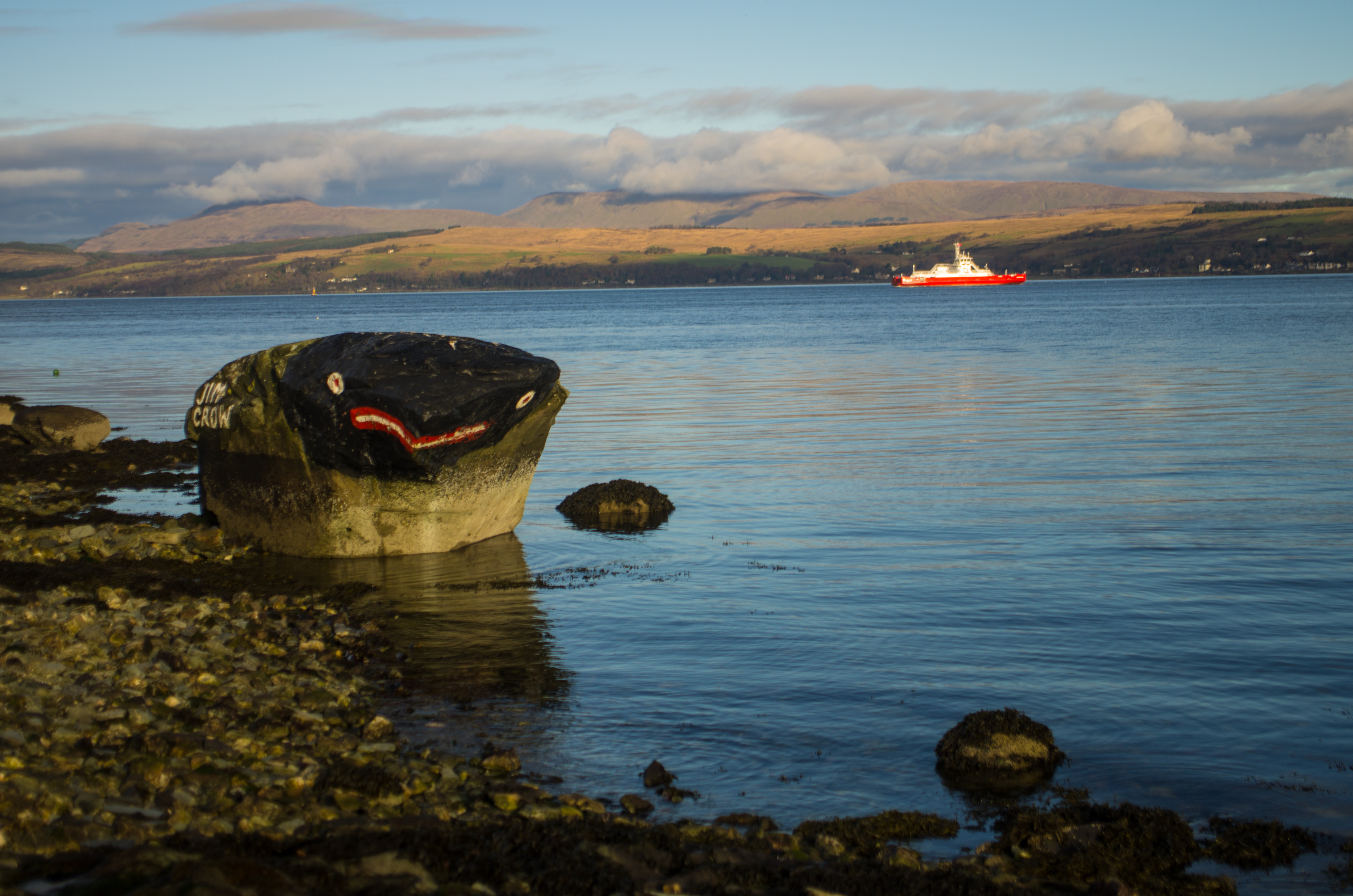
What’s in a name? Jim Crow Rock again…

Western ferries passing jim crow

Regular readers will be aware of this stone on Dunoon’s foreshore, close to my house. You will also be aware that I have tried to engage in debate locally about it’s origins, given that it carries two markers that have clear racist associations- it is decorated with familiar ‘Blackface‘ markings, and is labelled ‘Jim Crow Stone’.

This debate continues to be a rather difficult one as the rock divides people fiercely. Those who tend to object to the rock are more typically ‘incomers’ who are not thought by locals to have a right to comment. For their part, they grew up with the stone, as an innocent backdrop to playing on the shore. For them it was a crow, not a racist statement.

I wrote a letter to the local paper a couple of weeks ago, in the wake of the death of Nelson Mandela, suggesting a information board, where we might discuss the different opinions about the rock, and talk about the slave connection through Clyde trade, as well as the Blackface minstrel shows that happened in this area. To be honest, I did this with some trepidation as I expected to get a bit of a kicking from outraged locals.

However, this has not happened. Most conversations I have had with people have been broadly supportive of the idea. There was only one letter in the paper in opposition- and this one concerned itself with the history of the rock. The correspondent insisted that the rock could NOT be racist as it’s name pre-dated the ‘Jim Crow Laws’ in the USA.

There does appear to be some evidence of the name ‘Jim Crow Stane’ on early charts- as if it was used as a navigational marker, as early as the 1700’s.

However to suggest that this closes the argument, that the markings on the rock then become innocent, is clearly (in my view) nonsense. Folklore gets changed and adopted according to the mores of the times. The name of the rock, and the use of the term ‘Jim Crow’ as a pejorative label may (or may not) come from an era before the decoration, but the association with racist images and ideas does not. T

I wrote a reply for the local paper- again I do not know if they will publish it. Here it is though;

Dear Editor

Thanks very much to John A Stirling for his thoughtful reply to my previous letter suggesting an information board next to Jim Crow rock. John appears to believe that the historical points he makes close the argument about the origins of the decorations on the rock. I am afraid they simply do not. History is rarely value free and in this instance, far more complex than what John would have us believe.

John suggests that the rock cannot have racist connotations as its name pre-exists the Jim Crow laws in America. However this ignores the fact that these laws were grouped under the name ‘Jim Crow’ precisely because this was a pre-existing pejorative name that had been in common usage for Black people since at least the beginning of the 19th C. The song ‘Jump Jim Crow’ (written in 1828) perhaps popularised this stereotype but it is more likely to predate the song considerably.

The words ‘Jim Crow’ fell out of common usage possibly because they became increasingly associated with racist laws adopted by most States, and which were gradually removed from American statute over a period of 50 years of protest by brave people, some of whom lost their lives in the process. Previously ‘Jim Crow’ would have been used in the same way as the word ‘nigger’. Are we really happy to give unexamined space on our shores to such words?

Even if John is right, and the name of the rock pre-dates racist associations, the ‘blackface’ image that is painted on it now remains one that Black people recognise immediately as a racist stereotype. Again- do not take my word for it, ask the Jim Crow Museum (who have expressed horror at our rock) or the Racial Equality Unit.

Whatever the debate around this rock, at present it stands as a potentially offensive historical oddity. It will continue to divide us into people who are troubled by what it represents and others who fiercely defend it as an innocent local folklore.

Once again however, if we were to put up a display making clear the nature of this debate, perhaps we might yet transform the rock into something that both John and I can take mutual pride in. We can keep the rock in place, celebrate it even- whilst also owning the darker parts of our history.

TFT Christmas Card 2013…

Every blessing to you all!

woamn, child birth, national geographicImage from here.

.

If Jesus had been born in Nazareth

.

If Jesus had been born in Nazareth

They’d prepare the way of the Lord

The in-laws would gather, take over the manor

Joseph would just be ignored

.

If Jesus had been born in Nazareth

The paths would have all been made straight

The midwife would chide, send the kids all outside

A whole village would stand by and wait

.

If Jesus had been born in Nazareth

He’d have a fine bed for his head

But while men smoked cigars in the small local bars

He was born in a stable instead

.

Jesus was not born in Nazareth

This king never needed a throne

The first thing he saw was dirty old straw

Our God was a long way from home

Growing up as a scrounger; confessions of a child of the welfare state…

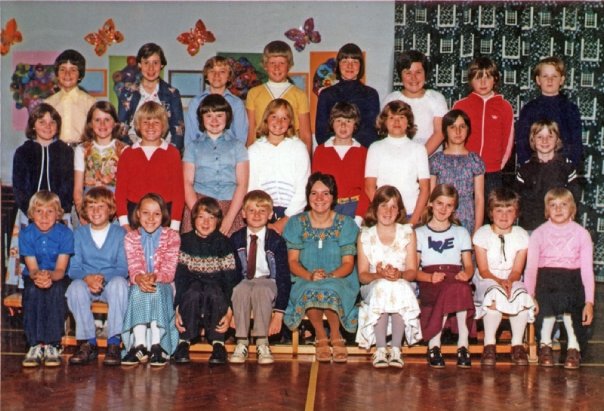
school-photo

Here I am, aged about 8 or 9, on the back row of my class picture from Croft Primary school. Someone posted this picture on Facebook and it all came flooding back. I am the one in the strange yellow t-shirt and the odd pudding bowl haircut.

My sister and I were part of a one parent family, existing entirely on welfare benefits. We lived in a reasonably comfortable house- a suburban semi detached that my mother had bought before she married my father. It was a difficult short marriage and she was left holding the babies, bitter and isolated.

Growing up a child of the welfare state in the 1970’s was possibly the best time to do so. Family credit, child benefit, free school meals, clothing vouchers, even help to pay for some school trips that otherwise we could never have been part of. Don’t get me wrong- we had very little, but my mother was very good at scraping together every last penny. But the chronic shortage of money dominated every waking hour- leaving lights on or wasting food was a sin punishable by violence. I lost a coat once and did not dare go home- hiding in the fields for hours.

There was food in the house- in the early days my mother fed the babies rather than herself, but as time went on, she began to stockpile dented tins and dried lentils. She is in her 70s now and still does- her kitchen cupboards are full of foodstuffs well past their sell by date but she can not begin to throw out. When you have been hungry and have had nothing, the fear of this returning cuts deep.

I mention all this because when I was a child, benefits were worth considerably more in real terms than they are now, even before the axe that our current government has taken to the welfare benefits system.

If I had been born 35 years later, it seems almost certain that I would have been one of the 500,000 people that would have needed to visit a food bank in order to eat.

Today the Christian charity who run many food banks spoke out in condemnation of the Work and Pensions secretary, Iain Duncan Smith. They have been trying to meet with him to discuss how they might work together to help families better. IDS refused. In fact, he did not even stay till the end of a commons debate on the issue this week.

The government agenda is clear. The problem is not poverty, as anyone who is poor should either get themselves a job or manage the benefits they get better. Neither is the problem benefits cuts- these are proportionate with the need manage national debt, and everyone has to do their part. IDS suggested that charities like the Trussell Trust are just scaremongering, following a lefty political agenda. The problem is that some people are scroungers, wasters, layabouts- addicted to hand-outs from the state. Wanting to sponge off the taxes of hard working people.

This agenda has been so well peddled by the government and the right wing media that even people on benefits (perhaps particularly them) come to believe it of themselves. Escaping from this kind of sense of failure is incredibly difficult. It also plugs into a certain kind of base me-first middle class mentality. Do you remember the study that I quoted here?

Another paper, published in Psychological Science, found that people in a controlled experiment who were repeatedly exposed to images of luxury goods, to messages that cast them as consumers rather than citizens and to words associated with materialism (such as buy, status, asset and expensive), experienced immediate but temporary increases in material aspirations, anxiety and depression. They also became more competitive and more selfish, had a reduced sense of social responsibility and were less inclined to join in demanding social activities. The researchers point out that, as we are repeatedly bombarded with such images through advertisements, and constantly described by the media as consumers, these temporary effects could be triggered more or less continuously.

Any discussion about welfare is always ideologically loaded. The facts, such as they are, tell a rather different, more complex story. Check out this article that seeks to tackle some of the myths.

When confronted by an ideology/political view/power statement that scapegoats marginalised and dis-empowered people it is time to sit up and take note. It is time to ask searching questions of those in power. Above all it is time to listen to the voices of those who are being scapegoated. Everything within me says that this is what followers of Jesus should be doing right now- listening, challenging, engaging.

foodbank

Anyone who has ever spent time with people whom life has broken and pushed to the ragged edge will know that survival is the goal- forget recovery, forget healthy environments for children to thrive within. The margins, slim though they were, that I grew up within are now simply gone. 

A radio interview with some people visiting a food bank today heard how people were not able to take food that needed to be cooked, as they simply could not afford the energy to cook with.

Most of us instinctively think of people who use food banks as ‘other’; ‘not one of us’. Despite my rather different circumstances in 2013 from 1973, I can not say that. The people at the food banks- they are just like me.

The weather turns ugly…

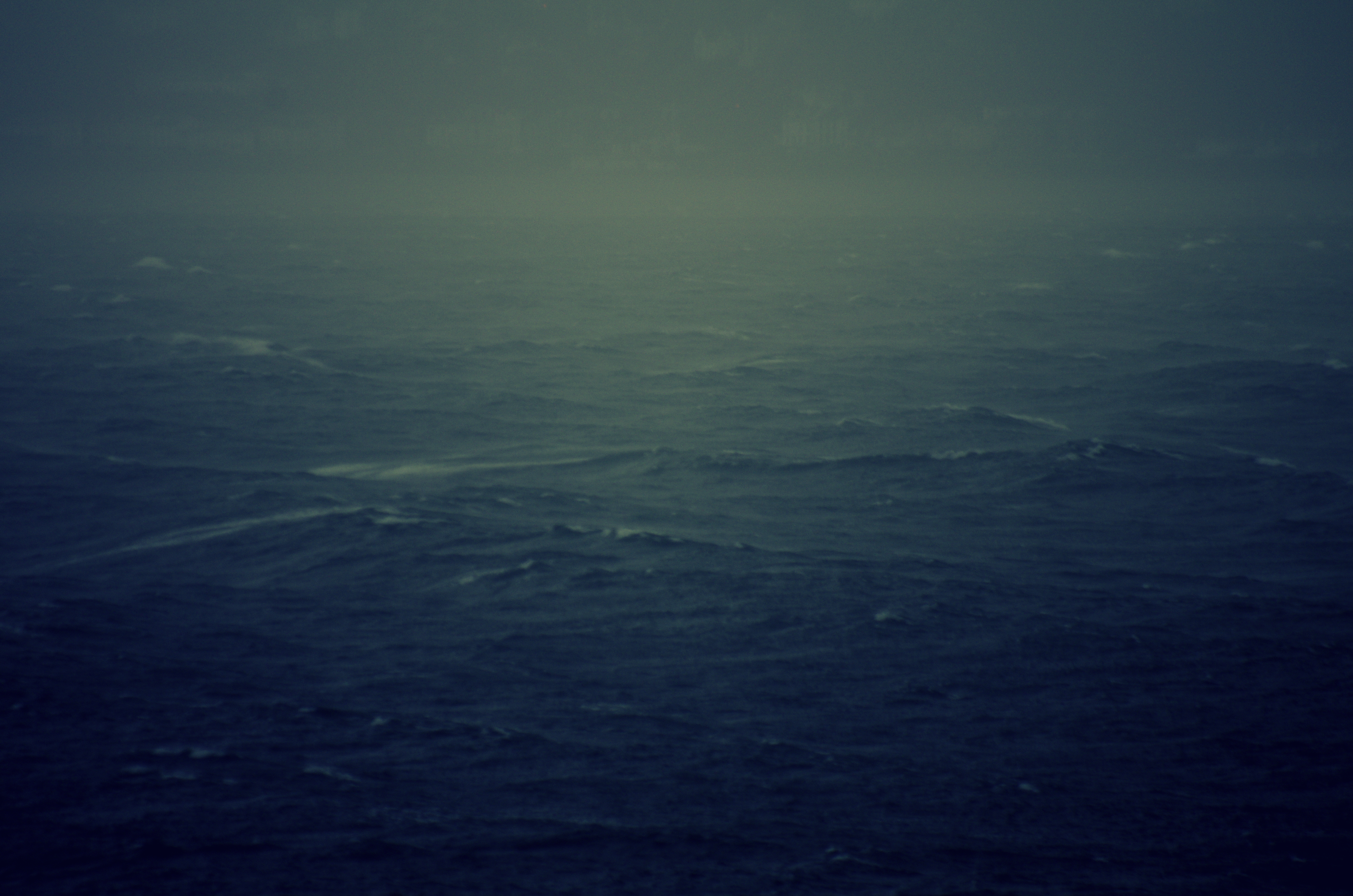
wild weather, the clyde

We are being treated to a series of storms up here in the north- It seems that we are having another one every second day. It has been quite a nature-show.

We all start to wonder about the over used phrase ‘global warming’. Is this the cause of the apparent increase in volatility of our Atlantic weather systems? Or is it just a variation within normal?

Whatever, the storms we complain about in the UK (even here on the Wild West) are nothing compared to the weather systems that kill thousands in places like the Philippines. Is there evidence that the increase in super storms might also be down to climate change?

There is some interesting discussion about all this on Climate Radio– reflecting on the Warsaw Climate Talks back in November.

The science is ever more categorical about the fact of climate change, but also about the potential for positive action;

The latest report from the Intergovernmental Panel on Climate Change released in October showed us that in the absence of an effective international agreement we are on a high-emissions scenario racing towards an inhospitable 5 degree world of escalating extreme weather. It also showed us that if we switch rapidly to a low-carbon pathway it is still technically possible to limit warming to two degrees centigrade.

The responsibility still lies primarily with us in the rich West. For example, the US are responsible for around a third of the worlds carbon emissions, despite the shift of much ‘dirty’ industry towards the East.

We might lose the odd fence, the odd roof tile. There is a lot more at stake.

The Dark Mountain Project…

dark mountian

I came across this project a while ago, and got very excited by it.

A lot of my writing on this blog has been an attempt engaged criticism with our economic/political/cultural malaise. I suppose I am seeking to make sense of where we are up to, and looking for what is changing, for good or ill. This means that some of the discussion in this blog has delved into the shady world of economics and that I find it impossible to avoid political statements.

But I am not an economist, or a politician. I approach these things as a writer, a poet, a person interested in theology. You will understand my interest then when I read about the Dark Mountain Project. This is how they describe themselves;

The Dark Mountain Project is a network of writers, artists and thinkers who have stopped believing the stories our civilisation tells itself. We see that the world is entering an age of ecological collapse, material contraction and social and political unravelling, and we want our cultural responses to reflect this reality rather than denying it.

The Project grew out of a feeling that contemporary art and literature were failing to respond honestly or adequately to the scale of our entwined ecological, economic and social crises. We believe that writing and art have a crucial role to play in coming to terms with this reality, and in questioning its foundations.

The first thing that the project did was to publish a manifesto, funded by a crowd funding appeal, which sets out what they are about. If this is of interest it is well worth reading the whole thing, but here are a couple of extracts that made me shout YES!

The myth of progress is to us what the myth of god-given warrior prowess was to the Romans, or the myth of eternal salvation was to the conquistadors: without it, our efforts cannot be sustained. Onto the root stock of Western Christianity, the Enlightenment at its most optimistic grafted a vision of an Earthly paradise, towards which human effort guided by calculative reason could take us. Following this guidance, each generation will live a better life than the life of those that went before it. History becomes an escalator, and the only way is up. On the top floor is human perfection. It is important that this should remain just out of reach in order to sustain the sensation of motion.

Recent history, however, has given this mechanism something of a battering. The past century too often threatened a descent into hell, rather than the promised heaven on Earth. Even within the prosperous and liberal societies of the West progress has, in many ways, failed to deliver the goods. Today’s generation are demonstrably less content, and consequently less optimistic, than those that went before. They work longer hours, with less security, and less chance of leaving behind the social back- ground into which they were born. They fear crime, social breakdown, overdevelopment, environmental collapse. They do not believe that the future will be better than the past. Individually, they are less constrained by class and convention than their parents or grandparents, but more constrained by law, surveillance, state proscription and personal debt. Their physical health is better, their mental health more fragile. Nobody knows what is coming. Nobody wants to look…

…We imagined ourselves isolated from the source of our existence. The fallout from this imaginative error is all around us: a quarter of the world’s mammals are threatened with imminent extinction; an acre and a half of rainforest is felled every second; 75% of the world’s fish stocks are on the verge of collapse; humanity consumes 25% more of the world’s natural ‘products’ than the Earth can replace — a figure predicted to rise to 80% by mid-century. Even through the deadening lens of statistics, we can glimpse the violence to which our myths have driven us…

…We do not believe that everything will be fine. We are not even sure, based on current definitions of progress and improvement, that we want it to be. Of all humanity’s delusions of difference, of its separation from and superiority to the living world which surrounds it, one distinction holds up better than most: we may well be the first species capable of effectively eliminating life on Earth. This is a hypothesis we seem intent on putting to the test. We are already responsible for denuding the world of much of its richness, magnificence, beauty, colour and magic, and we show no sign of slowing down. For a very long time, we imagined that ‘nature’ was something that happened elsewhere. The damage we did to it might be regrettable, but needed to be weighed against the benefits here and now…

…Creativity remains the most uncontrollable of human forces: without it, the project of civilisation is inconceivable, yet no part of life remains so untamed and undomesticated. Words and images can change minds, hearts, even the course of history. Their makers shape the stories people carry through their lives, unearth old ones and breathe them back to life, add new twists, point to unexpected endings. It is time to pick up the threads and make the stories new, as they must always be made new, starting from where we are…

We believe that artists — which is to us the most welcoming of words, taking under its wing writers of all kinds, painters, musicians, sculptors, poets, designers, creators, makers of things, dreamers of dreams — have a responsibility to begin the process of decoupling. We believe that, in the age of ecocide, the last taboo must be broken — and that only artists can do it.

Ecocide demands a response. That response is too important to be left to politicians, economists, conceptual thinkers, number crunchers; too all-pervasive to be left to activists or campaigners. Artists are needed. So far, though, the artistic response has been muted. In between traditional nature poetry and agitprop, what is there? Where are the poems that have adjusted their scope to the scale of this challenge? Where are the novels that probe beyond the country house or the city centre? What new form of writing has emerged to challenge civilisation itself? What gallery mounts an exhibition equal to this challenge? Which musician has discovered the secret chord?…

This response we call Uncivilised art, and we are interested in one branch of it in particular: Uncivilised writing. Uncivilised writing is writing which attempts to stand outside the human bubble and see us as we are: highly evolved apes with an array of talents and abilities which we are unleashing without sufficient thought, control, compassion or intelligence. Apes who have constructed a sophisticated myth of their own importance with which to sustain their civilising project. Apes whose project has been to tame, to control, to subdue or to destroy — to civilise the forests, the deserts, the wild lands and the seas, to impose bonds on the minds of their own in order that they might feel nothing when they exploit or destroy their fellow creatures.

Against the civilising project, which has become the progenitor of ecocide, Uncivilised writing offers not a non-human perspective—we remain human and, even now, are not quite ashamed — but a perspective which sees us as one strand of a web rather than as the first palanquin in a glorious procession. It offers an unblinking look at the forces among which we find ourselves….

So, uncivilised as it might be, let us rise to the challenge! They are having a meeting at Whiston Lodge in Scotland next year- I may even try to get along…

I noticed that one of my favourite musicians is involved in the Dark Mountain Project- the wonderful marmite on toast songwriter Chris Wood. I feel an uncivilised song coming on…

TFT goes all seasonal…

Last night we had our first proper Christmas celebration- a lovely evening with friends from our old ‘house group’- reading, praying, sharing gifts (a secret santa kind of thing) and even singing the odd carol. Michaela had planned a ritual involving listening to U2’s song ‘Peace on Earth’ (uncharacteristically dark and mournful for her!) and also re-lending some money our group had invested with Kiva.

Earlier we put up Christmas decorations. To prove it, here are some (slightly cheesy) photos!

Ad venting…

_IGP4087


We are all caught up in the Christmas madness again. Over the last few years I have railed and moaned about all the wasted money and fake snowflaking. I will not do that this year- partly because it has been said, but also because it is better to start closer to home.

However, I always find myself conscious of those who are outside the plastic bubble we make out of Christmas. I suspect that Jesus would be too. That is what this poem is about;


Ad vent


Who can ever expect the unexpected?

For what is hope to those from whom hope has been taken?

Why promise light but leave us in darkness?

I stand in this shit of tinsel and trimmings

Unmoved

The bells are not ringing

.

I live in the space between

What is

And what may never come.


Economic lie no. 5; competition can solve all our problems…

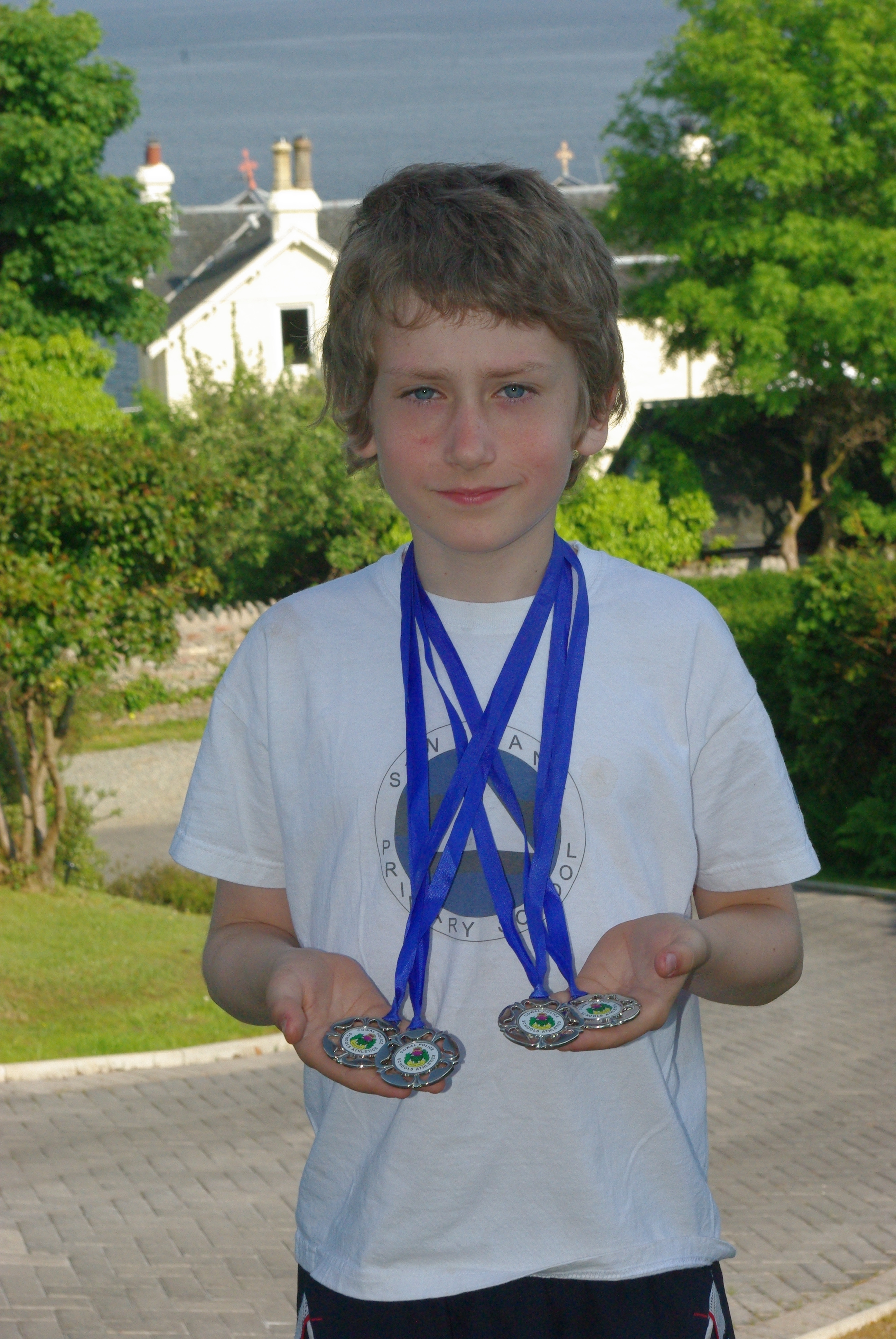
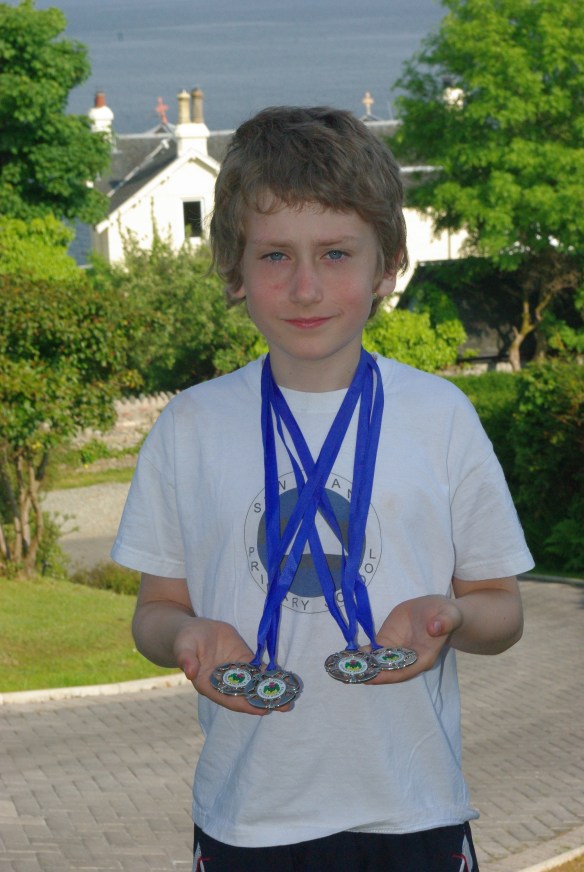
william, sports day

Some ideas are so central to our world view that everyone just assumes them to be fact. The domination of so called free market economics have forced quite a few of these kind of ideas into our thinking- one of them is the absolute necessity of competition.

Without competition we become flabbily inefficient, like some kind of state run farm in the old Soviet Union. Without competition we will never become the best that we can be, either as individuals or as countries. Without competition, we are told, all human endevour atrophies. All science is still born, all education is weak and pointless.

A what is more, without competition, there is no fun, no sport, no football no (Lord save us) cricket.

Be honest, at an economic level, do you think this is a closed argument? It might surprise you then to hear that there the value of competition in economics can be regarded as something of a mixed bag. Sure, it might drive down prices, but it might also drive down quality. It will ensure too that devices will lack interoperatability- each new produce will lead to the need for a new device- leading to huge waste and cost.

It might also deliver more choice for consumers (choice being another one of those current cultural holy cows) but this often leads to huge complexity, confusion and again much more waste.

What about competition pushing technology forward? We appear to be seeing unprecedented advances in computing at present. People are upgrading and renewing computers faster than ever before. Rather than buying a machine and using it for 8 years, people are renewing every 3 years, often due to the lower build quality, and cheaper parts end up breaking sooner. Again this is leading to huge wastage, not to mention the environmental impact of all those rare earth metals– which seem to be increasingly dumped in poor countries. There is now huge pressure to buy a new computer at the slightest problem, rather than fix the old one- they are cheap enough and new formats (netbooks, tablets, wrist) are made to look like essential accessories.
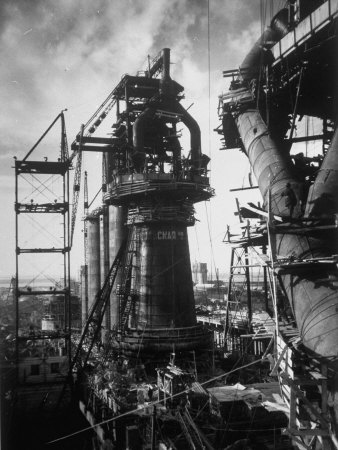
bourke-white-margaret-under-construction-blast-furnace-at-magnitogorsk-metallurgical-industrial-complex

Competition might also be regarded as aiming to destroy the opposition. So a powerful company (say IBM) might ensure that their computer platform overcomes other ones. They are removed from the marketplace, even if the technological solutions they contained were better, more useful. The story is often told of computers that used to boot up in seconds but the company that won the competition went a different route.

Am I suggesting that competition is bad then? It would be possible to make a strong case; what is the root cause for war if not competition? Does it not create far more losers than winners? Might competition not be dragging us headlong towards the end of our civilisation because of the damage being done to our environment? But this would be every bit as simplistic and one sided as the competition-is-always-good hegemony. What I would argue for however is the urgent need to look at the holy myth of competition and expose it to a measure of healthy doubt.

Clearly competition delivers huge benefits, but at what costs? I have mentioned potential environmental costs, but there are other more human ones too. The dream of success stalks us all- our huge need for measurable, quantifiable, objective evidence of our place in the human race. But in order for some to win, many must fail. And so we will do what we can to be one of the winners, not losers. However it has never been a level playing field; some will always be able to control the game on behalf of themselves and their families/friends. At present, by almost every measure, the world is providing less chances for those who have little than previously. We are discarding countless Einsteins, Beethovens, Marie Curies every day.

You could argue that even the costs of failure (our current banking crisis) has been outsourced. Those suffering from all the adversity programmes slashing our welfare, health and education budgets were certainly not the cause of the problem- in fact they were not even in the competition.

As someone who tries to follow after Jesus, it seems rather obvious that he did not seem to regard the winning of competitions as any kind of priority. In fact he seemed to favour the opposite; turning the other cheek, the first becoming the last, the lion lying down with the lamb. I know that neo-liberal economists do not tend to use Jesus as their major source material, but nevertheless it is strange how these ideas co-exist within so called Christian cultures. Perhaps the Jesus way of doing things is not really a good way for our children to get ahead?

Which brings me to my final point- the education of our children. When I was a kid back in the increasingly distant 1970’s, competition was bad. Enlightened parents and teachers tried to emphasise non-competitive games, encouraging co-operation and the shared experience. To be honest it was a bit shambolic, not much fun and the urge to compete was so strong in most of we kids that it was pointless anyway. Since then the whole attempt to imbue education with egalitarian principles has been totally abandoned in the UK. Competition is most certainly good- the more the better it seems, particularly under our current government.
school photo

The fear we live with as parents is that we do not skew the scales as far towards our own kids as we possibly can. The pressure is on to equip them for success in each and every exam, so that they can succeed in life. There is some evidence for the truth of this. Expensive private education hot-houses kids to exam success, and privately educated kids crowd the top professions in this country, particularly the political class.

Here is the rub though- as we start to look back on lives (rather than imagine forward into the lives of our kids) what successes do we most appreciate? What gives us most pleasure, satisfaction? Which of them might be regarded as having been worthwhile- not just for ourselves but for the world we were part of? If you are like me, this has little to do with money or exam results or career. It is much more to do with family, friends, community, creativity, love, kindness.  Is it possible that competition mitigates against some of this? Is it not at least a distraction, or perhaps given too much weighting in the choices we make for both ourselves and our kids?

Competition is saving us. Competition is killing us. Both are true, and neither.

Competition is overvalued, and needs to be subordinate to grace.