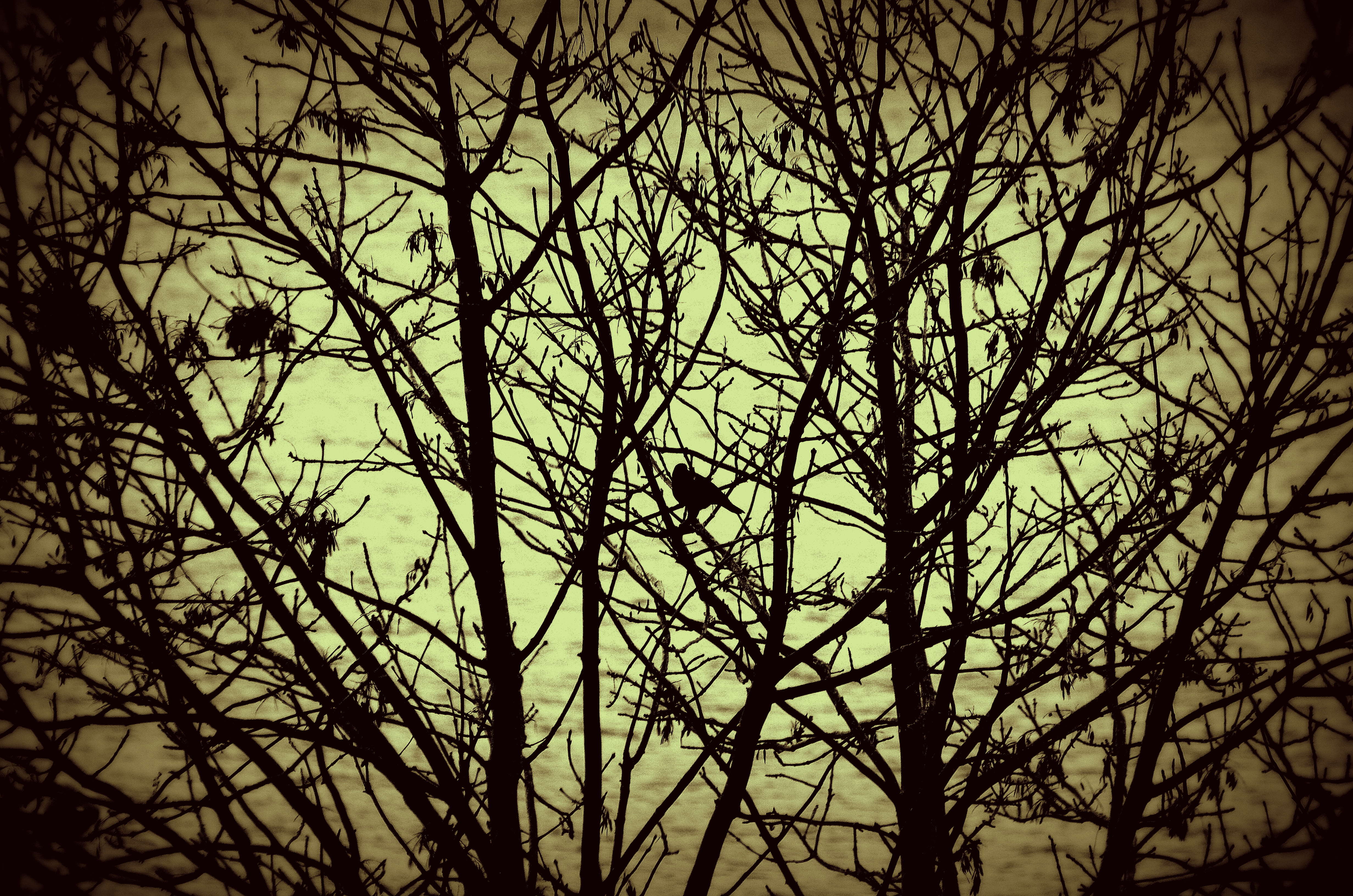
Bird
Sometimes I’m the bird
Sometimes the tree
Sometimes cold wind
Blows right through me
Sometimes the song
Comes steady and strong
Sometimes all I can do
Is keep
.
Holding
.
On

Bird
Sometimes I’m the bird
Sometimes the tree
Sometimes cold wind
Blows right through me
Sometimes the song
Comes steady and strong
Sometimes all I can do
Is keep
.
Holding
.
On

I have spent much of my adult life looking upwards towards mountains, longing to be lost in the shape of them. This started out in the crowded landscape of the Peak District, chewed and nibbled by quarries and industry, leaving only the millstone edges and the heavy dark peak with their wet peat wrapping of dead forest. It progressed to the cosy mountains of the Lake District– bare crags and scree spitting like broken teeth from the bare grasslands. Nowadays I have the high places of Scotland, path-less and unforgiving, untidy with scrub, alive with deer and ticks.
What I am just coming to realise is that these beautiful landscapes are anything but wild. Sure, it was more obvious with the first two of my places of adventure, but it is even true of Scotland. George Monbiot (rapidly becoming a real hero/prophet to lefties like me) is about to publish a book on Re-wilding and the impact of farming practices on our ecology. Once you look at the British landscape through these eyes, you will never quite look at it the same way again.
Could it be that those rolling hills and high mountains that have beckoned me all my life are actually barren wastelands created by the depletion of almost every indigenous ecosystem? A wasteland created and sustained above all by our agricultural practices and supported by vast amounts of public money in the form of subsidies?
Monbiot suggests that we do not see this because of the myths that we have adopted as fact about our landscape- myths that are so powerful that they have achieved some kind of stranglehold on politicians, ecologists and members of the public alike. Here is Monbiot in an interview with Steve Wheeler on the Dark Mountain blog;
Yes, that’s right, and in fact shifting baseline syndrome – the idea that what you experienced in your youth is the normal state of the ecosystem, and so conservation becomes an attempt to recreate the ecosystems that existed in your youth, oblivious to the fact that those ecosystems were themselves highly depleted – it’s that syndrome that is responsible for the dire state of conservation in this country. In some other parts of the world, too, but Britain is a particularly extreme case. There’s no other place on earth where conservationists are quite so frightened of nature, and where they try to such an extent to manage and suppress natural processes. There’s nowhere else where conservation so closely resembles a slightly modified form of farming, and that’s because conservationists, like everyone else, appear to be profoundly ignorant of what was here before farming, and what could be here without farming, so they focus on the species that have happened to survive 6,000 years of farming – which happen to be tough, weedy, rapidly reproducing, ‘R-selected’ rather than ‘K-selected’ in the jargon of ecologists, rather than the species that did live here and could live here again.
SW: It struck me, to be fair to some of these conservationists, that there’s a strong psychological reason when they talk about the dangers of undergrazing and so forth: there is a fairly messy phase that the ecology would need to go through before it became a rich, old growth forest, and that looks like stinging nettles or bracken, which to a lot of people elicits a reaction of: ‘Oh look, these weeds are coming here, this is a less beautiful landscape, this is less useful for the needs we wanted it for’. There’s a lack of faith and trust in the succession of species – that one stage needs to happen first and then the next colonisers will come and the next.
GM: Almost every stage is a stage of increasing richness over what was there before. Some of the upland sites are so impoverished, have so little life, that any recovery in terms of scrub, bracken, brambles, would actually mean an increase in biodiversity. It’s fascinating how almost every aspect of the discussion about what we’re trying to conserve and why has been completely distorted by our perceptions of the present overwhelming the past and the future.
For instance, conservationists will, with a straight face, assert that their grazed open grasslands are more biodiverse than woodland. You say ‘What do you mean?’ and they say ‘They’re more biodiverse’. And you ask which taxa they’re talking about and the answer is ‘flowers and butterflies’ – it’s always flowers and butterflies! So you say, ‘Yes, strange to relate, grasslands are more diverse in non-woodland species than woodlands are’. But they don’t see it, and they genuinely believe that more flowers and butterflies equals greater biodiversity in total, and ignore all the other taxa, whether they’re beetles, moths, spiders, mammals, birds, fungi… trees! – whatever they happen to be. All of those are ignored, because they only happen to see biodiversity in two groups.
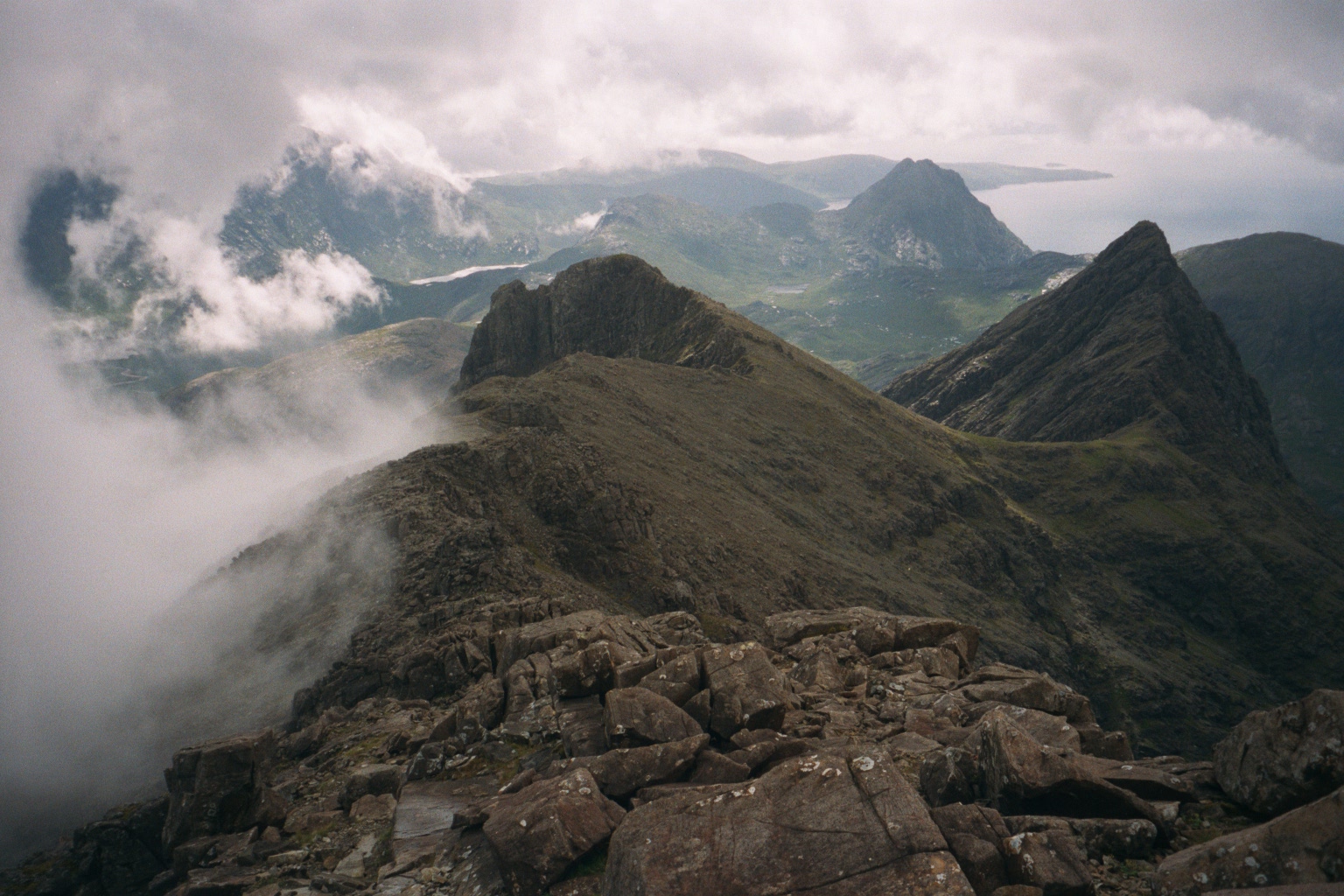
Does it matter then? Are these places not still beautiful, vibrant, compelling? To stand high on the Cuillin ridge with clouds lapping your feet on one side, an clear air the other (as above) is still transcendent. The reality Monbiot wants to wake us up to however is that we have stopped looking at what we are losing. We have become transfixed by the ‘conservation’ of certain totemic species which we have preserved, even re-introduced; sea eagles, otters, beavers, salmon. At the same time the diversity of the wider eco-system is in terrible decline;
SW: You’ve been at pains to point out that you want to rewild the uplands but leave the lowlands for agricultural practice – albeit perhaps not as currently practiced, but generally. Do you think that kind of agriculture is sustainable?
GM: Well, it depends what you mean by sustainable, which is a term that has become almost meaningless. Can it be sustained? Probably, yes, if the phosphate doesn’t run out, which is probably a couple of hundred years off. But at great cost to the natural world, and already we see that cost in terms of the extraordinary losses of wildlife in almost every nation on earth, including our own. A remarkably rapid loss, such that even since my youth – which admittedly was quite a long time ago – there have been profound changes.
I remember when the riverbeds were so thick with eels migrating to the sea in the the autumn that they looked almost black, and now the european eel is a highly endangered species, there are very few of them left – it would have been inconceivable to me if someone has said that that would be the case. For some 10,000 years following the ice age there was this massive migration, and now it’s come to an end, just about. I remember on summer nights, the moths would pack the windows, so that you could scarcely see out, of all sort of colours and shapes and sizes, which was a wonderful adventure for a boy like me, just to log the species stuck to the window, trying to get in. Fields used to be covered in white mushrooms, all gone now, and that’s just in my lifetime.
And as I say, that was already a highly depleted ecosystem; but it’s been so radically depleted in that short amount of time, and largely by agriculture, so it’s plainly unsustainable in terms of maintaining even the barest scrapings of life. It might be sustainable in terms of preserving food production, but it depends where you are, we’re now seeing in the interior of the United States large areas rapidly becoming unsuitable for agriculture through a combination of climate change, aquifer depletion, and overuse of the soil.

If Monbiot is right- then what should we do about it? His radical suggestion is that we change the subsidy system away from supporting upland grazing towards re-wilding; simply put, we get out of nature’s way. Switch the subsidies towards permaculture, with proximal zones where we do nothing.
Farmers will not be pleased- many of them anyway. Some are living in marginal subsistence situations already. Others are reaping vast profits from the subsidy system.
How about people like me for whom our ‘wild’ places are a poetic adventure play ground? We might need to get used to far less tidy landscapes- I can tell you that it is MUCH easier to walk and climb in the Lake District than it is in Scotland- mostly because the former is much less ecologically diverse (even though Scotland is heading in the same direction.) A walk up Cat Bells with the crowds in their creaky new Gore Tex will convince you of this if anything will;

It is not that we did not enjoy the stiff climb, the uninterrupted views out over Derwent Water, the sound footing on constructed paths. However, we did not consider the bare slopes, accommodating of our exercise as they were, to be anything other than normal- which perhaps is exactly what they were.
Wilderness.
What does it mean to us? Is it worth fighting to preserve? Do we think that our current economic systems can ever be trusted to do this?
You can tell I am not sleeping much at the moment…
I decided to play with the layout of TFT. The old wordpress theme (Chaotic soul) has been in place for over 5 years so it was time for a change. I am still not sure about it all though- I was trying to tidy it up, make it look more on trend, but seem to have found a new theme then customised it more or less to how it was!
What do you think? Better? Worse?

I have been thinking a lot about revolution- not the violent bloody guillotine kind, more the Jesus kind- the explosion of light in the middle of our thinking that means that living the old way seem ridiculous.
I worry that it is too late for me and for my generation. We lost our passion, our ideology, our religion. It was already being poisoned by toxic consumption when the wars in the Gulf killed it dead. What replaces this for most of us is that most pernicious anti-doctrine called cynicism. Those of us in whom some old light survives are tired and so easily distracted by trivia, sport, shiny product.
The gap between hope and aspiration is a dreadful one. We hoped for a world that was not being eaten away piece by piece by the rich North at the expense of the poor South. We hoped for societies who are learning to find harmony, community, justice, compassion. We hoped to break free from the cycles of materialism that corrupt and commodotise the lives of rich and poor (although particularly the rich.) We hoped for so much more than plastic life with built in obsolescence.
Instead we accommodate. We compromise our compromises. We watch TV. Our lives slip by with advert breaks. In an age of total communication I often find myself with three screens flicking three different sets of information at me at once. I outsourced my humanity into cyberspace; I live only on screen now.
Most of us know this to be true, and so we find ourselves on an instinctive search for something with meaning; mountaintop experiences, adrenaline rushes, screaming rock concerts. But because of the internet, because we are tired, distracted and outsourced, most of the time we look for meaning via our screens. Like the one you are reading this through right now.
And there is meaning/truth/beauty out there. Facebook is full of it- all those video clips, quotations, posters that get posted and re-posted millions of times. Clips like this one;
Don’t get me wrong- this is lovely. It might even contribute to making shifts in people minds towards grace. But at the same time do we really think that these kinds of formats can bridge the gap between hope and aspiration that I mentioned above?
You may also point me towards the way that savvy campaigning organisations have used social media platforms to get their messages across- flashmobs, direct protesting, bombarding of websites, on line petitions etc.
But if we are honest, as soon as we hit ‘share’ on most of these posts, we kind of think that our job is done right? As soon as I have written something full of faux-pathos on this blog I feel like I have liberated a captive or two, fed some hungry child or restored their sight.
But nothing has changed. Not really.
There was a great interview with Uruguayan President José Mujica in The Guardian today. He is an old revolutionary Marxist, friend of Che Guevara, who is now the leader of perhaps the most progressive country in South America. This is from the article;
“I’m just sick of the way things are. We’re in an age in which we can’t live without accepting the logic of the market,” he said. “Contemporary politics is all about short-term pragmatism. We have abandoned religion and philosophy … What we have left is the automatisation of doing what the market tells us.”
The president lives within his means and promotes the use of renewable energy and recycling in his government’s policies. At the United Nations’ Rio+20 conference on sustainable development last year, he railed against the “blind obsession” to achieve growth through greater consumption. But, with Uruguay’s economy ticking along at a growth rate of more than 3%, Mujica – somewhat grudgingly, it seems – accepts he must deliver material expansion. “I’m president. I’m fighting for more work and more investment because people ask for more and more,” he said. “I am trying to expand consumption but to diminish unnecessary consumption … I’m opposed to waste – of energy, or resources, or time. We need to build things that last. That’s an ideal, but it may not be realistic because we live in an age of accumulation.”
Asked for a solution to this contradiction, the president admits he doesn’t have the answers, but the former Marxist said the search for a solution must be political. “We can almost recycle everything now. If we lived within our means – by being prudent – the 7 billion people in the world could have everything they needed. Global politics should be moving in that direction,” he said. “But we think as people and countries, not as a species.”
Mujica and his wife chat fondly about meetings with Che Guevara, and the president guesses he is probably the last leader in power to have met Mao Zedong, but he has mixed feelings about the recent revolts and protests in Brazil, Turkey, Egypt and elsewhere. “The world will always need revolution. That doesn’t mean shooting and violence. A revolution is when you change your thinking. Confucianism and Christianity were both revolutionary,” he said.
But he is cynical about demonstrations organised by social networks that quickly dissolve before they have a capacity to build anything lasting. “The protesters will probably finish up working for multinationals and dying of modern diseases. I hope that I am wrong about that.”
The revolution does not need tanks to break down it’s barricades- those who want it to fail only need to sit back and watch it become tired, distracted, outsourced.
I hope I am wrong too. I suppose that the very presence of leaders like Mujica gives us hope, even if he is 78.
I hope that there are still people who have the courage to act as well as to observe quirky three minute clips on Youtube.
… and when those days come, reach for something – anything – by Mahalia Jackson.
This extraordinary woman chose to sing Gospel all her life- she could have sung whatever she wanted, with her incredible powerful voice. She would stand there, dressed like someones grandmother complete with church-hat, and then let rip. It was a force of nature that could break hard men somewhere inside. When asked why she sang Gospel she said this;
I sing God’s music because it makes me feel free,” Jackson once said about her choice of gospel, adding, “It gives me hope. With the blues when you finish, you still have the blues.
She sang before Martin Luther King gave THAT speech (and at his funeral) and her voice has power and authority even now that successive musicians have tried to borrow from- and mostly failed.
Today I need some Gospel music. Thanks Mahalia.

There are some things that all the worlds religions kind of agree on- almost as if in the distillation of spiritual wisdom of the the millennia, certain concepts were inescapable. One of these is our attitude towards possessions. Quite simply, they are more often than not regarded as an obstacle to enlightenment, not a path towards it.
Perhaps the most hard core religious response to the accumulation of wealth and possessions was Jesus- we all know the biblical passages and the perenthetical BUT we have added on to each and every one of them. It remains one of the great human paradoxes as to how Consumer Capitalism has been able to grow in a western culture dominated by Christianity- not just in spite of our faith, but almost because of the way we live it out. We have come to believe that Jesus is at heart a white middle class respectable home owner.

There was a brilliant article by George Monbiot in The Guardian yesterday that opened all this up again for me. He took a long look at consumerism, sharing some research about the impact of materialism on well being, sociability and mental health. He pulls no punches; Worldly ambition, material aspiration, perpetual growth: these are a formula for mass unhappiness.
Monbiot quotes a lot of research into the impact of materialism- here are a few examples;
There has long been a correlation observed between materialism, a lack of empathy and engagement with others, and unhappiness. But research conducted over the past few years seems to show causation. For example, aseries of studies published in the journal Motivation and Emotion in July showed that as people become more materialistic, their wellbeing (good relationships, autonomy, sense of purpose and the rest) diminishes. As they become less materialistic, it rises.
In one study, the researchers tested a group of 18-year-olds, then re-tested them 12 years later. They were asked to rank the importance of different goals – jobs, money and status on one side, and self-acceptance, fellow feeling and belonging on the other. They were then given a standard diagnostic test to identify mental health problems. At the ages of both 18 and 30, materialistic people were more susceptible to disorders. But if in that period they became less materialistic, they became happier.
In another study, the psychologists followed Icelanders weathering their country’s economic collapse. Some people became more focused on materialism, in the hope of regaining lost ground. Others responded by becoming less interested in money and turning their attention to family and community life. The first group reported lower levels of wellbeing, the second group higher levels.
These studies, while suggestive, demonstrate only correlation. But the researchers then put a group of adolescents through a church programme designed to steer children away from spending and towards sharing and saving. The self-esteem of materialistic children on the programme rose significantly, while that of materialistic children in the control group fell. Those who had little interest in materialism before the programme experienced no change in self-esteem.
Another paper, published in Psychological Science, found that people in a controlled experiment who were repeatedly exposed to images of luxury goods, to messages that cast them as consumers rather than citizens and to words associated with materialism (such as buy, status, asset and expensive), experienced immediate but temporary increases in material aspirations, anxiety and depression. They also became more competitive and more selfish, had a reduced sense of social responsibility and were less inclined to join in demanding social activities. The researchers point out that, as we are repeatedly bombarded with such images through advertisements, and constantly described by the media as consumers, these temporary effects could be triggered more or less continuously.
A third paper, published (paradoxically) in the Journal of Consumer Research, studied 2,500 people for six years. It found a two-way relationship between materialism and loneliness: materialism fosters social isolation; isolation fosters materialism. People who are cut off from others attach themselves to possessions. This attachment in turn crowds out social relationships.
As we read these studies, we instinctively know them to be true; there are no surprises here. Perhaps this is because of some kind of spiritual residue left in our psyches from all those religious people who made these discoveries previously. Perhaps also each generation has to learn it anew.
However, we in the West are more than pilgrims who have wandered off into some consumer-bog, we have become hostages.
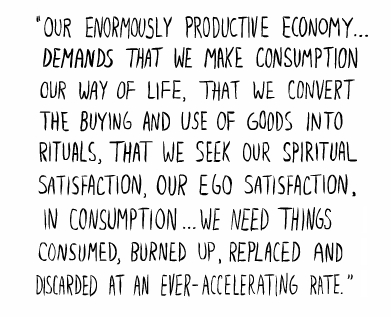
A few years ago I read Pete Ward’s excellent book ‘Liquid Church’, in which he suggested that ‘rather than condemn the shopper as materialist Liquid Church would take shopping seriously as a spiritual exercise.’ What Ward was seeking to do was to get the church to engage fully with the culture we are part of- to flow in its veins. I found this idea very helpful at the time- it enabled me to move from a fixed blinkered position which saw culture dominated by consumerism as universally bad (despite my full participation within it) towards a deliberate attempt to read culture through its patterns of acquisition. So if you look hard at lots of the advertisements we are bombarded with you will start to see the yearning behind the selling. What the advertisers are trying to do is to connect us with something beyond the physical aspect of the object, into the meaning it brings into our lives- so a car is not a good piece of engineering, it is a symbol of freedom, of self expression, of celebration of our lives.
Having understood this however; having looked again at our culture through its predominant consumer characteristics, where does this take us? I am more and more convinced that it takes us towards one thing only- the need to become engaged critics. Enraged critics even.
Let us turn over some tables in the temple.
Which brings us to Christmas again.
I know, I know, the calls to make Christmas less consumer-driven are getting a bit old. I have been banging on about it on this blog for years. Lighten up a little! Have some fun! There is nothing wrong with spending a bit more at Christmas after all.
Except, as our religious forefathers knew, and as Monbiot has underlined, let us not kid ourselves that any of this is making us happier. Let us not suggest that buying lots of stuff (even for others) is making us more sociable, more loving, more empathetic, more caring.
Rich and poor alike are caught up in this addictive destructive cycle. What would it mean to be clean?
What would it mean to be free?
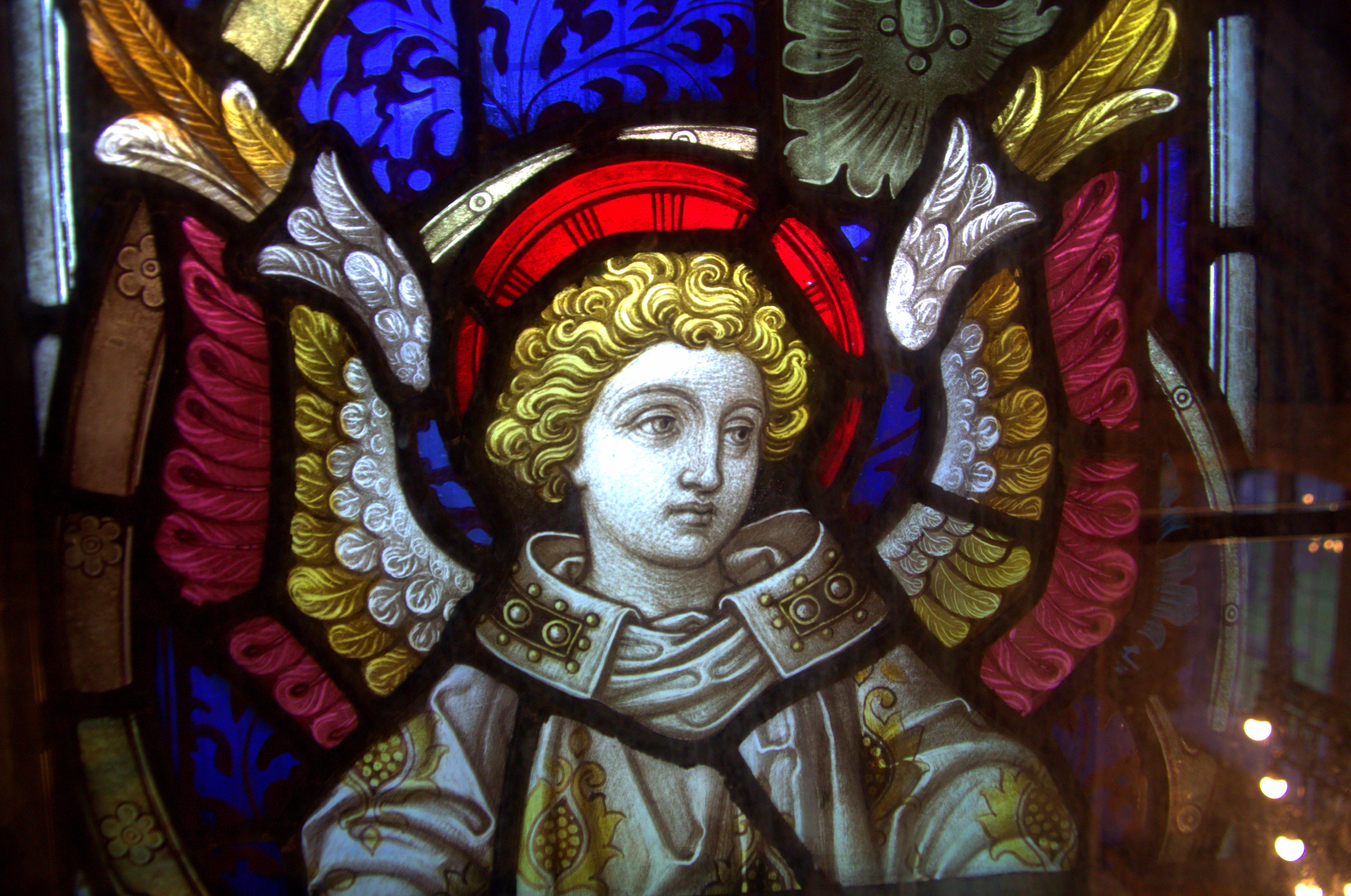
from The Message
5-8 Yet we’ve so narrowly missed being gods,
bright with Eden’s dawn light.
You put us in charge of your handcrafted world,
repeated to us your Genesis-charge,
Made us lords of sheep and cattle,
even animals out in the wild,
Birds flying and fish swimming,
whales singing in the ocean deeps.
9 God, brilliant Lord,
your name echoes around the world.
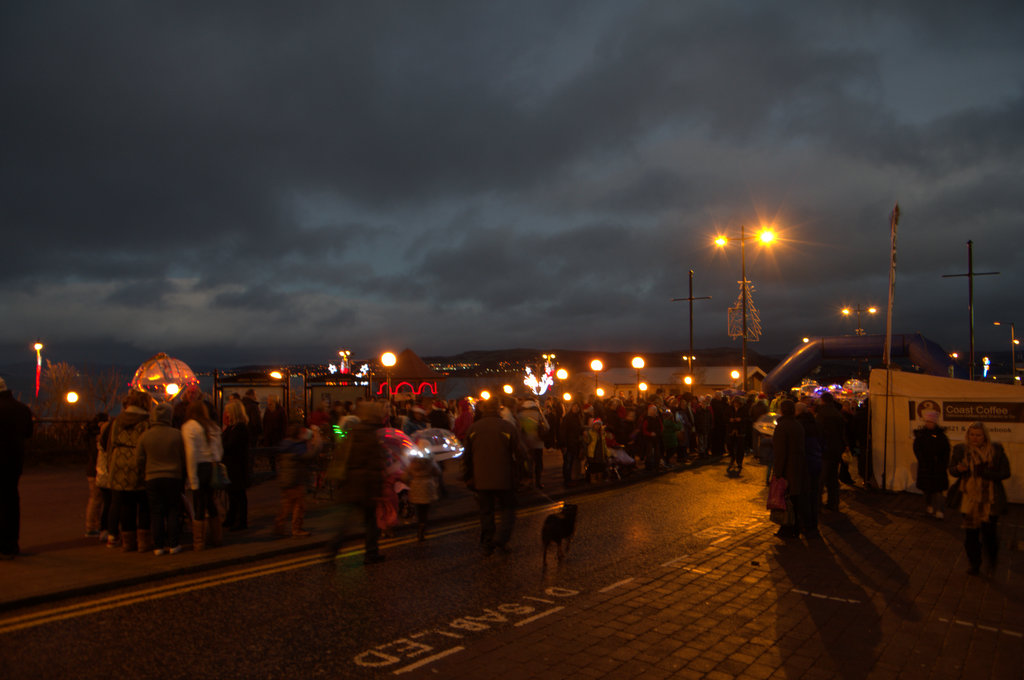
Following on from yesterdays post, I sent a letter to our local paper. This is not something I make a habit of- in fact this will only be the second such letter I have sent. The previous one was not published- and was triggered by the same issue.
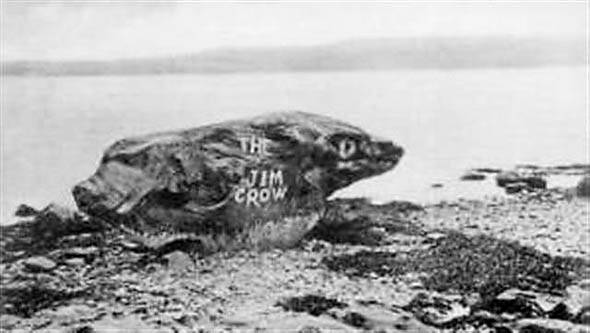
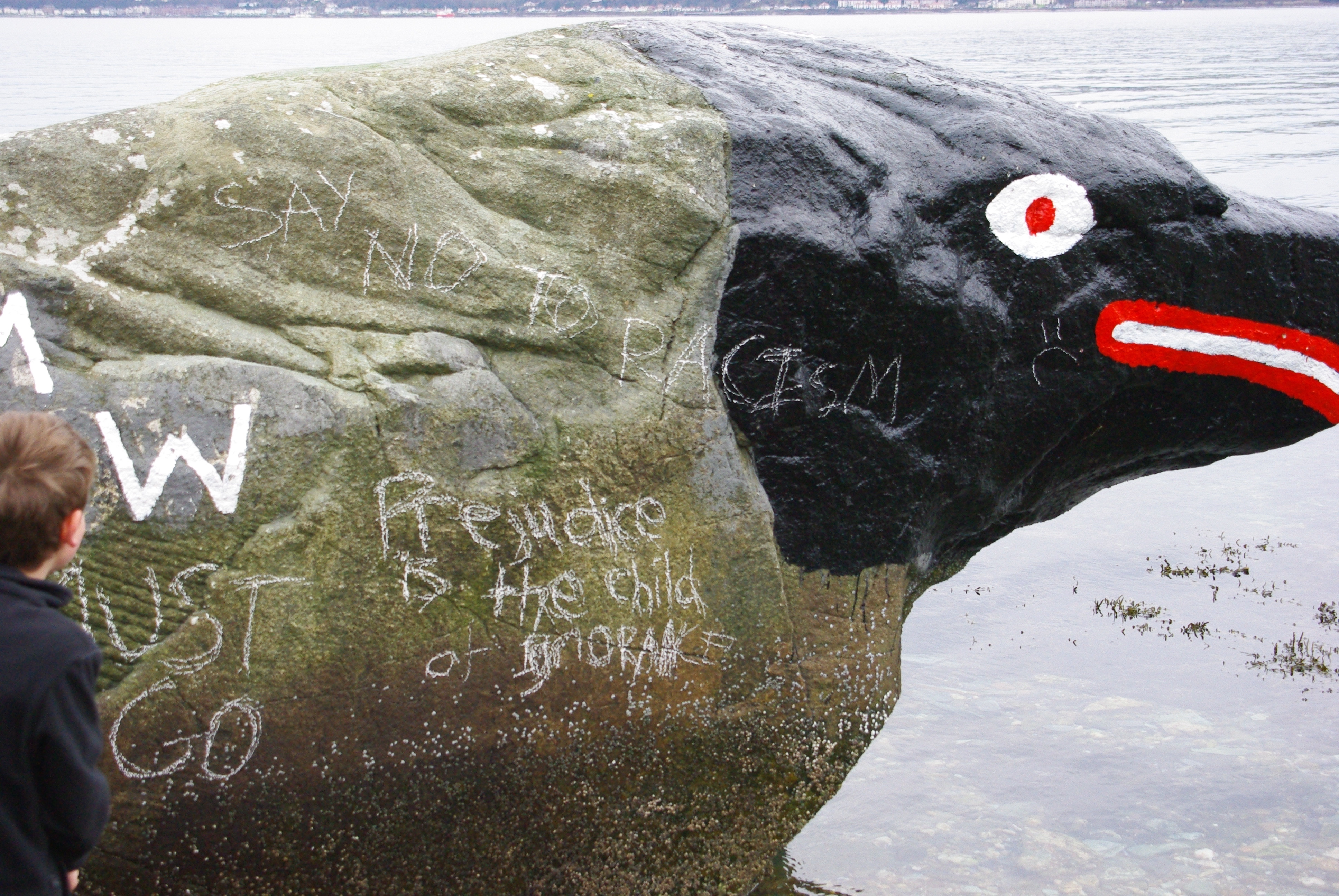
At that point I took exception to a rather poorly researched story in the paper after the rock’s Golliwog face has been painted over by a protester. (NO- it was not me, although some of me wishes it was.) It made no reference whatsoever to the Blackface tradition, nor to the objections raised to the decoration on the rock by others, not least the Racial Equality Unit.
Today I sent this to the editor. I am expecting a backlash- lots of people will be very angry. However, I walk past this stone several times a day, and each time it makes slightly ashamed.
Letter for Dunoon Observer
6.12.13
Dear Editor
The death of Nelson Mandela seems like a very good time to take another look at some of our own racist history. In doing so we very soon have to concede that the prosperity of this area owes much to international trade; shipping, sugar, tobacco and slavery. It is to the credit of Britain that as well as participating in slave trading we did much to end this practice at the beginning of the 19th Century. However, many would argue that we replaced slavery with Colonialism.
Alongside this, our attitudes towards the non-white people of the world has often been to view them as less-than. We supported this with entrenched prejudice and even with the so called ‘science’ of eugenics. These ideas found expression in our politics (segregation, apartheid) and also in our popular culture.
One of the most pervasive cultural carriers of this prejudice were the ‘Blackface’ caricatures that developed the world over- the Golliwogs, the Minstrel shows, Zvarte Piet and Jim Crow. Understanding how these have been a channel for racism is not easy, but they are commonly understood to allow culture to reduce the feared outsider to a figure of derision. A feckless, chicken loving, sexualised layabout who steals washing from the line, but is good at singing and dancing.
Which brings us to our own Jim Crow Rock, Only in Argyll does anyone seriously suggest that this has no racist origins. The Jim Crow museum in the USA expressed horror, the Racial Equality Unit is clear about its ‘Blackface’ beginnings, outsiders stand and look puzzled. When confronted with these outside perspectives, our response has often been to become angry and defensive, refusing to engage in any real discussion about the origins of the rock.
So, here is a suggestion; as a memorial to the late great Nelson Mandela, why do we not invest in an information board on the foreshore next to the rock? It could say some of these things;
It could acknowledge the local controversy, and disagreements about the origins of the decoration. It could deal with the role of the Clyde in the slave trade. It could talk about Blackface caricatures and the minstrel shows that were performed here in Dunoon’s heyday. It could talk about the Jim Crow Laws in America, and how they enforced segregation, prejudice and apartheid.
Above all, it could transform a local curiosity from something that is at best controversial (if not downright offensive) into something that we can all feel pride in the ownership of once more.
Yours sincerely
Chris Goan
Hunters Quay
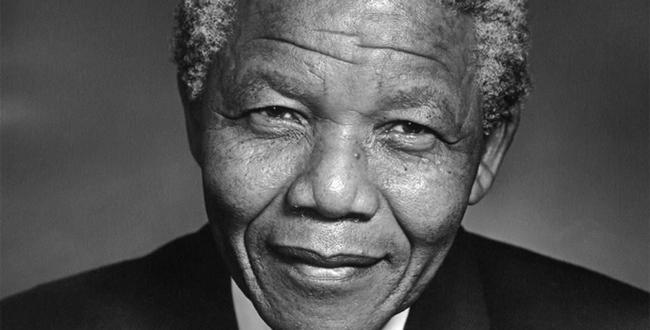
The great man is dead, and world leaders are tripping over themselves to cosy up to his memory. In the process, he becomes like some kind of neutral mirror in front of which others preen themselves.
He is a freedom fighter, a champion of western capitalist democracy. (Forgetting that he was also a communist revolutionary.)
He is the man of peace who chose the path of non resistance. (Forgetting that despite all the pressure to do so, he never renounced the need for an armed struggle against the state.
He is the icon of international statesmanship by which all others are measured. (Forgetting that a few short years ago many regarded him as a terrorist- including much of the Conservative government under Thatcher.)
He was the civilised face of Africa, the educated black man. (Contrast this with the way that our newspapers talk about all other black politicians in South Africa since.)
None of this should diminish the man, but it might be regarded as creating a degree of confusion, particularly as we consider the degree to which the racism that kept Mandela locked away in prison for so many years has really changed. Did his release and subsequent elevation to international sainthood mean that the battle was won?
We live in a world in which racism, of both the direct and indirect kinds, is alive and well. We still live in fear of the outsiders, who will take our jobs, ruin our NHS, steal our homes and drain our resources. When these outsiders are black or Asian, this seems to add a higher degree of concern. Australians have almost banned non-white immigration. Unfair trade relationships ensure that the white West will continue their economic ascendancy at the direct cost of the poor south- who send us their minerals and produce our goods for us. The abolition of most formal apartheid systems (African, American) has done little to change the distribution of wealth and power between black on white people, both within societies and across nations. Beware those characterisations of passive-Mandela that allow us to forget this- it does the memory of the great man no favours.
We the privileged have a reciprocal responsibility to act out the gift of it with grace. Part of this might be to confront the injustices that we inherit- both to understand the cost of this privilege, but also to confront our propensity towards self justification. This seems all the more important as the people in power line up to put a slice of Mandela in their top pockets.
In the spirit of ‘minding our privilege’ (a rather useful American phrase) I was reminded today of two other stories that carry more than a little of the old racist divisions. The first one is this one, concerning the tradition of Zwarte Piet or ‘Black Pete’ in Dutch traditional Christmas celebrations.
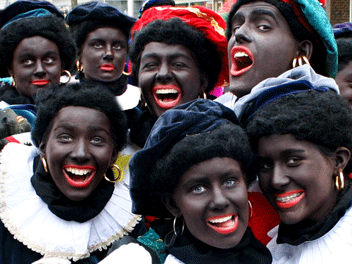
As the Netherlands gears up for its annual Saint Nicholas celebration on Friday, the festivities are in danger of being overshadowed by a growing row over his helper and clown, “Black Pete”.
While families exchange presents and eat cakes to welcome Santa Claus’s slimmer and more sober ancestor, criticism of the crude depictions of his sidekick, known locally as Zwarte Piet, has reached the United Nations.
The clown is usually portrayed by a white person in blackface, who goes around offering sweets to good children and, according to legend, threatens to collect naughty ones in a sack to be taken to Zwarte Piet’s home in Spain. But he is increasingly reviled by critics as a racist relic of Christmases past.
Momentum has been growing against the custom, in part thanks to campaigners such as Quinsy Gario, a poet and activist born in the former Dutch colony of Curaçao who was arrested two years ago for wearing a T-shirt with the slogan “Black Pete is racism” at a Saint Nicholas parade in the city of Dordrecht. Gario’s message is that the tradition perpetuates crude stereotypes.
From The Guardian.
The criticisms of Zwarte Piet have stung the Dutch, 91% of whom seem to want to keep it as part of their tradition, and will say it is harmless, and the black face is just because Piet comes down chimneys. However, the roots of the tradition seem to go back to ideas of good (St Nicholas) overcoming evil, and chaining the devil to service. The Devil of course, is African. He is less-than-human, a worthy recipient of our projected fears, hidden behind all the grease paint and derision.
Zwarte Piet reminds me very much of another blackface image that is a lot closer to home- about 100 meters in fact, the controversial Jim Crow rock;
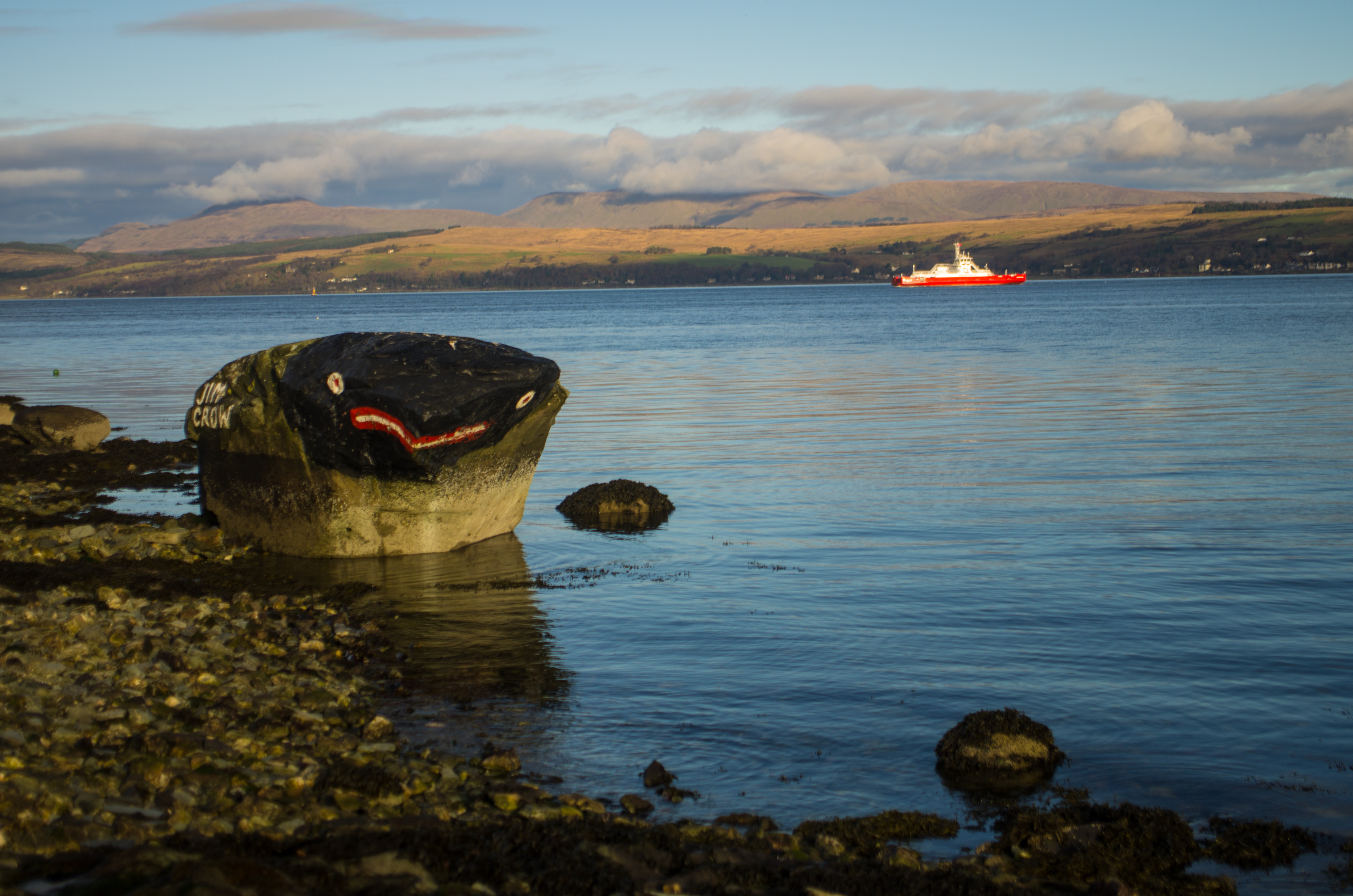
The blackface/Golliwog imagery of Jim Crow and Zvarte Piet are a direct link with the racism that justified slavery, that built the wealth of the West, that created colonialism, that gave birth to apartheid, and that Nelson Mandela gave his life to confront head on.
Perhaps a fitting memorial for his death might be to take another look at this history, and to mind our privilege.
Dunoon folk- I have said this before, and I respectfully say it again;
“… there can be no doubt that the painting of the ‘face’, with its exaggerated red mouth, is a typically caricatured image of a black person, as popularised by the American entertainer T.D. Rice in the nineteenth century. […] I feel certain that black visitorsfrom outside would see this as somewhat insulting […] as a derogatory reference to their skin colour and origins.”
So – are we sure that this is just a little bit of harmless local colour? And even if it is just that- are we really comfortable with the associations that are being made, and the offence that this might carry to the descendants of slaves who had to fight on for generations against the oppression of the Jim Crow laws?
If the rock is to stay, then we need to tell these stories.
If we are to keep the face on the rock- then let us also put a big sign on the foreshore dealing with the darker side of our past…
Check out this strangely moving video from the Abandoned Scotland website.
As a meditation on religion in the West, it is quite something…
The glimpses of the outside. The cross on its stained wall. The stained glass with the face of Jesus smashed.
 this fragile tent