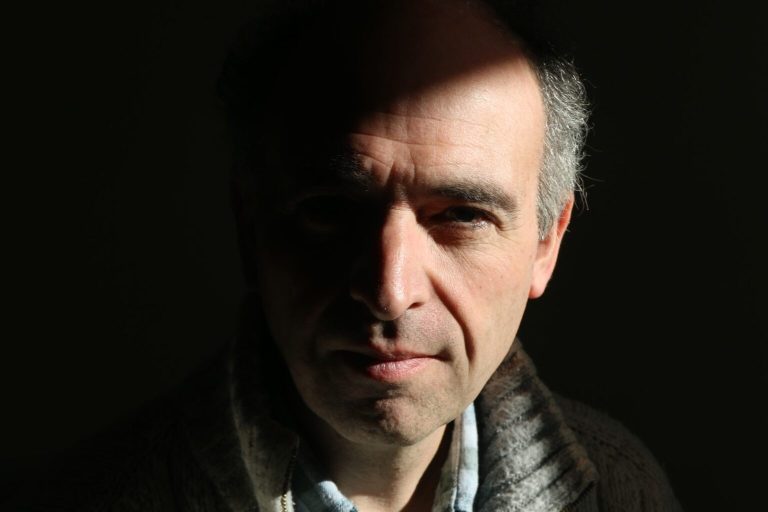
The other day I had the great pleasure of making a journey into deep Argyll, over Loch Fyne by ferry (whilst it was still dark) then up to the Isle of Seil, to meet with poet, novelist and artist Kenneth Steven. The pretext of this visit was to record a podcast, but the truth is, it was about time we met! Two blokes, both about the same age, both living in Argyll, both writing poetry inspired by the spirituality of wild places – oh and we have connection to Iona and the Iona community too. How was it that we did not already know each other?
Kenneth and his wife Kristina were the perfect hosts- despite an earlier failed attempt to record over the internet which I messed up by getting the time wrong! They live in a beautiful place and I very much enjoyed our chat. We hope you do too!
You can listen on Spotify, Apple or Youtube – Here is the spotify link;
If you don’t already know Kenneth’s work, here is the blurb from his website.
Kenneth Steven is first and always a poet. To survive as a literary author he’s had to become many other things as a writer – he translated the Norwegian novel The Half Brother, he’s a children’s picture book and story writer, he’s an essayist and a feature writer – but it’s poetry and the love of poetry that lies at the heart of it all. His volume of selected poems Iona appeared from Paraclete Press in the States a couple of years ago. His numerous collections have sold many thousands of copies, and he has a strong name as a poet thanks to the poetry-related features he’s written and presented over long years: his programme A Requiem for St Kilda having won a Sony Gold for Radio 4.
His poetry has been inspired primarily by place. He grew up on the edge of the Scottish Highlands with a profound awareness of that world: his mother’s people were Gaelic speakers from Wester and Easter Ross. It’s the wildscape of Highland Scotland that pours through his pen.
It’s that same wildscape he seeks to capture as a painter. He and his wife Kristina live on the Scottish west coast, and it’s the ever-changing colours of sea and sky he loves so much: the myriad blues and the incredible beauty of the light.
Kenneth runs his own podcast, available to those who support his work through patreon- we very much encourage any of you who are able to reach out. We need out poets more than ever!
One of the delightful things about our Proost project is that it enables us to walk the edges and find others that are doing the same. We try to gather some of this edge walking via our two podcasts- one that has a more general focus (and includes trying to do Proost ‘buisiness’ out in the open), the other one gathering poets and poetry- as this seems to have always been a strong and important strand of what we are about.
Today I was delighted to listen and share this conversation;
Where does poetry go? What is it for? How might it be used in the service of justice, peace and reconciliation? How does this relate to spirituality?
In this episode, our Talitha talks to the poet, musician and activist Samara Pitt about her practice, her songs and her love of words. In particular, she describes a process of turning poetry into song – an almost magical process…
Samara describes herself like this;
Samara is a 7th generation coloniser-inheritor living on the unceded land of the Wurundjeri Woirurrung people in the hills outside of Naarm/Melbourne.
She has lived and worked in several different intentional communities, most recently at Gembrook Retreat where the community invites people on to the land to encounter God in creation and to equip each other to live a soulful life.
She loves singing, singing with others, and putting music to words that help us listen more deeply to Country and to soul. Drawing on the liturgical tradition of sung refrains as a congregational response to the reading of a psalm, she has just started to compose short songs based on the repetition of short phrases, designed to help us dwell with the emotion and beauty of words and harmonies. They are also a grateful tribute and offering to the writers.
You can find more of Samara’s work – and support it – here.
Here is Samara’s account of her poetry choices for this episode.
Shaun Tan is one of my favourite writers and illustrators working in these lands now called Australia. His books are haunting and beautiful. and help me to look at the ordinary through the lens of wonder and imagination. This is taken from his book Tales from the Inner City which explores the mythic presence of the more-than-human world in the midst of our cities.
The lyrics come from Kerri ní Dochartaigh’s book ‘Thin Places’, a mix of nature writing and Troubles memoir about growing up in in the midst of violence in Derry and the role of nature in helping her find peace and healing.
Gout Gout is an up and coming Australian sprinter who gave the most poetic statement I’ve ever heard from an athlete in a press conference, when he was asked if he still feels normal. I found another slam poetry style quote from him about how he ‘steps light but presence heavy’, and then added my own line imagining the cycle of preparing for, running and coming down after races.
I found these lines in a book by Chris Anderson called ‘Light when it comes’. Based on the spiritual practice of ‘examen’, these words suggest that we turn to face darkness rather than flee from it.
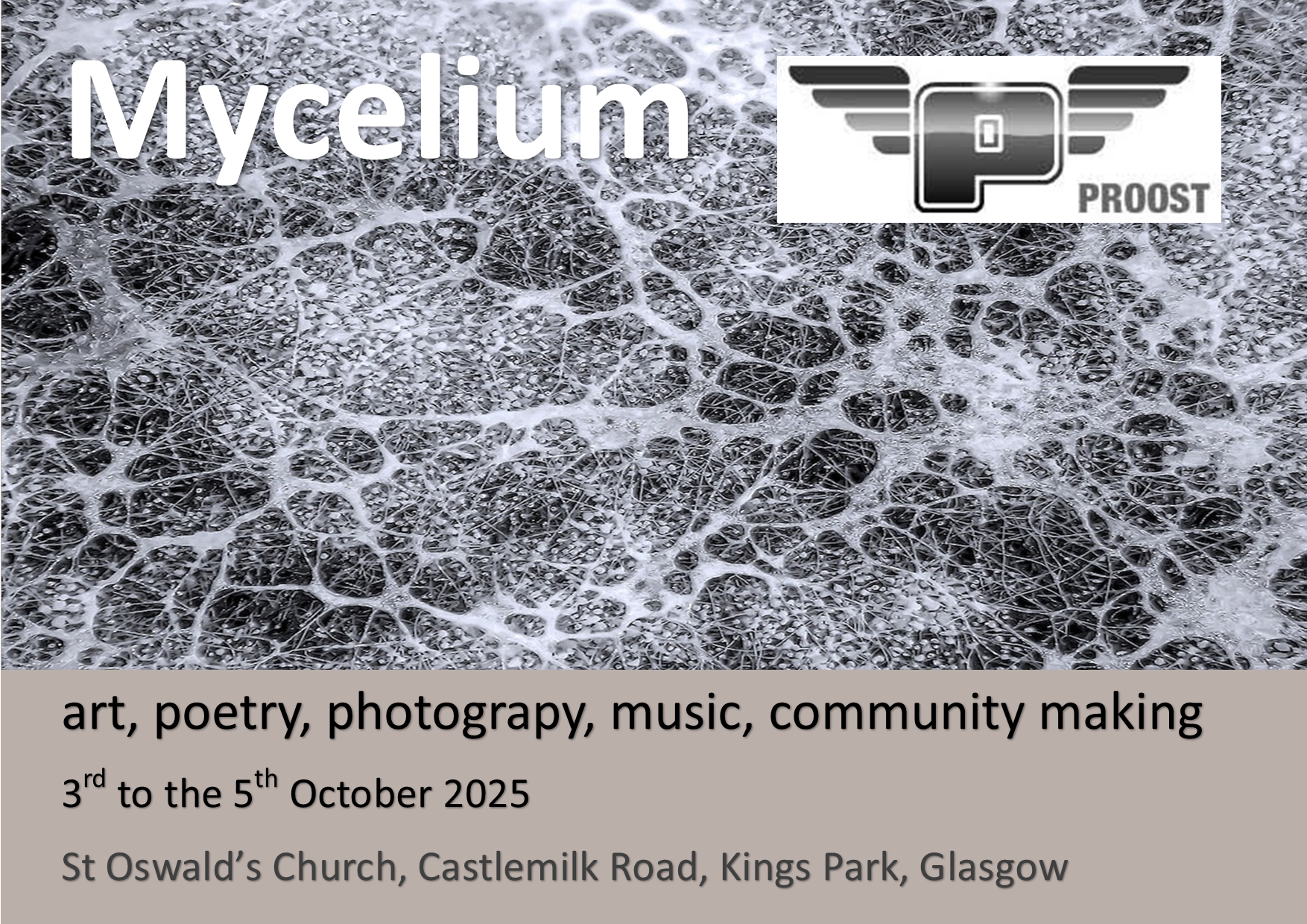
Here is a quick update on the Proost meet up for artists in Glasgow. First, the key details;
PROOST MEET UP, 2025
Date: 3rd October 2025 (6:00 PM) to 5th October 2025 (4:00 PM) Location:St Oswald’s Episcopal Church, King’s Park, 260 Castlemilk Rd, Glasgow G44 4LB
Hosted by: Proost, in partnership with local Episcopal and Church of Scotland Churches Cost: The gathering is free, with the aim of making this gathering as accessible as possible for all. Accommodation: Informal hosting options are available for those who need them, and we’re happy to provide guidance on nearby accommodation options to help you make your stay as comfortable as possible. Let us know how we can assist you!
WHAT IS IT ALL ABOUT?
Many of you will remember Proost as it used to be- a publishing platform established on the edge of what we used to call ’emerging church’ or ‘missional groups’ or ‘alt worship’. It gathered a community of creatives who made poetry, art, video, music, liturgy and much more. For many of us, it gave a sense of belonging and connection – and ways to collaborate with other artists in both gathered and dispersed events. We live in different times now, but if anything, creatives need these connections more than ever.
We need art that engages, that challenges, that allows us to go deeper.
We need to hear from people who are otherwise marginalised.
We need to speak of justice and peace, so challenge where appropriate.
We need to take allow our art to connect with the deep spirituality of the earth.
The landscape of faith and culture has changed a lot in the decades since Proost first came on to the scene. Communication technology has made publishing easier, yet at the same time so much harder because of the sheer volume of content being produced. Funding streams and generating income is a massive challenge. Against all this, we have a powerful tool called community.
This is our dream for a new Proost- the means by which we combine our voices, our creativity and our resources to transcend the limitiations imposed by our context in service of justice. We think this is a holy pursuit, made ever more urgent by the crises gathering around us- wars, climate breakdown, inequality and political/economic impotence.
Much of this discussion has been taking place via two podcasts…
… and we have made a start with some collaborations around Advent and Lent.
But we feel that community also needs to make physical connections. We need to come together in one place, to share stories, to make plans and art together.
WHAT WILL WE DO?
The idea is simple- choose a theme and then invite people to respond to it using their art – music, poetry, painting, dance, pottery, photography, animation, video – or anything else.
We will make space for as many contributions and expressions of creativity as we can comb together in the form of installation or performance. The only limitation is that you need to bring those contributions in person!
We are so grateful to St Oswald’s Episcopal Church (King’s Park, 260 Castlemilk Rd, Glasgow G44 4LB) in partnership with local Episcopal and Church of Scotland Churches for generously hosting this weekend.
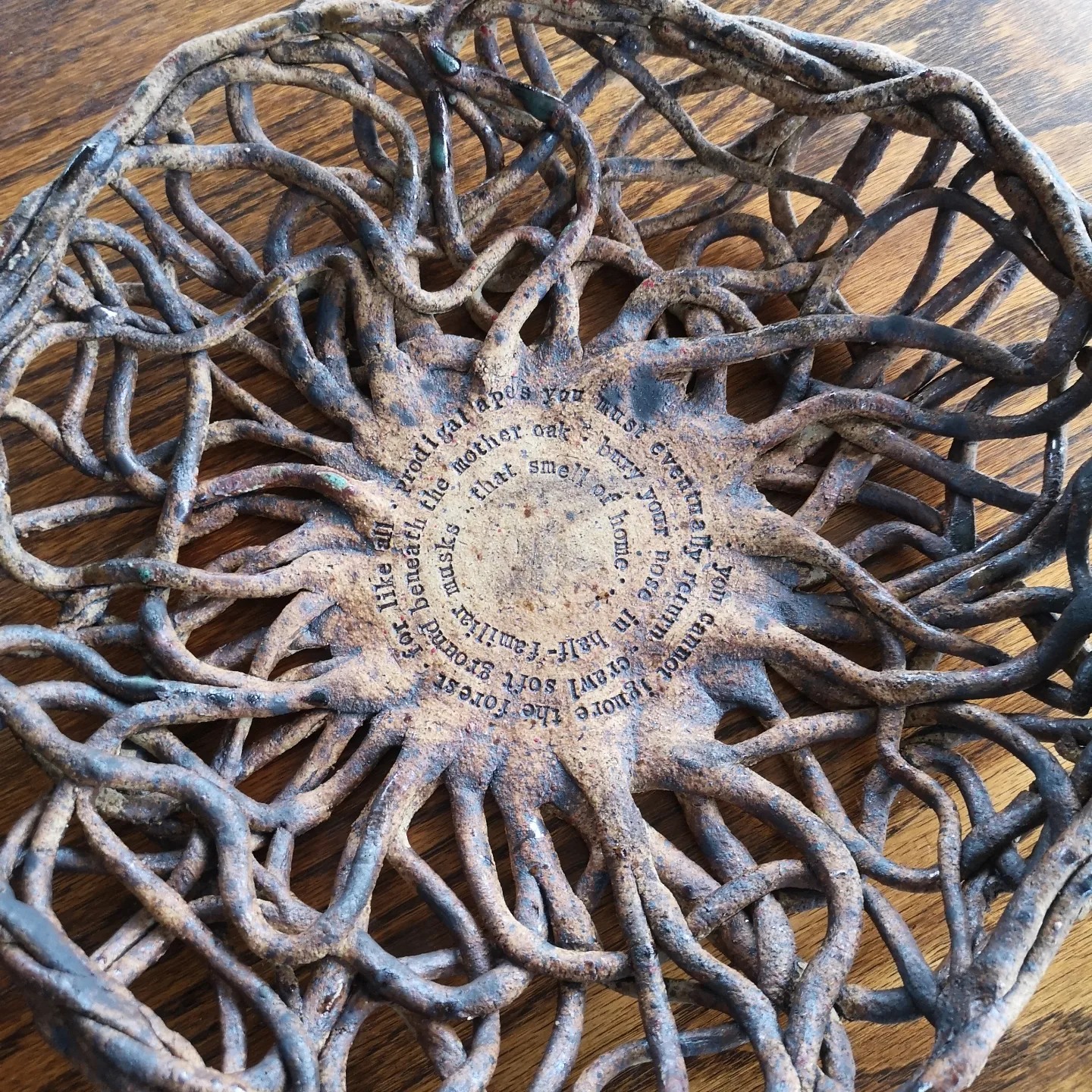
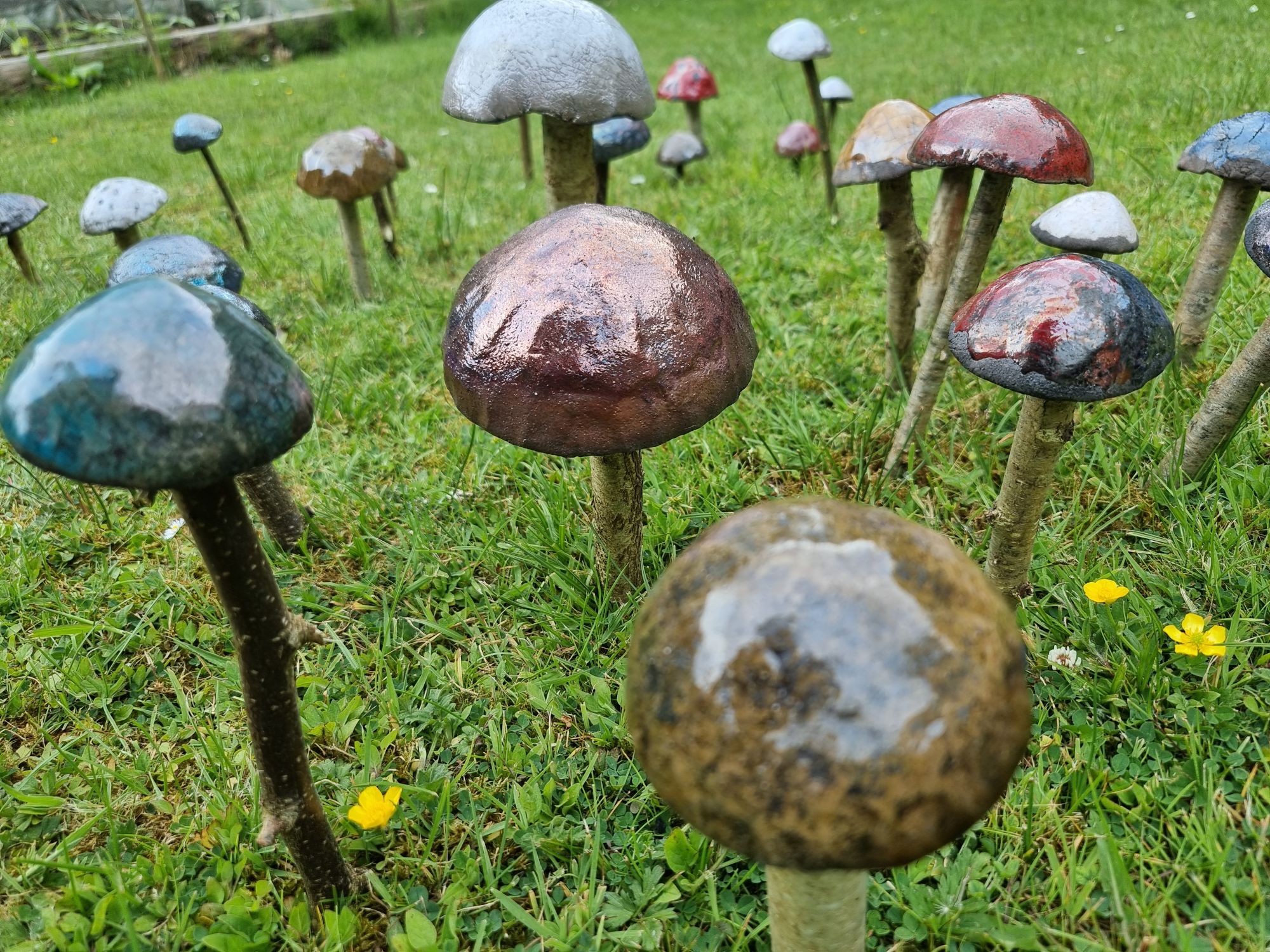
Installation space will be in and around the St Oswalds. (This will include a large mushroom-related ceramic offering!)
Performance opportunities will be via 1. A great big Ceilidh on Saturday night – dancing, hopefully interspersed with all sorts of other poems, songs and stories. 2. Sunday afternoon event. Both will be open to local people.
We want to keep Saturday day-time for discussion and chat amongst Proostians – working out together what seems important, and how this project might progress. There will be themed discussions led by different members of the team.
WHY MYCELLIUM?
This is the theme we have chosen for our meet up. Some of the reasons for this will already be in your heads, but here are some ponderings that might help unleash your own creative responses.
Soil science is advancing rapidly – we now need to stop thinking of soil as just inert dirt. It might be more accurate to regard it as a living entity all on its own – but if that is a little fanciful surely we need to understand that it is a complex ecosystem- one which almost all other land based life on the planet depends upon. Without soil, we die. Crucially, the role of mycelial networks in connecting, communicating and making communalities is increasingly being understood to be so much more important than previously thought.
Mycelium is the way that trees ‘talk’ to one another. Think about that- one life form relies upon another lifeform in order to share nutrients, warn of disease and so much more.
We modern humans tend to think about the natural world as being characterised by competition, the elimination of weakness and ‘survival of the fittest’. We have taken Darwinian ideas, misunderstood them and used them to justify our economics, our politics – even our spiritualities. The more we understand about mycelium, the more we need to think again.
Perhaps the ‘survival of the fittest’ might better be understood to mean that we survive best when we seek to fit with our context – when we seek connection and community.
What are we connecting with? Does mycelium only represent a way to understand human interrelatedness – with both each other and with the wider natural world? I would argue however that we might consider this connection to be much deeper than that.
These ideas have always been at the heart of the Christian story, not least the mystical traditions and the Celtic wisdom traditions, both of which have long emphasised that it is through God that all things live and have their being. In the Celtic understanding, God is to be found at the centre of everything, even us. We encounter him by going deeper.
Richard Rohr, in his magnificent book ‘The Universal Christ’ show us a different window into this way of understanding, in which the Christ is ‘another name for everything’ – the cosmic consciousness through which the universe expanded and came into being. We are all held in this commonality and invited to participate according to the deep truth of love.
As followers of Jesus, there seem to me to be so many other resonances here.
Unity and Oneness:
Jesus called for a unified community, where individuals, despite their differences, are “perfectly joined together” in their minds and judgments.
Body Analogy:
He used the image of a body with many parts, each playing a vital role, to illustrate the interconnectedness and interdependence of his followers.
Love for Neighbour:
Jesus emphasized the importance of loving one’s neighbour as oneself, which encourages cooperation and mutual support within a community. Compassion and love are a natural law that we need to be drawn towards.
Serving Others:
He demonstrated the importance of serving others, highlighting the value of helping those in need and working together for a common good.
Collaboration and Partnership:
Jesus encouraged his followers to work together, emphasizing the importance of partnership in living as agents of the Kingdom of God.
HOW TO GET INVOLVED?
We need ideas, songs, poems, film, images, dance, liturgies. We will ‘curate’ these in advance and include as many as we can. HOWEVER- this is about community, so we need you to bring your ideas, not just to send them. We will make the event together.
We have some very limited funding, and the offer of some accommodation. We don’t want money to be an obstacle for anyone.
This is the start of a new thing. Come and help shape it. On saturday we want to explore ideas together- to talk of Poesis and dream of how art and spirituality move togther and miight lead us forward.
This will not commit you to anything- we will keep you informed, that is all.
If you have ideas you want to talk through,or want to know more, or have questions, we would love to hear from you- you can get in touch via the website, or drop me a message via the comments below, or send me an e-mail at thisfragiletent@com
Today we have a brand new carol from Jonny Baker… I think he intends to get into a studio and record it, but for now offers this quick recordning along with an accompanying vid by Jon Birch.
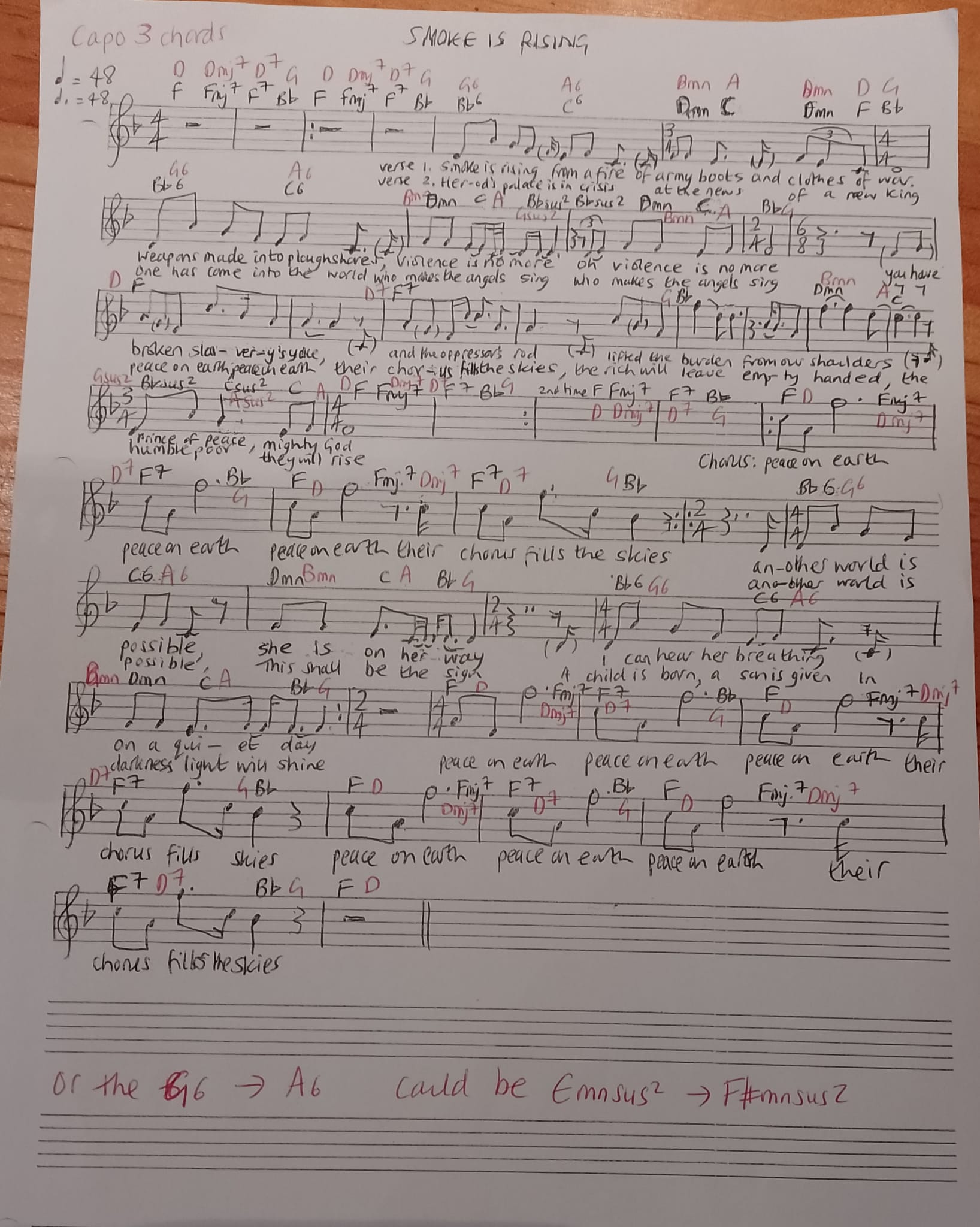
I will also include sheet/chords for it here.
This is what Jonny had to say about how the carol came in to being.
I was inspired reading Isaiah 9 and in particular the imagery of verse 5:
The boots of the warrior and the uniforms bloodstained by war will all be burned. They will be fuel for the fire.
In a world with so much brutality and violence the image of a fire burning army boots and clothes of war struck a chord and a deep sense of advent longing for another possible world. That turned into lyrics for a carol or advent hymn ‘Smoke is rising’. The last verse is quoting Arundathi Roy which many of you will recognise. Niall Dunne has written what I think is a beautiful melody. This came about through a chance conversation at CMS (Niall has started the undergrad pioneer training this year). I’d love any reactions to it. Even more I’d love any of you to try it out and lead it. Let me know how you get on if you do though it’s a bit late possibly for this year now. I imagine it with a huge church or choir but I don’t have one of those!
My sister Ruth kindly has written out the melody and chords. I should add that the guitar tuning is DADGAD which sounds lovely. Hopefully you can work out what I am doing from the video if you go that route and like me are not used to that. That’s how I learned it from Niall. I should say I am singing it a bit lower than Niall as I struggled to reach the top note in F. Ruth has written chords in F and in D and unhelpfully I am playing it in E flat!
I have not had the time or kit to record it properly so this is recorded on a phone – thanks to Jon Birch for his steady hand (and gorgeous lounge). Maybe this will spark a new project?!
And double thanks to Jon who was inspired to make a movie loop of a fire of army boots and clothes of war which you can watch and download. When I have done the song (the sum total of one time so far) I have projected lyrics over that video looping which is pretty evocative. Jon was one of the founders of proost with me (and Aad) so it felt great to collaborate for this proost advent series.
Our advent collaboration, inspired and curated by Si Smith, and involving Photographer Steve Broadway, Ian Adam’s meditations and poems by me is now available!
You can get hold of it here in dowload for now, but hopefully you can order it in actual paper soon too. (It would make a lovely Christmas present I reckon, in fact some of you might be getting just that!)
Any help with the social media spreading the word thing would be appreciated as ever…
Here is the blurb from the Proost website;
This beautiful Advent product evokes the sense of waiting and watching at this season. Its available here as a download for £3.50.
Expect beautiful poems, challenging punchy prayers and thoughts and some beautiful photography in this devotion resource aimed at taking you through the 25 days of December up to Christmas Day.
From the book, this is from Elizabeth:
They say every flapping scrapping life is
A brand new miracle
– I see them all in the street
Displayed there by their miracle makers
For the rest of us to worship.
Four great artists have come together to make this book happen. Chris Goan, Ian Adams, Steve Broadway and Si Smith have brought their collective creative wisdom together to shape a wonderful book and it’s one we’re very excited about here at Proost.
In addition to this version there is also a Bonus Edition available which includes all of Steve’s original photographs for personal use. That edition is £5.
A hard copy of the book is currently being created and will be made available shortly.
“We think this book typifies the reasons why Proost exists. It’s promoting people’s art and creativity. It’s giving people a voice and it’s sharing those voices with a wider audience. It’s almost an incredible good and very moving collection of poems. For those reasons we think it’s a fantastic resource and hope you’ll visit the site and pick up a copy.”
Here’s a poem to give you a flavour by Sheena Bradley
Being true
Before, I was not
And now, I am
In this place and at this time.
Rain, hail or shine I will hold up my head And bloom…
And not just so that I might be seen, That I might be admired
No, I do not need your praise.
Celebrated or unnoticed Until I’m trampled or I fade, For fade I will
I’ll bloom…
I am still gathering poetry submissions for inclusion in an up and coming poetry collection to be published by Proost– please keep them coming in!
Proost is a company set up by Christians to gather together lots of the creativity coming out of the left field ragged edge of the church here in the UK. In doing this they have been incredibly encouraging to people (like me) whose output is unlikely to find other commercial outlets. The poetry collection was an attempt to broaden out this ethos still further.
In the process of looking at this, I have been forced once again to consider what I might understand as ‘Christian’ poetry, or even ‘spiritual’ poetry.
The tradition of church that I grew up has little time for poetry. The nearest we got to it were the lyrics of songs and hymns- with people like Matt Redman or Graham Kendrick as the most widely known contributors. The subject matter and style chosen for these songs is very limited, and goes something like this;
Over use of obvious rhyme structures- face/grace love/above died/justified
Over identification with love songs- ‘Jesus is my boyfriend’ kind of stuff
Substitutionary atonement
Lack of room for questions, for uncertainty, for doubt
Lack of room for lament
Often driven by commercialism- what sells in the American mid west.
Substitutionary atonement
These songs became the cultural carriers of our faith- they gave us a proscribed language to describe our understanding of God but this left us only with a set of rather clichéd phrases that we rehashed over and over again- usually strapped to a good tune to make them more palatable.
Hardly surprisingly, those people that wrote poems at all in the churches I went to tended to write poems along these lines too, although this was a marginal practice, as the feeling was that the main forms of expression of faith were preaching the word, evangelising the lost and worshipping through singing.
There is of course a rich tradition of writing poetry in other Christian traditions- Hildegard of Bingen, Francis of Asisi, Teresa of Avila, John Donne, Christina Rossetti, Gerard Manley Hopkins, R.S. Thomas, Thomas Merton to name but a few. However, most of us do not know the work of these wonderful poets well, if at all. Some of them we know as people of faith, but the relationship that poetry has to the development of their spiritual understanding is far less clear. It is not something that we are schooled to even ask.
Eastern traditions are much clearer about this relationship. The Sufi tradition of poets like Rumi, Sanai and Attar are all famous because they were poets. The words they made arose from their spiritual journey- they were the very process of engagement with the divine, not an accidental by product. Here is a bit of Rumi to make the point, written around 800 years ago;
Say who I am
I am dust particles in sunlight
I am the round sun.
To the bits of dust I say, stay.
To the sun, keep moving.
I am morning mist,
And the breathing of evening.
I amwind in the top of a grove
and surf on the cliff.
Mast, rudder, helmsman and keel.
I am also the coral reef they founder on.
I am a tree with a trained parot in its branches.
Silence, thought and voice.
The musical air coming through a flute
A spark off a stone, a flickering
in metal. Both candle
and the moth crazy around it.
Rose and the nightingale
lost in the fragrance.
I am all orders of being, the circling galaxy,
the evolutionary intelligence, the lift
and the falling away. What is
and what isn’t.
What makes this poetry so wonderful to us is the freedom that exists in the middle of it- the sense of generosity, wonder and beauty. It opens something up- a window into something deeper. It seems to arise as much from personal experience- revelation even- as from a desire to proselytise or sell a particular idea to us. This is not Christian poetry- but then again, perhaps it is the poetry that we Christians need to be reading.
We often forget that the Bible is a product too of middle eastern mystics, prophets and nomads in their search for God. We forget that around a third of the Bible is written as poetry- not just the obvious bits (Psalms) but we also have searing prophetic rants, apocalyptic weirdness raunchy love poems, even St Paul seemed to be sneaking lyrics from hymns into his letters.
We needed the Bible to be a legal document, a constitional, foundational tool for life that we could mine for concrete instructional truth- what we got was lots of poetry- although we rarely see it as such. It is an interesting question as to whether reading the Bible as poetry changes how we engage with it.
But back to the point of this piece- which is a search for a new kind of Christian poetry- using language set free from the narrow cliches. An honest kind of poetry- that arises from a deep well of the Spirit within us. Poetry that does not shrink from pain, form ugliness, from doubt, from anger at God even. Poetry that asks questions as much as it answers them. Poetry that holds us to account for our actions- particularly those of us in power. Poetry that is skewed towards the weak, the broken, the poor (as these are the last made first.)
Poetry that can become the songs of the Kingdom of God that is woven into the fabric of our world- in each leaf, each ripple, each stratum, each child, each crack addict.
If you should come across poetry like this, you will recognise it for what it is, even if it disturbs you, discomforts you.
I would really appreciate your help in getting the message out there about this project- if you are a blogger/facebooker/twitterer would you mind reposting?
For a while now, I have been chewing on an idea about putting together a collection of poetry.
From time to time people send me things they have written- asking for feedback. I always really struggle to give feedback- I want to be honest, open and encouraging, but poetry is really subjective. What I find however, is that there is almost always gold in the dust. Most people who write do so to get into the depth of things, and the process opens us up- in my view, it opens us up to God (however you understand this.)
Much of this writing is personal- like many of the things I write, its primary purpose is personal spiritual discipline. However, some poems have a life beyond this- and become vehicles that allow other people to travel. It is these poems that I am interested in.
We are used to being told that our poetic voices are worth nothing- either because poetry has become so elitist, or because we doubt our inner voice. Poetry also has little or no commercial value in the consumer culture that we live in. However, we believe that poetry is more important now than ever- we need our poets our prophets and our malcontents.
So, if you write poetry and you have material that you think may be helpful to the spiritual journey of other people, then you might like to consider this;
We are looking for contributions to an collection of poetry to be published by Proost.
We intend this is to be a collection of voices in and around the margins of our churches and will bring together poets whose writing is not normally heard to be a resource for worship, contemplation, prayer and even faithful prophetic criticism.
Poems should fit broadly into one of the following categories/chapter headings;
Faith/doubt
Becoming
Losing
The world is beautiful
The world is broken
Inside/outside
Wilderness
Laughing out loud
The far horizon
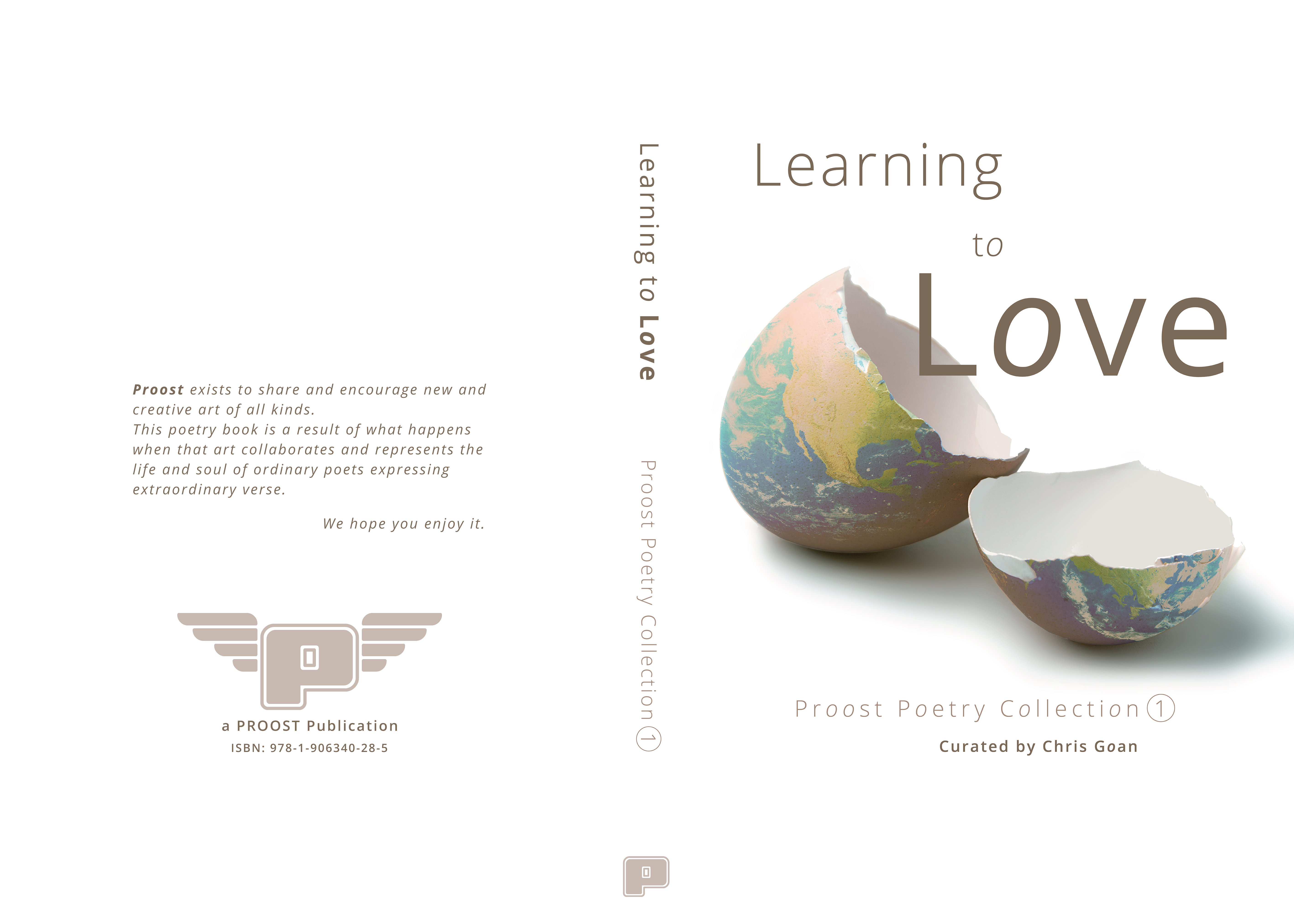
Learning to love
Notes on selection process;
We are looking for poems with something to say- poems that open us up rather than close us down. Poetry at its best can be challenging, disturbing, uplifting, transforming and much more. If you write poems like this we want to hear from you. We are not interested in reputation or CV- rather we want to encourage those of you with a poetic/prophetic voice to let others hear it.
We will select poems for the collection if they fit the broad (and generous) ethos of the book and if they are of a quality and spiritual depth that moves us. This means that some very good poems may not be selected. We hope that you will understand that we lack the resources to give feedback on the reasons for our editorial decisions.
We would impose no proscribed form on the poems, but broadly speaking poems should be no more than 35-40 lines.
You may send up to 8 poems– simply because we know how difficult it can be to choose. We hope that this too might be a way of gathering some more unusual voices- many of us have at least one pearl in amongst the pebbles.
Proost is a small publishing outlet aimed at gathering together resources from the creative edges of Church. Most of the material is made available for download- although hard copies of books can be purchased via a print-on-demand service.
As recompense for your hard work and creativity, poets published will be eligible for a free download of their choice from the Proost website- which is chock full of music, art, movies, worship resources and books.
As part of our Greenbelt installation, we put together some soundtracks of poetry and field recordings/sound scapes around wilderness themes- Sea, Woodland, River. The intention was to project them onto sculptural representations of the three locations using ultrasonic speakers, but the technology let us down somewhat, not to mention the appalling weather conditions.
.
Anyway, rather than letting it go to waste, the poetry soundscapes are being released by Proost as an audio download. Each one is around 10-11 mins long.
Poetry and meditations by Chris Goan and read by members of Aoradh.
All streams flow into the sea yet the sea is never full.
To the place the streams come from, there they will return.
(Ecclesiastes 1:7)
This collection of poems and meditation was first created for an installation used at Greenbelt Festival, but could be used for both personal and collective meditation. It combines soundscapes recorded in wilderness locations with poetry by Chris Goan and read by members of Aoradh, a community based in Dunoon, Argyll. The voices used in these recordings range from people aged 8 to 78 and with many different accents;
Netta Shannon, Simon Richardson, Helen Richardson, Emily Goan, Michaela Goan, Chris Goan, Sharon Barnard, Audrey Forest, Nick Smith, Paul Beautyman, Skye Beautyman.
Aoradh (meaning ‘adoration’) is shaped in many ways by our location and the wild places that surround us. It seeps into the words we write, and becomes the place where we seek to make worship and pilgrimage; from beach Pentecost bonfires to wilderness retreats on tiny islands.
The three meditation are as follows;
1. Sea. Soundscapes recorded on a beach on the northern shore of Iona, and supplemented by further recordings made on the shoreline near Dunoon.
2. Woodland. Soundscapes recorded in woodland behind Chris’s house in Dunoon and on an early spring morning along Loch Striven, Cowal Peninsula.
3. River. Soundscapes recorded near streams flowing down into Loch Eck, Cowal Peninsular and Pucks Glen, near Dunoon.
Aoradh spent tonight planning for some events we have up and coming- including our worship slot at Greenbelt Festival.
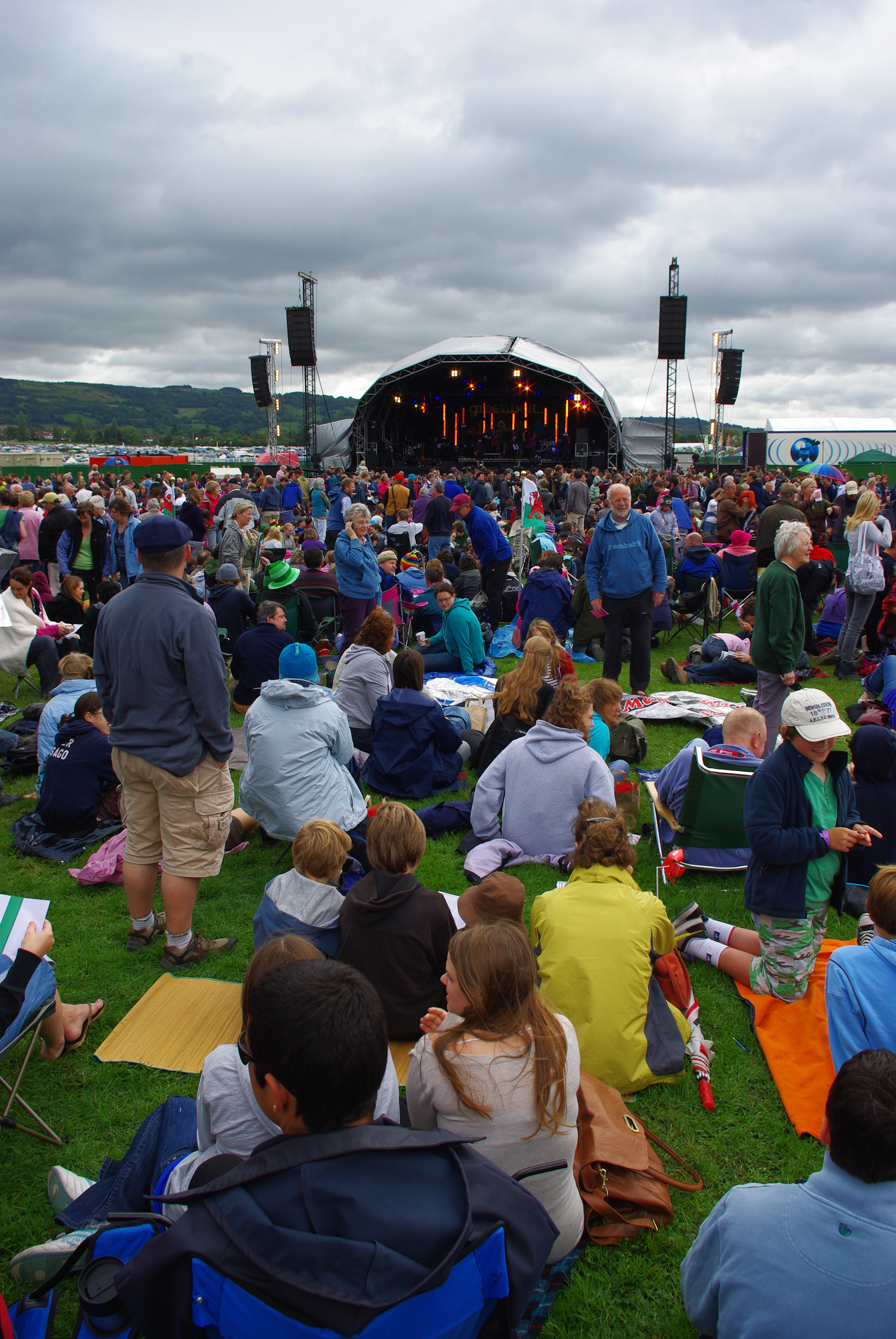
Greenbelt suddenly seems close, and we are still really at the ‘playing around with ideas’ stage. However, this is usually my favourite part of any project- the bit where you get to create things out of next to nothing- and how one idea sparks another, then another. The theme this year is ‘Dreams of home’- we are playing with some themes around the Feast of Tabernacles.
I am also doing some poetry with Proost– recorded and available on headsets around the site. I have not written that yet either! To be honest, I am a little worried about this- my poems tend to be so introspective and private- and these poems have to sit alongside those of two really great performance poets- European poetry slam champion Harry Baker and the equally brilliant Padraig O Tuama.
Oh dear- I can’t do that. Or that. I suppose that as ever, I need to stop worrying about what others do, and just trust that what I am/have is enough. I can do that. I think. Perhaps I will write a poem about it.
Anyway- there is lots of good stuff at GB this year- some music I really like- A Show of Hands, Kate Rusby, as well as headline speakers Rob Bell and Brian McLaren.
If you are going this year, and you read this blog- drop me a line, perhaps we can share a beer/coffee.
Otherwise, Aoradh’s worship slot is on Friday night this year- 7pm I think…



 this fragile tent