A contract between Scotland and God…

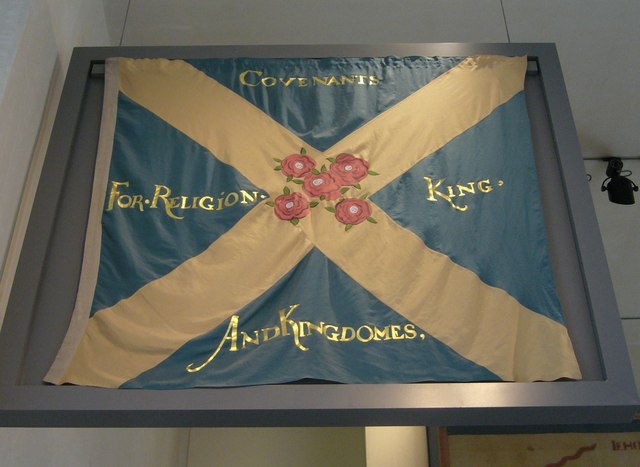
covenant flag

Back in 2009 I wrote a post about Jean Darnell‘s prophecies in relation to Scotland. The point of the post was to dig into some of the hopes that certain parts of the church hold on to up here- hopes for a revival, for a new Holy Nation that becomes a beacon of truth for the whole of Europe. I suspect that there are people who hold to this hope in all countries, and from all faith backgrounds- although it is perhaps fair to say that Scotland has had more than most.

I was reminded of this when watching a recent BBC documentary called ‘The History of Scotland’. Episode 2 is available on the i player, and tells the story of the Covenanters.

I remembered a wee on-line spat with someone who commented on the post I wrote about Jean Darnell. Check out the comments on the post. 

Most of us in the British isles know very little about the Covenant, and how the power of religion became the engine for slaughter, civil war and repression. We know some of the key events- the ‘English’ civil war, Cromwell, beheading Kings and then reacting against it all afterwards. We might also know something about the  clashes between Catholic and Protestant religious movements, but this seems like a decorative footnote in history- like an antique frock coat in a museum. 

I wonder though whether this part of our history is more important to engage with than ever, in this time of the rise of fundamentalist religion. 

So here we go…

The Reformation smashed apart some of the old established religious hierarchies. John Knox, brought the teaching sof Calvin back to Scotland. and in 1560 Scottish Parliament adopted a formal system of  presbyteries. Men came to beleive that the Scottish church was the closest to perfection on earth. This was the church that all churches should emulate.

However, this was the age of Kings- power was dynastic, and fickle. Charles the first of Scotland, England and Ireland, seemed to be undermining the purity of the Presbyterian church in a series of cuts. Anglican priest undertook his coronation service, bishops were imposed, a prayer book insisted upon. Charles was imposing himself between man and his God, using the ways of Anglicanism, which was seen as Catholic-light. All this led to trouble. Preachers denounced, rabbles were roused, Priests were beaten up, books were burned.

In 1638 some of the outraged faithful organised themselves on a new path. Taking inspiration from the covenant God made with the ancient Israelites, they wrote a document that captured what they believed to be the role of a perfect king- one limited by the law of God, and married to the perfect church. The document fell in fertile soil, and stimulated an uprising of religious fervour- Scotland could be the perfect kingdom, a new Israel. 60% of Scotlands adults signed the covenant- many swept up in the excitement of it all, some bowing to pressure- failure to sign was shameful, Popish. This pressure led inexorably towards extremism, fundamentalism, madness even.

In a time of fractious relationships across the Union, the Covenanters (as they were now known) raised an army. Charles was weak and his hired army was defeated twice. Charles had his own problems with a troublesome parliament at home and the English civil war began.

In the first year of the war, Scotland took no part, but in 1643, Parliamentary forces, who had been repeatedly defeated by Charles forces, sent to Scotland asking for help. In return for help- in return for this help they promised the establishment of a Presbyterian Kirk in Scotland and Ireland. 20.000 men sent and they turned the tide. 2 years later, Charles surrendered. The defeated King was asked to sign the Covenant, but this was like asking Charles to reject his understanding of God, and who he was in the whole order of things. He refused.

Charles made a secret deal with loyal noblemen in Scotland, offering a 3 year trial of a Presbyterian kirk in all his kingdoms. Old loyalties remained. This split the Covenanter movement. Ordinary people did not want to fight for the vague promises of a non covenant King. These became called the PROTESTORS.

However, the Nobles marched south- they were defeated at Preston by Cromwell. The Protestors saw this as evidence of Gods favour, and fired with the certainty of their election, they seized Edinburgh.

What happened then will be vary familiar to anyone who has been close to the Taliban in Afghanistan. In a period known as the ‘Rule of the saints’ backsliders were executed, holes made in tongues, ears nailed to posts, the ungodly were harried and purged. No sin was left unpunished, public floggings were held on every street corner. Yet these times were remembered later as the ‘golden age’ of Protestantism.

The interesting thing is that this kind of extremist collective madness was only possible in a political vaccum- a time in which the moderation and stability of state has been suspended, smashed. Like Afghanistan, or Iraq perhaps, before or after  the odd invasion.

In 1649, King Charles the first was tried to treason. On the 30th of Jan he was executed. Monarchy was abolished- in England at least.

However, in Scotland, the Covenant still needed a signature; the Scots still wanted a king. They invited Charles’ son to come and be king. In order to be King, he needed to sign the covenant. He signed.

Cromwell could not let this lie- he had by now replaced the Union of old Kingdoms with a new Commonwealth, and to protect his embryonic new order he came north in 1650 with his army. For a while, things were in the balance. At Leith the Covenant army was twice the size of Cromwells, but decided to purge itself of ungodly elements (who tended to be the professional soldiers.) Cromwell killed thousands and put the rest to flight. The Rule of the Saints was over.
Cromwell was brutal- the English armybecame an army of occupation in Scotland.

1653, Cromwell became Lord Protector- almost-King. Then Cromwell died and 11 years of guilt unleashed. The spectre of the headless king stood over the nation- people were appalled. Things had gone too far.

So in 1660, Charles, son of Charles, becomes King of England and Scotland.  The old world was re-made and in this new/old world there were no room for the Covenant. It was made unlawful. Copies were collected and burnt by hangman.

Charles appointed bishop0s and archbishops, made all swear allegiance. All of Scotland’s ministers had to find a noble patron. Many could not or would not.

Alexander Peden- (“Prophet Peden”) was one such minister. He left his Kirk and began preaching in open air to thousands of men in South West Scotland- often armed men.

But things were changing in high places; the direction was back towards Rome. In 1670 Charles made secret treaty with Catholic King of France for money and arms to make sure his power remained. National conversion to Catholicism. Needed to be kept secret- and so those who accused him of Papery were sent to Bass Rock, including Peden, who spent 4 years on Scotland’s own Alcatraz.
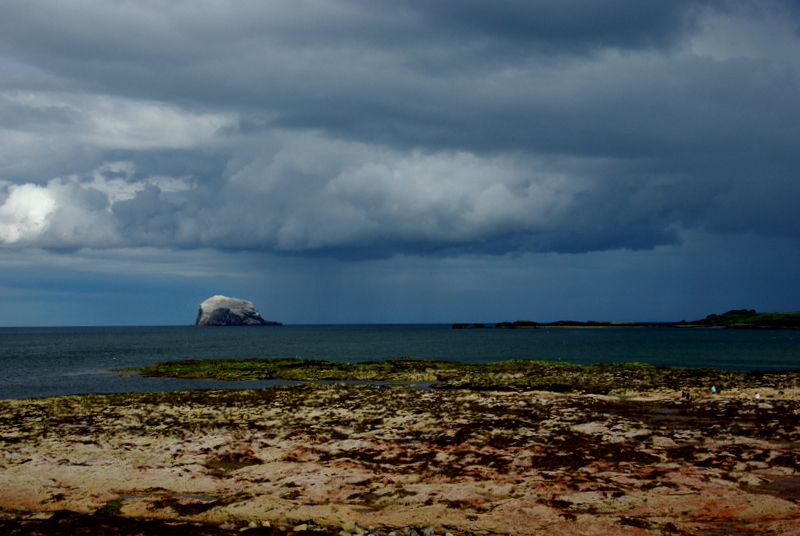
IMGP2900
Everything that has been achieved by Protestors (and the Covenanters) was being undone. The faithful were desperate. The accursed Bishops were a figurehead of all that was evil and so in 1679, 9 men chased down the coach pf the Archbishop of St Andrews and assassinated him in front of his daughter.

It was a  terrorist act and there was a reaction. Battles were fought again in which initially the Protestors did well, taking the city of Glasgow. Hopes were raised- could ‘The Golden Age’ return?

Then began three weeks of discussion. Should the ungodly be allowed to fight.? Were they wanting to unseat the king, or persuade him to sign the Covenant only? Theology was argued. Factions formed and split then split again. And then Cromwell attacked. 400 were killed, 1200 were taken prisoner, the rest fled. What followed became known as ‘the killing time’. Many preachers executed.

In 1681, a young Protestor called James Renwick climbed up pikes to retrieve and bury the heads of 5 executed Covenanters. He became leader of remaining Protestors,  Who made a new declaration and formed what were called ‘United Societies’. They rejected Stuart Dynasty. Rennick, along with his 6000 followers, wanted to start second civil war.

Meanwhile, James, Charles brother was declared heir to throne as Charles had no legitimate children and he was CATHOLIC. Fires of unrest started to smolder, and something needed to be done. The plan was this; an Oath was framed demanding all citizens reject the united societies. Failure to take oath was punishable by death. Soldiers sent into south west- and over 90 people were killed by summary execution- no courts, not appeals.

James came to throne in 1685. Now there wereCatholic monarchs in France and Britain. William of Orange in the Netherlands, James Nephew, had a claim to the crowns of Britain. He was not Catholic and had been at war with France for years. He prepared to make his move.

Meanwhile, Catholics became majority in Government. Only the United Societies remained as an opposition, so a price was placed on Rennicks head. Rennick wanted to become a martyr so after a skirmish in which he killed some of the men sent to detain him, he allowed himself to be taken and was executed in 1688.

Then William of Orange landed in Devon with 15000 men, and James support withered.  It seemed to be decided that this  was not an invasion- but rather a glorious restoration. Protestant army offices defected to Williams army and noblemen across the country declared their loyalty to William. James’ position was untenable  and so he fled the country. In 1689, William was crowned King of the union of Scotland, England and Ireland.

Significantly, he made a new covenant between crown and parliament- a bloodless covenant 50 years after it all started.

Bloodless in England that is- some noblemen in Scotland remained loyal to James- became known as Jacobites– and this is a whole different story- leading to a whole lot more blood letting down the line. There was a kind of compromise between William and the Protesters. This split in the Kirk though- and itsplit in the country. In the north, loyalty remained- a ticking time bomb which would take many more lives.

So, when all is said and done, what is the legacy of the Covenanters? They are still held as heroes by many- particularly within certain tribal religious groupings.

Where they martyrs in the service of civil liberty, of religious freedom in the face of oppression? Where they serving the cause of the Kingdom of God? Is there example enlightening to us across the (few) generations since their passing?

What was left of the message of Jesus in their war cries? The knew nothing of mercy, nothing of moderation nothing of peace.  Their only interest was  in securing power for their own brand of religion. One nation under God, sermons every day, twice on Sunday. All others will surely go to hell.

Their religion was the religion of empire- not of the Kingdom of God. This may sound like after-the-event rationalisation, but I think we owe our history (and the its victims) more than this.

Final words go to Neil Oliver, presenter of the BBC programme;

Once this was God’s country- but it is no more.

Thank God for that.

The next generation of garden grazers…

…and try as I might, I can not resent them for the plants that I know they will destroy.

I looked out of the front door a few minutes ago and there were two tiny fauns on the driveway, still covered in their lines of camouflage spots and speckles to hide them from the wolves and lions that no longer frequent these parts.

They are young Roe deer, around 2 or 3 weeks old.

One was shy and skipped through the hedge almost immediately. The other one lingered, perhaps curious about whose garden this was that provided such good eating.

Even when she wandered through the gap in the hedge she did not go far- watching me as I watched her. Here she is;

This slideshow requires JavaScript.

Leadership, networking and the trajectory of pioneering groups…

network


I am part of a small ‘missional’ group. We had ‘emerging church‘ conversations, flirted with ‘new monasticism‘. We found the old ‘paradigms’ restrictive and so wanted to do a new thing, using new ‘alternative worship‘ styles.

There you go; I have established my credentials- the badges and trendy buzz words that have allowed me to find a groove to travel in, no matter how shallow and indistinct.

The reality is that this language has often felt contrived and pompous, and the journey of our group has been one of ordinary people trying to get along, whilst searching for a way to live out faith that has some integrity and authenticity. Groups like ours are not unusual, even if they are ephemeral, fragile.

Many small groups like ours set out with pioneering passion- they have this idea of the purity of community releasing a power in them to achieve something special. Often they are right- but very soon it will get messy. The enforced intimacy of small community will crack things open quickly- there is no place to hide at times.

Then there is the inevitable reduction in passion that comes over time; things that were exciting always feel stale with repetition. How do you refresh, revitalise and renew. How do you avoid creating a new narrow liturgy that ensnares every bit as much as the ones we gratefully left behind?

This is the trajectory of most small groups- excited start, success, stagnation, crisis, reinvention (or destruction.)

If we are to be sustainable, if we are to make the longer journeys together, then we will probably need some help in the form of some external connections- we will need to speak to people who understand, who have made some of the same mistakes and dreamed the same dreams. Sometimes we may need others to listen to our pain or laugh with our small absurdity.

Groups like ours are inoculated against organised booted-and-suited religion for the most part. However I remember some interesting research from my old group work days within social work.  I nforget the references (I will try to add them later) but it goes something like this;

The success of a group depends to a large extent on the external context it is embedded within. An example of this might be an encounter group within a hospital or a prison. If the group lacks the support of the establishment this might be a plus at first- people feel embattled and react against their context – but it is simply less likely to be successful in the longer term. However, a little external validation seems to go a long way. So if the staff in the wider hospital speak positively of the group, see it as valuable and helpful, the group absorbs it all, and thrives.

Of course, the links to groups like ours is rather tenuous, but it is no surprise to me that many of the pioneers of missional groups that I know arrived at their adventure after many years of established churching. Despite their maturity, experience and a degree of reaction-formation against the context they escaped from, many of them still look back. Some return.

And this is no bad thing.

In Englandshire, there are good supportive links now for ephemeral groups- there is a wider recognition of the value of micro church through movements like CMS and Fresh Expressions. This is much less the case north of the Border in Scotland.

Last night (and this morning) I had a long discussion with David from Garioch Church, around this kind of stuff. We talked about the possibility of a new kind of network- an old theme for me. 5 years ago we tried to start such a network (see here and here for example) but things did not work out for various reasons.

So here is a question to people north of the border who find themselves on the ragged edge of organised church- where do you find your connections, and is it time to try this networking thing again?

Thoughts on retreats in wild places…

The Garvellachs

I am going here again in a couple of days.

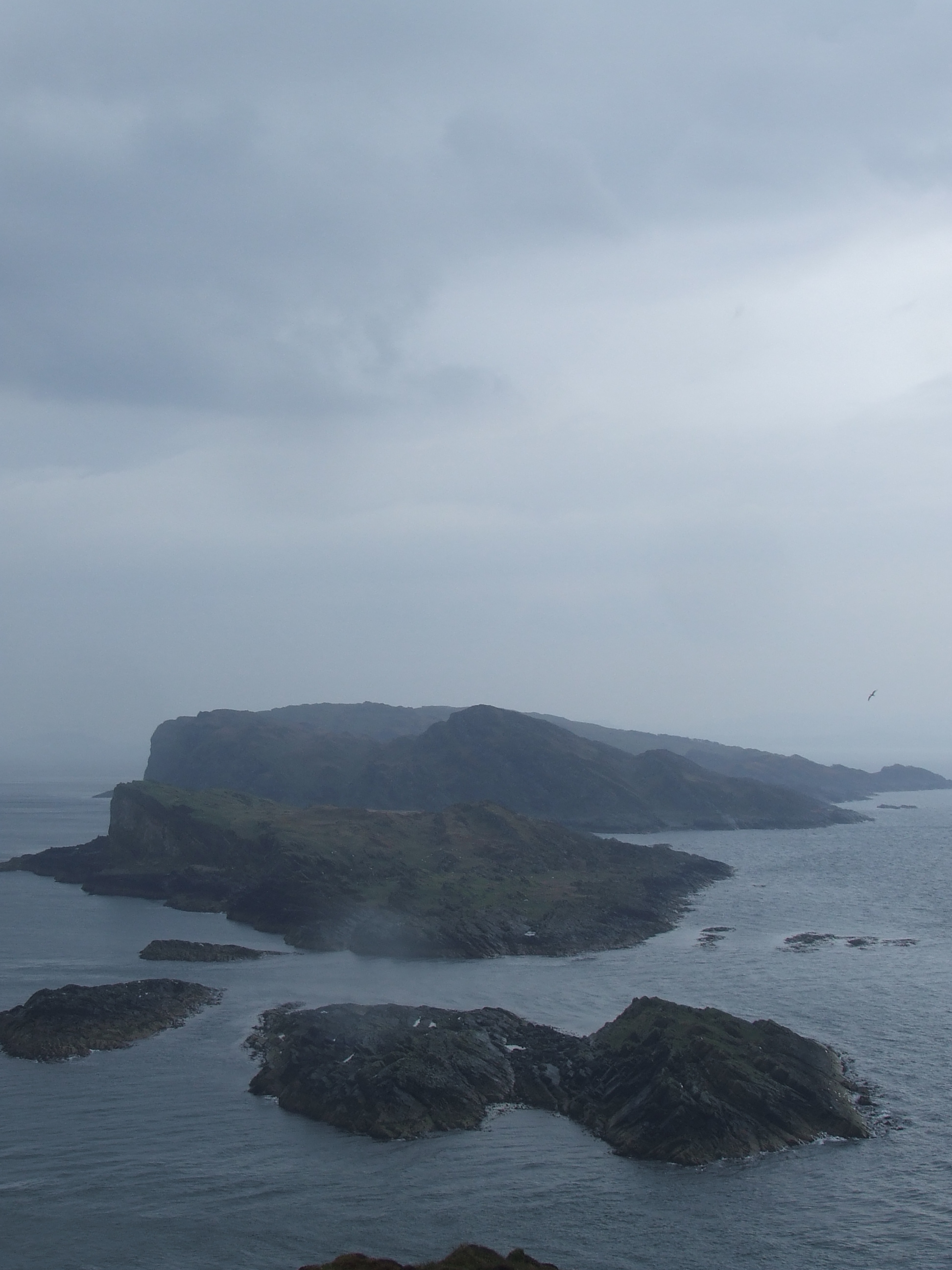
It is time for our annual Aoradh wilderness retreat. Each May bank holiday weekend, usually with old friends and invited guests, we hire a boat to drop us off for a couple of nights camping wild on an uninhabited island. This year we are returning to Eileach an Naoimh, one of the Garvellachs in the Ross of Mull, Inner Hebrides. The photo above was taken looking north at the other islands in the chain a few years ago, in less than ideal weather. The forecast for this weekend is better thankfully.

Eileach an Naoimh, even by west coast of Scotland standards, is a stunning place. It has soaring cliffs full of nesting birds on one side, and a rising green slope the other. It is also the site of an ancient Celtic monastery;

About 542, St. Brendan the Navigator founded a monastery on Eilach, presumed to be the island, possibly because of the combination of its isolation and good grazing. This may make the remains the oldest extant church buildings in Britain, although the earliest written record of its existence dates from the late 9th century. Columba is believed to have visited the island and it is one of the proposed locations of the Columban retreat isle of Hinba. Eileach an Naoimh may be the burial site of Columba’s mother Eithne.[5][6]

Remains of a chapel on Eileach an Naoimh

The monastery was destroyed by – or, at least, may have become excessively vulnerable to – Viking raiders, from about 800. The island has probably seen only intermittent occupation since, which has contributed to the survival of the ruins of many of the monastic buildings, including two chapels, beehive cells, and a graveyard with three crosses and another circular grave. The cells are contained in a pentagonal enclosure overlooking the rocky landing place on the south, which is guarded by various skerries. Beyond the enclosure there is another cell with two rooms. The oldest chapel is rectangular and may date from the 11th or 12th centuries.[7] The monastic ruins are the oldest ecclesiastical buildings in Scotland and the site is in the care of Historic Scotland.[8][9]

One of the lovely things about our retreats has been the chance to share the experience with others- friends and friends of friends – people who sometimes have never camped before, and certainly have never experienced that ‘noisy silence’ that is a Hebridean evening.

In case this sounds a little bit too idylic and romantic- there are many challenges of such journeys. It can be cold, very wet, and uncomfortable. There are no toilets, no tap water, no shelter apart from that which we make for ourselves. If the weather is kind, it is easy, but the weather changes so much even over a couple of days- this is one of the joys of being in such places; you see the weather coming, and you see it go. Sometimes it hits you right between the eyes.

I have been having lots of conversations with my friends about what we do, how we prepare, what we take etc. There are all the practical details- how much kit, what to leave out etc.

Then there have been discussions about what makes this a retreat, rather than a group of daft folk who like to get down with wilderness (which is worth doing in its own right after all.) Our trips evolved from friends being fools to friends trying to be more deliberate in our engagement with the God of wild places. These days we have simplified what we do considerably- we divide time into silent and communal, and gather round a fire in the evening using simple rituals to reflect on the day. This time we intend to use one of the chapel buildings to follow a days monastic pattern.

Finally I have had lots of discussions about how we best use our time, and what to bring that might help. I usually suggest that less is more- the fewer things we have between us and the nakedness of a wilderness experience the better. All sorts of things that in their own right can be good- books, cameras, art stuff etc, can become like static clutter: flotsam that chokes the pristine shore line.

What I always find most powerful is the combination of immersion in beauty alone, and then sharing this with times of companionship, laughter- making our individual experience communal.

One discussion with Sam surrounded what to take to write on. I have always taken notebooks and pens, but despite my conviction that (for me at least) writing is a primary spiritual discipline and practice, I usually write very little- in fact, when I try, what I write tends to feel forced and false- like I am doing it more for someone else rather than for me (or God.) I have felt a little guilty about this in the past- almost as if I am not doing it right- that I am playing at something.

I was reminded about this when listening to one of my favourite poets speak. Norman MacCaig’s work is saturated with wild Scotland- in particular the area called Assynt.  He spent each summer there walking fishing, meeting friends and sharing a dram or two. What he did not do over these summers was to write- this belonged to the darker times- when the wilderness came back to him- sometimes all in a rush- his famous ‘two fag’ poems. MacCaig had no religion- he was a avowed athiest – but his words have a life in them that I love.

Here he is speaking, and I find myself startlingly in agreement with much of what he says about the creative process- my love of free verse, and music, and my love/hate with imagery, which I feel like an addiction. I do not smoke, but my poems also usually drop out in no time at all, as if from nowhere. Or perhaps from seeds sown in the wilderness.

But I am getting technical again- there is time for all this writing later.

After the island.

Three stars!

B&B 3 STAR


And here they are!

Yesterday we had a ‘secret visitor’ in our B and B- from visit Scotland. We knew that we would get a visit at some point, and we had our suspicions about this particular guest (which made for some nervous moments!)

As it happens, she said lots of lovely things about our service, the rooms and the general feel of our B and B, and more crucially, awarded us three stars!

Three stars signifies a B and B of ‘a very good standard’. Realistically, we will not meet the criteria for 4 stars because of our location, the lack of lighting on the driveway and the fact that our rooms are within a family home. Overall, we are delighted with the three stars, particularly so early into our trading.

So if you would like to have a stay within our three star B and B, taking in the wonderful views, and perhaps trying out some pottery as part of your stay- take a look at our website!

family room

Looking back into empire…

Mount Stuart

Michaela was just showing me some of the photographs she sneakily took on our visit to Mount Stuart yesterday. Sneaky because they do not approve of people taking photographs. I always wondered why. Is it because the flash might affect the posh fabric, or because they want us to buy images from the gift shop?) She is not one for breaking rules, but makes an exception in the cause of the class consciousness (80s throwback there in honour of Margaret Thatcher.)

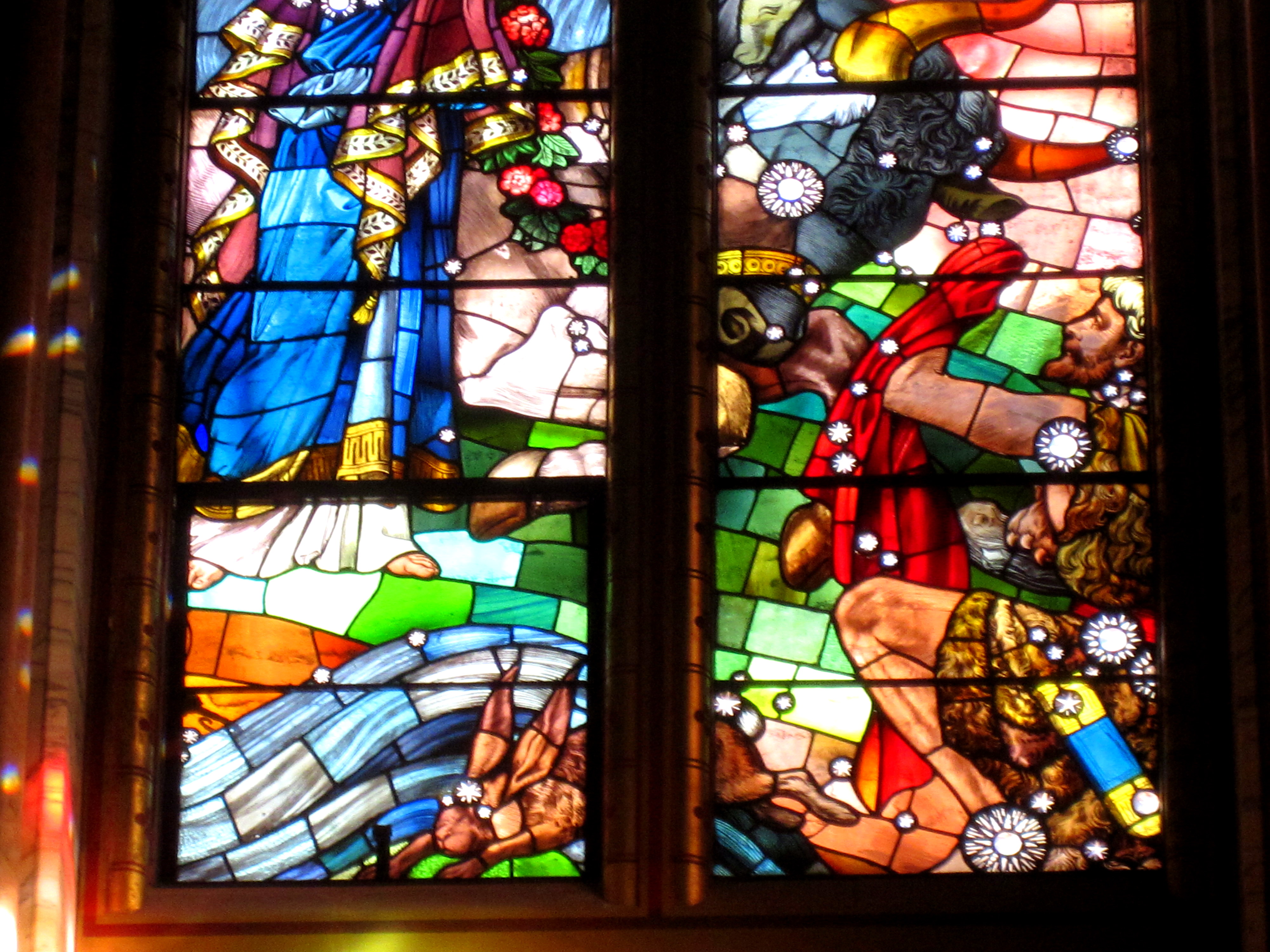
Mount Stuart (according to our tour guide) was one of the last great houses to be built in this country; the old one burnt down in 1877, so the owners set out to spend spend spend in high Victorian style- a display of wealth beyond what most people can dream of even now. Electric lighting, central heating, heated indoor swimming pool, every modern convenience, priceless paintings by old master, Gothic carving and painted walls, Stained glass. No expense was spared.

stained glass, mount stuart

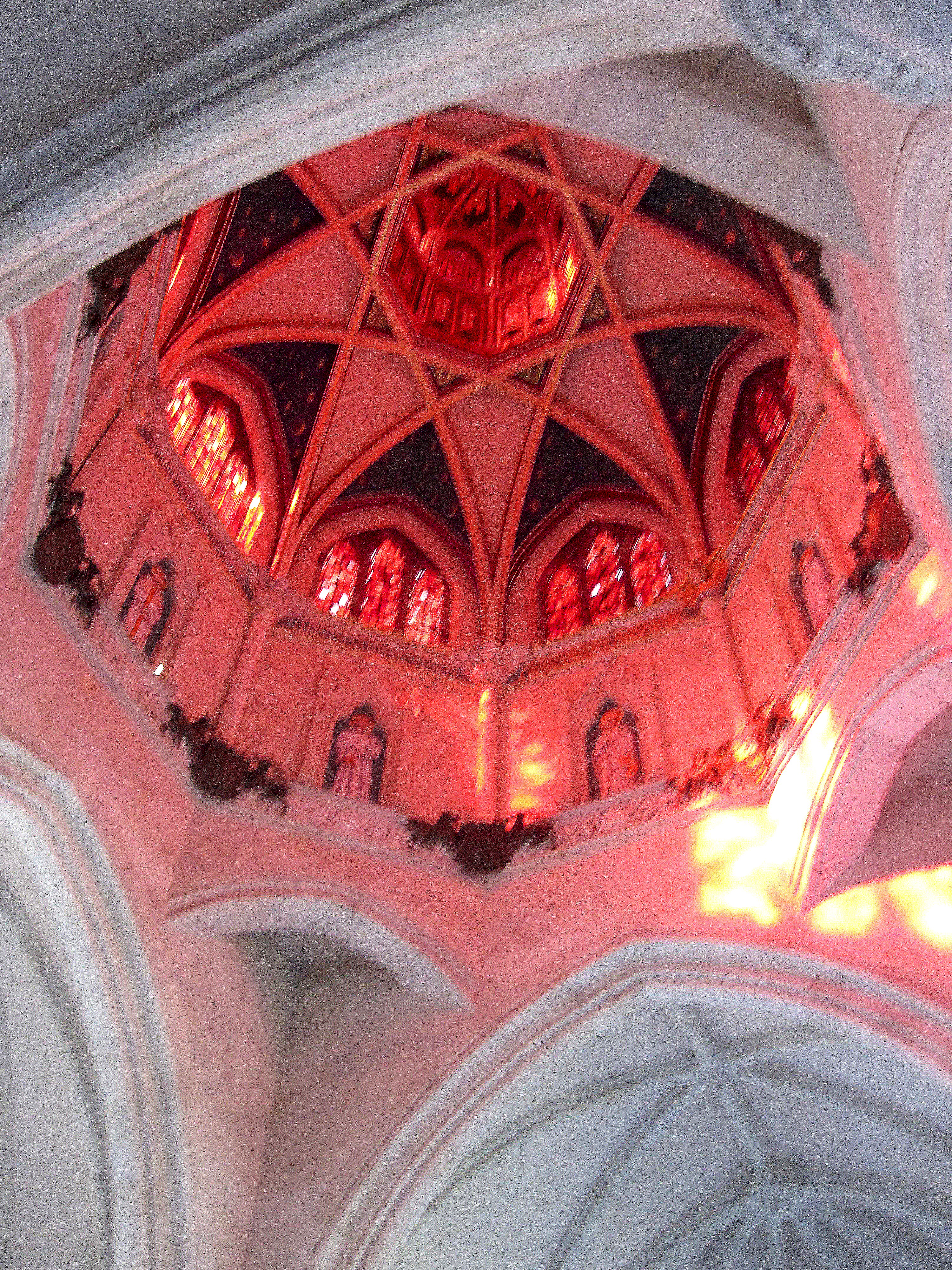
Marble chapel, Mount Stuart

What was created was already going out of fashion as it was completed in the years before the first world war. Baronial towers, a marble chapel, religious imagery everywhere. It must have seemed like the centre of Gods order for the universe- the rich man at the centre of his own world.

The house was only possible because of one thing- vast quantities of cheap labour. In the building (involving years and years of work by hundreds of skilled craftsman) and then in the running (an army of gardeners, housekeepers, kitchen staff etc.)

The interesting thing is that, in some respects it was never finished. Each column and stone cornice in the house was to be intricately carved- but not all of it was finished. Our guide told us this was because so many people were killed on the slaughtering fields of the first world war that the skills were simply gone.

unfinished carving, mount stuart

You could argue that this war was the logical end for all this stacking up of empire plunder- a war that should of ended all wars. It did not work out quite like this though. And the interesting thing is that this massive house is still privately owned.

This from Wikipedia;

John Colum Crichton-Stuart, 7th Marquess of Bute (born 26 April 1958 in RothesayIsle of Bute), styled Earl of Dumfries before 1993 and from this courtesy title usually known as Johnny Dumfries, is a Scottish peer and a former racing driver. He does not use his title and prefers to be known solely as John Bute.[1] The family home is Mount Stuart House on the Isle of Bute

…He ranked 616th in the Sunday Times Rich List 2008, with an estimated wealth of £125m. (26th in Scotland with £122m in 2006)

He lives with his family in London and at Mount Stuart House, 5 miles south of Rothesay on the Isle of Bute, PA20 9LR.  In 2007 Dumfries House inCumnockAyrshire was purchased for the nation for £45 million.[5]

John Bute, a rich man, who is the son and grandson of many other rich men.

It really is difficult not to love his house- but the culture that made it possible still casts a huge shadow over all of us- and in many ways, our current government, stacked as it is with rich men who are the sons of other rich men, will be very at home there.

How do you put out a mountain thats on fire?

IMGP4355

I suppose the answer to this is- you do not.

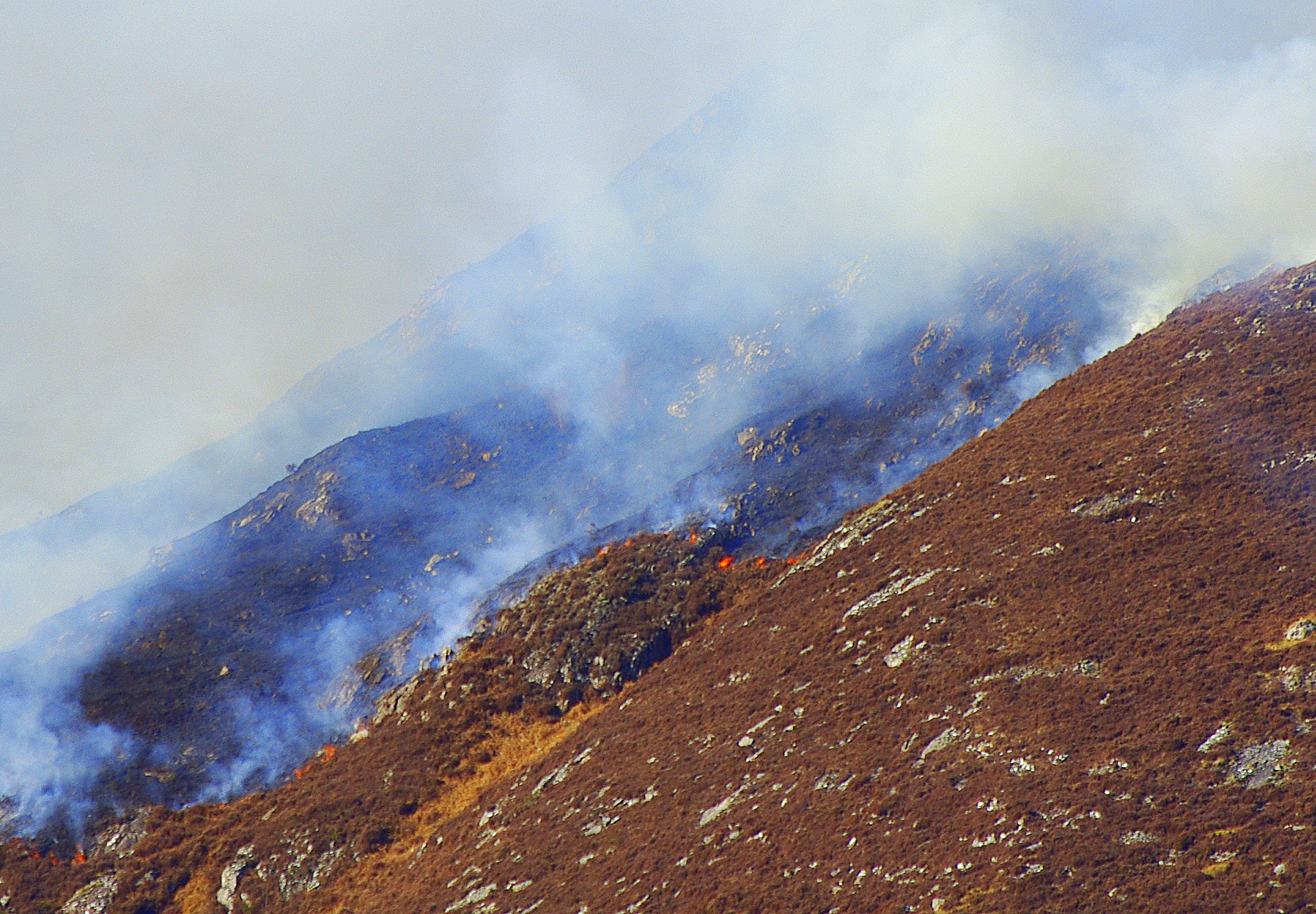
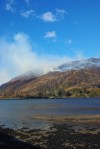
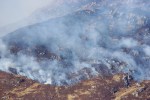
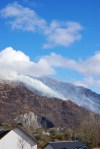
Here are some photos taken from Taynuilt today on my way round to Oban. As far as I could gather from the locals the fire has been burning for two days and looked spectacular last night as the flames lit up the hill. Someone told me she thought that the fire started over the other side of the mountain, and had spread- fortunately only slowly towards the houses this side as the wind was pushing the flames away.

Despite heavy snow falls in parts of Argyll (Campbeltown was cut off for three days over the weekend with no power) the hills are incredibly dry at the moment. What little moisture there is has been held in the form of ice.

Scottishness and the search for self…

I read this lovely book recently;

untitled

I will not go into any detail about what it is about, except to say that if you love poetry, landscape and humanity you will love this book. It is a beautifully written travelogue/memoir and obituary of the great poet Norman McCaig.

One of the things that resonated with me was how the book tried to grapple with Scottishness. Up here we are heading towards a referendum on whether Scotland should exist as an entirely separate country to the United Kingdom. The old confused profusion of ideas around history, identity, sense place in landscape, feelings of old injustices to be avenged, or old alliances to be celebrated- it is all there  just below the surface.

Andrew Greig talks with such eloquence about Norman McCaig’s generation- McCaig was a conscientious objector in the second world war and had a deep suspicion of nationalism wherever he saw it. I share this feeling. I have an outsider’s discomfort with borders and in-groups. I struggle to think of anything positive that came out of nationalism- it has so much power to bring out the worst of what we are, but rarely the best. It throws up statues of lots of dead people.

However, there is another kind of Scottish identity in Greig’s book- as he moves from city to mountainside there is a profound sense of place- a love of landscape. A sense of one-ness with the roll and curve of the land. A sense of understanding that others too have been here, and in some sense are here still. I have had plenty of glimpses of this in my own adventures. There is a generosity as well as a cruelty to mountains- they do not care about accent.

There is also this lovely piece of writing that I thought I would reproduce here- which is another image that stuck in my mind. Greig starts to think about his father;

…it began as a yarn about how he and his classmates, in the early years of the last century, would challenge each other to walk for as long as possible carrying a penny gripped between thumb and forefinger, the arm hanging down. It may seem an easy thing to do laddie but  no matter how hard you try sooner or later it will drop. Muscular fatigue, numbness, something like that. And I thought, what a fantastically futile thing to do, and how deep and Scottish a teaching it must have been, yoking together money, endurance and the inevitability of loss.

Then my father went on to say how, still carrying his penny, as a boy he once stopped in a gale under a Scots Pine. He stood against it, thrilled – not a word he had much use for – to feel bark shift against his back. He said he’d imaged the tree a mast, and yearned to be sailing where the wind was blowing…

I love this simple little story- of how we get caught up in futile loops, and imagine them to be significant.

But how there is a wind in the trees, and if we would let it, it has the power both to root us where we are, and also to call us to something far beyond.

How the two are related.

And so it is that we can be Scottish (even I) and still both bigger, and much smaller.

Open letter to ‘Pray for Scotland’ in relation to recent prayer call around gay marriage…

gay-marriage1

I received a prayer bulletin from Pray for Scotland today. This is an organisation run by some wonderful people whom it was a great privilege to meet and spend time with a few years ago when Michaela and I first arrived in Scotland, hungry for connection, and to understand what God might be up to north of the border. Pray for Scotland can be characterised as evangelical, charismatic and apostolic in their aims- full of people who believe that prayer can make a difference to the very character of our nation.

It was through PFS that I first heard of people who genuinely believed and hoped for a revival, as prophesied by Jean Darnell- something I have written about before on this blog- here.

However, I had some trepidation as I opened the e-mail as I could guess what the content would be. Both the media and the church are full of talk about gay marriage at the moment, and so I was both saddened by, and not surprised, to read the content of this newsletter. Here are a few extracts;

Dear Praying friends

I’m sending out this extra E-letter regarding the Marriage (Same Sex Couples) Bill 2012-13 . The bill is being read in the House of Commons today 5 February 2013  and we think its important that we all join together to pray for our leaders. I have brought some material together  for prayer and information on the issues.

Let’s storm heaven with our petitions of  ‘ His kingdom come’ in the UK government and  ‘His will to be done’ .

At the very beginning I found myself wondering about our common understanding of the Kingdom of God, and whether we would ever want to ‘storm heaven’.

Dear Friends, Tuesday. 5th Feb. will be the second reading of a bill in Westminster on redefining marriage.
We would appreciate if you would pray at a convenient time during the day.
.
There will be a bill come to the Scottish parliament, however Westminster will influence Scotland particularly in the area of equality bill and protection of people in ministry and public offices eg. registrars, teachers, social workers.
.
On Sunday many people prayed in churches and the following was the suggested corporate prayer—
.
 ‘Heavenly Father, we thank you for the gift of marriage which you established at the dawn of time, to be a blessing throughout the earth, down through the ages. We pray you would fill every marriage with your love and grace, and that every husband and wife would know the joy that comes from sharing and giving. We thank you for establishing marriage to be a secure and stable environment for raising children.
.
We pray for all those who do not enjoy these blessings, remembering you are a father to the orphan and a husband to the widow. We pray, as you have commanded us, for those in positions of civil authority. We pray that our government will act with wisdom and righteousness, upholding marriage as the voluntary union of one man to one woman for life, for the good of all people.
.
We pray for forgiveness for our nation as our government seeks to redefine marriage. We pray for ourselves that we would speak out in support of marriage with gentleness and kindness, also with courage and confidence. in the name of our lord Jesus Christ, amen. –
.
Jean Black(Mrs)
Director Pray for Scotland
I have met Jean, and have the utmost respect for her as a gentle, thoughtful and loving person. However, this prayer troubled me greatly. The newsletter went on to quote CARE, and also the World Prayer Centre, who suggested these points of prayer;
  •  That marriage will not be redefined, and that real marriage will be promoted in society for the good of all.
  • That as many MPs as possible will vote against the Bill to redefine marriage.
  • For David Burrowes, MP and others, as they lead opposition to the Government’s plans in the House of Commons.
  • For the Coalition for Marriage group as it campaigns to defend the true meaning of marriage.
  • For politicians and others in public life to have the courage to stand up for what is right and true.
  • For the news media, that they would report the issue widely, fairly, and accurately.
  • That the true consequences of redefining marriage would be publicly known and properly discussed.
  • That people would not face discrimination, in the workplace or elsewhere, because of their sincere beliefs about marriage.

I decided that I would reply to Pray for Scotland in the form of an open letter. I do so with some trepidation as I do not like conflict, nor am I ever happy to offend anyone. However I have come to believe that this is one of those issues that I can not stay silent on- that unless other people see that there is a real debate going on in the church as to what is the right way to respond to changes in society around homosexual rights then we do a disservice to Jesus and everything that he was.

Here is my reply;

Dear praying friends

Firstly thank you for your faithfulness in continuing to encourage those of us who are seeking to follow Jesus in Scotland to pray. However please forgive me, but I felt that I needed to respond to your latest prayer bulletin. I have made this the subject of an ‘open letter’ via my blog, and am happy for you to re-use these words as you see fit.

The issue of marriage and the underlying (but primary) issue of the Church’s correct stance towards people who are homosexual are ones that have the capacity to polarise and I have little interested in becoming involved in endless circuitous debates. However, your bulletin appears to assume that there is only one perspective on this issue and that all praying Christians will have come to the same view as the organisations you quote about the sanctity of marriage and the inherent sinfulness of a homosexual ‘lifestyle’.

I would respectfully suggest that this is not the case. There are many Christians, like myself, who have come to a different position after years of prayerful engagement with scripture and the traditional teachings of Evangelical churches.  I think many of us were very heartened to read Steve Chalke‘s (Oasis Trust) piece on this issue, which was quoted in Christianity Magazine, and can be read in full here; http://www.oasisuk.org/article.aspx?menuId=31887 I will not seek to rehearse the theology, as Steve has done it far better than I could.

Although I am aware that some will be scandalised by what Steve has to say (and its implications for the way we read the Bible) as Pray for Scotland  seek to unite Christians in prayer for our nation I consider it vital that we bear in mind that this is not a marginal view- rather it is one that an increasingly large part of the Body of Christ in Scotland are beginning to awake to.

I have read and re-read Jean’s suggested prayer, which is full of grace as I know her to be. However, I simply can not join you in many of the prayer points you outline. I am excluded from being able to do this because I believe that the Holy Spirit is leading us on a new path- towards the radical inclusion of the outsider that Jesus modeled for us in everything that he was. I accept that some of you will be convinced of my error in understanding Scripture and my conviction that the new marriage bill poses no danger whatsoever to this nation, nor to the intrinsic value of marriage. Even in our disagreement I would however ask you to consider whether the views you hold allow us to join in a universal prayer for Scotland

In my own prayers, I decided I could join you in prayer in these ways;

  • Thanking God for the gift of marriage- for the blessing it has been in my own life, and the life of others all around me.
  • Praying for those who are married, that their relationships may be characterised by peace, productivity, life long loyalty and blessing. Praying that this kind of relationship will be available to all.
  • Praying particularly for people whose marriages have NOT been like this- for those who have known pain, abuse and brokenness in their marriages. For divorced people, for those alone. Praying for them to find peace, and renewed companionship.
  • Praying in particular for the children born to marriages like the one above. The children born to these marriages will have all sorts of disadvantages and damage, and so I will pray that these might be turned towards healing by grace.
  • I will also say sorry to God that I am part of a society that constantly tends towards selfishness, over consumption, empire building and trivialisation, whilst at the same time undervaluing the principles of love and justice that would lead us always towards the other- particularly those who are marginalised and stigmatised by society.

May you be richly blessed

Chris Goan.

(Comments on this piece are welcome, but will be strictly moderated- let us discuss this issue with love and respect or not at all.)