New proost poetry podcast with Samara Pitt…

One of the delightful things about our Proost project is that it enables us to walk the edges and find others that are doing the same. We try to gather some of this edge walking via our two podcasts- one that has a more general focus (and includes trying to do Proost ‘buisiness’ out in the open), the other one gathering poets and poetry- as this seems to have always been a strong and important strand of what we are about.

Today I was delighted to listen and share this conversation;

Where does poetry go? What is it for? How might it be used in the service of justice, peace and reconciliation? How does this relate to spirituality?

In this episode, our Talitha talks to the poet, musician and activist Samara Pitt about her practice, her songs and her love of words. In particular, she describes a process of turning poetry into song – an almost magical process…

Samara describes herself like this;

Samara is a 7th generation coloniser-inheritor living on the unceded land of the Wurundjeri Woirurrung people in the hills outside of Naarm/Melbourne.

She has lived and worked in several different intentional communities, most recently at Gembrook Retreat where the community invites people on to the land to encounter God in creation and to equip each other to live a soulful life.

She loves singing, singing with others, and putting music to words that help us listen more deeply to Country and to soul. Drawing on the liturgical tradition of sung refrains as a congregational response to the reading of a psalm, she has just started to compose short songs based on the repetition of short phrases, designed to help us dwell with the emotion and beauty of words and harmonies. They are also a grateful tribute and offering to the writers.

You can find more of Samara’s work – and support it – here.

Here is Samara’s account of her poetry choices for this episode.

Butterflies

Shaun Tan is one of my favourite writers and illustrators working in these lands now called Australia. His books are haunting and beautiful. and help me to look at the ordinary through the lens of wonder and imagination. This is taken from his book Tales from the Inner City which explores the mythic presence of the more-than-human world in the midst of our cities.

The hunger

The lyrics come from Kerri ní Dochartaigh’s book ‘Thin Places’, a mix of nature writing and Troubles memoir about growing up in in the midst of violence in Derry and the role of nature in helping her find peace and healing.

The halos and the rocks

Gout Gout is an up and coming Australian sprinter who gave the most poetic statement I’ve ever heard from an athlete in a press conference, when he was asked if he still feels normal. I found another slam poetry style quote from him about how he ‘steps light but presence heavy’, and then added my own line imagining the cycle of preparing for, running and coming down after races.

Turn towards the darkness

I found these lines in a book by Chris Anderson called ‘Light when it comes’. Based on the spiritual practice of ‘examen’, these words suggest that we turn to face darkness rather than flee from it.

Seatree artist retreat- help needed…

For years now, we have been trying to get a project over the line. It has often seemed like it was never going to happen, but now we are finally on the cusp of making it reality.

When we moved to our house, we were not looking for lots of land. Our brief was simple – a smaller house, with room for a pottery studio in which we could work and run workshops, and a small vegetable patch to grow as much food as we could. The aim was for a simple lifestyle, as environmentally sustainable and low impact as possible. Things did not quite work out in the way we planned…

Firstly, we ended up buying a house that came with a large area of overgrown woodland. When we moved, it was impossible to explore most of it, choked as it was by invasive rhodedendron and buddleia. I felt the responsibiity to care for this land keenly – to take out the invasive species and let the old oak trees breathe. I have since spent a long time and lots of hard work trying to do just that – and slowly it has started to transform the woodland back to what it always should have been- a pocket of beautiful oak rainforest, perched above the Clyde estuary…

The other thing that did not go to plan was that we had an unfortunate brush with officialdom. When we moved to our new house, we asked a series of questions of Argyll and Bute planning department about what permissions we needed to obtain to work from home and run pottery workshops for members of the public. We were told (by e-mail) that we required none. Accordingly, we built workshops and pretty soon a third of our income was made up of people paying for pottery workshops.

Unfortunately, following a complaint from a neighbour about us running a business from home, the planning department conducted an investigation, and decided that although our activities were not in breach of planning, the building we had erected as our workshop was not deemed to pass building regulations for recieving members of the public. We appealed, on the basis that we had previously been informed by e-mail that building regulations were not required, but to no avail. Conspiracy theorists might well enjoy the fact that our beloved council deleted all documents and e-mails relating to our enquiries, meaning that the ombudsman was not able to rule in our favour. Such is life. We adapted and moved on…

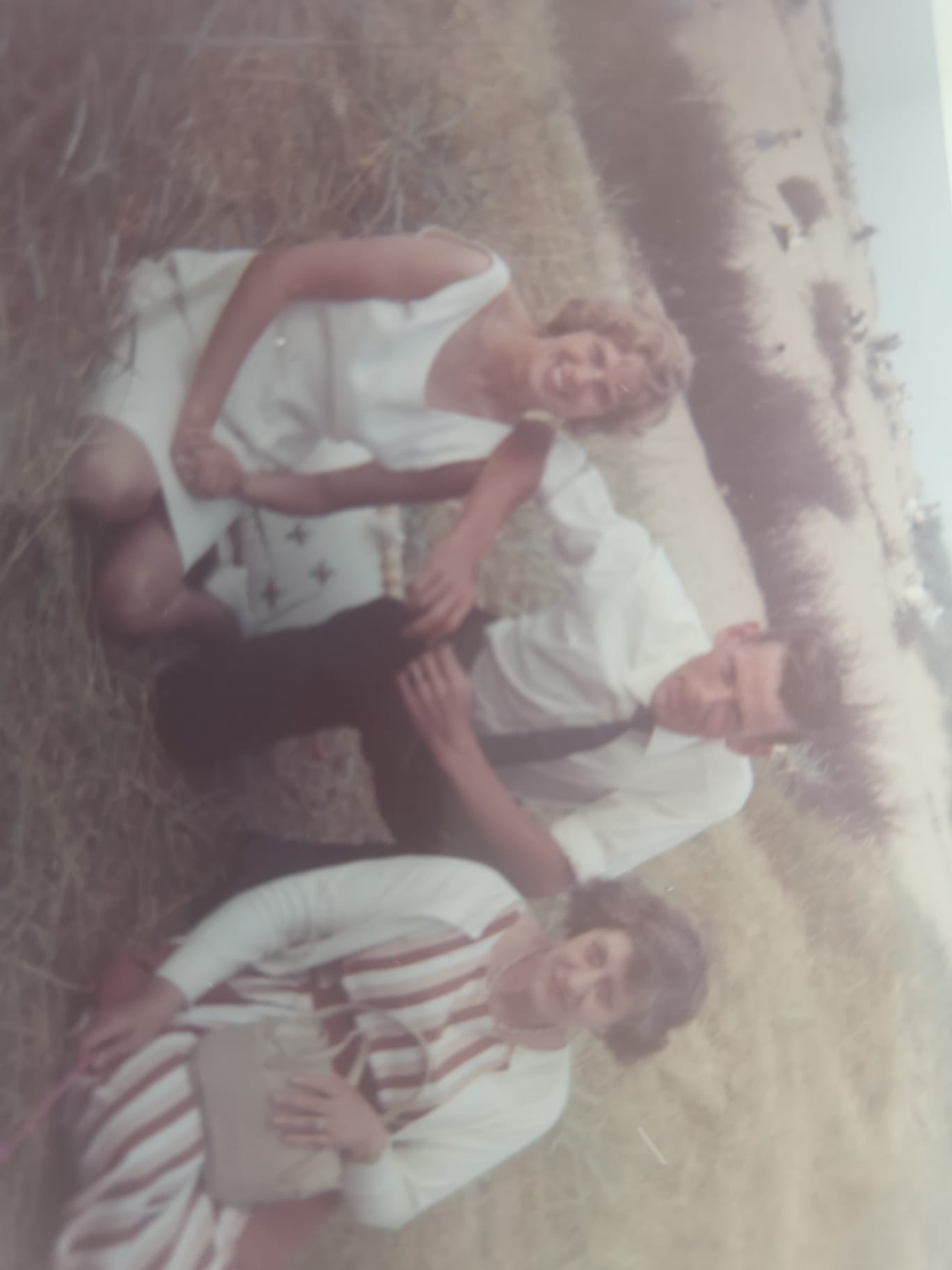
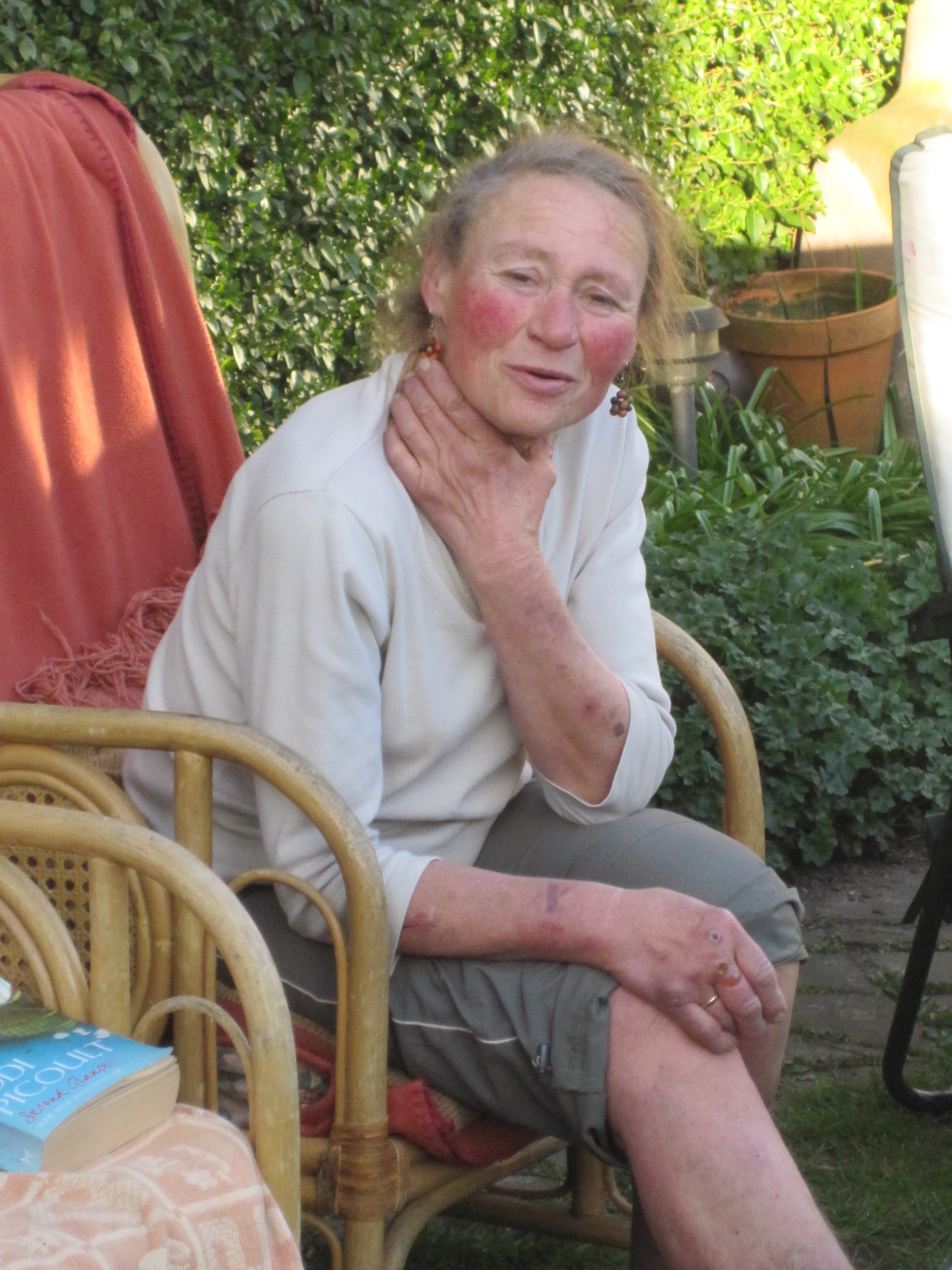
My mum died. Here she is, sitting in a garden, her favourite place in the world. She never got to see our new garden, here in the Clyde, being too ill to travel north. When it came to a share of the small amount of inheritance from the sale of her house that was coming to us, I wanted to make something that might form a lasting memorial.

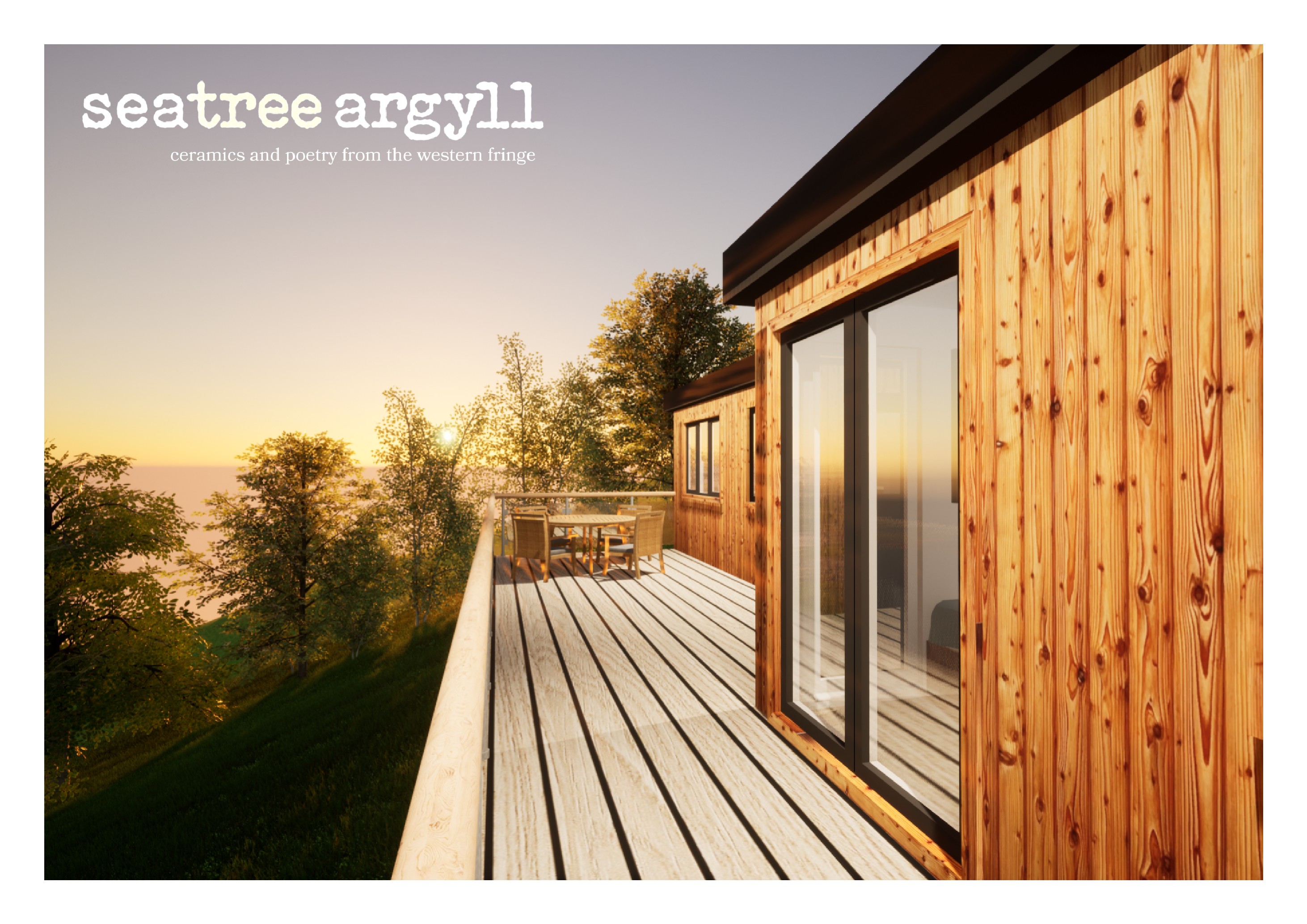
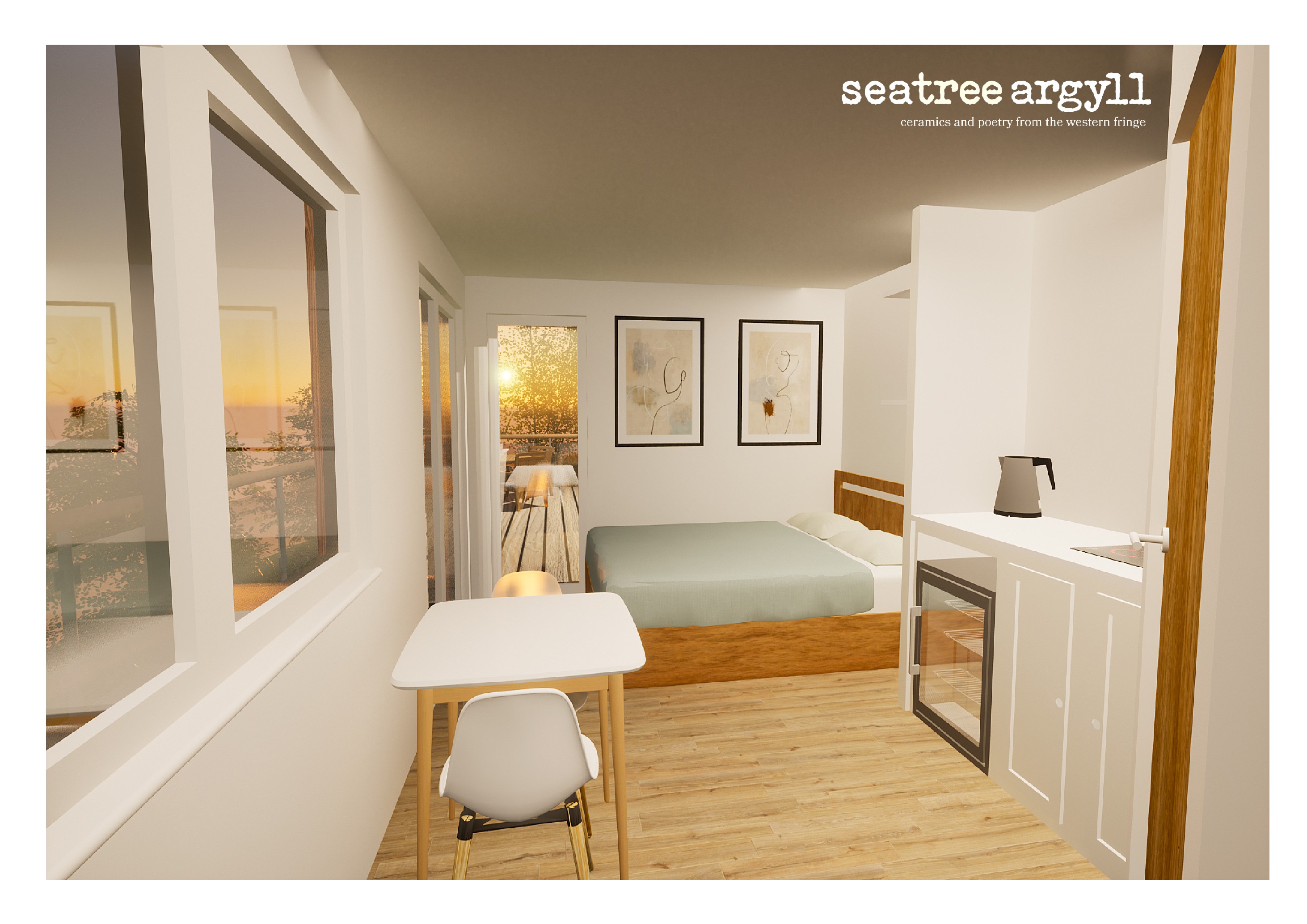
Could we use it to build a new workshop? Something that enhanced the woodland, built from sustainable materials and using low impact construction methods?

Even better, could we make a space in the woodland that might become a haven for people – for artists and makers to spent time creating and recharging their passion?

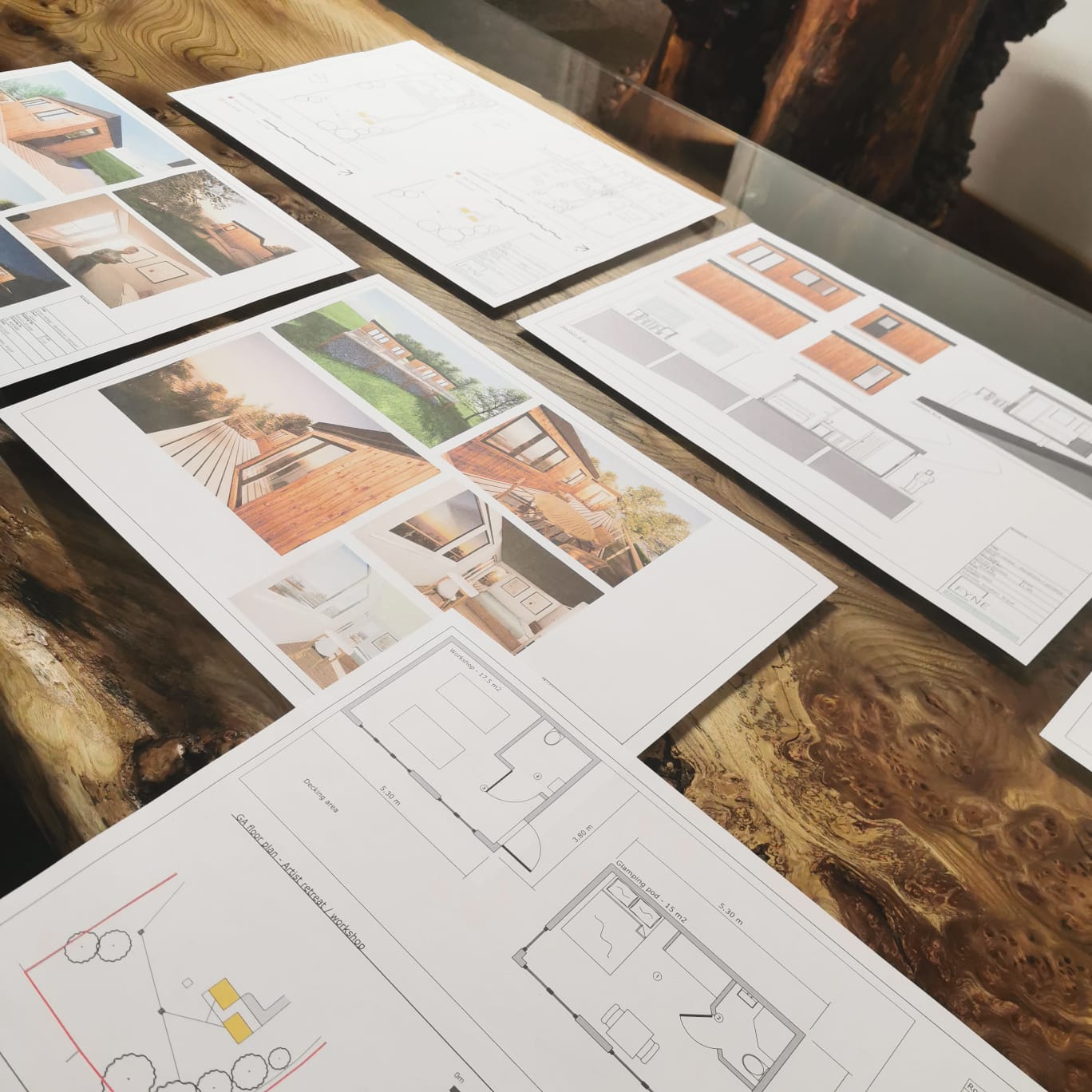
Fortunately, we have a friend who runs a company who have the skills to make something like this happen. Without Stuart and his company Fynewood, we would have given up long ago as we have tried to navigate the labyrinth of planning. Along with Ronan (who handles design and planning) we came up with something…

We now have planning consent to put up two small buildings – one a micro-lodge with shower and amenities, the other a workshop with disabled access loo. We intend to make the whole site fully accessible to people in wheelchairs by putting in a graded pathway and decking.

We will then use the premises in a number of different ways;

  • A place for people to make artist retreats. People will be able to book both the accommodation and the workshop for either four, seven or eleven nights.
  • We intend to make some slots available at low/no cost to artists who would otherwise not be able to participate.
  • Our own workshops. Pottery, retreat days, poetry and writing days.
  • Guest workshops. Working with our network of artists and creatives, to host a wide range of arts, crafts and writing.
  • Bookings by other artists to run their own events.

As you can imagine, the costs of making this happen is a real challenge – particularly as these costs have been rising constantly, making everything much more expensive than when we started this process. Conditions imposed by the planning department have raised these costs further – we are still negotiating some of these conditions.

Despite this, we are pressing forward, determined and very grateful for the support of Fynewood.

But now we need your help.

Firstly, there is this survey.

If you are an artist, and you have ever taken, or would like to take, an artists retreat, then we would love to hear from you.

If you have undertaken workshops, would like to start or attend more, we would love to hear from you.

If you have run workshops yourself, we would love to hear from you.

Crowdfunding

The next way you might be able to help is to support this project more directly – specifically with the accessibility side of the project. Feel no pressure, but if this project connects with things that you find important and you have some spare cash to put towards it, then we would be most grateful.

Back in 2020, we were amazed when our crowdfunded ‘shop shed’ was so well supported. We decided to reach out once more to our wonderful supporters.

We have set up a new crowd funding portal, with a set of rewards as before – both physical things, but also the opportunity to book in advance as a way of investing in the future.

You can take a look here.

Creative Scotland have a system of match funding crowdfunded donations (up to a combined total of £10K) so your contributions might count for double!

Help us make this plan a reality. Help us create a space for hospitality and creativity, Let us bring good things out of this good ground, together.

Art as agitator/discomforter/confronter…

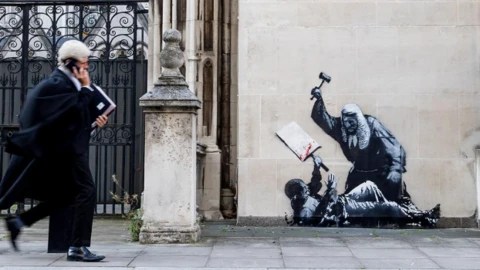
This image is everywhere.

Why? is it because it is ‘good’ art? I am not sure how to judge such a thing. Is it because it is brave and fearless in the face of unyielding bureacracy? Perhaps there is some of this here. Is it because it captures a mood- a national feeling against an unjust law? I hope so. God knows, we need our post-modern Prophets even more than the ancient Israelites did.

There remains something else too that makes me slightly uncomfortable- the celebrity mystique of protest art that is allowable somehow because it has been owned by the establishment – permissable as a democratic safety valve that pretends towards non-conformity whilst at the same time playing the art game as well as everyone. The Banksy machine is very well oiled after all…

He even made a self-aware film in which he describes the rules of the machine…

Michaela tells me that the inverse snobbery in me never allows me to fully enjoy anything that is popular, and this skews me towards art that is made on the edge, the fringes rather than the centre. The irony here is that I love art that challenges our culturual assumptions injustices but in order to do this, it has to break through the algorythms somehow to reach large numbers of people… just as Banksy has managed. For art to engage, it has to find vehicles that will allow it to travel.

Here is a case in point. I was recently asked to supply some poetry for an art exhibition entitled ‘A colourful world’. The idea was to place some poems on coloured cloth and drape them in the entrance. I suggested this poem from 2014 as it seemed to fit the theme rather well. Each three-line verse taking a different colour as inspiration. It was my attempt to consider the beauty and brokenness of this wonderful life that we have, in all its different colours…

Blue hangs like a limp flag above him

Stirred only by half-a-breeze

Always waiting for tomorrow

.

Light falling through these trees

As if through ten green bottles

Hanging on for the fall

.

In a crush of commuting greys she wore bright orange

Less to draw attention to herself, more in blazing protest

Against complicity, against the curse of ordinary compliance

.

Yellow says hello

As the summer strips the grass to straw

And flowers forget their gazing upwards

.

Red bowl of the sun in a darkening sky

Curtaining so fast that I reach out

Grasping as to cup it, to keep it close

.

Pink flesh unfolds like a flower

This fragile child, as if fearing the late frost

Now wrapped up safe in mother

.

The night is purple, not-quite-dark

Wide open like the mouth of a whale

Or the space between stars

.

Black like before-life, like un-pregnancy

Like before the big bang roared outwards into us

Before love made anything possible

.

Grey like the day she came to say “The time has come for leaving”

The sun itself was choked by cloud

The very sea was weeping

.

Water falling down on these old rocks

Gilding them with liquid silver

This normal place, anointed

.

Age has turned your hair pure white

Like the soul that dances in you

You are cathedral and I, your evensong

.

Sunlight makes alchemy from mountains

Now gold in the evening mist

Far beyond the wealth of kings

.

Brown like the ground where we lay down

The earth is pillow-soft

And waiting

After accepting this suggestion , the curator later gave me a print-out of the poem with crosses next to the verses he wanted. Black, pink and brown where all out, as was white. He only wanted ‘positive’ verses, or ones he could understand. He wanted a kind of ‘Hallmark’ poetry that was pretty, ornamental, but unchallenging. When I suggested this was not the way that most of us experienced this colourful world, or wanted to engage with it through art, he told me that I would have to deal with the ‘complaints’. In the end, we did use most of the poem, but it left me thinking again about art gatekeeping.

Photo by Tracy Le Blanc on Pexels.com

What does this look like at my end of the market? Where are the organisations that would foster/network/encourage/publish this kind of art?

Of course, in this internet age, we are all our own agents, our own publicists… each one of us has the same chance, right? The same access to the communal megaphone? Except it does not seem to work like that. In a world in which we all have access to mass connection, it has remains as true as ever that the media IS the message.

Art that challenges can not play by the same rules. It must find other ways to support and sustain itself.

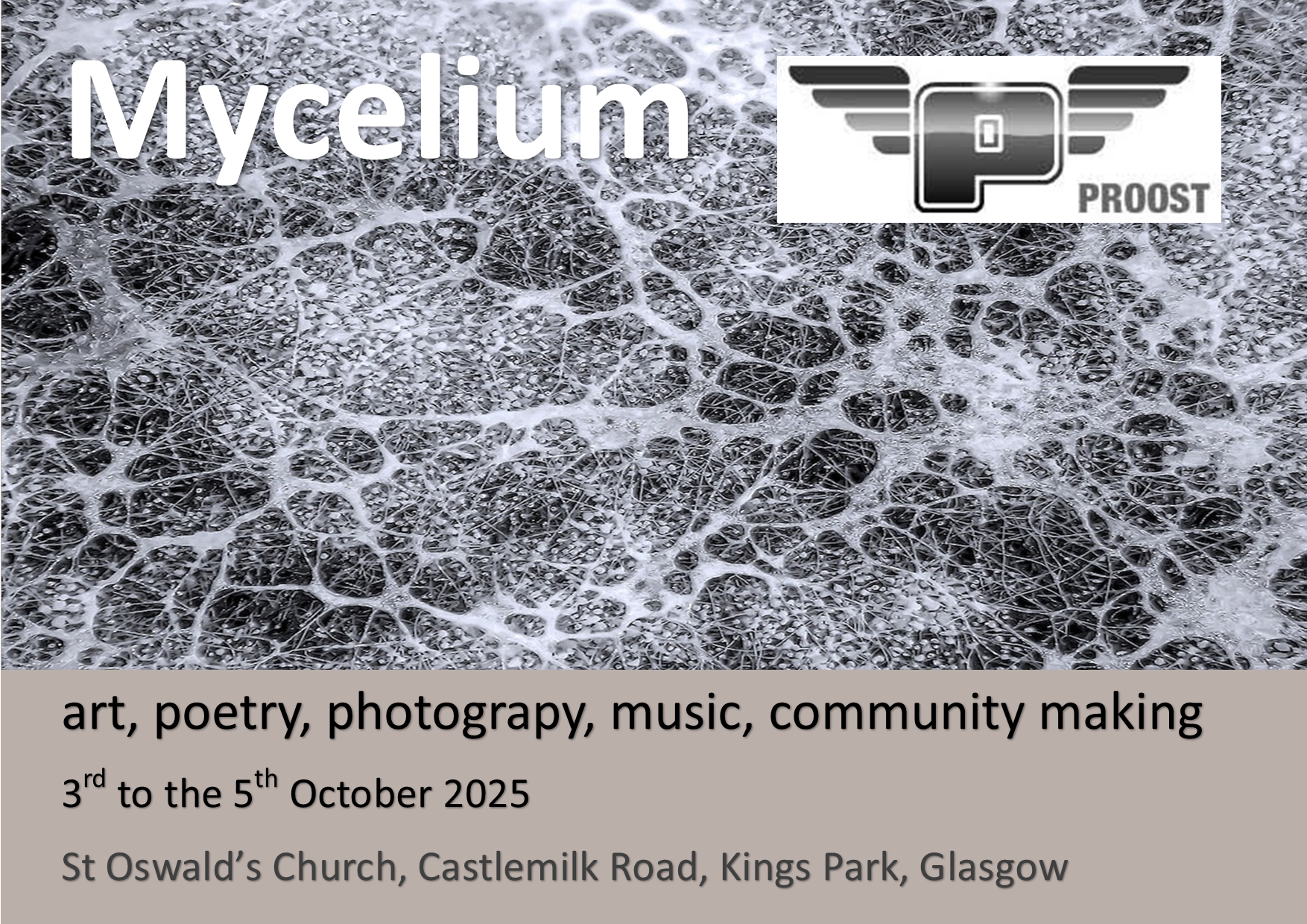
It is for this reason that I am involved in the Proost project, which is an attempt to network and bring together a community of artists around the intersection between faith and social justice. This is not about selling product (although this has to be part of it) rather it is about finding a collective voice.

This meet up is a chance to be part of what Proost might become. We would love you to be part of it.

Saturday will be a day for networking, sharing ideas and making art together.

There will be a ceilidh in the evening!

Sunday will be outward facing, inviting the wider community of Castlemilk into spaces we have created. There will be live Raku firings and other installations.

We are very grateful to St Oswalds, Kings Park Parish Church and to the wider diocese for hosting and trusting us.

For more information, check this out

The weaponisation of racist tropes – a long and inglorious history…

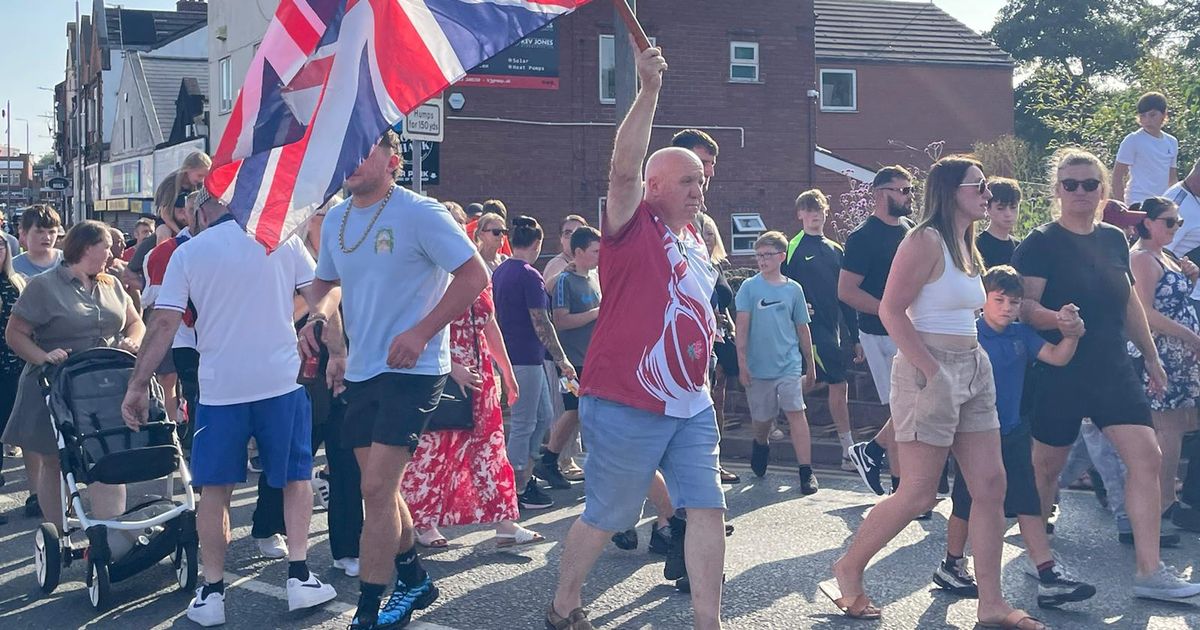
Over the weekend, over 300 people marched through my home town of Sutton-in-Ashfield in a protest against… well that is not quite clear. Immigration? Sexual assault of a minor? A hotel that might/might not be taking in asylum seekers? A loss of white male identity?

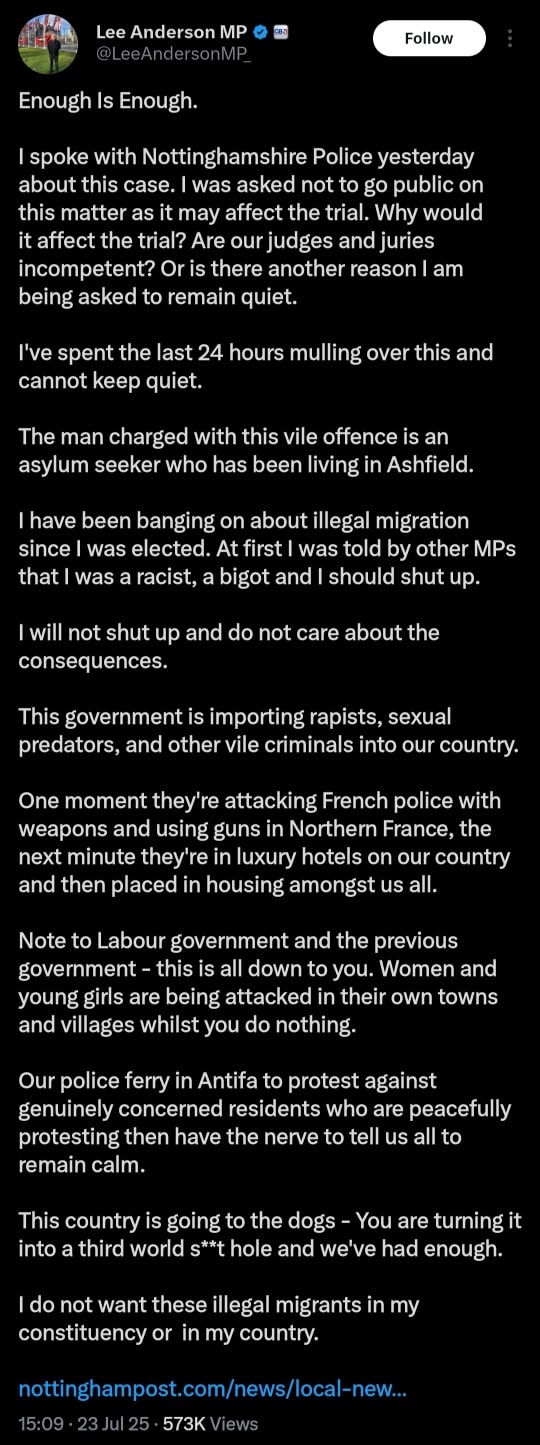
What we do know is that it all started with this post from the local MP, Lee Anderson.

There is so much about this post that is misinformation, intended to fuel a particular narrative. It worked.

There is a real question of whether Anderson broke the law in revealing this information – if indeed it is true. Truth Against Hate (an organisation that seeks to work against racist amd hate) puts it this way;

…the individual in question has been charged, which means the case is now active under UK law. That means public statements which risk prejudicing the trial could be in breach of the Contempt of Court Act 1981.

Anderson also links the case to immigration and asylum policy, which some legal experts say could inflame tensions or risk stirring up hostility. We are not accusing anyone of a crime, this post simply asks whether his actions are appropriate or lawful.

If you believe this should be looked into, you can report it to your local police or via the national service:

https://report-it.org.uk/your_police_force

This story has not been picked up (as far as I can see) by national news outlets – apart from a story in the Mail and the Express who have chosen to focus on the fact that a woman wearing a union jack dress was denied entry to a Wetherspoons pub in the middle of the town as police were trying to reduce tensions and alcohol intake. Of course, the right-wing red tops chose to depict this in a rather different kind of way.

As I watched the march unfolding via facebook, and messages from Michaela’s relatives who still live there, one thing that seemed obvious is that most of the people on the march – apart from a few drunk thugs – thought they were doing a good thing. They have been fed so many lies and half truths by Anderson and countless news and social medial outlets – often funded by shady ultra right wing sources – that they feel themselves to be the good guys in the face of some kind of liberal conspiracy. One sign being waved on the march read ‘Not far right, just concerned’.

The idea that the ‘hoards’ of young men ‘flooding’ into the country via the small boats constitute an existential threat to our country, particularly to our young women, has been pushed relentlessly via outlets such as GB news. This exchange is rather instructive;

The thing is, this is not new.

A certain kind of politics has ALWAYS sought to portray ‘the other’ as ‘the problem’. We know this of course, but yet it works anyway. The question I find myself asking is WHY does it work? How are we so easily taken in?

The answer is partly to do with fear. Firstly the fear of the black and brown outsider, secondly the great fear of those who already feel left behind and excluded of someone else replacing them, getting hold of those things that are scarce and almost out of reach. Housing, the NHS, benefits, jobs, education- exactly the themes that much of the narrative on GB news cycles through over and over again. They know that if people who feel already disadvantaged are presented with information that others are getting what they can not have for free, this will create a reaction – whether or not it is true.

I will not link to any of the news articles or videos, but you do not have to look hard to find articles and social media videos with titles like ‘Immigration is obliterating our communities’. It is all the same fear mongering, targetted at people who already feel excluded and worried about their futures. It is like spraying petrol at a hundred candles. Most commentators feel that this will inevitably lead to violence.

There is more though – for this to be believable, Anderson, Farage and their chums on GB news need ‘experts’ who can back up their outrageous claims with ‘research’ and apparently informed opinion. Much of this is filtered through so called ‘think tanks’ of the Tupton street variety.

The point of this piece though was to connect this post with the one I wrote yesterday. Ther report in The Guardian revealing the work to understand the links to racism and slavery at Edinburgh University.

Today, another article concerned itself with information released about the use by the far right of long ago discredited pseudo-science such as Phrenology and Eugenics.

The advent of modern genetics and human population data has shattered the idea that there are biologically distinct groups, or that humans that can be neatly categorised based on skin colour or external appearance. Genetic variation between populations is continuous and does not align with social, historical and cultural constructs of race. Race, as a genetic concept, does not exist.

Yet, says Angela Saini, author of a book on the return of race science, “people don’t stop believing falsehoods just because the evidence suggests they are wrong”. As IQ testing became the metric of choice for those seeking to draw conclusions about racial differences – often based on biased or fraudulent datasets – old, discredited arguments resurfaced.

In other words, the ways our Empire ancestors justified conquest and colonisation are still being used to justify the ‘othering’ and dehumanising of black and brown people – this time to gain political advantage.

With the recent rise in ethnic nationalism and the far right globally, a resurgence of interest is under way into theories of racial exceptionalism. Last year, the Guardian revealed that an international network of “race science” activists, backed by secret funding from a US tech entrepreneur, had been seeking to influence public debate. Discredited ideas on race, genetics and IQ have become staple topics of far-right online discourse.

“The ideas have absolutely not changed at all,” says Prof Rebecca Sear, an anthropologist at Brunel University of London and president of the European Human Behaviour and Evolution Association. “If you can provide a measurement – IQ, skull size – that helps give racism a respectable gloss.”

I had a conversation with a dear friend recently about how we might approach information or facts on some of this material. I suggested to her that the word ‘hermaneutic’ is important. (There is more about the word here.)

We look at everything through a set of goggles – most of the time ones we don’t even know what we are wearing. This means that how we read things is distorted in ways that we are often only partially aware of.

It also means that information that we (and others) give out – including this blog – is shaped by the hermaneutic of the person or organisation that provided it. In this case, it then becomes important to try to understand this as a means of understanding what is being sold. Facts are dangerous things, easy to use in ways demanded by a particular hermaneutic. If we can understand the nature of that hermaneutic, then perhaps this might enable some compensational caution when these facts become too convenient for a partucular narrative- particularly when this create victims out of victims and suits the ends of people who already have too much power.

Proost podcast- wilderness retreat, part 1…

Imagine stepping away from the digital world and immersing yourself in the raw beauty of a tiny Hebridean island. What if you went there with a purpose, and deliberately called it a ‘pilgrimage’? What if you split your time there between laughing with friends and times of deep silence? What impact would such a time make in your life? Would it just be a nice interlude, or might it start to shape you in more profound ways? How might relationships that you formed there impact survive back in the real world, both in terms of the divine and profane?

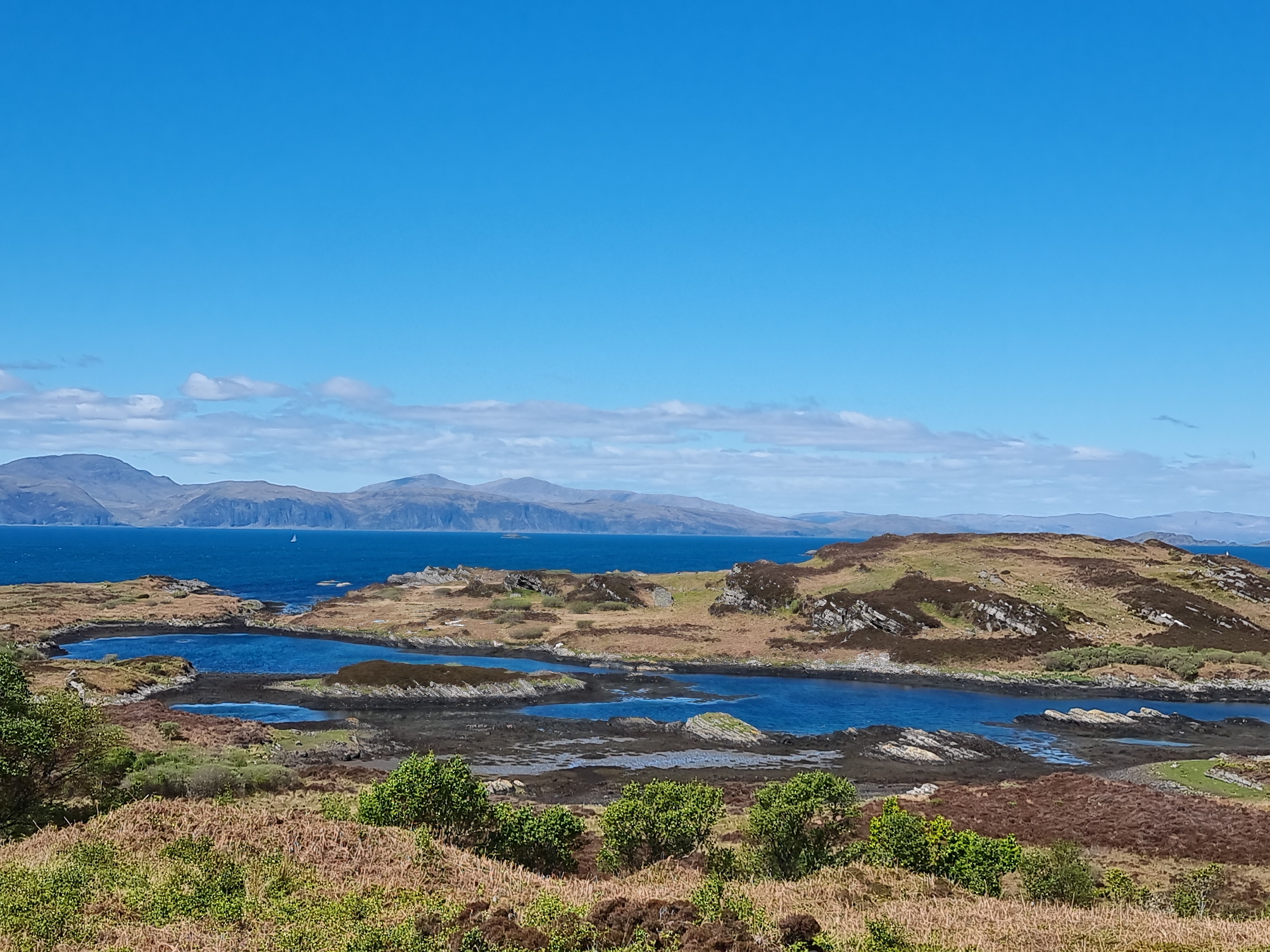
On our most recent retreat, back in May, I took the opportunity to ask some of my friends these questions. We went to the island of Lunga, part of the Inner Hebrides, just the other side of the ‘Grey dogs’ tidal race from its more famous neighbour, Jura. This remote location, with its sense of wild beauty, provided the perfect backdrop for our trip, and this time, the sun was shining throughout. As we explored the island, we were reminded of the rich Celtic heritage and the spiritual significance of these islands – and how they connect us with an older spiriuality that was always connected to earth in ways that we have largely forgotten.

The retreat was more than just a getaway; it was a gathering of friends, old and new. We shared stories, laughter, and deep conversations, creating a temporary community that felt like home. I have often reflected on how these people, some of whom I see only once or twice a year, have become for me a kind of Anam Cara- deep soul-friends of the kind that ‘know’ me in ways that it is impossible to fully describe. Some of this is fostered by the island – the exposure and shared need for each other it places in us but also by the raw uncouth toilet humour that has two superpowers – it is very funny, but also strips out all pretense.

These video’s were recorded in a hurry, right at the end of our trip, as I it felt like an imposition, an indulgence. I am very grateful that some of my friends were gracious enough to take part.

There are two ways to watch/hear the chat…

By podcast

Or I uploaded the vid to Youtube here

Earthling

Photo by Pixabay on Pexels.com

I played cricket yesterday. It was the first match of the season, which we won, despite dropping at least 15 catches (I have a black finger of shame) and enjoying many comedy moments. So it was, stiff and sore, that I ventured into the garden early this morning to attend my ‘church’.

The birds sang hymns.

Deer in the thicket were present but unseen like the Holy Ghost.

I planted onion sets like one might lay down gifts at the altar.

I wove and tied up live willow as if wrestling with theology.

I mark my blessings one by one. No matter what may unfold in the future, I count this day – its beauty, it’s promised companionship and the health I now enjoy – as a gift I should treasure…

…and it all made me think about the earth that sustains us. The community that carries us. The inter-relatedness of everything…

…and the spirit (that I sometimes call god) who holds it all together – or perhaps it would be better to say ‘who loves it all by becoming what s/he loves’

And I wrote this…

Earthling

.

What do we mean when we say ‘Earth’?

Are we not formed from the same dirt?

Is the soil beneath our feet not alive?

Does it not squirm and churn

With sinew and stone, just

Like we do?

.

What do we mean when we say ‘Earth?’

This ball of half-cooled molten rock

Still sweating from creation condensation

Careening through unknown space

Perhaps still searching for home

Like we are

.

What do we mean when we say ‘Earth?’

Is it it, or is it us?

If it survives, must we first fall?

How much wounding can it mend?

Is it big, or is it small?

Like we are

.

What do we mean when we say ‘Earth?’

This womb that bore us

This tomb that buries us

This field that feeds us

If we should prick it, will it not bleed

Like we do?

Proost through lent…

I have been loving the start of the daily lent posts over on the proost.community blog. If you are needing something to give pause and focus during this season, you might want to check it out.

Even better, we are looking for contributions- poems, music, art, anything really.

Because today’s post was my poem, I thought I would replicate it here.

Spring window, Otter artwork by Sarah Woods.

This morning, up here in Scotland at least, the sun is shining, the sky is blue and the sea flat calm. If you had no connection to the world we are part of – if we were truly able to live in this moment alone – then it would be a day to truly glory in. In an age of smart phones and media feeds, many of us find this impossible. There is a background noise to our times that is oppressive. I will not list the reasons for this – you know already.

There is something that unites many people on all sides of the political spectrum just now – a sense that things are not right, that deep within our culture, our economics, our political systems, our ways of living life, something is not working.

Does this dichotomy remind anyone of anything? How about the beginning of 2020?

That was another glorious spring, with a different kind of oppressive background noise. It might be difficult sometimes to remember, this is not the first time that humans have lived like this. This is not the first epoch of injustice, of super-rich so-called-superheros, of wars and division making. Think about it.

So this morning I offer one of my own poems, written back in that 2020 springtime. It became part of a book illustrated by Si Smith.

Human races

The upright ape ascends from knapped flint to
Silicon chip. He scratches sonnets in split slate and
Solves problems (almost) as fast as he makes them.
His alchemy promised gold, but instead just turned the
Lights on, lighting a road ahead called Progress.

There is nothing new under the sun; the circle is still
Unbroken. Empires rise whilst others fall; ours was
Not the first at all. It turns out that our times were never
Linear (just oscillation) and that for every page of
Knowledge gained, another is forgotten.

But what are we, if not whisps of the same Spirit?
We carry in us the same am-ness as all things that ever were,
Hidden under thin skin and hubris, waiting for those moments
Beneath stars or trees or tenderness when we remember;
It is all about connection.

Image by Si Smith, from ‘After the Apocalypse’.

Not Messiah, but memory…

Clear felled plantation, Glen Massan, Argyll

It has been a while since I have posted any new poetry here. This is not because I am not still writing, rather because the way that poetry allows me to explore ideas (which this blog is primarily about) fluctuates.

Today however, I am going to share a brand new poem, which makes some rather profound theological statements – ones that I know many of my friends will find troubling.

I’m not going to explore them here – at least, not yet. I am not even sure that I agree with them all just now.

This is one of the gifts of poetry – it can become it’s own voice, its own person. As well as a way of exploring then externalising, poetry can go further than this, and be part of a dialogue even with its author.

The dialogue does not even need to find agreement. It might be possible to hold more than one perspective – as if our theological constructs are just different poems.

It is in this space that this poem sits just now. In committing the words to keyboard and screen, I am able to stand back and consider them as if they were not mine.

Except they are mine. In writing them, I was consciously breaking through some barriers into places that feel new.

.

Christus

.

Not Messiah, but memory –

You are what we once forgot.

Woodsmoke.

A curve of earth

Towards completeness.

.

Not God, but goodness –

You are what we left behind.

Compost.

A fecundity of light

Awakes this forest floor.

.

Not Risen, but wide open –

We are not just the sum of skin.

Mycelium.

An animal whom, despite of evolution

Finds value most in kindness.

.

Not Saviour but revelator –

We search the stars in vain.

Insemination.

A pulse pounds insistently when

There should by rights be silence

.

CG March 2025

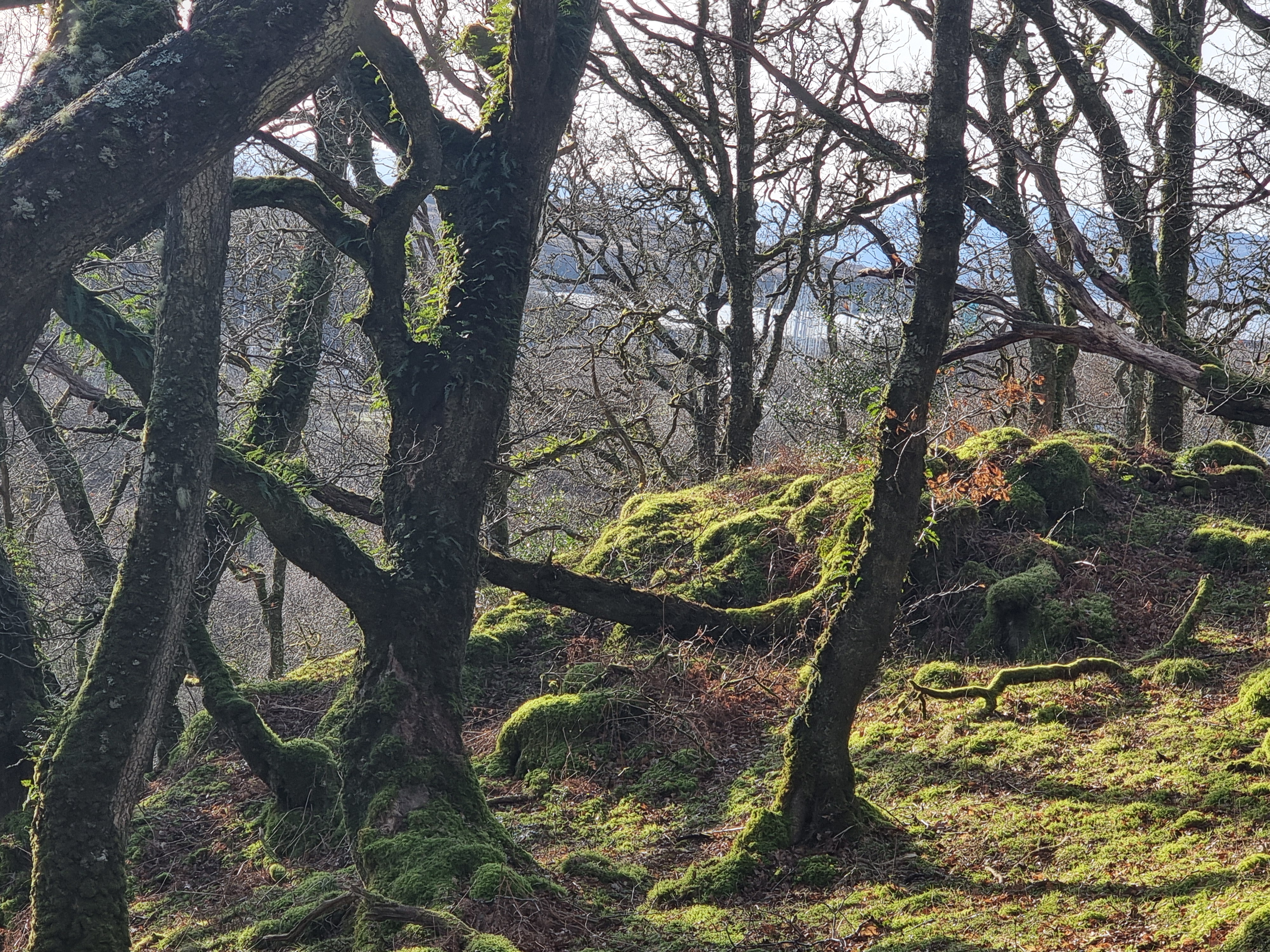
Temperate rainforest floor

New Proost poetry podcast stream…

Annoucing a new poetry thing (and looking for collaborators)

Before Christmas (on this blog and elsewhere) we curated a series of beautiful contributions of poems, videos and songs produced by what is starting to feel like a developing Proost community. It was a lovely thing to be part of and this has given us an interesting template for future collaborative work.

During this run of daily posts, in the busy days of preparation, when it seems we have so little time for reflection, we released two poetry podcasts. These followed a simple format – three poets each reading two poems then talking about them in the round and allowing them to take us into deeper connection. I participated in both and they were profund, beautiful and even sacred.

If you have not had the chance to listen to them yet (and given the pre-Christmas pressure, you are forgiven) then here they are.

The first featured two Australian poets, Talitha Fraser and Stevie Wills. It was extraordinary.

The next featured two old friends of mine, Mark Berry and Ali Matthew. There was no guarantee that the magic of the first poetry pod would be repeated, but afterwards it felt like I was emerging from a great forest or an ancient cathedral.

In reflecting on these sessions, we think there is so much here that we want to continue. The sense of community, a genuine exchange of hearts, the way that poetry always takes us deeper, the conversation about things that matter, the mutual ancouragement of voices and poems that might otherwise never be heard. The deep generous spirituality woven through it all.

In other words, these podcasts seem to gather so much of what we hope that the new Proost is all about…

…so we want to make this a new regular podcast stream.

The idea is to develop a small team of people to ‘chair’ these discussions and for each podcast to involve at least two more poets on each episode. To connect with these poets, we will be casting the net as wide as possible, looking to connect with poetic voices who are exploring spirituality through this medium – after all, is not poetry first and foremost a spiritual discipline?

If you are interested in this, please drop me a line. If you know of other poets that we should be talking to, then it would be great to hear about them.

How this all develops will depend on the community that gathers around it – as with all Proost activities – but it genuinely feels as though this simple format offers a brand new way to do reflection and spiritual adventure.

Music and spirituality…

Photo by Vishnu R Nair on Pexels.com

This week and next week there will be two Proost podcast episodes released, featuring interviews with musicians. The first one (out already) is with the rather wonderful Ant Clifford, of the band Lofter. Next week we will hear from our lovely friend Yvonne Lyon.

These chats are part of our on-going pondering as to the shape and purpose of a revival of Proost, an old publishing organisation. It might be interesting to note that before the old Proost took on the role of publishing loads of written material, video and animation etc. it was first concieved of as a record label.

Photo by Eric Esma on Pexels.com

The questions we are trying to explore are some of these;

What role does music take in our spiritual lives? More than just soundtrack, might it actually shape us in real and meaningful ways? If so, how?

What kinds of music might we want to showcase? Who might help us navigate a world we know little about, particularly the music being made by non-white,non-male, non-middle-class people like us?

What is the difference between worship music and ‘music of the spirit’ of the kind we are most interested in?

Who is making this kind of music? Are there people out there who should be heard, but are struggling with an indifferent music money machine?

Is there a need for a simple network to support grass-roots music that seeks to make a difference?

Photo by Clem Onojeghuo on Pexels.com

We have an inkling (particularly following these two conversations) that musicians need connection, just like all artists do. In fact, there may be particular reasons why musicians need this more than most. The music business has taken such a pounding in the last few years. The rise of streaming services has placed all the earning power out of reach of all but the biggest stars, and the pandemic left many performing artists in a hole. Meanwhile rising energy costs are forcing many vanues that previously supported live music to close.

As Yvonne points out, music is also relational at heart. The image of the tortured bedroom genius, making tracks on a laptop, might have some basis in reality, but actually, music flies when it is made in community, when it sparks between different creative inputs on different instruments. It comes alive when people listen. It creates a space in which people can transcend, almost uniquely.

But it can also be a hard road, and musicians need one another.

Photo by Edward Eyer on Pexels.com