This was the name of the Sunday supliment in last weekend’s Herald newspaper.
A strange title indeed, as buried on page ten in an article entitled ‘A time for others’ was a discussion about the work of Alternativity– in which development worker Margaret Paul was quoted as saying this-
We know that our communities women bear the main burden of Christmas and what should be a happy time can be very stressfull, especially where money is concerned.
Some women see Christmas as a chance to make things up to their children because they live in poverty all year round.
The article also quotes a Samaritans volunteer, who said
People can be very affected by the imagery portraying the perfect Christmas when the reality is that it is different for everyone.
So much more so if you are on your own, or unwell. I know many people who just want to shut their door on Christmas, and wait for the season to pass on by.
What then might be the ultimate Christmas for these folk, and for us?
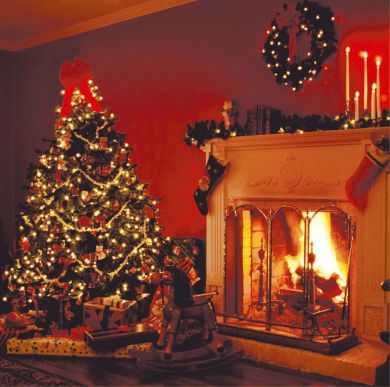
Does it depend on a colour coded table, set in front of a huge log fire in a picture post card cottage covered in snow? Do it need to be punctuated by the sharing of the perfect presents around the designer tree? All of these things are good- but are they really the measure of what is ‘ultimate’?
My ultimate Christmas celebration involves family, friends, food and an appreciation of the coming of the King of peace.
It is the story of Uxbal – a single father who struggles to reconcile fatherhood, love, spirituality, crime, guilt and mortality amid the dangerous underworld of modern Barcelona — all before his life is over. He must deal with his loving but unreliable, reckless, and bipolar wife (from whom he is separated and who poses a threat to the safety of their children), and a large group of illegal immigrants for whom he obtains material so that they may not be deported. In the middle of all of this, he is diagnosed with terminal cancer, which he tries to hide from his two children.
It is a gut wrenching masterpiece of cinematography, and is soaked with a wonderful kind of broken loving humanity.
It also tells the story of globalisation, and the poverty on the frontiers of capitalism.
Watch it- but be warned. It will open something up inside…
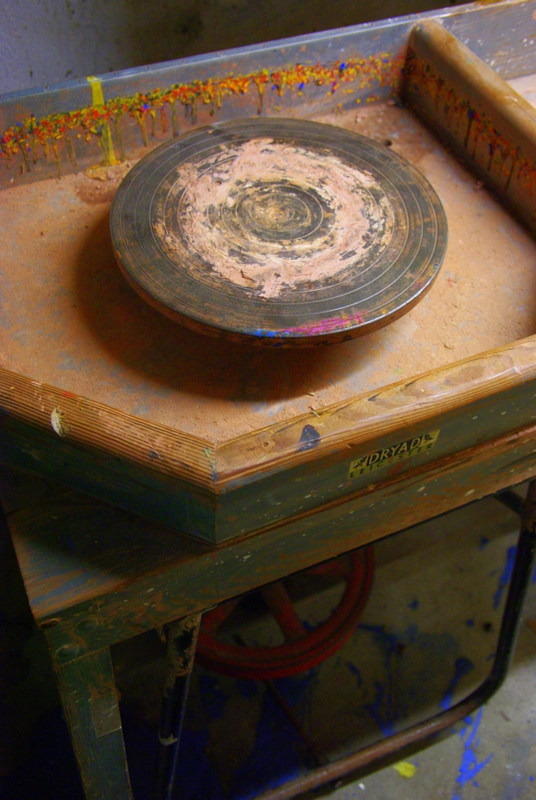
Paul turned up at our house this evening with a potters wheel. It was fun getting it down into the cellar as it was very heavy.
This is part of the slowly unfolding project that Michaela and Pauline have of converting our cellar into a working pottery. I know nothing about using clay, but I have to say that I love the idea of something so basic being shaped into lovely things down there.
Particularly using this functional basic object that still somehow manages to be beautiful…
It was a lovely old wooden thing, with a treadle and fly wheel. The kind of thing that has been used to shape clay for thousands of years- certainly since the times of Jeremiah-
1This is the word that came to Jeremiah from the LORD: 2“Go down to the potter’s house, and there I will give you my message.” 3So I went down to the potter’s house, and I saw him working at the wheel. 4But the pot he was shaping from the clay was marred in his hands; so the potter formed it into another pot, shaping it as seemed best to him.
5Then the word of the LORD came to me: 6“O house of Israel, can I not do with you as this potter does?” declares the LORD. “Like clay in the hand of the potter, so are you in my hand, O house of Israel.
(Jeremiah 18 NIV)
We used to sing songs asking God to mould us like clay- shaping us into the perfect pot that he would have us be.
Now, I think that my prayer is more that God would still fill me up and use me, misshapen and rough as my pot surely remains.
Because of the direction I started down a few years ago now in trying to break out of the Christmas consumer driven craziness, I find that some things make me angry.
Those advertisements on the TV- with celebrities who supposedly do all their shopping for celebrity friends in some most unlikely store like Argos or Lidl. And then there are the advertisements aimed at parents through their children. I could mention some brand names, but it perhaps would not be fair as they are all up to the same sort of thing really.
After the anger comes other emotion that is most unflattering- smugness– the vaguely superior feeling that I am somehow ‘different’- not like them. Of course this is nonsense- we all live in the same consumer driven culture and it is so hard to go against the flow. Advertising works- on all of us at some level.
Then there is this other more corrosive emotion called cynicism. I think this is the worst of all. It drives us to sit back, sneer and to do nothing. It is not a force for anything but inertia. It sucks the joy and the wonder out of anything it comes up against. It is the enemy of life.
I think that our lives are journeys- through all sorts of stuff- towards the unknown. They are marked by many boundaries and transitions. We do not make these journeys alone, because we are communal beings. Neither do not journey without meaning because we humans search for the depth of things- we are spiritual beings. Therefore the celebration of season- birthday, feast day, wedding, funeral, etc- is ever more important.
As a person of faith I might have a particular reason to celebrate Christmas, but I also recognise that the role of the Church in mediating our transitions and life patterns has been largely broken. Christmas is little to do with Christ. Whilst some of us might lament this in our own lives, it is simply not something that we can impose on a mostly secular society.
There is that saccarine sweetness that is sold to us in Christmas card poetry and Hollywood films- something to do with the ‘spirit of Xmas’. Which is usually conjured up with pictures of shiny faces, snow scenes, candles and of course, that greatest modern consumerist invention, Santa Claus.
Oh dear, there I go again.
What then is left? After the anger and the cynicism what remains?
These are no small questions, because life is lived in the asking of them.
I have my own partial answers- which I try to work out creatively with my family and friends and small community. I am sure that you do too.
But first I need to set aside the cynicism, and find inside of me some wonder.
I was out at the Innellan Cricket Club Annual dinner the other night. A posh meal- an all male affair, with lots of long well libated speeches, lots of belly laughs and shameless in-jokes. It was a strangely alien environment for me.
Many of the people there were former members of the club (or associate members) and so there was a palpable sense of shared history. Matches narrowly won, or almost lost. Catches taken and dropped. Friends now no longer with us.
And of course, drunken cricket tours where men can once again be boys.
It was all good fun.
William was not there, but he was awarded the ‘most improved cricketer’ cup. Never was there a prouder boy (or father.)
Specifically, Carol suggested I watch the clip below. It is quite long, but makes for rather interesting watching.
I had not heard of this movement before, so spent some time researching what I could about what they are about, their core beliefs and campaigning aims. At first I was pretty suspicious to be honest- there is something about their website that made me instantly uncomfortable- it is a little too slick, too shiny.
TZM is another one of these internet generation organisations that grows not along the lines of corporations that are led and controlled from the centre, but rather grows virally by a network of connections, and a set of common evolving principles. It has vague, fuzzy edges, and slightly non specific goals. Rather than ‘leaders’ who are appointed and recognised, there appear to be some key voices, but the structure is deliberately local.
This is a familiar organisational structure to me- as it reminds me very much of the ‘Emerging church’ movement. Such organisations are always difficult to get your head around from the outside- as they appear to lack structure and substance. There is more about these kinds of organisations here.
But back to the specifics of what BenMcLeish had to say above-
I liked much of what he had to say- particularly his analysis/critique of the state of our current economic/political/environmental situation, which I find myself largely in agreement with. I might also echo some of his concerns about religion- although unlike him, I remain a believer.
I think the importance of a strong critical voice against the excess and over consumption of our wider culture is vital. I have been wondering for a while where this will come from, and where we might see examples of people living lives that are different- people that break from the flock and show a better way to live. I have been excited by these possibilities all my life, and so wherever I see these things being talked about, I am interested.
Unlike what Ben had to say above however, I have seen most of this kind of thing within faith based organisations. Sure, there are a lot of people within our churches and mosques and synagogues who are as sheep like as the rest of society, but there are also many whose beliefs lead them to aspire to something more. Within my own faith, I would point to the New Monastic movement, towards which my own little community makes a slight nod.
CS Lewis used to talk about Communism being a ‘Christian heresy’- in the sense that the impulse towards good things was in many ways Jesus-like. I think you could perhaps say the same about TZM. I have described previously my belief that the job of Christians is to watch out for wherever there is truth and beauty, then to seek to shine light on it, and to salt it to bring out the flavours. On this basis alone, I intend to keep an eye on TZM.
Which makes what is happening in front of St Paul’s Cathedral all the more interesting. The grand old Church of England have got themselves in a bit of a cafuddle- they want to be ‘nice’ to the young activists, but can’t quite deal with the mess of it all.
Having said all that- TZM seems to espouse some macro economic and political solutions to our current woes- these I find myself less inspired or convinced by. A futurist perspective like this, with grand predictions of the fragmentation of the current mechanisms of state and society, seems to me to be highly speculative. The grand idea of a money-less society, with resources allocated according to need (and administrated by think tank and committee) just seems to be rather fanciful on a national scale.
But not necessarily so on a local small community scale. This is where my interests lie. Ben speaks at the end about what individuals and families might do to look at their own patterns of consumption and life choices- a list of things that are very familiar to the aspirations of my faith community.
Does this organisation offer a real alternatives to our Capitalist consumer economy? Not yet. What it does do however, is to push back– to offer a visible critical analysis of what we are.
Thought it might be worth mentioning our holiday let again- If you are considering a wee break then you might like to think about a trip to Dunoon…
The Annexe has a double bedroom and twin bunks, an open fire and a DVD player for lots of late night films with a hot toddy. At £250 a week (or £45 a night) you are unlikely to find anything of better value.
It has been really lovely to have Graham and Victoria (along with Matthew and Ben) over the last week. Graham is a minister in North Yorkshire, and blogs here. After exchanging the occasional comment we met up for a pint when we were on holiday a couple of years ago- only to discover that Victoria and I used to work together in Bolton. It’s a small world.
If you want to know more (about the Annexe, rather than Graham and Victoria) then feel free to get in touch…
I watched Panorama tonight- telling the story of the mass eviction of a community of Travelling families from the site at Dale Farm.
If you are unaware of the background to this story, it involved the establishment of a settlement on privately owned land- leading to around 800 travelling people setting up permanent living arrangements- caravans, mobile homes. However, the site was established without planning permission, in the shadow of a sleepy affluent English village. Ten years of negotiations, court battles and exchanges of vitriol and hate followed.
On the one side, the outraged locals, who pointed to high crime rates, threats of violence and unruly behaviour. These folk have the rule of law on their side- and the local County Council. On the other side are travelling folk, whose leadership (if the Panorama film is to believed) is provided by a number of matriarchs. The Travellers are supported by an assortment of activists, from all ages and works of life.
It ended predictably- riot shields, rocks hurled at police, diggers smashing barricades. The Travellers lost their homes and were forced back out onto the road.
Stories like this polarise us too. Power wielded against the marginalised in the name of the rule of law will always feel (to me) WRONG. But neither can we blame those whose job it was to enforce the will of the court- who had to face their own trial of violence.
The issues for me are much longer standing. We have well over a thousand years history of regarding Tinkers/Gypsies/Romanies/Travellers as dangerous thieving, untrustworthy and less than human. There is absolutely no doubt that this has resulted in prejudice and even direct persecution.
That is not to say that there is no criminality within the Travelling community- but they follow a way of life that has been criminalised.
One of the most striking aspects of the Dale Farm situation is that Travellers have so few alternatives to illegal sites. There used to be law on the statute which obligated each and every local authority to provide designated travelling sites. These sites (where they remain) are not without their problems- but do at least offer safe places for families to settle for a while, and receive health and education. However, this law was repealed in 2004- by the then Conservative government, responding to another middle England tabloid backlash against New Age Travellers.
Many councils closed their sites.
The end result is that at any time, there are estimated to be around 3500 caravans with no legal place to stop. The options they face are to abandon their way of life and move into social housing (which many have done) or continue with a life that constantly skirts the edge of legality.
As a matter of interest to those of you from a particular Christian background that there has been a charismatic revival sweeping through the Travelling community over the last few years. There is more about this in this book.
As revealed in the Panorama programme, these communities are not without their problems- but nevertheless are communities characterised by very strong social norms, and sense of identity.
Something to celebrate perhaps, rather than to try to squash?
The Christmas advertisements are already being shown on TV- something that most of us will have complained about. The money machine is limbering up…
But if we want to do something differently, then we too will need to make some preparations.
It is my conviction that although most of us love to celebrate Christmas, we do not feel in control of what happens to us each year. It comes at us like a massive snowball rolling down the hill, gathering all in it’s path. Bigger and bigger.
The controlling factors that result in our powerlessness are complex, but I think some of these things have been part of our experience-
Collective momentum- none of us are immune from the power of advertising, particularly when all around us people shop till they drop.
Making it special- and because of our consumer driven context, this means more consumption. More shiny stuff for the kids, and more booze and gadgets for the adults.
Busyness- most of us simply lack the head space to think our way into a different way of doing things. It is all we can do just to go with the flow.
Obligation- present buying is a socially stressful activity. Getting the right balance between cost/quirkyness/suitability is a pressure for more of us. This is because we value our friends, and do not want to give offence. Remember those awful moments when someone gives you a present and you realise you have not given them one? Do you keep ‘spare’ presents just in case this happens?
Lack of viable alternatives- what else would we do? Faced with this, we reluctantly end up just doing the same.
All this suggests to me that if we want to change our approach to Christmas, we have to make plans well in advance.
We will need to negotiate/discuss with our family and our friends. It might mean different solutions for different groups.
We are part of a community called Aoradh– and last night, we made a start towards our different kind of Christmas.
Sarah (our 11 year old super-chef) had baked cupcakes. At the base of each cake was a name, revealed as we ate. Later on we will eat another meal together, and exchange gifts only with the person whose name we drew.
The rules are- gifts can be something you have made, or a promise for the new year (babysitting, grass cutting, chest waxing or whatever) or if you need to buy something then that is fine, but you must spend little.
Will this be less special? Will our community be showing less love and committment to one another? I rather think the opposite- it has already been a means of bringing us closer, having fun- and of course, eating together. We do a lot of that…